

How to Mix and Match Tila Bead Bracelet Colors for a Stack You'll Actually Wear
What's the easiest way to mix tila bead bracelet colors without it looking random?
Start with one anchor color you already love, then use a color wheel to choose a second. Pick something directly across from your anchor for contrast, or right beside it for a softer blend. Add a neutral to the mix and you've got a three-piece stack that holds together. It's that simple.
Most people overthink bracelet stacking. They pull together five or six pieces that each work on their own, put them on, and then feel vaguely off but can't explain why. The issue usually isn't the individual bracelets. It's that there's no throughline. A little color theory fixes that fast.
Why does color theory actually matter for bracelet stacking?
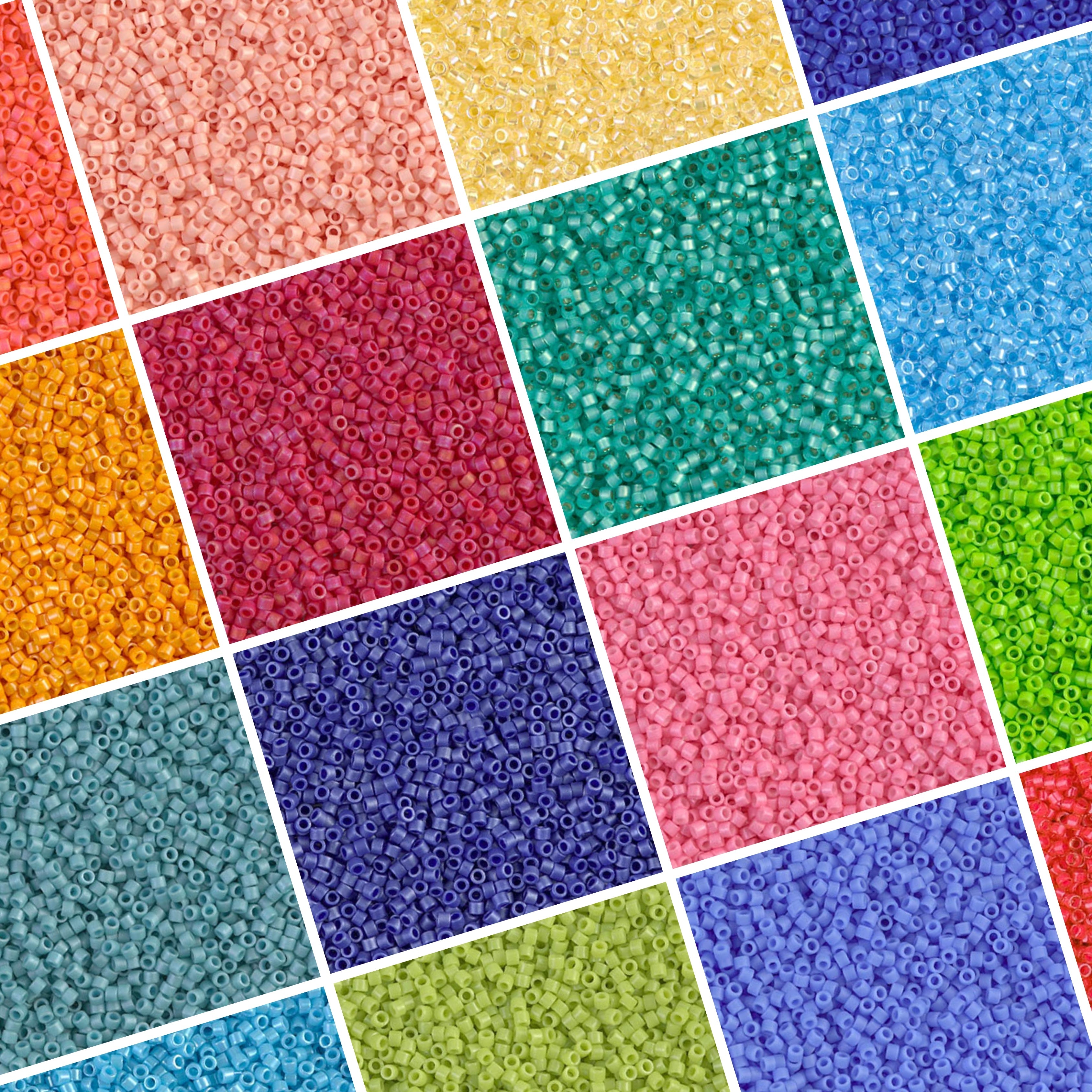
Color theory gives your stack a structure that your eye can follow. Two colors that are analogous (neighboring on the wheel, like dusty rose and soft coral) feel calm and cohesive. Two that are complementary (opposite on the wheel, like deep teal and burnt orange) feel energized. Neither is wrong. The difference is the mood you're after.
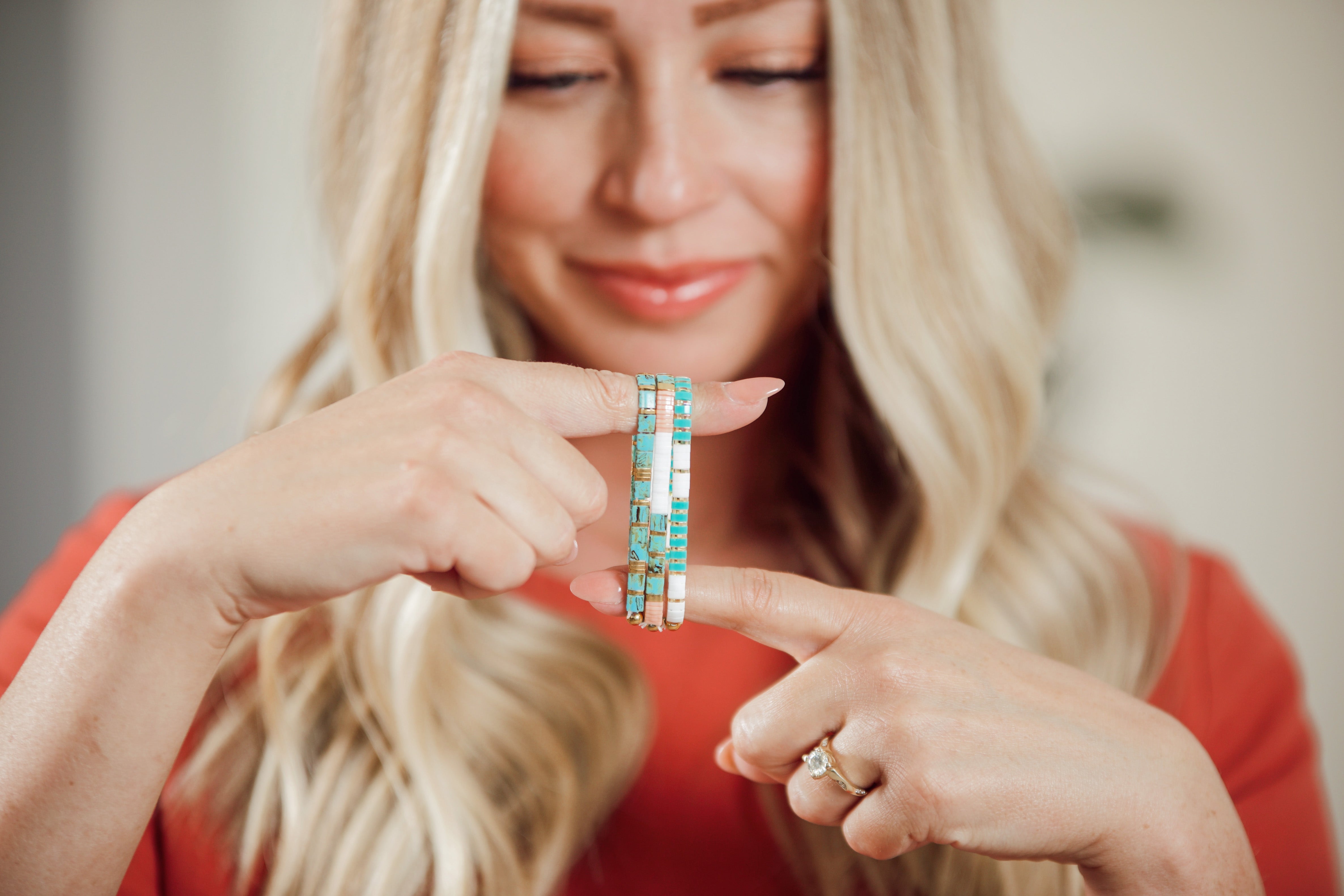
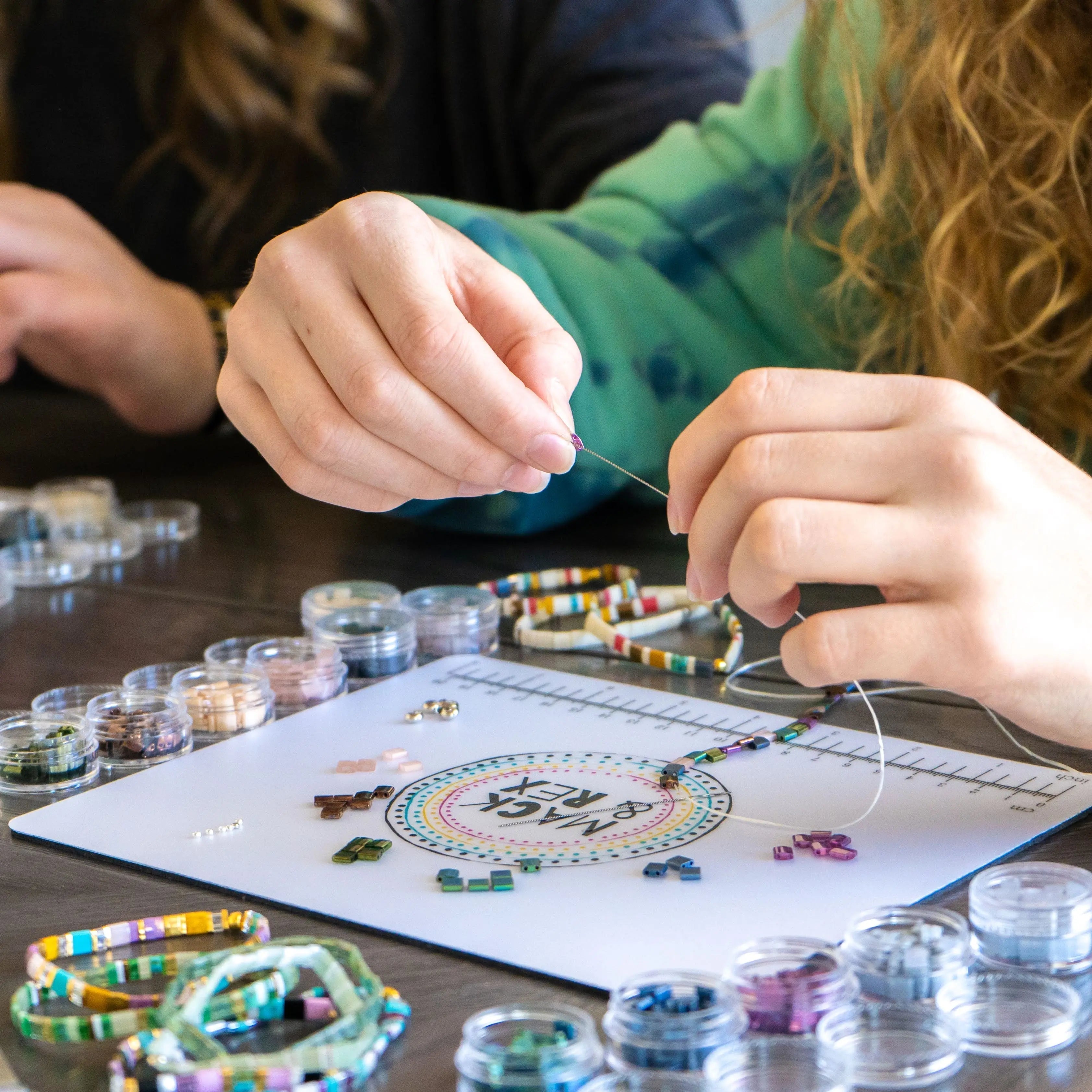
Tila bead bracelets made with Miyuki Tila beads come in enough solid shades, metallic finishes, and two-tone combinations to support both approaches. The flat square bead shape is consistent across every piece, so even a bold color mix reads as intentional. That visual consistency is actually one of the things that makes tila bead stacks easier to build than mixing random bead shapes. According to The Spruce Crafts, a repeating element like bead shape or size is one of the most reliable ways to make a mixed-material accessory feel pulled together rather than scattered.1
How do you pick an anchor color for your bracelet stack?
Your anchor is the bracelet you reach for first. It's the one that already matches the most things in your wardrobe, or the one you just love. Everything else builds outward from it.
If you're starting from scratch, look at the colors you wear most on any given week. A lot of people find they default to neutrals in their clothes and want the bracelet stack to carry the color. In that case, your anchor can be something bolder, like a deep cobalt or a warm terracotta, and you build the rest of the stack in slightly softer tones so the anchor stays prominent.
If your wardrobe already has a lot of color, go the other direction. Pick a neutral (cream, black, warm gray) as your anchor and bring in the color through the secondary and tertiary bracelets. Either way the anchor earns its spot by being the piece you'd grab even if you only had time to put on one.
What's the difference between analogous and complementary color stacks?
Analogous stacks feel warm and wearable. Think of a summer stack in coral, peach, and soft yellow: those three sit side by side on the color wheel and blend without any single piece jumping out. It's a look that works for daily wear because it doesn't demand attention.
Complementary stacks have more punch. A navy-and-gold combination or a purple-and-amber one creates contrast that reads from across a room. These work well when you want the stack to be a focal point of the outfit, something people actually notice.
The rule of thumb: if you're building a stack you'll put on every morning without thinking, go analogous. If you're building one for a specific event or outfit, complementary gives you more drama. Craft educator and color resource site Craftsy notes that most wearable jewelry uses analogous groupings precisely because the harmony is low-effort to maintain across different lighting and outfits.2
How do you add a neutral without killing the color story?
One neutral. That's the move.
A single white, cream, or warm gray bracelet placed between two bolder pieces acts as a visual pause. It keeps your eye moving across the stack without getting stuck on any one spot. Two neutrals start to dilute the color story. Three or more and the stack loses its personality.
Black is a special case. It sharpens contrast rather than softening it, so a black bracelet in a pastel stack makes every other color look brighter. If that's what you want, great. If you want a softer look, cream or light gray is a better buffer between strong colors.
Does finish (matte vs. glossy) change how a stack reads?
It does, and it's one of the more underused tools when building a color-coordinated stack. Two bracelets in the same color but different finishes look like a purposeful variation rather than a repeat, which gives you more depth without adding more colors to manage.
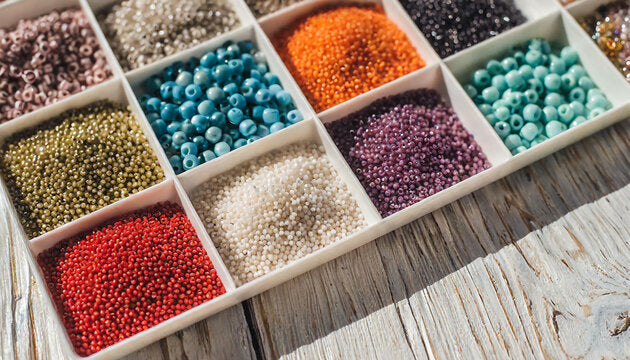
A matte finish absorbs light and reads softer. A glossy finish reflects it and looks more polished. Metallic Miyuki Tila beads sit somewhere in between: they pick up surrounding light and shift slightly with movement, which makes them work well as a bridge piece between a matte solid and a glossy solid in the same hue family. According to Beadaholique, varying the finish within a palette is one of the most effective ways to give a monochromatic or tonal bead design visual dimension without adding complexity.3
How many bracelets make a good stack?
Three to four is the everyday sweet spot. It's enough to show intention without weighing down your wrist or getting in the way when you're typing or cooking or doing anything with your hands. Mack & Rex's buy 3 get 1 free deal makes it easy to fill out a four-bracelet stack in one go, no code required.
For a bolder look, five to six can work. Just make sure you've got your anchor, at least one neutral, and enough variation in finish or tone to give the eye a few different places to land. More than six starts to slide from styled into chaotic unless you're very deliberate about it.
A tip worth using: lay everything on a flat surface before putting it on. Natural light is your friend here. What looks cohesive under a lamp sometimes looks muddy in sunlight, and the reverse is true too. Swap pieces until the group looks balanced flat, and it'll look balanced on your wrist.
What Mack & Rex collections work well for building a color stack?
The STAINED collection runs deep jewel tones. BEACHY covers the lighter end: aquas, corals, sandy neutrals. RETRO SUNSET is exactly what it sounds like: warm oranges, pinks, and golds from that late-afternoon window. EVERGREEN EDIT stays in muted greens and natural earth tones.
If you're starting a stack from zero, pick one collection as your base and let it define the palette, then pull one piece from an adjacent collection to add contrast. A single STAINED deep plum in a mostly BEACHY stack, for example, grounds the lighter colors and gives the whole group more weight. Finished tila bead bracelets at Mack & Rex run around $20-25 each, and with the buy-3-get-1-free offer already live, building a four-piece stack is a reasonable single order. Orders over $100 ship free within the US.
Browse the full accent bracelet collection at mackandrex.com/collections/accent-bracelets to see what's currently available by color family.
Frequently Asked Questions
How many bracelets should be in a tila bead stack?
Three to four bracelets is the most wearable everyday stack. It reads as intentional without feeling heavy on the wrist. If you want a bolder look for a night out or festival, five to six can work well, especially when you anchor the stack with a neutral.
What colors go together in a bracelet stack?
Analogous colors (colors that sit next to each other on the color wheel, like coral, peach, and warm yellow) blend smoothly. Complementary pairs like blue and orange or purple and gold create more contrast. Either approach works as long as you include at least one neutral to keep the stack grounded.
Can you mix different bracelet styles in a stack?
Yes. Mixing finishes (matte vs. glossy), patterns (solid vs. two-tone), and widths adds visual interest without clashing. With tila bead bracelets, the consistent flat square bead shape already ties the stack together, so you have room to vary color and finish freely.
Do tila bead bracelets come in enough colors to build a stack?
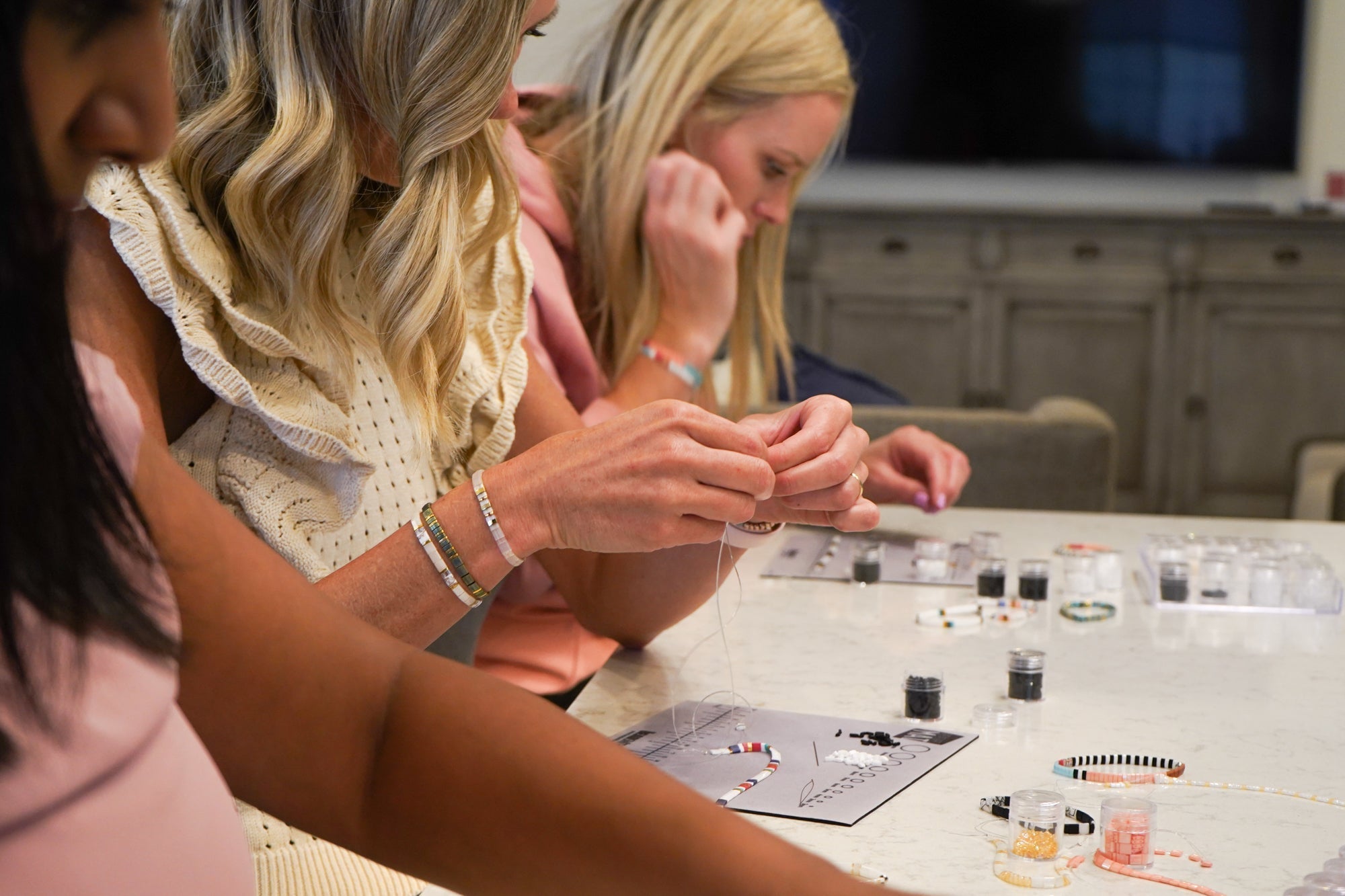
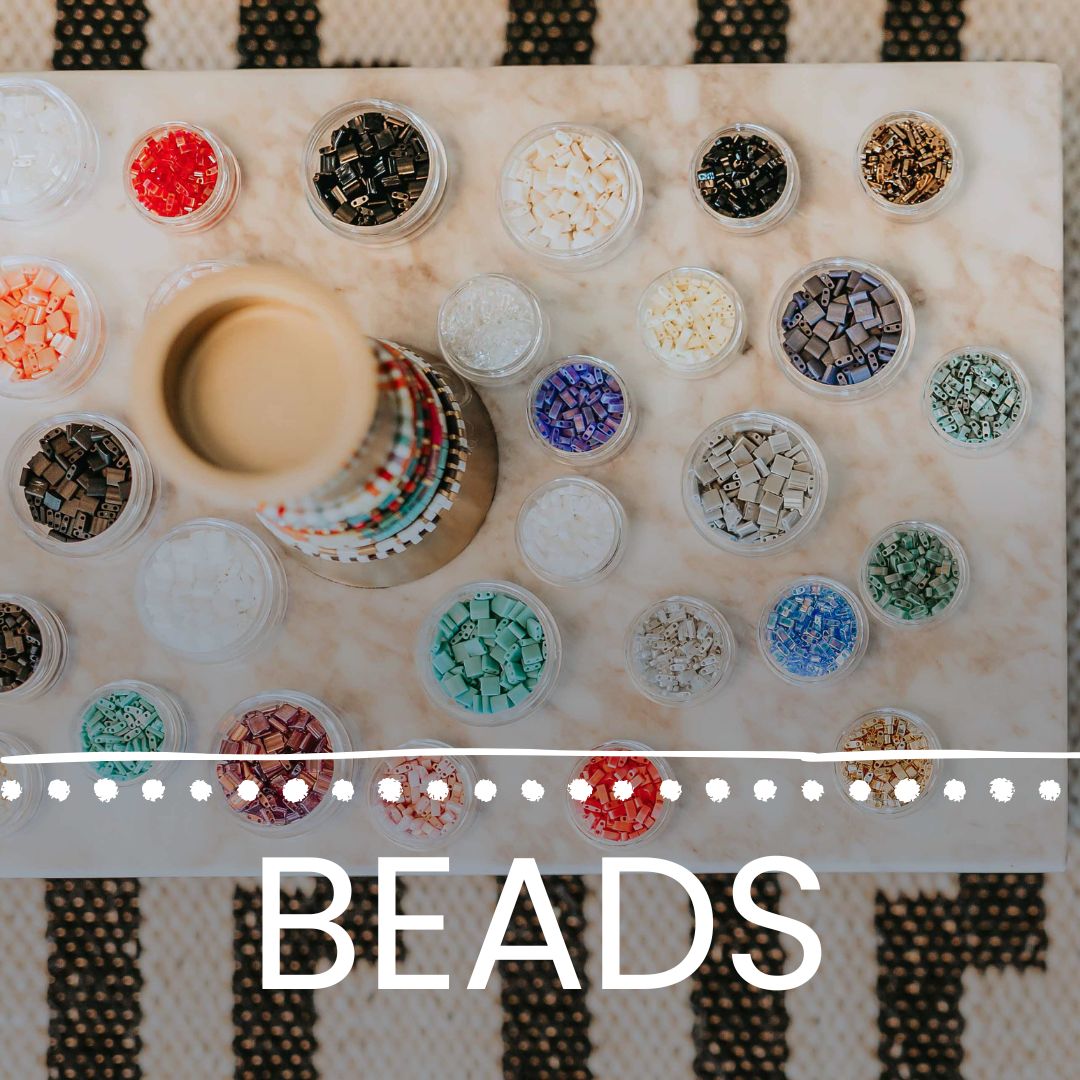
Tila bead bracelets made with Miyuki Tila beads come in a wide range of solid colors, metallic finishes, and two-tone combinations. Mack & Rex carries finished ready-to-wear bracelets and loose Miyuki Tila bead mixes so you can shop for a single statement piece or plan out a full stack.
What is the buy 3 get 1 free deal at Mack & Rex?
Mack & Rex currently offers buy 3 bracelets, get 1 free with no code needed. Orders over $100 also ship free within the US. It's a straightforward way to build out a stack without overcomplicating it.
Ready to build your stack? The accent bracelet collection is the best place to start. Filter by color family, pick your anchor, and add from there. The buy 3 get 1 free offer is already applied at checkout, no code needed.