

How to Organize Bracelet Making Supplies So Nothing Goes Missing
How Should You Store Bracelet Making Supplies?
Store bracelet making supplies by category, not by whatever container is closest. Keep beads in clear, divided cases sorted by color or size, keep elastic and cord wound on a spool and stored apart from loose beads, and keep clasps, crimps, and findings in their own labeled tin. Sorted, visible storage is the difference between a five-minute project and a fifteen-minute hunt for one missing clasp.
If your supplies currently live in a single shoebox, you're not alone. Most crafters start there. The fix isn't an expensive storage system. It's sorting first, then matching containers to what you actually have, and it takes less time than you'd think.
What's the Best Way to Organize Beads and Clasps?
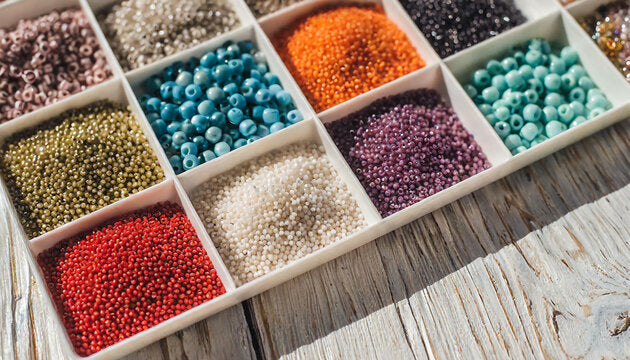
Beads and clasps need to live apart. Beads sort best by color, then by size, in a stackable container with real dividers. Clasps, crimp covers, and jump rings belong in a separate small tin, because a stray clasp buried in a pile of Tila beads is nearly impossible to spot.
Sort by category before you buy a single container
Grab everything you own and make four piles: beads, stringing material, findings, and tools. It sounds basic. It's also the step most people skip, and skipping it is why so many craft bins end up as one big jumble again within a month. Craftsy's guide to organizing jewelry-making supplies makes the same point: group similar items together first, then size containers to the pile, rather than buying storage and hoping your supplies fit it.1
Give beads a home by color and size
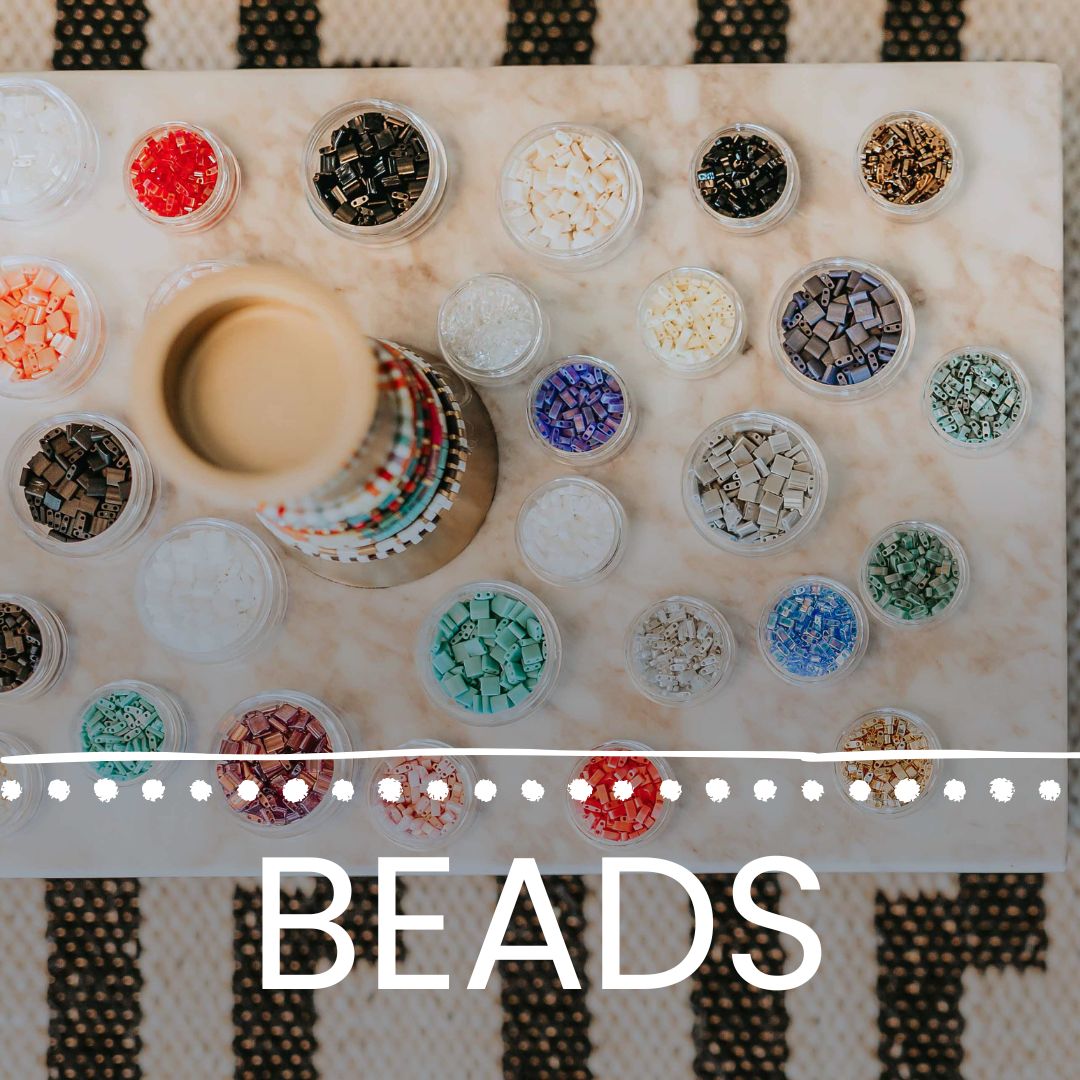
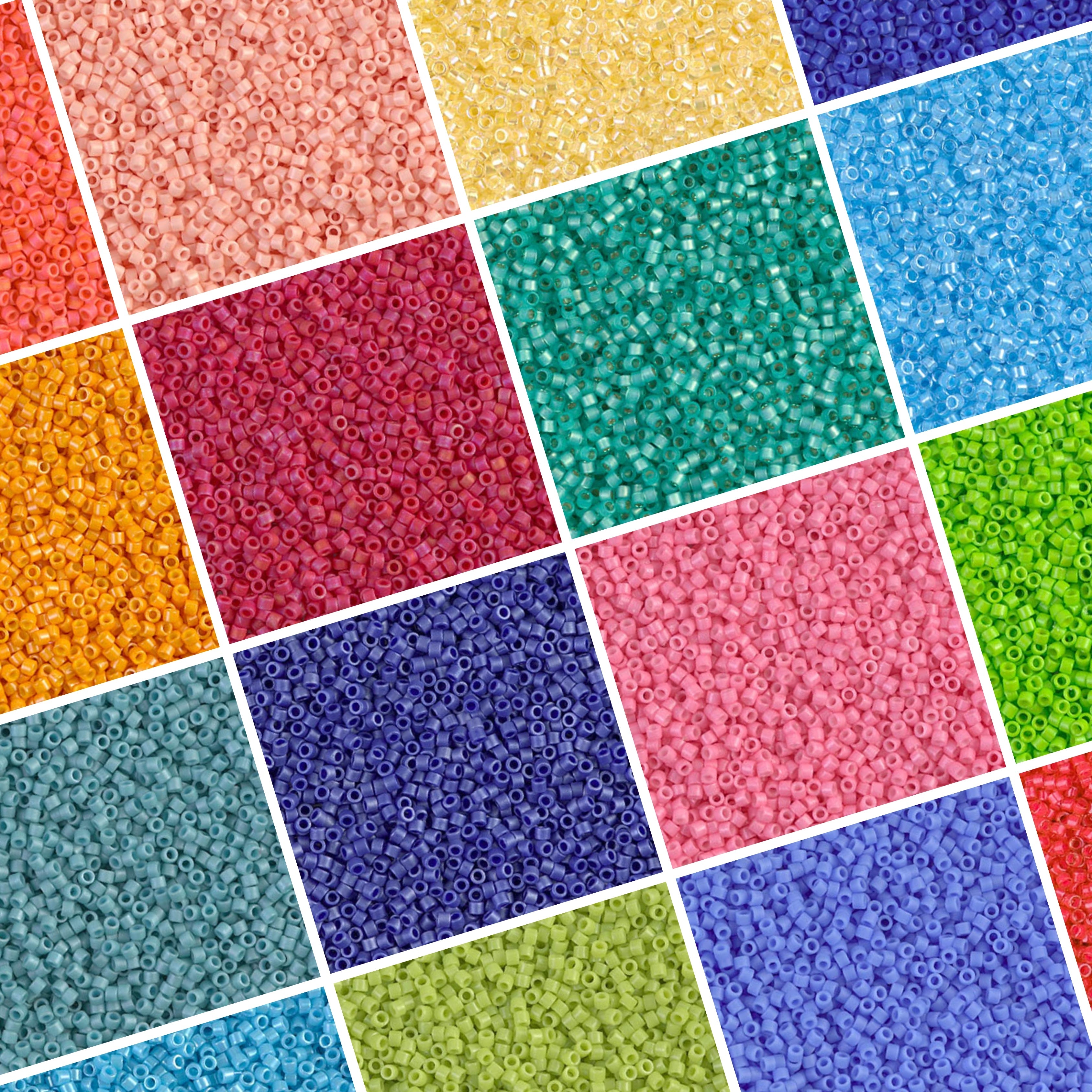
A clear, stackable bead box beats an opaque drawer every time, since you can see exactly what's inside without opening a single lid. Sort within the box by color first, then by size if you have a lot of one shade. This two-step system means grabbing "the last of the seafoam Tila beads" takes seconds instead of a full inventory of every container in the house.
How Do You Keep Bracelet Making Supplies From Tangling?
Tangling starts with loose cord, not beads. Wind elastic and cord onto a small bobbin, cord reel, or even a piece of cut cardboard, and store each length by itself. Cord left loose in a drawer wraps around anything nearby, including itself, within a few weeks.
Bead Club Lounge and other craft-organization sources back this up: fishing tackle boxes and stacked, divided containers work because everything stays visible and separated, and separation is what prevents tangling in the first place.2 Apply the same logic to cord. One spool per color or type, stored upright in a small cup or divided tray, keeps a whole stringing-material collection from turning into a single sad knot.
What Containers Actually Work for Small Beads and Findings?
Clear, divided, and secure. Those three words cover most of what actually works for bead and finding storage. A stackable bead box with a locking lid handles loose beads without spilling if it gets knocked off a shelf. A small tin or pill-organizer-style case, labeled by type, handles clasps and crimps.
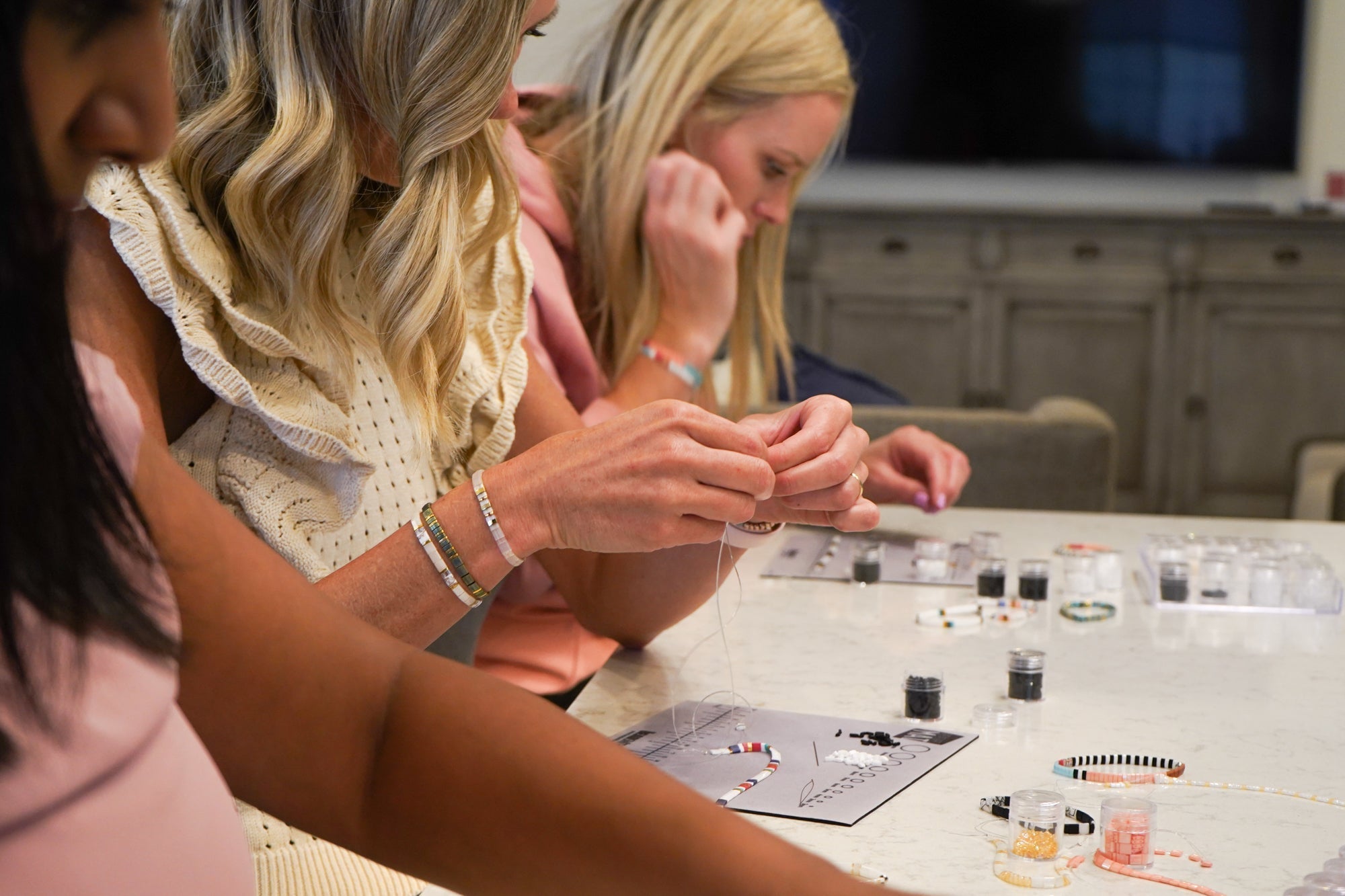
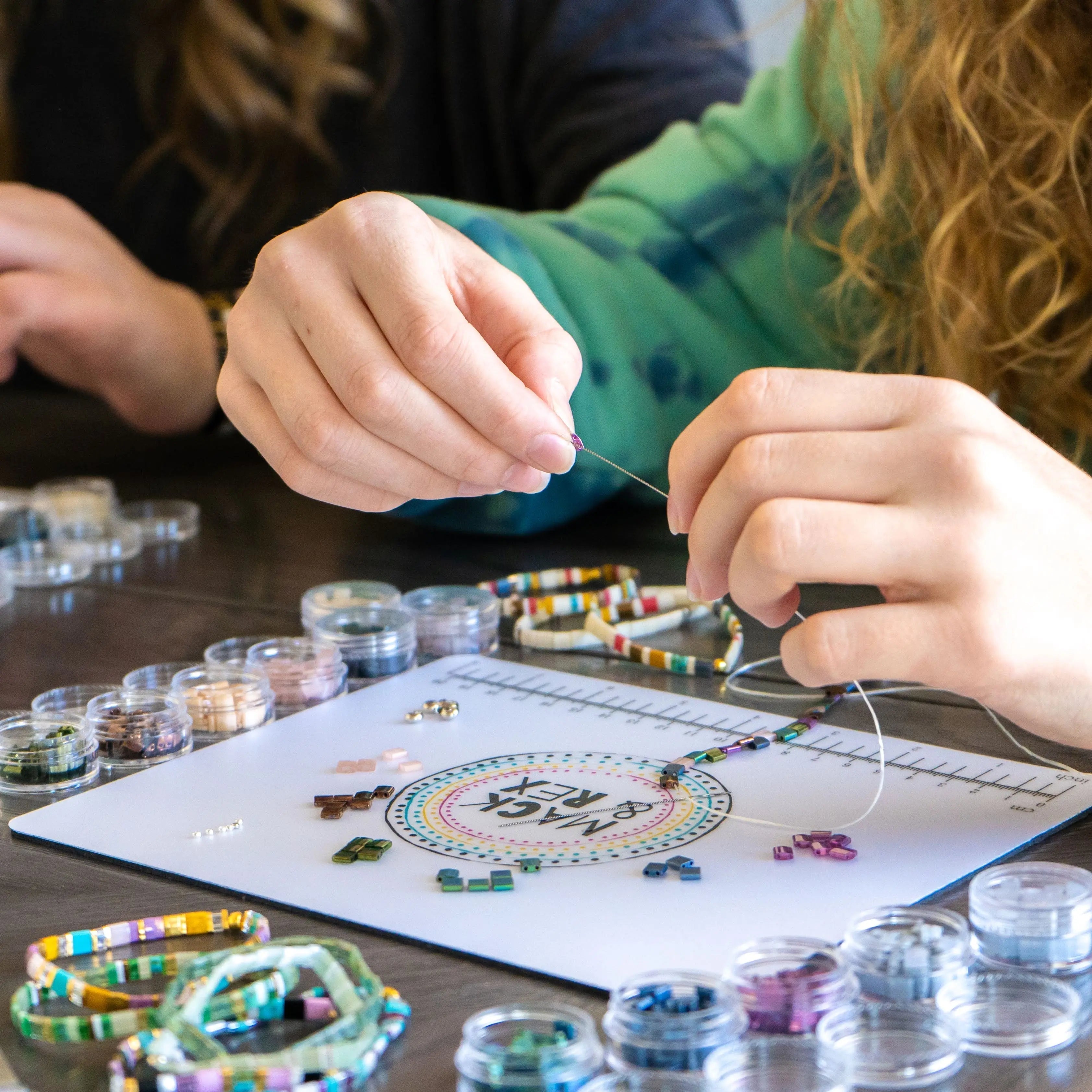
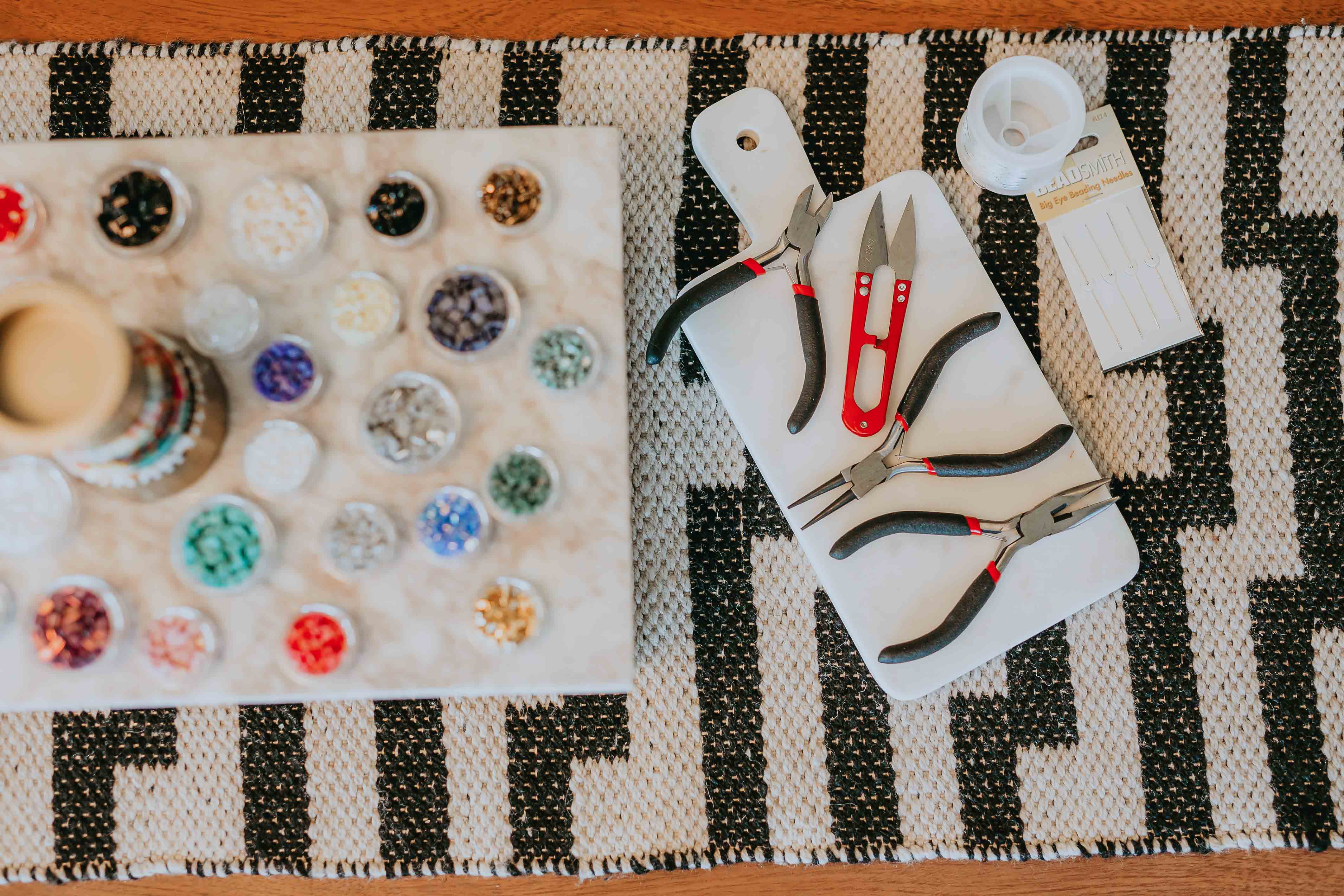
PotomacBeads' storage guide adds a detail worth stealing: keep needles in their own dedicated case, separate from everything else, since a loose needle in a bead box is both hard to find and genuinely unsafe to reach into blind.3 A beading mat also earns its space here. It's not storage exactly, but it keeps beads from rolling off the table mid-project, which cuts down on the "where did that one bead go" moment every beader knows.
One Mack & Rex customer put it simply in a product review: "I like the packaging of all the beads. Easy to see transparent case." That's the whole point of clear storage in one sentence.
How Do You Set Up a Bracelet-Making Station at Home?
Pick one spot, even a small one. A bracelet-making station doesn't need a dedicated room. A drawer, a rolling cart, or a shelf in a closet works, as long as your sorted containers live there consistently rather than migrating around the house.
The Mack & Rex All-in-One Beaded Jewelry Making Kit is built around this exact problem. It comes with knot covers and crimp covers for around 100 bracelets, 0.5mm crystal-cord elastic, a full tool set (twisters, pliers, side cutters), four beading needles, and bead mats in three sizes, all in one box, so a bracelet-making station starts with matched pieces, not a scavenger hunt through mismatched supplies from three different stores. It runs $39.99 to $43.99 depending on the version, with a large or small bead mat included.
Once the station's set up, keep the working tray separate from long-term storage. A tray or mat is for the bracelet you're building right now. The clear bead boxes and labeled findings tin are for everything else. Mixing the two is how a tidy system slides back into chaos within a few projects.
A quick safety note: beads, crimps, and clasps are all small parts and a choking hazard, so keep loose supplies on a shelf or in a closed container out of reach of young kids between projects. Beading together at the table, with an adult right there, is a great family activity. Leaving a bin of loose beads within reach of a toddler is not the same thing.
Frequently Asked Questions
How should I store bracelet making supplies?
Store bracelet making supplies by category rather than by container. Keep beads in clear, divided cases sorted by color or size, keep elastic and cord wound and separated from loose beads, and keep clasps and findings in their own labeled tin. Clear, sorted storage means you can see what you have without digging.
What's the best way to organize beads and clasps?
Never store beads and clasps together. Beads do best in clear stackable containers sorted by color, then size. Clasps, crimps, and jump rings belong in a separate small tin or divided box, ideally labeled, since they're easy to lose in a pile of loose beads.
How do I keep bracelet making supplies from getting tangled?
Tangling almost always comes from loose cord or elastic stored without a spool. Wind each length onto a small bobbin or cord reel and store lengths separately by type and color. Keep cord out of the same container as beads and findings, since loose beads work their way into cord and make it worse.
Do I need special containers for seed beads or Tila beads?
Small flat beads like Tila tiles do best in a container with tight, secure compartments, since a loose lid can dump an entire section. A stackable divided case or a locking tackle box works well. Skip open bowls or bags for anything this small.
Is it safe to store loose beads where kids can reach them?
No. Beads and small findings are a choking hazard, so storage should go on a shelf or in a closed container out of reach of young kids, not in a low drawer or open bin. Beading is a great project to do together with adult supervision at the table, but loose supplies shouldn't be left within reach between projects.
Get Your Supplies (and Your Station) in Order
A tidy setup makes bracelet making faster and a lot more fun, and it starts with the right supplies in the right containers. If your current setup is more junk drawer than craft station, the Mack & Rex All-in-One Beaded Jewelry Making Kit gives you matched tools, cord, crimp covers, and bead mats in one box, or browse the full bracelet making kits collection to find the version that fits your project list. Mack & Rex ships internationally, with shipping and any customs or duties calculated at checkout, and free shipping applies to US orders over $100.