
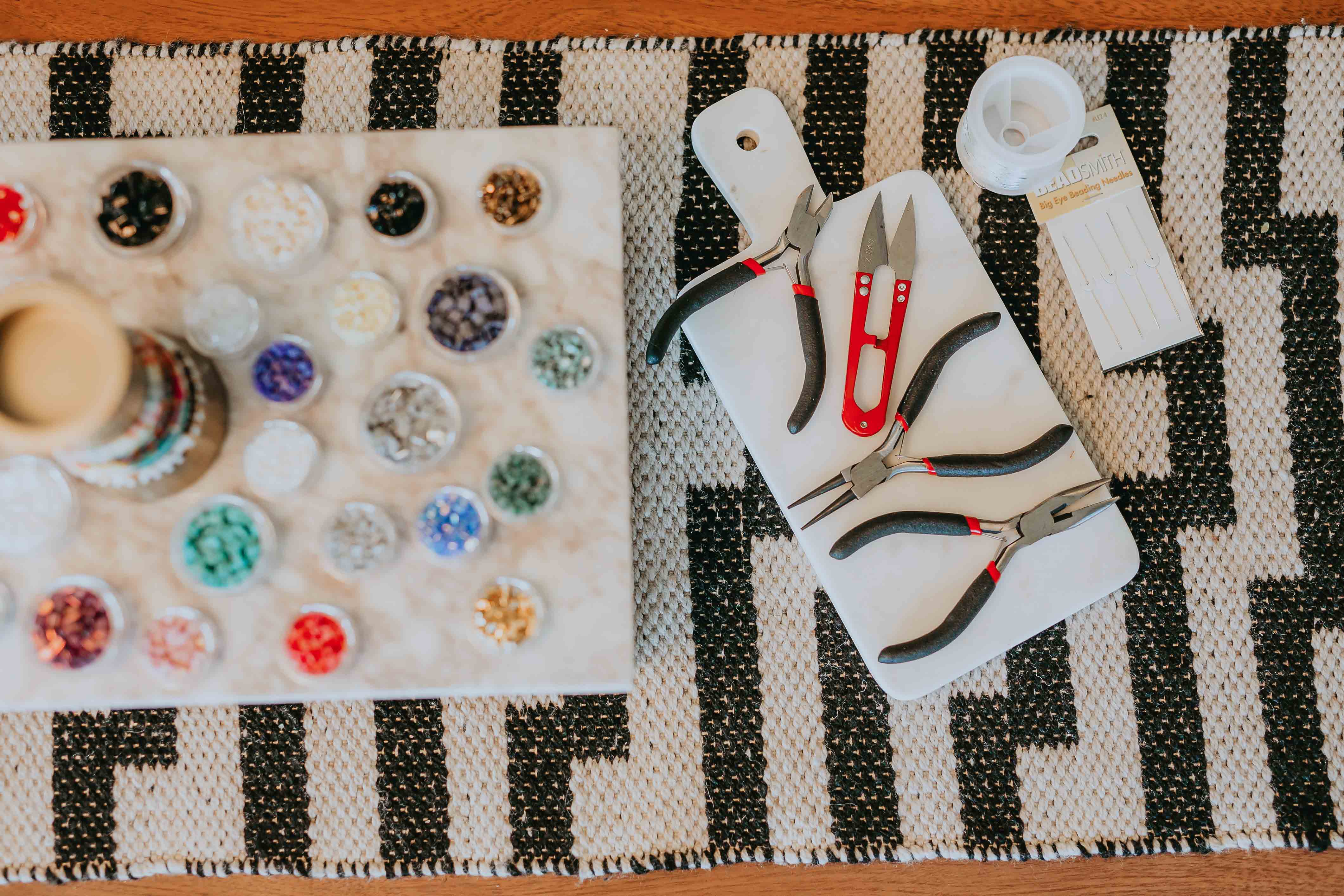
How to Store Miyuki Delica Beads So They Don't Spill or Mix
Why do Delica beads need their own storage plan?
Delica beads are tiny, uniform cylinders, and that is exactly what makes a spill painful. An 11/0 Delica is only about 1.3 mm across, so a tipped tube can send hundreds of beads across the floor in a second. A good system keeps them sealed, labeled and sorted before you ever sit down to weave.
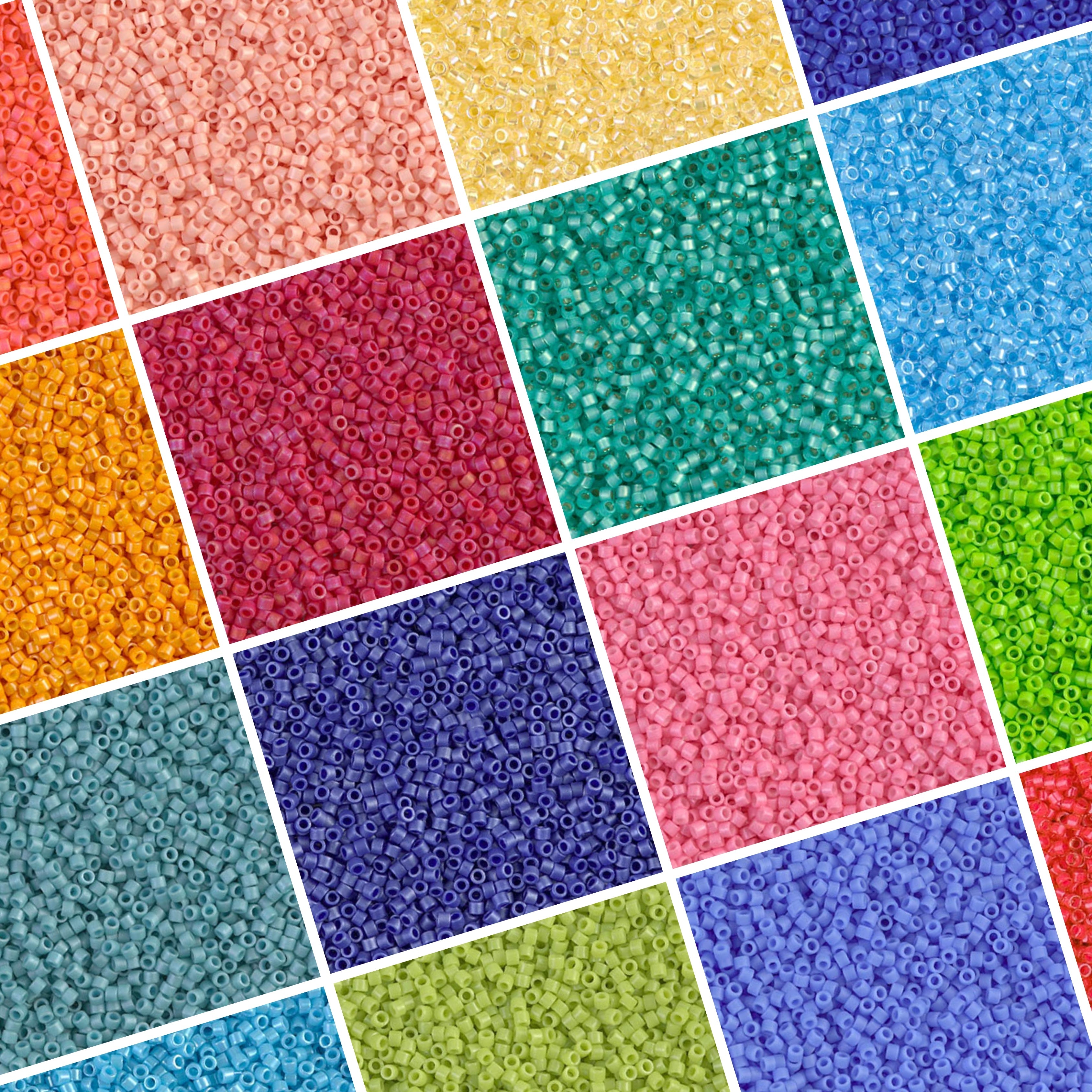
Miyuki makes Delicas in several sizes, and the 11/0 is the one most people stock. Miyuki lists the full range on its official product page. Because the cut is so consistent, beads in similar colors look almost identical in a pile. Mix two shades of gray and you may not spot the problem until your pattern looks off.
Three things go wrong most often. Beads spill. Colors blend together. And labels fade or fall off, leaving you with a drawer of mystery vials. The steps below fix all three.
What is the best container for Delica beads?
Small screw-top vials with tight lids are the best choice. They hold a few grams each, seal completely, and let you see the color through the sides. Pair them with a stackable organizer so each vial has a fixed home.
Screw-top vials and tubes
Screw-top containers beat flip-top ones for beads this small. A flip lid can pop open in a bag, and Delicas will find the hinge gap. A threaded lid stays shut. Look for clear plastic or glass vials about 2 to 4 cm tall. They're big enough for a project's worth of one color and small enough to line up in rows.
Stackable organizers
Stackable trays and compartment cases keep dozens of vials in one footprint. Choose a case with a snug lid and a shallow tray so you can scan every color at once. Skip anything with loose, open compartments for Delicas. Open dividers work for large beads, but 11/0 cylinders bounce right over them.
Zip bags as a backup
Small zip bags are fine for leftovers and short-term holding. Press the air out, seal them fully, and drop them into a vial or tray later. They tear and slump, so treat them as temporary.
How do I label Delica beads so colors never mix?
Label every container with the Miyuki DB code, such as DB0001 or DB0310. The code names the exact color and finish, which matters because many Delicas look alike. With a DB number on the lid, you can reorder the right shade months later.
Write the code on the lid and on the side of the vial. A fine permanent marker on a white label sticker holds up better than pen on tape. If you want a quick visual cue too, add a small dot of the matching color. Some beaders also note the finish: matte, opaque, lined or metallic. That tiny extra word saves a lot of guessing.
Keep a simple inventory too. A notes app or spreadsheet with the DB code, the finish and roughly how many grams you have left works fine. Check it before you shop, and you'll stop buying the same sage green twice.
When you're ready to restock, the Mack & Rex Delica listings show colors by DB number, so your labels and your cart match.
How should I sort Delica beads by color?
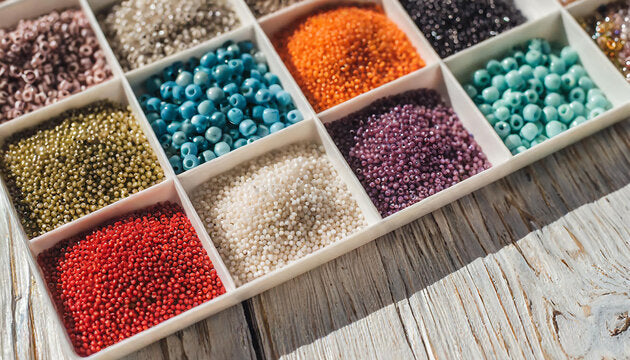
Sort by color family first, then by shade within the family. Reds together, blues together, neutrals together. Inside each family, run light to dark. This is the same logic you use for paint chips, and it makes a shade easy to find at a glance.
Patterns often need two or three near neighbors, like a dark teal and a medium teal. Storing them side by side means you pick both without hunting. Keep metallic and gold-plated finishes in their own row, since those are the ones you'll want to handle separately and protect from scratches.
Don't pour a mixed leftover into a main vial. Give leftovers their own labeled bag. Once two shades combine, separating them is a slow job nobody enjoys.
How do I fill a vial without spilling?
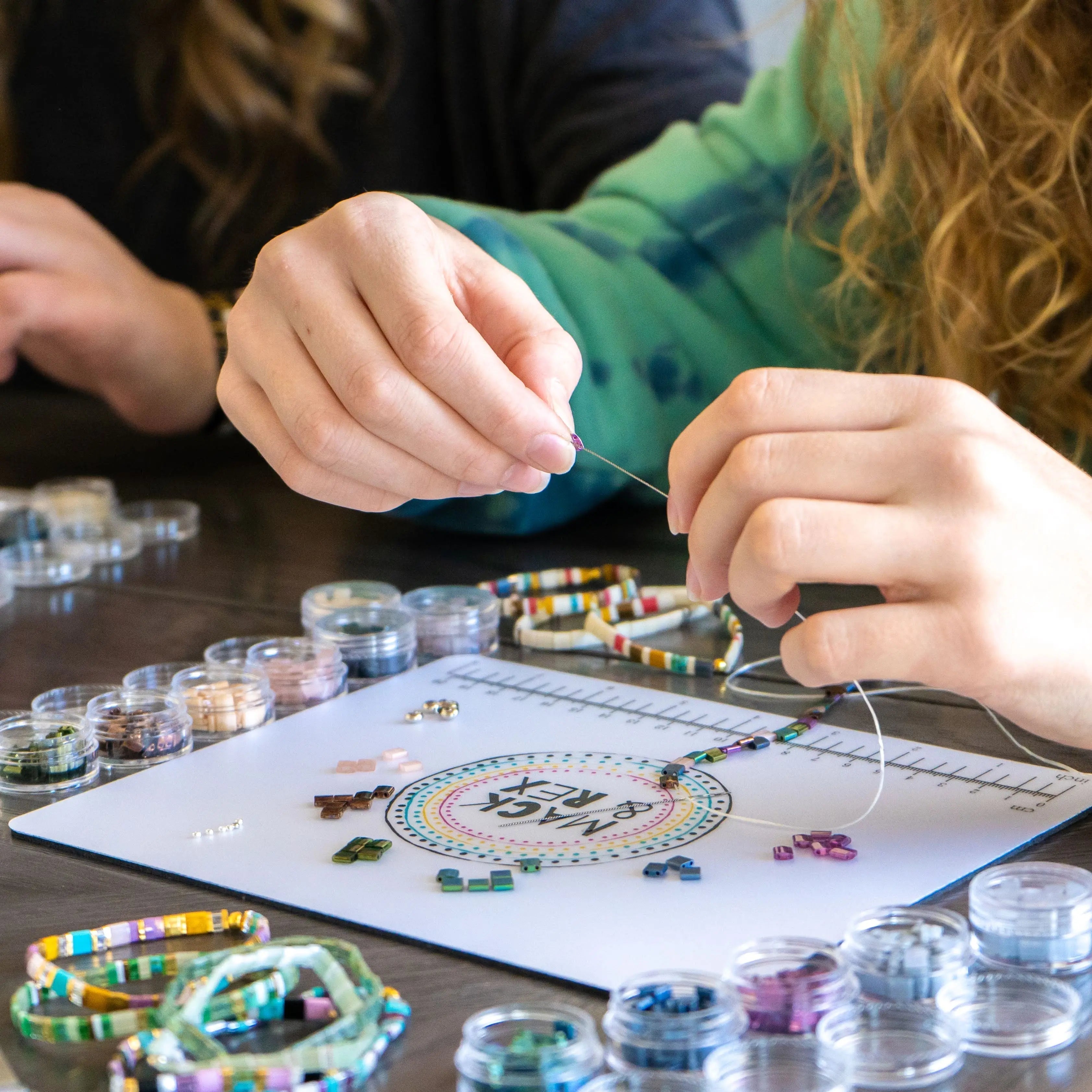
Work over a bead mat, open only one container at a time, and use a funnel. Folded paper works as a funnel in a pinch. Pour slowly, tap the vial, and close the lid before you move anything.
Here's the setup that works at a real craft table. Lay a towel or felt mat flat. Put the new tube on the left and the empty vial on the right. Open both, pour through the funnel, and cap the vial. Then cap the tube. Never leave an open tube standing, because a single bump ends the session.
A shallow tray with a lip helps during a project. Tip a few grams into the tray, pick up beads with your needle, and pour the rest back through the funnel. The tray's edge catches the roll.
How do I store Delica beads for travel?
Pack the colors for one project in sealed tubes inside a single rigid case, and bring a bead mat. A small kit beats a full collection. You'll carry less, lose less and still have what you need for a bracelet or a cuff.
Pick six to ten colors, fill sealed vials, and nest them in a compact case with a snug lid. Add your needles, thread, scissors and a folded mat. Keep the case in your bag, not checked luggage, so it doesn't get crushed. On a train or plane, put the mat on your tray table and open one vial at a time. The same rule applies on a couch with a dog nearby.
Needles are the easy thing to forget. Poke them into a small cork or a strip of felt so they don't go loose in the case.
What should I do when Delica beads spill?
Stay calm and stop moving your feet. Most spills are recoverable. Scoop the big piles onto a card, press a piece of tape on stragglers, and use a damp fingertip for the last few. A flashlight held low to the floor makes glints easy to spot.
Sort what you recover right away. Tip it into a shallow tray and separate by color before it goes into any vial. If you can't tell two shades apart, put them in a "mystery" bag and use them for a practice piece. It's better than contaminating a clean tube.
Where should I keep my bead storage at home?
Keep it somewhere cool, dry and out of direct sun. Glass Delicas don't spoil, but humidity can warp paper labels and sunlight can fade ink. A shelf in a craft room works, and so does a closet bin with a lid.
Glass seed beads have been made and traded for centuries, as the seed bead overview on Wikipedia describes, so they handle time well. Your labels and containers are the fragile parts. For a look at the wider range of seed bead types and where Delicas sit among them, the Potomac Beads seed bead listing shows the options side by side.
Safety matters too. Delicas are a choking hazard for young children. Store them in closed containers on a high shelf, and supervise any crafting with kids.
Frequently Asked Questions
What is the best container for Delica beads?
Small screw-top vials or tubes with tight lids, kept in a stackable organizer. They hold a few grams each, seal against spills and let you see the color through the sides.
How do I label Delica beads so I can reorder them?
Write the Miyuki DB number on each container, such as DB0001 or DB0310. The code identifies the exact color and finish, so you can match it later even if the bead looks like another shade.
How do I pick up spilled Delica beads?
Work over a bead mat or towel so spills stay put. Scoop piles with a card, use a damp fingertip or tape for strays, and sort mixed beads by color in a shallow tray.
Can I travel with Delica beads?
Yes. Pack beads in sealed tubes or small zip bags inside one rigid case, and carry a bead mat. Keep the case in your carry-on so it isn't crushed or lost.
Are loose Delica beads safe around kids?
No. They're tiny and a choking hazard. Keep them in closed containers, out of reach of young children, and supervise any bead crafting with kids.
Ready to stock your own Delica drawer?
A tidy system takes about 45 minutes to set up and saves hours of searching and sorting later. Start with a handful of vials, label them by DB code, and build from there. Browse colors in the Delica beads collection. Mack & Rex resells Miyuki Delicas and ships internationally, with any duties calculated at checkout. Free shipping applies to US orders over $100.

