

How Can You Tell If Tila Beads Are Actually High Quality?
How Can You Tell If Tila Beads Are Actually High Quality?
Run four quick checks before you commit a whole spool of cord to a pack: weight, thread glide, side-by-side size matching, and a fingernail rub on the finish. High-quality Miyuki Tila beads pass all four in under two minutes. Cheap beads usually fail at least one, and the failure shows up later as a bracelet that won't lie flat or a cord that snaps early.
You don't need a jeweler's loupe or a lab. You need a flat surface, a scrap of cord, and two minutes with the beads actually in your hand (or a close read of the listing photos if you're buying online). Here's each test, one at a time.
Test One: What Does Bead Weight Tell You?
Pick up a small handful. Genuine Miyuki glass has heft. It's dense, and a pile of it feels substantial in your palm compared to the same volume of a plastic or resin imitation, which feels light and almost hollow by comparison.
This is the fastest test there is, and it works because it's physics, not marketing. Glass has a higher density than most plastics used in cheap bead knockoffs, so a gram-for-gram comparison gives away the material fast.1 If you're shopping online and can't hold the beads, check the listing for the actual material named as glass, not "glass-look" or "glass-style," which are common workarounds for plastic beads.
Test Two: How Do the Beads Feel on a Thread?
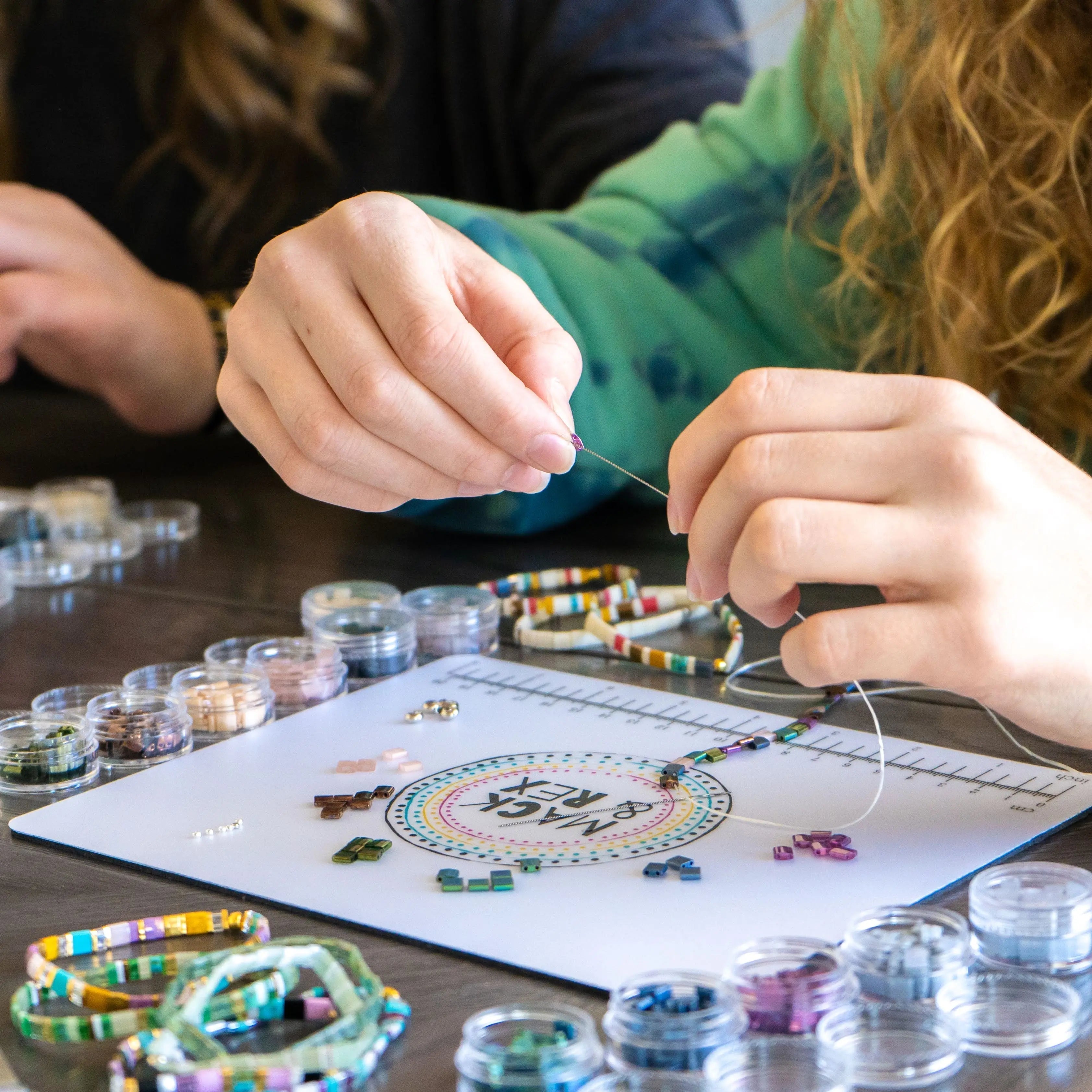
String ten or twenty beads on a scrap of cord and slide them back and forth. Quality glass holes are smooth on the inside, so the cord glides. Rough or poorly finished holes catch, drag, or feel gritty as the cord passes through, and that friction is exactly what wears through elastic cord over months of daily wear.
This test catches something the weight test can't. A bead can be heavy, real glass, and still have a poorly finished hole from a rushed manufacturing pass. Feel matters as much as material here. If you don't have loose cord handy, a straight pin works almost as well for a quick drag test on a single bead.
Test Three: Do the Beads Actually Match Each Other?
Line up ten beads in a row on a flat surface, edge to edge. On high-quality Tila beads, the row sits flat and even because every bead shares the same 5mm width and 1.9mm thickness. Any gaps, tilts, or a bead that sits noticeably taller or shorter than its neighbors means the batch has inconsistent sizing.
This one matters more for tila beads specifically than for round seed beads, because the flat, tile-like shape only looks clean when the pieces actually tile together. A single mismatched bead buried in the middle of a bracelet throws off the whole row, and you often won't spot it until the piece is strung and sitting crooked on the wrist.
Test Four: Does the Finish Hold Up to a Fingernail?
Give a bead a light scratch with your fingernail, or rub a few between your fingers for a few seconds. A durable finish, whether it's opaque, matte, or metallic, stays put. A cheap surface coating leaves a faint residue on your skin or shows a scuff where you scratched it.
Preciosa, a longtime Czech glass manufacturer, notes that consistency and durability in seed bead finishes come down to how the color and coating are applied during production, a process separate from the raw glass underneath.2 That holds for tila beads too. A finish that rubs off in your hand during a thirty-second test is not going to survive months against skin, water, and fabric.
What Happens If You Skip These Tests?
You find out the hard way, usually a few weeks in. A bracelet made with mismatched or rough-holed beads tends to fail in one of three ways: it won't lie flat on the wrist, the color starts looking patchy where the finish has worn thin, or the elastic snaps at a spot where a rough hole edge has been sawing at the cord every time the bracelet stretches.
None of that is dramatic. It's just disappointing, and it usually happens right after you've settled into wearing the piece daily. Beadaholique's overview of seed bead materials makes a similar point about glass beads generally: the quality difference between a well-made bead and a cheap one often isn't visible on day one, it shows up in how the piece wears over weeks and months.3
Does This Mean You Should Only Buy Full-Price Beads?
Not exactly. It means price alone isn't the test, these four checks are. A pack priced in the normal range can still be a rushed, low-tolerance batch, and a fair-priced mix from a seller who actually sources from Miyuki can be a great value. The tests above catch what price tags can't.
That said, an unusually low price is still a useful early flag. Mack & Rex prices curated Miyuki Tila bead mixes at roughly $5 to $9, which reflects the real cost of sourcing genuine Japanese glass in small, quality-checked batches. If you see a similar-looking pack priced well under that, run it through the tests above before you buy, or just skip straight to a source you already trust.
Where Can You Buy Tila Beads That Pass These Tests?
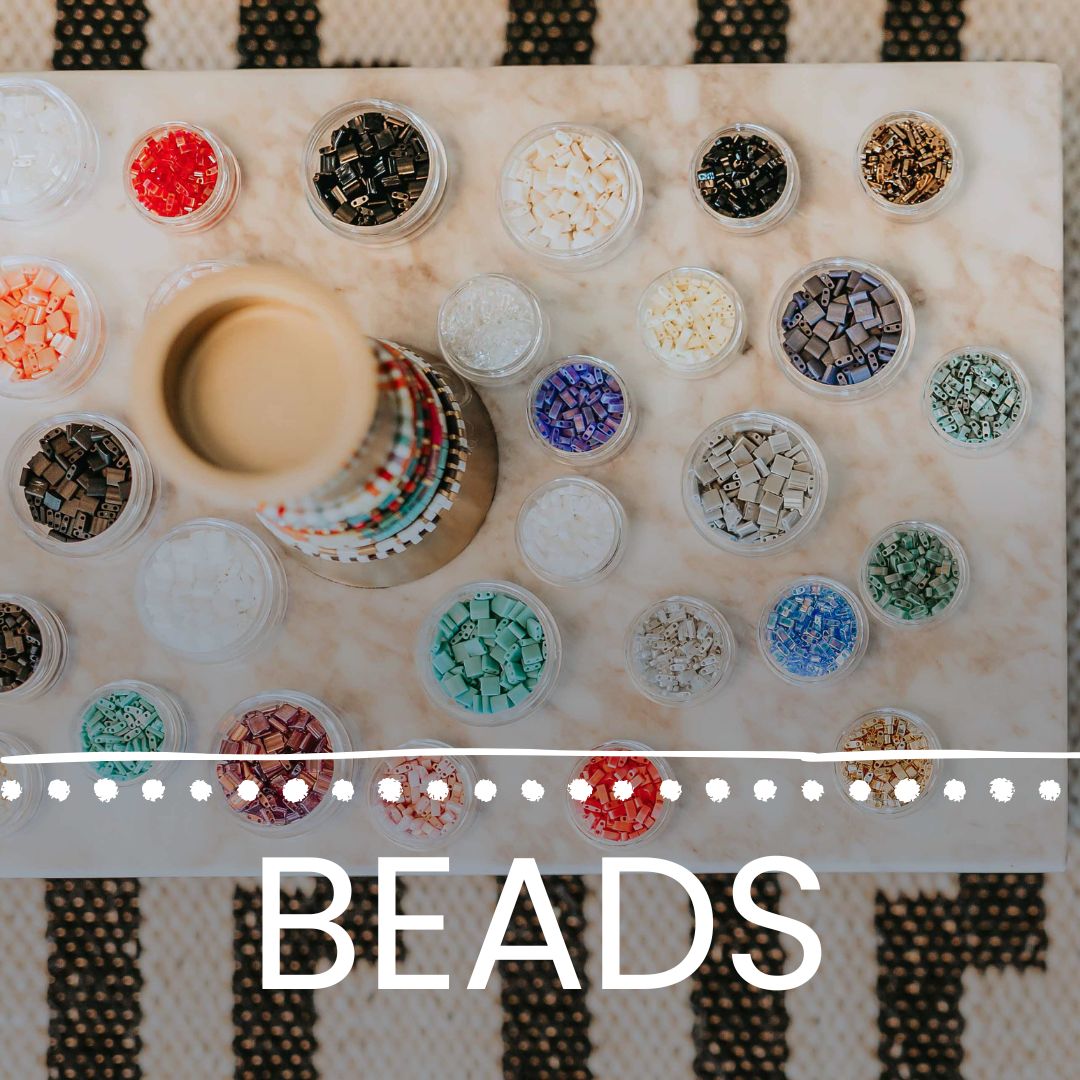
Mack & Rex sells genuine Miyuki Tila beads and curated color mixes, sourced from Miyuki (not manufactured in-house), and every mix is checked for consistent sizing and finish before it ships. Browse the Mack & Rex seed bead collection to see current mixes and single colors.
One repeat customer summed up what a properly finished bracelet feels like after months of wear: "This is the 4th bracelet I've purchased and I wear it daily. The elastic has not stretched out and the tiles are as beautiful as the day I got it." That's the outcome these four tests are trying to protect. Beads are small parts and a choking hazard, so if you're testing or stringing with kids or grandkids nearby, keep loose beads supervised and out of reach of very young children.
Mack & Rex ships internationally, with shipping and any customs or duties calculated at checkout. US orders over $100 ship free, and finished bracelets are buy 3, get 1 free, no code needed.
Frequently Asked Questions
What's the fastest way to test tila bead quality at home?
Pour a small pile onto a flat, light surface and run your thumb across it. High-quality beads feel cool, heavy for their size, and slide smoothly against each other. Cheap beads feel light, warm to the touch faster, and often catch or grind slightly as they move, a sign of rougher glass or a plastic blend.
Can you tell tila bead quality just by looking at it?
Partly. Look for a sharp, even square edge and a hole that sits dead center on all four sides. A slightly warped square, an off-center hole, or a visible seam line down one edge points to a cheaper mold. But the look-only test misses hole roughness, which you need to feel with cord or a pin to catch.
Does a higher price always mean a higher-quality tila bead?
Not automatically, but an unusually low price is a reliable warning sign. Genuine Miyuki Tila beads cost more to produce because of tighter tolerances on size, hole placement, and finish. A mix priced far below the market range, roughly $5 to $9 for a usable pack, is worth running through the tests before you buy.
Why does bead quality matter more for a bracelet than for other jewelry?
A stretch bracelet flexes every single time it goes on and comes off your wrist. Rough hole edges saw against the elastic cord with each stretch, and mismatched bead sizes create pressure points that wear the cord unevenly. A necklace or a pin sees far less repeated stress, so bead quality shows up faster on something worn daily.
Are all Miyuki-brand beads automatically high quality?
Genuine Miyuki beads are made to consistent manufacturing standards, but the label alone doesn't guarantee what you receive. Counterfeit and mislabeled listings exist. Running the size, hole, and finish tests on what actually arrives is still worth the two minutes, even when the listing says Miyuki.