


Are Jewelry Making Kits for Adults Beginner-Friendly? What to Expect Your First Time
Are Jewelry Making Kits for Adults Beginner-Friendly?
Yes. Jewelry making kits for adults are built for complete beginners, people who have never strung a bead in their life. A good kit includes pre-measured materials, numbered steps, and clear photos so you never have to guess what comes next.
The features that make a kit beginner-friendly are specific: pre-cut cord (so you're not measuring elastic with a tape measure), a needle sized for the beads it ships with, a bead layout that's already color-planned, and instructions written for someone who's never done this before. If a kit assumes you already know terms like "crimp" or "tension," it's not really a beginner kit, even if the box says it is.
What's Actually Inside a Good Adult Jewelry Making Kit?
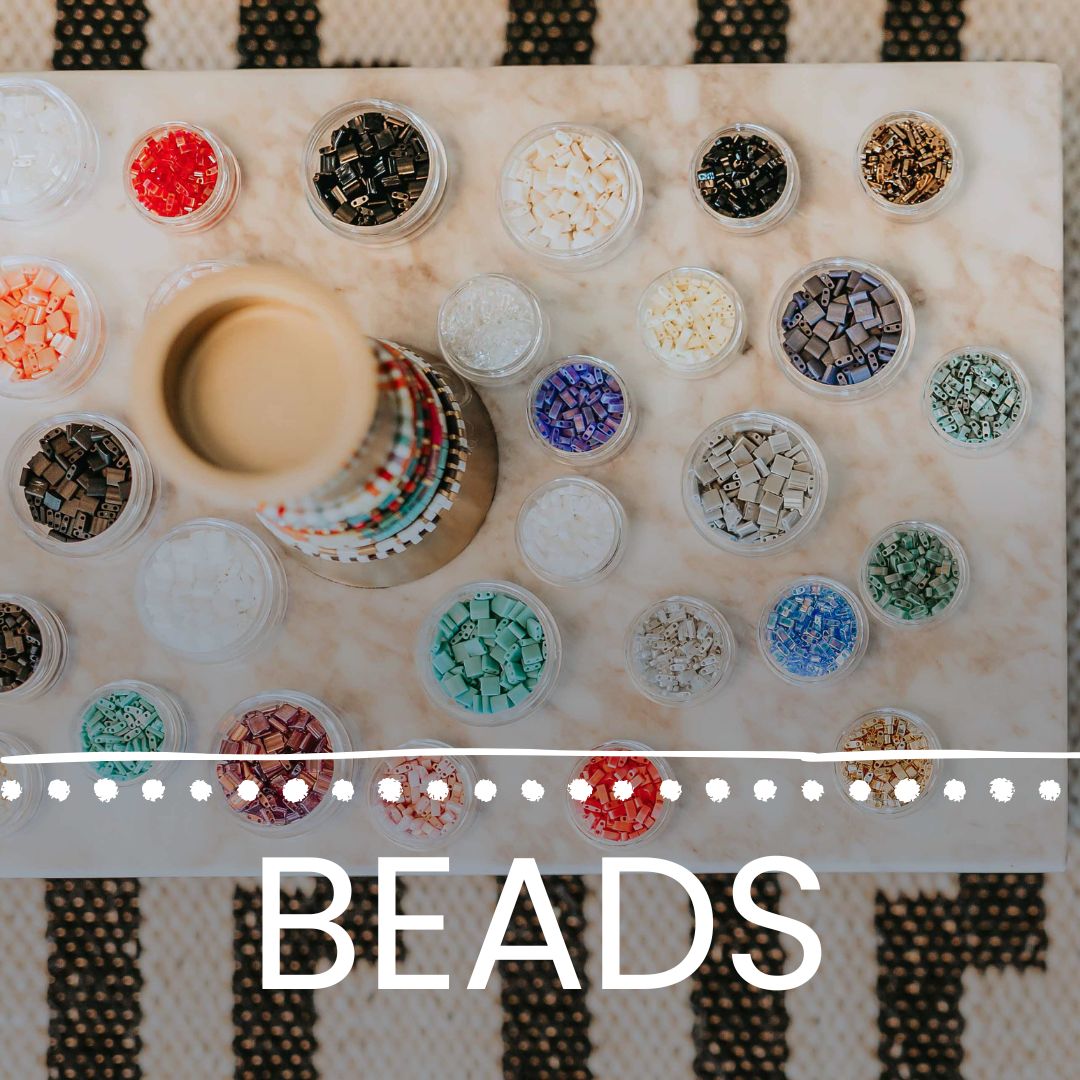
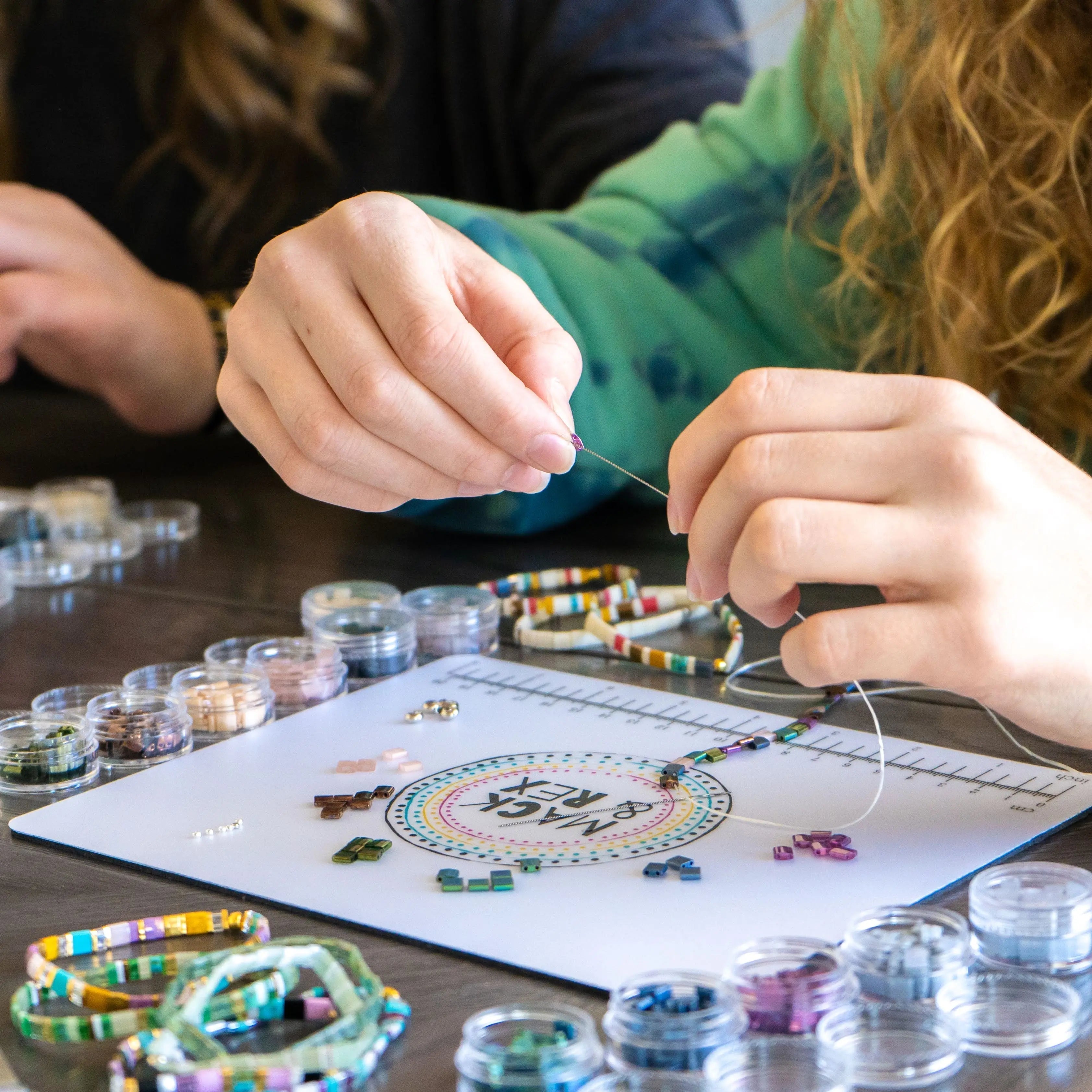
A solid beginner kit gives you everything needed to finish a piece, from materials to a needle to instructions. Expect glass beads (often Japanese Miyuki Tila beads, a two-hole tile-shaped bead prized for how flat and even it lays), stretch crystal cord, a beading needle, and step-by-step instructions with photos, all sized to make a specific number of finished pieces.
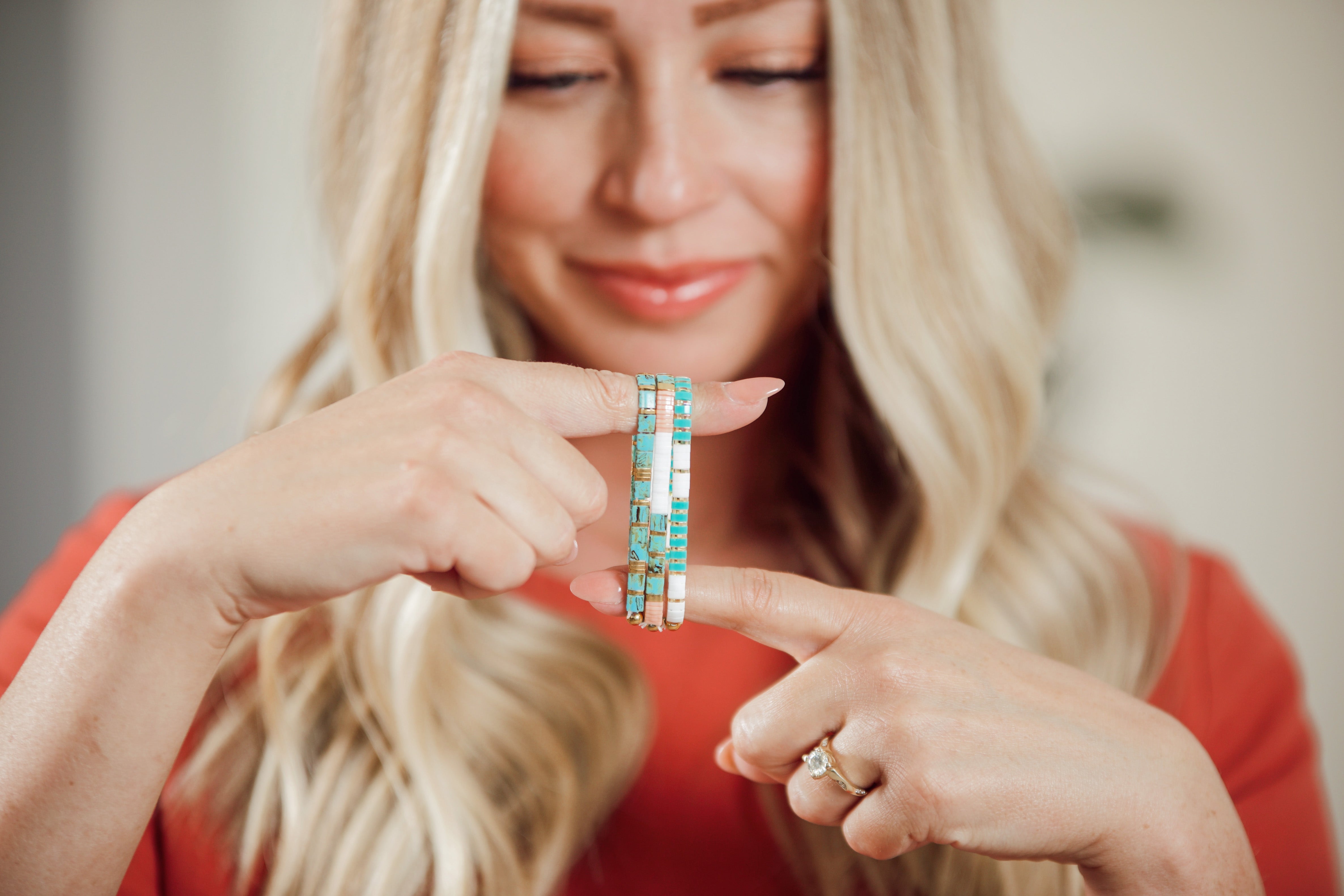
Mack & Rex's trio kits, for example, run $44.99 and come with enough beads and elastic to make three bracelets in one sitting, plus the needle and printed steps. The DIY Bracelet Kit Club is $36.99 for a similar three-bracelet set, and the All-in-One tools and supplies kit ($39.99 to $43.99) adds reusable tools like a bead mat and scissors if you want to build out a proper crafting kit rather than buy tools separately each time. For someone who wants to go bigger, the Tila Bead Starter Kit at $189.99 makes 20 bracelets, which works well for a first family craft night or a holiday gift-making marathon.
Tila beads themselves are a Miyuki product. Mack & Rex sells them and builds kits around them, but doesn't manufacture the beads. That distinction matters if you're comparing brands: you're paying for the kit's curation, the pre-measured elastic, and the instructions, not a proprietary bead.
What's the Real Learning Curve for a First-Time Kit?
Short. Most adults pick up the core technique, stringing beads onto stretch cord in a pattern, within the first few beads, and the whole skill set for a Tila bracelet fits on one page of instructions. The only real "skill" is tying a secure knot at the end, and even that's shown step by step with photos.
Where people slow down isn't the stringing itself. It's reading the color pattern correctly and keeping tension even so the bracelet doesn't end up loose in one spot and tight in another. Both of those get easier by bracelet number two. If you've ever strung popcorn on thread or threaded a needle to sew a button, you already have the fine motor skill this requires.
How Long Does Your First Bracelet Actually Take?
Budget 20 to 40 minutes for your very first bracelet, including the time you'll spend re-reading the instructions and double-checking the pattern. Bracelet two usually takes half that. By your third, most people are working from memory and can finish one while watching TV.
That first-timer window includes a few minutes of "wait, which bead goes next?" This is normal and doesn't mean you're doing it wrong. It just means you're still matching the photo to the beads in front of you rather than working on instinct.
What Are the Most Common First-Time Snags?
Nearly every beginner hits the same three or four snags, and all of them have quick fixes. None of them mean the kit is too advanced for you.
- Beads rolling off the table. A folded towel or a shallow tray keeps loose beads from scattering. If you use a bead mat, it does this for you and also keeps beads from bouncing.
- Losing your place in the color pattern. Lay beads out in order on your mat before you start stringing, following the photo left to right, so you're placing beads rather than hunting for them mid-stitch.
- Cord feels too loose or too tight. Stretch cord should sit snug but not stretched while you work. Pull gently after each few beads to check, and don't crank it tight, that's what makes bracelets pucker instead of lying flat.
- The knot won't hold. A single overhand knot slips on stretch cord. Double or triple-knot it, then add a small dot of clear glue if your kit includes one, and tuck the tail back through a bead before trimming.
None of these require special tools or a redo from scratch. Fix them mid-bracelet and keep going.
What Should You Expect From Start to Finish?
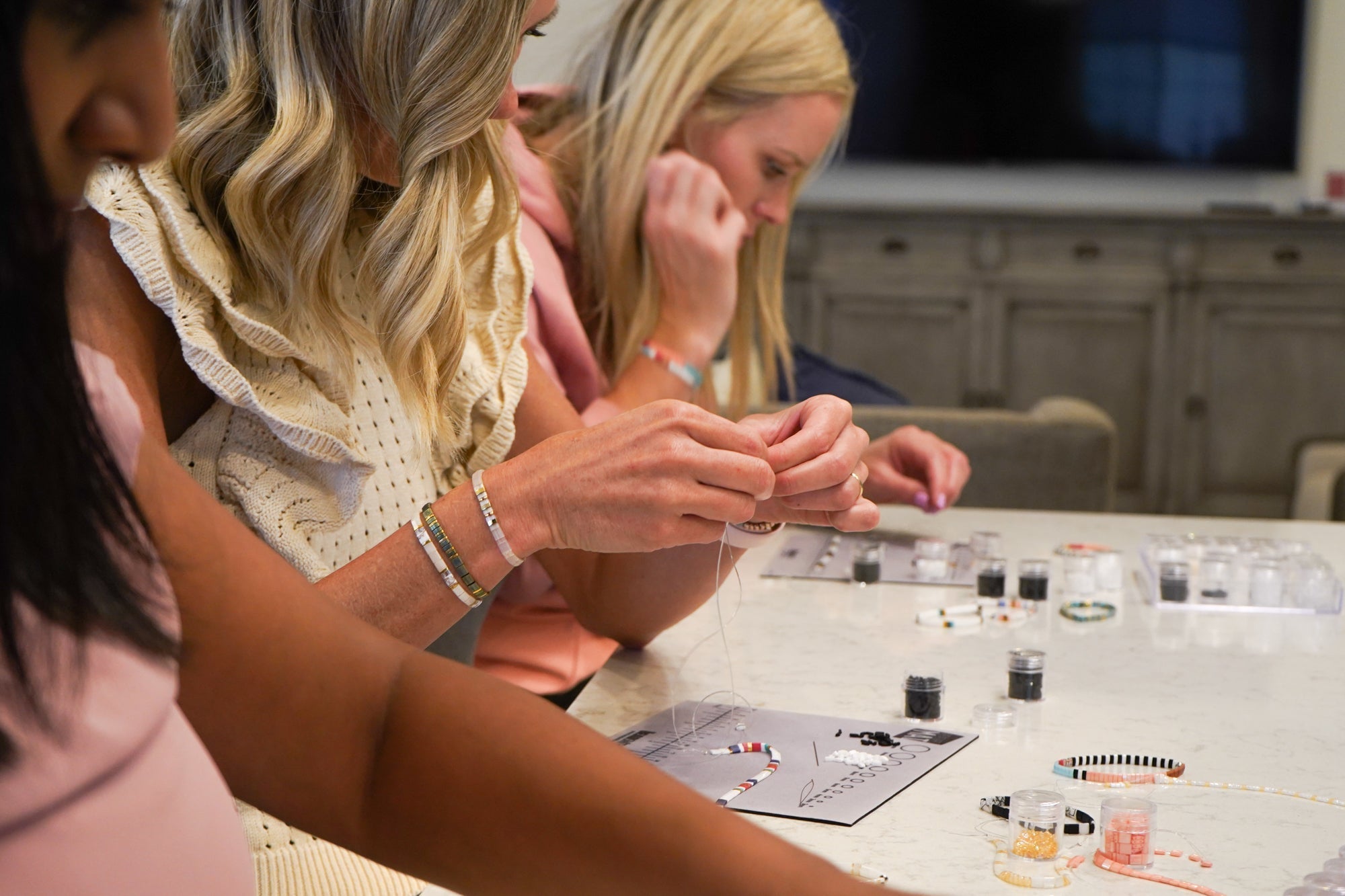
Expect to open the kit, spread out your materials, and follow a short instruction sheet that walks you from empty cord to finished bracelet in one sitting. There's no separate "practice round," you make the real thing the first time, and it comes out wearable.
Here's the general flow: unpack and sort your beads by color, cut your cord to the length shown in the instructions, string beads following the pattern (checking the photo every few beads at first), tie off the ends, and trim. A finished Mack & Rex bracelet uses inclusive stretch sizing from XXS to 5XL, so the same technique works whether you're making one for yourself or for someone with a very different wrist size. If something looks off partway through, you can always slide beads back and adjust rather than starting over.
If kids are joining the craft session, keep loose beads and cord away from very young children since small beads are a choking hazard, and stay close by for supervision. This is an adult-and-older-kid activity more than a toddler one.
One practical tip: a single trio kit at $44.99 won't clear the $100 free-shipping threshold on its own, but picking three trio kits for a group project or gift set will. Mack & Rex ships internationally, with shipping and any customs costs calculated at checkout, and free shipping applies to US orders over $100.
Ready to try one? Browse the full lineup of bracelet making kits and pick a color story that fits your first project.
Frequently Asked Questions
Do jewelry making kits for adults really work if I've never made jewelry before?
Yes. Kits designed for adult beginners include pre-measured materials and full instructions specifically so no prior experience is needed. The learning curve for a basic stretch bracelet is short enough that most people finish a wearable piece on their first try.
What tools do I need besides what comes in the kit?
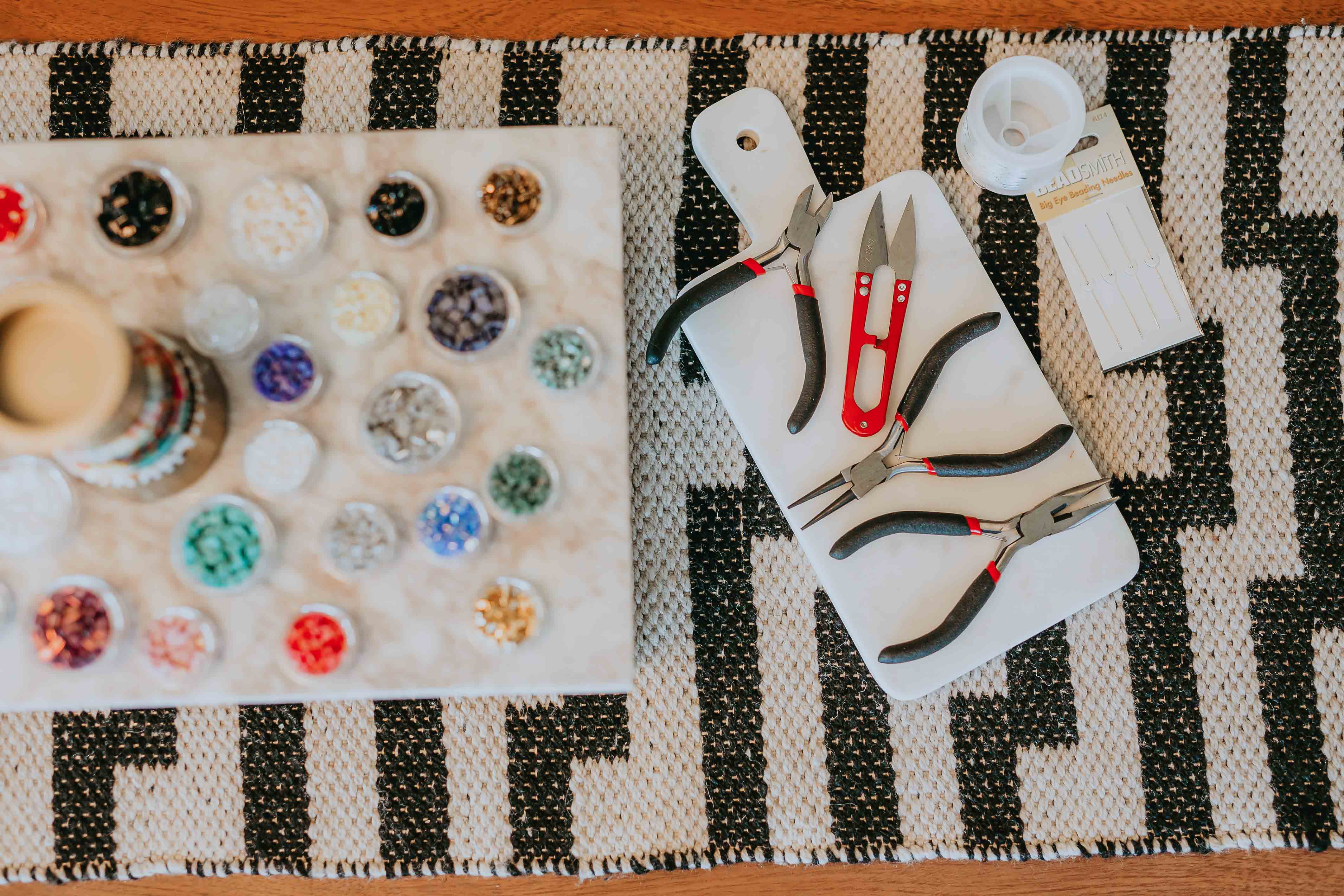
A basic trio kit needs almost nothing extra beyond scissors to trim the cord. All-in-One kits already include tools like a bead mat, so you'd only need to buy separate tools if you want extras like flush cutters for more advanced projects down the road.
Can kids help with an adult jewelry making kit?
Older kids can join in with adult supervision, since the beads and findings are small and pose a choking hazard for young children. It works best as a shared activity rather than something a young child does unsupervised.
How much should I expect to spend on a first kit?
A three-bracelet trio kit runs $44.99, and the DIY Bracelet Kit Club is $36.99 for a similar set. Larger options like the Tila Bead Starter Kit ($189.99) make 20 bracelets if you want to stock up for gifts or a group activity.
What if my first bracelet comes out uneven?
Uneven tension is the most common first-bracelet issue, and it's fixable by sliding beads to redistribute space before you tie off. It's rarely worth unstringing the whole thing. A little unevenness in bead number one is normal and disappears by bracelet two or three.
Sources: Beadaholique, "Intro to Beading 101"; Lima Beads, Bead Tips; Wikipedia, "Beadwork".