


Can You Make Matching Bracelets from One DIY Kit?
Can You Really Make Matching Bracelets from One DIY Kit?
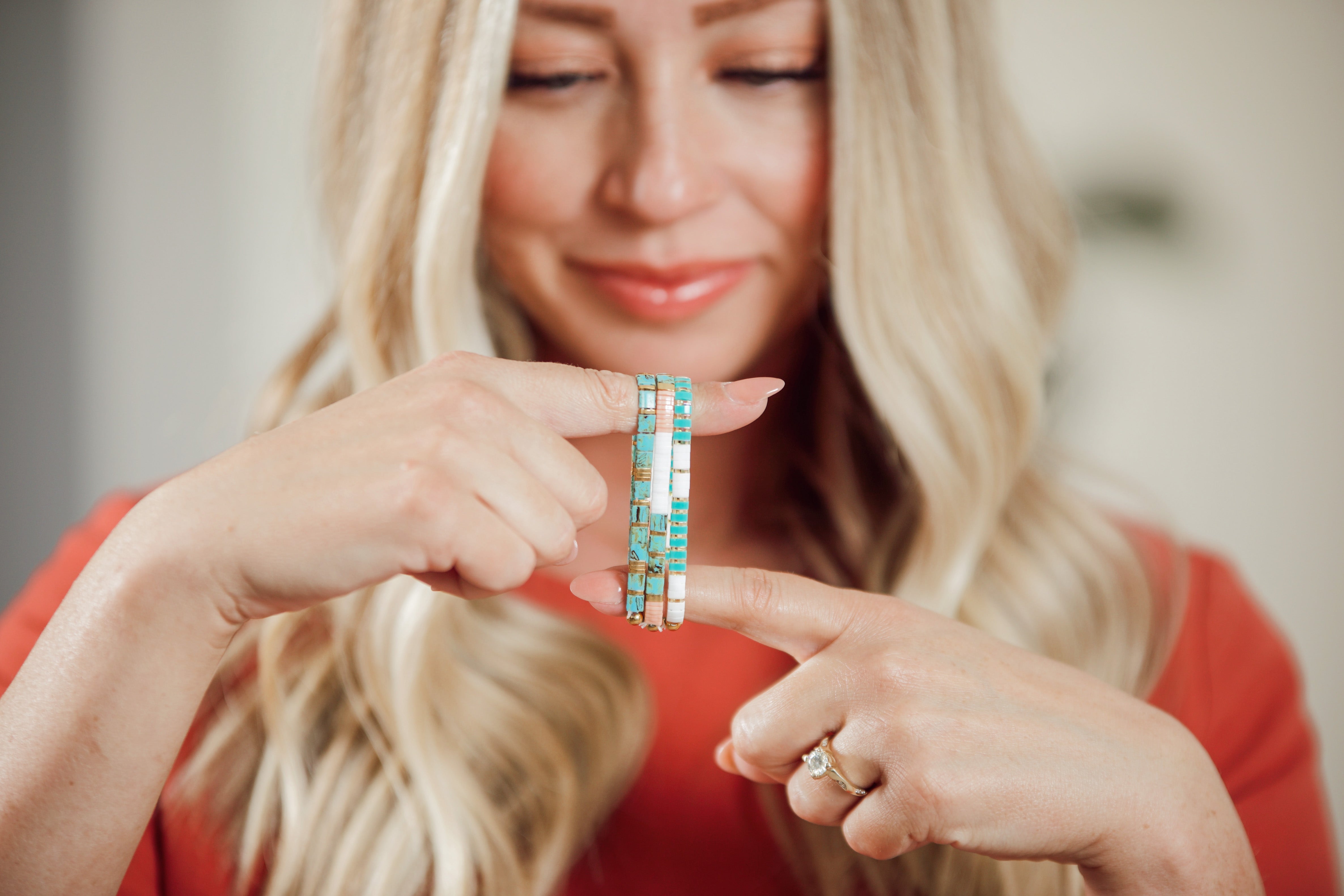
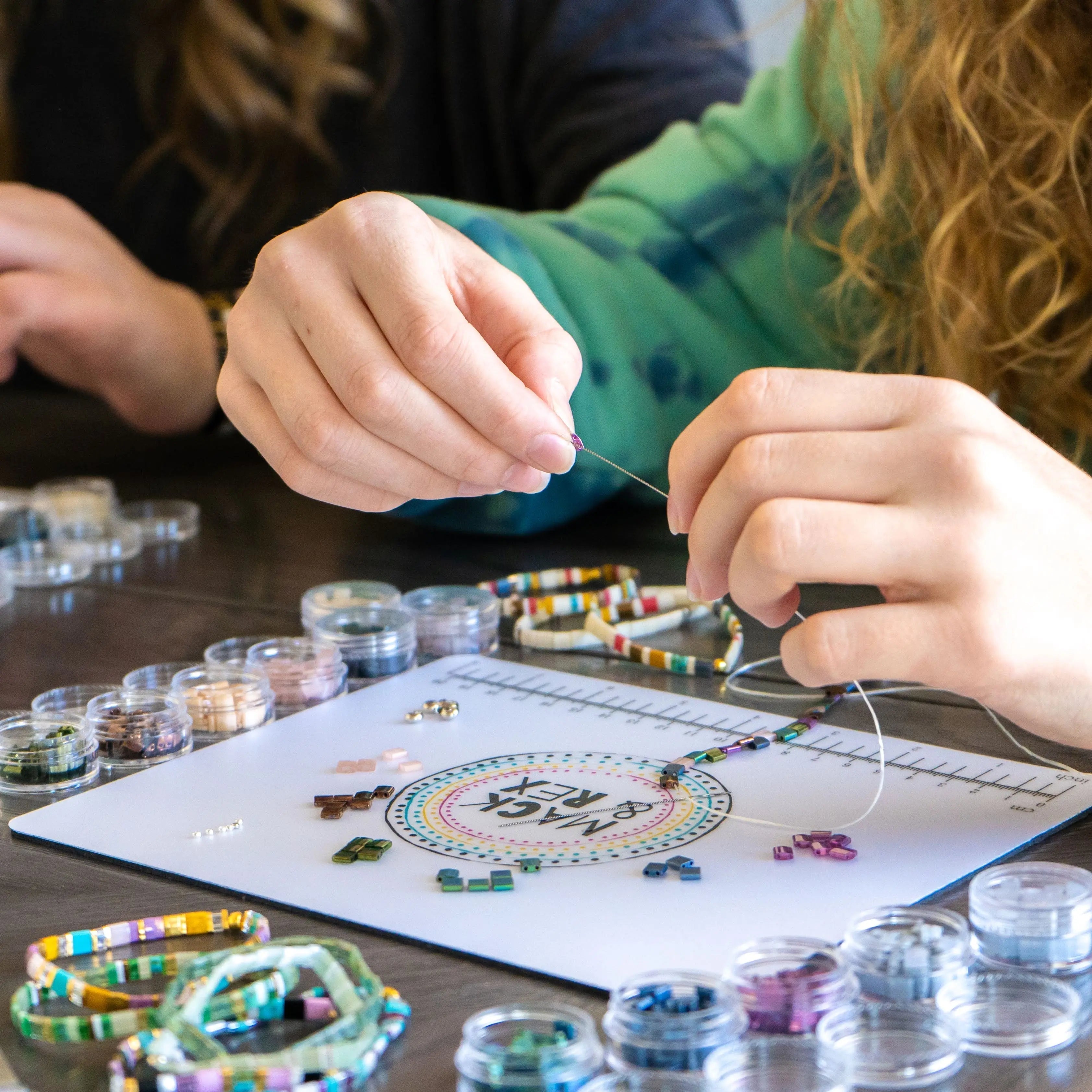
Yes. A single kit gives you a shared pool of beads, cord, and findings, so everyone in the group works from the same color story instead of buying separate supplies that never quite match. The trick is planning the split before anyone starts stringing, not after.
Most people assume a kit makes one bracelet for one person. It doesn't have to. A kit sized for a group is a shared craft box waiting to be divided, and the beads inside don't care whether they end up on four wrists or one.
How Many Bracelets Does One Kit Actually Make?
It depends on the kit size, and the listing should say so plainly. A trio kit makes 3 bracelets in one palette, a starter kit makes 20, and the largest bulk kit makes 80, so the right size comes down to your headcount.
Match the math to your group before you buy. Two best friends plus a spare bracelet for whoever loses theirs first (it happens) fits a trio kit. A mother-daughter-grandmother trio works the same way. A bridesmaid party of six or eight needs a bigger kit, and a bulk kit makes more sense per-bracelet if you're handing out extras as thank-you gifts. Count the people first, then shop.
Should You Plan for Matching or Complementary Bracelets?
Matching means every bracelet uses the identical bead pattern and color order, so the set reads as one design worn by multiple people. Complementary means everyone shares a color family or theme but arranges the beads a little differently, which gives each person some say in their own piece.
The idea itself isn't new. Friendship bracelets have been traded as a symbol of a shared bond for generations, and the tradition leans on a simple rule: same materials, personal execution. A couple or a BFF pair might want true matching, identical down to the bead order, while a bridesmaid group often looks better complementary, since six people rarely share a wrist size or color preference. Complementary is also more forgiving when a kit's color counts don't divide evenly.
How Do You Split the Beads Fairly?
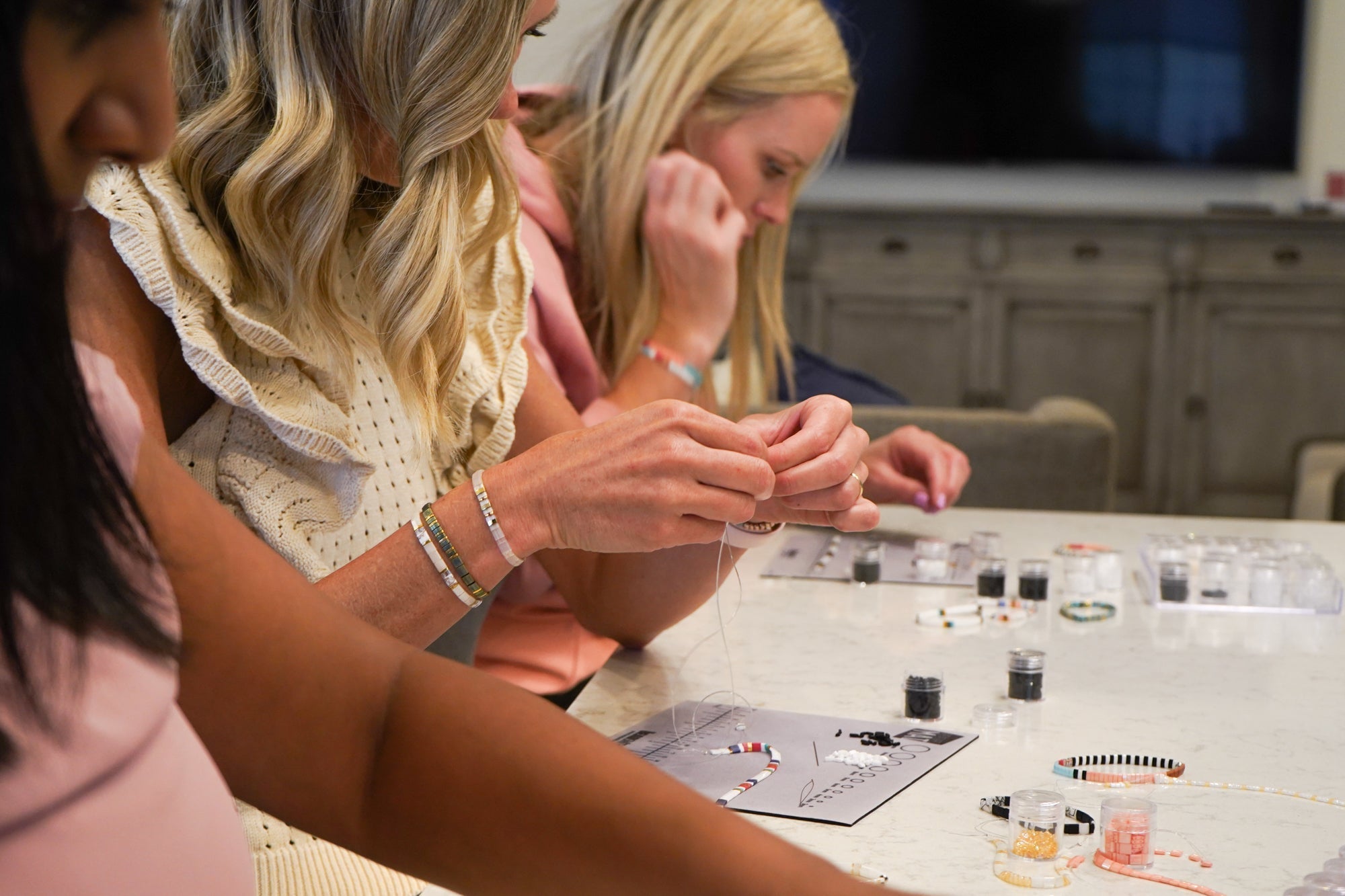
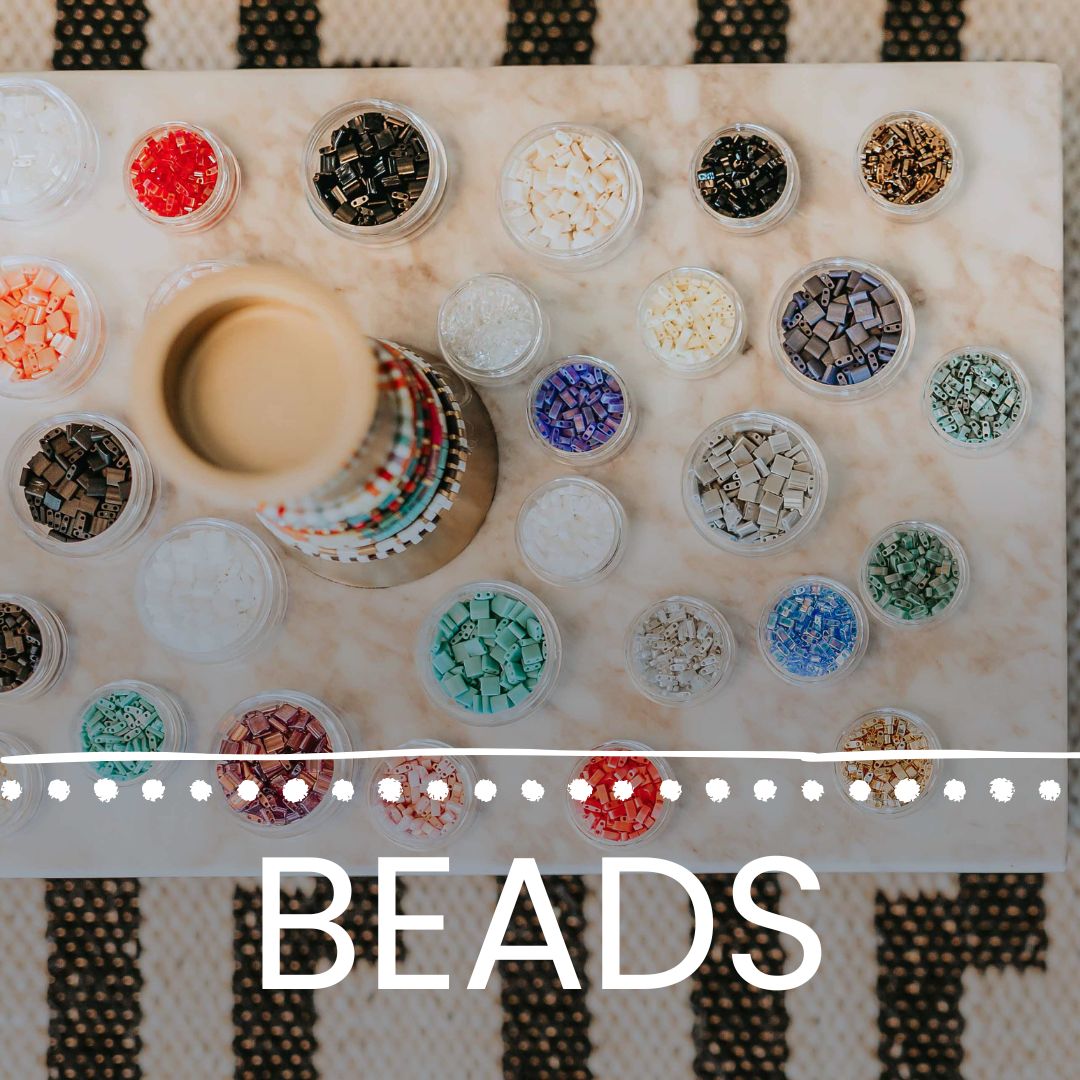
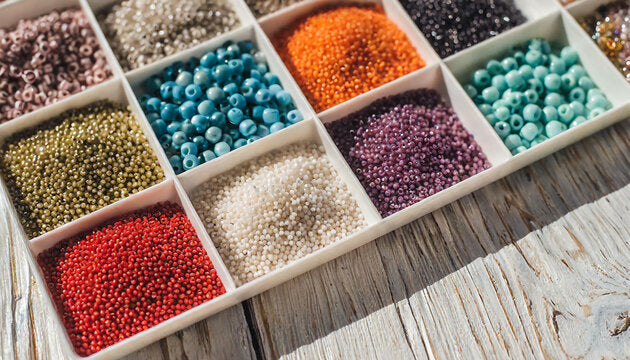
Sort first, then divide. Lay every bead out by color before anyone touches a needle, then split each color pile evenly across the number of bracelets you're making, setting aside a small buffer for a cracked bead or a dropped one.
This is where group projects go sideways. Someone gets three extra of the accent color; someone else runs short two beads from the finish line. Avoid it by counting, not eyeballing. If the colors don't split evenly, hand the leftovers to whoever has the busiest pattern, since a detailed design eats more beads per inch. A divided sorting tray speeds this up; Fire Mountain Gems has a useful overview of bead sizing if you want to estimate ahead of time how far a mix stretches across several bracelets.
How Do You Size Bracelets for Different Wrists from the Same Kit?
Cut the stretch cord to length for each person rather than assuming one measurement fits the whole group. Wrap the cord loosely around each wrist, mark where it overlaps, and cut there, since a kid's wrist, an adult's wrist, and a grandmother's wrist rarely measure the same.
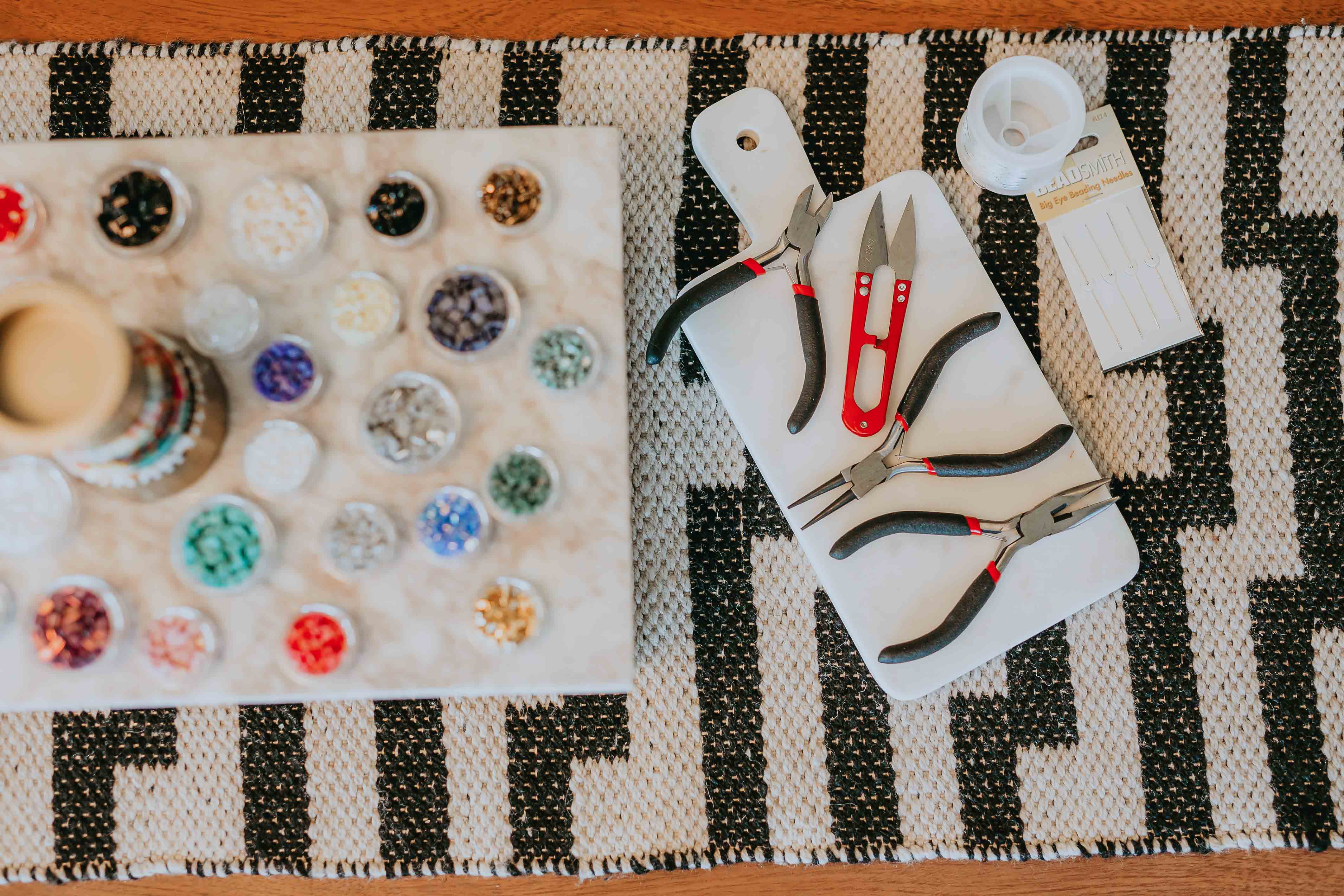
This is the part that makes a "matching" set work across a real family or wedding party. The beads and pattern stay identical, but the cord length flexes person to person, exactly how crystal-cord elastic bracelets are meant to be built. A general-technique primer like Beadaholique's beading basics helps if you need a refresher on knotting off cleanly. Measure everyone first, so nobody ends up with a bracelet cut from what's left over.
Which Kit Fits Your Group?
Two people, a trio kit. A small family or wedding party of five or six, size up to a starter kit. A bigger bridal party or a full craft night with a dozen guests, look at a bulk kit so the per-bracelet cost comes down.
A couple making matching bracelets for each other is the simplest case, since a trio kit's 3-bracelet yield leaves a spare for backup. A mother-daughter pair or a small sibling group fits the same size. Bridesmaids and bigger friend groups should count heads honestly and order slightly more supply than the headcount. A dropped bead or a knotting mistake is normal, not a sign anyone did it wrong.
Is This a Good Project to Do with Kids?
It can be, with an adult in the room the whole time. Beads, crimp findings, and stretch cord are small parts and a choking hazard, so a kid stringing a matching bracelet with mom or grandma should be supervised, with loose beads cleared away between sessions.
Beyond that safety note, a mother-daughter or grandparent-grandkid matching set fits a shared kit well precisely because the project scales down. One adult, one kid, one shared pile of beads split in half. Keep the pace relaxed and let the kid choose their own bead order within the shared color family if you're going complementary rather than strictly matching.
Ready to Order a Kit for Your Group?
Count your group, pick matching or complementary, and choose a kit sized to how many bracelets you need plus a couple of spares. Mack & Rex ships internationally, with shipping and any customs fees calculated at checkout, and free shipping applies to U.S. orders over $100, so a bigger group kit is more likely to clear that threshold than a single small one. Browse current sizes and color stories on the bracelet making kits page and pick the one that matches your headcount before you start sorting beads.
Matching Bracelet Kit FAQs
How many matching bracelets can I make from one DIY kit?
It depends on the kit. A trio-style kit is built to make 3 bracelets in one color story, which fits a small BFF group or a mother-daughter pair plus one extra, while a larger starter or bulk kit yields more and works better for a bigger group like bridesmaids. Check the exact count on the product listing before buying since it varies by kit.
What's the difference between matching and complementary bracelets?
Matching bracelets use the identical bead pattern and color placement on every piece, while complementary bracelets share a color family or theme but arrange the beads differently on each one. Complementary designs are more forgiving when a kit's beads don't divide into perfectly even sets.
How do you split the beads fairly among a group?
Sort all the beads by color before anyone starts stringing, then divide each color pile evenly by the number of bracelets you're making. Set aside a small buffer for mistakes or a broken bead, and let the person doing the most detailed pattern pick their beads first if the count doesn't split perfectly even.
Can one kit make bracelets that fit different sized wrists?
Yes. The beads and cord in a single kit work for any wrist size since you cut the stretch cord to length per person rather than using a fixed pre-cut piece. Measure each wrist separately and cut accordingly, which is what lets one kit fit a kid, a mom, and a grandmother in the same matching set.
Is making matching bracelets a good project for kids?
It can be, with an adult present. Beads, crimps, and other small findings are a choking hazard, so kids should string and knot under supervision rather than working with loose parts alone, and any spare beads should be cleared away between sessions.