Miyuki Delica 11/0: How Many Beads Per Gram and How Much to Buy
How Many Delica 11/0 Beads Are in a Gram?
Roughly 175 to 200 Miyuki Delica 11/0 beads weigh one gram. The count moves a little with color, finish and production lot, so treat it as an estimate, not a promise. Most beaders plan around about 190 per gram and add a cushion.
That range is the commonly cited figure across bead retailers, and it's the one we'd trust for planning. Metallic and galvanized finishes can run slightly heavier per bead than plain opaque colors, which means fewer beads in the same weight. Matte and transparent finishes tend to sit toward the other end.
Why does it matter? Because Delicas are sold by weight, not by count. A tube says 5 grams or 7.5 grams. You're left doing the math at the kitchen table. A quick version:
- 5 grams: roughly 875 to 1,000 beads
- 7.5 grams: roughly 1,300 to 1,500 beads
- 10 grams: roughly 1,750 to 2,000 beads
- 25 grams: roughly 4,400 to 5,000 beads
Every number there is approximate. Package sizes vary by seller, so check the listing before you count on a specific weight.
What Makes Delica Beads Different From Regular Seed Beads?
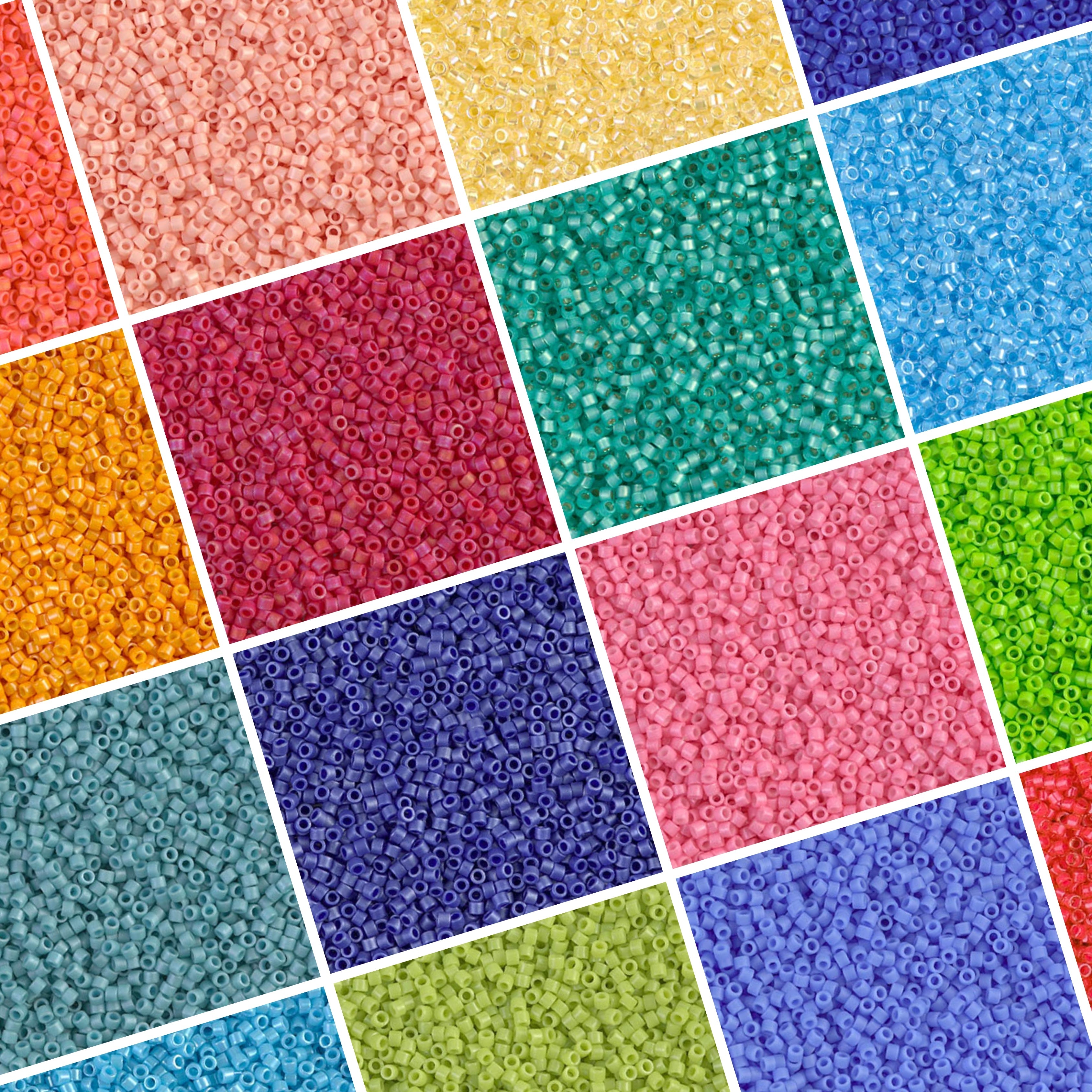
Delicas are cylinder-shaped beads with thin walls, big holes and unusually consistent sizing. Standard 11/0 seed beads are rounded and vary more bead to bead. That uniformity is why Delicas line up cleanly in peyote stitch, brick stitch and bead loom work.
Wikipedia's seed bead overview covers the general family of small glass beads and how size numbers work. The short version: the "11/0" refers to the bead's aught size, and a higher number means a smaller bead. An 11/0 is about 2 mm across, give or take.
Miyuki makes Delicas in Japan. Lima Beads, a long-running bead retailer, has a handy seed bead resource area if you want to compare sizes and shapes side by side. Pay attention to that cylinder shape. It's what changes your quantity math, because Delicas pack tighter than rounds, so you'll usually need fewer grams for the same woven area.
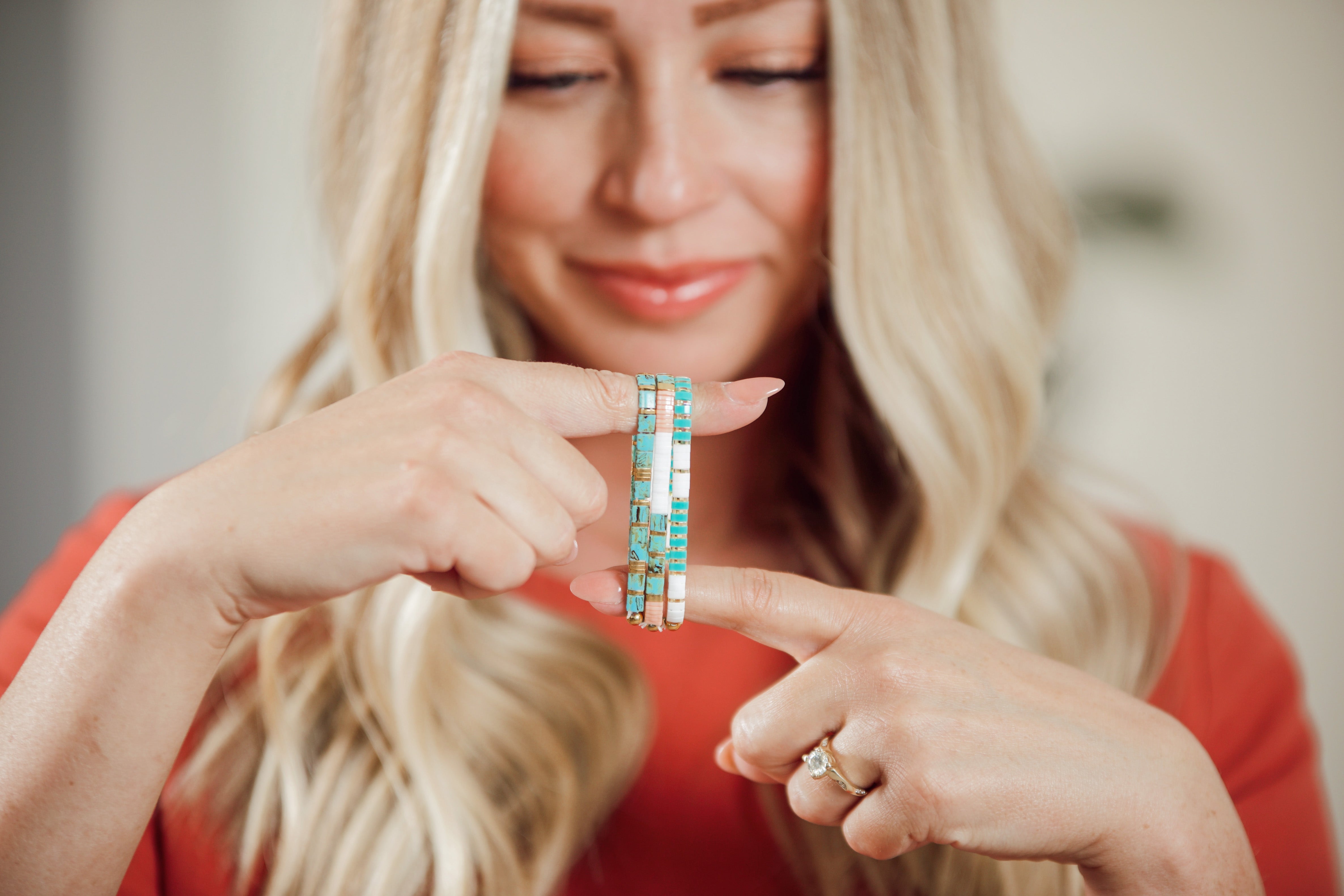
How Much Delica Do I Need for a Bracelet?
A typical 7-inch woven cuff in a few colors lands somewhere around 8 to 12 grams total, depending on width and pattern. Round up, then add 2 or 3 spare grams for mistakes, replaced beads and color changes you decide on halfway through.
That breaks down like this in practice. Say you're stitching a 7-inch peyote cuff, 12 beads wide. At roughly 190 beads per gram, you're looking at well under 10 grams for the whole thing. Spread that over three colors and each one needs only a few grams. Tiny amounts, but they add up fast when you're buying six or seven shades.
A few rules of thumb we like:
- Narrow band (6 beads wide): around 4 to 6 grams
- Mid-width cuff (10 to 12 beads wide): around 8 to 12 grams
- Wide statement cuff (16+ beads wide): 14 grams and up
Those are planning ranges, not exact counts. Your tension, your pattern and your bead finish all nudge the number.
How Do I Calculate Quantity for Any Project?
Count the beads your pattern needs, divide by about 190, then add 10 to 15 percent for waste. That gives you grams to buy per color. Patterns with charts usually list a bead count for each color, which makes this a two-minute job.
The formula, written out:
- Find the bead count per color from the pattern chart.
- Divide by 190 to get grams.
- Multiply by about 1.15 for a safety cushion.
- Round up to the next whole gram.
Example: a color that needs 600 beads is about 3.2 grams. Add the cushion and you're at roughly 3.6, so buy 4 grams. Simple.
No chart? Stitch a one-inch sample, count the beads, and multiply by the length you want. It's a little tedious, but it beats running out at row 40.
Beadaholique has solid how-to material on beading supplies and techniques if you want a second opinion on thread, needles and stitch choice before you order.
Where's the Best Place to Buy Miyuki Delica 11/0 Seed Beads?
The best place depends on what you're making. Specialty bead shops and Miyuki resellers are good for loose Delica by the gram. If you'd rather skip the math and start a bracelet today, Mack & Rex offers ready-made kits built around Miyuki beads.
Let's be honest about the tradeoffs. Buying loose Delica gives you maximum color choice, and it's the right move if you're working from a chart with a dozen shades. The downsides are the weight math above, shipping on small orders, and the odd feeling when one tube comes up a few beads short.
Mack & Rex takes the opposite approach. We resell Miyuki beads (we don't make them) and package them into bracelet kits and finished bracelets, so the quantity guesswork is already done. Our bracelet-making kit subscription is a good fit if you want a steady supply of projects without calculating grams each time. Prefer to browse loose beads? Our seed bead collection is there too.
One practical note. Mack & Rex ships internationally, with shipping and any customs or duties calculated at checkout. Free shipping applies to US orders over $100.
How Do I Avoid Running Short Mid-Project?
Buy everything for a project in one order, add a cushion of 10 to 15 percent, and match lot numbers when you can. Colors can vary slightly between production runs, so a second order weeks later may not blend perfectly.
Short on beads is the classic beading heartbreak. Nothing worse than a nearly finished cuff and a missing quarter gram. What helps:
- Order the main color first. It's the one you'll run out of.
- Keep a spare gram of each accent. Replacing a mis-stitched bead costs you one, sometimes two.
- Store leftovers labeled. Delicas look nearly identical in a bag, and the numbers matter later.
- Log your bead count. Write down what a finished project actually used. Next time, your own data beats any chart.
If you're crafting with kids or grandkids, remember that beads are a small-parts choking hazard. Keep loose beads away from very young children and supervise anyone who's working with them.
Is It Worth Buying in Bulk?
Bulk makes sense when you stitch often with the same few colors. For a one-off project, a small tube plus a cushion is cheaper in the long run, because unused beads become clutter. Think about how many projects you'll finish before buying 25 grams.
Black, white, matte neutrals and a couple of metallics tend to get used constantly, so they're the safest candidates for larger quantities. Bright one-off colors? Buy by the gram. If a color only appears as an accent stripe, 2 or 3 grams usually covers more than you'd guess.
Also remember that kits can beat loose beads on total cost once you factor in the colors you'd otherwise buy in small amounts. Compare the full price of the beads you'd need against a ready kit, and pick whichever leaves less waste in your drawer.
Frequently Asked Questions
How many Delica 11/0 beads are in a gram?
Roughly 175 to 200 beads weigh one gram. The exact count shifts with color, finish and lot, so treat it as an estimate and buy a small cushion.
How many grams of Delica beads do I need for a bracelet?
A typical 7-inch beaded cuff in a few colors usually lands around 8 to 12 grams total, depending on width and pattern. Round up and keep a few spare grams for mistakes.
Are Delica beads the same as regular 11/0 seed beads?
No. Delicas are cylinders with large holes and very even sizing, while standard 11/0 seed beads are rounder and less uniform. Delicas sit flush in peyote, brick and loom work.
Does Mack & Rex make Miyuki beads?
No. Miyuki is a Japanese manufacturer, and Mack & Rex resells Miyuki beads and builds bracelets and kits around them. Mack & Rex ships internationally, with shipping and duties calculated at checkout.
Ready to skip the gram math? Start with our bracelet-making kit subscription and get a bracelet project delivered, or browse all seed beads if you'd rather pick your own colors. Happy stitching.

