

Miyuki Tila vs. Generic Tila Beads: Is the Premium Worth It?
Is Miyuki Tila Actually Better Than Generic Tila Beads?
Yes, in the ways that matter for a bracelet you'll wear daily. Authentic Miyuki Tila beads are cut and finished to tighter, more consistent tolerances than most generic two-hole tile beads, which means straighter holes, more even sizing, and a color coat that holds up to sweat, lotion, and time. That consistency is what keeps a stretch bracelet sitting flat and lasting past its first few wears.
Here's the thing about a 5mm square bead with two tiny holes: there's almost no room for error. A hole drilled even slightly off-center throws the bead's balance off, and on a stretch bracelet that shows up as beads that twist, tilt, or catch on the elastic cord. Generic tile beads cut costs somewhere, and it's usually in the precision that a name-brand manufacturer like Miyuki builds into every batch.
What Actually Separates Miyuki Tila From Generic Tile Beads?
Four things, mostly. Hole alignment, size consistency, finish durability, and quality control. Miyuki is a Japanese glass bead manufacturer that's been refining its production process for decades, and Tila is one of its trademarked bead shapes: a flat, roughly 5mm square with two parallel holes running through it. Generic "tile" or "two-hole tile" beads copy the shape but skip the manufacturing rigor behind it.
Hole alignment is the big one. On authentic Miyuki Tila, both holes sit parallel and centered, bead after bead, so the flat face stays flush when you string a run of them. Off-brand tile beads vary more: some holes drift toward one edge, some come out slightly angled, and a percentage of any generic batch is simply unusable once you try to thread it. Crafters comparing bead grades online consistently note that uniformity is what separates a premium seed or tile bead from a bargain one, more than color choice alone.
Size consistency matters just as much once you're stringing a full bracelet. If even a handful of beads in your mix run 0.3mm to 0.5mm larger or smaller than the rest, the strand won't sit evenly, and you'll see gaps or bunching once it's on the wrist. Miyuki holds its glass beads to tight dimensional standards across production runs, which is part of why the brand has become the default reference point for quality in the bead world according to Miyuki's own manufacturer information. See Miyuki's manufacturer overview here.
Does the Finish Really Wear Differently?
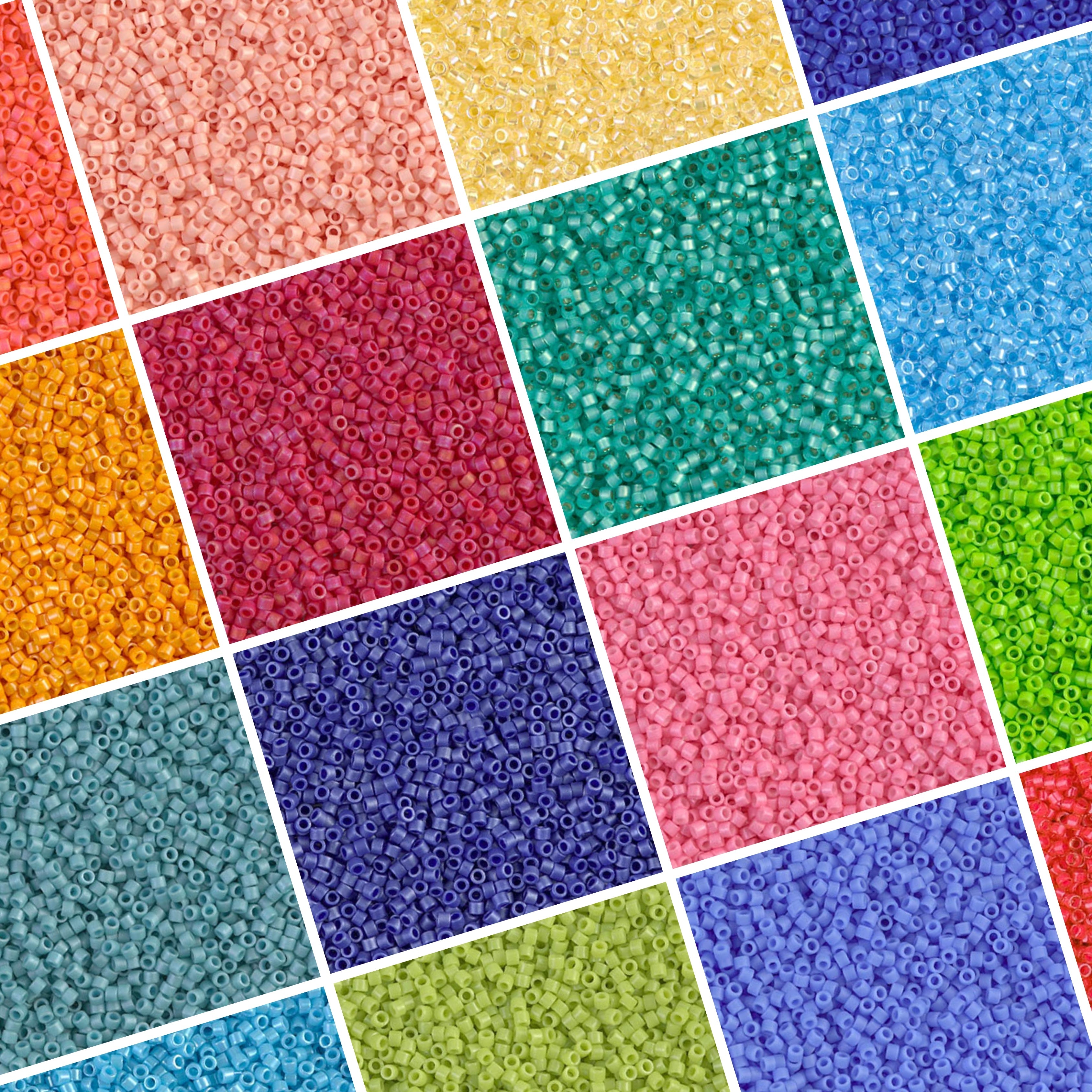
It does, and this is where the price gap becomes obvious fastest. Miyuki applies its color and metallic coatings (AB, luster, matte, opaque, and so on) with a process built to bond to the glass surface, so the finish resists flaking from daily friction against skin, clothing, and other beads. Generic tile beads often use a thinner or less-adhered coating, and after a few weeks of regular wear you'll start to see dulling, especially on metallic and AB finishes where the coating sits on top of the glass rather than fused into it.
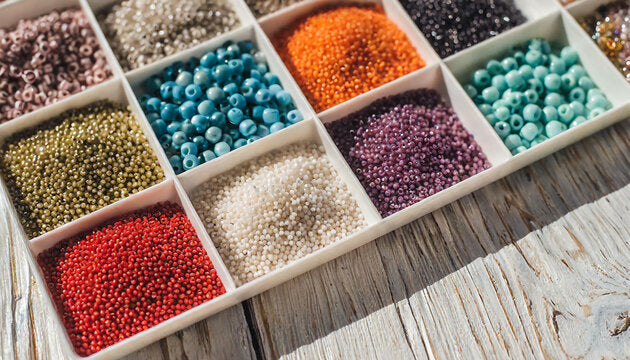
Glass bead finishes in general are a well-documented category, ranging from simple transparent and opaque glass to layered metallic and iris coatings, and coating quality is exactly where manufacturers differentiate on cost. This overview of seed bead types and finishes is a useful primer if you want to understand why two beads that look identical on a card can behave so differently after a month on someone's wrist.
A bracelet that loses its shine in three weeks isn't a bargain. It's a bracelet you'll replace, which means paying twice.
How Does This Play Out on a Real Stretch Bracelet?
String twenty generic tile beads next to twenty Miyuki Tila beads and the difference shows up fast under tension. Stretch bracelets flex every time they go on and off the wrist, and that repeated stress finds every weak hole and every loose finish. Misaligned holes on cheaper beads create tiny stress points where the elastic cord rubs unevenly, which is a common cause of premature cord wear and beads that shift out of place mid-strand.
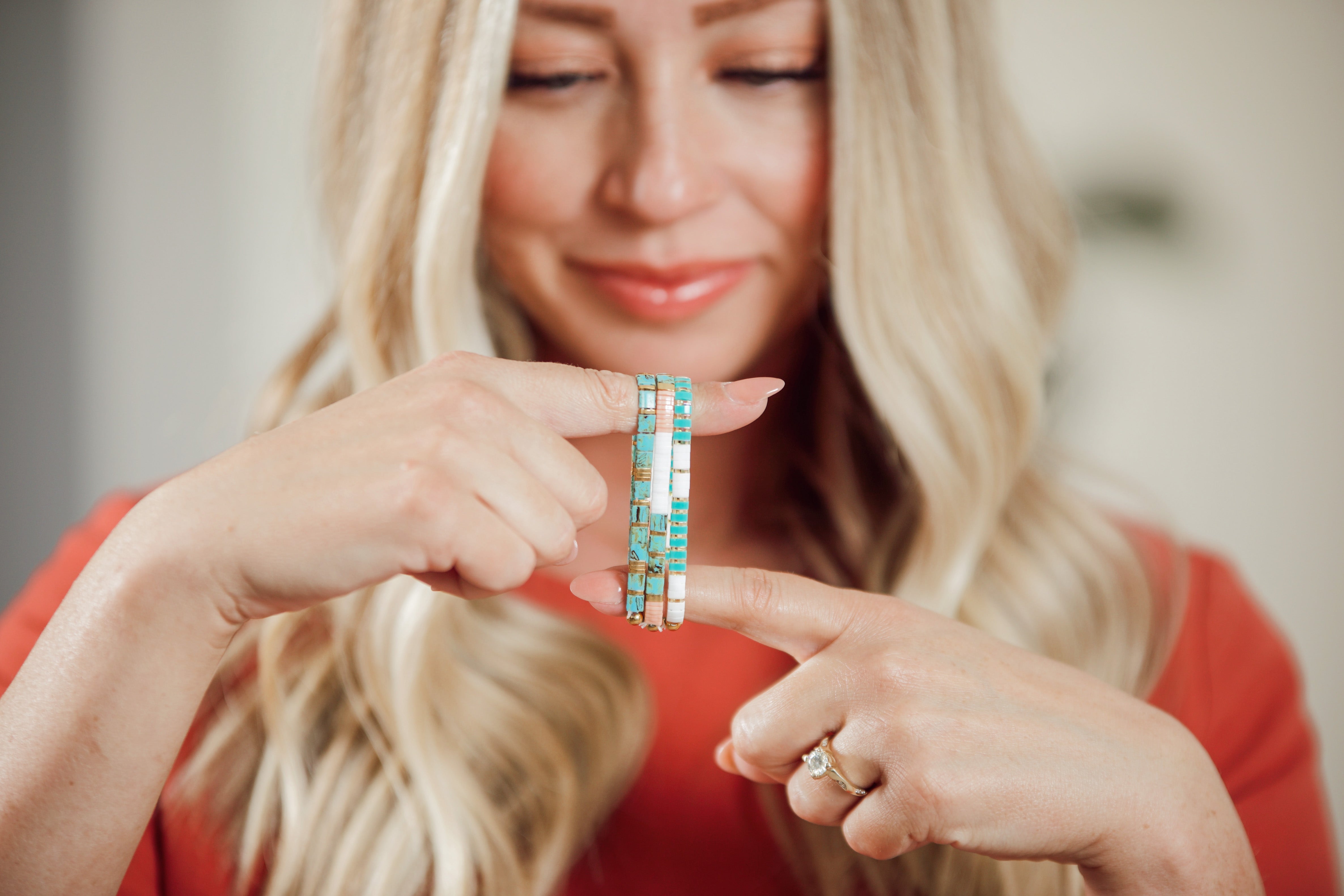
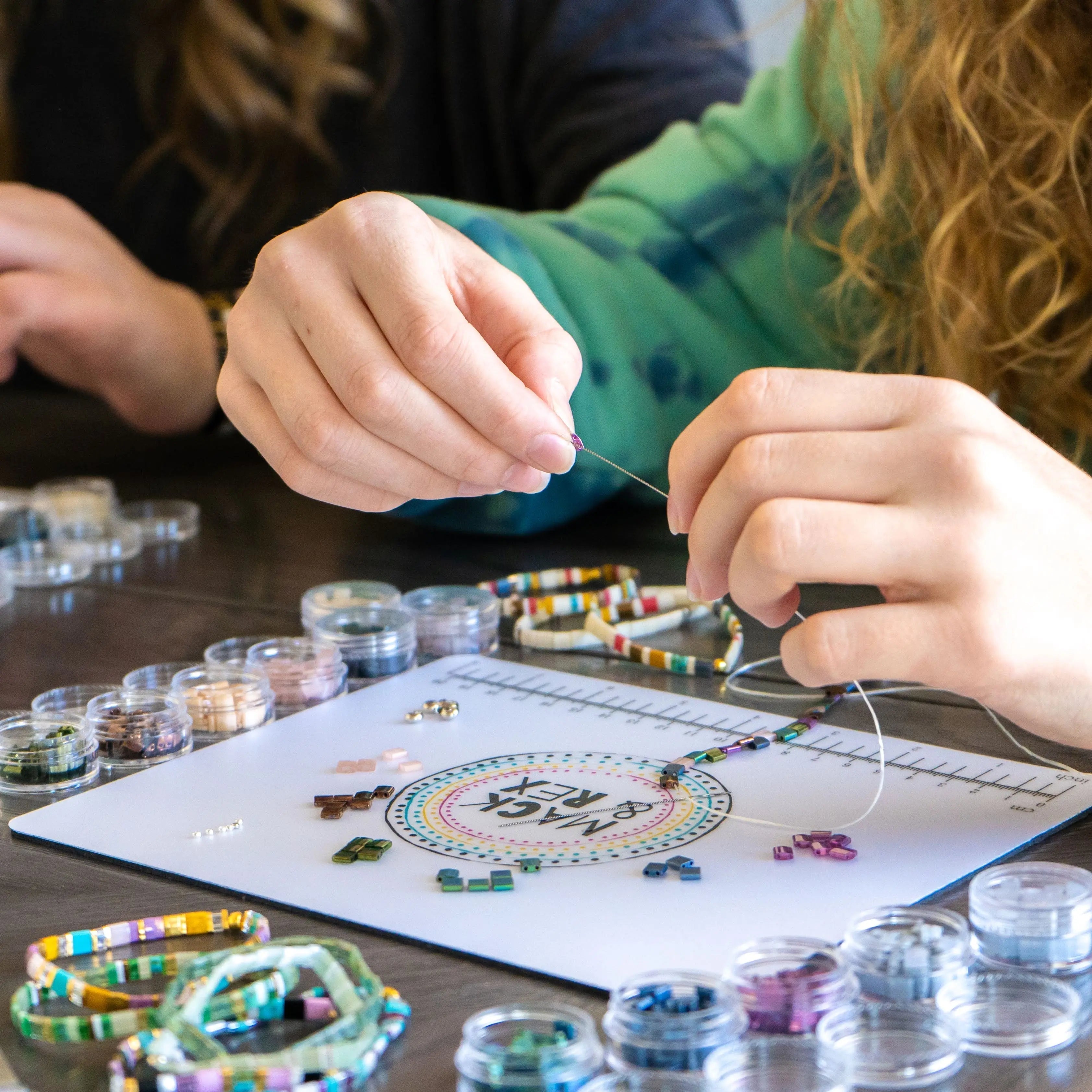
We build our finished bracelets and kits around Miyuki Tila for exactly this reason: a bracelet that's going into daily rotation, through workouts and hand-washing and sleeve cuffs, needs beads that hold their alignment and their finish. It's a small detail on paper, but it's the difference between a bracelet that still looks good at month six and one that's already headed to the junk drawer.
Specialty bead suppliers that carry the authentic Miyuki line typically list the full spec, including the two 0.8mm holes and the exact 5mm dimension, since precision is part of what buyers are paying for. Fire Mountain Gems' Tila bead specs are a good reference if you want to compare dimensions against whatever's in your own stash.
Is the Price Difference Worth It for a DIY Kit?
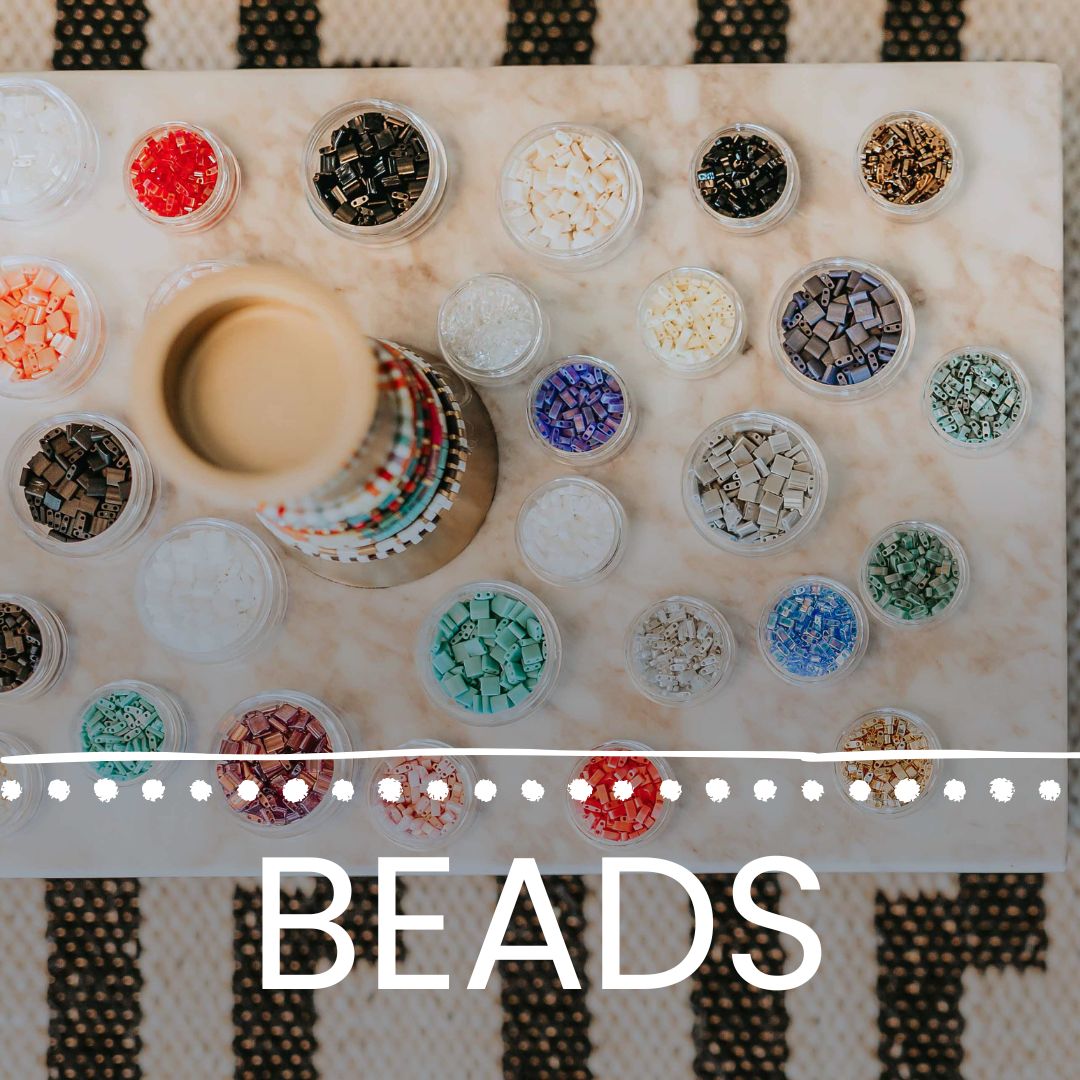
For most crafters, yes. Authentic Miyuki Tila bead mixes at Mack & Rex run roughly $5 to $9, which isn't a huge premium over generic tile beads once you account for how much less waste you get from consistent holes. Fewer beads snap or jam during stringing, so more of what's in the pack actually ends up on your wrist instead of in the trash.
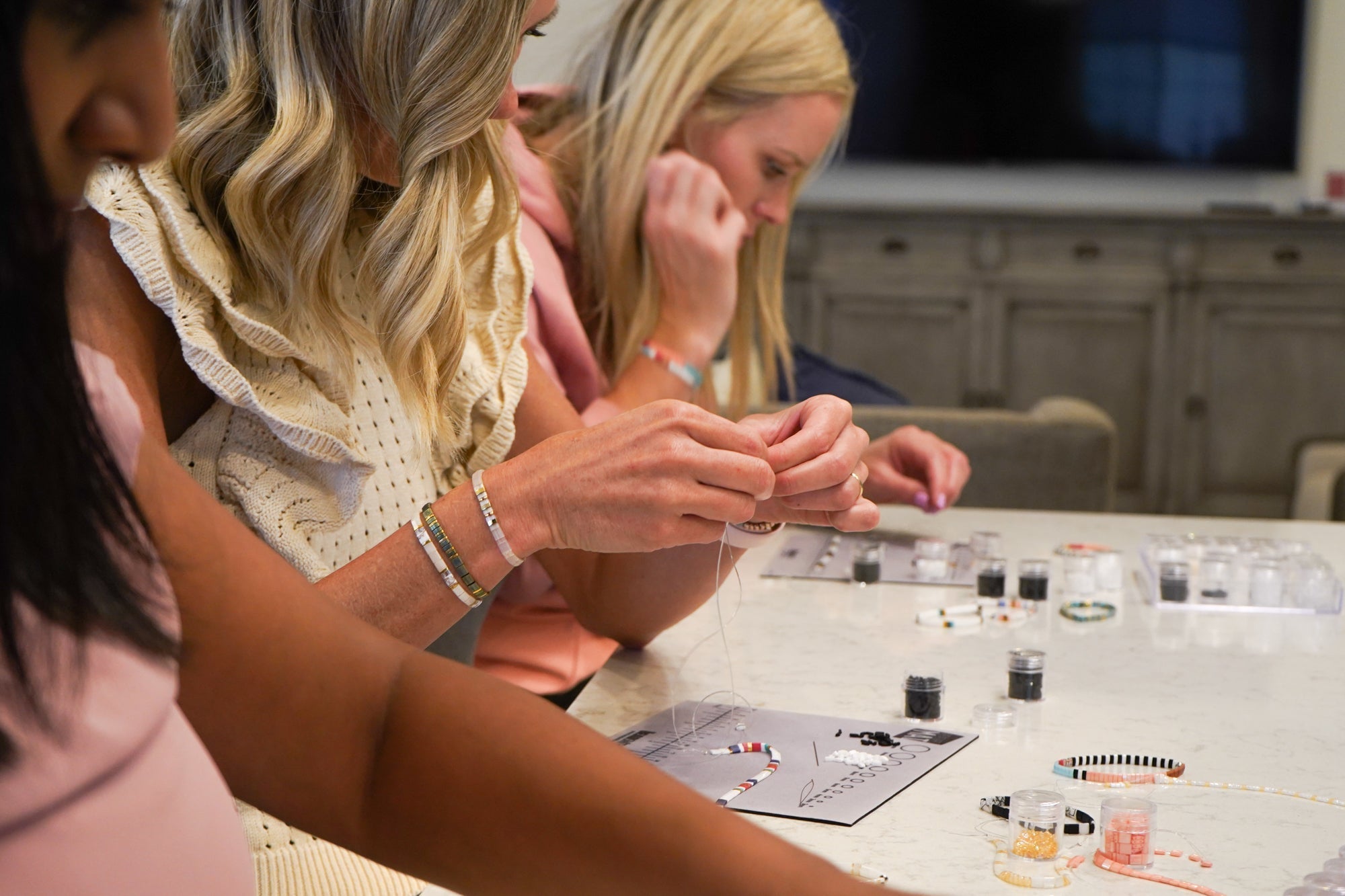
If you're building out a full DIY habit rather than a single project, our Trio bracelet kits ($44.99) and the DIY Bracelet Kit Club ($36.99) both use authentic Miyuki Tila, so you're not stuck evaluating bead quality mix by mix. For someone stocking up seriously, the Tila Starter Kit makes 20 bracelets for $189.99, and the Ultimate Tila Kit stretches to 80 bracelets for $399.99. Every option pulls from the same authentic supply chain, not a mixed bag of off-brand lookalikes.
One quick note if kids are helping with a project: Tila beads and their packaging are small parts and a choking hazard, so keep loose beads away from young children and have an adult handle stringing and knotting with little ones nearby.
How Do You Spot Authentic Miyuki Tila Before You Buy?
Check the label first. Reputable sellers name Miyuki directly on the packaging or product listing rather than using vague terms like "tila-style" or "two-hole tile." If a listing avoids the word "Miyuki" entirely while using "Tila" in the title, that's worth a second look, since Tila is a Miyuki trademark and shouldn't appear disconnected from the brand name on a genuine product.
Second, look at the price point relative to bulk generic tile beads. Authentic Miyuki Tila isn't the cheapest option on a bead marketplace, and a price that undercuts every other Miyuki-labeled listing by a wide margin is a signal to check the seller's sourcing before adding to cart. Mack & Rex sources its Tila bead mixes and kits directly through the authentic Miyuki supply chain, and the full Tila bead collection is a straightforward place to start if you'd rather skip the guesswork entirely.
Frequently Asked Questions
Is Tila a specific brand or a generic bead shape?
Tila is a trademarked bead style made by Miyuki, the Japanese glass bead company. Other manufacturers sell similar flat, two-hole square beads under names like "tile beads" or "two-hole tile," but only beads stamped Miyuki are genuine Tila beads.
Can you tell Miyuki Tila and generic tile beads apart just by looking?
Sometimes, but not always at a glance. The clearer tell is handling a handful: Miyuki Tila beads are nearly identical in size hole to hole, while generic tile beads often show visible variation in thickness, hole placement, and finish coverage once you line up ten or twenty side by side.
Do generic tile beads actually save money in the long run?
Not usually. Misaligned holes cause more breakage during stringing, and rejected or crooked beads get tossed, so you buy more mix to get a usable count. A finished bracelet that sits crooked or wears through its finish fast also costs you the redo time, which erases whatever you saved upfront.
Where can I buy authentic Miyuki Tila beads?
Mack & Rex carries authentic Miyuki Tila bead mixes and kits sourced from the manufacturer, not off-brand tile lookalikes. Reputable specialty bead retailers that name Miyuki directly on the packaging are also a safe bet.
Are Tila beads safe for kids to use?
Tila beads are small glass beads and a choking hazard, so loose beads should stay away from young children. Older kids can help with stringing under adult supervision, and an adult should always handle the final knotting.
The extra dollar or two for authentic Miyuki Tila buys straighter holes, steadier sizing, and a finish that actually lasts. On a bracelet that's going on your wrist every single day, that's not a small thing.
Ready to see the difference for yourself? Browse the Mack & Rex Tila bead collection for authentic Miyuki mixes and kits. Free shipping on US orders over $100, and shipping to international addresses is calculated at checkout. Buy 3 finished bracelets, get a 4th free, no code needed.