

Rocaille, Seed, and Tila: A Beginner's Bead Glossary
What are seed beads, exactly?
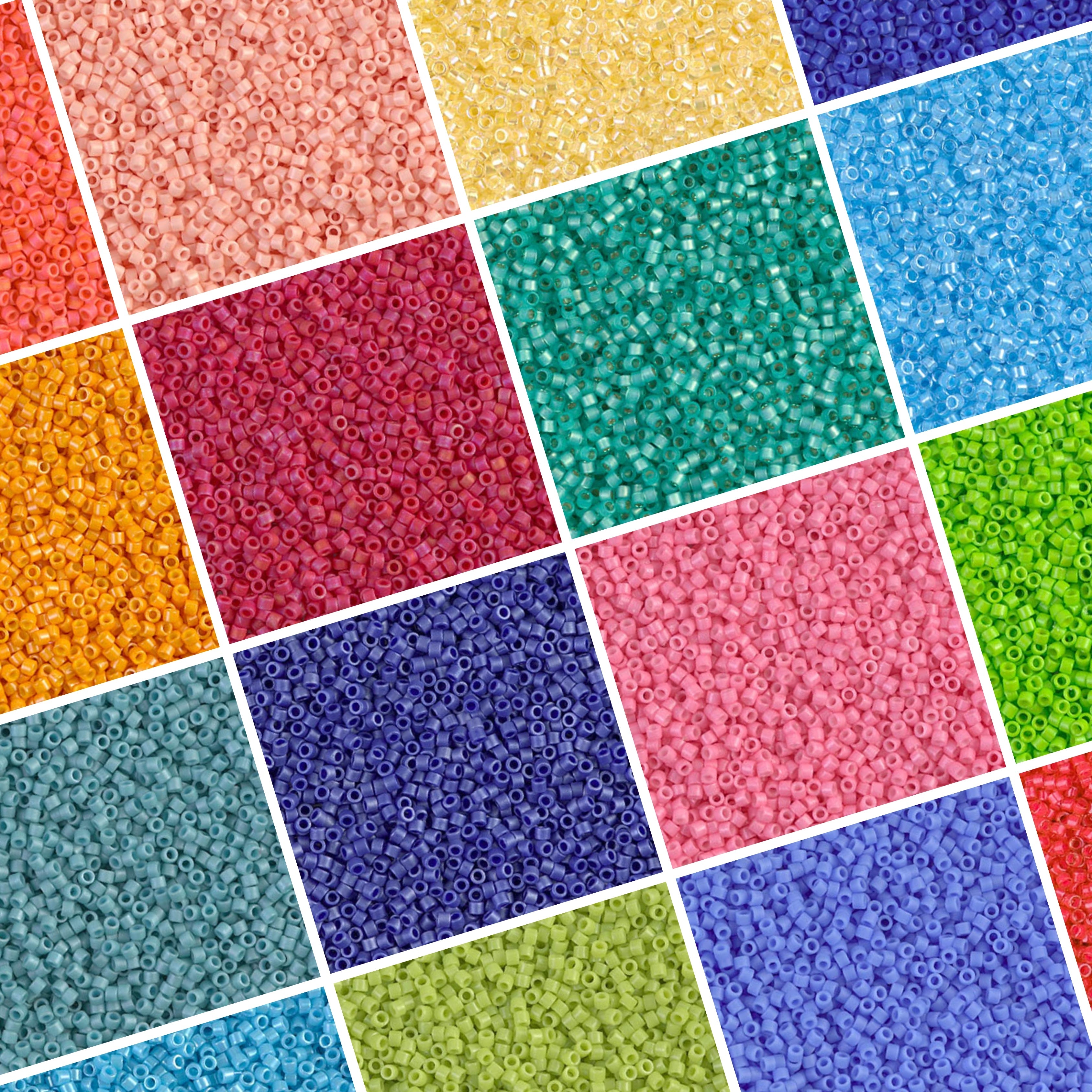
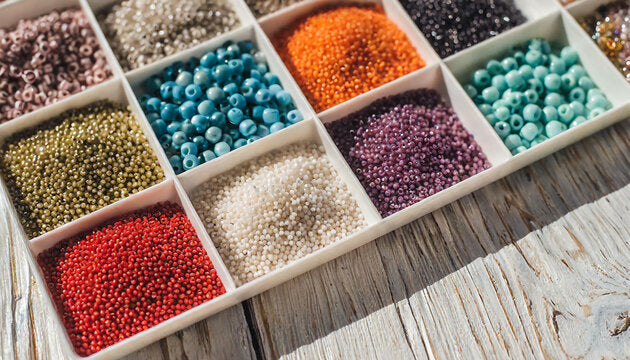
Seed bead is the category name for small glass beads used in needlework, weaving, and jewelry making. Any bead small enough to be strung on fine thread or passed through a beading needle multiple times can fall under this label. The term has been in use since at least the 1800s, and today it covers dozens of bead shapes, finishes, and sizes from manufacturers around the world.1
What confuses a lot of beginners is that "seed bead" gets used two ways. Sometimes people mean the whole category. Sometimes they mean the basic round or oval type you'd find at any craft store. The other terms (rocaille, delica, tila) are more specific names within that same family.
Think of it like the word "pasta." Linguine and penne are both pasta, yet they look and behave quite differently. Rocaille beads and tila beads are both seed beads, built for different jobs.
What are rocaille beads?
Rocaille beads are small, rounded glass seed beads with a barrel shape and a hole through the center that's often silver-lined or color-coated. The name comes from the French word for "pebble" or "small stone," which fits. They have that smooth, rounded look.2 Rocaille beads come in the standard seed bead sizing system (8/0, 11/0, 15/0, and so on), where a higher number means a smaller bead. An 11/0 rocaille is about 2.2mm across, small enough that you can fit several on a fingernail.
The silver- or color-lined hole is a big part of what makes rocaille beads distinctive. Light passes through the transparent glass body and bounces off the metallic lining inside the hole, giving each bead a sparkle that plain round glass beads don't have. That effect is why rocaille beads have been popular in traditional beadwork, embroidery, and fringe for generations.
How do rocaille beads string?
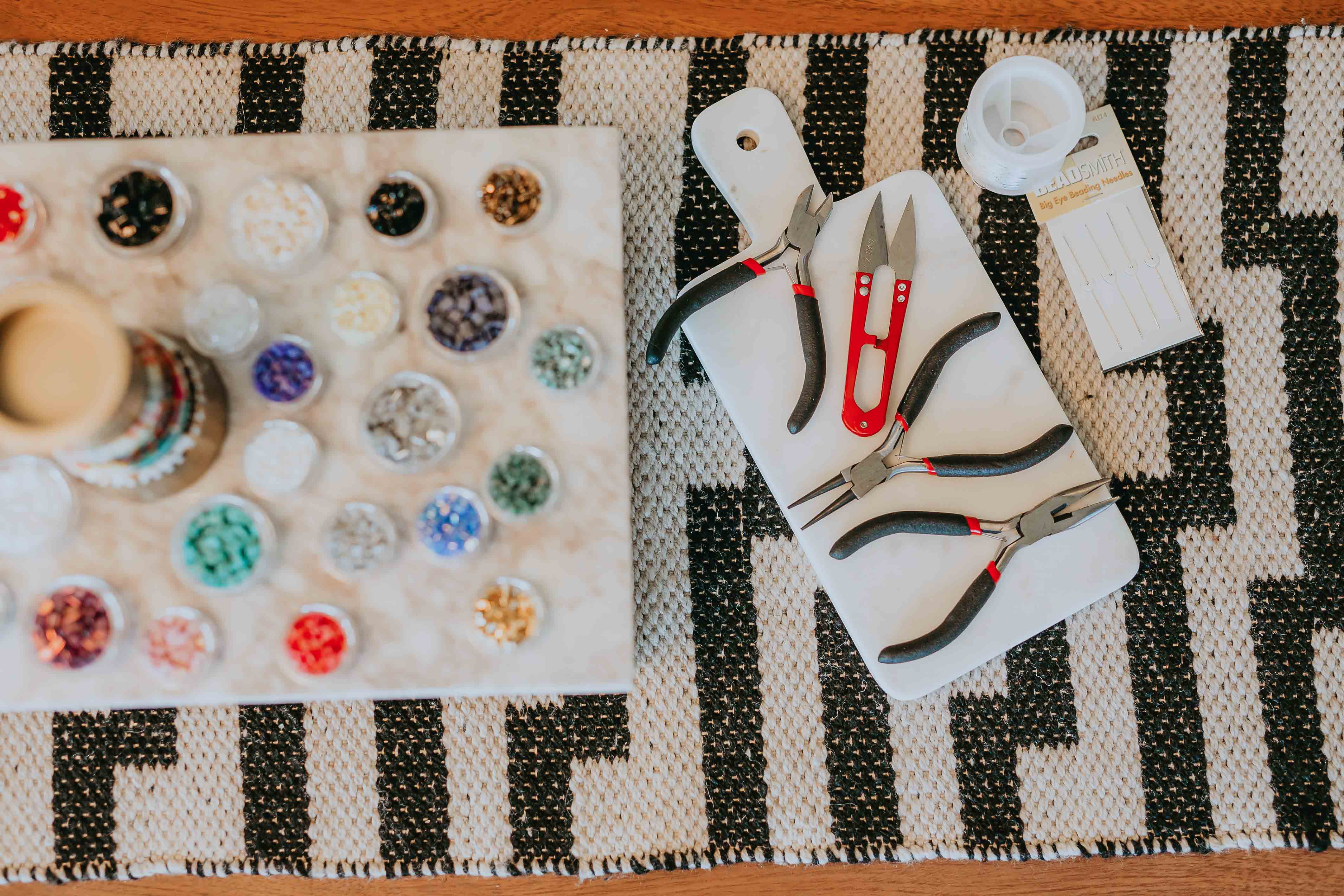
Rocaille beads string on fine beading thread, size 12 or 13 beading needles, and beading wire. Their round shape means they settle against each other in a curved, organic way. Good for fringe, woven pieces, and embroidery. They don't lock flat like some other bead shapes do, which can make tension trickier for beginners.
How is a rocaille bead different from a regular seed bead?
Technically, rocaille is a type of seed bead. The distinction is shape and finish. A "regular" seed bead (sometimes just called a round seed bead) has a slightly more cylindrical or donut profile, while a rocaille bead is rounder and often has that lined hole. In everyday conversation, many beaders use the terms interchangeably, which is why beginners get confused.
The table below compares the three bead types beginners encounter most often:
| Bead Type | Shape | Holes | Typical Size | Best For |
|---|---|---|---|---|
| Seed bead (round) | Round / donut | 1 | 11/0 (~2.2mm) | General beadwork, stringing, weaving |
| Rocaille bead | Rounded barrel, lined hole | 1 | 8/0 to 15/0 | Embroidery, fringe, sparkle-heavy designs |
| Tila bead | Flat square | 2 (parallel) | 5mm x 5mm | Flat-band bracelets, two-strand weaving |
What are tila beads, and how are they different?
Tila beads stand apart. They're flat, square, two-hole glass beads made by Miyuki, a Japanese bead manufacturer known for tight tolerances and consistent sizing.3 Each tila bead measures 5mm x 5mm x 1.9mm (about the size of a small sequin, though thicker), with two parallel holes running side by side through the bead.
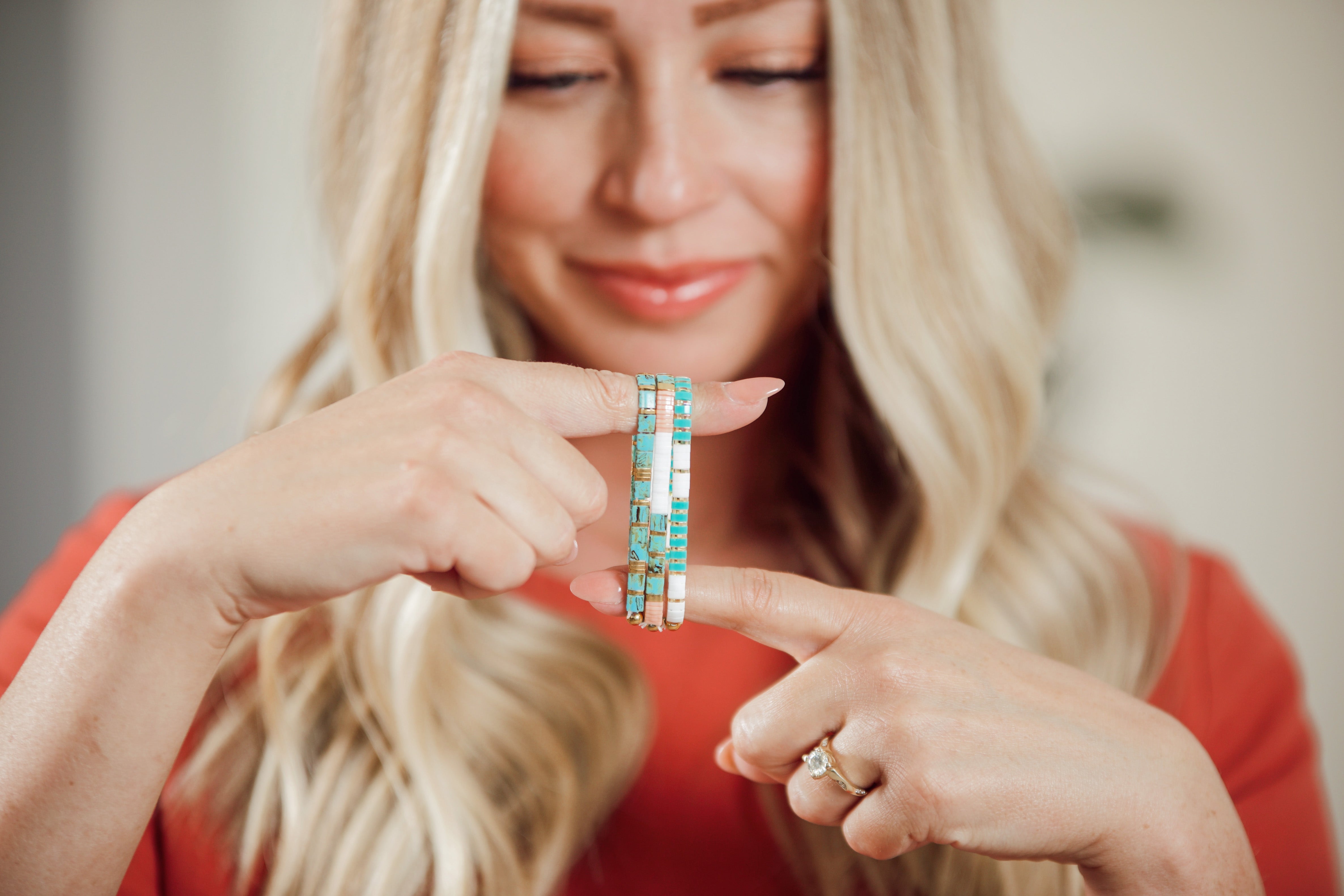
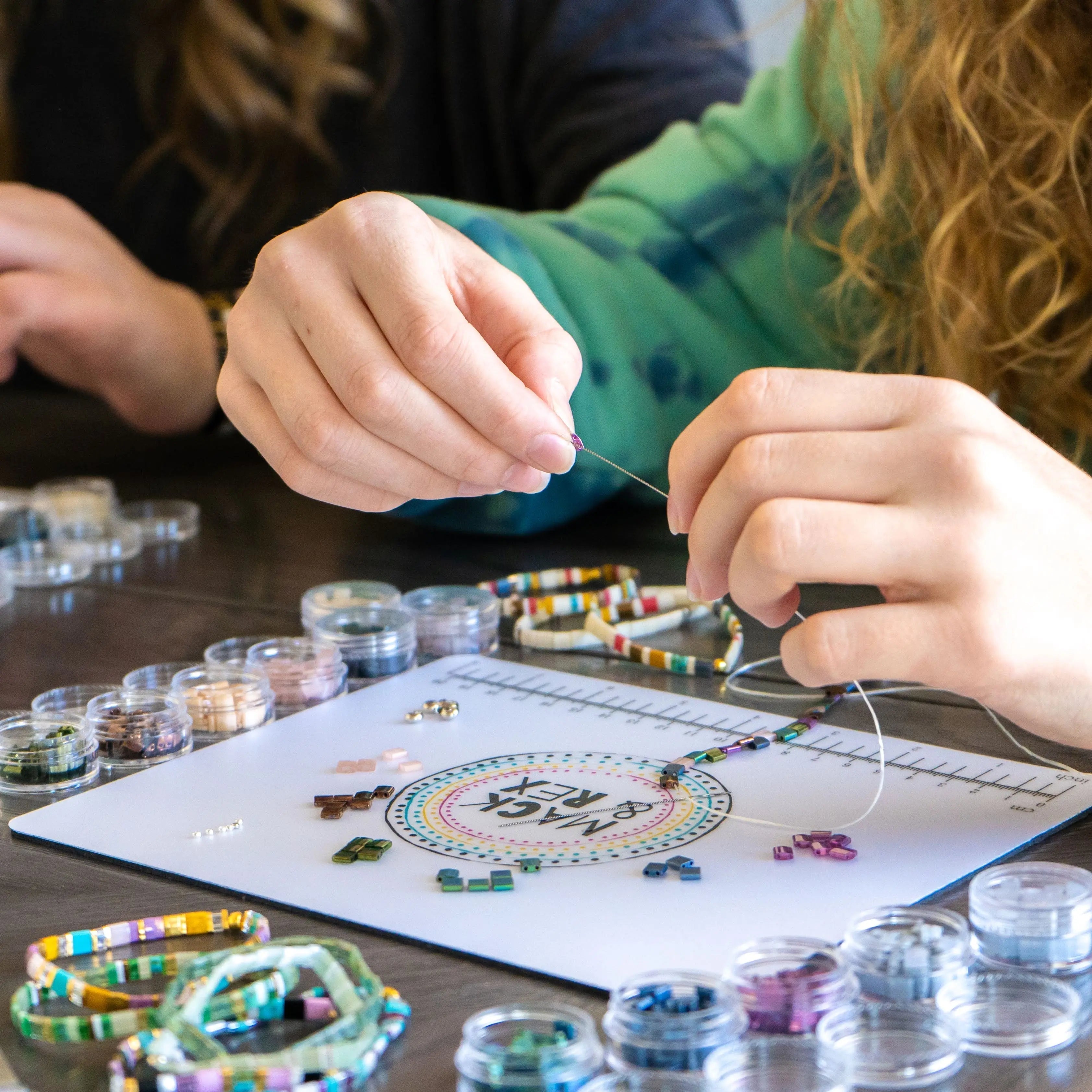
That two-hole design changes everything about how the bead behaves. Thread or elastic runs through both holes at once, locking the bead flat and creating a smooth, tile-like surface. String a row of them side by side on dual strands of elastic and you get a wide, flat band that sits flush against the wrist. Modern, graphic, stackable.
Why do tila beads work so well for bracelets?
A few reasons. The flat shape means the bracelet doesn't roll or twist on the wrist the way a round-bead bracelet can. The two-hole construction gives the band structure so it holds its shape rather than drooping between beads. And because tila beads come in a wide range of colors (Miyuki produces them in hundreds of colorways), you can mix and match for patterns, gradients, and custom looks without any complicated techniques.
For a beginner who wants a bracelet that actually looks finished and wears well, tila beads are a solid starting point. They're larger and easier to handle than 11/0 rocaille beads, and the band-style result is something you'd actually want to wear every day.
At Mack & Rex, the tila beads are Miyuki Japanese glass — the same material and tight bead sizing you'd expect from the source. They sell loose tila beads and themed mixes, plus ready-to-wear tila bracelets and DIY kits for anyone who'd rather skip the stringing and just wear one.
Which bead should a beginner start with?
Depends on what you want to make.
If you're drawn to traditional embroidery, beaded fringe, or detailed woven pieces, rocaille beads and round seed beads are the right place to start. You'll need beading needles, beading thread, and patience. Size 11/0 beads are tiny, and working with them takes some practice.
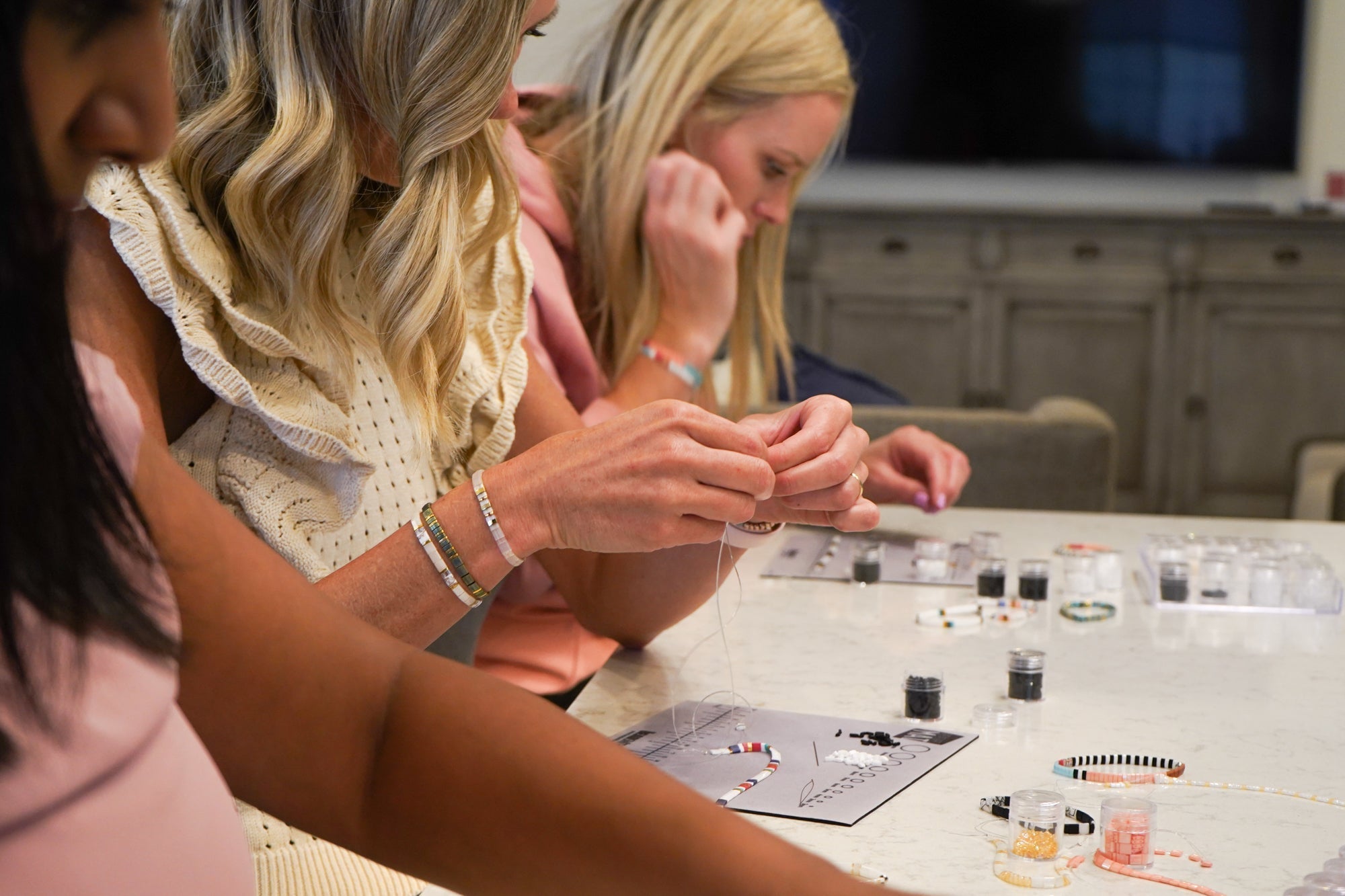
Want to make bracelets without a steep learning curve? Tila beads are easier. The larger size (5mm vs. ~2mm) means you can actually see what you're doing. The two-hole threading is straightforward to learn. The finished look is clean and modern rather than fussy.
Either way, start with a limited palette. Pick two or three colors and just practice the threading before you worry about patterns. Most beaders say the first bracelet is just to learn the tension, and that's fine.
A note on kids and beads
Small beads of any type (rocaille, seed, or tila) are choking hazards. If you're crafting with kids, an adult should supervise throughout and keep loose beads away from young children who might put them in their mouths. Kits and loose beads aren't appropriate for very young children.
Where to buy tila beads and tila bead bracelets
Mack & Rex carries Miyuki tila beads and tila bead mixes at mackandrex.com/collections/all-seed-beads, along with ready-to-wear tila bracelets in named collections like STAINED, BEACHY, and RETRO SUNSET. Want to make your own? Their trio kits come with beads, elastic cord, and tools — everything in one box.
US orders over $100 ship free, and bracelets come with a buy-3-get-1-free deal (no code needed). Mack & Rex ships internationally, with shipping and any customs and duties calculated at checkout.
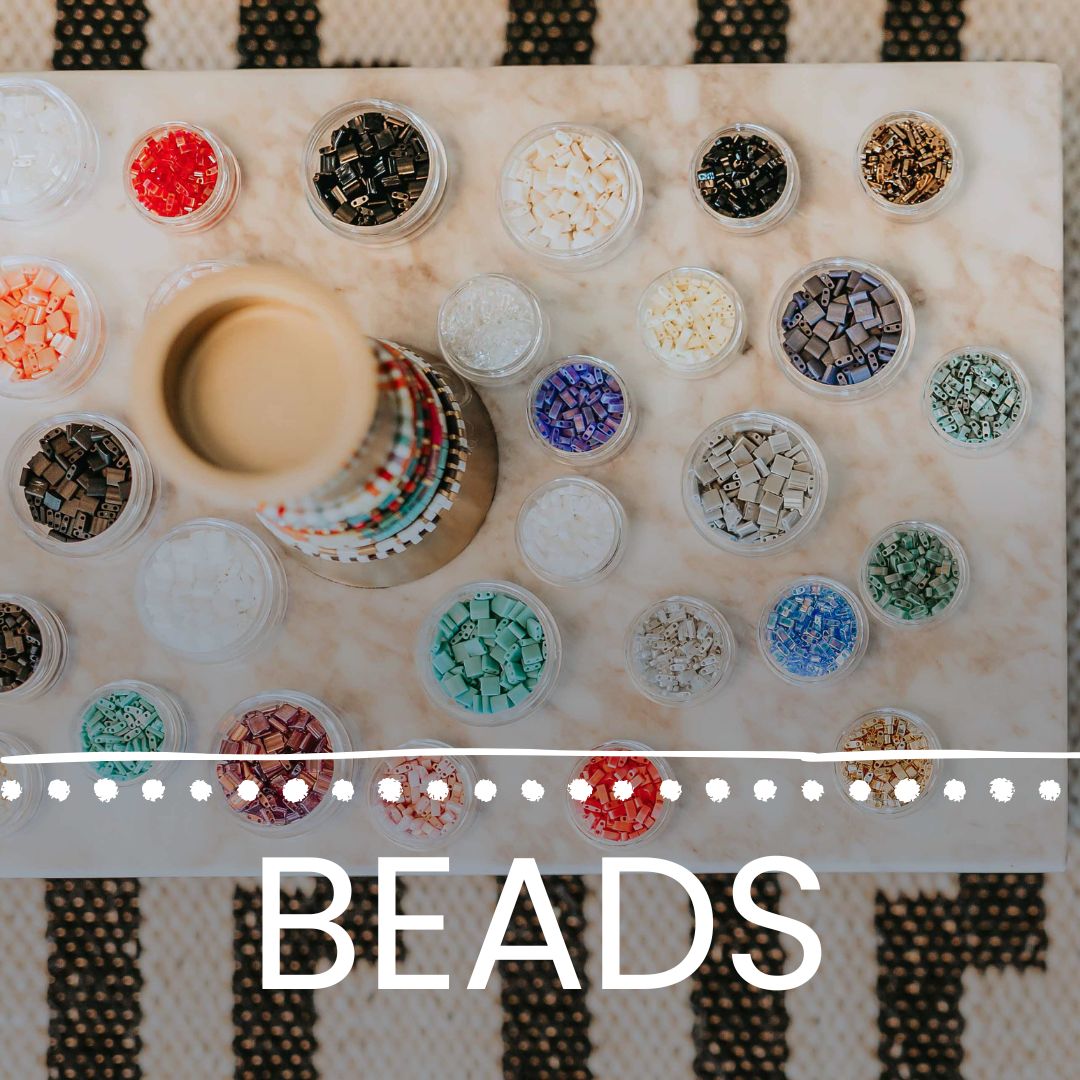
Browse the full bead selection and see what color combinations catch your eye. That's usually how it starts.
Frequently Asked Questions
What are rocaille beads?
Rocaille beads are small, rounded glass seed beads with a barrel shape and a silver-lined or color-lined hole. The name is French for "pebble." They follow the standard seed bead sizing system (11/0 is about 2.2mm), and the lined hole gives them a distinctive sparkle. They're commonly used in embroidery, fringe, and traditional beadwork.
What is the difference between rocaille beads and seed beads?
Seed bead is the broad category. Rocaille beads are a specific type of seed bead with a rounded barrel shape and a lined hole. All rocaille beads are seed beads, yet seed beads also include cylinder beads (like Miyuki Delicas), two-hole beads, and tila beads. The terms are often used interchangeably in casual conversation, which is where the confusion comes from.
What are tila beads?
Tila beads are flat, square, two-hole glass beads made by Miyuki in Japan. Each bead is 5mm x 5mm x 1.9mm with two parallel holes. That design creates a tile-like surface that, when strung on two strands of elastic, produces the flat band you see in modern tila bead bracelets. Mack & Rex carries Miyuki tila beads in loose packs and themed color mixes.
What size are seed beads, and what do the numbers mean?
Seed beads are sized using "aught" notation: 11/0, 8/0, 15/0, and so on. A higher number means a smaller bead. The most common general-purpose size is 11/0, which is roughly 2.2mm in diameter. Size 8/0 is larger (about 3mm) and easier to handle. Rocaille beads follow the same sizing system. Tila beads are a fixed 5mm square.
Can beginners use tila beads for bracelets?
Yes, and they're often easier to start with than tiny round seed beads. Tila beads are 5mm across, so they're much easier to see and handle. The flat, two-hole design threads easily on elastic cord, and the finished bracelet holds its shape well. Mack & Rex sells DIY tila kits and ready-to-wear tila bracelets for shoppers who'd rather skip the stringing. Note: all loose beads are small parts, so keep them away from young children.
Shop tila beads and bead mixes at Mack & Rex. Japanese Miyuki glass, hundreds of color options, free shipping on US orders over $100.
Sources: 1. Wikipedia: Seed Bead | 2. Wikipedia: Rocaille | 3. Miyuki Beads (Japan)