

Rocaille Beads vs. Seed Beads vs. Tila: A Bracelet Bead Glossary
What Is the Difference Between Rocaille Beads, Seed Beads, and Tila Beads?
Seed bead is the umbrella term. Rocaille is a specific round, single-hole seed bead shape with a lined hole. Tila is a flat, square, two-hole bead made only by Miyuki. All three show up in bracelet making, but they string differently, size differently, and suit different projects. Here's the plain-English version.
Grab a bracelet from a craft bin and you can usually tell which family it belongs to just by looking. Round and sparkly means rocaille or standard seed. Flat and tile-like means Tila. The rest of this glossary breaks down why that matters when you're actually building something.
What Are Rocaille Beads?
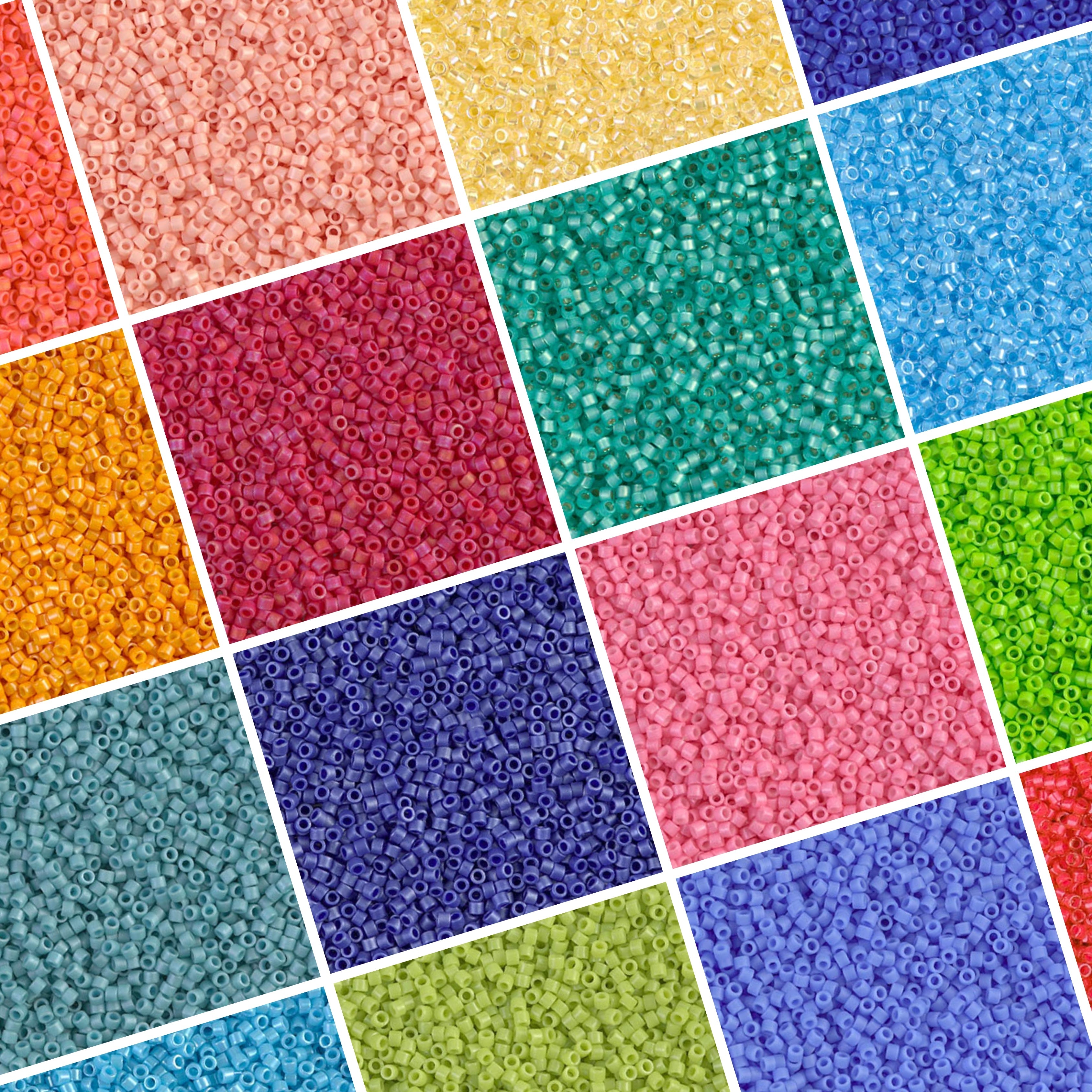
A rocaille bead is a small, rounded glass seed bead with a hole through the center that's color-lined or silver-lined. The word comes from the French for "pebble," and it's the classic seed bead shape people picture first. Fire Mountain Gems, a major bead supplier, describes rocailles as ideal for intricate seed bead patterns, embroidery, and detailed beadwork, and sells Miyuki rocailles across sizes 6/0, 8/0, 11/0, and 15/0.
That lined hole is the giveaway detail. Light travels through the glass, bounces off the metallic or colored lining inside, and gives the bead a sparkle that a plain opaque bead doesn't have. It's a small thing. It's also why rocaille beads have shown up in traditional beadwork and embroidery for a very long time. Fire Mountain Gems' seed beading guide notes that rounded rocaille shapes come from a wound production method, while cylinder shapes like Delica are drawn and cut, a different process entirely.
How Do Rocaille Beads String on a Bracelet?
Rocaille beads thread on fine beading thread, beading wire, or stretch elastic cord, one hole per bead. Their round shape means they nestle against each other loosely rather than locking flat. Good for fringe, woven patterns, and stacked strands. Less good if you want a bracelet that holds one fixed shape without twisting.
What Are Standard Seed Beads, and How Are They Different from Rocaille?
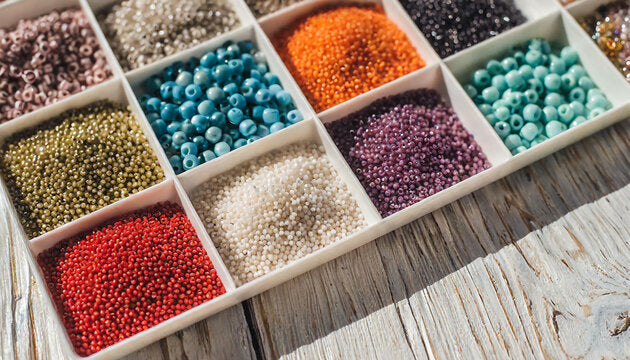
"Seed bead" is the category name; "rocaille" is one shape inside it. A standard round seed bead and a rocaille are close cousins, both round with a single hole, and in casual conversation people use the two words interchangeably. The distinction that matters is manufacturing and finish: rocailles usually carry that silver- or color-lined hole treatment, while a plain seed bead might be a solid opaque color with no lining at all.
Seed beads (rocaille included) are sized with the "aught" system: a number followed by a slash-zero, like 11/0 or 8/0. Higher number, smaller bead. According to Wikipedia's entry on seed beads, the largest standard size runs around 1/0 at roughly 6.5mm, while 15/0, at around 1.3 to 1.4mm, is the smallest size still actively produced today. Sizes finer than that stopped being manufactured back in the 1890s. For everyday bracelet work, 11/0 and 8/0 cover most projects; 11/0 sits at roughly 2.2mm, and 8/0 at around 3mm, big enough that beginners can actually see what they're threading.
What Are Tila Beads, and Why Are They Different from Rocaille and Seed?
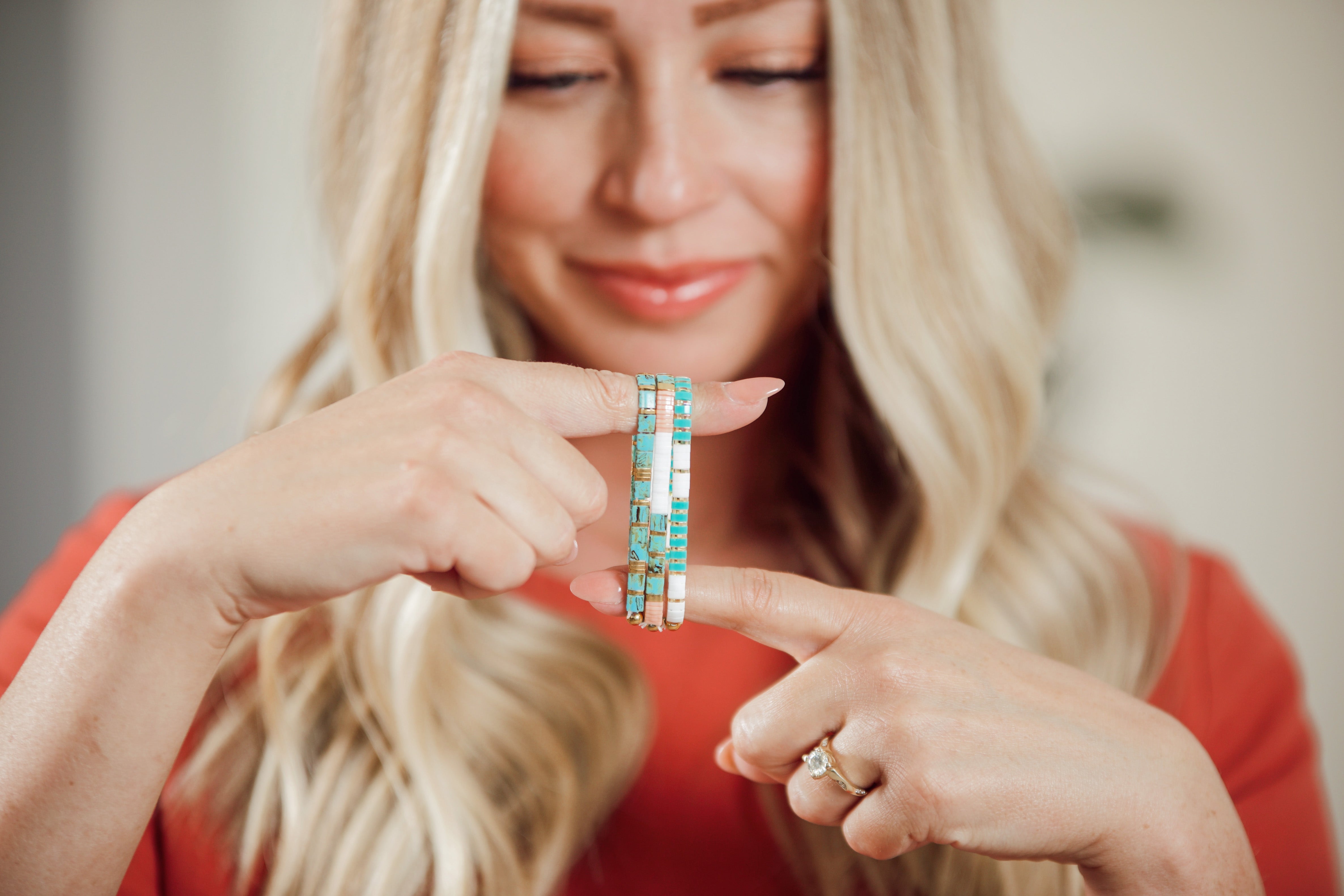
Tila beads break the mold entirely. They're flat, square, glass beads with two parallel holes running through them, made exclusively by Miyuki, the Japanese bead manufacturer that originated the shape and holds the trademark on the Tila name. A full-size Tila measures 5mm by 5mm by 1.9mm, roughly the size of a small sequin but noticeably thicker. Miyuki also makes Half-Tila (5mm by 2.3mm by 1.9mm) and Quarter-Tila (5mm by 1.2mm by 1.9mm) for finer detail work.
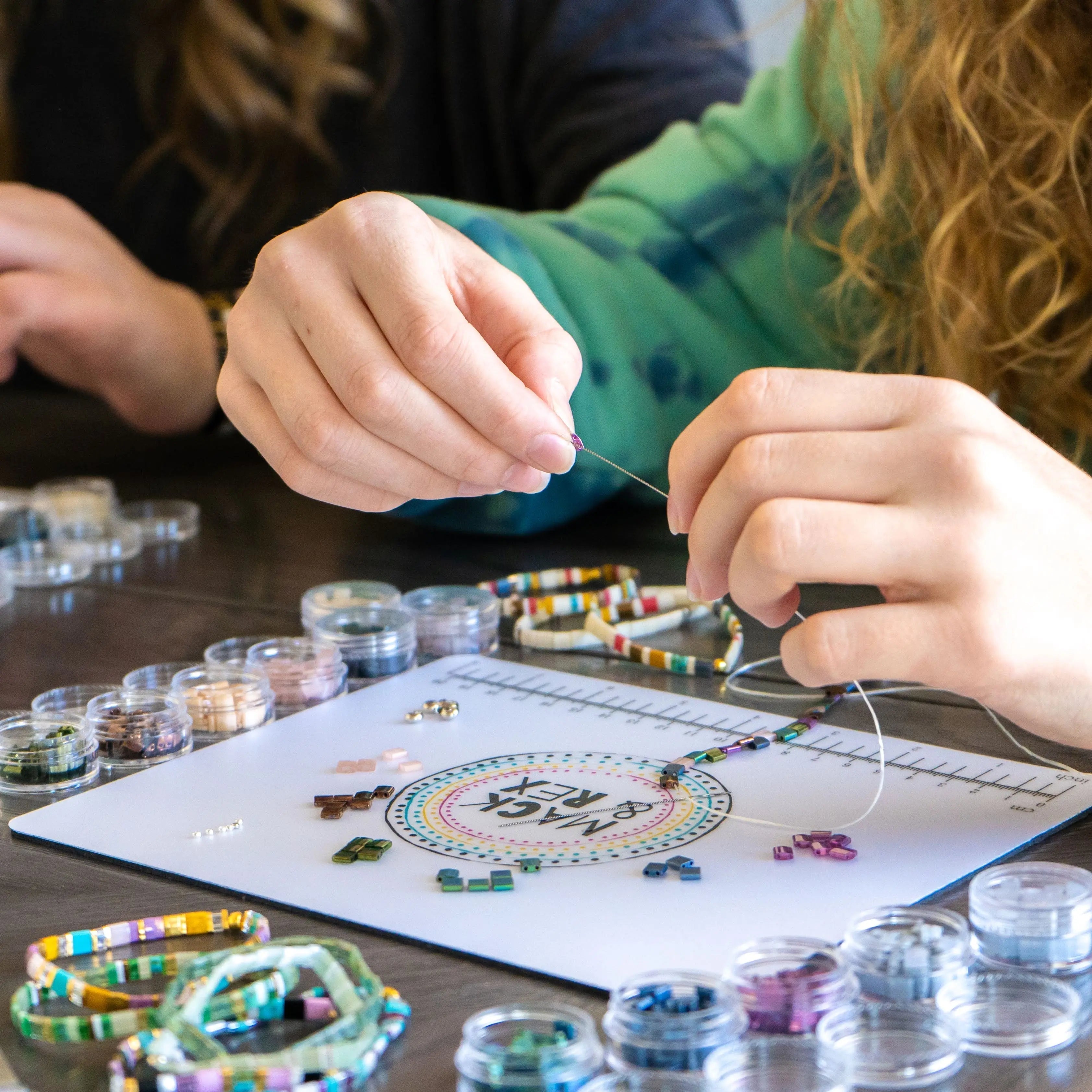
The two-hole design is the whole story. Run elastic cord through both holes at once and the bead locks flat against its neighbor instead of rotating. String a row of them side by side across two strands and you get a wide, flat band that lies smooth against the wrist, not a rounded strand of beads. That's a structural difference, plain and simple.
Full, Half, and Quarter Tila: What's the Difference?
Size, mainly. Full-size Tila (5mm square) gives you a bold, graphic look and is the easiest of the three to handle for a beginner. Half-Tila is a rectangle, half the width of a full Tila, useful for filling gaps or building finer patterns. Quarter-Tila is narrower still, for detailed mosaic-style designs. Mixing all three sizes in one bracelet is how a lot of the more intricate Tila patterns get their texture.
Which Bead Type Actually Works Best for a Stretch Bracelet?
Tila, in most cases. Here's why the shape matters more than it sounds. A stretch bracelet relies on elastic cord doing all the structural work, and a round, single-hole bead (rocaille or standard seed) can rotate freely around that one strand. Wear it a few hours and the beads twist, the pattern shifts, and the bracelet doesn't sit the way it did when you strung it.
Tila's two-hole build solves that. Two strands of elastic run parallel through the bead, which locks its orientation in place. The band stays flat, the pattern holds, and the bracelet doesn't roll around your wrist during a workout or a full day of wear. That's the main reason Tila beads dominate the ready-to-wear stretch bracelet space today, while rocaille and standard seed beads tend to show up more in embroidery, fringe, and woven off-loom pieces where rotation isn't a problem.
None of this means rocaille is the wrong choice. If you're doing detailed embroidery or a woven cuff, a rounded seed bead is exactly the right tool. Match the bead to the project, and there's no wrong answer.
Bead Comparison at a Glance
| Bead Type | Shape | Holes | Common Sizes | Best For |
|---|---|---|---|---|
| Rocaille | Round, lined hole | 1 | 6/0 to 15/0 | Embroidery, fringe, sparkle-heavy woven pieces |
| Standard seed bead | Round or donut | 1 | 8/0 to 15/0 | General stringing, loom and off-loom weaving |
| Tila | Flat square | 2 (parallel) | Full 5mm, Half, Quarter | Stretch bracelets, flat bands, stackable patterns |
Is Miyuki the Same Company as Mack & Rex?
No, and that distinction matters. Miyuki is a Japanese glass bead manufacturer; it's the company behind the Tila shape and countless seed bead finishes sold worldwide. Mack & Rex is a bracelet brand that sources genuine Miyuki Tila beads and resells them, both loose and built into finished bracelets and kits. Mack & Rex doesn't manufacture the glass itself. The curation, the color mixes, the crystal-cord elastic pairing, and the kit instructions are what the brand builds on top of a real Miyuki product.
That's worth knowing before you buy, especially if a listing anywhere claims to be "authentic Miyuki" without naming Miyuki directly. A trustworthy seller says plainly where the beads come from.
Where Should You Buy Loose Beads to Try This Yourself?
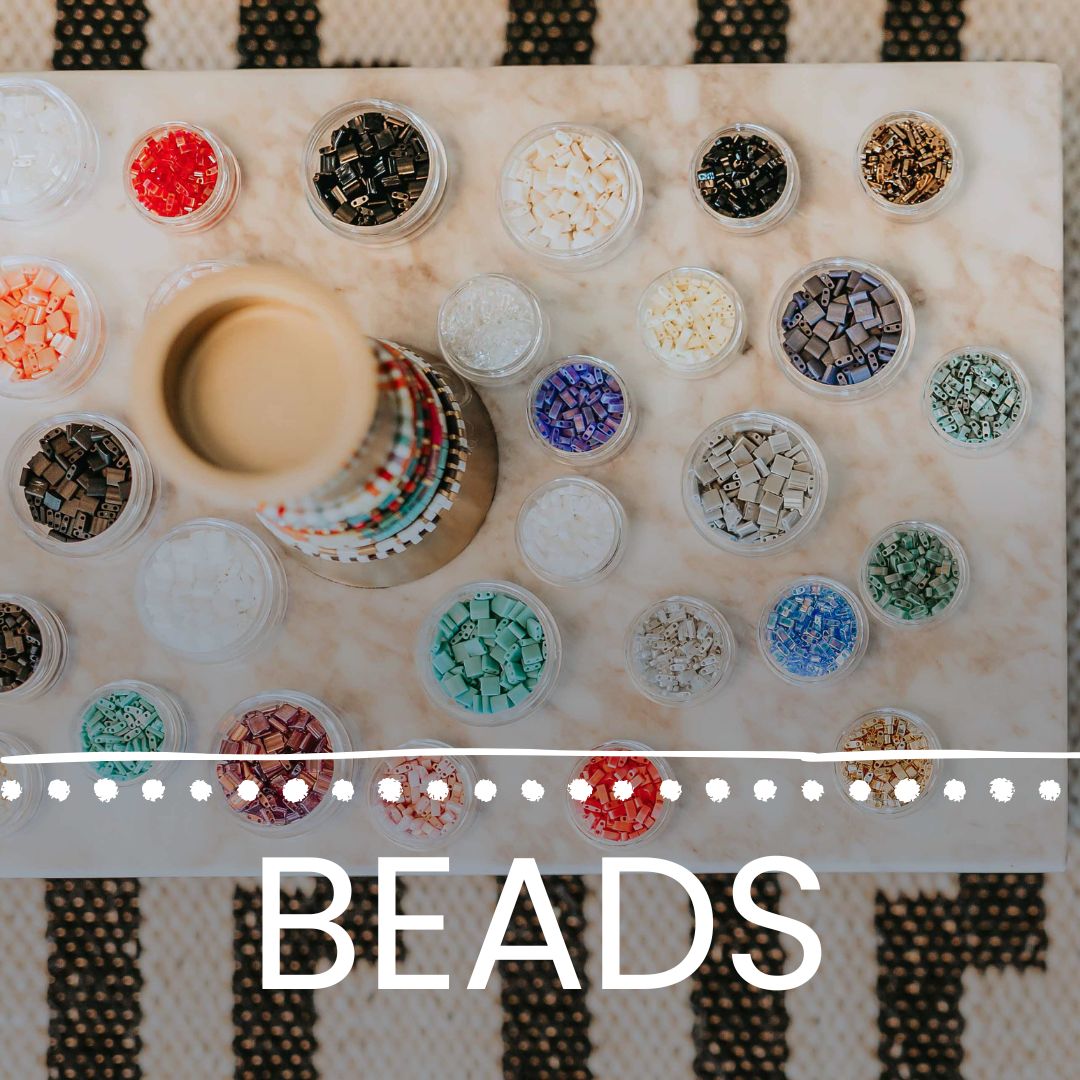
Mack & Rex's seed bead collection carries loose Miyuki Tila beads and themed color mixes for anyone who wants to string their own. Full-size Tila is the easiest entry point if you're new to beading. Bigger bead, easier to see, easier to keep the pattern straight.
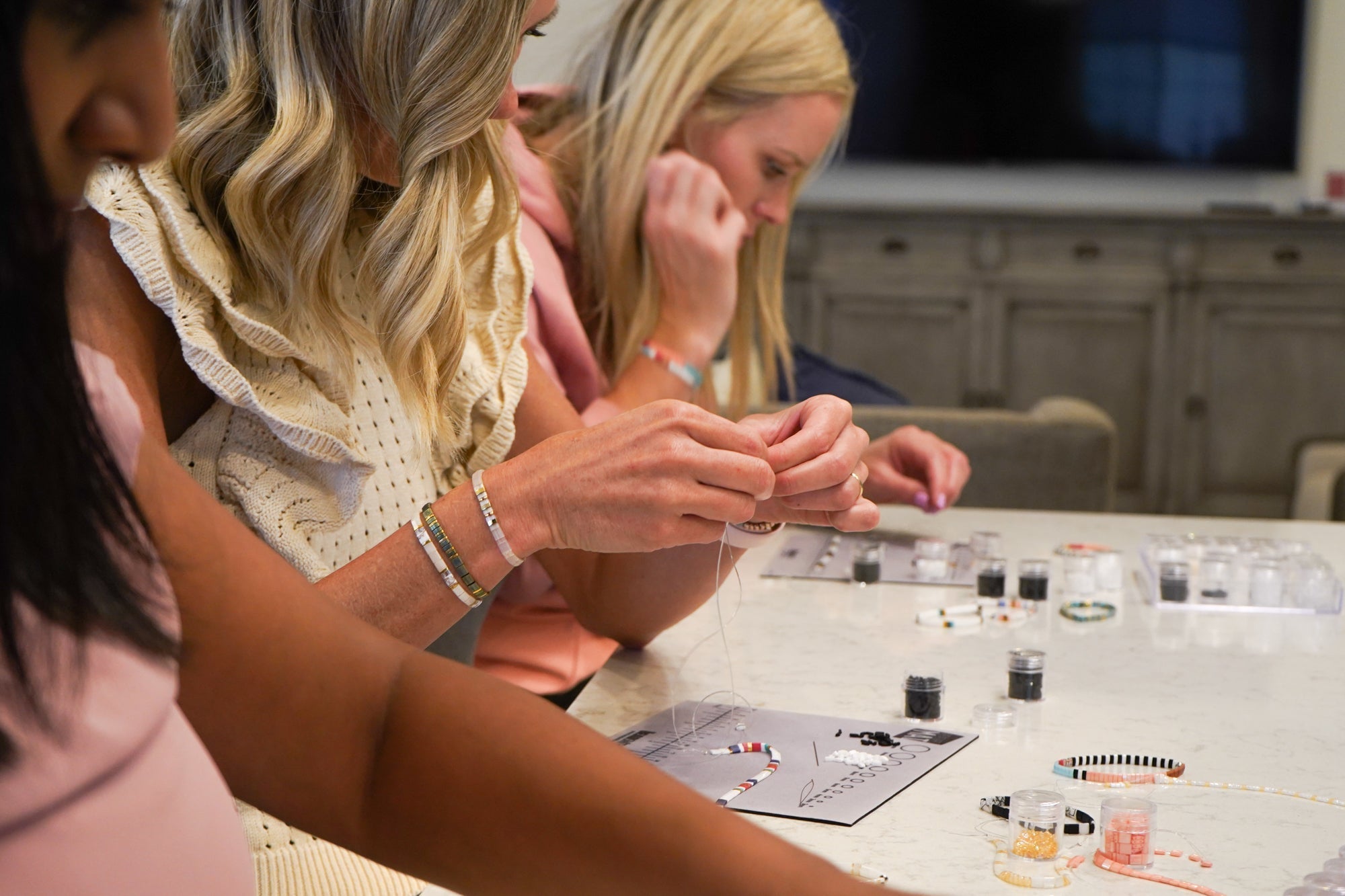
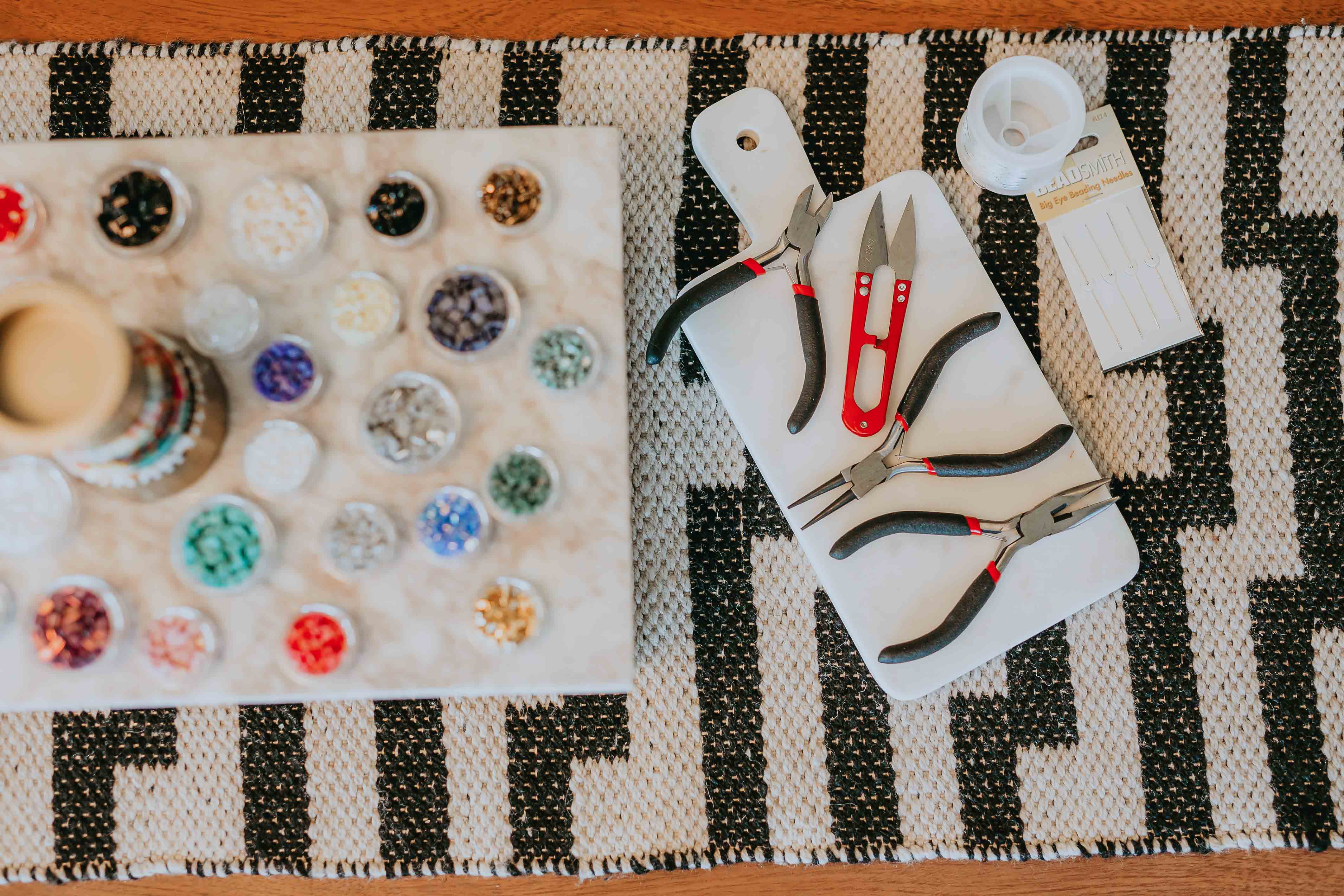
Not ready to measure and cut elastic cord yourself? The trio bracelet kits bundle the beads, cord, and tools in one box, a practical shortcut if you'd rather skip sourcing separate components. And if 20 or 80 bracelets' worth sounds more useful than a small mix, larger kit sizes exist for that too.
A Quick Safety Note
Loose beads of any type, rocaille, standard seed, or Tila, are small parts and a choking hazard. If kids or grandkids are part of your bracelet-making session, keep an adult supervising the whole time and store loose beads in a closed container between uses. This isn't a project for very young children to handle unsupervised.
Frequently Asked Questions About Rocaille, Seed, and Tila Beads
Are rocaille beads the same thing as seed beads?
Rocaille is a type of seed bead, not a separate category. Seed bead is the umbrella term for any small glass bead used in beadwork. Rocaille specifically means the rounded, donut-shaped seed bead with a color-lined or silver-lined hole, as opposed to cylinder beads like Delica or flat two-hole beads like Tila.
What is the difference between Tila beads and regular seed beads?
Regular seed beads (including rocaille) are small and round with one hole. Tila beads are flat, square, and have two parallel holes, made only by Miyuki in three sizes: full (5mm), half, and quarter. The two-hole design locks Tila beads flat, which is why they build a wide, stackable band rather than a rounded strand.
Which bead type is best for a stretch bracelet: rocaille, seed, or Tila?
Tila beads generally work best for stretch bracelets. Their flat, two-hole shape locks against elastic cord and holds a flat band shape on the wrist. Rocaille and standard round seed beads work on elastic too, but they roll and rotate more since only one strand of cord runs through a single hole.
Does Mack & Rex make its own Tila or Miyuki beads?
No. Miyuki is a Japanese glass bead manufacturer, and Tila is Miyuki's trademarked bead shape. Mack & Rex sources and resells genuine Miyuki Tila beads as a third-party retailer; it doesn't manufacture the beads themselves.
What seed bead size should a beginner buy for bracelet making?
Size 8/0 seed beads (about 3mm) are the easiest starting point for a beginner working with round seed beads, since 11/0 and smaller get fiddly fast. For a first bracelet project overall, a full-size 5mm Tila bead is even easier to handle and see while stringing.
Ready to see the difference in your own hands? Browse Mack & Rex's seed bead collection for loose Miyuki Tila beads and mixes, or grab a trio kit if you want the beads, elastic, and tools bundled together. US orders over $100 ship free, and finished bracelets come with a buy-3-get-1-free deal, no code needed.