

Silver Ball Bracelet Buyer's Guide: Sizing, Styles & What to Look For
What Should You Actually Look for When Buying a Silver Ball Bracelet?
A silver ball bracelet sounds simple until you're staring at a product page with no material details, a vague "one size" claim, and a photo that could be anything from sterling to spray paint. The right silver ball bracelet fits your wrist, holds its finish through daily wear, and plays well with the rest of your stack. Here's how to read a listing and know what you're getting before you buy.
How Do You Find the Right Size?
Measure your wrist at the narrowest point with a soft tape measure, then add half an inch to one inch for comfort. That extra room lets the bracelet move naturally without sliding over your knuckles or sitting tight enough to leave marks. For a stretch bracelet, you want it to slip on easily but not gap when your arm is at rest.
Most bracelet listings give you a circumference in inches. If a brand only gives you "small, medium, large," ask for the actual measurements. A size medium from one brand might measure 6.5 inches; from another, it's 7.5. Those are two entirely different fits. Mack & Rex publishes wrist size ranges from XXS through 5XL precisely because "medium" tells you almost nothing.
Ball bead diameter affects perceived fit, too. A bracelet strung with 8mm beads will sit slightly higher off the wrist than one with 4mm beads at the same circumference. If you're layering multiple bracelets, mixing bead diameters adds visual depth and keeps pieces from fusing into a solid band on your arm.
What Bead Finish Options Are Worth Knowing?
Silver is a finish category, not a material. The word covers everything from solid sterling to thin plating over plastic, and the price gap between those two extremes is real.
Four finishes you'll actually encounter:
- Sterling silver (.925): 92.5% silver, alloyed for wearability. Tarnishes slowly in air and sweat but can be polished back. Look for the .925 stamp or explicit "sterling" in the product description. According to the Gemological Institute of America, sterling silver remains the industry standard for durable fine-silver jewelry.[1]
- Silver-plated: Base metal (often brass or zinc alloy) with a thin silver coating. Looks identical at first but the plating wears through at contact points, typically within one to two years of daily use.
- Hematite or metal-coated glass: Glass or stone beads with a metallic surface treatment. Lighter weight than solid metal. The look is similar to polished silver, and it often shows up in tila-adjacent stacks because the sheen pairs well with Japanese glass beads.
- Oxidized or antiqued silver: Deliberately darkened with a patina to bring out texture or design. A different look than bright silver, but durable when properly sealed.
If the listing doesn't say what the material is, that's a red flag. Reputable sellers specify the bead material, the cord type, and whether there's any warranty or quality guarantee.
What Makes a Stretch Bracelet Actually Last?
Short answer: the cord, not the beads.
The cord is the failure point on nearly every stretch bracelet that breaks. Basic rubber or silicone elastic degrades with exposure to lotions, chlorine, hand sanitizer, and repeated stretching. It loses elasticity before the beads show any wear. Crystal-cord elastic (a braided, coated construction) holds its memory and resist chemical breakdown far better than single-strand rubber. The Craft Industry Alliance notes that crystal elastic cord rated for jewelry use typically outperforms standard rubber elastic for wrist-worn pieces that see daily flexing.[2]
Things worth checking on any stretch bracelet listing:
- Cord material (crystal elastic vs. standard rubber vs. nylon)
- Knot placement and whether the knot is secured inside a bead
- Quality guarantee or return policy if the bracelet breaks
Mack & Rex bracelets use crystal-cord elastic and back their finished bracelets with a quality guarantee. That matters when you're wearing a bracelet through workouts, kid pickups, and dishwashing cycles in the same week.
How Does a Silver Ball Bracelet Fit Into a Tila Stack?
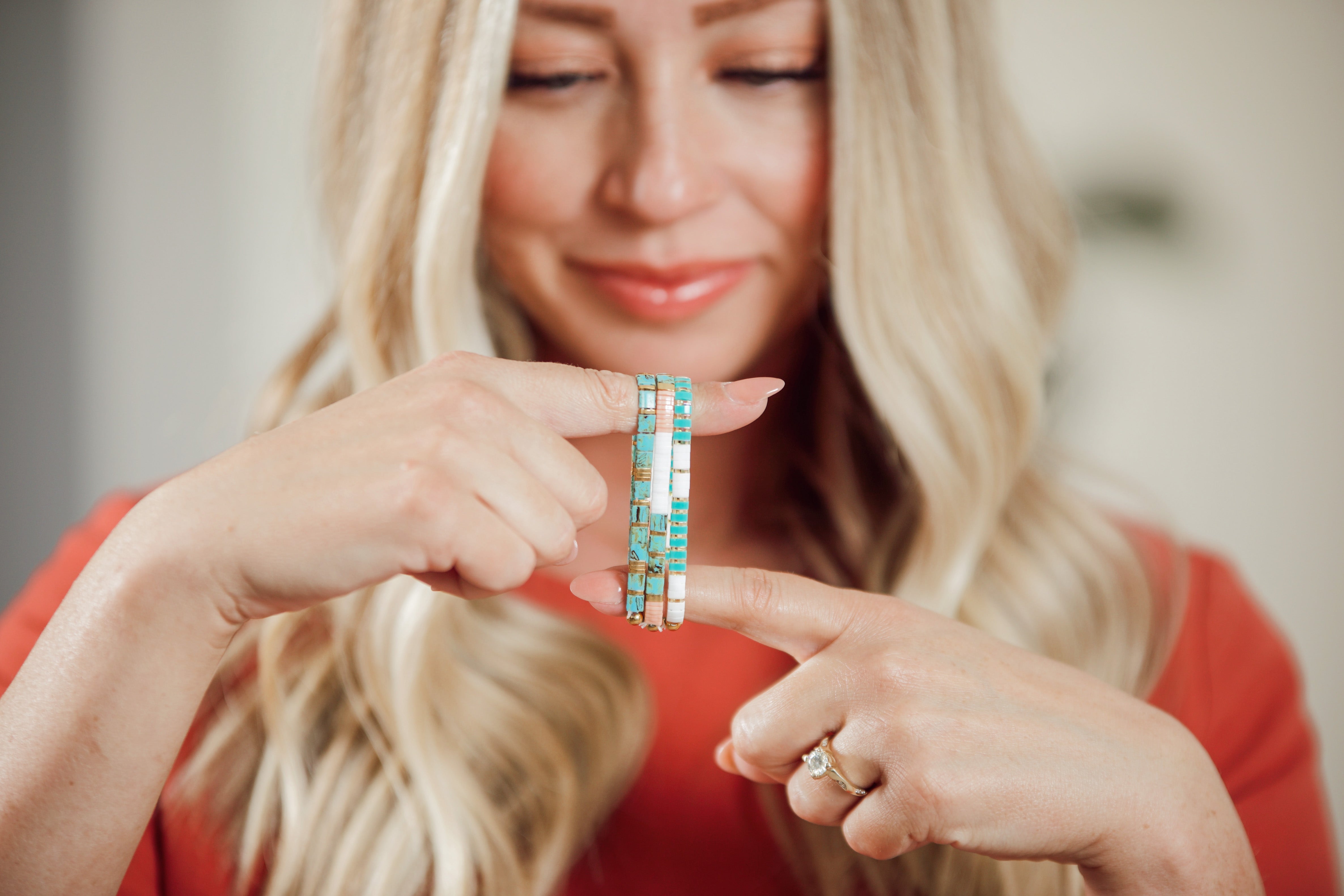
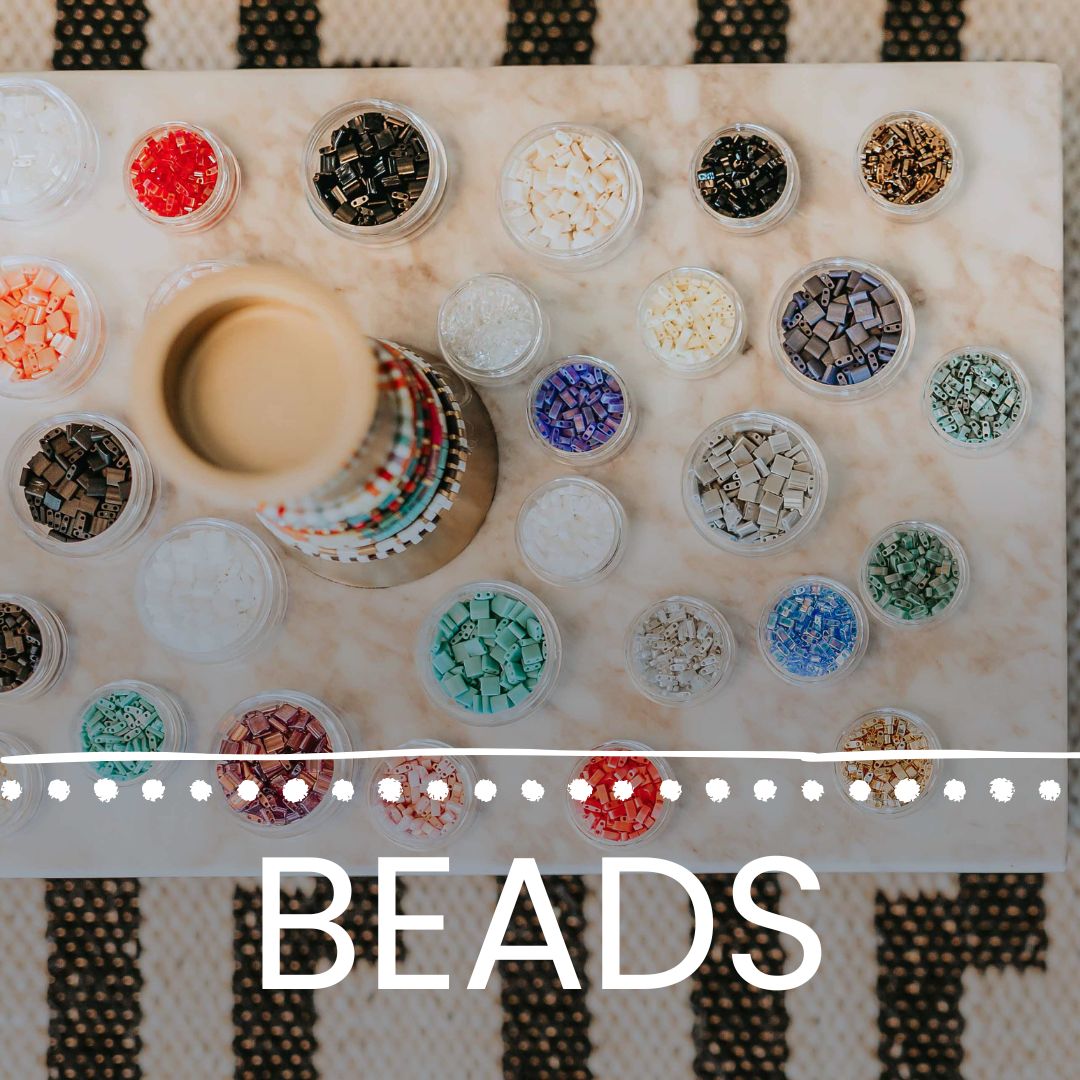
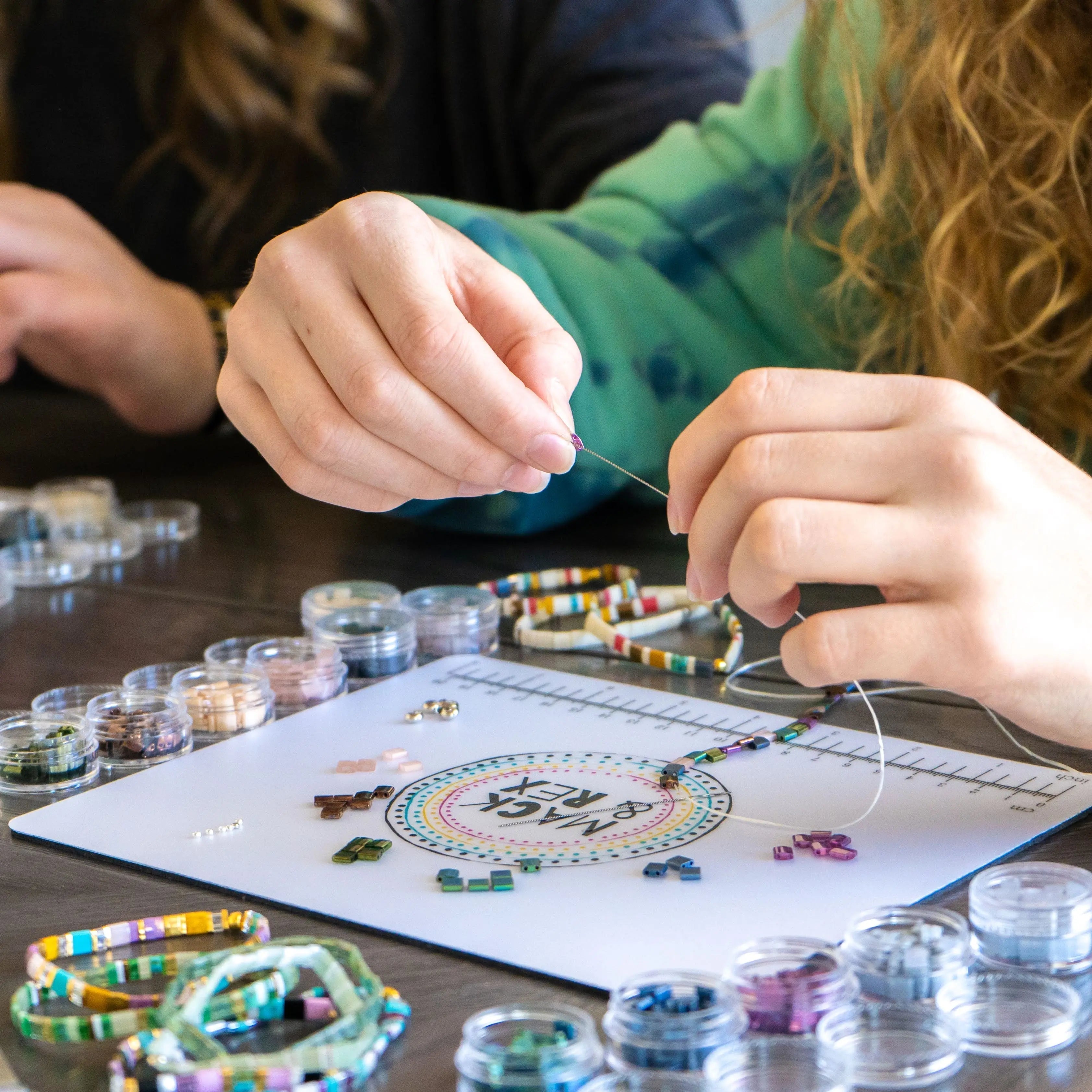
Tila beads are flat, two-hole Japanese glass tile beads made by Miyuki. They have a squared profile and a smooth face, which gives a tila stack a very specific texture: geometric, flat, and colorful. A silver ball bracelet introduces a round element that breaks that flatness without disrupting the overall palette.
One silver ball bracelet is usually enough in a tila stack. Wear it between two tila bracelets rather than at the edge of the stack. The round bead shape contrasts with the squared tila profile, which makes the whole stack look more composed. The silver finish reads as neutral, so it works against virtually any tila color combination.
If you're building a stack from scratch and want the silver ball piece to anchor it, go with a 6mm to 8mm bead diameter. Smaller than that and the silver disappears next to the wider face of a tila bead; larger and it starts to dominate. The goal is balance: the silver should be visible and intentional, but the tila bracelets should still carry the color story.
Mack & Rex carries accent bracelets designed to pair with tila stacks. You can browse the current selection at their accent bracelets collection, where silver ball pieces sit alongside matte, metallic, and textured options built to layer.
What Quality Signals Should You Check in a Product Listing?
Seven things worth looking for before you add to cart:
- Bead material specified: sterling, silver-plated, hematite, glass with metallic finish. If it just says "silver beads," ask.
- Bead diameter stated: in millimeters. A 4mm and an 8mm bracelet look completely different in person.
- Cord type named: crystal elastic, rubber, or nylon. This determines how long it lasts.
- Wrist size range: actual circumference in inches, not a vague S/M/L label. Inclusive sizing across a wide range (XXS to 5XL, for example) signals a brand that has thought about real customers, not a single average.
- Photos with scale: a wrist shot alongside a hand for proportion context. Flat-lay photos with no wrist reference tell you almost nothing about actual size.
- A quality or satisfaction guarantee: a seller who backs their bracelet is a seller who is confident in what they made.
- Clear return policy: especially for sizing. Even with measurements, fit is personal.
The Spruce Crafts points out that for beaded bracelets specifically, material transparency and accurate sizing information are the two gaps that generate the most returns and disappointment from online buyers.[3] A listing that answers both upfront is the listing worth buying from.
How Do You Know You're Getting Good Value?
Price alone doesn't tell you much. A $12 silver ball bracelet with sterling beads and crystal cord can outperform a $30 bracelet with plated beads on rubber elastic that breaks in four months. Value is material quality plus cord quality plus sizing accuracy plus a brand that stands behind the product.
For single finished bracelets, expect to pay in the $20 to $25 range for a quality piece from a specialty bracelet brand. That price range reflects real materials and construction. Anything significantly below that is likely plated over a base metal or strung on standard rubber elastic.
If you buy three bracelets at once (a natural impulse when building a stack), Mack & Rex runs a standing buy-three-get-one-free offer with no code needed. That's a practical way to build a full stack and try a silver ball piece alongside a few tila bracelets without committing to a single piece and waiting to see how it layers. Orders over $100 ship free within the US.
Frequently Asked Questions
What size should a silver ball bracelet be for my wrist?
Measure your wrist snugly and add 0.5 to 1 inch for a stretch fit. Most adult wrists run 6 to 7.5 inches. Look for actual circumference ranges in inches, not vague S/M/L labels.
What bead diameter looks best on a silver ball bracelet?
6mm to 8mm works for most everyday stacks. Smaller (4mm) layers cleanly; larger (10mm+) reads as a statement piece. For a tila stack, 6mm sits proportionally next to the wider face of a Miyuki tila bead.
What is the difference between silver-plated and sterling silver ball bracelets?
Sterling (.925) is 92.5% pure silver and lasts years with basic care. Silver-plated beads have a thin coating over base metal that wears through at contact points over time. Check the listing for explicit material info.
How do I know if a silver ball bracelet will hold up to daily wear?
Focus on the cord. Crystal-cord elastic resists lotion, sweat, and daily flexing better than basic rubber. A quality guarantee from the seller is a solid signal the bracelet is built to last.
Can a silver ball bracelet work in a tila bead stack?
Yes. Position one silver ball bracelet between two tila pieces. The round bead shape contrasts with the flat squared tila profile, and silver reads neutral against virtually any color palette.
Ready to Find Your Silver Ball Bracelet?
The right silver ball bracelet comes down to three things: accurate sizing, real materials, and a cord that lasts. When a listing answers all three clearly, you're looking at a bracelet worth buying.
Browse Mack & Rex's accent bracelets collection for silver ball pieces and coordinating tila stack options, all sized from XXS to 5XL and backed by a quality guarantee. If you're building a full stack, the buy-three-get-one-free offer (no code) makes it easy to bring a complete look home at once. US orders over $100 ship free.