

Silver Ball Bracelet vs Gold: How to Choose and Stack Them
Silver ball bracelet or gold ball bracelet: how do you choose?
Look at what's already on your wrist and in your jewelry box first. A silver ball bracelet matches silver-tone, white gold, or platinum pieces you already wear, while a gold ball bracelet matches gold-tone jewelry and warmer accents. Skin undertone is a useful second filter, not a hard rule, and plenty of people wear both tones without giving it a second thought.
Ball bead bracelets, the ones strung with small round silver-tone or gold-tone beads on stretch cord, are having a real moment right now because they layer so easily. That's also exactly why the silver-versus-gold question comes up. Neither one is more "correct." It's a styling decision, and a fairly low-stakes one since both tones are easy to build a stack around.
Does skin undertone actually matter for silver vs gold?
It can help narrow things down, but treat it as a starting point rather than a rulebook. Cooler undertones, the kind where veins on the inside of your wrist look more blue or purple, tend to look especially sharp in silver-tone pieces. Warmer undertones, where those same veins look more green, often get a nice lift from gold-tone pieces. This is the same basic logic behind personal color analysis systems that sort complexions into cool and warm groups, and it's a helpful gut check, not a strict rule.
Plenty of people fall somewhere in the middle, and plenty of people just prefer one tone regardless of undertone. If you've ever tried on a gold necklace and thought "that's not me" while a silver one felt right immediately, you already know your answer. If you've never noticed a strong preference either way, that's a fine place to be too. It means you can pick based on your existing jewelry, your mood, or honestly, whichever one is in your cart.
What if I want to match my watch or existing jewelry?
Match the metal tone that shows up most often, not every single piece you own. If your watch case is silver-tone and most of your everyday rings and studs are too, a silver ball bracelet will sit right alongside them without a second thought. Same logic for gold. This matters more with a watch specifically, since it sits right next to a wrist stack and any mismatch is easy to spot at a glance.
Sterling silver and gold plating are both common in everyday jewelry, and each behaves a little differently over time. Sterling silver can tarnish with air exposure, which a quick polish fixes, and gold plating wears thin gradually with heavy daily contact, like from a watch band rubbing against it. Keep that in mind when you decide which piece to wear daily versus which to save for dressier days, since either metal will look better longer with a little bit of that awareness.
Is mixing silver and gold bracelets actually okay?
Yes, and it's been a normal look for a while now, not a trend that's about to fade. The old rule that metals had to match head to toe has loosened up a lot. What separates "mixed metals on purpose" from "grabbed whatever was on the dresser" usually comes down to ratio.
Pick a lead metal, the one that makes up most of the stack, roughly two-thirds to three-quarters of what's on your wrist. Let the other metal show up in just one or two accent pieces, like a single gold ball bracelet mixed into a mostly-silver stack, or the reverse. That small amount of contrast reads as intentional. An even 50/50 split can look intentional too, but it takes a steadier hand to pull off, so starting with an uneven ratio is the easier entry point if you're new to mixing.
Everyday wear vs. dressed up: does the metal choice change?
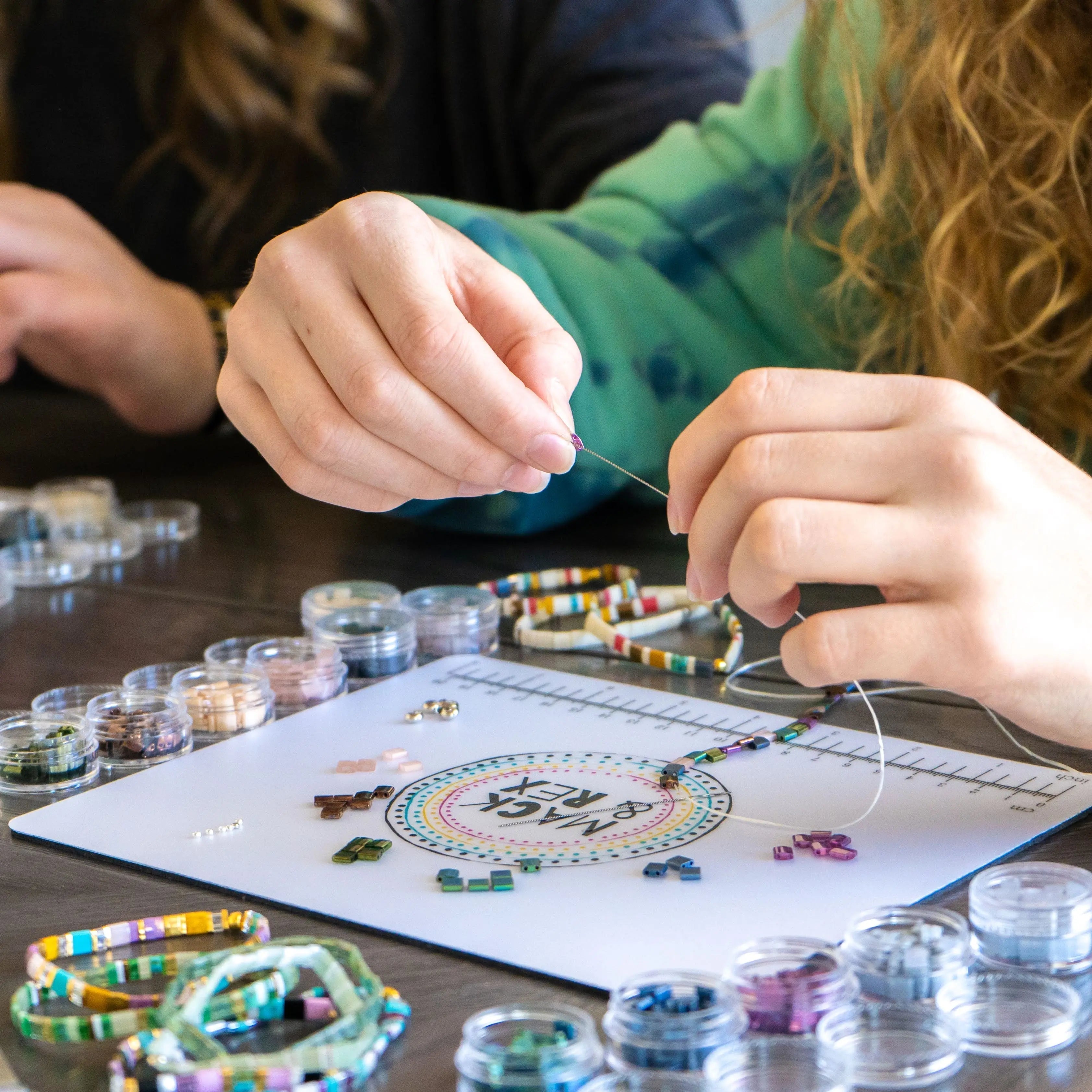
Not really, but the rest of the stack around it does. A silver or gold ball bracelet works for both an everyday errand-running stack and a dressed-up evening look. The difference is what you build around it. For daily wear, pair your ball bracelet with a couple of casual tila or heishi bracelets in relaxed colors, something that can handle a gym bag or a school pickup line without a second thought.
For a dressier occasion, let the ball bracelet stand out more on its own, paired with maybe one other slim metallic or neutral-toned piece instead of a full color stack. Fewer, quieter pieces tends to read as more polished for evenings out, while a fuller stack feels more at home for a regular Tuesday.
How do you stack a ball bracelet with tila or heishi bracelets?
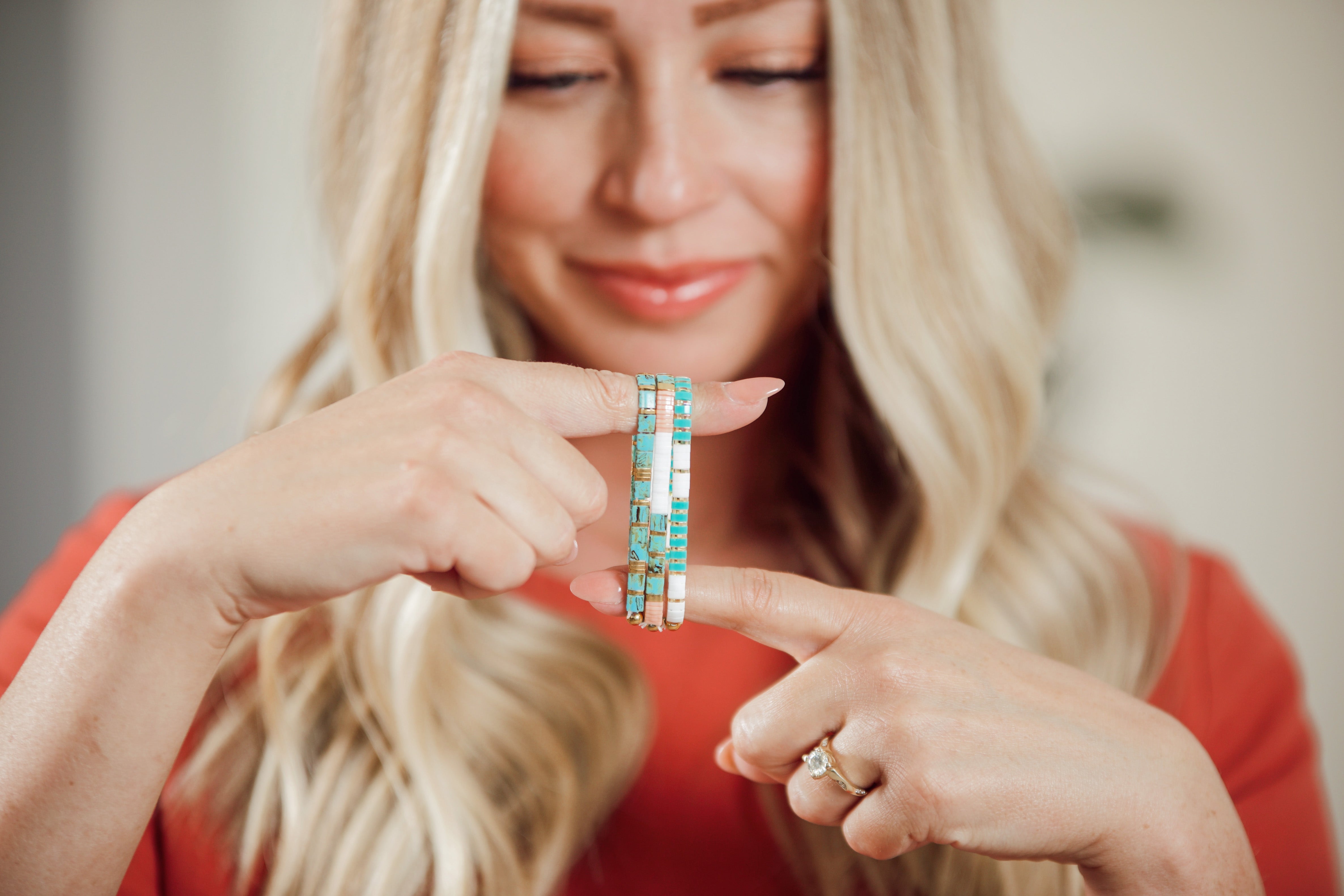
Treat the ball bracelet as your metal anchor and build the rest of the stack in a shared color family around it. Mack & Rex's accent bracelets collection is built for exactly this kind of layering, small pieces meant to sit next to your Tila or heishi bracelets rather than compete with them.
A few combinations that work well:
- One gold ball bracelet with two or three warm-toned tila bracelets, like a RETRO SUNSET-style palette.
- One silver ball bracelet with cooler-toned or neutral heishi bracelets, like shell or stone tones.
- A gold or silver ball bracelet paired with a single heishi bracelet in a matching or complementary color, for a simpler two-piece stack instead of a full pile.
The metal tone doesn't need to repeat throughout the whole stack. One ball bracelet is usually enough to read as the anchor piece, with the beaded bracelets carrying the color.
How should a silver or gold ball bracelet fit?
It should sit close enough that it doesn't slide past your wrist bone during regular movement, but not so snug that it pinches or leaves a mark. Ball beads are rigid and fully round, so a bracelet that runs even a little large will rotate and shift more than a flatter bead shape like heishi or tila would. That's worth paying attention to since a ball bracelet that's constantly twisting around your wrist gets annoying fast.
Mack & Rex bracelets are built with inclusive sizing from XXS to 5XL on stretch crystal cord, so getting a comfortable, secure fit isn't a guessing game. If a bracelet in your stack ever starts sliding down easily or feels looser than when you bought it, that's the cord telling you it's due for a restring rather than a sign anything was made wrong.
Building your first stack: a simple starting point
Don't overthink the first one. Pick a single ball bracelet in the metal tone you already wear most, then add one or two tila or heishi bracelets in a color you already like wearing. That's a complete, wearable stack on its own, and it gives you a base to build from as you add pieces over time.
From there, expand slowly. Add a second ball bracelet in the same metal for more weight, or bring in that one accent-metal piece once you're ready to try mixing. There's no wrong order here, just a low-risk way to test what actually feels like you before committing to a bigger stack.
Frequently Asked Questions
Should I get a silver ball bracelet or a gold ball bracelet?
Start with what you already wear. If your everyday jewelry and watch are silver-tone, white gold, or platinum, a silver ball bracelet will blend right in. If your daily pieces are gold-tone, a gold ball bracelet does the same job. Skin undertone is a helpful second filter, not a rule: cooler undertones often lean silver, warmer undertones often lean gold, but plenty of people wear both and like the contrast.
Can you mix silver and gold ball bracelets on one wrist?
Yes. Mixed metals are a normal, current look, not a mistake. The easiest way to do it on purpose is to pick one metal as the lead, usually two-thirds to three-quarters of the stack, and let the other metal show up in one or two accent pieces so it reads as a choice instead of a mismatch.
How do I stack a ball bracelet with tila or heishi bracelets?
Let the ball bracelet act as the metal anchor and build color and texture around it with tila or heishi pieces. A silver or gold ball bracelet next to two or three beaded bracelets in a shared color family reads as a finished stack rather than a random pile, especially if the metal tone repeats somewhere else in the mix, like a clasp or an accent bead.
How should a ball bead bracelet fit?
A ball bracelet should sit close enough that it does not slide past your wrist bone during normal movement, but not so tight that it pinches. Since ball beads are rigid and round, a bracelet that runs even slightly large will rotate and shift more noticeably than a flatter bead shape would, so checking fit matters more here than with heishi or tila styles.
Ready to build your stack? Browse the Mack & Rex accent bracelets collection for silver-tone and gold-tone ball bracelets, and remember that buying three finished bracelets gets you a fourth free, no code needed. Orders over $100 within the US ship free, and Mack & Rex ships internationally with duties and shipping calculated at checkout.