

Stackable Tila Bead Bracelets: Color Pairings That Actually Work
What Makes Stackable Tila Bead Bracelets Look Intentional Instead of Cluttered?
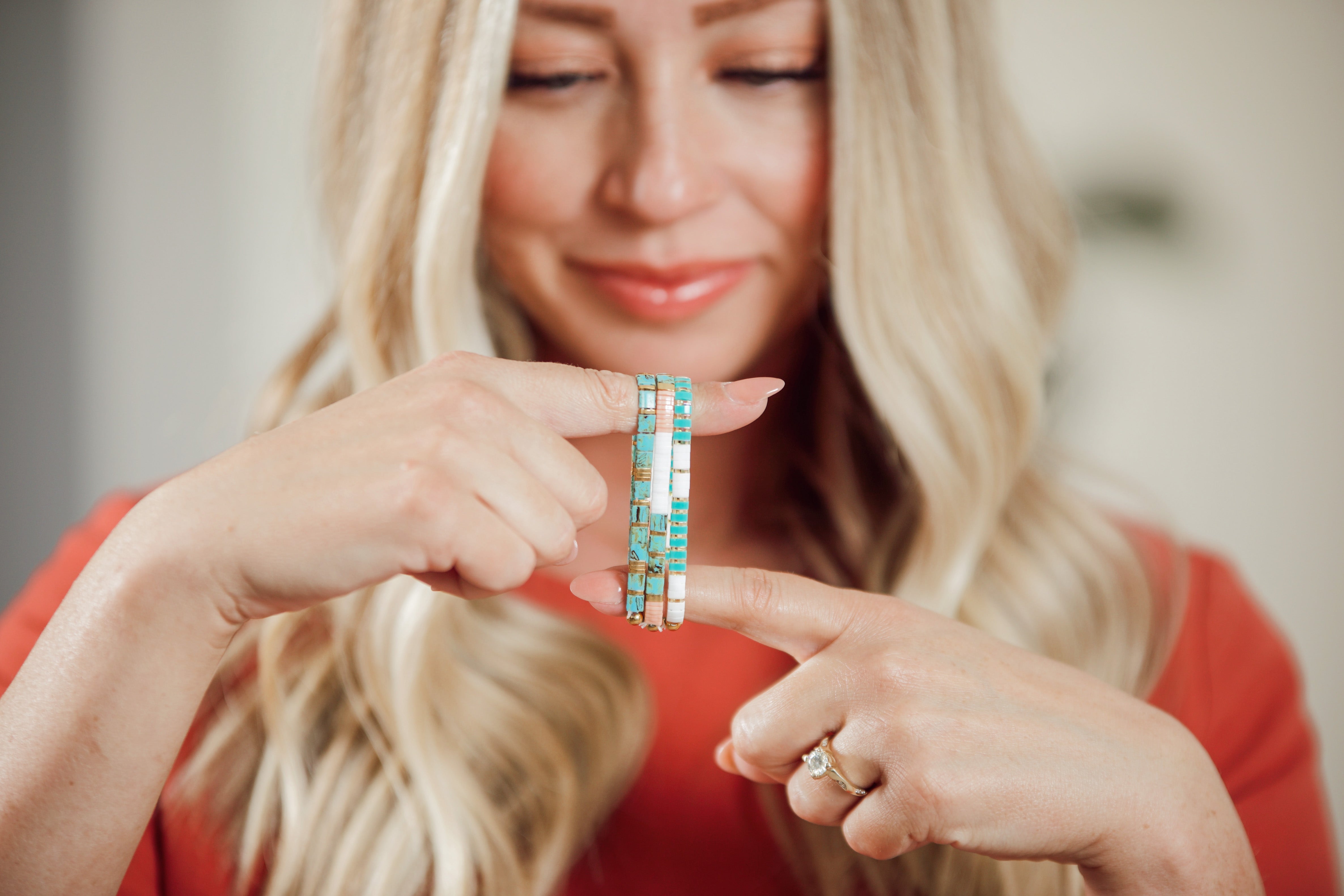
A stack reads intentional when the bracelets share one consistent thread, a repeated neutral, a matching undertone, or one accent color, while the finishes and patterns vary. Stackable tila bead bracelets go wrong the same way every time: someone grabs three favorites with nothing in common, and the wrist ends up looking like a junk drawer instead of a styled look.
The fix isn't complicated: one rule ties the bracelets together, and everything else varies. That's the method behind every pairing below.
How Do I Build a Neutrals-Plus-One-Pop Stack?
Start with two or three bracelets in black, white, tan, gray, or cream tila beads, then add exactly one bracelet in a saturated color. The neutrals do the quiet work of holding the stack together, and the single pop color becomes the thing people actually notice.
This is the lowest-effort, highest-success pairing for anyone new to stacking. Pick a neutral-heavy piece from a collection like EVERGREEN EDIT for the base, then layer in one bracelet from a brighter line for the pop. Two neutrals and one pop reads clean on a workday; one neutral and two pops starts to feel busy, so if you're unsure, lean more neutral.
Which Neutrals Pair Best
Warm neutrals (tan, cream, warm gray) pair with warm pops like coral, rust, and mustard. Cool neutrals (black, white, cool gray) pair with cool pops like cobalt, emerald, and fuchsia. Mixing the two still works, it just reads more contrast-forward than tonal.
What's a Tonal or Monochrome Tila Bracelet Stack?
A tonal stack uses several shades of the same color family, like three blues ranging from pale sky to deep navy, instead of one flat repeated color. It's the most forgiving pairing there is because nothing has to match exactly, it just has to sit in the same family.
Finish does most of the heavy lifting here. Three bracelets in identical blue tila beads and identical finishes look like one thick bracelet, not a stack. Swap in a matte finish for one, a metallic for another, and an AB (aurora borealis) finish for the third, and the same color family gains depth. A tonal collection like BEACHY works this way on purpose: several ocean-adjacent blues and greens never meant to be identical.
How Do Complementary Color Pairs Work in a Stack?
Complementary pairing means combining colors from opposite sides of the color wheel, like blue and orange or purple and yellow, so each color makes the other look more saturated. In a stack, this usually means splitting your bracelets roughly 70/30: most of the stack in one color, a smaller portion in its opposite.
Complementary pairs are the boldest option here and the easiest to overdo. Two bracelets in blue and one sharp orange piece looks styled; an even split across five bracelets starts fighting for attention. Try a warm, opposite-toned line like RETRO SUNSET for the accent, kept to one or two pieces against a larger cool-toned base. This is contrast by hue, one of the oldest tools in color theory for making an element stand out without changing its size or position.
Should I Add a Metallic Anchor Bracelet?
Yes, in most stacks a single metallic tila bracelet, gold, silver, or gunmetal, works as a neutral that also adds shine, anchoring bracelets that would otherwise look like unrelated colors thrown together. Think of it as a neutral with a job to do beyond just not clashing.
One metallic anchor is plenty; two compete for light and the anchor effect disappears. Gold warms up a stack and pairs naturally with tan, coral, and mustard. Silver and gunmetal cool a stack down and sit well against black, cobalt, and emerald.
How Do Tila Bead Finishes Change a Color Pairing?
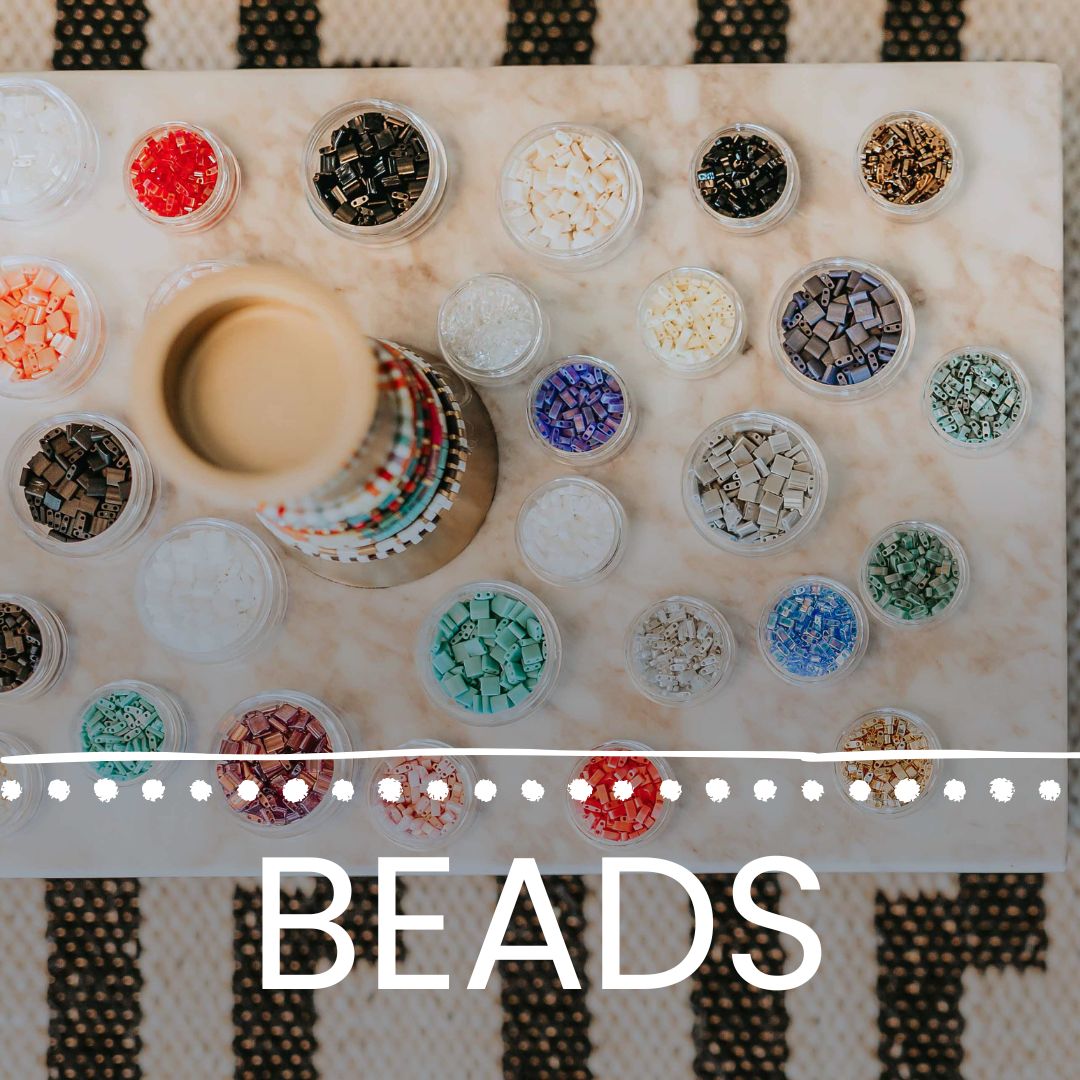
Finish is the lever most people skip, and it matters as much as color. Matte finishes read quiet and everyday. Metallic and AB finishes catch light and read dressier. Picasso finishes (that mottled, earthy multi-tone look) add texture without adding another color to track.
If two bracelets are close in color but the stack still feels flat, the color isn't the problem, the finish is. Swap one to matte or one to AB and the same pairing gains dimension. Two bracelets in the exact same shade of blue can look completely different worn together once one is matte and one is metallic, a design choice, not a flaw.
What Are Good Seasonal Palettes for a Tila Stack?
Spring and summer stacks lean toward lighter, brighter tonal pairings (think BEACHY blues and greens, or a coral-and-cream neutrals-plus-pop combo). Fall and winter stacks lean toward deeper, warmer tones, rust, burgundy, and mustard against a gold or gunmetal anchor, closer to what a collection like STAINED or RETRO SUNSET offers.
You don't need a full seasonal wardrobe of bracelets. One or two seasonal pieces layered into a stack you already wear update the whole look. Swap the pop color, keep the neutrals, and the stack feels new without rebuilding it from scratch.
How Many Bracelets Should Go in a Stack, and What Does It Cost to Build One?
Three to five is the range that reads as a stack rather than a single accent or a cluttered wrist. A finished Mack & Rex tila bracelet runs about $20 to $25, so a five-piece stack lands around $100 to $125 depending on which pieces you pick, close enough to the US free-shipping threshold that it's worth checking your cart before you check out.
Buy 3 finished bracelets and get 1 free (no code needed), which makes building a stack in one order the most cost-effective way to do it. Orders over $100 ship free within the US; outside the US, shipping and any duties calculate at checkout, since Mack & Rex ships internationally.
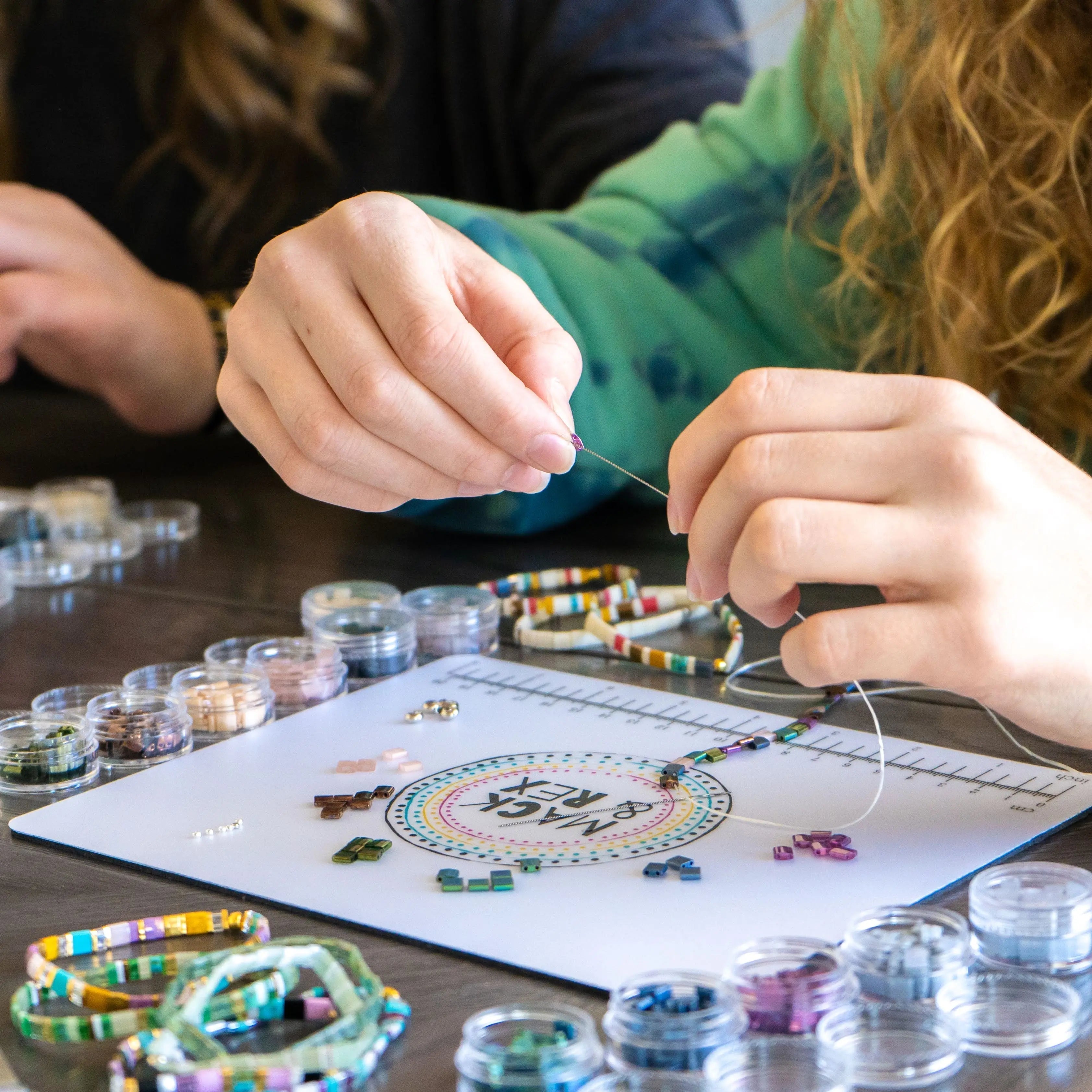
The accent bracelets collection is the place to browse finishes and colors side by side and build a stack instead of guessing from single product photos. Start with one neutral base, add a tonal second piece, then pick your pop or metallic anchor last.
Frequently asked questions
How many bracelets should be in a tila bead bracelet stack?
Three to five bracelets is the sweet spot for a stackable tila bead bracelet look. Fewer than three barely reads as a stack, and past five the wrist starts to look busy unless every piece shares a clear neutral or tonal thread.
What's the easiest tila bead color pairing for beginners?
Neutrals plus one pop color is the easiest place to start. Pick two or three bracelets in black, white, tan, or gray, then add a single bracelet in a saturated color like coral or cobalt to give the stack a focal point without any color-matching guesswork.
Can I mix matte and metallic tila bead finishes in one stack?
Yes, and it usually improves the stack. Pairing a matte or picasso-finish bracelet with one metallic or AB-finish bracelet adds contrast in shine, not just color, which keeps a stack from looking flat even when the colors themselves are close.
Do stacked bracelets need to match exactly to look good?
No. Exact matching usually looks flatter than a coordinated stack. Bracelets that share one element (the same neutral, the same undertone, or a repeated accent color) while varying in finish or pattern read as styled on purpose, which is the actual goal.
Sources: Wikipedia: Color theory, Beadaholique: Choosing Bead Color Combinations, Beads and Pieces: Using the Color Wheel for Jewelry Design.