


A Tila Bead Bracelet Kit for Two: Crafting Together
Why is a tila bead bracelet kit a good project for two people?
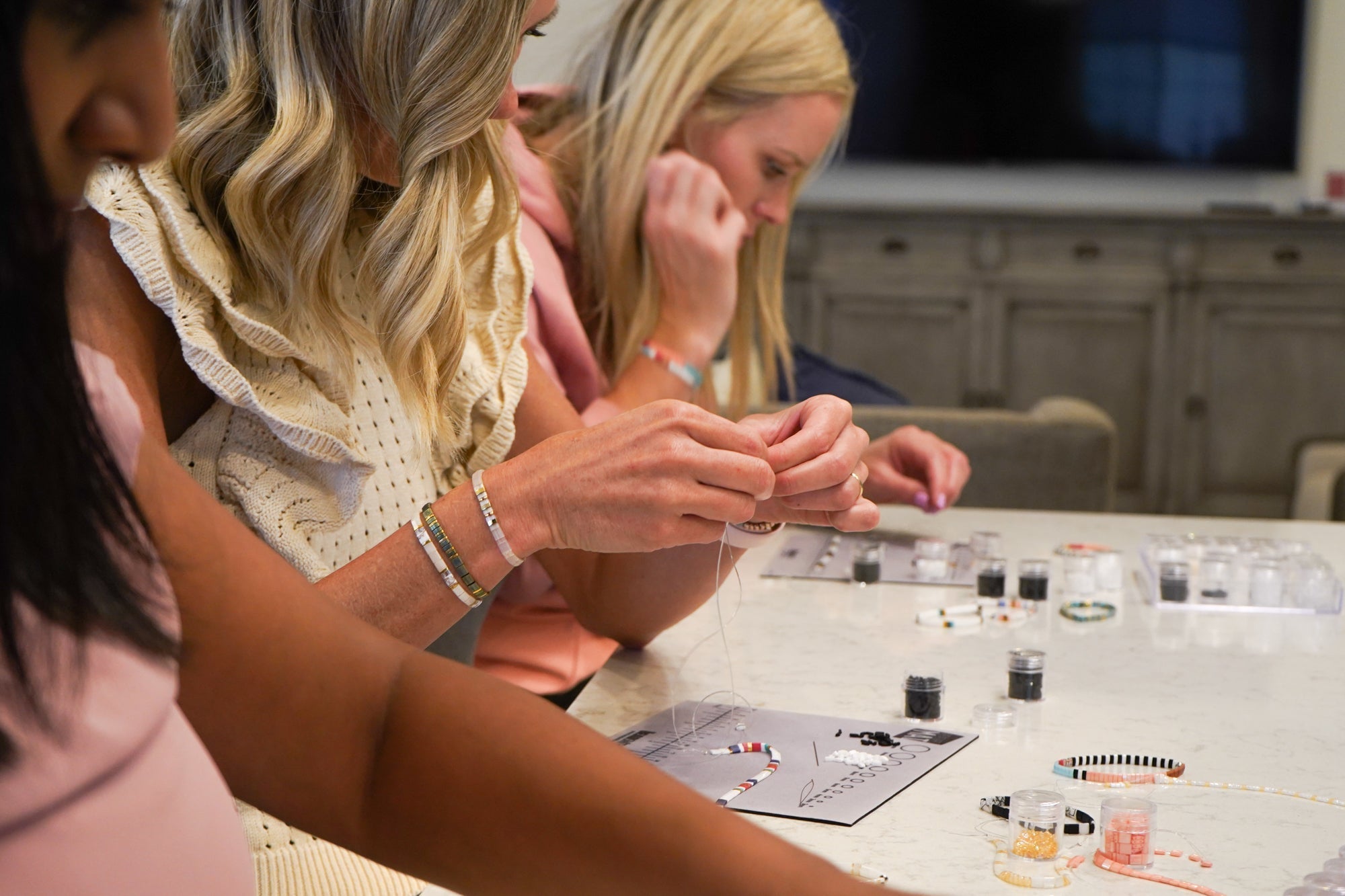
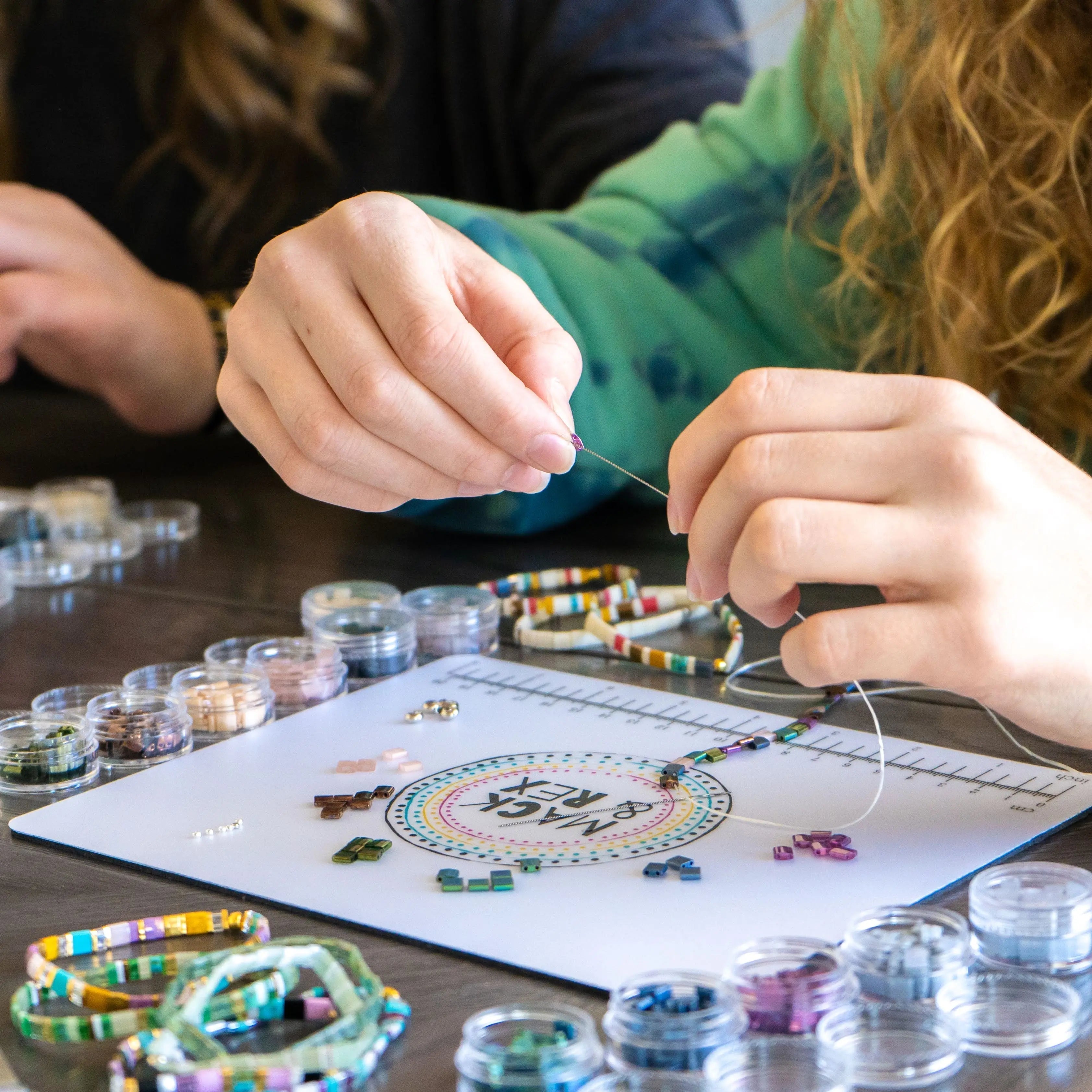
One tila bead bracelet kit gives two people a shared table, a shared pile of beads, and about an hour where nobody is looking at a phone. Most kits are built to make more than one bracelet, which means the project splits naturally rather than forcing one person to hand over the good beads and wait their turn. It is quiet, it is tactile, and it does not require either person to be good at crafting to enjoy it.
That last part matters more than it sounds like it should. A lot of shared activities have a skill gap built in, one person is faster at the board game or better at the puzzle, and that gap can make the whole thing feel like competition instead of connection. Stringing tila beads is close to skill-neutral. A ten-year-old and a grandmother end up producing work of roughly the same quality.
How do you split beads and patterns so both people actually finish something?
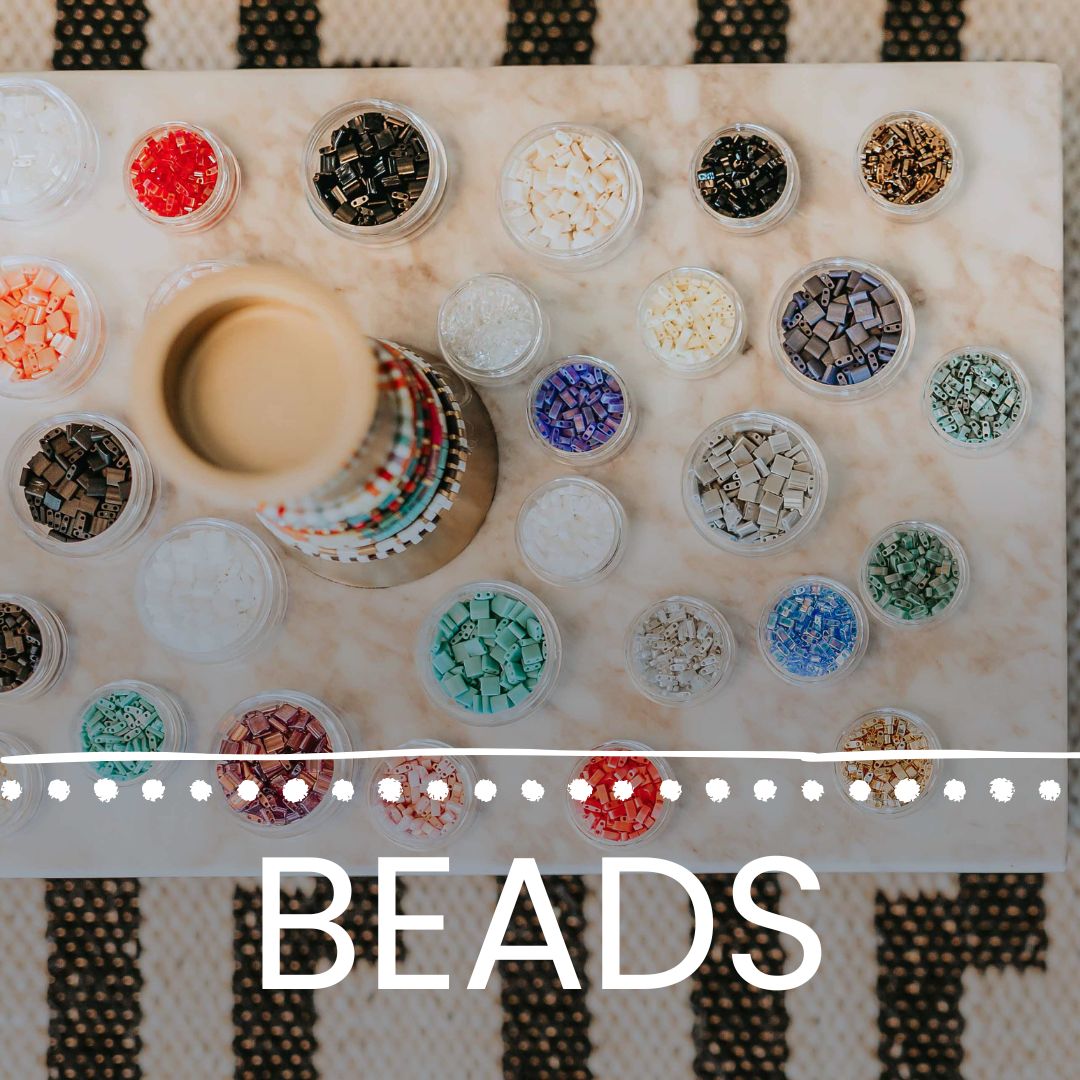
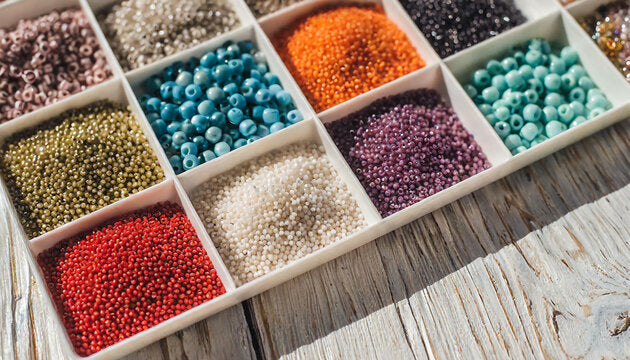
Sort by color before anyone starts stringing. Dump the whole bag out, group it by shade, then divide each color pile roughly in half. This is the single biggest thing that keeps a shared kit from turning into one person's project with a helper attached. Without that step, whoever grabs first tends to end up with more of the beads they need, and the other person spends the back half of the session waiting on a color that already ran out.
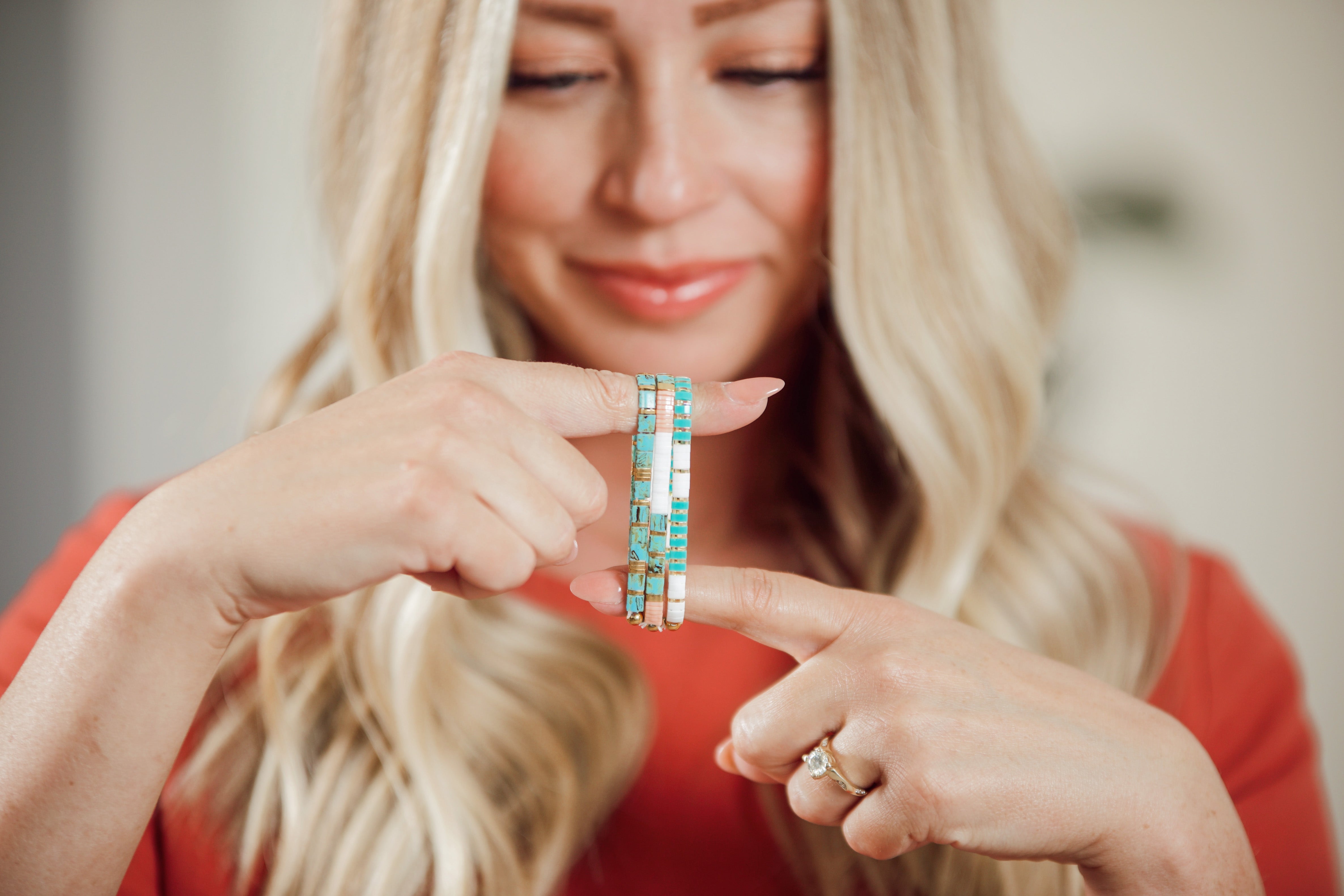
A trio bracelet kit that makes three bracelets is the easiest structure for two people, since it splits cleanly with a spare pattern left over. One person strings bracelet one, the other strings bracelet two, and the third gets made together or saved for a second sitting. If the kit only comes with pattern instructions for one bracelet, pick two different color combinations from the same bead mix rather than making identical copies. It keeps both people making their own decisions rather than one person copying the other's row.
Split by task if the ages or skill levels are far apart. A younger kid might string beads onto pre-cut cord while an adult ties off and adjusts tension. Neither person is doing all the work, and the finished bracelet still feels like a joint effort.
How do you make matching or complementary bracelets without it feeling forced?
Pick one shared color and let everything else vary. Two bracelets in different patterns but the same accent shade read as a set without looking like a matched costume. A grandmother and grandchild doing this with a deep evergreen or a sun-washed coral tends to produce two pieces that actually get worn afterward, since neither person ends up with a bracelet that only makes sense next to the other one.
Complementary works better than identical for most pairs past early childhood. A parent and a teenager, in particular, tend to resist anything that looks like a matching set. Give them the same bead mix and let each person choose their own layout.
For younger kids who do want to match, exact copies are fine and often the whole point. A five-year-old proudly wearing the same bracelet as mom is a real win.
How do you keep it low-stress when one person has never done this before?
Let the beginner start on the simplest row. Tila beads are flat, two-holed squares, and the trickiest part for a first-timer is usually keeping the pattern straight across a long stretch, not the physical act of threading. Starting them on a solid-color section or a simple stripe, then handing them a more detailed section once the motion feels familiar, keeps frustration low without making the project feel babied.
Sit close enough to glance over, not so close that every bead gets checked. A beginner who feels watched tends to slow down and second-guess each bead. If a pattern gets a little off around row six, that is fine. A slightly imperfect bracelet made calmly beats a technically perfect one made under pressure, and a small pattern wobble is part of what makes a handmade bracelet look handmade.
Keep a small dish or tray nearby for stray beads. Tila beads and their tiny openings are a choking hazard, so this is a project for kids old enough to not put beads in their mouths, with an adult staying at the table the whole time.
How do you turn a single kit into a recurring craft night?
Treat the leftover beads as the start of round two. Most kits leave a small surplus after two people finish their bracelets, plus whatever gets set aside from the sorting step. That surplus is enough for a quick second project weeks later, a keychain, a friendship bracelet for someone else, or a matching accent piece to go with the first one.
Pick a recurring slot rather than leaving it open-ended. "First Sunday of the month" or "after dinner on Fridays" turns a one-off activity into something both people start expecting, and the expecting is half of what makes it feel like a ritual. A grandmother who knows her granddaughter is coming over Sunday afternoon to bead has something specific to look forward to.
Save the finished bracelets somewhere visible, a small dish by the door or a shared drawer. Seeing last month's bracelets sitting out is a quiet reminder of the last session and a nudge toward the next one.
Why does a tila bead bracelet kit make a good gift for two people?
It gives the gift and the time together in one box. A gift card or a single finished bracelet is nice, but it does not come with an afternoon attached. A tila bead bracelet kit does. Giving one to a mom and her kid, two sisters, or a couple planning a low-key night in hands them an activity along with the materials, which reads as more thoughtful than most gift-wrapped objects.
It also works across a wider range of relationships than most craft gifts. A mother-daughter pair, a grandmother and grandchild, two close friends, or a couple looking for a date night that is not dinner and a movie again, all fit the same kit. The activity flexes to whoever is doing it.
If you are shopping for this specifically, look at the bracelet making kits collection for options built to make more than one bracelet at a time, since those split most naturally between two people. A trio kit or a larger bead pack gives both people real material to work with, not just one person getting the leftovers.
What should you set up before a two-person craft session?
A clean, flat surface and good light matter more than people expect. Tila beads are small, and squinting at a dim table is the fastest way to lose patience with a fiddly project. A kitchen table near a window or under an overhead light works better than a couch.
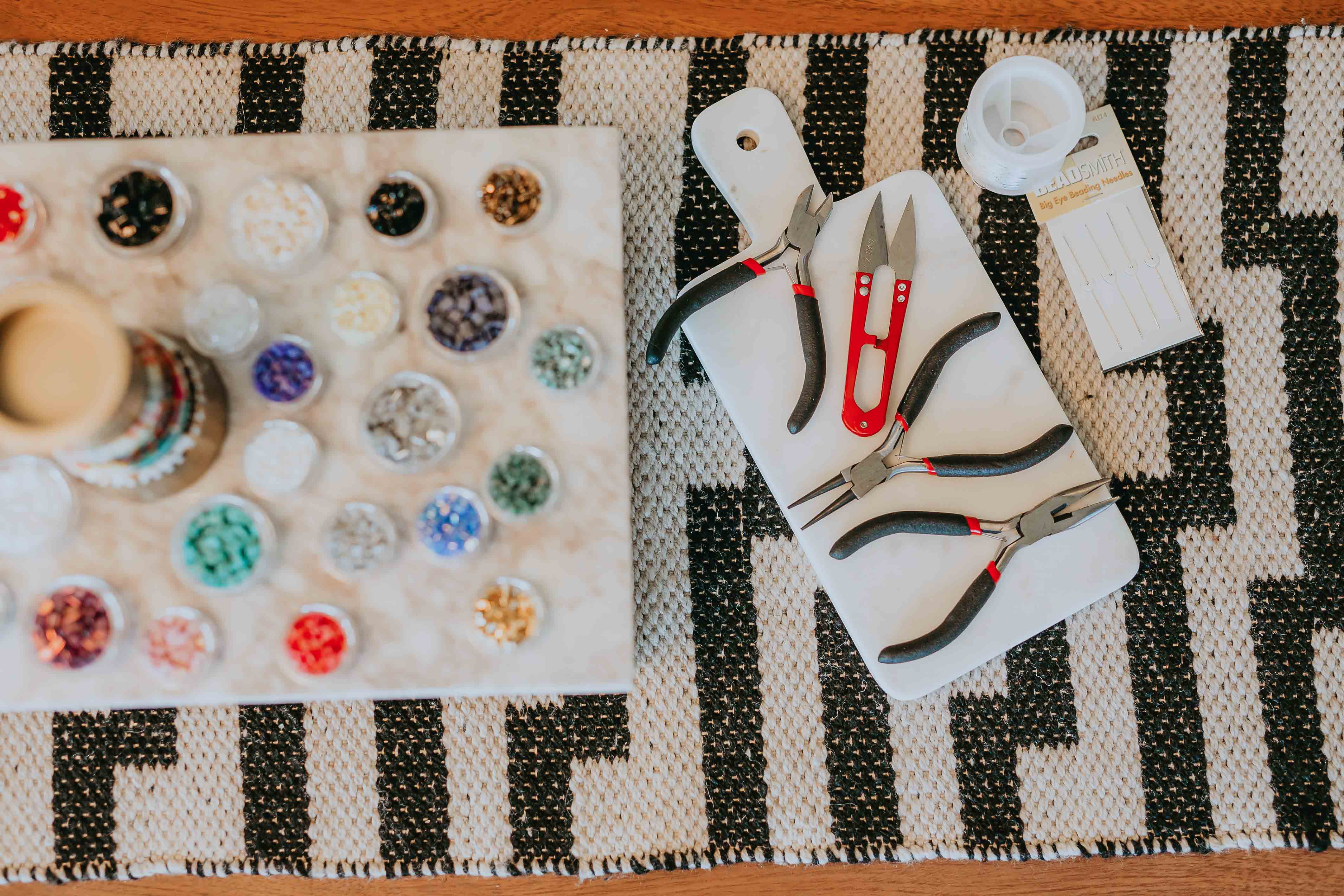
Two small dishes, one per person, keeps sorted beads from sliding back together mid-session. Scissors, the elastic cord that usually comes with the kit, and a spot to set finished bracelets aside to check tension round out what you need. Nothing fancy. Part of what makes this a good shared activity is how little setup it takes compared to how much time it fills.
Snacks help more than most people plan for. A bracelet-making session runs anywhere from thirty minutes to an hour and a half depending on the pattern, and a plate of something to nibble on turns a craft task into more of an occasion.
A shared project worth repeating
One kit, two people, and an hour at the table adds up to more than a finished bracelet. The bracelet is the souvenir. The actual point is the sitting-down-together part, the sorting-beads-while-talking part, the small ritual that gets repeated because it worked the first time. Kits built to make several bracelets at once, like Mack & Rex's trio kits, are set up for exactly this kind of sharing, with enough beads and pattern room for two people to each walk away with something they made themselves.
Browse the bracelet making kits collection to find one built for two, and remember that a single kit typically will not clear the $100 free-shipping threshold on its own, so it is worth checking what else is going in the cart if free US shipping matters to you. Once the bracelets are finished, buying three finished bracelets gets a fourth free, no code needed, a nice next step if the craft night turns into a habit.
Frequently Asked Questions
Can two people really share one tila bead bracelet kit?
Yes, and it works well since most kits include enough beads and cord for multiple bracelets rather than just one. A trio kit that makes three bracelets splits naturally between two people, with a spare pattern left over for a second round or a third bracelet to give away.
What is the easiest way to split the beads fairly?
Sort by color first, then divide each color pile roughly in half before anyone starts stringing. Doing this up front stops the mid-project moment where one person runs low on a shade the other one is still holding, which is the most common snag in a shared kit.
Is a tila bead bracelet kit good for a total beginner?
It is, especially with someone more experienced sitting alongside them. The stringing motion itself is simple repetition. What trips up a first-timer is usually pattern reading, not the physical part, so pairing them with a partner who can glance over and course-correct early removes most of the friction.
Does Mack & Rex ship kits internationally?
Yes. Mack & Rex ships internationally, with shipping and any customs or duties calculated at checkout for the destination country. Free shipping applies to US orders over $100, and note that a single kit purchase on its own typically will not clear that threshold.