

Tila Bead Bracelets vs Charm Bracelets: Which Is Right for You?
What's the Real Difference Between Tila Bead Bracelets and Charm Bracelets?
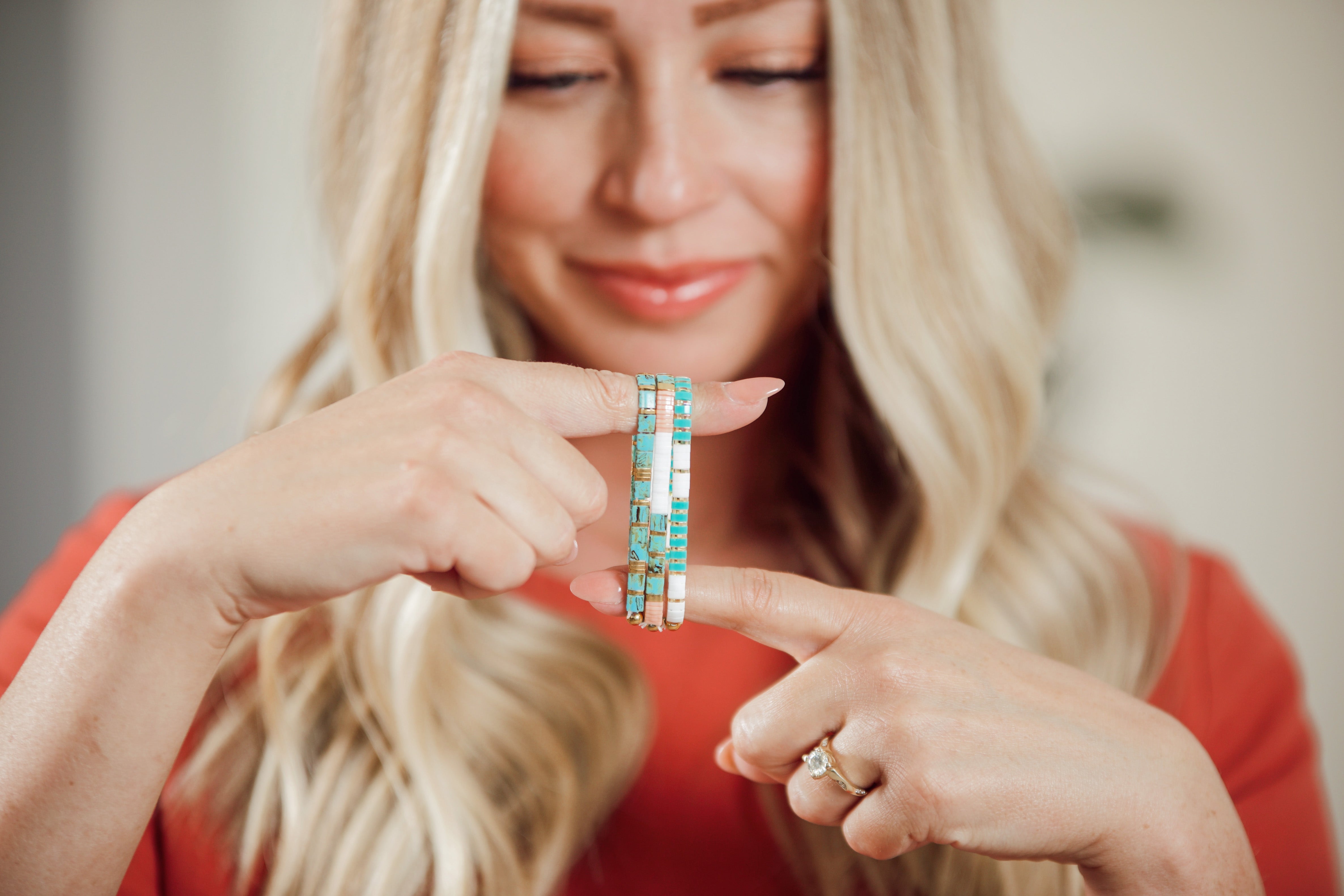
The construction is completely different, and that shapes everything from how each bracelet looks to how it feels on your wrist. Tila bead bracelets are stretch bracelets strung on elastic cord using Miyuki Tila beads, which are flat, square Japanese glass tiles with two holes that lock together edge to edge. Charm bracelets are metal chains with decorative pendants attached via jump rings or clip clasps. Both are popular bracelet styles with loyal fans. They suit different lifestyles, aesthetics, and budgets.
How Does Each Style Look on Your Wrist?
Clean geometry vs. personal storytelling. That's the short version.
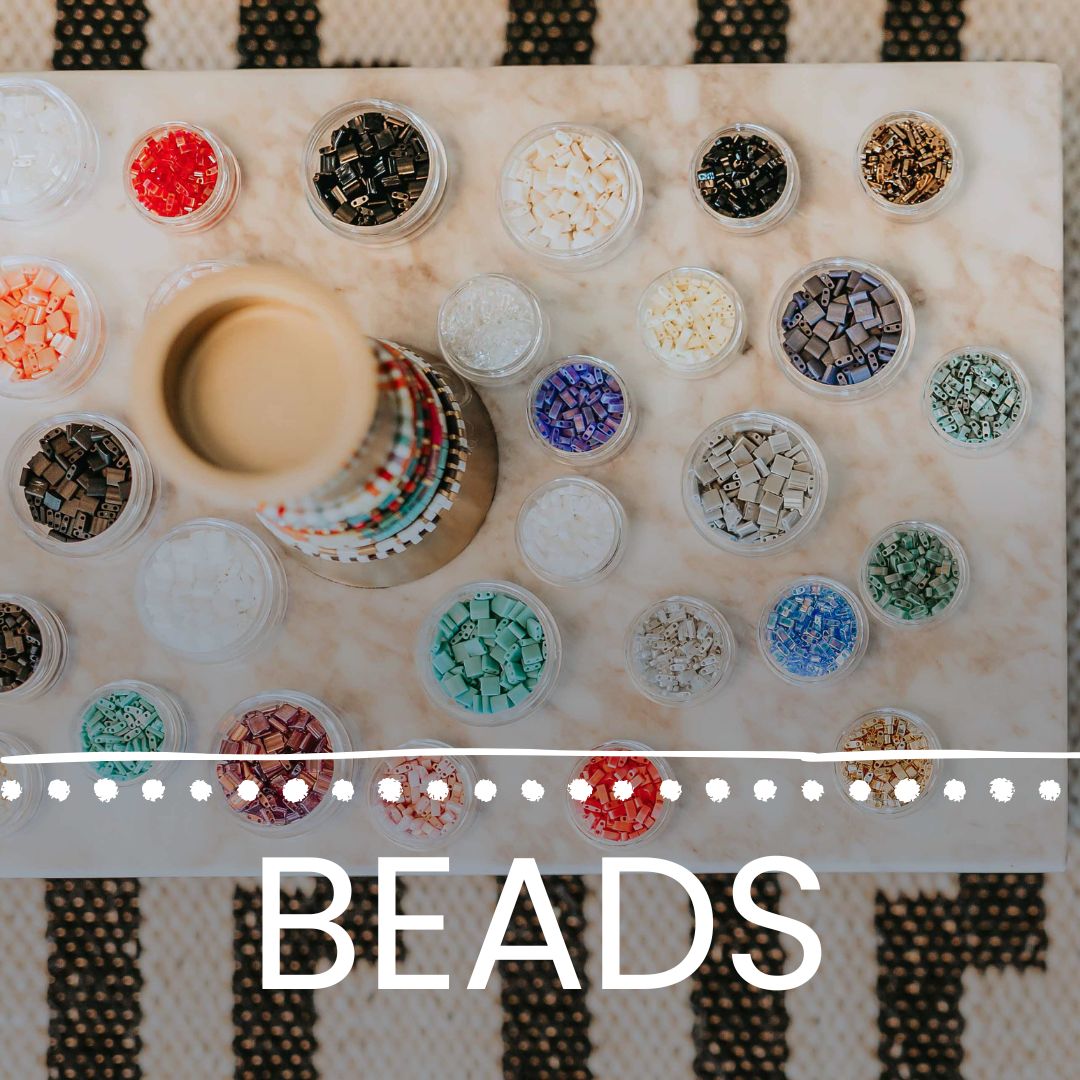
Tila bead bracelets have a mosaic-like surface. Each 5mm square tile sits flush against the next, wrapping the wrist in a band of color and pattern. Because the flat tiles can't rotate on the cord, the bracelet always looks neat and intentional. Miyuki produces Tila beads in hundreds of colorways, from matte earth tones to mirror-finish metallics, so the range of looks runs from understated to bold. The Spruce Crafts explains the Tila bead construction well if you want more background on how these beads work.
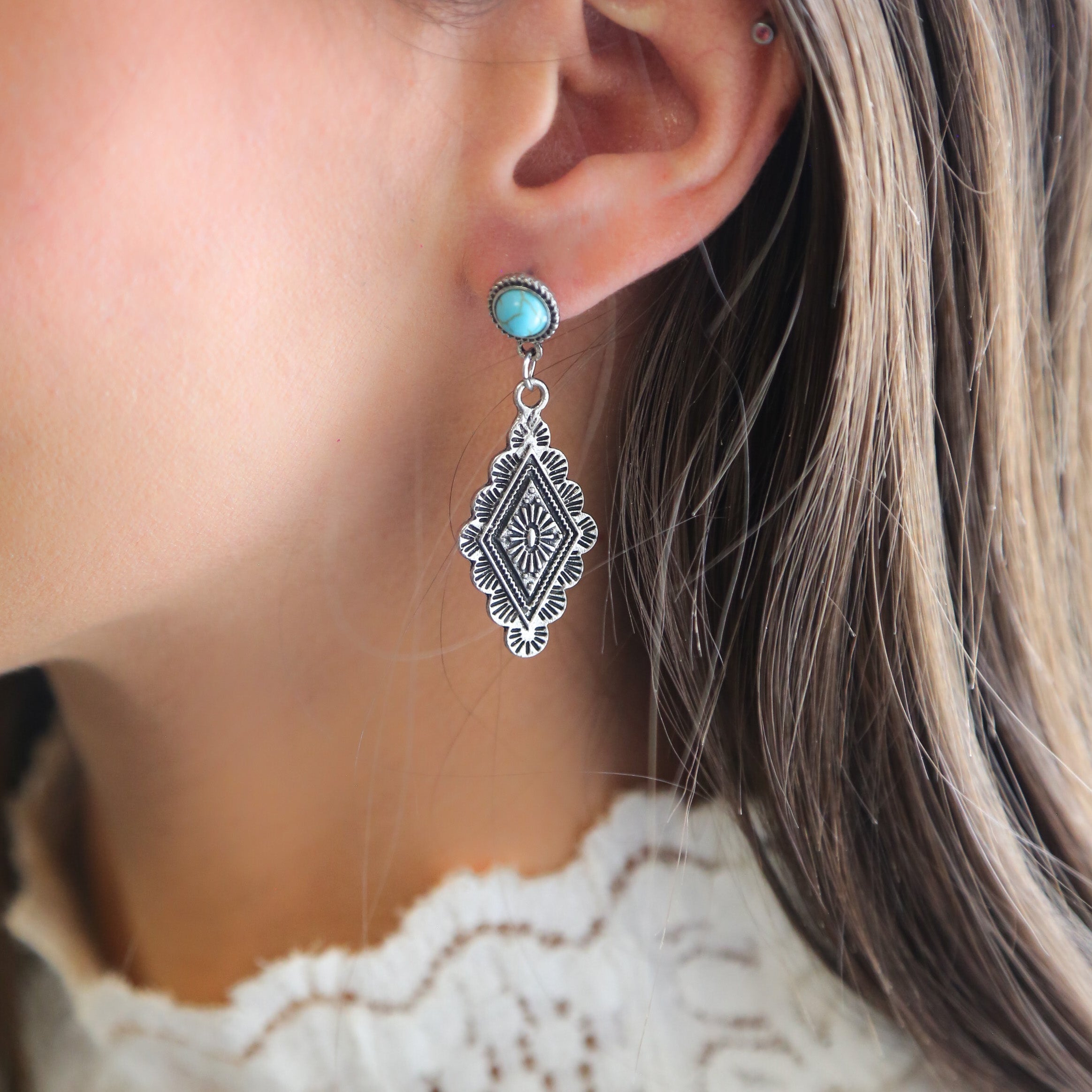
Charm bracelets tell a story. Each charm on the chain represents something, a birthday trip, a pet, a hobby, and the bracelet grows over time. The aesthetic is more three-dimensional and varied since charms come in every shape and material imaginable. The overall look depends entirely on which charms you've collected.
Both styles stack well with other bracelets, though in different ways. Tila bead bracelets stack cleanly because of their flat profile. Charm bracelets add more visual noise to a stack, which some people love and others find too busy.
Which Bracelet Feels Better for Everyday Wear and Active Days?
Tila bead stretch bracelets have an edge here.
Because they're strung on elastic cord, they slide on in a second and flex naturally with every wrist movement. There's no clasp to fiddle with in the morning and no metal hardware pressing into your skin. Many people wear them through workouts, gardening, and long days without taking them off. The flat tile surface doesn't catch on fabric the way a dangling charm can.
Charm bracelets are beautiful for going out or dressing up. The hardware can be less practical during active tasks, though. The chain clasp can pinch skin if it rotates, charms occasionally snag on sweater cuffs, and the noise of metal charms can be a consideration in quieter settings. That said, plenty of charm bracelet wearers keep theirs on all day without issue. It really comes down to your tolerance for that slight bit of extra bulk and movement.
Fit matters more with charm bracelets. Standard lengths don't account for wrist size variation well, and a too-loose charm bracelet slides around noticeably. Mack & Rex Tila bead bracelets come in sizes XXS through 5XL, which means a proper fit is available for every wrist without tailoring or resizing.
How Does Durability Stack Up?
Both styles hold up well when they're made right.
The glass in a quality Tila bead bracelet doesn't tarnish, fade, or chip under normal wear. Miyuki Tila beads are made to tight manufacturing tolerances, which is part of why their color consistency is so reliable across batches. The cord is the variable. Crystal-cord elastic on a well-tied square knot handles daily wear and activity without snapping. Over time, with very heavy use, the cord does stretch or eventually need replacing. That's a simple fix. Beadaholique has a helpful rundown on stringing stretch bracelets that covers cord selection and knotting.
Charm bracelets made from sterling silver, gold-filled, or gold vermeil hold up well over years of wear and are generally more heirloom-grade than a stretch bracelet. The tradeoffs are real though. The metal can tarnish (silver especially) and needs occasional polishing. Jump rings connecting charms can weaken and open over time. A charm that falls off is usually gone for good.
For everyday practical wear, especially anything athletic or hands-on, a well-made stretch bracelet with quality glass beads is the more forgiving choice. For something you're buying as a lasting keepsake that gains meaning through collected charms, a metal charm bracelet earns its place.
What Does Each Style Cost, and Is One a Better Value?
The price ranges are wide for both.
Ready-to-wear Tila bead bracelets at Mack & Rex run around $20 to $25 each. That's a finished bracelet, backed by a quality guarantee, in your choice of size. Stack three and grab a fourth free with the buy-3-get-1-free offer (no code needed). If you want to make your own, Trio kits with enough beads and supplies for three bracelets are $44.99.
Charm bracelets have a much wider range. A simple chain starter bracelet might cost $15 to $30, and the total price grows with every charm added, and quality charms from popular brands can run $25 to $60 or more per piece. A fully loaded charm bracelet from a premium brand can reach several hundred dollars. That's partly the point. The bracelet is meant to grow over time and carry sentimental value per charm.
If you're buying a gift or stocking up for a bracelet-making night with family, Tila bead bracelets are the more accessible option. A handful of $20 to $25 bracelets lands well under $100, and orders over $100 ship free within the US.
Which Style Is Better for Making Together as a Family?
Tila bead bracelets win here, and it's not close.
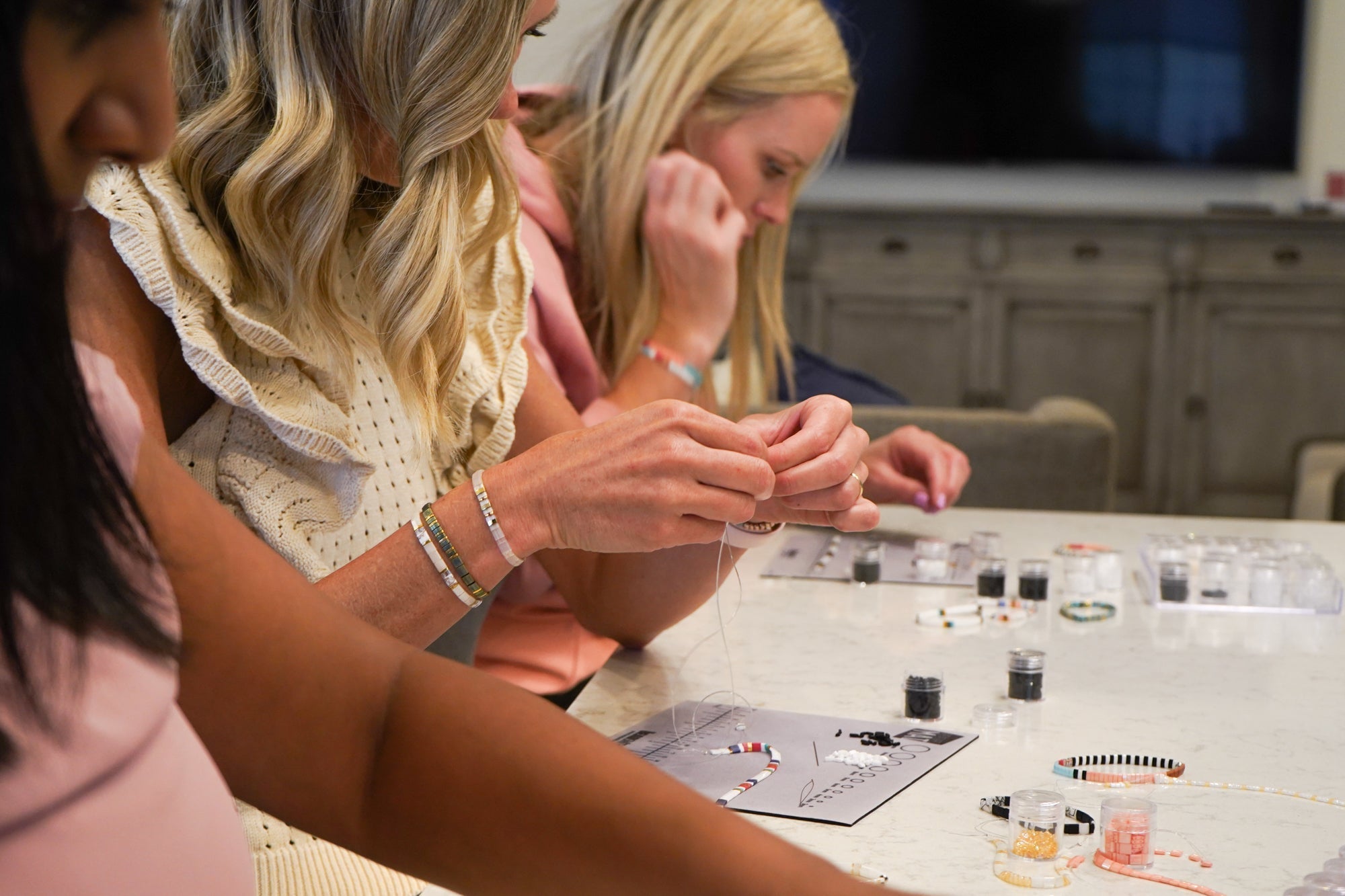
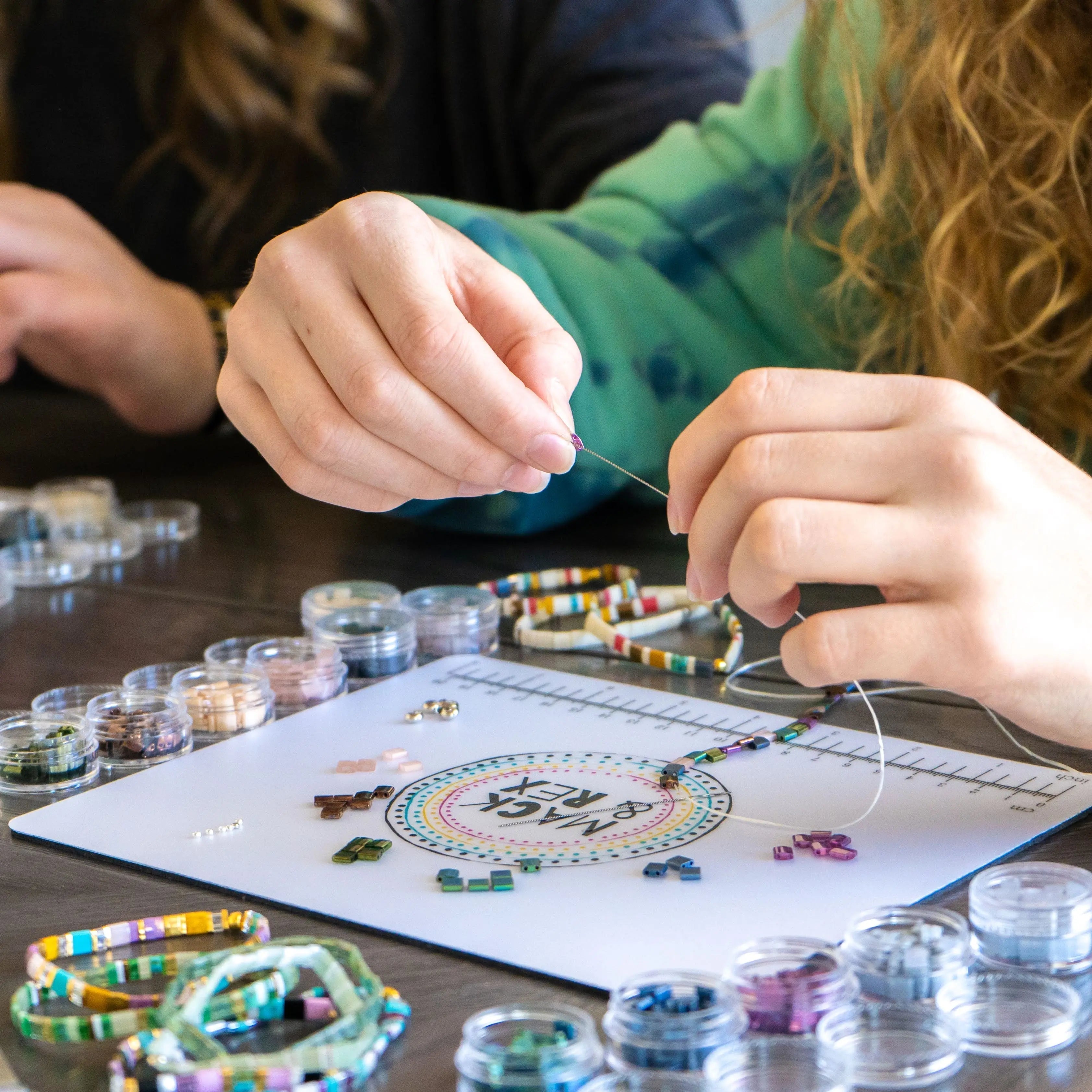
The whole reason Mack & Rex started, a mom and her two daughters, was to make bracelet-making a shared activity rather than a solo craft. A Tila bead stretch bracelet takes 20 to 30 minutes for a beginner to finish, requires no metal tools or clasps, and produces a finished wearable result the same day. Kids who are old enough to thread beads can do it with adult supervision. The DIY kits include everything needed so there's no extra shopping trip.
Charm bracelet assembly is mostly a purchasing activity rather than a making activity. Buying charms and clipping them to a chain doesn't have the same hands-on craft element. There are charm bracelet kits that let you create charms from clay or resin, though those are more involved projects with longer dry times and more cleanup. For a two-hour family activity that everyone walks away from wearing something new, Tila bead bracelets are the cleaner choice.
Note: beads are small parts. Always keep loose beads away from very young children and supervise kids during bracelet making.
Which Bracelet Style Should You Actually Choose?
Pick charm bracelets if you want to build a piece of jewelry with personal history, you love the traditional look of charms on a chain, or you're looking for something heirloom-quality that gains meaning over years.
Pick Tila bead bracelets if you want something you can wear every day without babying it, you love bold or subtle color play, you want to make them yourself (or with your kids), or you need a proper fit without a trip to the jeweler. They're also a good stacking bracelet for building out a wrist look quickly, since a set of three or four sits flat and cohesive without visual clutter.
The two styles aren't really competing. Plenty of people wear both. If you're deciding where to start, Tila bead bracelets offer more everyday wearability, better fit options, and the option to make them yourself, all at an accessible price point. According to a Statista survey on jewelry purchases in the US, bracelets are one of the most frequently bought jewelry categories, and comfort and wearability consistently rank among the top purchase drivers.
Frequently Asked Questions
What is the main difference between a Tila bead bracelet and a charm bracelet?
A Tila bead bracelet is strung on elastic cord using flat, two-hole Miyuki glass tiles that lock together edge to edge. A charm bracelet uses a metal chain with decorative pendants attached via jump rings or clips. Tila bead bracelets sit flat and flex with your wrist; charm bracelets dangle and move with you.
Which bracelet style is more comfortable for everyday wear?
Tila bead stretch bracelets tend to be more comfortable for all-day wear. They flex with your wrist, have no clasp, and sit flat against the skin without snagging. Charm bracelets can catch on fabric during active tasks. Both work for casual wear; your lifestyle is the deciding factor.
Which bracelet holds up better over time?
A Tila bead bracelet on quality crystal-cord elastic with a solid square knot handles daily wear and stays looking sharp because the glass beads don't tarnish. The cord may need replacing eventually under heavy use. Sterling silver charm bracelets are more heirloom-grade but can tarnish and lose charms over time if jump rings weaken.
Can you make a Tila bead bracelet at home?
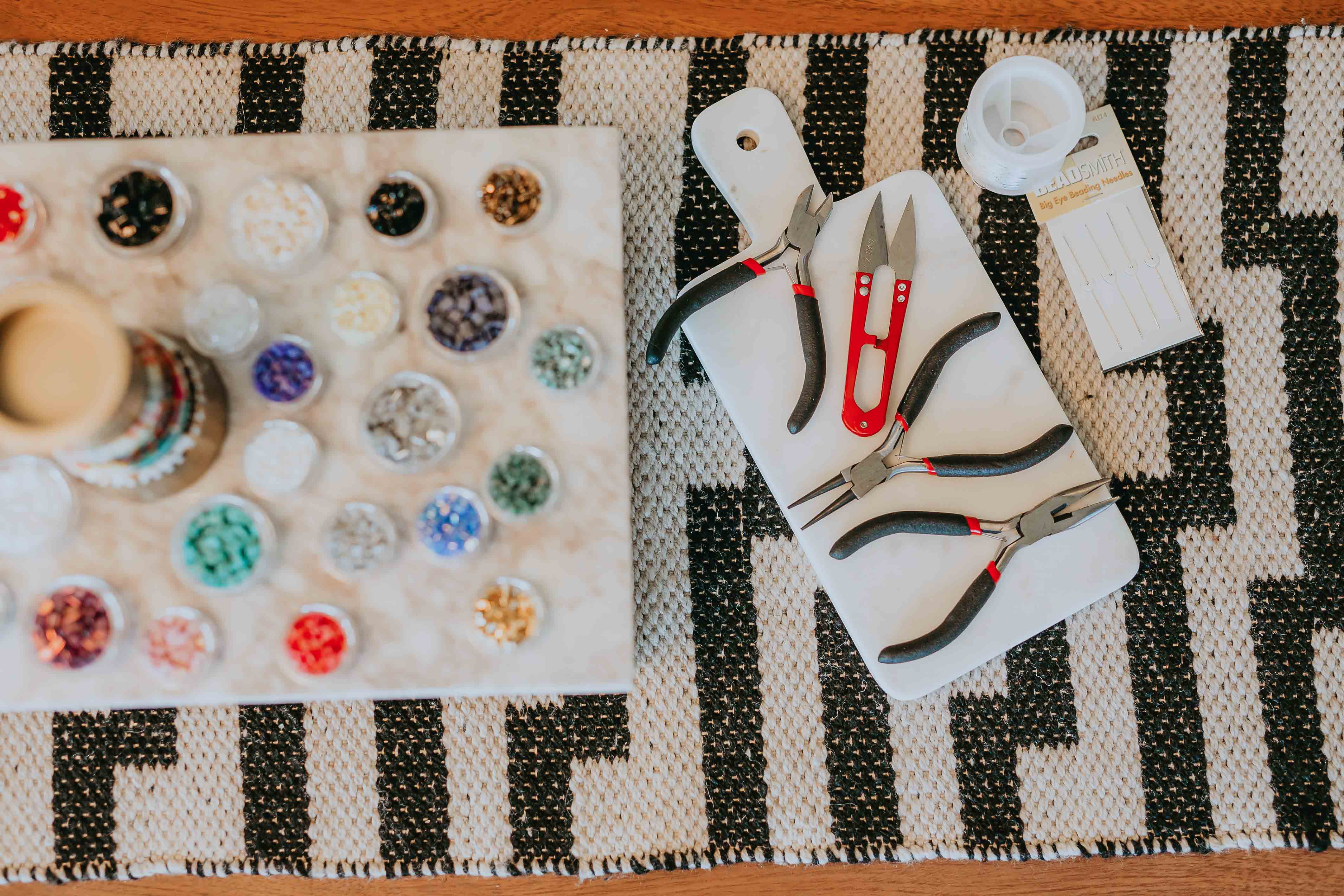
Yes. A basic Tila bead stretch bracelet only requires beads, elastic cord, and scissors. No needles or clasps needed. Most beginners finish their first one in 20 to 30 minutes. Mack & Rex sells both ready-to-wear finished bracelets and DIY kits with everything included.
Are Tila bead bracelets available in inclusive sizing?
Yes. Mack & Rex offers Tila bead bracelets in sizes XXS through 5XL for a proper fit on any wrist. Charm bracelets typically come in one or two standard lengths and may need resizing by a jeweler.
Ready to find your style? Browse finished Tila bead bracelets, DIY kits, and bead mixes at Mack & Rex. Orders over $100 ship free within the US, and if you buy three bracelets you get a fourth one free, no code needed.