

Tila Bead Color Combinations: How to Build a Bracelet Stack That Actually Works
What Are the Best Tila Bead Color Combinations for a Bracelet Stack?
The best tila bead color combinations for a bracelet stack share one thing: a clear anchor. Pick one neutral or dominant color as your base (matte black, ivory, or warm silver are solid choices), then build around it with one or two accent colors and a mix of finishes. That structure is what separates a stack that looks curated from one that just looks busy. Done right, a five-bracelet tila bead stack takes maybe 30 seconds to put on and works from school drop-off to dinner out.
Below is a practical breakdown of the palettes, finishes, and mixing strategies that actually work. No art degree required.
Why Does Finish Matter More Than Color?
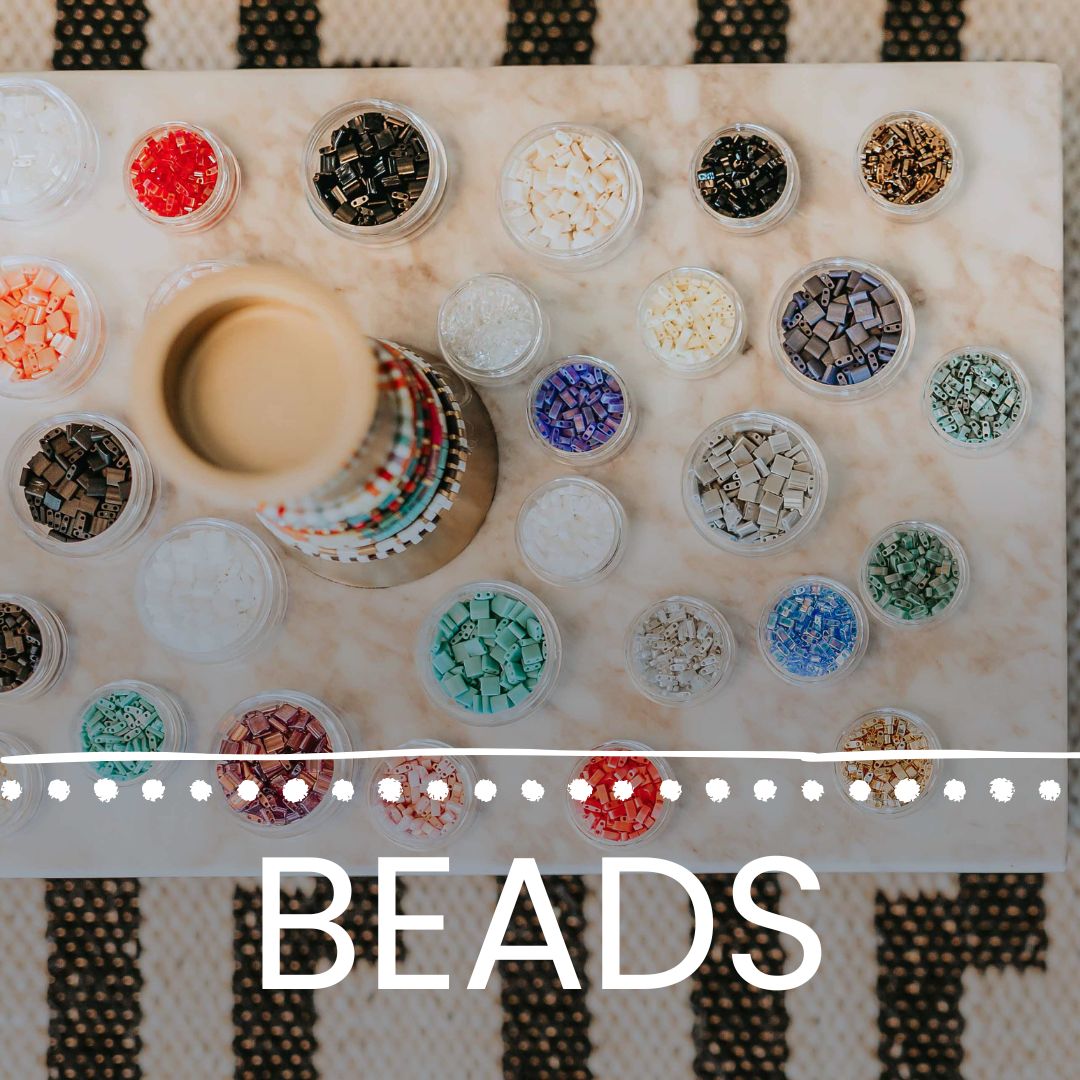
Color gets all the attention, but finish is doing most of the work in a bracelet stack. Miyuki tila beads come in a wide range of surface treatments: matte, glossy, metallic, luster, and AB (aurora borealis) coatings. Understanding how those finishes interact is the fastest way to make a stack look intentional.
Matte finishes absorb light. They read as calm, modern, and easy to wear. Glossy finishes bounce light and pop against skin. Metallics (gold, silver, bronze, gunmetal) act as neutral anchors that pull other colors together. AB coatings add an iridescent shimmer that can look subtle in natural light and more dramatic indoors.
The approach that works most consistently: build your stack's foundation with matte beads, then add one or two glossy or metallic pieces for contrast. It creates depth without requiring you to think hard about complementary colors on a color wheel.
Matte vs. Glossy: Which One Should Anchor Your Stack?
Matte anchors. Glossy accents. That's the short version.
Matte tila bead bracelets sit against the wrist quietly; they don't compete with your outfit or each other. When you start a stack with two matte pieces (say, matte black and matte ivory), you've already got a foundation that works with almost anything. From there, one glossy or metallic bracelet is enough to make the whole stack interesting. Two glossy pieces can work if the colors are close; three usually tips into visual noise.
The exception is an all-metallic stack. A mix of gold, silver, and bronze tila bead bracelets reads as cohesive because the unifying thread is the metallic finish. The color variation between warm and cool metals creates interest without chaos. The Spruce Crafts has a solid overview of bead types and finishes if you want to go deeper on the terminology.
What Palette Works for a Neutral, Everyday Stack?
Neutral palettes are the easiest to wear and the hardest to mess up.
A go-to neutral tila bead stack might look like this: matte black + matte white + warm silver metallic. Three bracelets, three finishes, no clashing. That combination works with jeans, a blazer, workout gear, or a sundress. It's the stack you can put on once and not think about.
For a warmer neutral palette, swap the cool silver for a bronze or gold metallic and add a matte greige or tan. Earth tones (dusty rose, warm camel, sage, and rust) work the same way. They don't require you to match anything specific because they tend to pick up undertones in whatever you're already wearing.
One thing worth knowing: Miyuki's matte finishes are produced by acid-etching the glass surface, which gives them a consistent, velvety texture across colors. Miyuki's site covers their bead production process if you're curious about what makes the glass quality different from generic craft-store alternatives.
How Do You Build a Tonal Stack Without It Looking Flat?
Tonal stacks (two or more bracelets in the same color family) look beautiful when they have finish variation. All the same finish and you lose dimension; all the same color and you lose interest. The fix is to vary both.
A navy tonal stack might include a matte navy, a glossy deep blue, and a navy-with-gold metallic finish. Same color story, three different textures. The depth comes from the finish contrast, and the color unity keeps it looking intentional.
The same principle works with greens (sage, olive, emerald), pinks (blush, mauve, dusty rose), and warm earth tones (rust, terracotta, camel). Pick three values of the same hue: light, medium, dark. Give each a different finish. That formula rarely fails.
What About High-Contrast Color Pairings?
High contrast means opposite-ish colors: navy and white, black and gold, cobalt and orange. The trick with high-contrast tila bead stacks is to keep the overall count low. Two or three bracelets max. Four high-contrast pieces on one wrist starts to feel hectic.
The most wearable high-contrast pairings have one neutral in the mix. Black + gold is high contrast, yet both pieces are technically neutrals, so the combination goes with everything. Cobalt + white works for the same reason: white is a neutral anchor. When neither color is a neutral (say, bright red + bright green), limit the stack to two pieces or the colors start fighting each other.
What Seasonal Palettes Work Well for Tila Bead Bracelets?
Seasonal color pulls are one of the easiest ways to keep a stack feeling fresh without buying entirely new pieces.
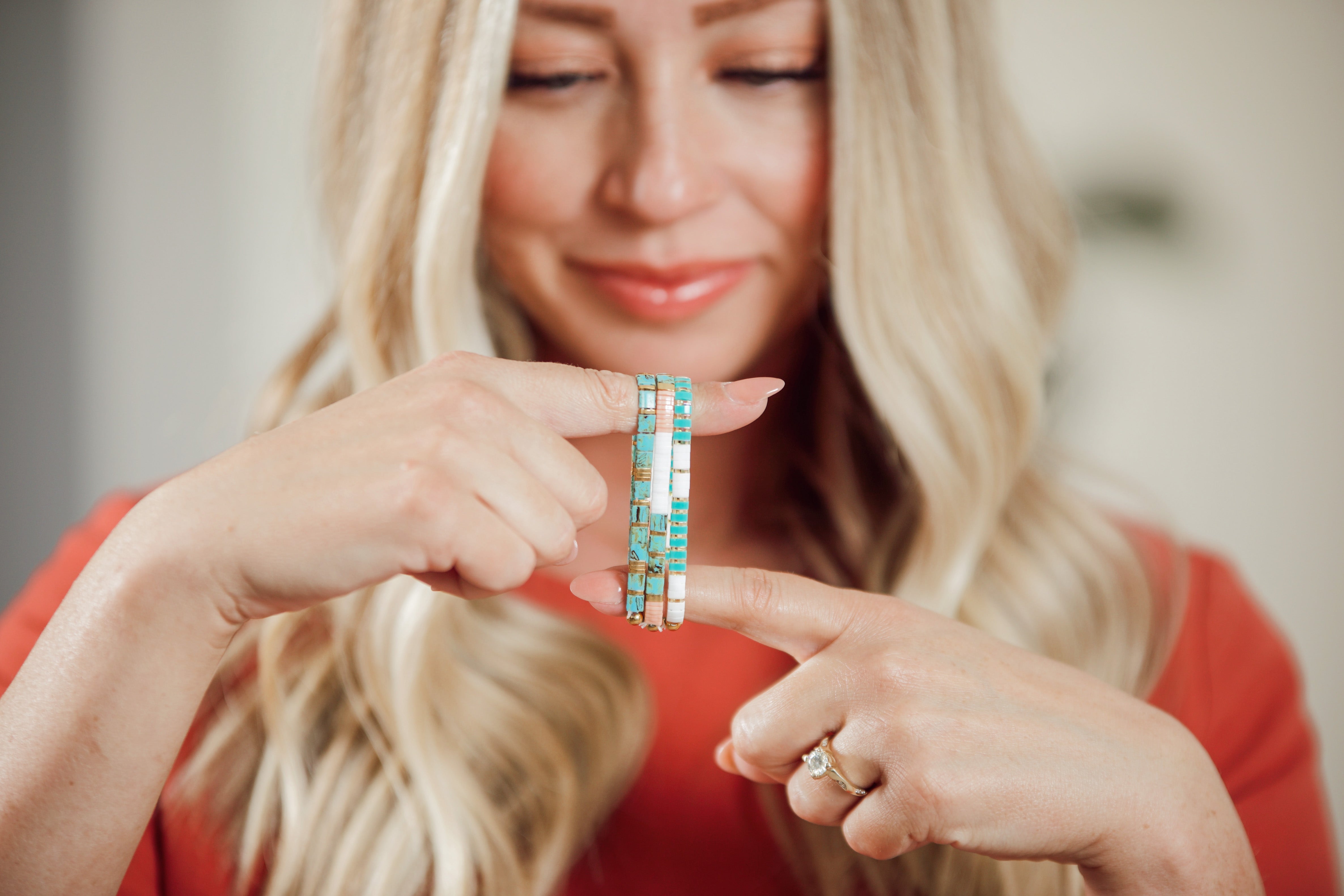
Summer: whites, turquoise, coral, bright yellow, seafoam. Glossy finishes pop more in summer light. The Mack & Rex BEACHY collection is built around exactly this palette: sun-faded brights against sandy neutrals.
Fall: burnt orange, deep burgundy, forest green, mustard, warm brown. Matte finishes and metallic coppers are natural fits here. Rich, muted tones that work well with the wardrobe colors most people are already pulling out in September.
Winter/holiday: deep red, forest green, gold, white pearl, midnight navy. Metallic and AB finishes look especially good in low winter light. The STAINED collection from Mack & Rex plays in these deeper, jewel-tone shades. The kind of colors that look great layered under a sweater cuff.
Spring: lavender, mint, soft peach, sky blue, warm ivory. Light and airy, mostly matte with a touch of luster. The EVERGREEN EDIT leans into the earthy-green side of this palette: natural, quiet, and very wearable.
How Do You Mix Tila Beads With Accent Beads in a Stack?
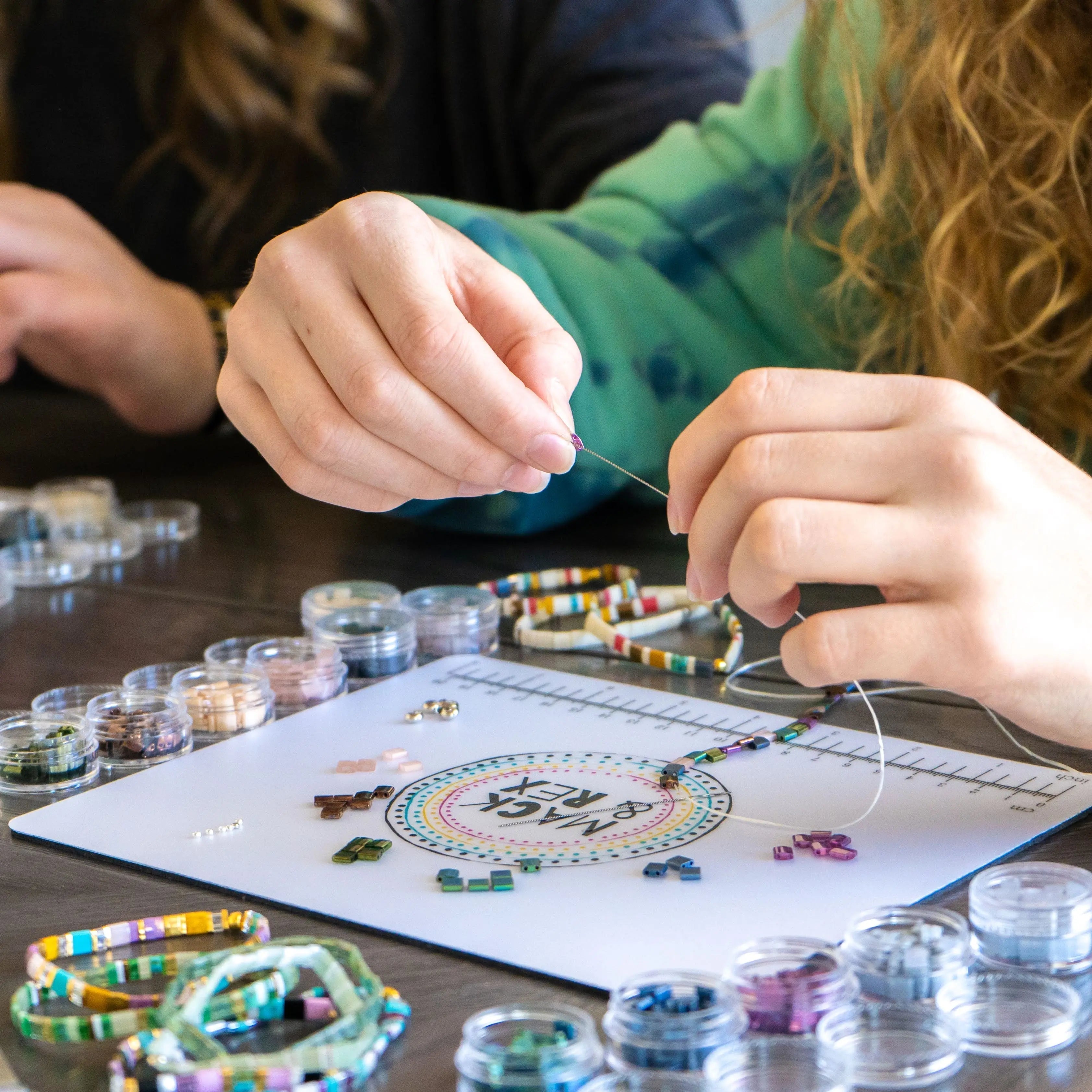
Tila bead bracelets have a flat, tile-like structure that stacks differently from round beads, and that contrast is exactly what makes mixing them interesting.
The cleanest mix: one or two tila bead bracelets paired with one or two bracelets made from round seed beads or small accent beads. The flat geometry of the tila pieces contrasts nicely with the rounder texture of accent bead bracelets, and the two styles tend to sit at slightly different heights on the wrist, which adds visual layering without adding bulk.
Color-wise, let the tila bracelet lead. Pick your tila piece first, then choose accent bead bracelets that pull one color from it. If your tila bracelet is white and gold, an all-gold accent bead bracelet ties the stack together without copying it.
Beadaholique's bracelet stacking guide goes into more detail on mixing bead types and bracelet widths if you want a broader reference on stacking technique.
What Makes a Tila Bead Stack Work for Everyday and Workout Wear?
Two things: cord quality and bead weight.
Miyuki tila beads are Japanese glass: lightweight and smooth, which means they don't add bulk or snag on fabric the way heavier or rougher beads can. The glass itself holds up well to daily wear and light sweat. What usually determines how a bracelet holds up over time is the elastic, and that's where quality varies a lot between brands.
Mack & Rex bracelets use crystal-cord elastic, which is stronger and more stretch-resistant than standard craft-store elastic. They're designed to stay put during a workout and not slide around during regular movement. That said, no elastic bracelet is meant to be soaked for extended periods. If you're swimming laps or doing hot yoga, it's worth taking your bracelets off.
Sizing also matters more than most people expect. A bracelet that fits correctly (snug enough to stay put without being tight) will be much more comfortable during activity than one that's too loose. Mack & Rex offers inclusive sizing from XXS to 5XL, which makes a real difference for wrists that don't fit standard "one size" bracelets.
Ready to Build Your Stack?
The easiest way to start is with a finished bracelet you already love, then build around it. If you've got a palette in mind, browse the Mack & Rex accent bracelets collection — it's where new colorways land first, and most pieces are under $25. Buy three and you get a fourth free, no code needed, which makes building a starter stack a pretty low-stakes experiment.
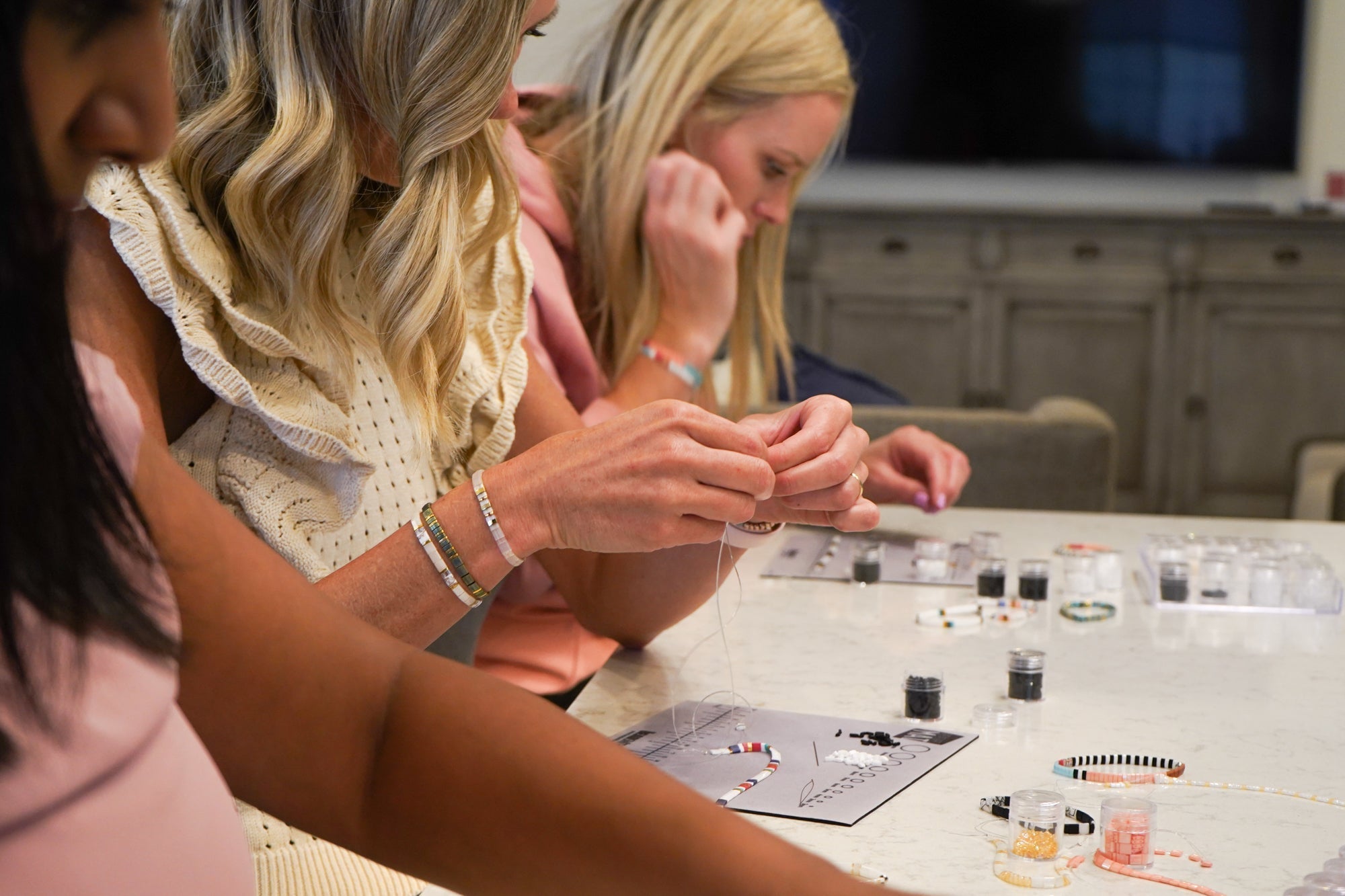
If you'd rather DIY your own combinations from scratch, the loose tila bead mixes let you pull exactly the palette you want. Either way, the hardest part is narrowing it down.
Tila Bead Color Combinations: Frequently Asked Questions
How many tila bead bracelets should be in a stack?
Three to five bracelets is the sweet spot for most wrists. Two feels sparse and hard to style; six or more starts sliding around and tangling. With tila bead bracelets, odd numbers usually look more intentional than even. Three is an easy starting point, and you can build from there once you know which palettes you want.
Can you mix matte and glossy tila beads in the same stack?
Yes, and it usually looks better than an all-one-finish stack. The contrast between a matte finish and a glossy or metallic tila bead creates texture without clashing. A good rule: pick one finish as your anchor (usually matte) and let the glossy or metallic pieces act as the accent.
What colors of tila beads work best for everyday wear?
Neutrals (matte white, matte black, ivory, greige, and silver) are the most wearable because they go with almost any outfit. From there, pull in one or two accent colors that match what's already in your wardrobe. Earth tones like tan, rust, and olive are popular for everyday wear because they read as neutral without being boring.
What is the difference between tila beads and regular seed beads in a bracelet stack?
Tila beads are flat, square two-hole beads made by Miyuki, a Japanese glass bead manufacturer. They're larger and more geometric than round seed beads, so they sit flat on the wrist and stack cleanly. A bracelet made with tila beads has a tile-like, structured look that's distinctly different from the softer texture of round seed beads.
Are tila bead bracelets waterproof?
Miyuki glass tila beads themselves won't be damaged by water. The real question is the elastic cord. Quality crystal-cord elastic (the type used in Mack & Rex bracelets) holds up well to everyday splashes, handwashing, and light workouts. Prolonged soaking, like a long bath, will eventually degrade any elastic, so it's smart to remove your bracelets before swimming.