

Tila Bead vs Seed Bead Bracelets: What's the Difference and Which Should You Choose?
What's the Difference Between Tila Beads and Seed Beads?
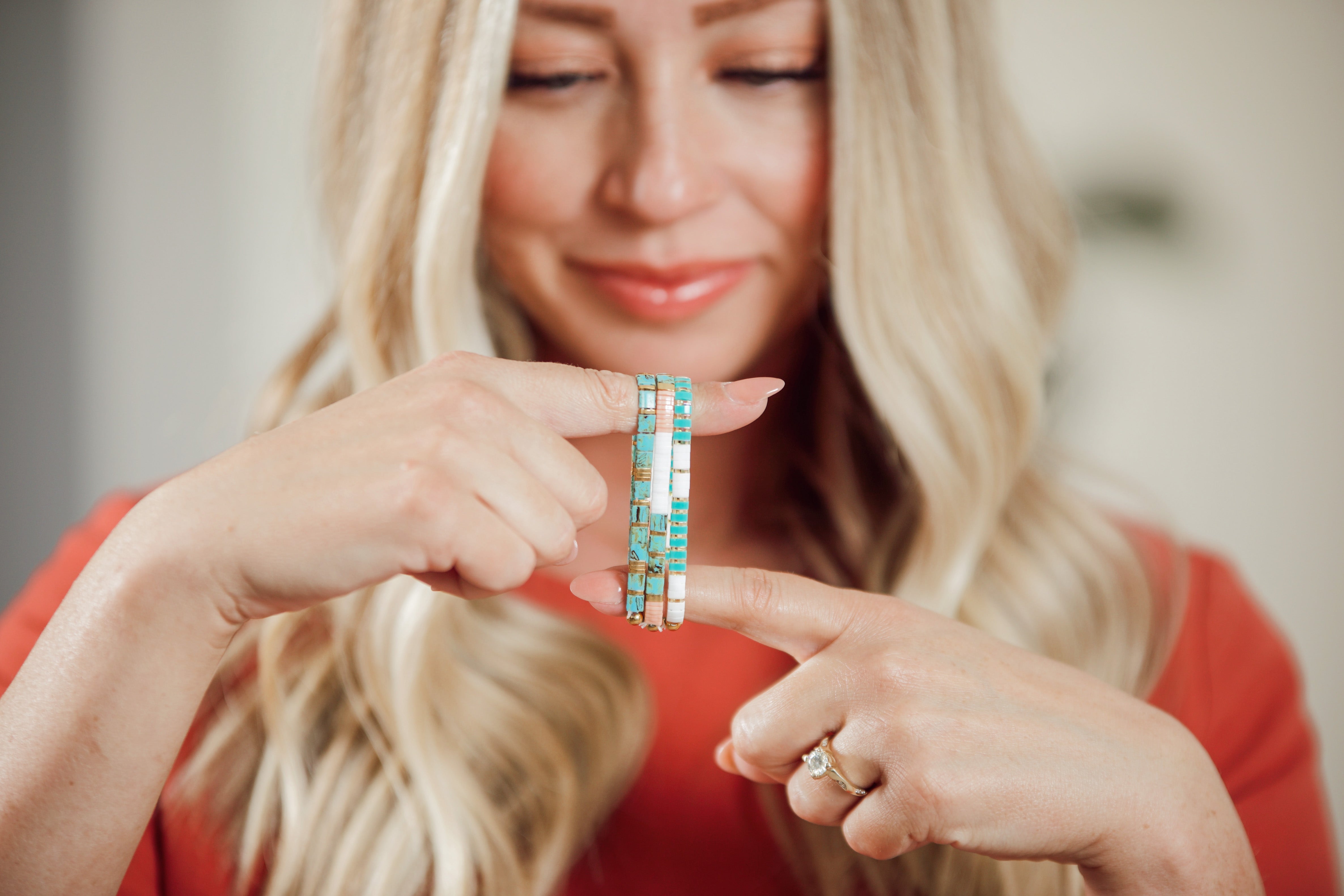
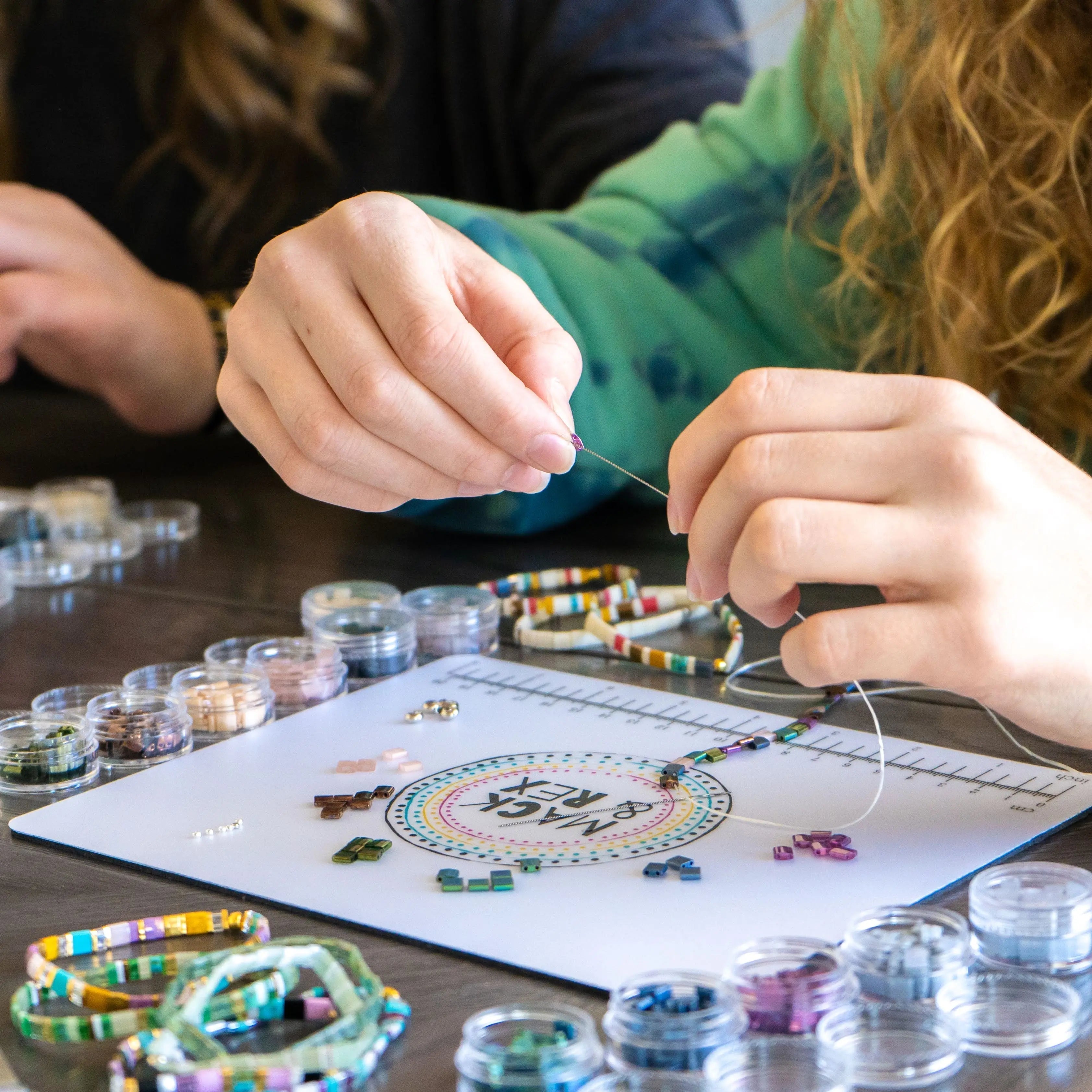
Tila beads are a type of seed bead, but they work very differently on a bracelet. Standard seed beads are small, round or cylindrical, with a single hole through the center. Tila beads are flat, square Japanese glass tiles (5mm x 5mm) with two parallel holes side by side, made by Miyuki in Japan. That double-hole structure locks every Tila bead flat against the cord, giving a bracelet a smooth, mosaic-like surface that round seed beads can't replicate.
How Does Each Bead Actually Look on a Bracelet?
The shape difference is the whole story.
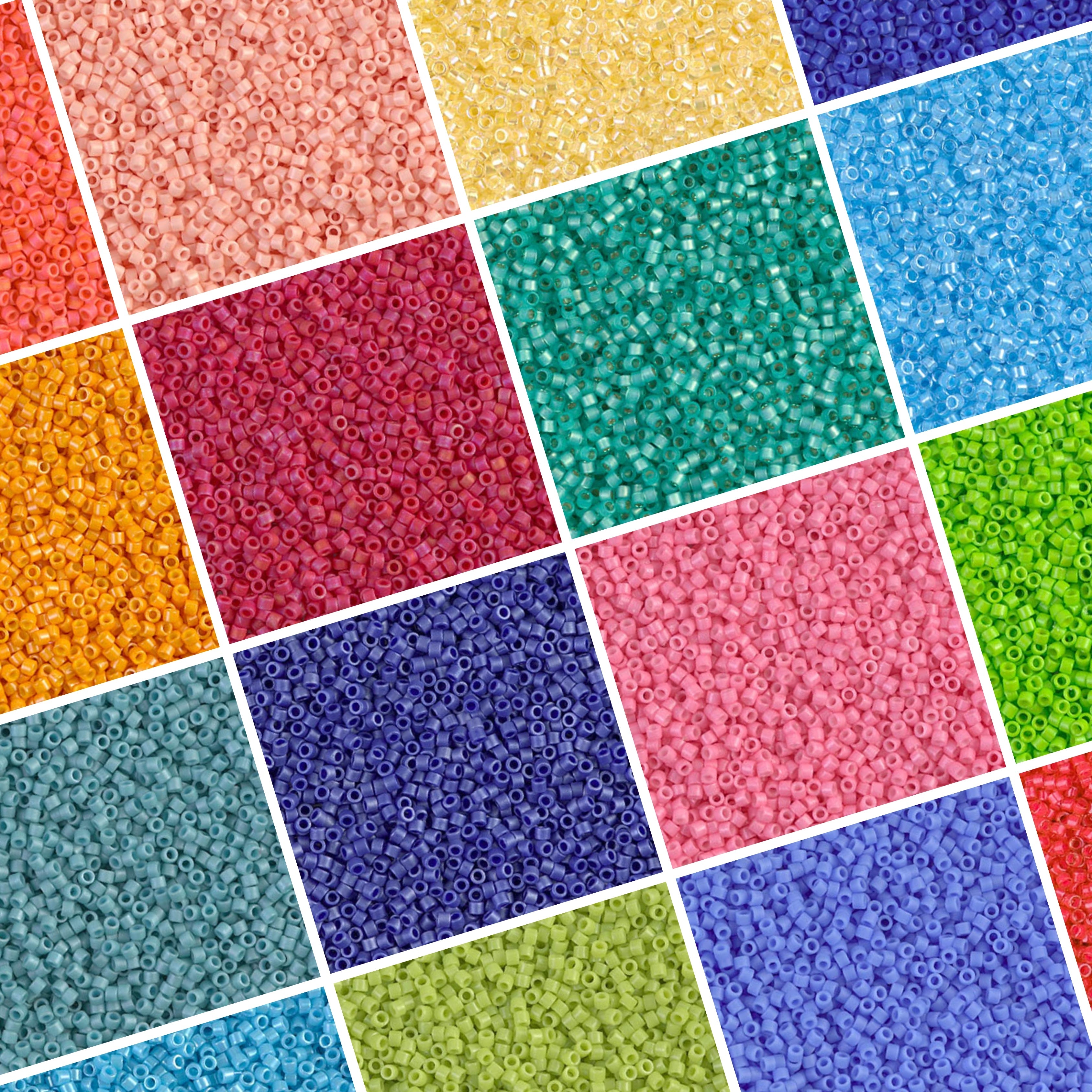
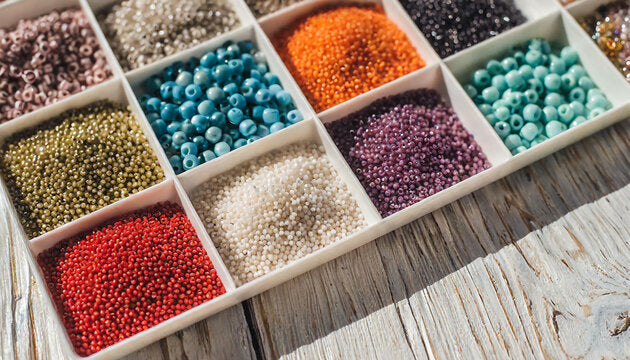
Round seed beads produce a classic beaded look. Each bead sits as a small sphere or cylinder, and on a stretch bracelet the beads shift a little with movement. The look is textured and casual, like a classic friendship bracelet scaled up. Depending on the size you use (seed bead sizes range from 6/0 down to 15/0, with larger numbers meaning smaller beads), you get a finer or chunkier effect.
Tila beads produce something completely different. Because each bead is flat and has two holes, it can't rotate or shift along the cord. The result is a bracelet that looks almost architectural, with square tiles lined up flush against each other around your wrist. The surface is clean and geometric. It sits flat rather than having that round, bumpy texture.
One practical upside of the flat profile: Tila bead bracelets stack cleanly. You can wear three or four at once without them bunching up or catching on each other. Round seed bead bracelets can do the same, but the rounder surface creates more friction between layers.
Which Bead Is Easier to Use for Bracelet Making?
For a simple stretch bracelet, Tila beads win on ease.
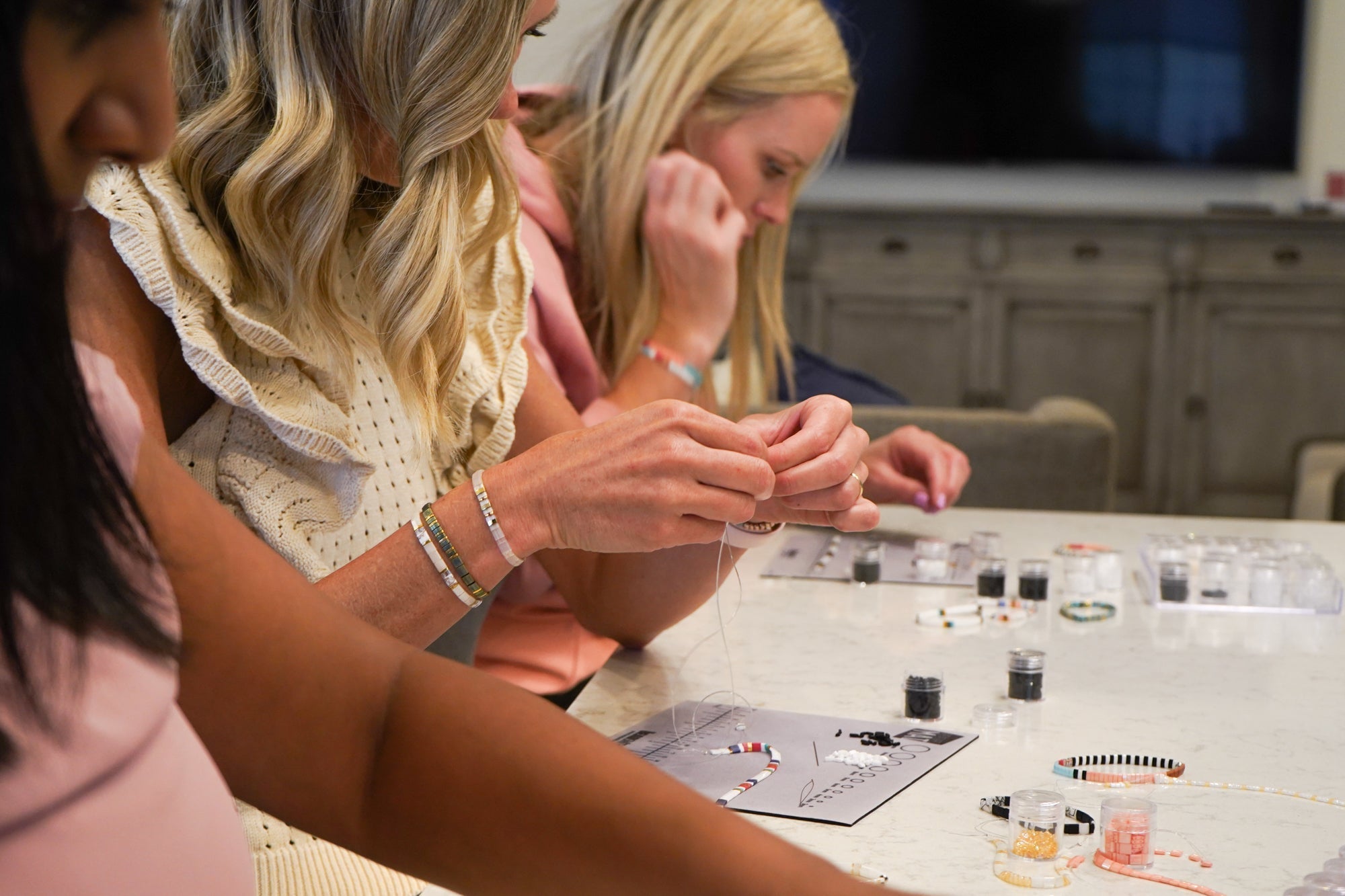
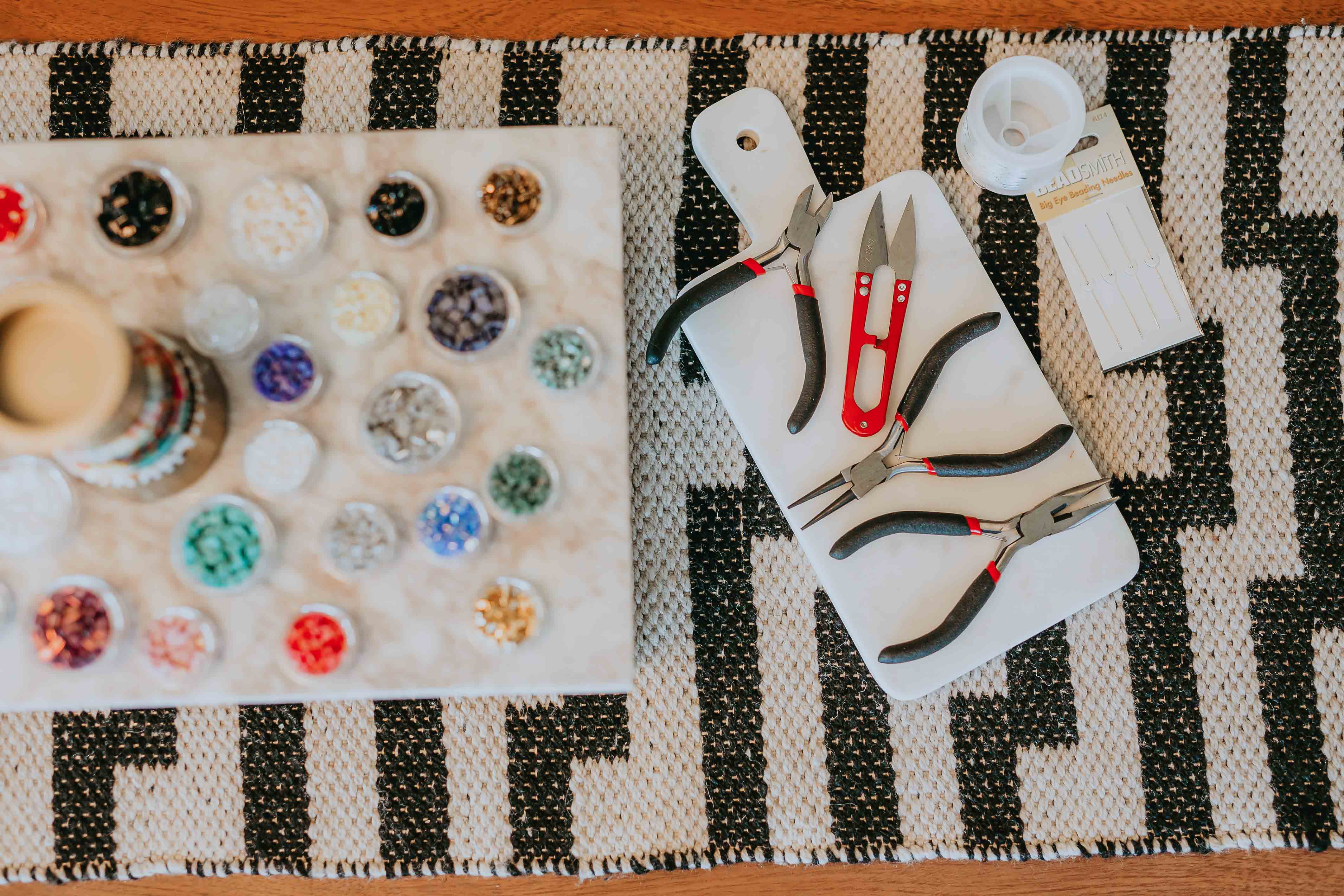
Because they're flat and relatively large (5mm), they're much easier to pick up and thread than tiny round seed beads. They stay put on the cord while you work. A basic Tila bead stretch bracelet uses a straightforward loop-and-knot method, and most people finish their first one in 20 to 30 minutes. You don't need a needle, a loom, or any special tools.
Round seed beads open up a much wider world of stitching techniques, but most of those techniques have a steeper learning curve. Peyote stitch, brick stitch, and right-angle weave are common approaches that require a needle, thread (or FireLine), and some patience to get even tension. The Spruce Crafts has a solid primer on seed bead stitches if you want to dig into those methods. They're rewarding, but they're not a 20-minute project.
If you're crafting with kids or looking for a weekend project that delivers a finished bracelet the same day, Tila beads are the easier starting point. That's a big part of why Mack & Rex built their kits around them.
Do the Two Bead Types Feel Different to Wear?
Yes, noticeably.
Round seed bead bracelets have more texture against your skin. The curved surface of each bead creates a slight rolling sensation when the bracelet moves. Some people love that tactile feel. Others find it catches on fabric or feels less polished.
Tila bead bracelets feel smooth and flat. The square tiles sit flush against your wrist without much movement, so you barely notice them during a workout or a long day. That's one reason Mack & Rex customers often mention wearing their bracelets to the gym or through active days without taking them off.
Durability is similar for both, assuming quality glass. Miyuki's Japanese glass manufacturing process produces consistent bead thickness and color saturation that holds up without chipping. The cord and knot quality matter more for longevity than the bead type itself. A bracelet strung on quality crystal-cord elastic with a solid square knot will outlast one strung on cheap elastic, regardless of whether you used Tila beads or round seed beads.
Which Style Works Better for Stacking?
Both can stack well, but the mechanics are different.
Tila bead bracelets have a flat profile, roughly 5mm tall when worn, and they lie parallel to each other without creating a lot of bulk. You can stack four or five before they start feeling substantial on your wrist. The uniform surface makes them look intentional as a set.
Round seed bead bracelets have more variance. Thinner bracelets (strung on fewer or smaller beads) stack easily. Chunkier styles take up more wrist space. If you're mixing seed bead bracelets with Tila bead bracelets in a stack, the visual contrast between the flat tiles and the rounded texture can actually be interesting, two different beading styles that complement each other without competing.
The main thing to avoid in any stack is forcing too many bracelets onto the same stretch of wrist and losing the fit on all of them. A bracelet that fits right when worn alone should still fit right in a stack of three or four.
Can You Mix Tila Beads and Seed Beads in One Bracelet?
You can, though it takes some planning. On a simple elastic strand, the flat Tila beads and round seed beads have different heights and widths, so they don't always sit evenly together. A common workaround is using round seed beads as accent spacers between Tila bead clusters in a woven or stitched design. Beadaholique's tutorial library has several patterns that combine bead types this way if you want a starting point.
For a stretch bracelet specifically, most people stick with one bead type per bracelet and create variety through color palettes rather than mixing shapes on the same strand. It's a simpler approach and the results look more polished.
Which Should You Choose?
Go with Tila beads if you want a clean, flat bracelet that stacks well, holds up during daily wear, and works for a weekend crafting session without a steep learning curve. Tila bead kits are a great match for making bracelets with kids or anyone who's new to beading. (A quick reminder: Tila beads are small and a choking hazard for very young children, so adult supervision is a must during any crafting session.)
Go with round seed beads if you're drawn to more complex patterns and stitching techniques, or if you want the classic look of a beaded bracelet with more texture and movement. Seed bead work opens up into a full hobby with dozens of stitch types and design possibilities.
Many crafters end up working with both over time. A beginner might start with a Tila bead stretch bracelet, then branch into peyote-stitched seed bead pieces as their skills grow. They serve different creative goals and they layer together beautifully in a stack.
Where to Find Miyuki Tila Beads and Seed Bead Mixes
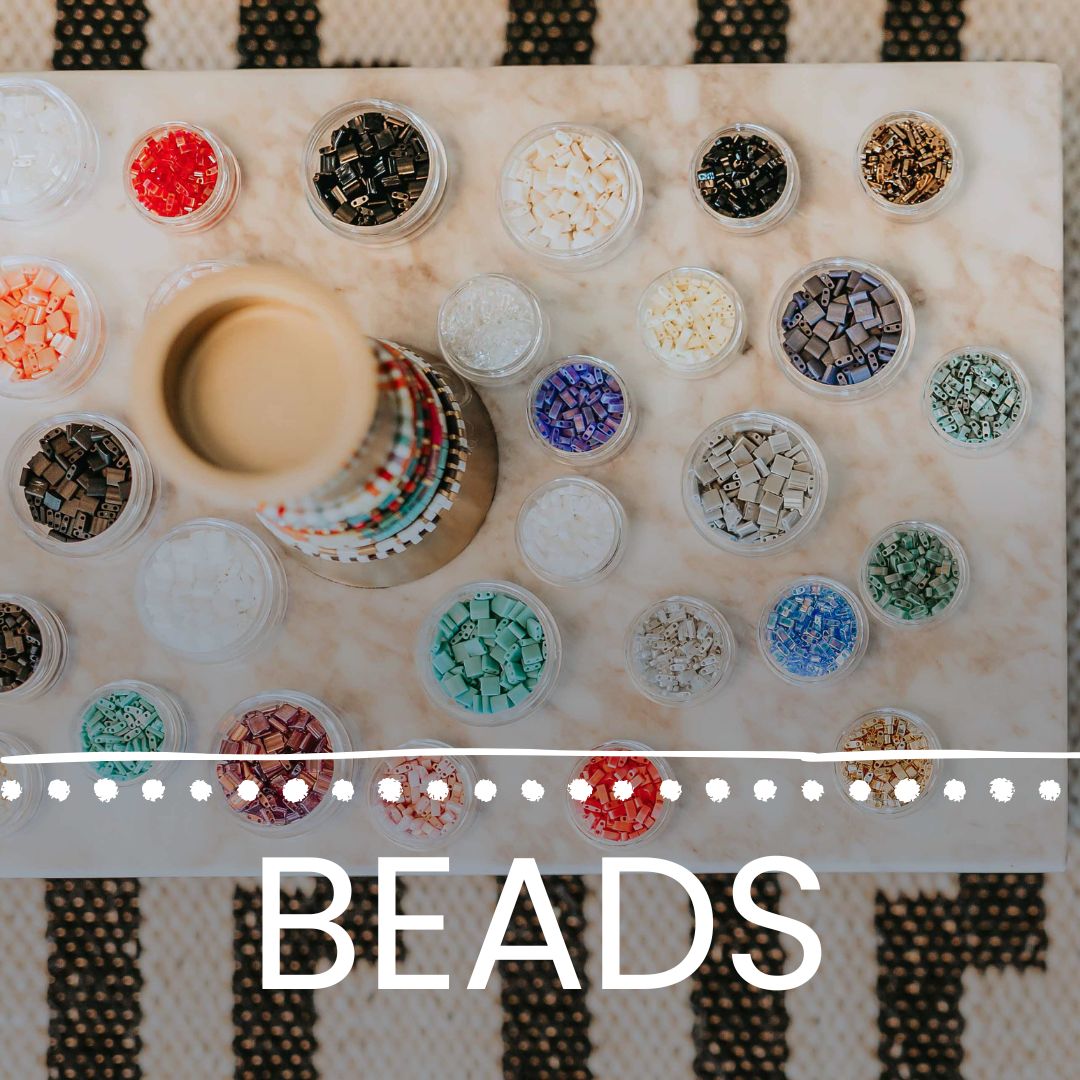
Mack & Rex carries curated Miyuki Tila beads and seed bead mixes in ready-to-use color palettes. Whether you're shopping for a specific project or just want to build up your bead collection, the selection skips the overwhelm of a big craft store and focuses on what actually makes great bracelets.
Browse the full range at mackandrex.com/collections/all-seed-beads. Orders over $100 ship free within the US. Mack & Rex drops new colorways monthly, so the collection changes regularly.
If you're ready to make rather than just plan, a trio kit ($44.99) gives you Miyuki Tila beads in three coordinating color mixes, elastic cord, and a step-by-step guide with everything to make three finished bracelets from scratch. Or pick up finished ready-to-wear bracelets in inclusive sizing from XXS to 5XL. Buy 3 bracelets and get 1 free, no code needed.
Frequently Asked Questions
Are Tila beads a type of seed bead?
Yes. Tila beads are technically a seed bead, but they're a flat, square two-hole variety made by Miyuki in Japan. Standard seed beads are round with a single hole. The two-hole design is what makes Tila beads sit flat on a bracelet, edge to edge, rather than rolling or shifting.
Which bracelet is easier to make: Tila bead or seed bead?
For a simple stretch bracelet, Tila beads are easier for beginners. They stay in place while you thread them and don't roll around. Round seed beads are smaller and harder to handle, and many seed bead bracelet patterns require needles, thread, and stitching techniques that take longer to learn.
Do Tila bead bracelets last longer than round seed bead bracelets?
Both are made from glass and are durable. The bigger factor is the cord and knot quality. Tila bead bracelets made with crystal-cord elastic and a proper square knot will outlast bracelets made with cheap elastic, regardless of bead type.
Can you mix Tila beads and seed beads in one bracelet?
Yes, but it takes some planning. Because Tila beads are flat and sit edge to edge while round seed beads are cylindrical, mixing them on a single elastic strand creates uneven spacing. Many crafters use seed beads as accent separators between Tila bead sections in woven or stitched designs.
Where can I buy Miyuki Tila beads and seed beads?
Mack & Rex carries Miyuki Tila beads and seed bead mixes in curated color palettes. Browse the full selection at mackandrex.com/collections/all-seed-beads. Orders over $100 ship free within the US.