

Tila Beads vs Delica Beads: Which One's Right for Your Bracelet?
What's the Real Difference Between Tila Beads and Delica Beads?
Tila beads are flat, two-hole glass squares that tile together into a mosaic-like surface. Delica beads are tiny glass cylinders built to stack into perfectly even rows on a loom or in peyote stitch. Both come from Miyuki, the Japanese bead maker, but they're shaped to solve two different design problems.
Same manufacturer, same glass quality, very different jobs. If you've landed here trying to figure out which one belongs in your next project, the short version is this: Tila is the flat, graphic, stretch-bracelet bead, and Delica is the fine-detail bead for woven and lettered designs. The rest of this guide walks through why, and where each one actually earns its spot on your bead mat.
What Are Tila Beads and Why Do They Give Bracelets That Tiled Look?
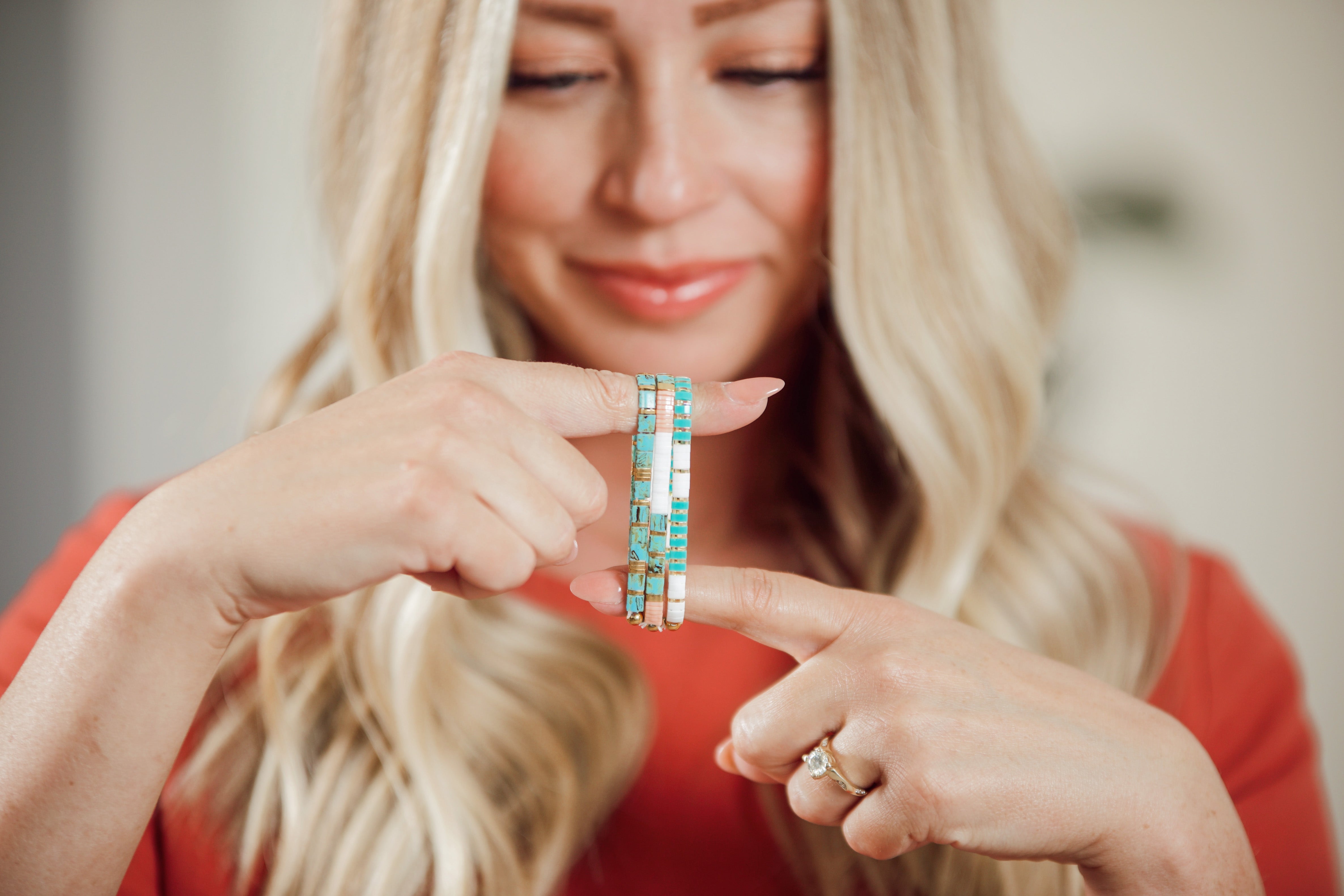
Tila beads are square, flat glass beads, about 5mm per side, each drilled with two parallel holes running through it instead of one hole through the center. That flat profile and double-hole setup let the beads sit edge to edge with almost no gap, which is exactly what gives a Tila bracelet its clean, tiled surface. Miyuki introduced the shape after years of glass-cutting research in Japan, and the flat square remains one of its most recognized specialty cuts, according to PotomacBeads' rundown of the Miyuki Tila line.
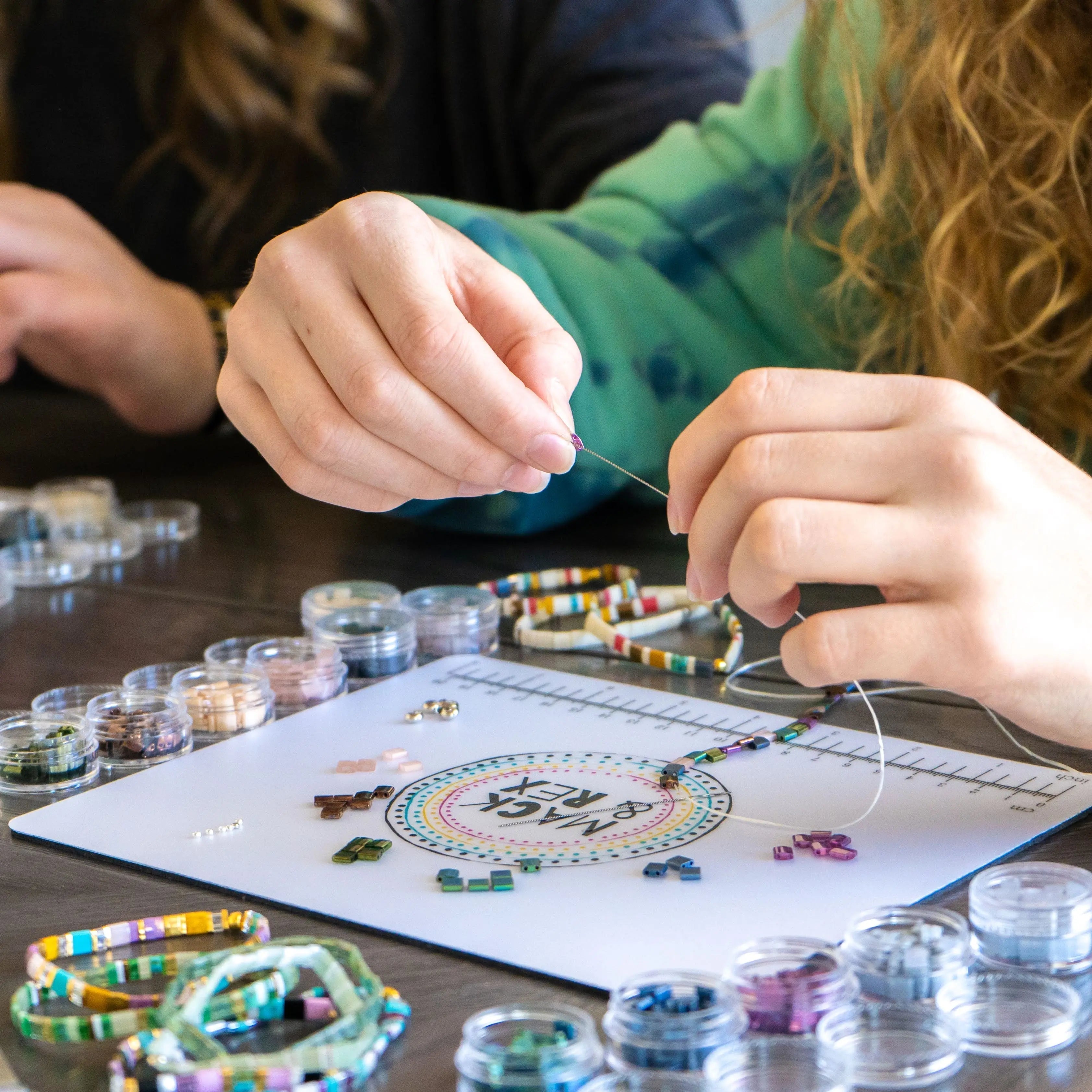
Two holes rather than one changes more than you'd expect. It means a Tila bead can sit flush against its neighbors on two sides at once, so a strand of Tila beads reads as a continuous surface rather than a string of individual dots. That's the mosaic effect people mean when they say a bracelet looks "tiled." It also means Tila beads work well strung on plain stretch cord, no loom or needle-and-thread setup required, which is a big part of why Mack & Rex builds most of its ready-to-wear bracelets around this shape.
What Are Delica Beads Used For in Beadwork?
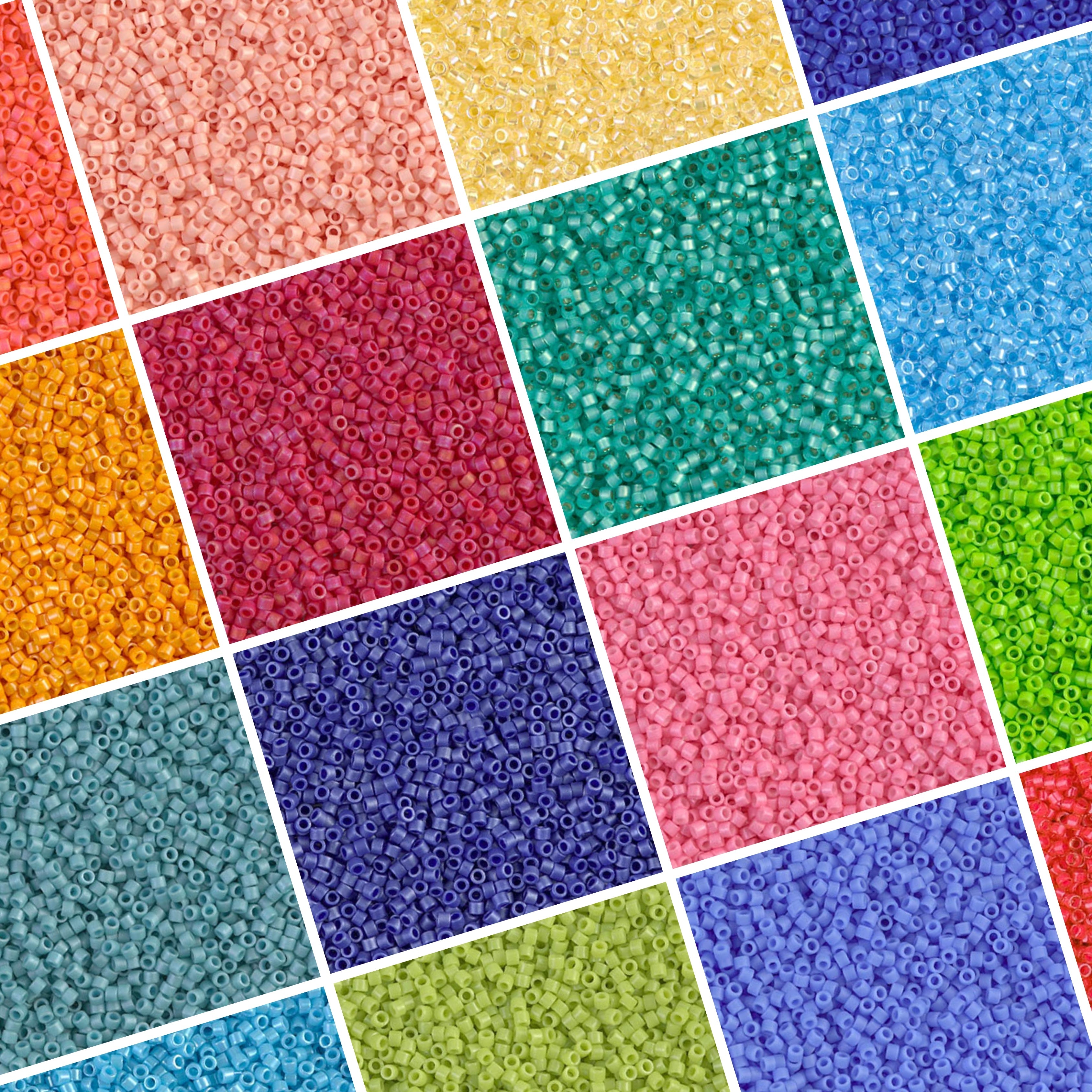
Delica beads are uniform glass cylinder beads, most commonly sold in size 11/0 but also available in 10/0 and 8/0, prized for edges so even that rows of them stack with almost no visible gap. That precision is what makes Delica beads the go-to choice for loomwork, peyote stitch, brick stitch, and word or name bracelets, where a single crooked bead throws off the whole pattern.
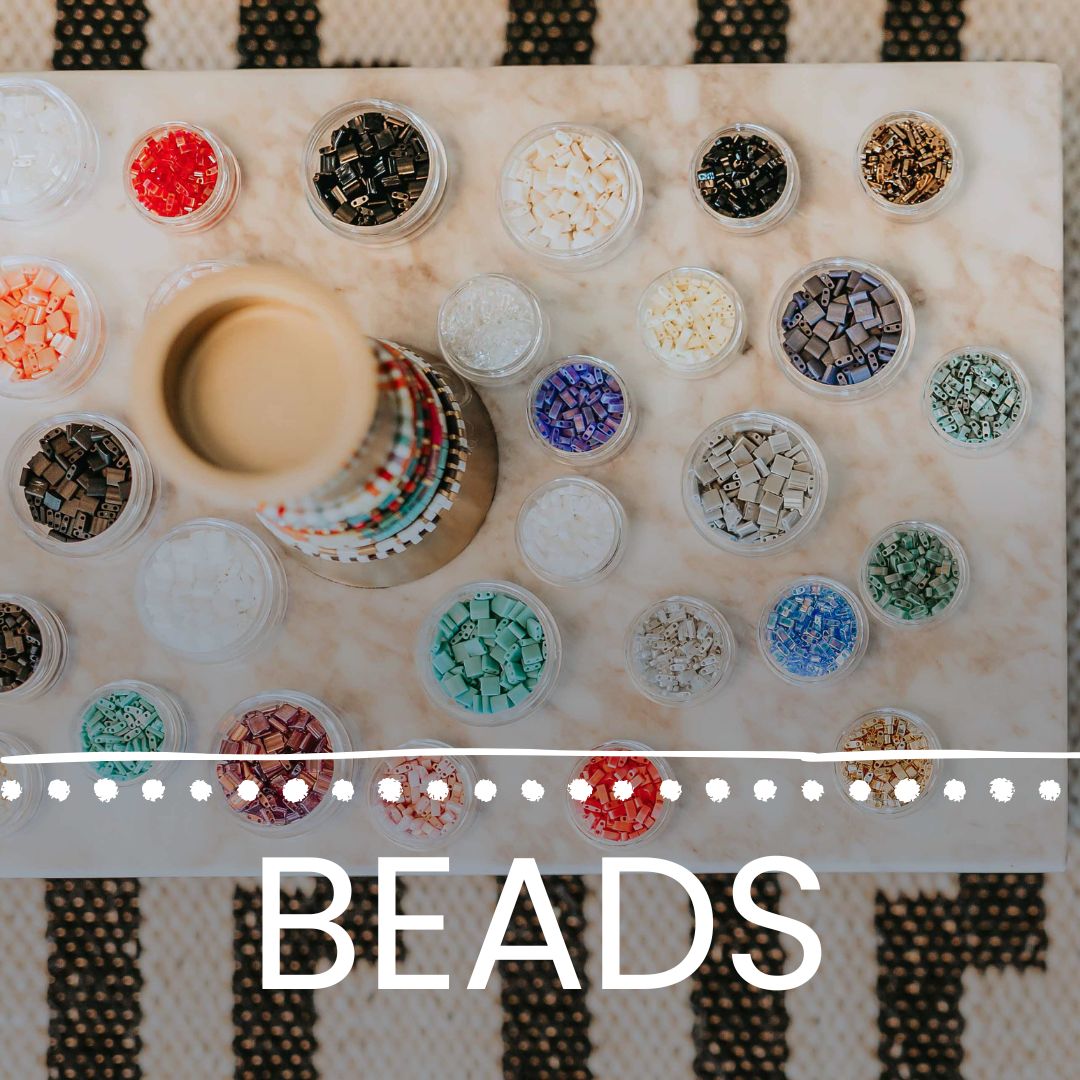
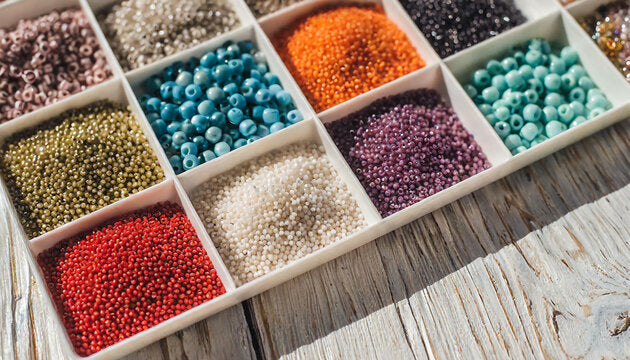
The cylinder shape is the whole point. Round seed beads have a natural curve that leaves small gaps between beads once you weave several rows together. A Delica's flat top and flat bottom eliminate that gap, so a woven panel looks almost printed rather than beaded. Seed bead sizing itself runs on an "aught" system where a higher number means a smaller bead, a convention that goes back generations in the bead trade and still varies slightly from maker to maker, per Wikipedia's overview of seed beads. Delica's own size range and shape specs are detailed in CJ Beaders' guide to Miyuki bead sizes and shapes, which is worth a look if you want the full breakdown across every Miyuki cut.
Tila vs Delica: Which Is Easier for a First Bracelet?
Tila wins, hands down. A single strand of Tila beads on stretch cord already looks finished the moment you tie it off; there's no stitch pattern to learn and no loom to set up. Delica beads reward patience and a steadier hand, since most Delica projects rely on peyote stitch, brick stitch, or a bead loom to hold their shape.
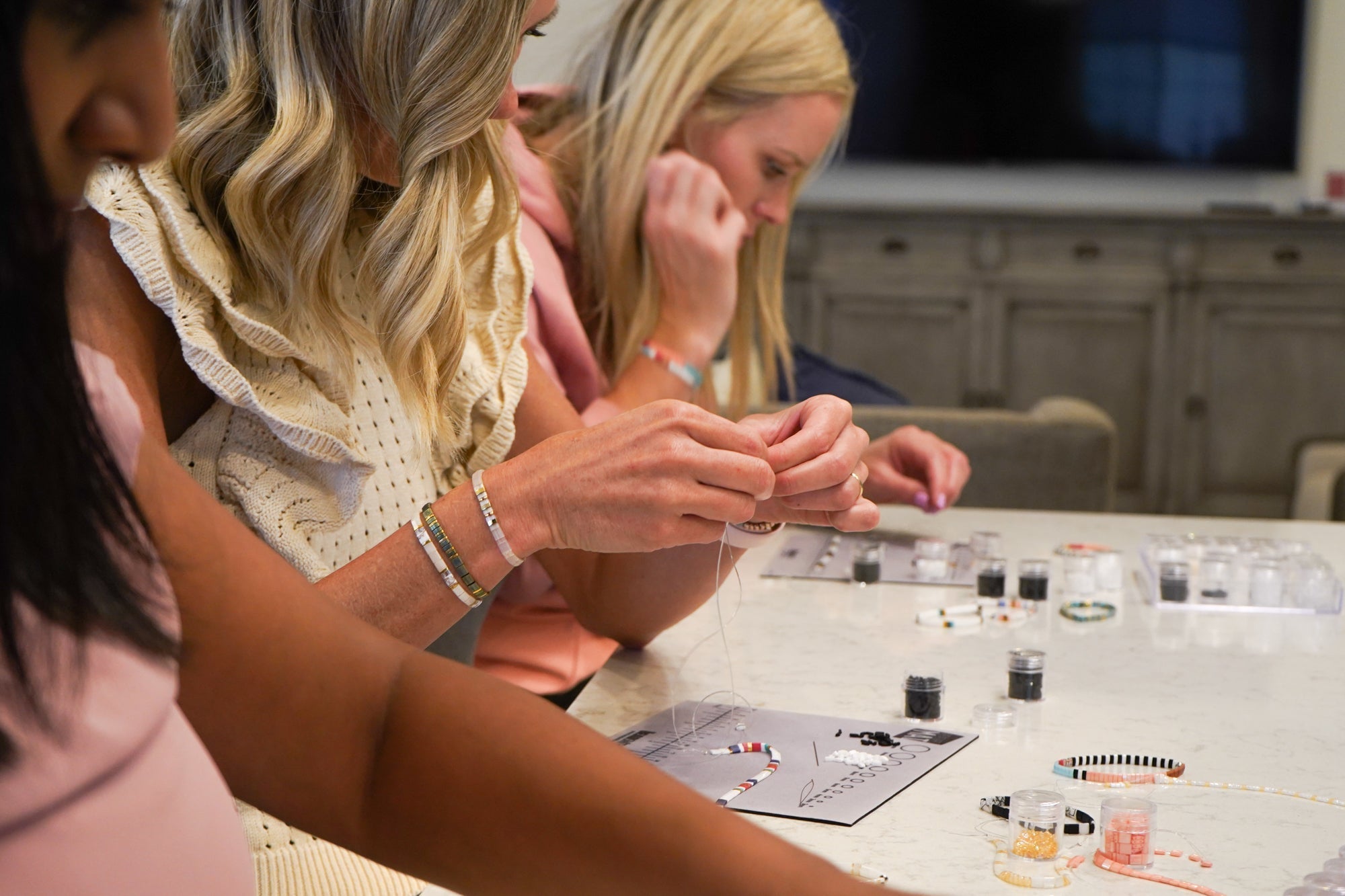
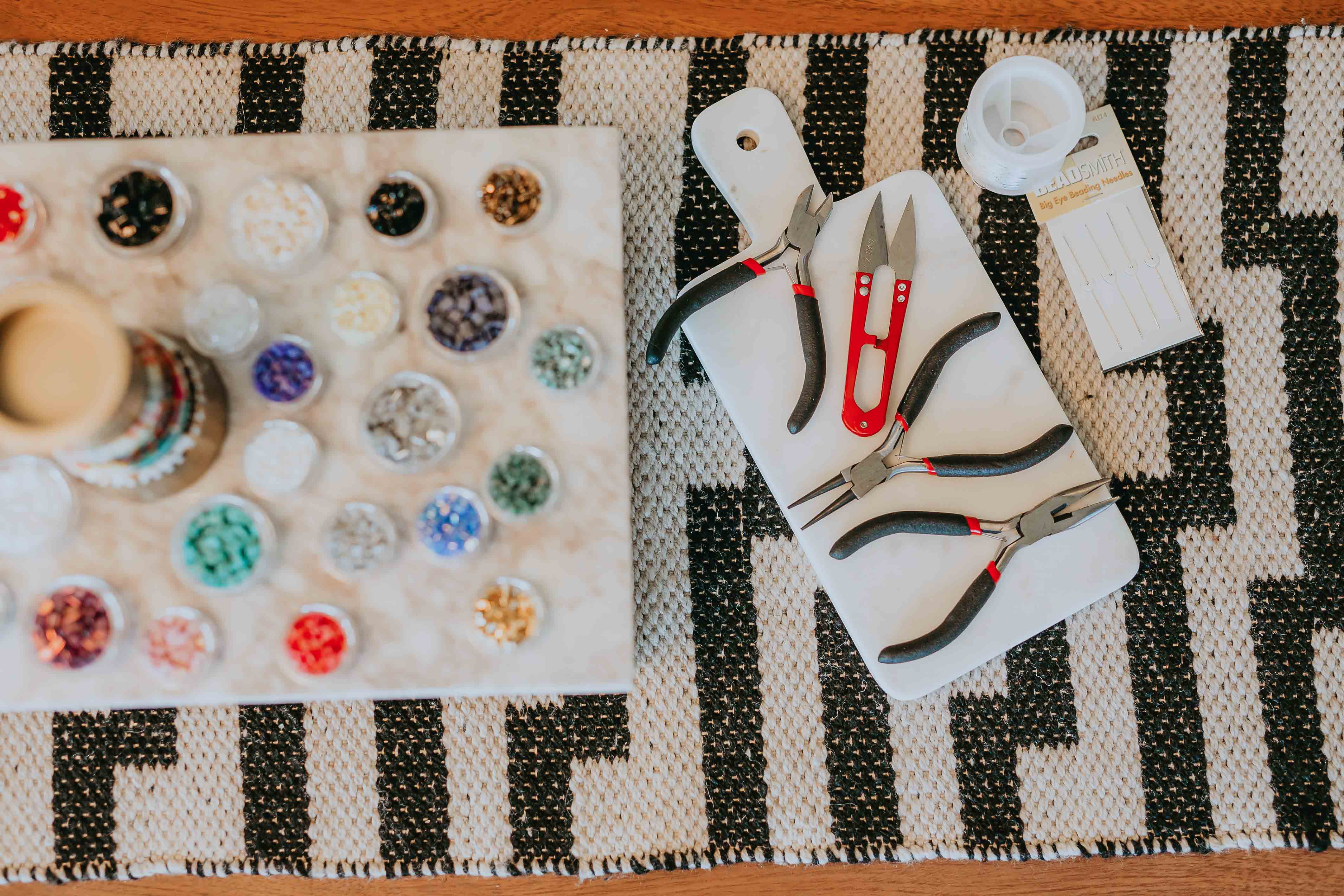
That doesn't make Delica hard, exactly. It just asks more of you up front. You need a needle, thread built for tension (something like Fireline or Nymo), and a bit of practice keeping your rows straight before a Delica bracelet starts looking the way you pictured it. Tila skips that learning curve almost entirely. Pour the beads onto a mat, string them in your pattern, knot the elastic, and you're done. That's exactly why Mack & Rex leans on Tila for its stretch bracelets: fewer steps between "I want to make this" and "I'm wearing this."
Which Bead Works Better for Stretch Bracelets vs Woven Designs?
For stretch bracelets, Tila. For anything woven, loomed, or lettered, Delica. That split holds up almost every time, and it comes straight from how each bead is built.
Tila's two parallel holes let stretch cord pass straight through in a simple line, so the bead sits flat and doesn't twist as the bracelet moves on your wrist. Try that with a Delica cylinder on plain elastic and you'll get a floppier, less structured strand, because Delica beads are designed to be locked in place by a woven thread path, not to hang freely on cord. Flip it around and try weaving a peyote panel out of Tila squares, and the flat sides won't nest the way a cylinder does, so your rows come out uneven. Each bead is doing exactly what it was cut to do. Neither one is the "better" bead in general; it depends entirely on whether you're stringing or weaving.
Do Tila and Delica Beads Cost About the Same?
Roughly, yes, though it depends on what you're buying. A tube of loose Miyuki beads, Tila or Delica, tends to land in a similar price range at most bead retailers. Where the cost difference shows up is in the finished product and the kit, not the raw bead.
At Mack & Rex, loose Tila mixes run about $5 to $9 a pack, and a finished, ready-to-wear Tila bracelet runs about $20 to $25. If you'd rather make your own, the trio kits (three coordinating bracelets) run $44.99, the DIY Kit Club subscription is $36.99 a box, and the all-in-one supply sets with tools included run $39.99 to $43.99. For bigger projects or gifting, the starter kit makes 20 bracelets for $189.99, and the ultimate kit stretches to 80 bracelets for $399.99. Delica beads themselves are sold as loose beads on the site too, priced the same way as other seed beads by the tube, since Delica work is more of a build-your-own-pattern project than a finished-bracelet one for most home crafters.
Can You Combine Tila and Delica Beads in the Same Bracelet?
You can, and a lot of experienced beaders do. Tila beads make excellent flat "anchor" spots in a design, while Delica beads fill in fine detail, a lettered word, a gradient of color, a thin decorative band, around them. The two shapes complement each other because they're solving different visual problems in the same piece.
A common approach: use a Tila square (or a strand of them) as a focal point or clasp-adjacent accent, then run a short Delica panel next to it for a name, initial, or pattern detail. It takes more patience than a straight Tila stretch bracelet, since you're now managing two bead shapes and probably two techniques, but the payoff is a piece that reads as more custom and more intentional than either bead used alone.
So Which One Should You Choose: Tila or Delica?
Pick Tila if you want a bracelet you can finish in one sitting, no loom, no stitch pattern, no learning curve. Pick Delica if you're after fine detail work like a name bracelet, a woven cuff, or a pattern with real texture, and you don't mind a slower build.
Most of the moms and grandmothers we hear from want the first option: something that looks put-together, fits right, and doesn't eat an entire weekend to make. That's the gap Mack & Rex was built to fill. We're a family business, started by a mom and her two daughters, and our ready-to-wear Tila bracelets and DIY kits come in sizes from XXS through 5XL so a bracelet actually fits the wrist it's for. Buy three finished bracelets and the fourth is free, no code needed, and any US order over $100 ships free. We also ship internationally, with shipping and any customs or duty costs calculated at checkout. If you want to compare both bead types side by side before you decide, browse the full Mack & Rex seed bead collection, which carries genuine Miyuki Tila and Delica beads together in one place.
One practical note if a bracelet project turns into a family activity: both Tila and Delica beads are small enough to be a choking hazard, so keep loose beads away from young children and supervise any bead-related crafting closely.
Frequently Asked Questions
What is the main difference between Tila beads and Delica beads?
Tila beads are flat, two-hole glass squares about 5mm across that create a tiled, mosaic look. Delica beads are tiny glass cylinders, most often used in size 11/0, with even walls that stack into smooth, precise rows. One is a flat design piece; the other is a workhorse for detailed weaving.
Are Tila beads good for beginners?
Yes. Tila beads are one of the easier specialty beads to start with because a single row on stretch cord already looks finished. Delica beads usually need a loom or a stitch like peyote to really shine, which asks more of a first-time crafter.
Can you use Delica beads on a stretch bracelet?
You can, but Delica beads are small cylinders built for structured stitching, not stretch cord. They shine most in loomed or peyote-stitched pieces where their uniform shape lines up into clean rows and letters. For a simple pull-on stretch bracelet, Tila beads or round seed beads are the more forgiving choice.
Are Tila and Delica beads both made by Miyuki?
Yes. Tila and Delica are both trademarked Miyuki bead shapes made in Japan. Mack & Rex sources and resells genuine Miyuki beads; we don't manufacture them ourselves.
Which bead is better for a name or word bracelet?
Delica beads are the standard choice for word and name bracelets because their flat-topped cylinder shape holds tiny letters legibly in a loomed row. Tila beads are too large and square for lettering at that scale, though they work well as spacer or accent beads next to a lettered Delica panel.
Sources: Wikipedia, Seed bead; CJ Beaders, Guide to Miyuki Bead Sizes and Shapes; PotomacBeads, Miyuki Tila Beads.