

Tila vs. Half Tila Beads: What's the Difference?
What is a Tila bead?
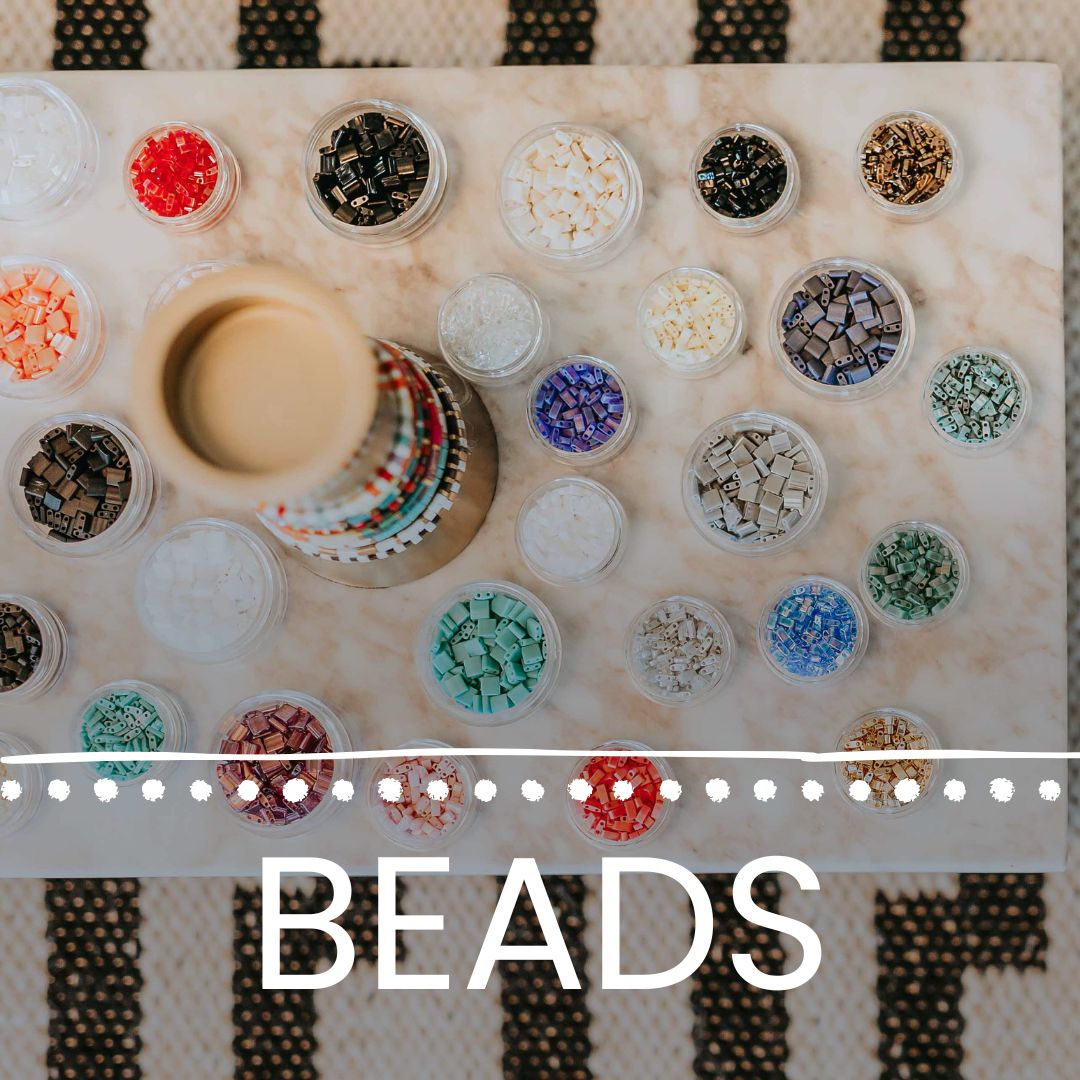
A Tila bead is a flat, square glass bead with two parallel holes running through it. Made by the Japanese company Miyuki, a standard Tila measures roughly 5mm on each side and is under 2mm thick. It's the bead behind most woven tile bracelets.
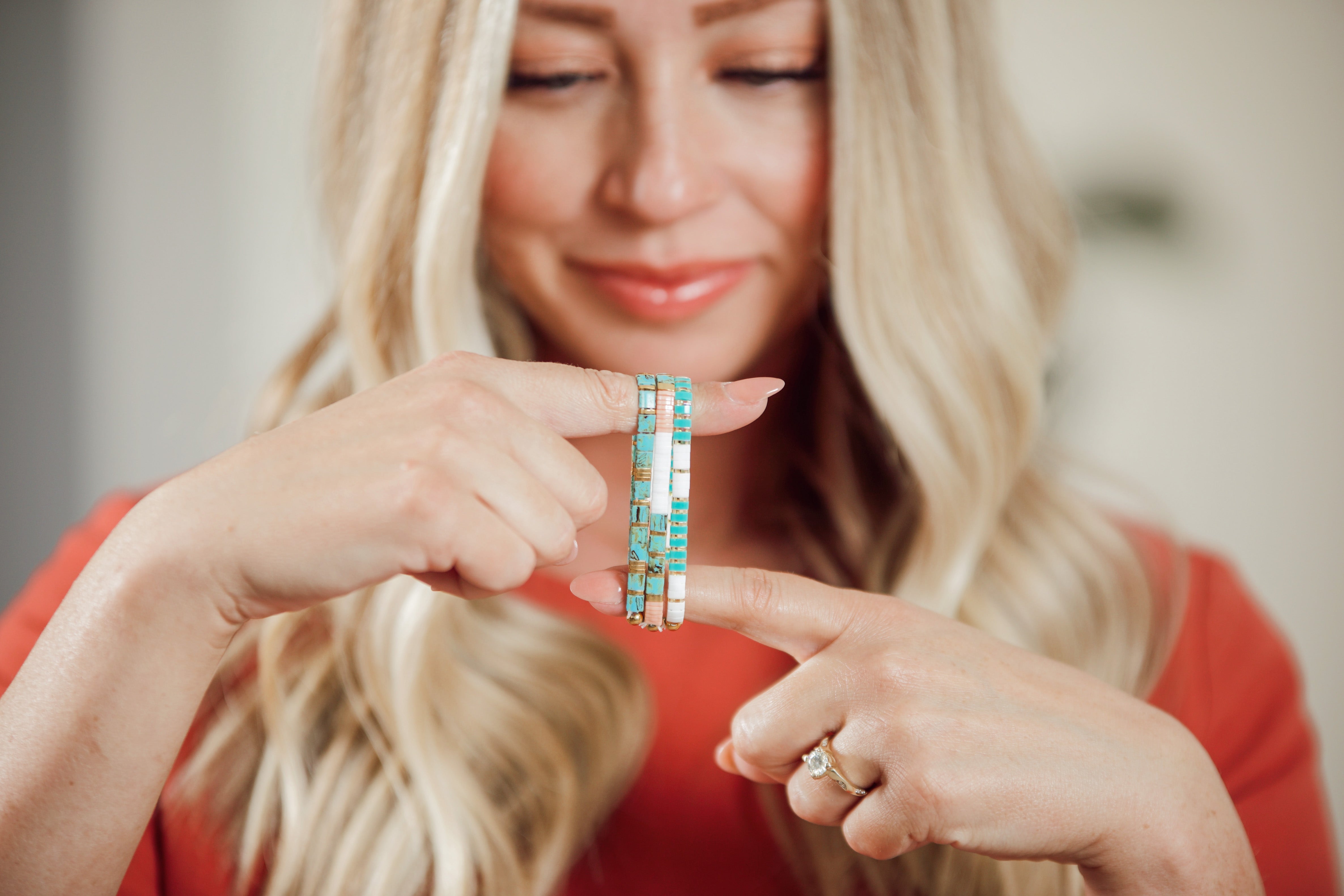
Think of a tiny glass tile. Because the two holes run side to side, a Tila doesn't dangle on a cord like a round bead. It lies flat, and the beads line up edge to edge to form a smooth, mosaic-like band. That flat face is what gives Tila bracelets their polished, uniform look.
Tila is a Miyuki trademark, and Miyuki is a third-party brand. Mack & Rex resells Miyuki Tila beads and builds its bracelets and kits around them. We don't make the beads ourselves. If you want to see the maker's own lineup, Miyuki's English site is the source.
What is a Half Tila bead?
A Half Tila is the same flat, two-hole bead cut to half the width. It measures about 5mm long by 2.3mm wide, with the same thickness as a regular Tila. It still has two holes, so you thread it the same way. It's just a slimmer rectangle.
That's the whole idea. Same family, same glass finish, same hole layout. Only the width changes. If a Tila is a square tile, a Half Tila is a thin plank cut from it.
Exact measurements vary slightly between color batches and finishes, since glass beads are never perfectly identical. Treat 5mm and 2.3mm as the standard figures, not a guarantee for every single bead.
How do the two sizes compare side by side?
The difference is width. A Tila is about 5mm by 5mm. A Half Tila is about 5mm by 2.3mm. Both are thin, flat and drilled with two holes. Two Half Tilas laid side by side cover nearly the same width as one standard Tila.
- Standard Tila: about 5mm x 5mm, flat, square, two holes
- Half Tila: about 5mm x 2.3mm, flat, rectangular, two holes
- Hole spacing: two parallel holes in both, so they work on the same cord setup
- Maker: Miyuki, Japan
Miyuki is known for tight tolerances. Japanese seed beads are generally more uniform in size and shape, with larger holes, than many other seed bead types, according to the Wikipedia overview of seed beads. That consistency is why flat tile bracelets lie so neatly.
Why do two holes matter?
Two holes let a bead be strung or woven in more than one direction. Stretch bracelets typically run cord through both holes in a pass, which keeps each bead flat and facing out. In woven designs, the two holes give you two anchor points per bead.
With a single-hole bead, the piece can spin on the cord. A two-hole tile can't, because the cord passes through at two spots. That's why Tila bracelets look so even from wrist to clasp or from end to end.
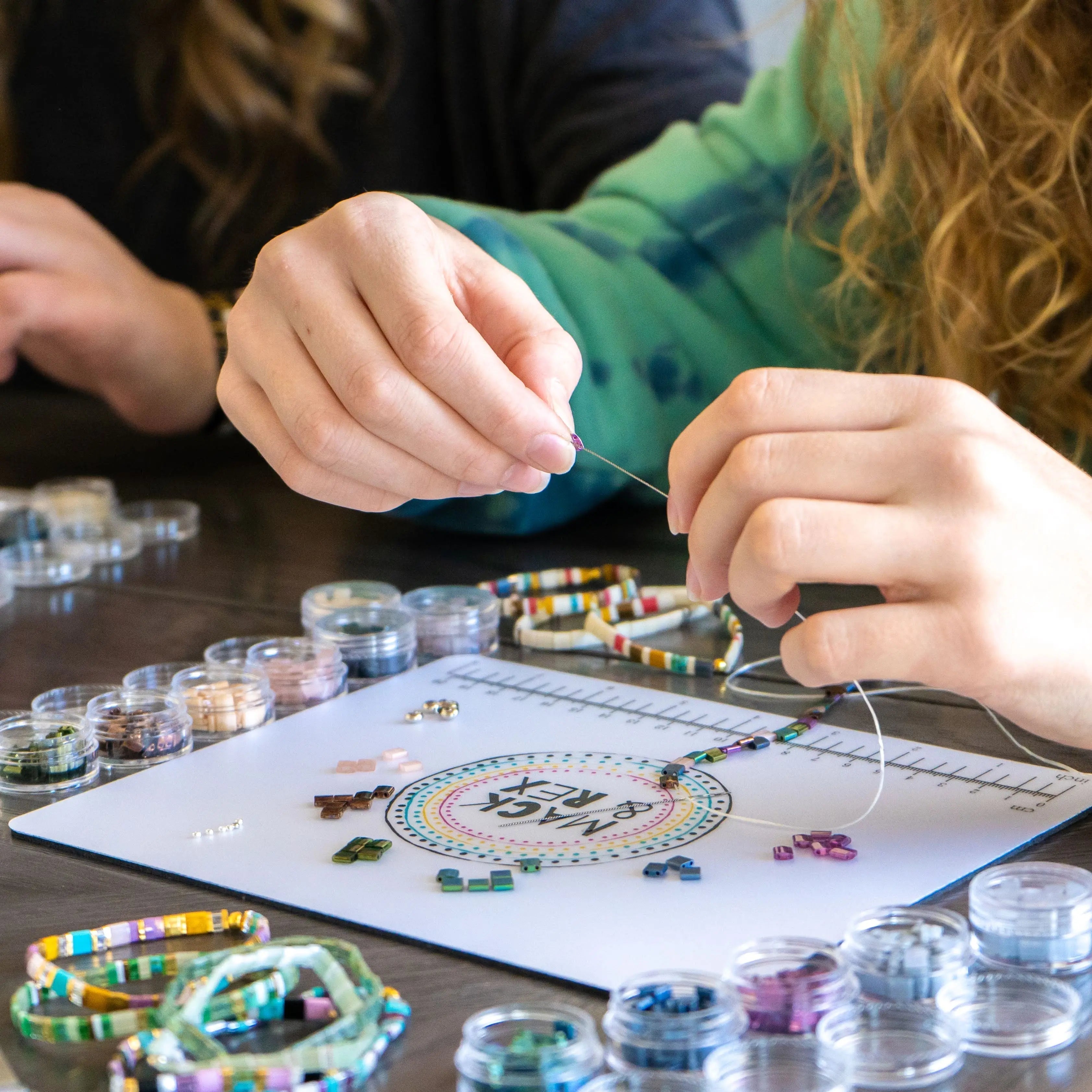
Here's the practical bit. A bracelet strung through both holes of every bead tends to look like a smooth band of color. You can see how that plays out across the Mack & Rex Tila bead collection, where mixes are sorted by color story.
How does each one look in a finished bracelet?
Standard Tila beads make a bold, graphic band. Each square reads as a distinct block of color, so a bracelet looks clean and mosaic-like. Half Tilas make a finer, more textured surface, because the narrower beads create more breaks and a denser, ribbed pattern.
Picture a single row of Tilas in sunset shades. You'd see big, confident color blocks. Swap in Half Tilas and the same palette looks more detailed, almost like pinstripes, since you get twice as many bead edges in the same length.
Neither is better. They're two looks. Plenty of crafters keep both on hand for that reason.
Which bracelet styles suit Tila beads?
Standard Tila beads suit simple, wear-every-day stretch bracelets, bold color-block designs and beginner projects. They're easy to see, easy to thread and quick to finish. A single-color or two-color Tila bracelet looks sharp without needing complicated patterning.
They're also a good fit for stacking. A few Tila bracelets in related shades make a coordinated stack. Their size gives each bracelet presence on the wrist without feeling heavy.
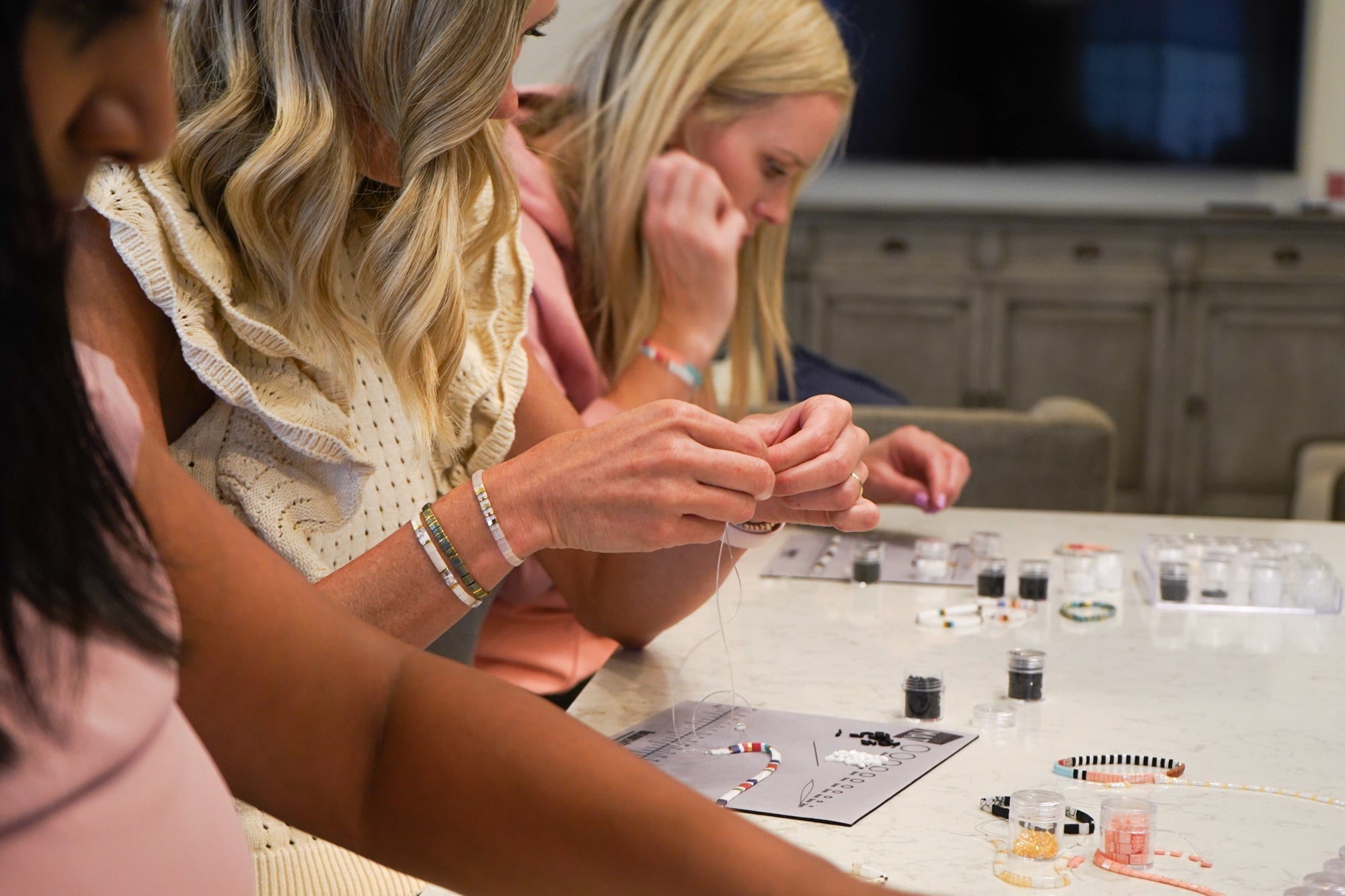
For families making bracelets together, Tilas are the friendlier start. Their size makes the holes easier to find. Always supervise young crafters closely, since beads are small parts and a choking hazard. They're not appropriate for very young children.
Which bracelet styles suit Half Tila beads?
Half Tila beads suit slimmer bracelets, fine detail work and accent lines. Use them to add a thin stripe between wider Tila sections, to build gradients with more steps, or to make a delicate, narrow band that sits lightly on the wrist.
They're handy as spacers too. A single pair of Half Tilas in a contrasting color gives a standard Tila pattern a crisp accent without redoing the whole design. Because they're narrower, they also bend a little more easily around a curve in a woven piece.
The tradeoff? They're smaller, so threading takes a steadier hand. Not hard. Just more of a focus-and-go task. If you're new to beading, finish a Tila bracelet first, then try a Half Tila accent on your second.
Can you mix Tila and Half Tila beads?
Yes. Both beads have two holes in the same layout and share a thickness, so they sit together on the same cord. Two Half Tilas cover about the width of one Tila, which makes swapping easy. That's the simplest way to add rhythm to a design.
A few easy ways to try it:
- Accent stripe: replace one Tila with two Half Tilas in a contrasting shade
- Gradient steps: use Half Tilas to make a fade look smoother
- Edge detail: finish each end of a bracelet with a Half Tila pair
Keep your color count modest while you learn. Three or four shades with a mix of sizes looks intentional. Eight shades with three sizes can look busy. Beading retailers like Beadaholique carry a wide range of tile and seed bead shapes if you want to see how other crafters combine them.
How do you pick between them?
Start with Tila if you want a quick, bold bracelet. Pick Half Tila for fine detail and narrow bands. Buy both if you're curious, since they combine so well. Your first bracelet will tell you which you reach for more.
A simple rule: choose the bead that matches the look in your head. Chunky and graphic means Tila. Delicate and detailed means Half Tila. A mix gives you the best of both.
Mack & Rex sells ready-to-wear bracelets, loose Tila beads and themed mixes, and DIY kits, all built on Miyuki Tila beads. That makes it an easy place to try the shapes before you commit to a big color haul. Our bracelet-making kits are a good first step if you'd like everything together, and we ship internationally, with shipping and any duties calculated at checkout.
Frequently asked questions
Are Half Tila beads the same as Tila beads?
No. They share the same flat shape, thickness and two-hole design, but a Half Tila is about half the width of a standard Tila. A Tila is roughly 5mm square, while a Half Tila measures about 5mm by 2.3mm.
Can you use Tila and Half Tila beads in the same bracelet?
Yes. Because both have two parallel holes spaced the same way, they sit side by side on the same cord. Two Half Tilas take up about the same width as one Tila, so you can swap them to add color breaks or texture.
Which is easier for beginners?
Standard Tila beads are usually easier to handle first. They're larger, so the holes are simpler to see and thread. Half Tila beads work well once you're comfortable, especially for narrow or detailed patterns.
Does Mack & Rex make Tila beads?
No. Tila and Half Tila beads are made by Miyuki, a Japanese bead company. Mack & Rex is a reseller that uses and sells Miyuki Tila beads in its bracelets, mixes and kits.
Ready to try both?
The easiest way to see the difference is to hold them. Browse Mack & Rex Tila beads and mixes or start with a bracelet-making kit, and spread a little happy on your wrist.

