

Tile Beads vs. Tila Beads: Are They the Same Thing?
Are tile beads and Tila beads the same thing?
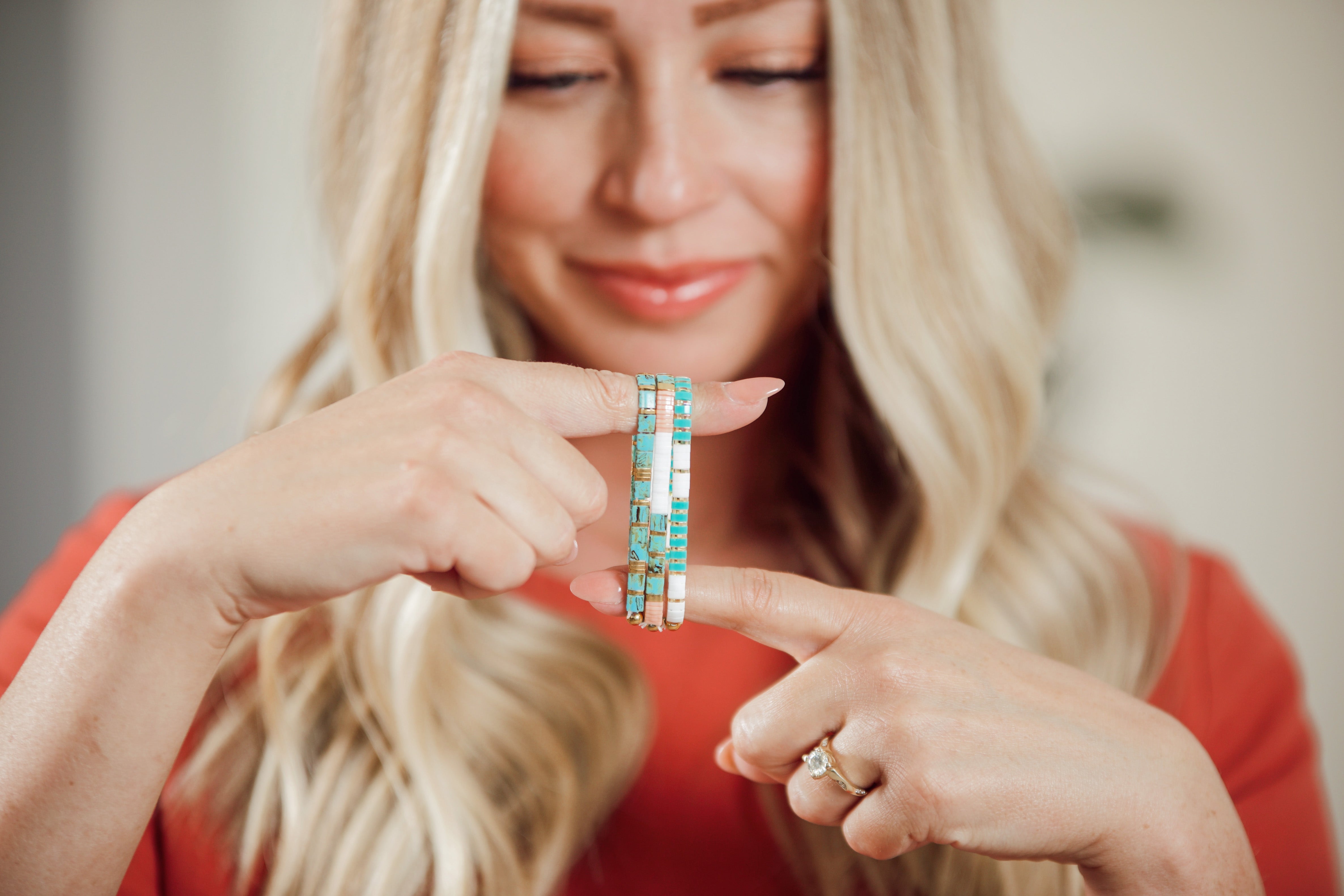
Short answer: yes, most of the time. "Tila" is Miyuki's trademarked name for a flat, square, two-hole Japanese glass seed bead that measures about 5mm x 5mm x 1.9mm, and "tile bead" is the generic, often-misspelled term shoppers use for that same flat two-hole shape, whether they mean Miyuki's version specifically or a similar bead from a different brand.
Here's where it gets a little messier. "Tila" isn't an English word, so a lot of people searching for it type or say "tile" rather than "Tila," and search engines happily serve up results for both. On top of that, "tile bead" has also become a real category name in the bead world, since Miyuki isn't the only company that makes a flat, square, two-hole bead. So when someone asks "are tile beads the same as Tila beads," the honest answer depends on which product they're actually looking at.
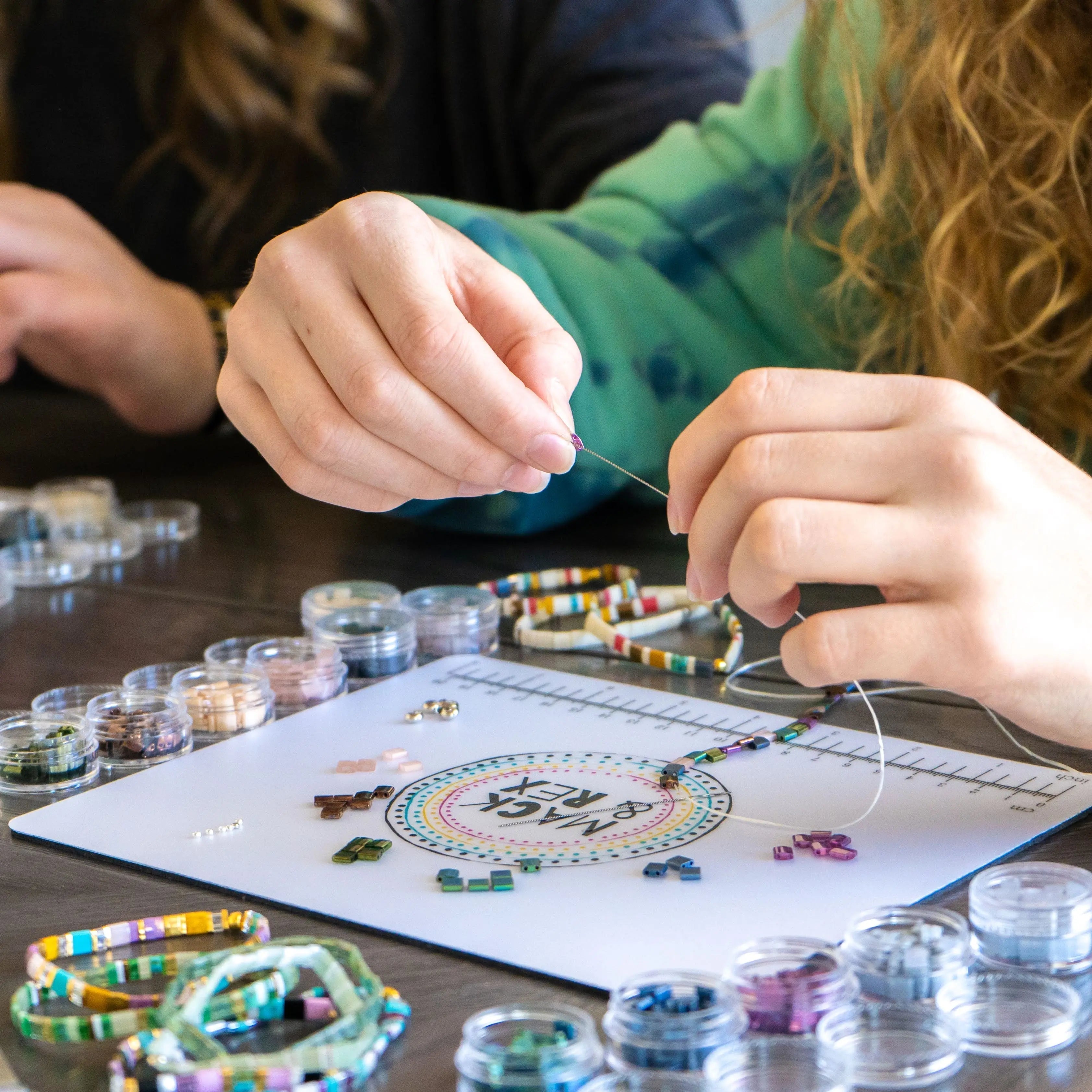
For most home crafters typing "tile beads" into Google, though, what they want is the Miyuki product. That's the bead used in the majority of flat-square bracelet and beadwork patterns you'll find online, including the ones Mack & Rex sells kits for.
What exactly is a Miyuki Tila bead?
A Tila is a specific bead. Miyuki, a Japanese glass bead manufacturer, produces it in a precise 5mm x 5mm x 1.9mm flat square with two parallel holes, each about 0.8mm wide, running through the face. According to Fire Mountain Gems' Tila bead product reference, that two-hole construction is what makes Tila beads ideal for peyote stitch, brick stitch, and right-angle weave, since the second hole lets a beadworker anchor rows flat, rather than letting them twist or roll.
Every Tila bead in a genuine Miyuki batch holds that same size and hole placement. That consistency matters more than it sounds. String a row of true Tila beads and they sit edge to edge with barely a gap. Swap in a bead that's even slightly off-spec and the row starts to buckle or gap unevenly, which shows immediately in a finished bracelet.
Why do so many people type "tile beads" when they mean "Tila beads"?
Three reasons, and they stack. First, autocorrect. Phones and search bars aren't fluent in bead terminology, and "tila" gets flagged as a typo for "tile" more often than not. Second, the shape genuinely looks like a miniature floor tile, so it's an easy mental shortcut even for people who know the brand name. Third, "tile bead" really is used as a broader product category in the craft world, not purely a misspelling.
That third point is the one worth knowing before you check out. A handful of other manufacturers make their own flat two-hole beads under the "tile" name rather than "Tila," which is a trademarked Miyuki term. PotomacBeads' two-hole tile bead collection is a good example: it groups several brands' takes on the shape together, Miyuki's Tila among them, under one general "tile bead" heading. So the category label and Miyuki's specific product share a name by design, not by accident.
Is a tile bead ever a genuinely different product from Tila?
Sometimes, yes. CzechMates Tile beads, made by a Czech glass manufacturer, are a real, separate product from Miyuki's Tila. They run larger at 6mm x 6mm x 3mm, with rounded edges and corners rather than Tila's sharp ones, and a noticeably bigger hole that fits more thread passes. They're a legitimate bead in their own right, just not the same bead a pattern calling for "Tila" expects.
This is the detail that trips people up when they buy off a generic "tile beads" listing that doesn't name a brand. If a pattern is written for 5mm Miyuki Tila spacing and you substitute a 6mm CzechMates tile, the math won't line up. According to the Wikipedia overview of seed beads, Japanese manufacturers including Miyuki have long been known for tight size tolerances across production runs, which is exactly the consistency a flat two-hole pattern depends on. A listing that just says "tile beads" with no brand and no size spec is a coin flip on whether you'll get that consistency.
The fix is simple. Check the size (5mm points to Miyuki Tila; 6mm usually means CzechMates or a similar Czech-glass tile) and check whether the brand is actually named. If a listing avoids naming Miyuki and just says "tile" or "Tila-style," treat that as a hint you might be getting a substitute, not the genuine bead.
Where can you buy genuine Tila beads for a bracelet?
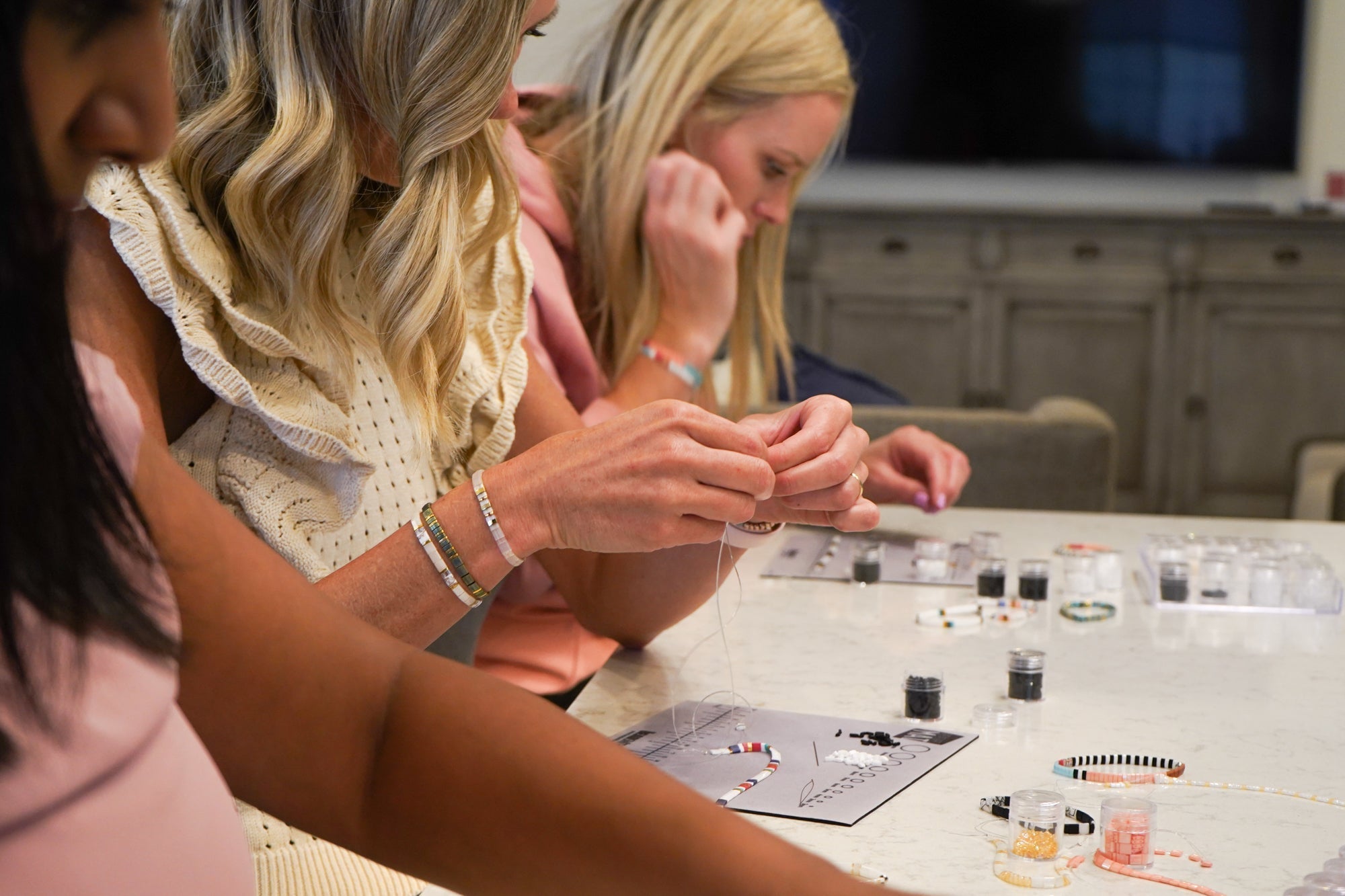
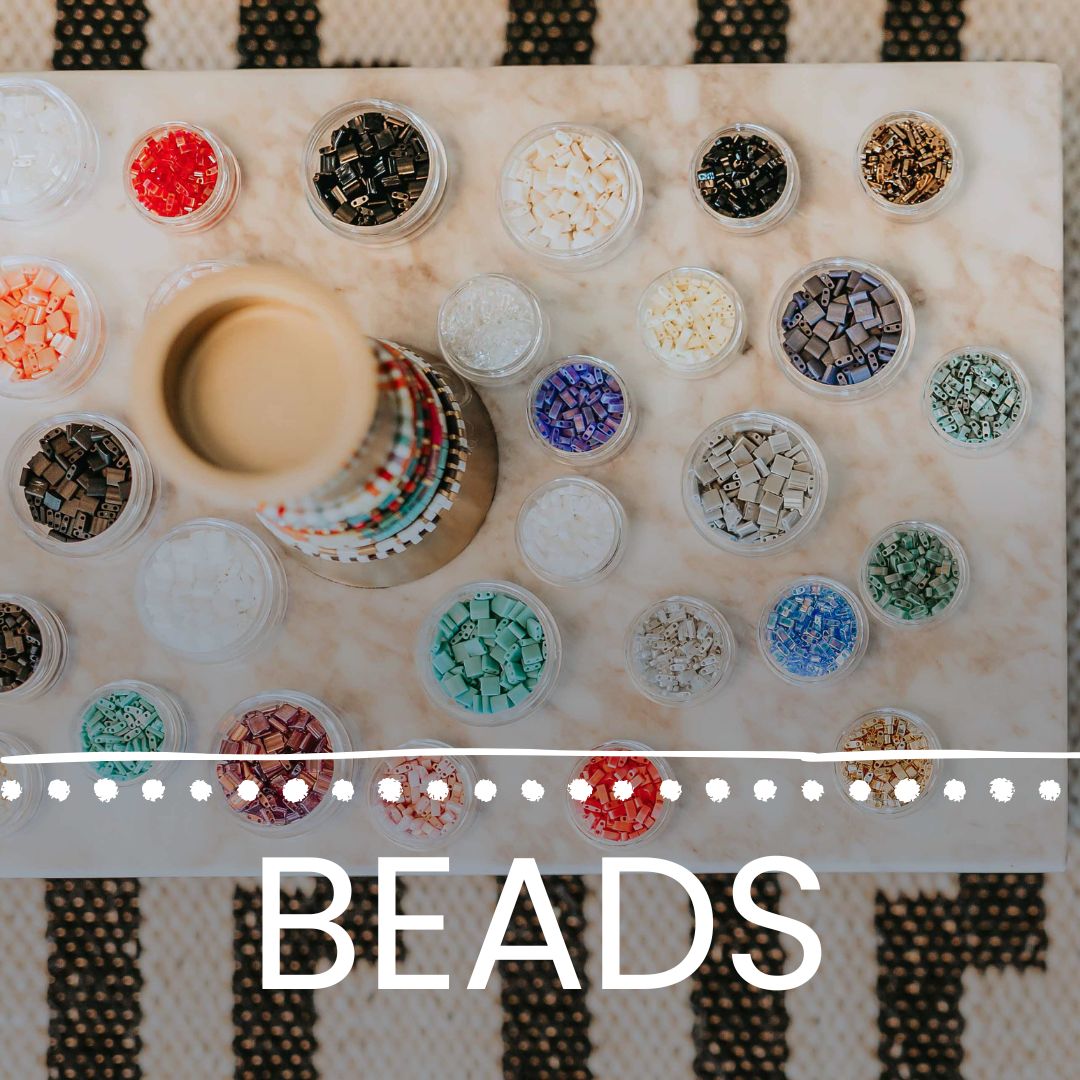
Buy from a shop that names Miyuki outright. Mack & Rex carries authentic Miyuki Tila beads, loose and in curated color mixes, along with ready-made Tila bracelets and DIY kits for anyone who wants to string their own. The Tila bead mixes generally run about $5 to $9 a pack and pull together colors that already coordinate, which saves a lot of guesswork if you're new to picking a palette.
One Mack & Rex customer put it simply: "Glad there is a website which carries the hard to find bead colors I'm looking for," which is a pretty common comment on the review page. Tracking down a specific Miyuki color code isn't always easy, and having a shop that stocks the less common finishes alongside the staples is a real time-saver.
Mack & Rex resells genuine Miyuki Tila beads; it doesn't manufacture them. Miyuki makes the glass in Japan, and Mack & Rex sources and ships the finished beads, mixes, and kits. Worth knowing before you order: shipping is international, with duties and customs calculated at checkout outside the US, and free shipping applies to US orders over $100. Browse the full Tila beads collection to see what's in stock right now, from single colors to seasonal mixes.
Frequently Asked Questions About Tile Beads and Tila Beads
Are tile beads and Tila beads the same thing?
Usually, yes. Most people typing "tile beads" into a search bar mean Miyuki's Tila beads, a flat, square, two-hole Japanese glass seed bead measuring about 5mm x 5mm x 1.9mm. "Tile bead" is also used more loosely as a category name for that flat two-hole shape in general, which is why the terms overlap so much.
What size are Miyuki Tila beads?
Genuine Miyuki Tila beads measure 5mm x 5mm x 1.9mm, with two parallel holes about 0.8mm wide running through the flat face. That precise, consistent sizing is what lets rows of Tila beads sit flat against each other with almost no gap.
Can I substitute CzechMates tile beads for Miyuki Tila beads in a pattern?
Sometimes, but check the pattern first. CzechMates Tile beads run larger at 6mm x 6mm x 3mm with rounded edges, versus the 5mm sharp-cornered Miyuki Tila. Swapping one for the other in a pattern built around exact spacing can throw off the fit, so it's safest to buy the bead the pattern actually calls for.
Why do people call Tila beads "tile beads"?
Mostly autocorrect and mishearing. "Tila" isn't an English word, so search engines, voice assistants, and plenty of shoppers default to the more familiar "tile." The flat, square shape looks like a tiny floor tile, which reinforces the mix-up.
Where can I buy genuine Tila beads?
Buy from a retailer that names Miyuki as the brand and lists a Miyuki color code, not just "tile beads." Mack & Rex carries genuine Miyuki Tila beads, curated color mixes, and Tila bracelet kits, with mixes typically priced around $5 to $9.
Ready to shop genuine Miyuki Tila beads without the guesswork? Browse the Mack & Rex Tila beads collection for loose beads, color mixes, and bracelet kits, all made with authentic Japanese glass. US orders over $100 ship free.