



Toy Bracelet Kits vs. a Real Beading Kit: What Actually Differs
What's the Real Difference Between a Toy Bracelet Kit and a Real Beading Kit?
Start with the category. A toy bracelet kit is built around rubber loom bands or molded plastic snap beads and sold in the toy aisle as a one-time activity, the same shelf as coloring books and slime kits. A real beading kit uses actual jewelry materials, glass beads and crystal-cord elastic, sold as a craft product meant to produce something you'd wear and eventually restock. Once you know what to look for, the two are easy to tell apart before you even open the box.
That distinction matters more than "cheap vs. expensive." Plenty of buyers land on a toy kit by accident because it's shelved near real craft supplies, then wonder why the finished bracelet snapped in a week or never looked like the picture.
How Do You Spot a Toy Kit vs. a Real Beading Kit Before You Buy?
Check three things on the package. First, the age grade. Toy kits list an age range like "6+" printed right on the box, a labeling requirement for products marketed as children's toys. A real beading kit doesn't carry that label because it's marketed as a craft or jewelry product, not a toy.
Second, the language. Toy kits call themselves an "activity kit" or "craft toy" and rarely name the actual bead material. Real kits state exactly what's inside: Miyuki Tila beads, crystal-cord elastic, and so on. Vague language on the front of the box is usually a sign the beads inside are generic plastic.
Third, sizing. A toy kit fits one generic loop size and calls it done. A real kit built for wearable jewelry offers a wrist-size range, because an adult's wrist and a child's wrist aren't the same and the maker knows it.
What's Actually Inside a Toy Bracelet Kit?
Rubber bands, mostly. The popular version of this category is a loom-band kit, small colored rubber bands linked together with a plastic hook or mini loom board, a format that took off with products like Rainbow Loom and spread across the toy aisle. The other common version uses molded plastic snap beads or pony beads strung on thin elastic or plastic lacing.
Both are fine for what they're built for: a fast, cheap craft-table activity. Neither is built to survive daily wear. Rubber bands degrade, dry out, and snap within weeks. Snap beads crack at the seam. The finished piece looks like exactly what it is, a kid's activity project, not a bracelet you'd wear to work.
What's Actually Inside a Real Beading Kit?
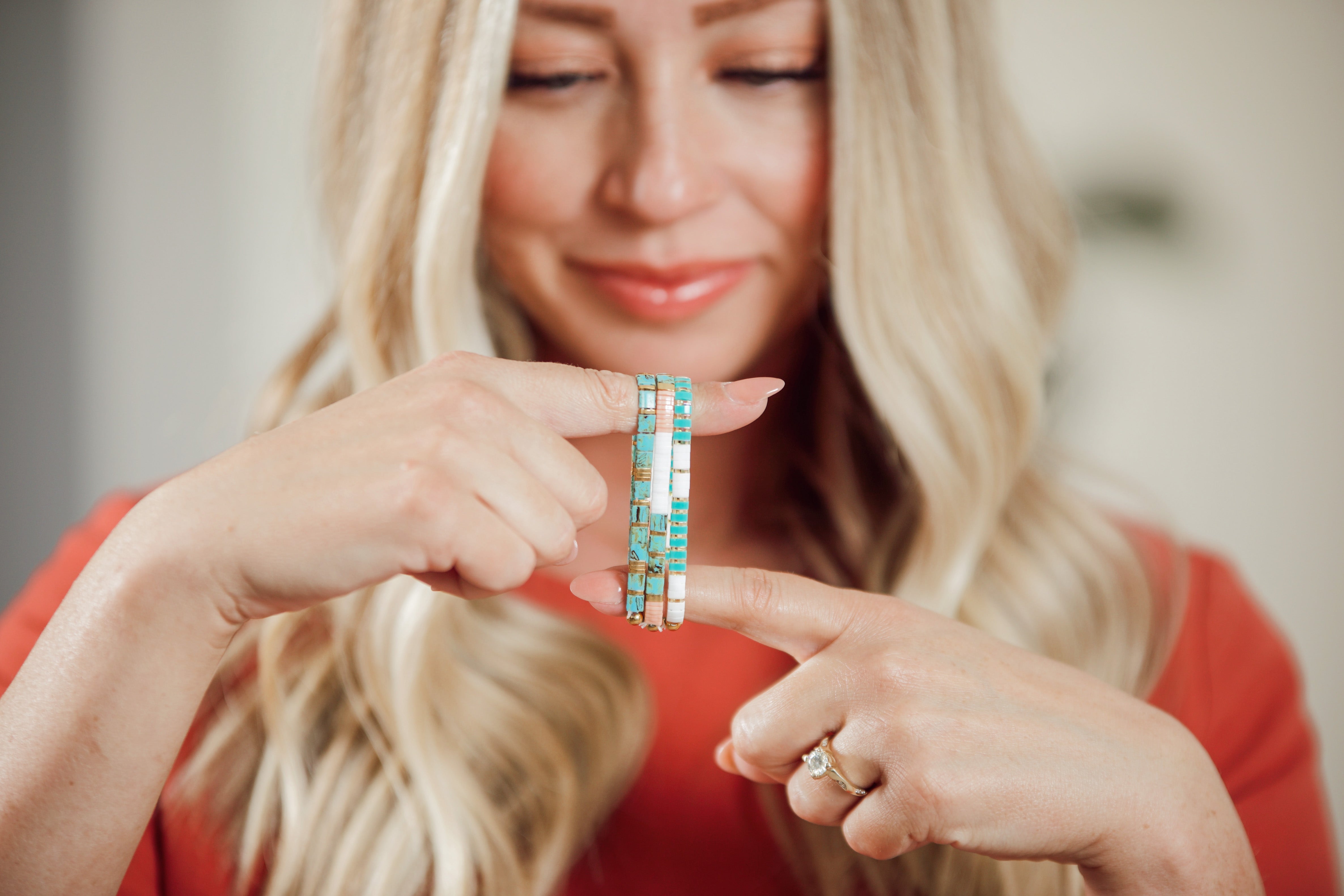
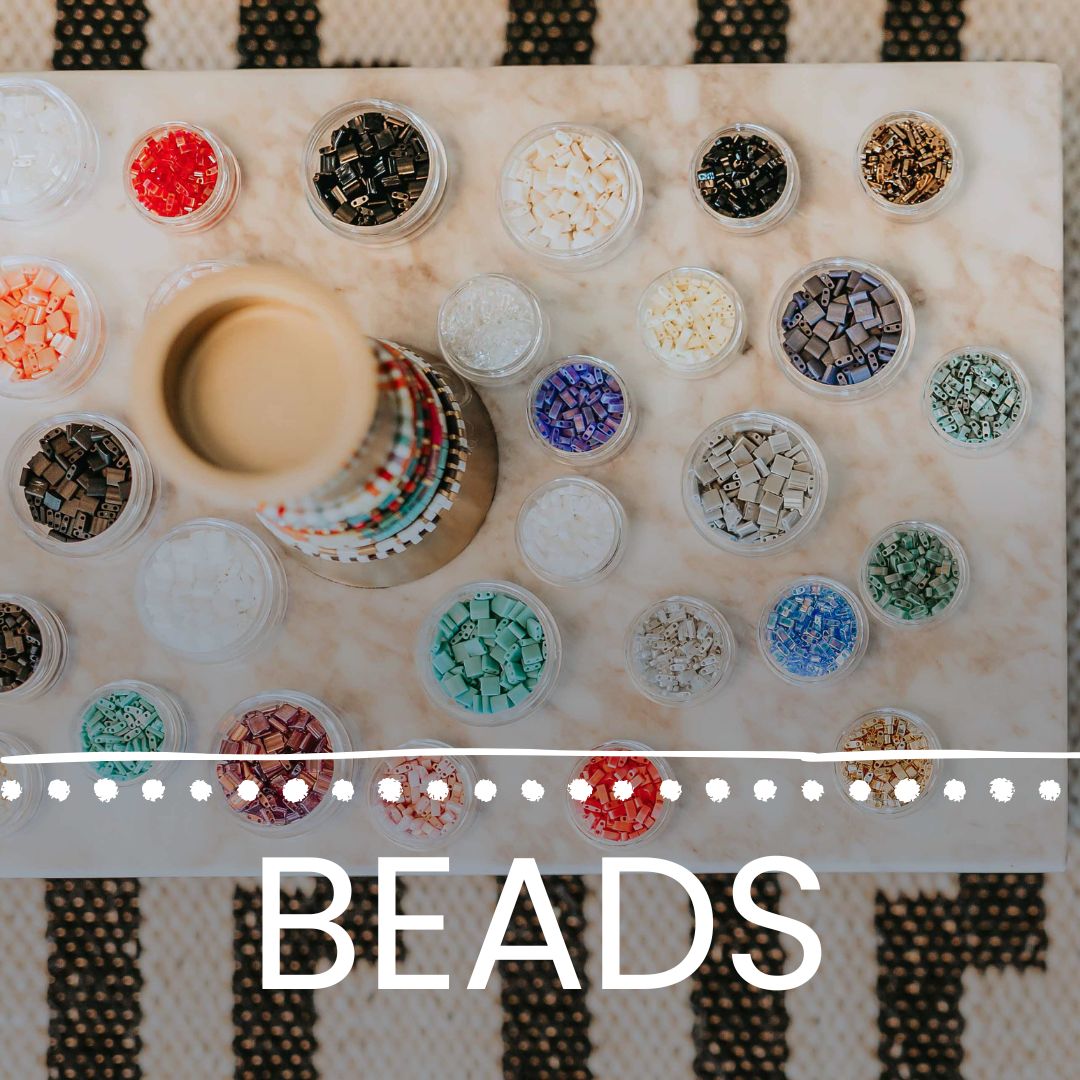
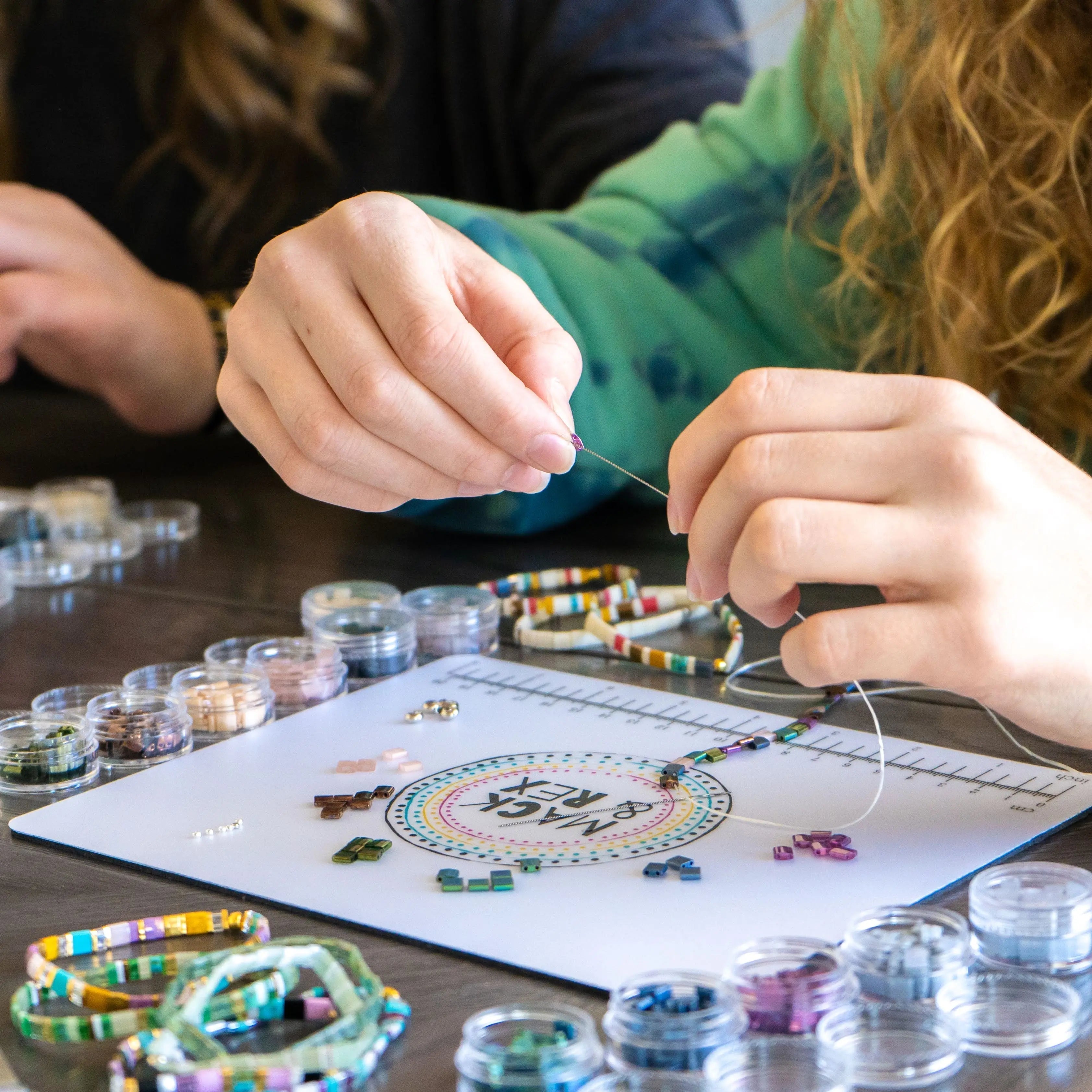
Glass, cord, and a color plan. Mack & Rex kits are built around Miyuki Tila beads, flat two-hole glass tile beads made in Japan and known for tight sizing and a smooth, consistent finish. Glass seed beads have been a beadwork standard for centuries precisely because glass holds color and shape in a way molded plastic doesn't. Mack & Rex resells these beads; Miyuki, a Japanese manufacturer, makes them.
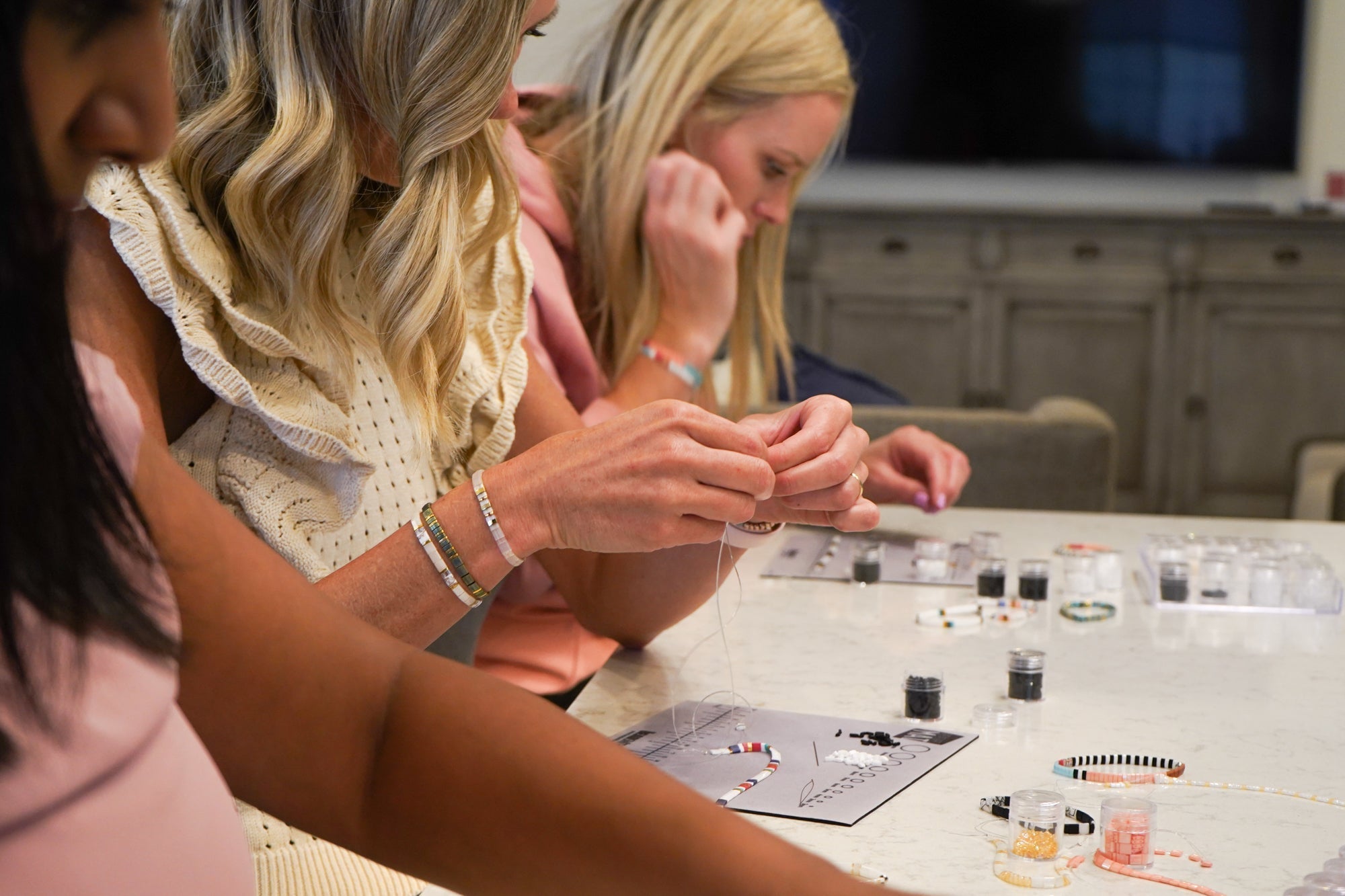
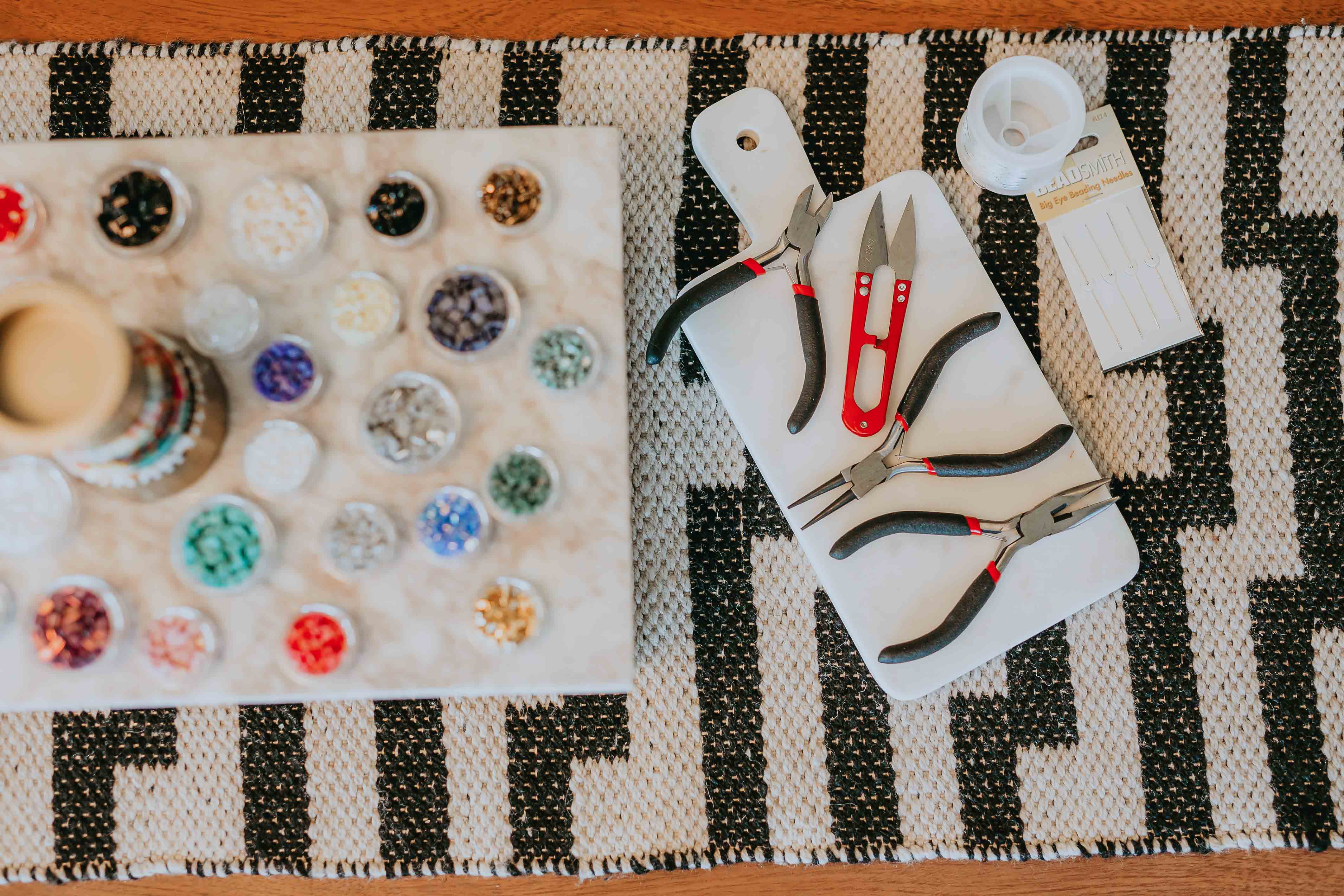
The cord is crystal-cord elastic instead of rubber bands or thin lacing, and it's paired with beads sized to match. A Trio Kit ($44.99) makes three coordinating bracelets in one box, with instructions and a curated color palette already worked out. Specialty bead retailers like Lima Beads carry the same class of Japanese glass beads, which gives you a reference point if you want to compare bead quality across retailers.
Can You Keep Making Bracelets After the Kit Runs Out?
This is the difference that matters most and gets skipped in most comparisons. A toy kit is a closed loop. Once the bands or the bag of snap beads is gone, the kit is over. There's nothing to buy that plugs back into it, so the whole thing usually ends up in a drawer.
A real beading kit is an open system. Tila bead mixes run roughly $5 to $9 and let you restock colors and keep stringing with the same crystal-cord technique you already learned. Buy the Trio Kit once, then top up with bead packs rather than a whole new kit every time. Cost per bracelet drops the longer you stick with it, something a one-and-done toy kit simply can't offer.
Is a Toy Bracelet Kit Safe for a Young Child to Use Alone?
No. Loom bands, snap beads, and glass beads are all small parts, and small parts are a choking hazard for young children regardless of what material they're made from. Adult supervision is required any time a child is working with any bracelet kit, and none of these products, toy grade or jewelry grade, are appropriate for unsupervised use by very young kids. Keep loose pieces of any kit away from toddlers between craft sessions, too. The risk doesn't end when the beading stops.
So Which One Should You Actually Buy?
Depends on the job. A loom-band or snap-bead toy kit is genuinely fine for a rainy afternoon with an eight-year-old who wants to make something in twenty minutes and move on. Buy that one and don't feel bad about it.
If you want a bracelet you'll actually wear, or you're stocking up for a craft night with adults and older kids, a real beading kit is the one that delivers. Browse Mack & Rex bracelet making kits and finished bracelets to compare the Trio Kit against the larger Starter and Ultimate sets, all built around Miyuki Tila glass beads and crystal-cord elastic. Orders over $100 ship free within the US, and buying three finished bracelets gets you a fourth free, no code needed. A single $44.99 kit won't clear that shipping threshold alone, so pair it with a bead pack or a finished bracelet if free shipping is the goal.
Frequently Asked Questions
What's the difference between a toy bracelet kit and a real beading kit?
A toy bracelet kit is built around rubber loom bands or plastic snap beads, sold in the toy aisle as a one-time activity. A real beading kit uses glass beads, like Miyuki Tila beads, and crystal-cord elastic, sold as a jewelry-making product you can restock and keep using.
Can you tell a toy kit from a real beading kit just by looking at the package?
Usually, yes. Toy kits are labeled with an age grade like 6+, feature cartoon art, and call themselves an "activity kit." Real beading kits name the actual bead material, list a wrist-size range, and describe themselves as jewelry-making, not a toy.
Can you keep making bracelets after a toy kit runs out?
Not really. Most toy kits are a closed system. Once the bands or beads in the package are used up, there's nothing to restock and the kit is done. A real beading kit is an open system: you can buy loose bead packs or mixes afterward and keep making bracelets with the same cord and technique.
Are toy bracelet kits safe for young children to use alone?
No. Loom bands, snap beads, and glass beads are all small parts and a choking hazard for young children. Adult supervision is required whenever a child is handling any bracelet kit, toy grade or otherwise, and none of these kits are meant for unsupervised use by very young kids.
Does Mack & Rex sell real beading kits?
Yes. Mack & Rex builds its kits around genuine Miyuki Tila glass beads and crystal-cord elastic, with instructions and inclusive wrist sizing from XXS to 5XL. Mack & Rex resells Miyuki beads; it doesn't manufacture them.