

Vacation Bracelet Stacks: Waterproof Beaded Layers That Survive the Beach
Is a Beaded Bracelet Stack Actually Waterproof Enough for the Beach?
Not fully waterproof, but built to handle a beach trip better than most jewelry you own. Glass tila beads and stone or resin heishi beads are non-porous, so saltwater, pool chlorine, and sand don't damage the beads themselves. The part that wears down is the elastic cord, and it does that gradually with repeated soaking, not from one afternoon in the waves.
A lot of "waterproof jewelry" marketing skips right past the cord and only talks about the beads. Glass never rusts or absorbs water, so of course it survives the ocean. The real question for a vacation stack is what happens to the stretch cord after five days of pool time, sunscreen, and salt air. That's where the honest answer lives.
What Makes Tila and Heishi Beads Beach-Friendly in the First Place?
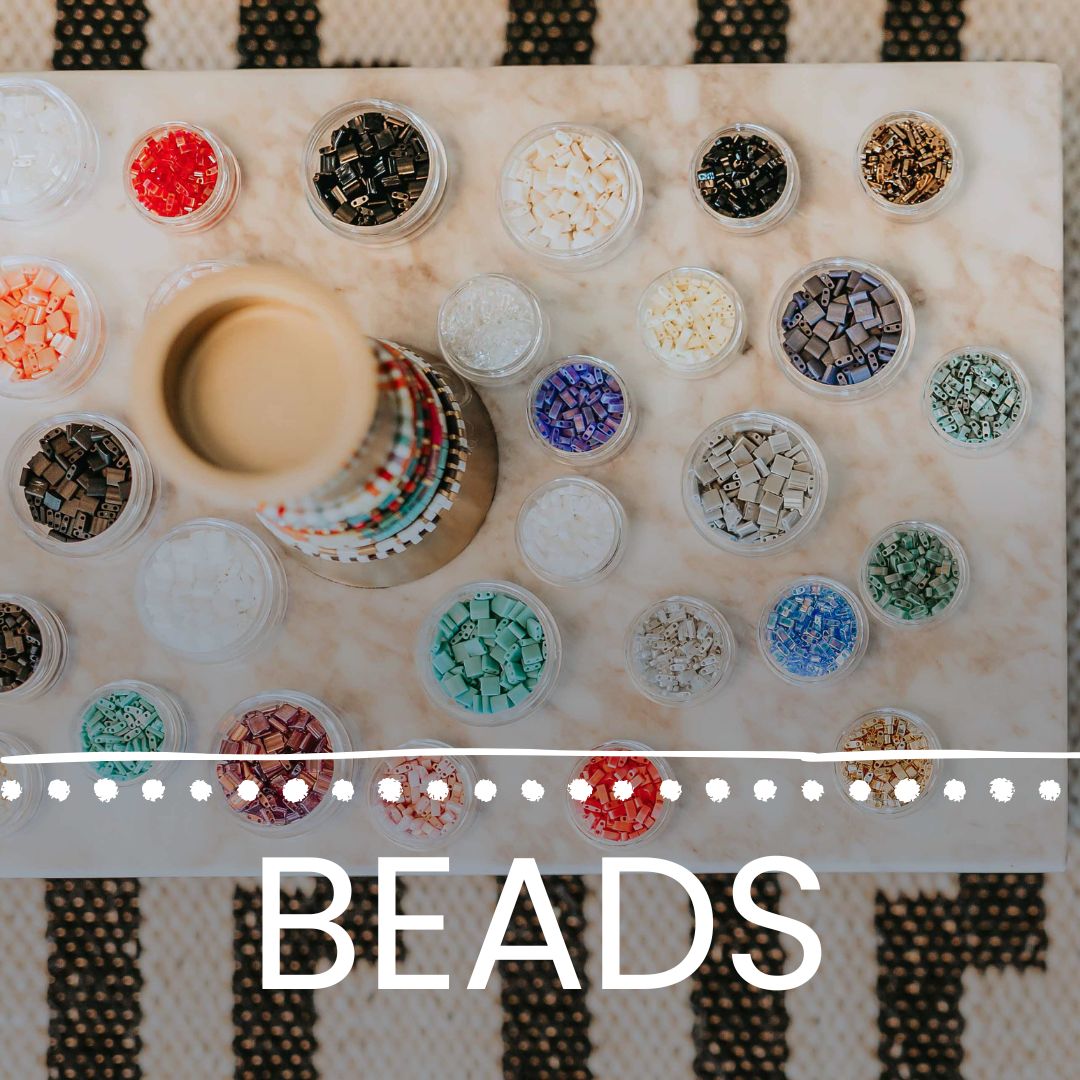
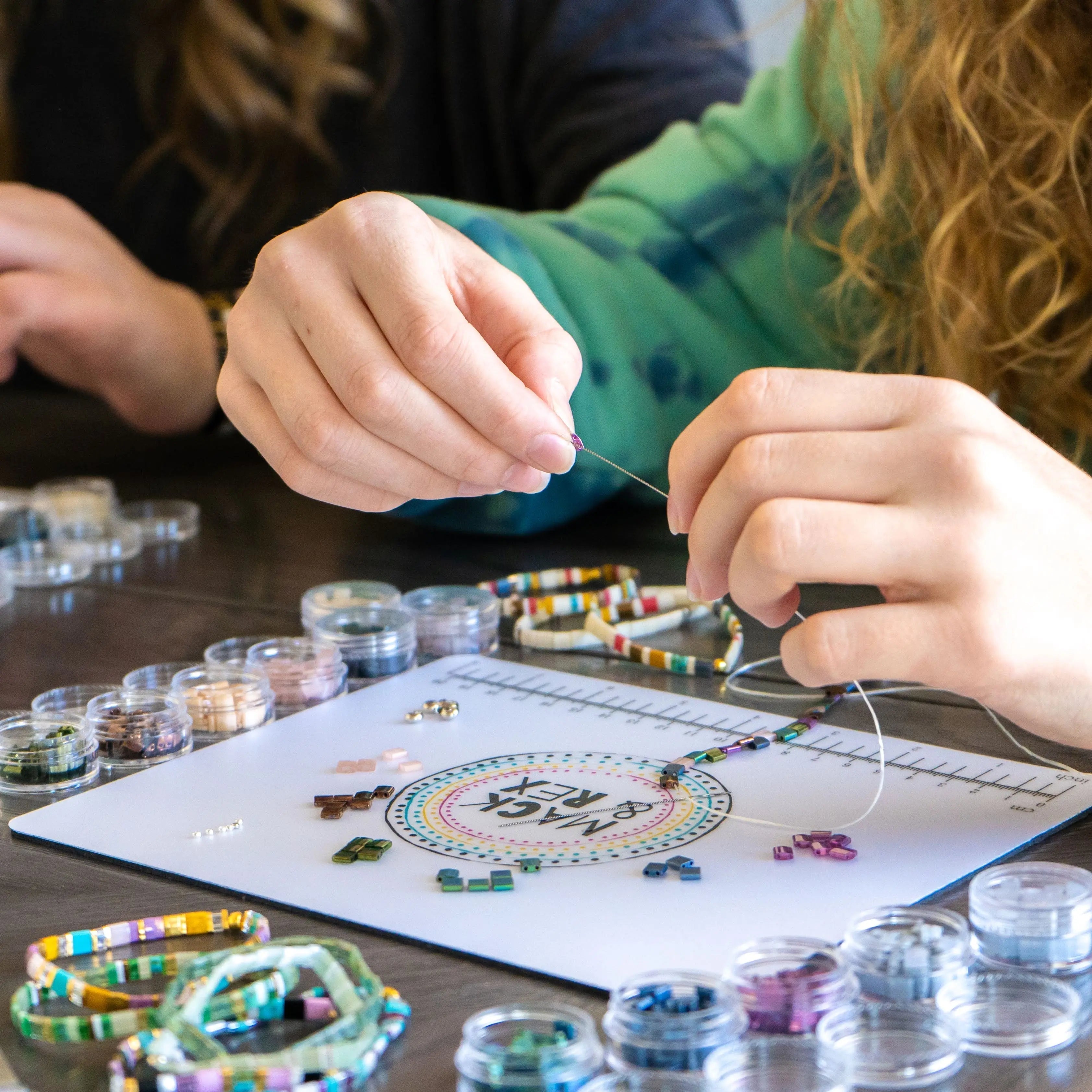
Both bead styles start from materials that don't degrade in water. Tila beads are square, flat Japanese glass beads made by Miyuki, a brand Mack & Rex carries as finished, ready-to-wear bracelets rather than something made in-house. Heishi beads are disk-shaped and traditionally cut from shell, stone, or clay, though modern versions also use resin and glass. Neither material corrodes, tarnishes, or clouds up from sun or salt the way plated metal jewelry does.
Wikipedia's overview of elastomers, the polymer class that includes stretch-bracelet cord, notes that these materials rely on long polymer chains that flex and recover under stress, which is why they lose bounce with repeated wetting and drying. Read more about elastomer structure here. The cord isn't fragile, it's just the part doing mechanical work every time you put the bracelet on, take it off, or soak it.
How Do You Build a Trip-Ready Vacation Stack?
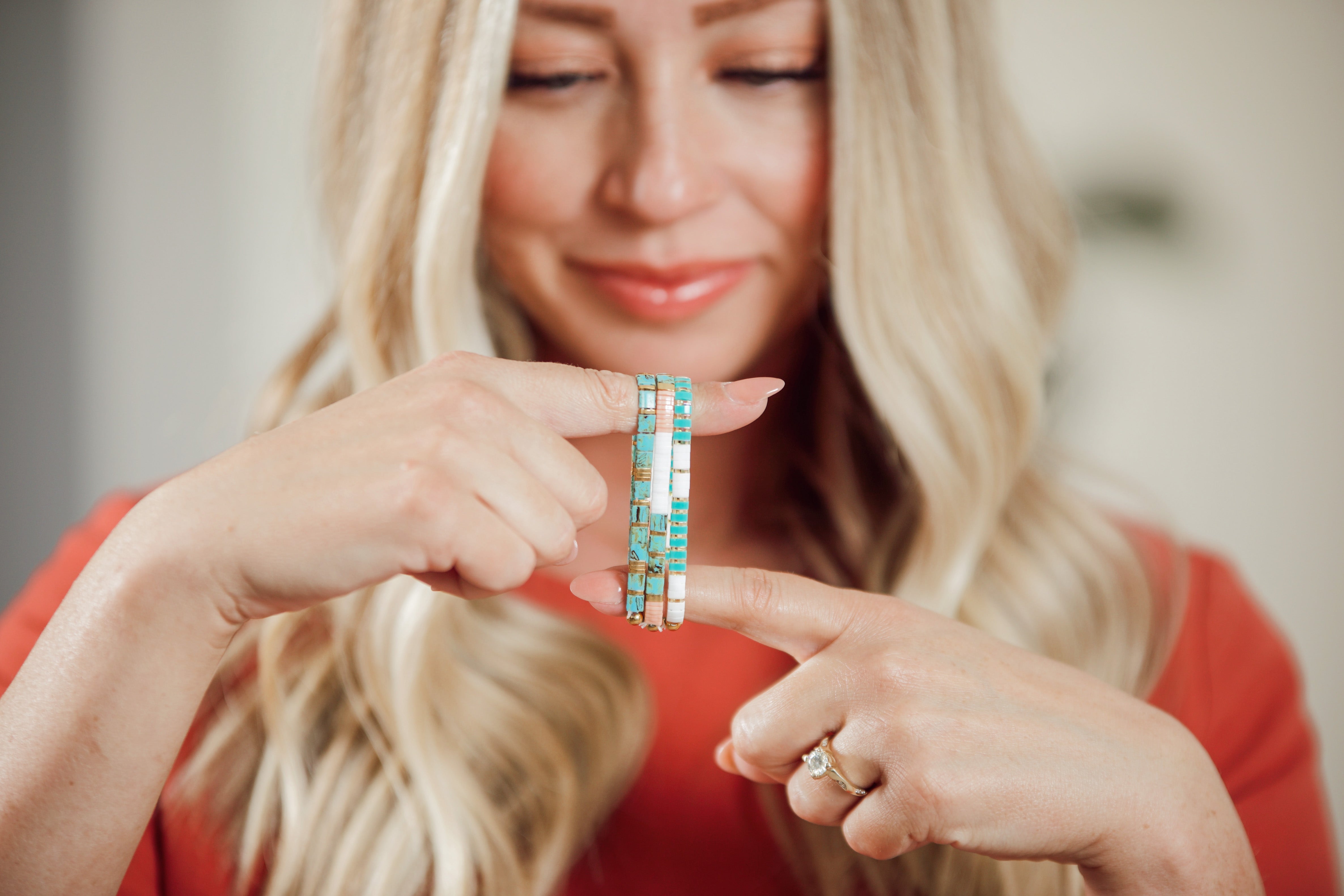
Three to five bracelets is the sweet spot for a beach vacation stack. Enough to look intentional in photos, few enough to keep track of at the pool bar. A few rules make the stack actually work for a week of sun, sand, and water:
- Pick opaque and matte finishes for your water-wear pieces. Solid-color tila or stone heishi beads hold their look through repeated sun and moisture better than shiny galvanized finishes.
- Save a metallic or Duracoat piece for dinner. Add it after you've rinsed off from the beach, not before. It'll look brighter for longer if it isn't soaking in salt every day.
- Get the fit right. A bracelet that's too tight stretches the cord on every wear, and heat makes hands and wrists swell. Mack & Rex bracelets run XXS through 5XL, so the fit doesn't add extra stress to the cord before the ocean even does.
- Build the stack from finished bracelets, not loose beads. A trip is not the moment to be restringing anything. Ready-to-wear pieces mean you land at the beach and just put them on.
The Mack & Rex collection is where this gets easy. Finished tila and heishi stacks are strung on crystal-cord elastic, sized to actually fit, and sold with a quality guarantee behind the build. You're not assembling a vacation stack from scratch the week before a trip, you're picking three or four that work together and packing them flat in a pouch.
What Really Happens After Saltwater or Chlorine?
Saltwater and chlorine both work on elastic cord faster than fresh water does, though neither is instant. Perles & Co, a beading supplier that publishes care guides for elastic jewelry, lists sea salt exposure alongside heat, sun, perspiration, and skincare products as one of the recurring reasons stretch bracelets lose elasticity ahead of schedule. Their breakdown of what wears out elastic bracelets is worth a look before a beach trip.
What that means in practice: one swim doesn't ruin your stack. A whole week of wearing it in and out of a chlorinated pool, every single day, adds up faster than the same stack worn on dry land. Think of the ocean and the pool as places your stack can visit, not places it lives. A quick dip is a normal part of vacation wear. Hours of laps or a full day of snorkeling is a better reason to leave the bracelets in your bag.
How Should You Care for Your Stack After a Beach Day?
The routine takes under a minute and makes a real difference over a week-long trip:
- Rinse with cool fresh water. Salt and chlorine residue sitting on the cord is what does the slow damage, not the swim itself.
- Pat dry, don't wring. A soft towel or washcloth is enough. Twisting the cord to dry it faster stresses the material.
- Let it air out before you put it back on or pack it. A damp bracelet stuffed into a zippered pouch stays wet longer and dries unevenly.
- Put it on after sunscreen and lotion, not before. Both products sit against the cord and speed up wear, so let them absorb first.
Satin Crystals, a stretch bracelet specialist, recommends checking cord for fraying or lost bounce every few months and restringing at the first sign of wear rather than waiting for a snap. Their full stretch bracelet care guide covers the warning signs to watch for. A quick check before and after a big trip is a good habit either way.
Is It Ever a Bad Idea to Wear Your Stack in the Water?
Hot tubs, yes, skip those. The mix of heat, chlorine concentration, and jet pressure is rough on elastic in a way a normal pool or ocean swim isn't. Beyond that, use judgment based on how long and how often. One beach vacation with daily swims and the post-swim rinse routine above is well within what a well-made stack can handle. A bracelet worn into chlorinated water every single day for months, with no rinsing, is a different story, and that's true of any stretch bracelet regardless of brand.
The honest takeaway: a tila or heishi stack is genuinely one of the better jewelry choices for a beach trip, lightweight, no metal to tarnish, and beads that don't care about sun or salt. It's not meant to replace a dive watch. Treat the ocean as an occasional guest star in your vacation, not the stack's full-time job, and it'll come home from the trip looking the way it left.
Ready to pack a stack for your next trip? Browse the full Mack & Rex bracelet collection for finished tila and heishi stacks in sizes XXS through 5XL. Buy 3 bracelets and get 1 free, no code needed, and orders over $100 ship free to US addresses.
FAQ: Vacation Bracelet Stacks and Water
Is a beaded bracelet stack waterproof enough to wear in the ocean?
Not fully waterproof, but beach-ready. The glass or stone beads handle saltwater fine, the elastic cord is what wears down with repeated soaking. A swim here and there is normal use, not a risk.
Does chlorine hurt a tila or heishi bracelet stack?
Chlorine wears elastic cord faster than fresh water over time, though not in one pool day. Rinse and dry your stack after chlorine exposure to slow that down.
How do I care for my bracelet stack after a beach day?
Rinse with cool fresh water, pat dry, and let it air out before wearing it again or packing it away. Put it on after sunscreen and lotion, not before.
What beads hold up best for a vacation bracelet stack?
Opaque, matte, and solid-color tila or heishi beads keep their finish best. Save shinier galvanized or metallic pieces for evenings rather than water time.
Should I take my bracelet stack off before swimming?
For a quick dip, no. For a long swim, laps, or hours of snorkeling, take it off first. Occasional water exposure is fine, constant soaking is what shortens a stack's life.