



What Age Is a Bracelet Making Kit Good For?
What Age Is a Bracelet Making Kit Good For?
Most bead bracelet making kits fit kids around age 8 and up, working near an adult, because loose beads are a choking hazard for anyone younger. Older kids and teens can string beads mostly on their own with supervision nearby, and younger children do better with a finished, ready-to-wear bracelet in place of loose parts.
That's the short version. The longer version depends on the specific kid: how careful they are with small objects, whether an adult can sit with them the whole time, and whether you're buying for a solo project or a shared table. Here's how to think through it before you buy.
Why Do Bead Kits Come With an Age Caution at All?
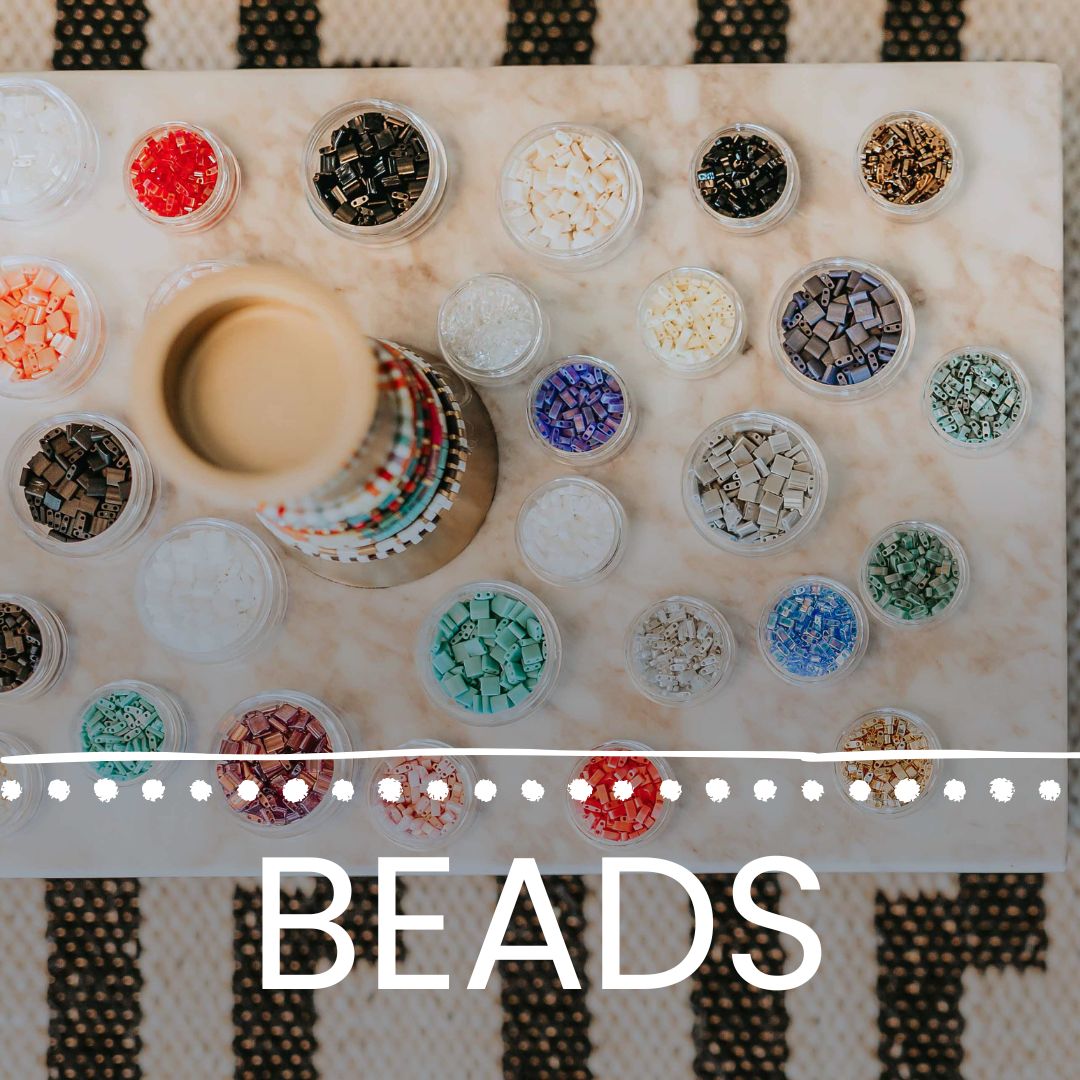
Small parts, big risk. Individual beads, including the flat glass Tila beads Mack & Rex uses, are small enough to be a genuine choking hazard for young children, and that risk exists whether a kit is marketed toward crafters or toward kids.
Toy and craft manufacturers have leaned on age labeling for exactly this reason for decades. A widely cited safety practice is printing an intended age range on the package, particularly a "not for children under 3" style warning on anything with small, detachable pieces.1 Bead kits fall squarely into that category. There's no way around it: if a kit has loose beads in it, someone under that warning age shouldn't be handling them without an adult right there.
Safe Kids Worldwide, a nonprofit focused on childhood injury prevention, flags small round or cylindrical objects as a top choking risk for young kids, and beads meet that description exactly.2 That's the reason behind every "adult supervision required" line you'll see on a bead product, Mack & Rex's included.
At What Age Can Kids Actually String Beads Themselves?
Later than most parents expect. Threading a small, flat bead onto elastic cord takes a level of fine hand control that most kids don't reliably have until somewhere around age 6 to 8, and general child-development sources place steady, precise small-object handling in that same window.3 A 4-year-old can technically pinch a bead. Getting it onto a cord, on the first try, without dropping three others on the floor, is a different skill.
None of that changes the supervision rule. A capable 9-year-old still needs an adult in the room with loose beads out, the same as a beginner would. Dexterity affects how much of the actual stringing a kid can do. It doesn't affect whether the beads need to be watched.
Is a Kit Good for a 5- or 6-Year-Old?
It can work, but only as an adult-led activity, not something handed over and left alone. At this age, a parent or grandparent does most of the actual bead handling while the child chooses colors, watches, and maybe places a bead or two under direct supervision.
If that sounds like more supervision than you want to commit to for a single project, a finished bracelet is the simpler gift for this age. It gives a kid something to wear right away, with none of the loose-bead handling that makes a DIY kit a bigger commitment at 5 or 6.
What About Tweens and Teens?
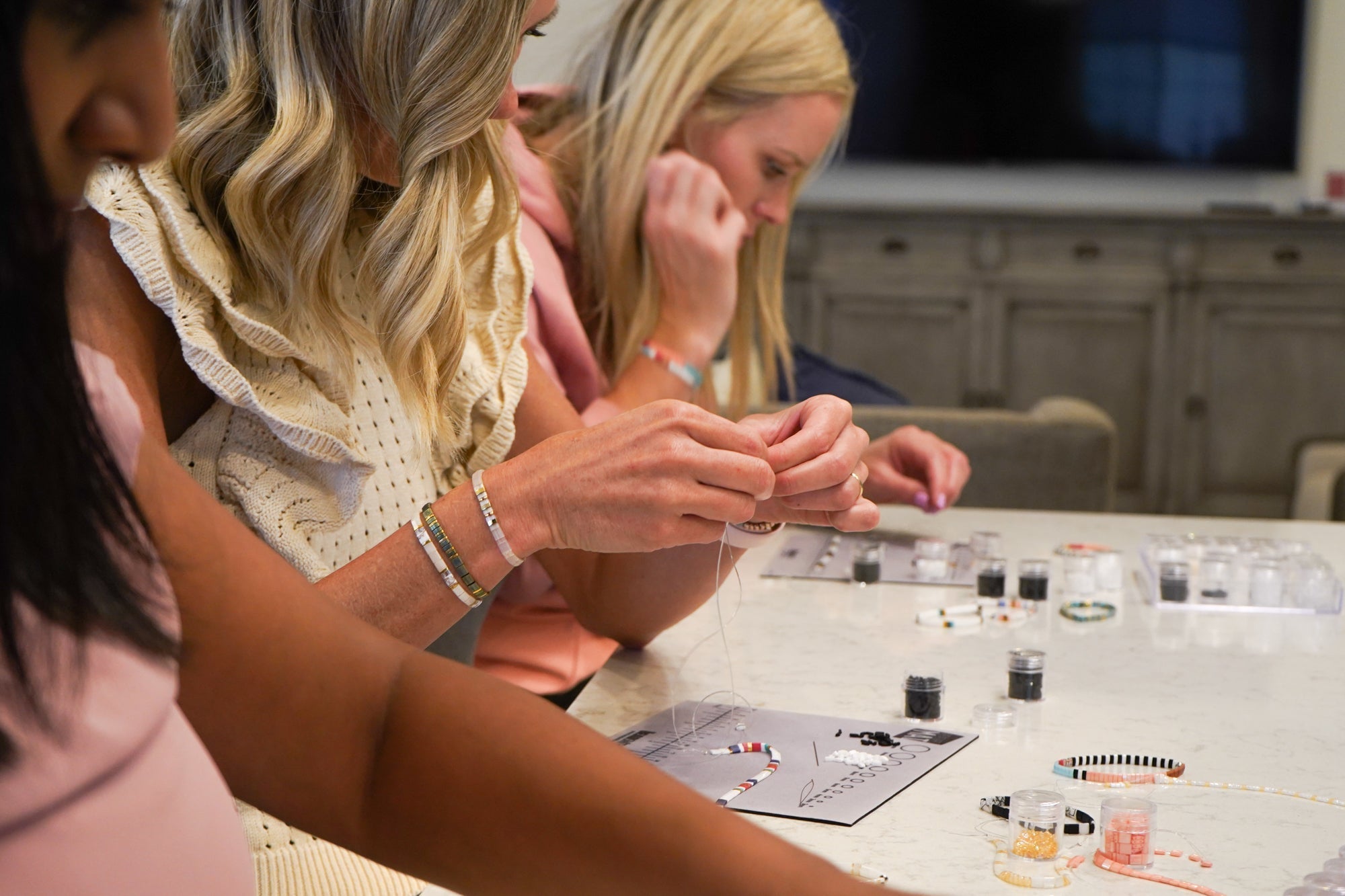
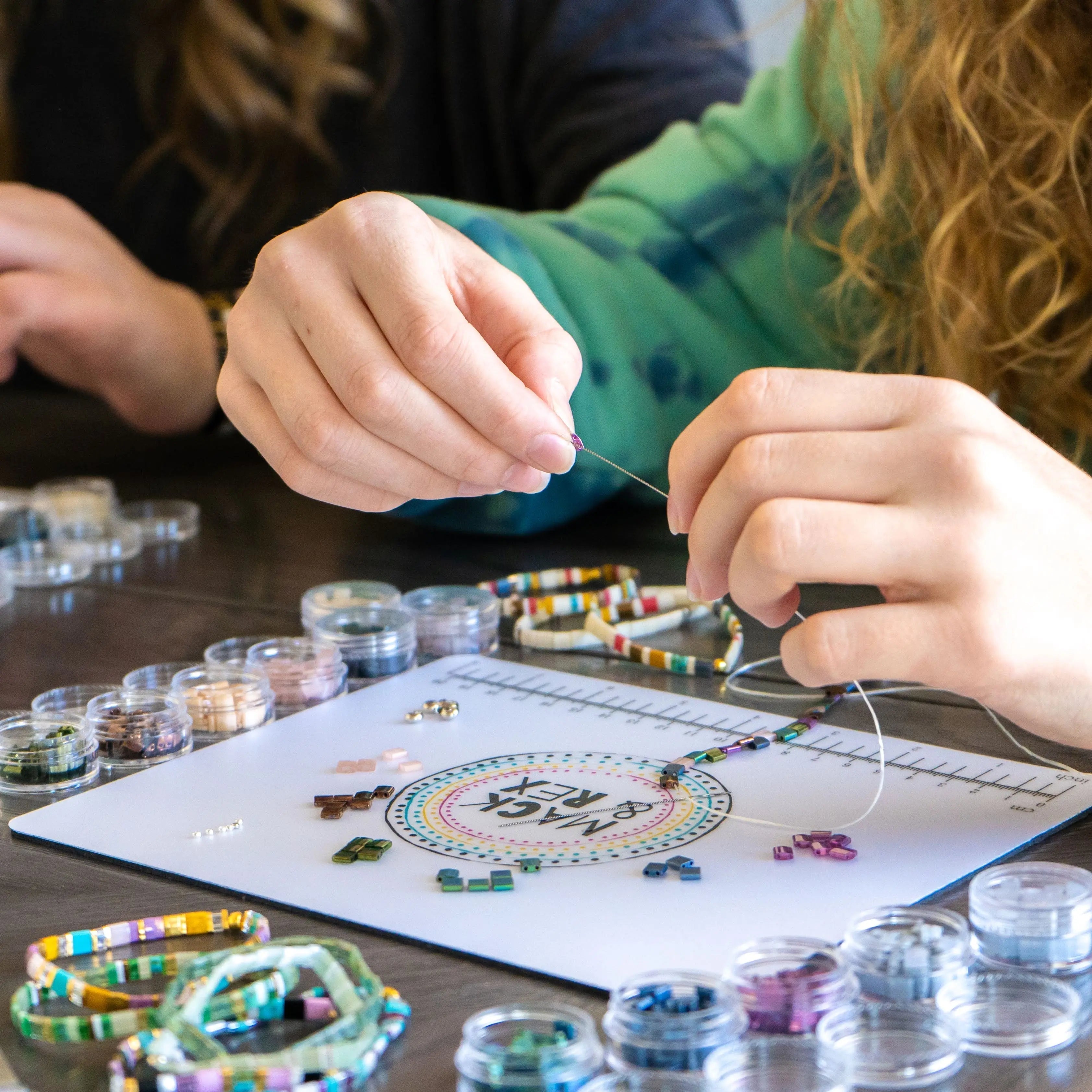
This is the sweet spot. Kids around 8 to 12 generally have the hand control to manage the stringing themselves, with an adult present rather than hovering over every bead. Teenagers can usually run a kit start to finish on their own, with the same general small-parts awareness anyone crafting with beads should have.
This is also where Mack & Rex's kits are built to land. A trio kit ($44.99) makes three coordinating bracelets in named color stories like STAINED, BEACHY, RETRO SUNSET, and EVERGREEN EDIT, so a tween or teen isn't stuck guessing at a color scheme. It's a manageable, one-sitting project for that age group, done alongside an adult rather than solo in another room.
Can Adults Use the Same Kits?
Every single one of them. Mack & Rex started as a mom making bracelets with her two daughters, Mack and Rex, and that shared-table idea is still the point of the kits: one project, everyone at the table walks away with a finished bracelet.
For adults crafting solo or gifting to another adult, there's no age caution to think about beyond ordinary small-parts common sense. The bracelet making kits collection covers a range of project sizes, from the $44.99 trio kit up to bigger multi-bracelet sets, plus a DIY Bracelet Kit Club subscription at $36.99 a month for anyone who wants a new project delivered on a schedule.
What's a Safer Pick for Younger Kids or a Mixed-Age Group?
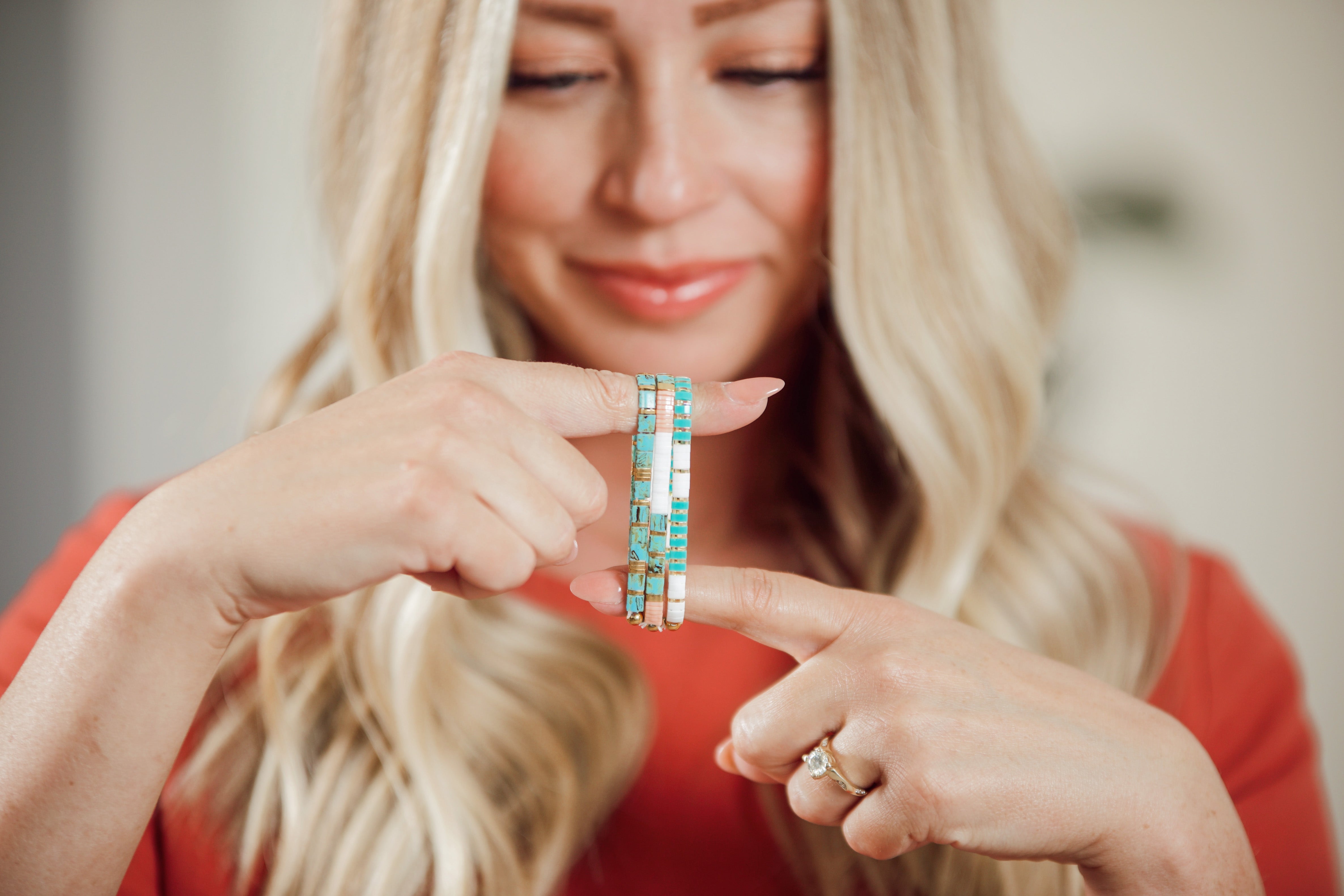
A finished bracelet. It's already strung and secured on crystal-cord elastic, so there's no loose-bead handling step at all, just a bracelet to put on. For a birthday gift going to a younger child, or a family gathering with kids at very different ages, a finished bracelet sidesteps the age question that a kit raises.
It's still jewelry with small components, so it's not something to leave in reach of an infant or toddler unsupervised. But it removes the specific risk that comes with a pile of loose beads on a table.
How Do You Supervise a Bracelet-Making Session, Whatever the Age?
A few habits cover most of it:
- Work over a tray or mat so stray beads don't end up on the floor, in reach of a younger sibling.
- Count beads out and count them back in when the project wraps up.
- Keep the kit's storage container closed and put away between sessions, not left out on a coffee table.
- Sit with the kit, not across the room. Supervision means eyes on the beads, in the same room, at the same table.
These aren't complicated rules. They're just the ones that matter, and they apply whether the crafter is 6, 16, or 60.
So What Age Should You Buy a Bracelet Making Kit For?
Age 8 and up is the practical floor for handing a kit over as a mostly independent project, with adult supervision continuing regardless of age. Below that, treat it as an adult-led activity, or hand over a finished bracelet in place of the kit. Above it, tweens, teens, and adults can all use the same kit at the same table.
Mack & Rex's trio kits ($44.99, makes 3 bracelets) are built around genuine Miyuki Tila glass beads (Miyuki is a Japanese bead maker, and "Tila" is a Miyuki trademark, not a Mack & Rex product) and crystal-cord elastic in curated color stories, a good starting point for a tween, teen, or adult crafting solo or as part of a family project. Browse the bracelet making kits collection to find one that matches the age and skill level of whoever's at your table.
A quick note on the fine print: shipping is free on U.S. orders over $100, and a single $44.99 kit won't clear that threshold by itself. The buy-3-get-1-free offer applies to finished, ready-to-wear bracelets only, not to kits.
Frequently Asked Questions About Bracelet Making Kit Age Guidance
What age is a bracelet making kit good for?
Most bead bracelet making kits fit kids around age 8 and up, working near an adult, because loose beads are a choking hazard for anyone younger. Older kids and teens can string beads mostly on their own with supervision nearby. Younger children do better with a finished, ready-to-wear bracelet in place of loose parts.
Is a bracelet making kit safe for a 5-year-old?
Only with an adult doing hands-on, right-next-to-them supervision the entire time, and even then it's not the easiest fit. Beads are small parts and a real choking hazard at that age. A calmer option is letting a 5-year-old pick colors and watch while an adult handles the actual beads, or giving them a finished bracelet to wear right away.
At what age can kids string beads on their own?
Most kids develop the fine hand control to reliably thread small beads on their own somewhere between ages 6 and 8, though it varies child to child. Even once a child can physically manage it, adult supervision around small beads is still the standard, since the choking risk doesn't disappear once dexterity arrives.
Are Mack & Rex bracelet making kits appropriate for kids?
Yes, for tweens, teens, and adults, with adult supervision whenever younger kids are at the table. Mack & Rex kits use genuine Miyuki Tila glass beads and crystal-cord elastic, and like any bead product they carry the standard small-parts caution rather than a specific minimum age printed on the box.
What's a safer bracelet option for younger kids?
A finished, ready-to-wear bracelet. It skips the loose-bead handling entirely, since the beads are already secured on crystal-cord elastic. It's still not a toy for an unsupervised toddler, but it removes the loose-parts step that makes a DIY kit a poorer fit for younger kids.