What Are Heishi Beads? How to Use Them in Your Bracelets
What Are Heishi Beads?
Heishi beads are small, flat clay discs. Strung together in long rows along a strand, the name comes from a Keresan word for shell bead, and nearly every heishi bead sold today, including Mack & Rex's, is polymer clay rather than the hand-cut shell or stone of the original craft.
That distinction matters. Search "heishi beads" expecting an heirloom shell necklace and you'll mostly find rows of colorful clay discs at your local bead shop or on sites like Mack & Rex, sized for bracelets and priced for everyday crafting. Both things are real. They're just not the same object.
Where Does the Word "Heishi" Actually Come From?
It traces back to the Kewa Pueblo people of New Mexico, formerly known as Santo Domingo Pueblo. Heishi, sometimes spelled heishe, is their Keresan-language word for shell bead, and artisans there have hand-rolled disc beads from shell, turquoise, and stone for generations, a craft that predates metal jewelry in the region by thousands of years (Wikipedia: Heishe).
The process is slow on purpose: slice shell or stone into strips, drill a center hole through each rough square, string them, then grind the strand against a turning wheel until the edges round into even discs. A lot of material gets lost for a few uniform beads. The clay version skips nearly all of that. It's molded, not carved, which is why it costs a fraction of the price and comes in neon colors shell never will.
What Sizes and Finishes Do Heishi Beads Come In?
Clay heishi beads are usually sold around 6mm wide, with a hole near 2mm, small enough to pair naturally with seed beads but still easy to see and handle. A single strand runs roughly 15.75 to 16.9 inches and typically holds 320 to 450 beads, so one strand goes a long way across a few bracelets.
Finish-wise, most clay heishi comes in flat matte or lightly glossed colors rather than the metallic or AB-coated finishes you'll see on glass seed beads. Mack & Rex's lineup leans into soft, wearable shades: pearl pink, misty rose, soft yellow, rosy brown, dark gray, light gray, gold, and a few brighter options like neon yellow and neon tangerine for anyone who wants a punchier stack.
How Are Heishi Beads Different From Tila Beads and Seed Beads?
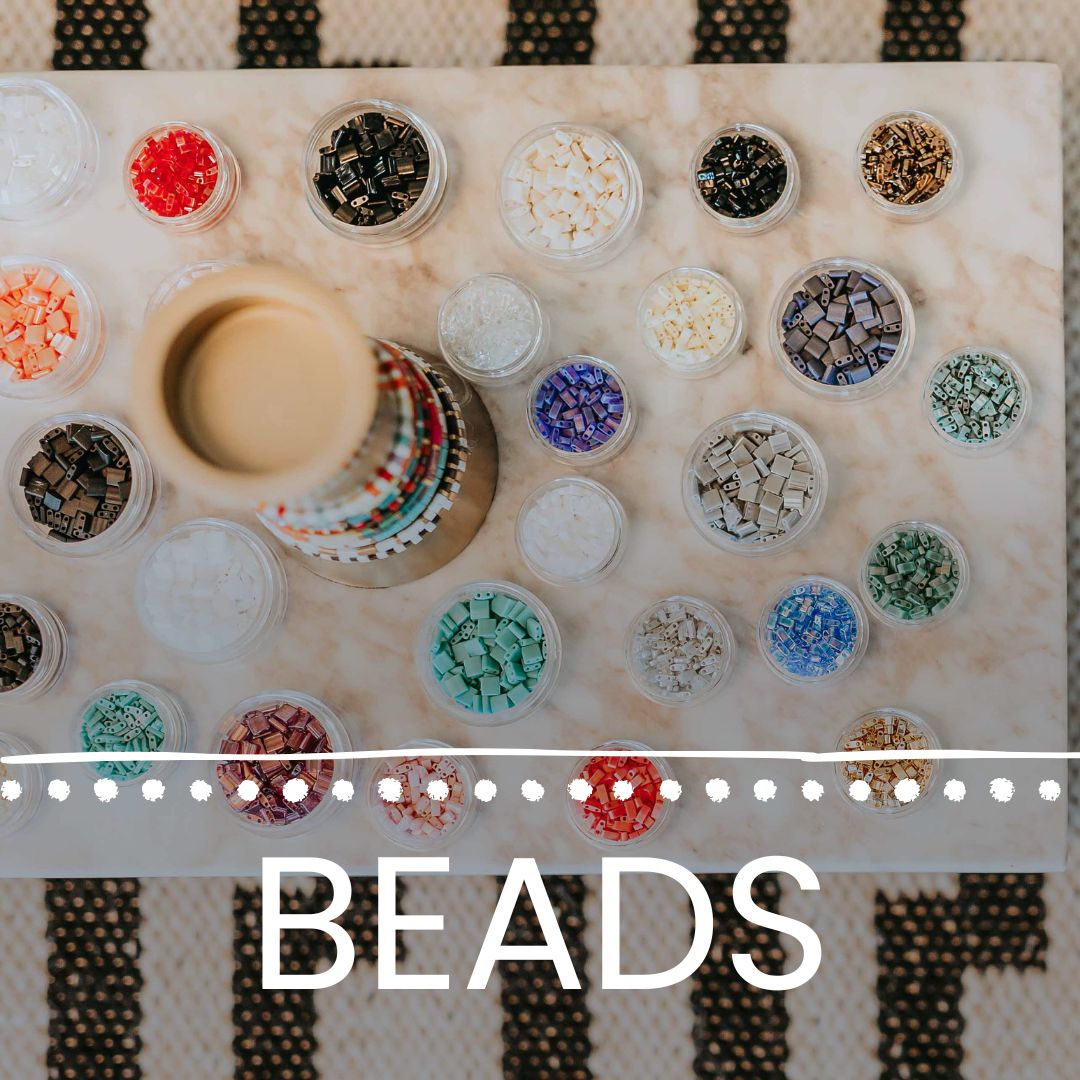
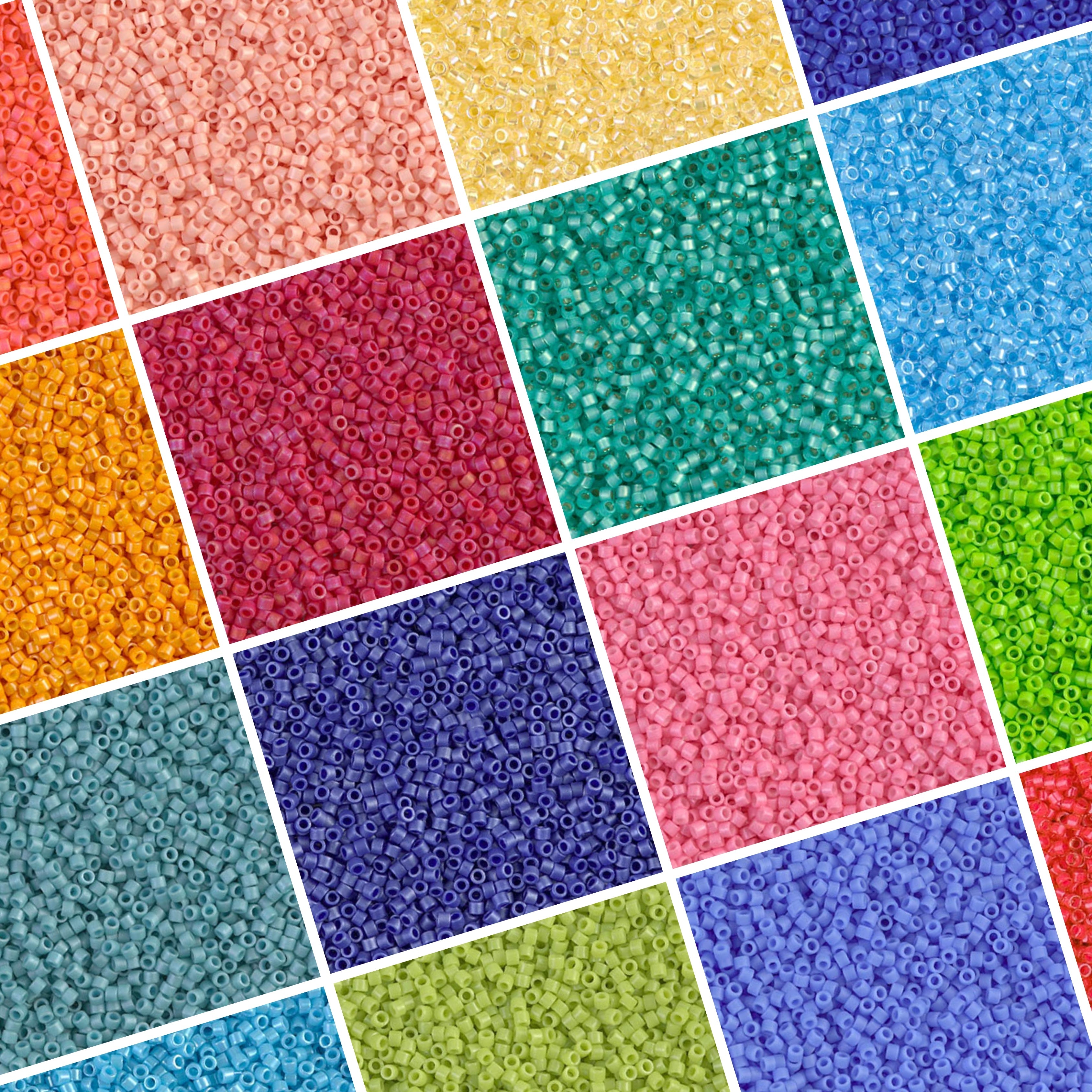
Shape and material, mostly. Miyuki Tila beads are flat, square glass beads with two parallel holes that keep them sitting face to face in a straight, gapless row. Round seed beads, sometimes called rocaille, are small glass beads with a single center hole, sold in sizes like 6/0, 8/0, 11/0, and 15/0, and they roll rather than lock into place.
Heishi splits the difference: flat like a tila bead, but round, light, and single-holed like a seed bead, made of clay instead of glass. That flat shape means it lies fairly still on cord without the tight interlock a tila panel gets, so it behaves more like a soft spacer bead than a structural one.
How Do You String Heishi Beads Into a Bracelet?
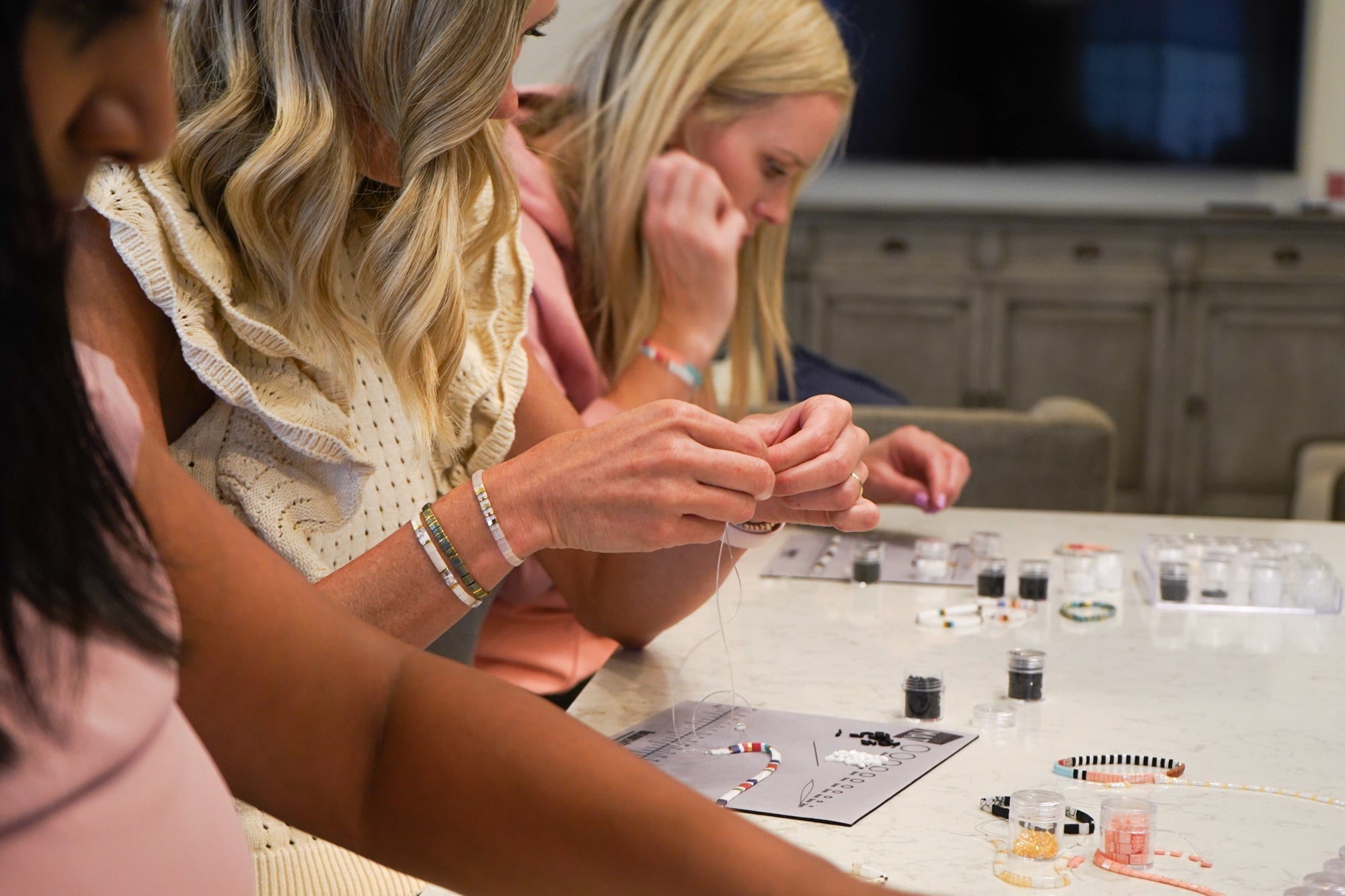
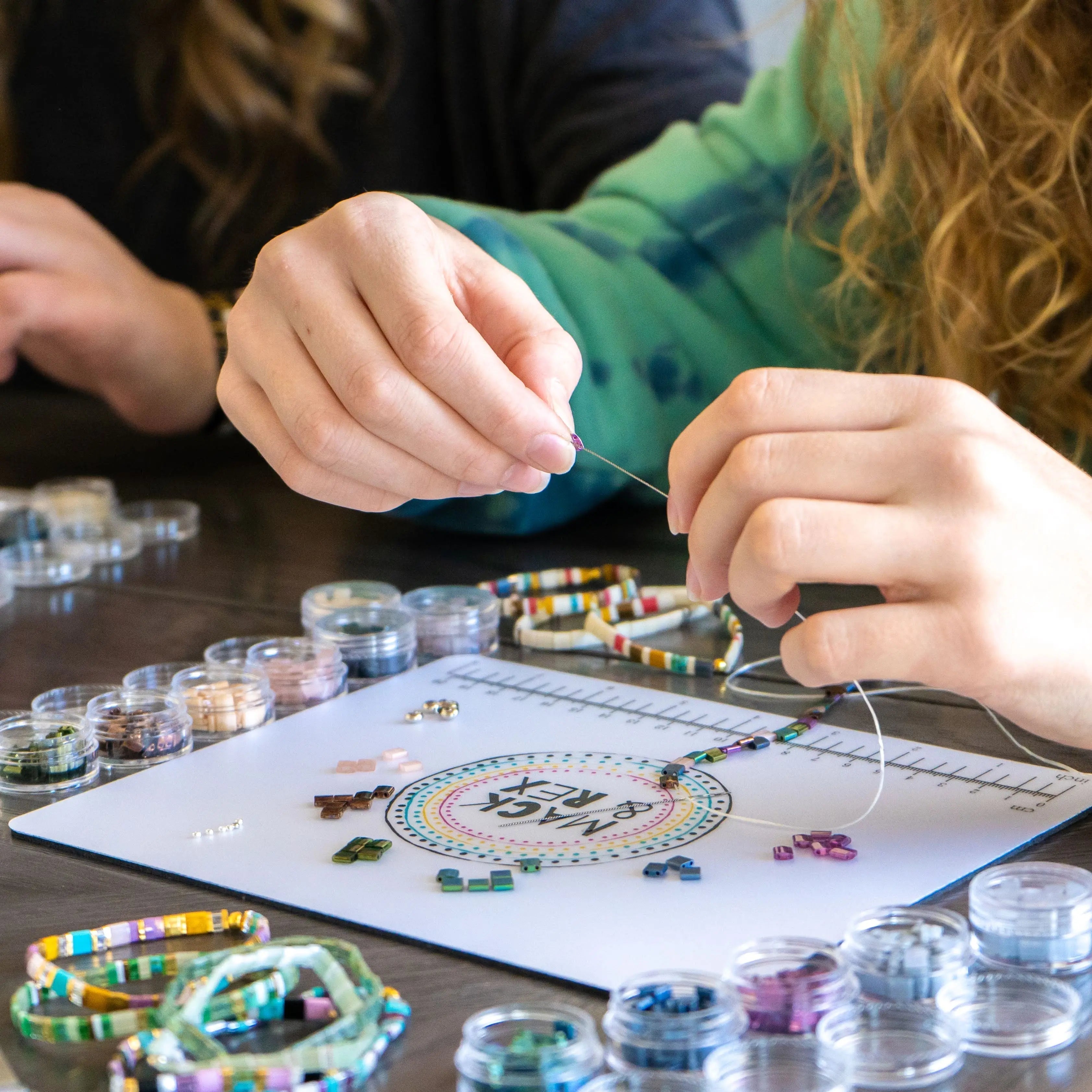
Start with the cord. Cut stretch cord about an inch longer than your wrist measurement, since beads take up slack. Lay your heishi discs out in the order you want, string them on, then finish the ends. A secure finishing knot, or a crimp bead if you're using beading wire rather than elastic, is what actually holds the piece together. It's worth doing carefully, since a loose knot is the most common reason a handmade bracelet falls apart within a week (Beadaholique: Stringing 101).
Pre-stretch the cord before you string anything, or you'll get gaps once it's worn. Trim excess close to the knot and add a dab of glue for insurance. If a kid is helping, stay close: heishi beads and their small holes are a choking hazard for little ones, so this is an adult-supervised project.
How Do You Pair Heishi Beads With Tila Beads or a Stack?
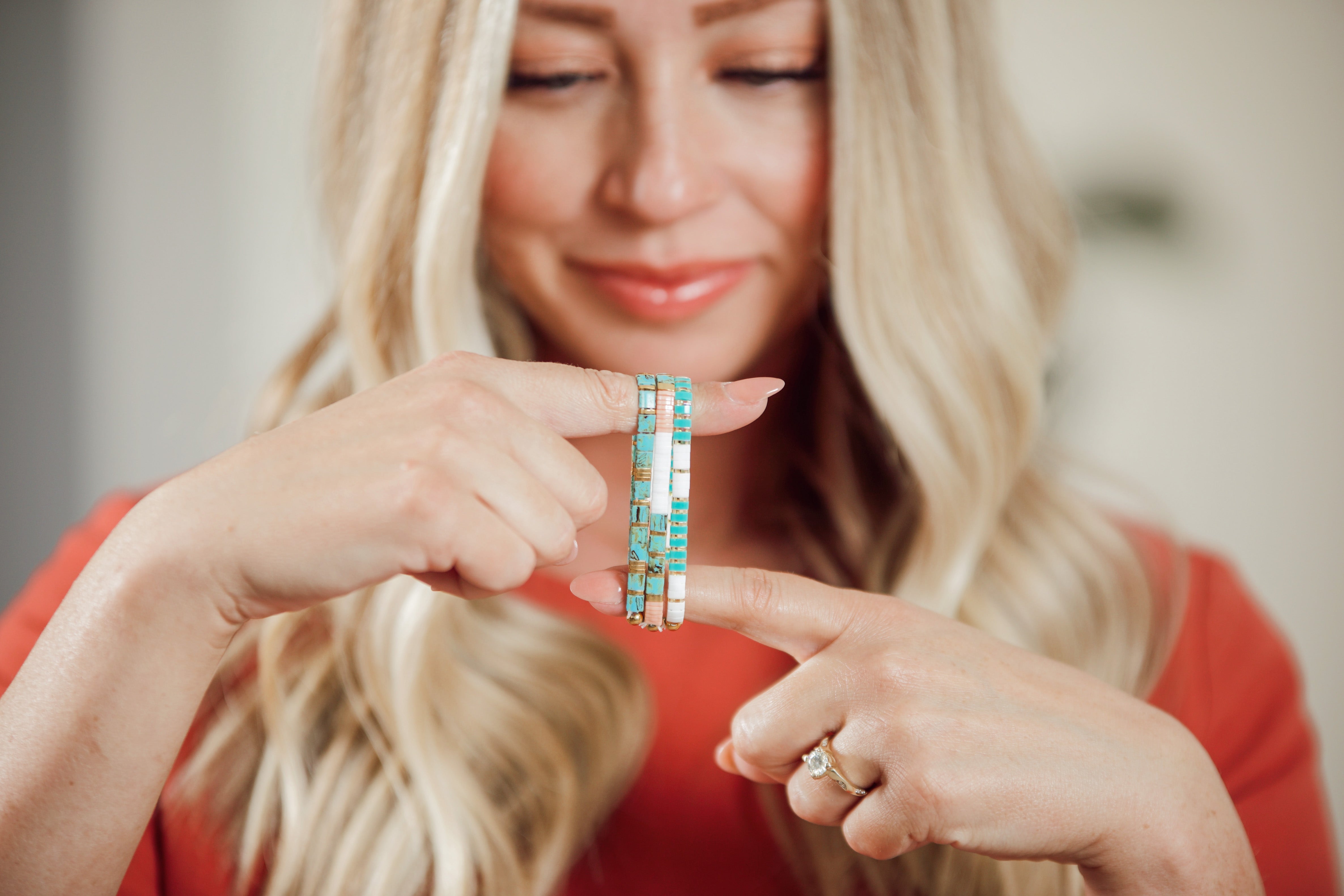
The most common approach treats heishi as the quiet piece in a stack, not the star. A row of neutral discs, say rosy brown or light gray, sits well next to a bolder tila panel in a named colorway, letting the tila piece do the visual work while heishi adds texture and breathing room on the wrist.
It also works as a border: a short run of heishi on either end of a tila center section, or scattered as spacers between seed bead segments. Mack & Rex carries a dedicated heishi beads collection in the colors above, making it easy to match a strand to whatever tila mix or color pack you're already working with.
Frequently Asked Questions About Heishi Beads
What are heishi beads made of?
Traditionally, shell or polished stone. The heishi beads sold in most bead and craft shops today, including Mack & Rex's, are polymer clay: a flat disc shape inspired by the original but made from a totally different, more affordable material.
Are craft-store heishi beads the same as traditional Native American heishi?
No, and it's worth saying plainly. Traditional heishi is hand-cut shell or stone, historically made by Kewa Pueblo (formerly Santo Domingo Pueblo) artisans in New Mexico. The polymer clay discs sold commercially, including by Mack & Rex, borrow the name and the flat round shape but are a modern, mass-produced craft material, not a handmade cultural piece.
What size are heishi beads and how many come on a strand?
Mack & Rex's polymer clay heishi beads run about 6mm wide with a roughly 2mm hole, and a single strand is typically 15.75 to 16.9 inches long holding somewhere between 320 and 450 beads, depending on exact thickness.
Can you mix heishi beads with tila beads in one bracelet?
Yes, and it's one of the more popular combinations. Heishi discs add a flat, rounded, matte-leaning texture next to the glossy square faces of Miyuki Tila beads, so a lot of makers use heishi as a border or spacer section around a tila focal panel rather than blending the two shapes bead-by-bead.
Are heishi beads safe for kids to string into bracelets?
With supervision, yes, for kids old enough not to put beads in their mouth. Heishi beads are small and the hole is only about 2mm wide, which makes them a choking hazard for very young children, so an adult should stay close for any bead project with little ones.
Ready to see the colors in person? Browse Mack & Rex's full seed bead collection to find heishi, rocaille, and tila-friendly shades for your next bracelet.