

What Are Heishi Beads Made Of? Materials and Durability Explained
What Are Heishi Beads Actually Made Of?
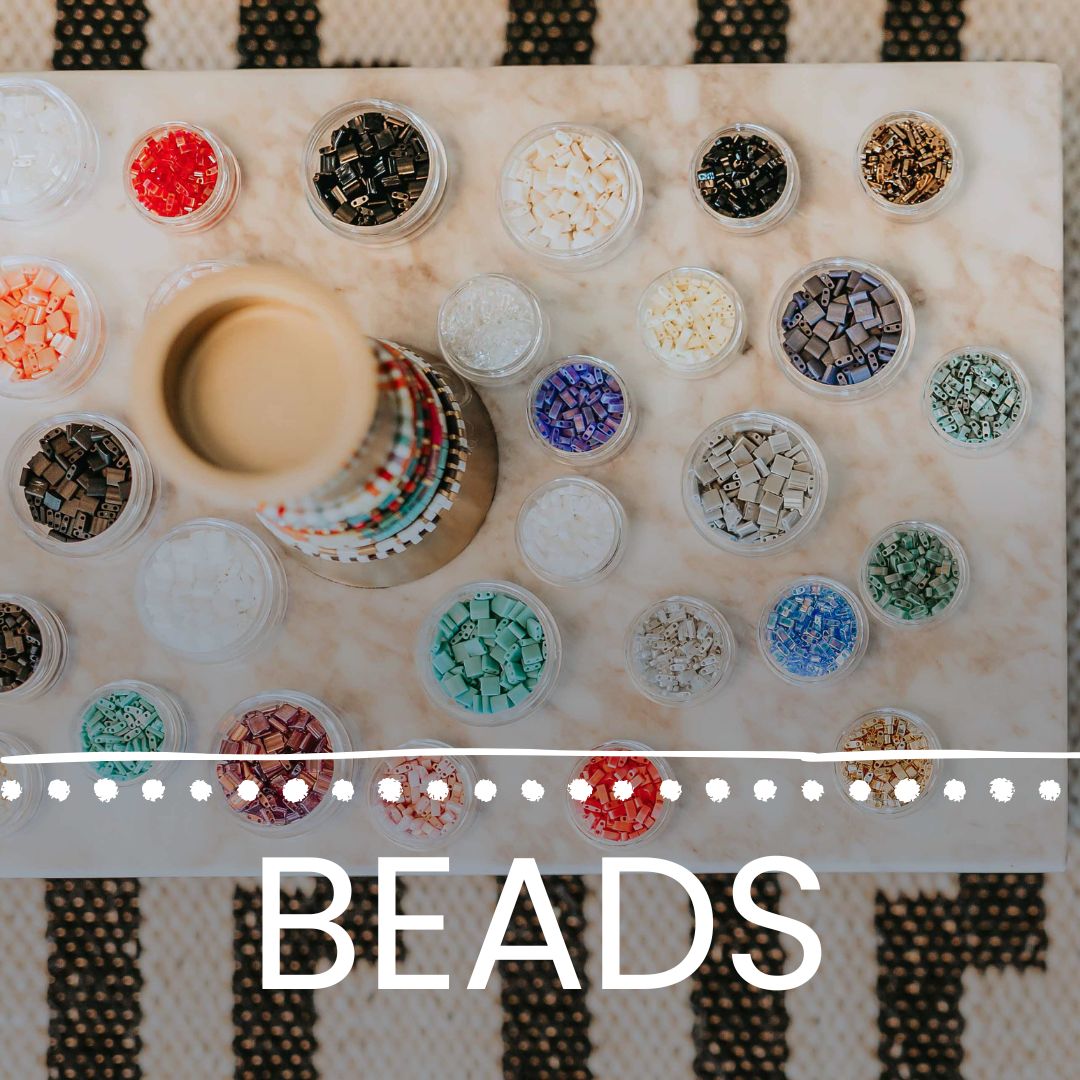
Heishi beads come in four main materials: polymer clay, natural shell, stone, and coconut. The material determines everything about how the bead performs on your wrist: its weight, flexibility, water resistance, and how long it lasts through daily wear. Most heishi bracelets sold today use polymer clay because it's consistent, lightweight, and widely available in hundreds of colors.
A practical breakdown of what each material means for you as a buyer follows below.
What Are Polymer Clay Heishi Beads, and Why Are They So Common?
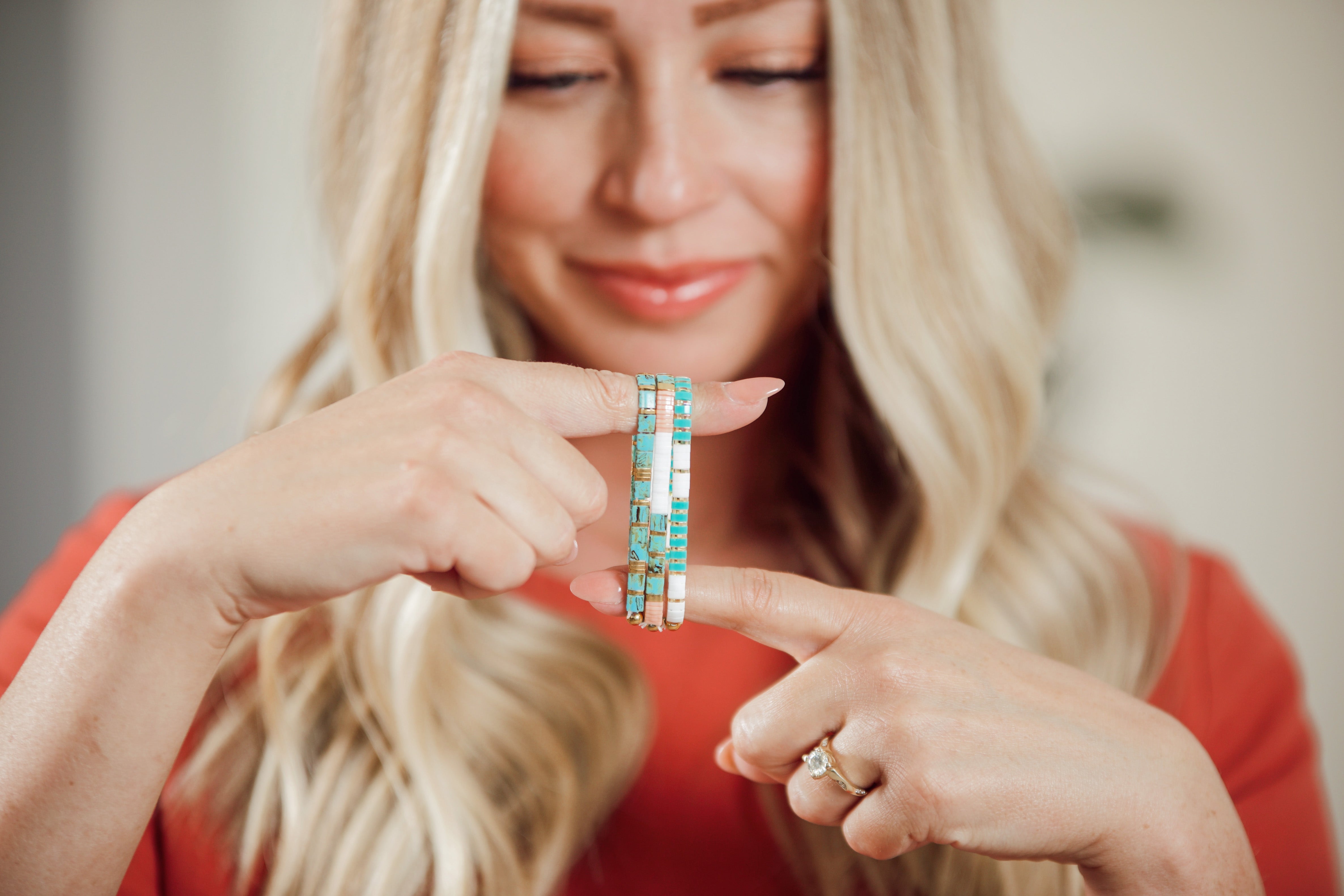
Polymer clay heishi beads are molded and baked from a synthetic clay compound, then shaped into thin discs. They're the most widely produced heishi style today because manufacturers can control color, size, and finish precisely. A strand of polymer clay heishi will be far more uniform bead-to-bead than a hand-cut shell strand.
What that means for you: the finished bracelet looks clean and intentional. Colors are saturated and consistent. Sizes run predictably, which matters when you're stacking multiple bracelets and want them to sit flush on your wrist.
Weight is another advantage. Polymer clay is light. A full heishi bracelet barely registers on your wrist compared to stone alternatives, which makes it practical for all-day wear. The soft disc shape also makes the bracelet flexible and comfortable against the skin.
The tradeoff: polymer clay is softer than shell or stone. Under normal everyday use that's fine, though drag it repeatedly against rough surfaces and you'll see micro-scratches over time. It's also sensitive to acetone-based products (nail polish remover, in particular). Keep that in mind when doing your nails with a bracelet stack on.
How Do Traditional Shell Heishi Beads Compare?
Shell heishi go back thousands of years. The original form comes from the Kewa Pueblo people of New Mexico, who hand-cut and ground spiny oyster shell, puka shell, and other natural shells into tiny discs. The Spruce Crafts notes that true heishi is a Pueblo craft tradition, though the term now broadly covers any flat disc bead regardless of material.
Natural shell heishi has a warmth and variation that polymer clay doesn't replicate. Each bead is slightly different in color and pattern because it comes from an actual shell. That's either a feature or a drawback depending on your aesthetic. For a rustic, organic-looking stack, it works well. For a clean, uniform line of color, polymer clay wins.
Durability is solid. Shell is harder than polymer clay and holds up well against scratches. The surface can fade with repeated exposure to sunlight and salt water over time. Brief contact with water is fine; sustained soaking isn't ideal for either the shell or the cord holding the bracelet together.
What About Stone and Coconut Heishi?
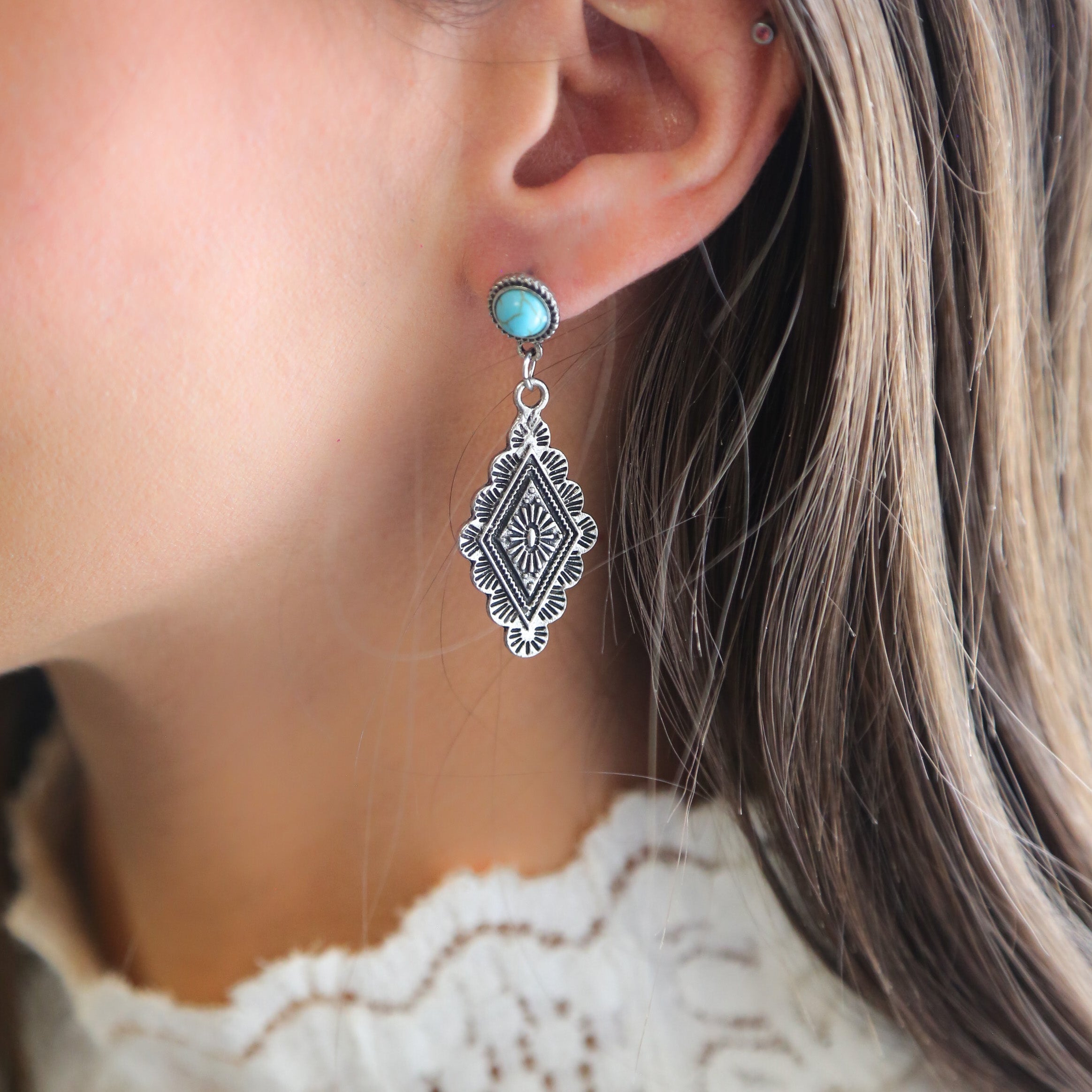
Stone heishi beads are cut from materials like turquoise, howlite, onyx, jasper, and lapis. They're the heaviest option by a significant margin. A full stone heishi bracelet has real presence on the wrist, and many people love that. If you're stacking several bracelets together and wearing them through an active day, though, the weight adds up.
Stone heishi is the most durable surface-wise. It won't scratch easily. Some stones are porous (turquoise is a good example) and can absorb oils or discolor with heavy exposure to water or sweat, so occasional cleaning matters. Fire Mountain Gems covers caring for natural stone beads in detail if you want to go deep on a specific stone type.
Coconut heishi is cut from dried coconut shell. It's lightweight, has a natural brown-to-tan range of color, and holds dye well for more saturated tones. It's biodegradable and has a slightly rough, textured surface compared to polymer clay. For a natural, earthy look it works well. For longevity, it's less durable than stone or shell because coconut material can crack if it gets very dry or experiences repeated wet-dry cycles.
How Does Material Affect Flexibility and Fit?
All heishi bracelets use a stringing material to hold the beads together, typically elastic cord or thread. The beads themselves don't flex. What makes a heishi bracelet feel flexible is the disc shape: thin, flat discs on stretch cord move with your wrist in a way that round beads or chunky shapes don't.
Polymer clay discs are slightly softer and lighter, so they sit more quietly on the wrist. Stone discs are stiffer and heavier, which can make a bracelet feel like it wants to sit in one position. For workout or active-wear use, polymer clay heishi is the practical pick. For a dress-up or occasional piece, stone looks more elevated and holds up fine.
According to Beaducation's bead resource library, the disc shape is what defines heishi, regardless of material. The name refers to the shape, not the substance. That's worth knowing when you're shopping, because "heishi" covers a wide range of materials at very different price points.
Which Heishi Material Is Best for Everyday Wear?
For consistent daily use, polymer clay heishi is the practical choice. Lightweight, colorfast, available in the widest range of colors, and priced accessibly enough to build a real stack without overthinking it. Shell heishi is a close second for durability and has a look that polymer clay can't fully match. Stone heishi is worth it when you want one bold statement piece rather than a stacked collection.
The cord matters as much as the bead. A well-made heishi bracelet on quality elastic cord will outlast a poorly strung one regardless of material. Sourcing from a shop that cares about construction and bead color together makes a real difference in how long your bracelet actually lasts.
Where Can You Find Heishi Beads Worth Wearing?
Mack & Rex carries heishi beads sourced for consistent sizing and color quality, the two things that separate a clean-looking bracelet from one that looks haphazard. Check out the full heishi bead collection at Mack & Rex to see the current color range and available options.
If you're building a stack, the buy 3 bracelets, get 1 free offer (no code needed) makes it easy to experiment with combinations. Orders over $100 ship free within the US.
Frequently Asked Questions
Are polymer clay heishi beads durable for everyday wear?
Yes, with some caveats. Polymer clay heishi hold up well under normal daily wear, but they're softer than shell or stone and can show scratches over time. Keep them away from harsh chemicals like bleach or acetone, and they'll last through years of regular use.
Can heishi bead bracelets get wet?
The bead material matters more than people think. Shell and stone heishi can tolerate brief water exposure but shouldn't be soaked repeatedly because it weakens the cord and can dull the finish. Polymer clay heishi are slightly more water-tolerant, but the same cord rule applies: extended soaking shortens the life of any stretch bracelet.
What is the difference between natural and synthetic heishi beads?
Natural heishi beads (shell, stone, coconut) are cut and shaped from organic materials, so color and texture vary from piece to piece. Synthetic heishi beads (polymer clay, acrylic) are manufactured, so the color and size are consistent across every bead. For bracelets, that consistency means a cleaner finished look and more predictable buying experience.
Do heishi beads come in consistent sizes?
Polymer clay and acrylic heishi are sized consistently because they're manufactured in molds. Natural shell and stone heishi are cut by hand, so there's more variation. If a uniform stack is your goal, polymer clay heishi are the more reliable choice.
Which heishi bead material is lightest on the wrist?
Polymer clay and acrylic heishi are the lightest. Shell falls in the middle. Stone heishi (turquoise, onyx, jasper) are noticeably heavier because natural stone is denser. For all-day wear, polymer clay is the most comfortable option.