

What Are Heishi Beads? A Guide to Styling Clay Disc Bracelet Stacks
What Are Heishi Beads?
Heishi beads are small, flat disc-shaped beads, usually 4 to 6mm across, that stack edge to edge along a cord rather than rolling like a round bead would. The name comes from a Puebloan word for shell, since the original heishi beads were hand cut from shell and stone. Nearly all heishi sold in craft and jewelry shops today, Mack & Rex included, is polymer clay rather than shell.
That flat shape is exactly why heishi works so well in a bracelet stack. A wide bangle eats up real wrist space. Four or five heishi bracelets sit slim and close together, so a jacket sleeve still slides over the whole stack without a fight. The rest of this guide covers what the bead is made of today, where the shape actually came from, and how to build a stack that reads as styled, not thrown together.
What Are Heishi Beads Made Of?
Most heishi beads on the market today are polymer clay, rolled into a thin log and sliced into rounds before curing.1 Mack & Rex's own heishi strands are 6mm polymer clay discs with a 2mm hole, sold by the strand in colors like pearl pink, gold, dark gray, and neon tangerine, running roughly $6 to $14 depending on how many strands you buy.
Clay heishi costs less than natural material, comes in almost any color a dye can produce, and holds up fine to daily wear. Genuine shell and stone heishi still exists, cut from spiny oyster shell or pipestone the way it was originally made, and it costs more because each disc is shaped by hand rather than sliced from a clay log. If a listing just says "heishi beads" without naming shell or stone, assume clay. That's the industry standard now, not a downgrade.
Where Did Heishi Beads Come From?
The Southwest. Heishi is a Puebloan word, and the bead has roots in jewelry made by Native American artisans in the American Southwest, who hand cut and drilled small shell discs long before craft stores or polymer clay existed.2
The clay version popular now keeps the same shape and the same name, but it's a different material entirely: faster to produce, far more affordable, and available in colors that shell and stone never came in naturally. That's why a strand of clay heishi runs a few dollars, well under what a hand-cut shell strand would cost. Worth knowing before you buy, mostly so you know exactly what you're paying for.
How Do You Style a Heishi Bead Bracelet Stack?
Start with one bracelet, then build around it. That's the whole method, whether you're stacking heishi discs or fine jewelry: pick an anchor piece in a color you already wear, then add pieces that either match it or intentionally contrast against it.
Heishi's flat profile makes this easier than it is with chunkier beads. You can wear more pieces without the stack feeling heavy on your wrist, and the discs sit close enough together that even a six-bracelet stack doesn't add much bulk under a fitted sleeve. Think of the build in two modes: an everyday stack that leans on quantity and muted colors you don't have to think about each morning, and a dressed-up stack that drops the count but raises the color depth. The sections below walk through both.
How Many Heishi Bracelets Should You Stack?
Three to six, depending on your wrist. Jewelry retailer Blue Nile's guide to bracelet stacking puts the visual cutoff at roughly a third of your forearm before a stack stops reading as styled and starts looking busy.3 For heishi's slim disc shape, that usually lands around four to six bracelets on an average wrist.
Smaller wrists tend to look cleanest with three to four bracelets. Larger wrists can carry five or six without looking sparse, especially if one piece in the mix is a slightly wider style. Leave a finger's width of slack between the stack and your wrist bone so nothing bunches up when you bend your arm. If you've had trouble finding bracelets that actually fit rather than pinch or slide, that's a sizing problem first and a styling problem second: Mack & Rex runs finished bracelets from XXS through 5XL, so get the size right before worrying about how many pieces to wear.
What Colors Pair Well in a Heishi Stack?
Start neutral, then add one accent. White, ivory, or natural tan as your base, one earthy tone like terracotta or sage as the accent, and you've got a stack that goes with almost everything already hanging in your closet.
For a dressed-up version, swap one neutral piece for something deeper, burgundy, emerald, or black, and drop your total bracelet count from five down to three. Fewer pieces, each one doing more visual work. That's the same formula stylists reach for with any layered jewelry, heishi or otherwise: casual wear leans on quantity, dressed-up wear leans on color depth and a shorter, more deliberate lineup. Seasonal swaps work the same way. Sandy, lighter tones read as spring and summer, while caramel, olive, and deeper rust carry a stack into fall and winter without changing the underlying formula.
How Do You Mix Heishi With Tila Beads or Metal Accents?
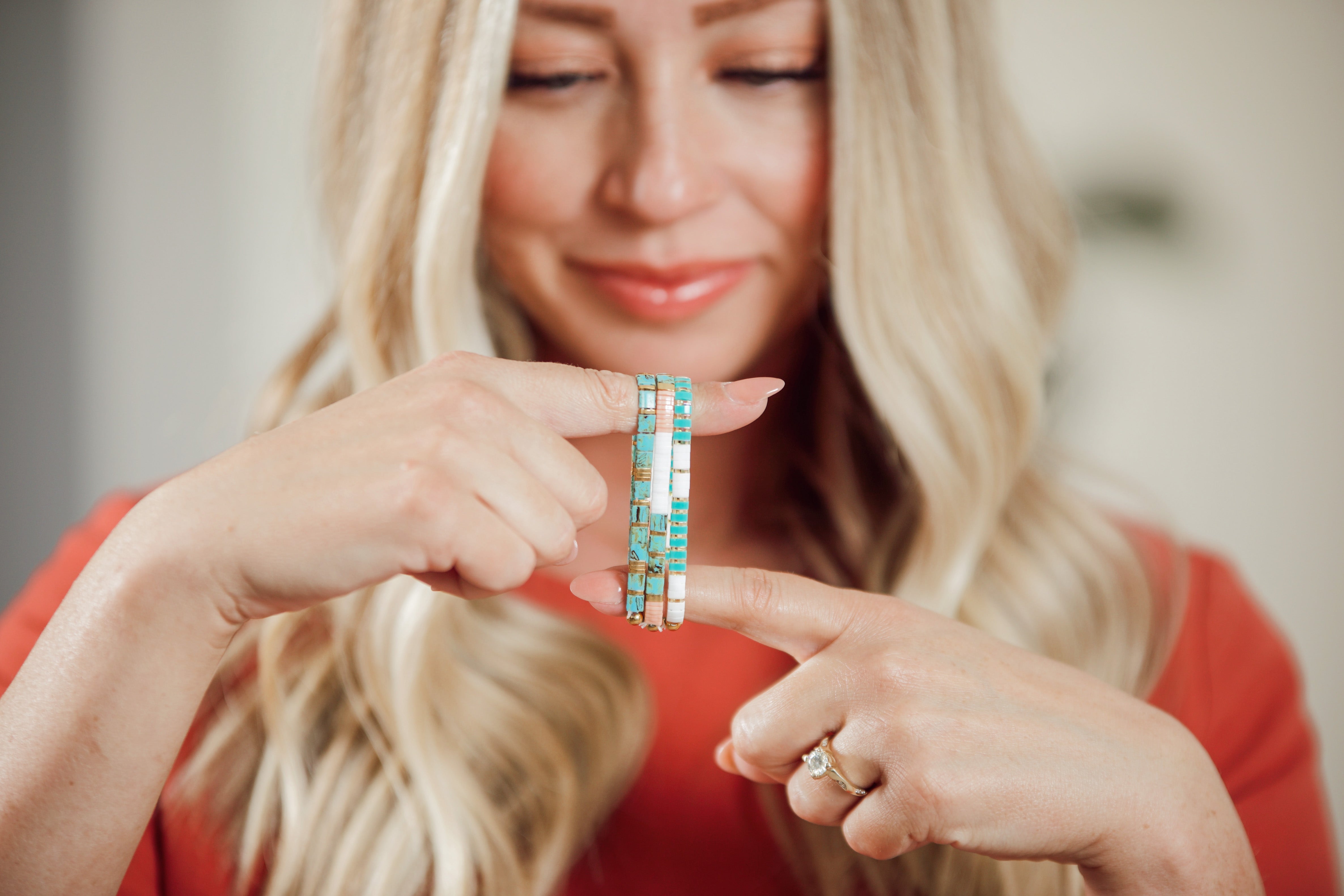
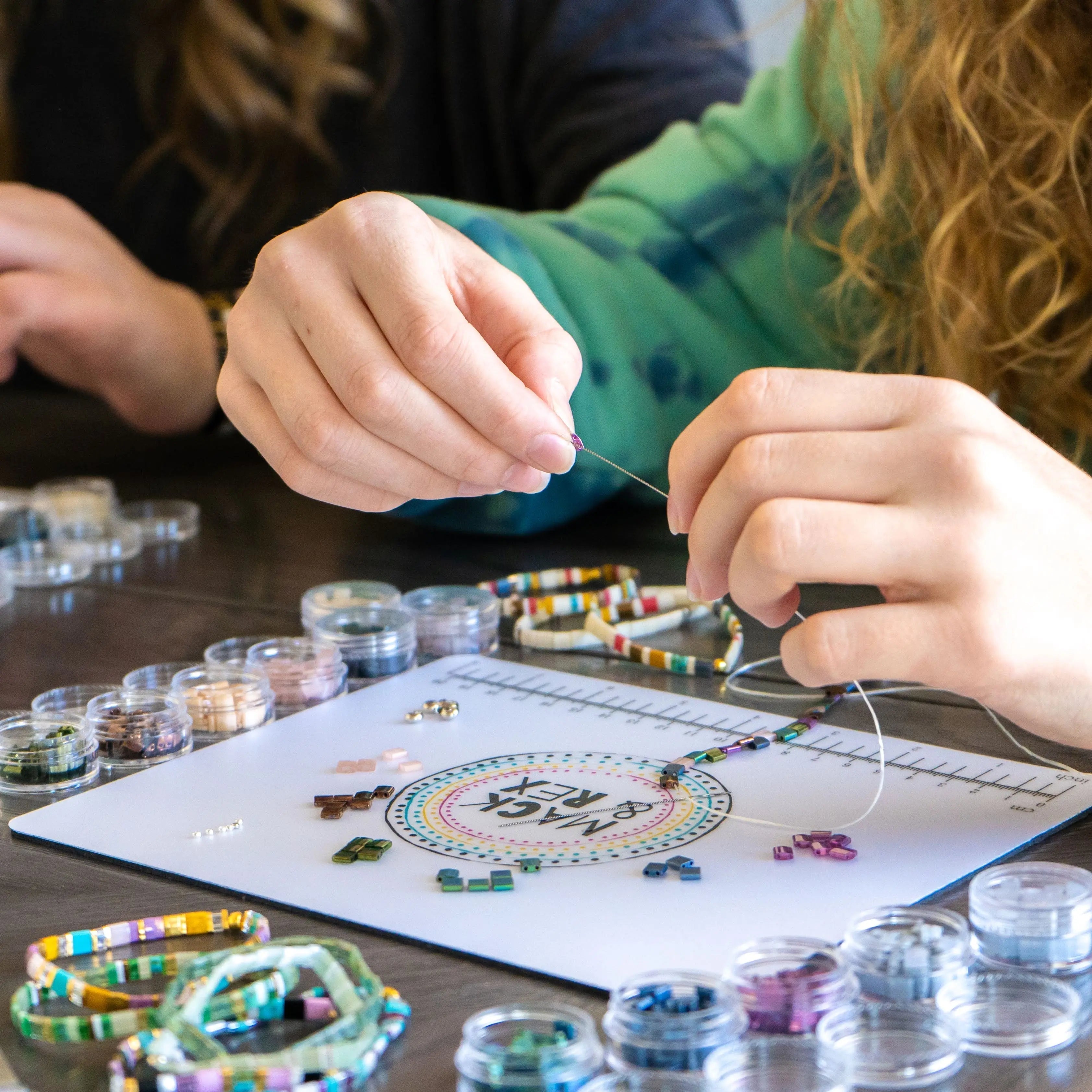
This is where a stack goes from fine to noticeably put together. Heishi discs are matte and flat. Miyuki Tila beads, a Japanese glass tile bead that Mack & Rex carries alongside its heishi strands, are glassy and squared off, so combining the two brings a texture contrast a heishi-only stack doesn't have on its own.
An easy formula: two heishi bracelets plus one Tila bead bracelet in a shade from the same color family. The matte-versus-glossy contrast does most of the styling work for you, no color-matching app required, just one glass piece next to a couple of clay discs in a related tone. A metallic accent bracelet does something similar if Tila isn't already part of your collection: gold or silver-toned pieces catch light the way Tila does, just with less color to coordinate.
How Do You Build a Stack, Step by Step?
- Pick your anchor. One heishi bracelet in a color you already reach for.
- Set your count. Three to four for a smaller wrist, five to six for a larger one.
- Add contrast. A second heishi bracelet in a neutral or a deeper shade of your anchor color.
- Add texture. One Tila or metal-accent bracelet if you want to dress the stack up.
- Check it on your actual sleeve. A count that looks right bare-armed can look crowded under a cuff.
None of this requires buying five bracelets in one sitting. Add a piece every month or two, and the stack keeps evolving as your closet does, which is really how most good bracelet stacks come together anyway.
Are Heishi Beads Safe for Kids to String or Wear?
Not for young kids to handle unsupervised. Heishi beads, along with the spacer beads often strung between them, are small parts and a real choking hazard. That rules out loose beads and stringing projects for toddlers and very young children, full stop.
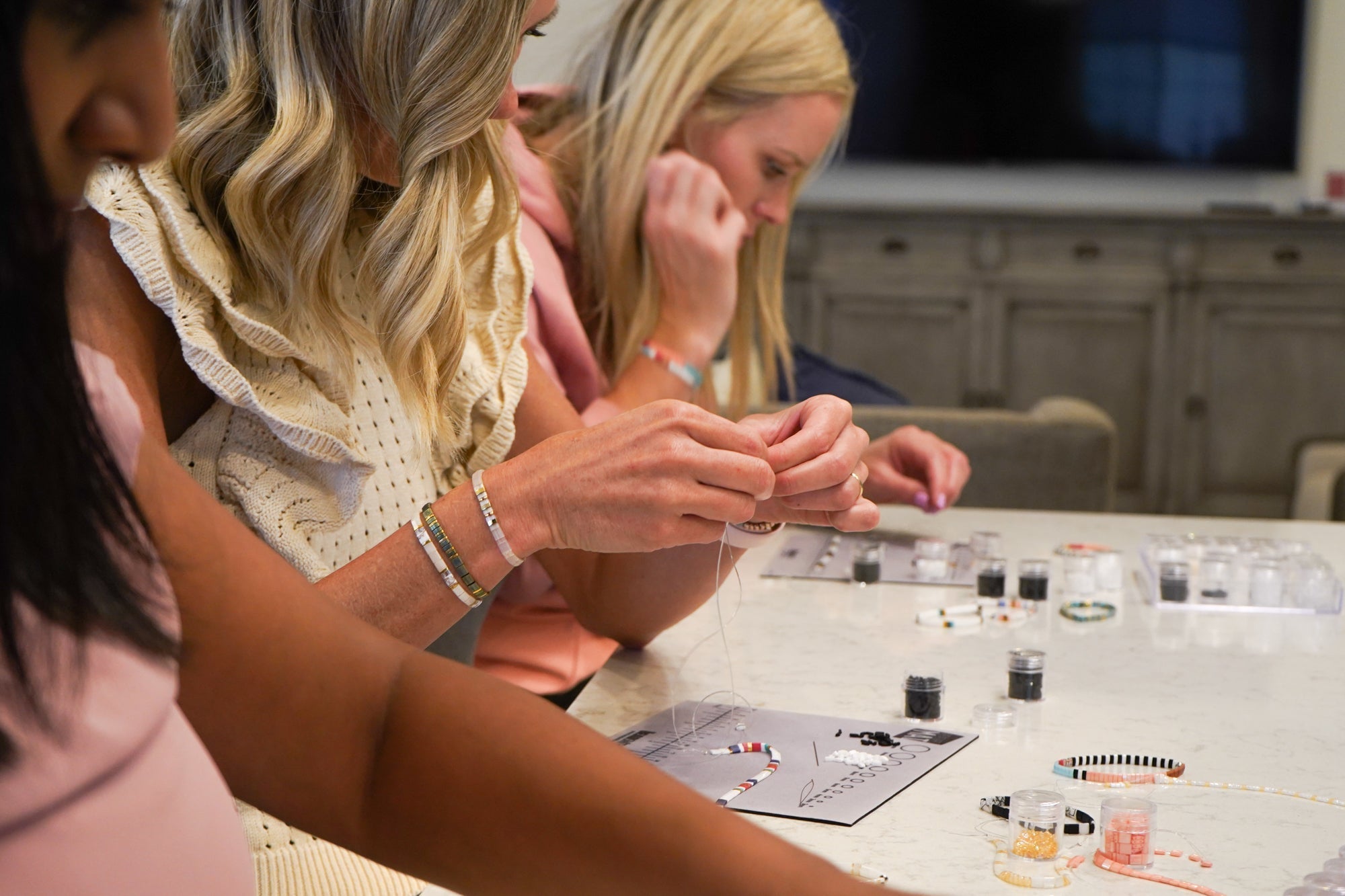
Older kids can string a heishi bracelet, but an adult needs to be present the entire time, not just checking in periodically. A finished, securely strung bracelet worn on the wrist is a different situation than a bag of loose beads during the making process, but supervision during stringing isn't optional either way.
Where Can You Buy Real Polymer Clay Heishi Beads?
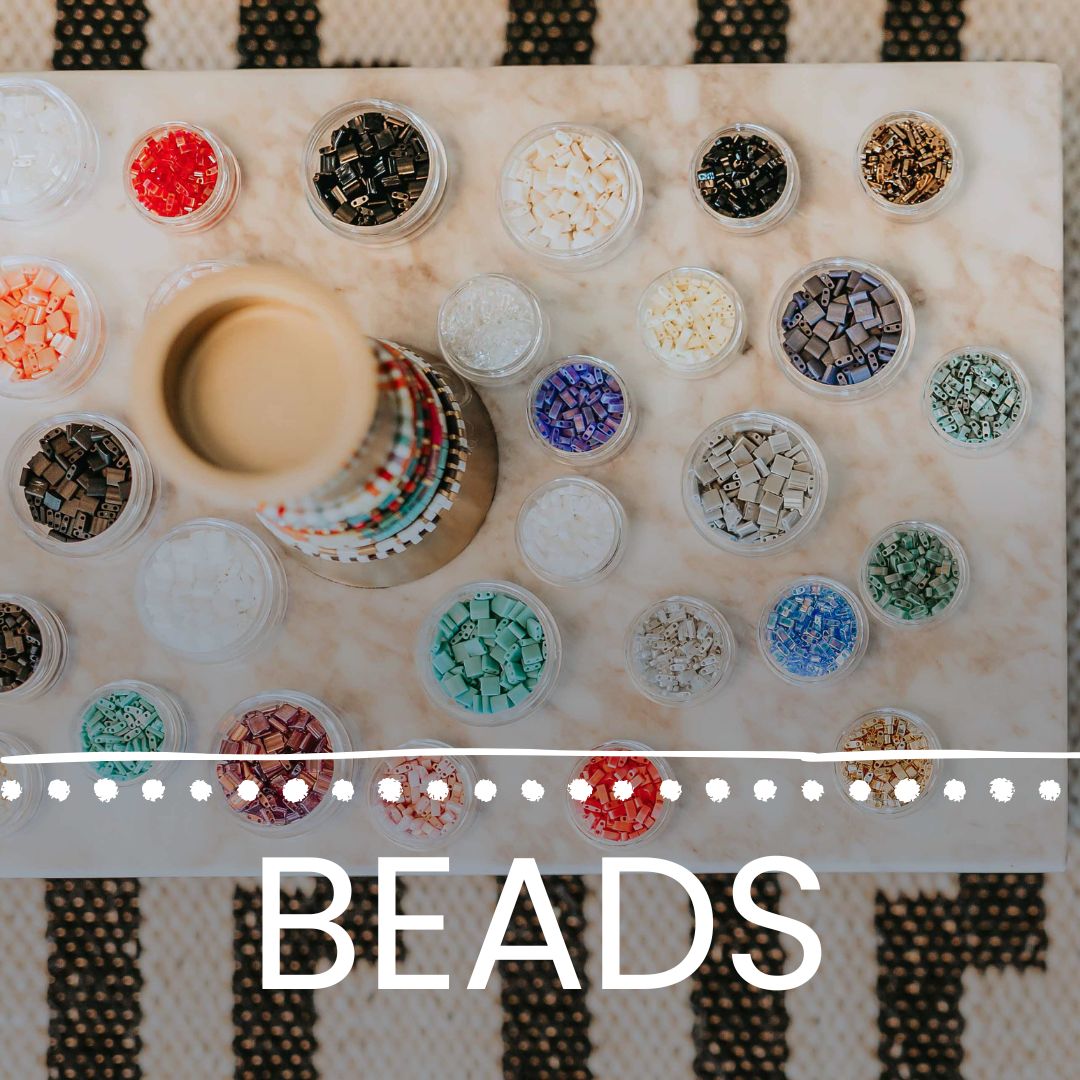
Right here, as it happens. Mack & Rex sells 6mm polymer clay heishi bead strands in a wide color range, pearl pink, peach puff, gold, dark gray, misty rose, and more, sold in packs of 3, 5, or 10 strands so you can build a stack in exactly the colors you're planning rather than settling for whatever a pre-made bracelet happens to come in.
Mack & Rex's main specialty is Miyuki Tila glass tile beads (Miyuki is a Japanese bead maker Mack & Rex carries, not one it manufactures), used across the brand's finished bracelets and DIY kits. The heishi strands round out that lineup for anyone building a mixed stack the way this guide describes: matte clay discs next to glassy Tila tiles. Browse the heishi beads at Mack & Rex to see the current color lineup and pick strands to match a stack you're already planning in your head.
Frequently Asked Questions About Heishi Beads
What are heishi beads?
Heishi beads are small, flat disc-shaped beads that stack edge to edge on a cord. The name comes from a Puebloan word for shell, since the earliest heishi beads were hand cut from shell and stone. Most heishi sold today, including Mack & Rex's, is polymer clay.
What are heishi beads made of?
Modern heishi beads are almost always polymer clay, rolled into a log and sliced into thin discs before curing. Traditional heishi came from shell, most often spiny oyster, or stone like pipestone, cut and drilled by hand.
How many heishi bracelets should I stack together?
Three to six bracelets works for most wrists, with smaller wrists looking cleaner around three to four and larger wrists able to carry five or six. Past six or seven, a stack tends to look crowded instead of layered.
Can I mix heishi beads with Tila beads in one stack?
Yes, and it's one of the easiest ways to add polish to a stack. Heishi discs are matte and flat, while Miyuki Tila beads are glassy and squared off, so pairing one or two of each brings real texture contrast to a wrist stack.
Are heishi beads safe for kids to string or wear?
Heishi beads and the spacer beads often strung alongside them are small parts and a choking hazard, so they aren't appropriate for young children. Older kids can string a heishi bracelet with an adult present the entire time.
Ready to build your own heishi stack? Browse Mack & Rex's heishi bead collection for polymer clay discs in colors from pearl pink to dark gray, then mix in a Miyuki Tila bracelet for texture contrast. Mack & Rex ships worldwide, with shipping and any customs or duties calculated at checkout, and free shipping on US orders over $100. Finished bracelets also qualify for buy 3, get 1 free, no code needed (that offer applies to finished bracelets, not loose bead strands).