

What Are Rocaille Beads? A Seed Bead Guide for Bracelet Makers
What Are Rocaille Beads?
Rocaille beads are small, rounded glass seed beads with a consistent shape and a hole drilled through the center. The name is French, from "rocaille," meaning "little stone" or "pebble." Smooth and nearly spherical, they're the most widely used type of seed bead in jewelry making, prized for their uniform size and the way they catch light across a finished piece.
If you've ever bought a tube of seed beads without a specific brand label and been told they were "round seed beads," you were almost certainly holding rocailles. They're the default. The category is so dominant that many crafters use "seed bead" and "rocaille" as interchangeable terms, even though seed bead is technically the broader category that also includes cylinder beads, hex-cut beads, and other shapes.
The French term stuck in the craft world because European glass bead makers, particularly in Bohemia (now the Czech Republic), were producing these rounded glass beads centuries before Japanese manufacturers entered the market. Today, both Czech and Japanese rocailles are widely available, though they differ slightly in consistency and finish quality. The Wikipedia entry on seed beads traces the history of these beads from Venetian glasswork through Czech and Japanese manufacturing traditions.
How Do Rocaille Sizes Work?
Bead sizing runs backward from what you'd expect. A size 8/0 rocaille is noticeably larger than a size 15/0. The higher the "aught" number, the smaller the bead. Three sizes cover most bracelet projects: 8/0, 11/0, and 15/0.
Size 8/0 measures roughly 3mm across. It's the biggest of the common sizes and easy to work with for beginners. You'll see 8/0 rocailles used as accent beads between focal pieces, or as the main bead in chunky-style seed bead bracelets.
Size 11/0 is the workhorse. At around 2.2mm, 11/0 rocailles are small enough to create smooth texture but large enough to thread comfortably. Most seed bead bracelet patterns call for 11/0 as the default. They're also the most common size sold in bulk tubes and mixes.
Size 15/0 is tiny. About 1.5mm across, they're used for fine detail work, fringe, or filling tight spaces where a larger bead won't fit. Unless you're doing advanced off-loom beadwork, you probably won't need 15/0s right away. Lima Beads has a practical size chart that shows how these dimensions compare side by side, which is helpful when you're shopping and trying to picture the actual bead.
What Finishes Do Rocaille Beads Come In?
Finish changes everything.
The same basic 11/0 rocaille bead reads completely differently depending on its surface treatment. Here are the four finishes you'll see most often:
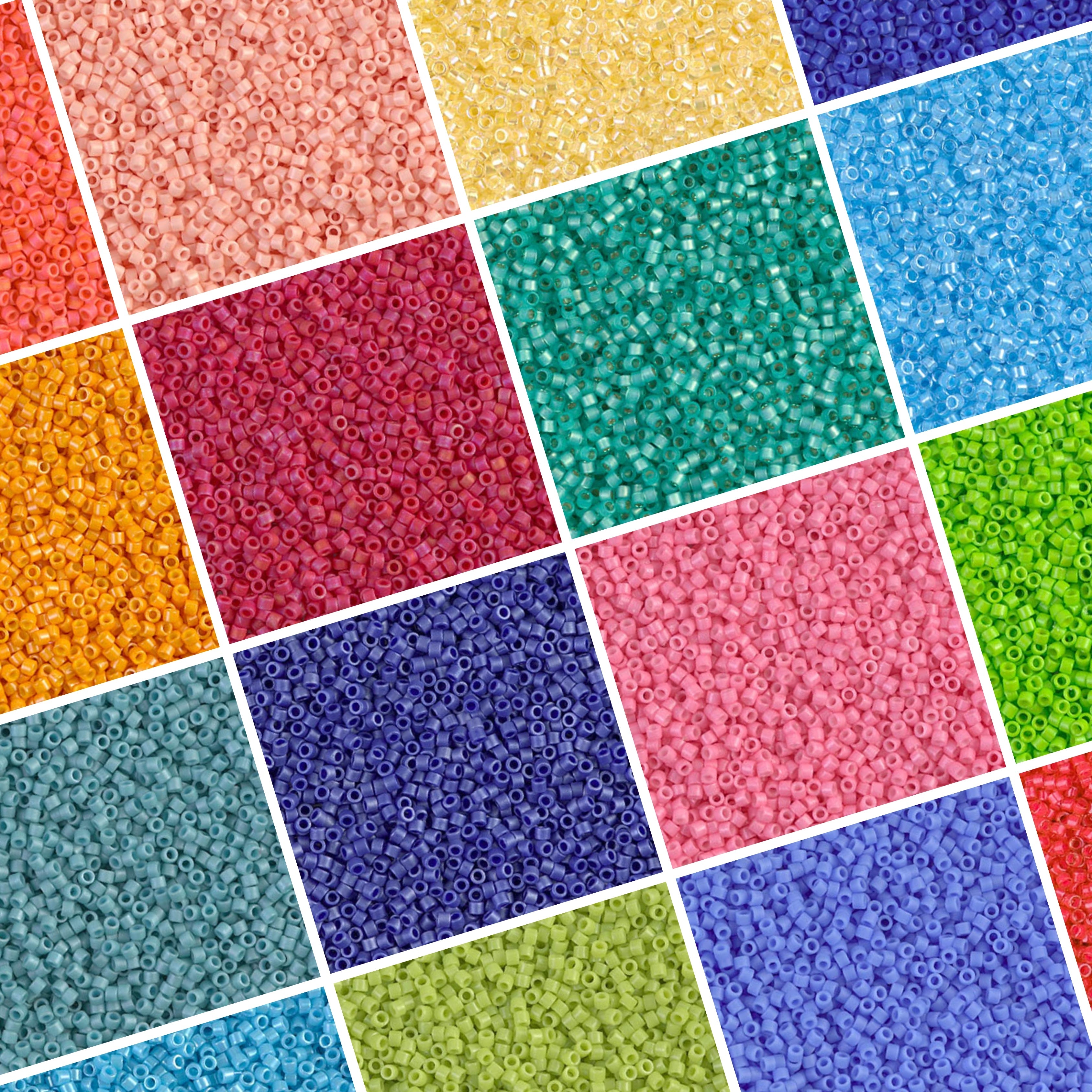
Silver-lined: There's a foil lining inside the bead's hole that reflects light back out through the glass. Silver-lined rocailles sparkle, and they're the go-to when you want a bracelet that catches the light. Many crafters reach for silver-lined in the 11/0 size for seed bead straps alongside flat Tila beads because the shimmer balances the matte surface of the tile bead.
Galvanized: A metallic coating on the outside gives these beads a solid, mirror-like metal look. Gold and silver galvanized rocailles are popular for modern, polished bracelets. The coating can wear over time with heavy use, which is worth knowing before you commit to them for an everyday piece.
Matte: A frosted surface treatment that diffuses light. Matte rocailles look earthy and soft. They tend to recede visually, which makes them useful as background or filler beads. Pair matte with silver-lined in the same bracelet for a nice contrast.
Gold-plated: A thin layer of gold over glass gives these beads warmth and weight. They're a step up in price from standard finishes, but even a handful of gold-plated rocailles woven into a bracelet adds something. Worth it for gifts or special-occasion pieces.
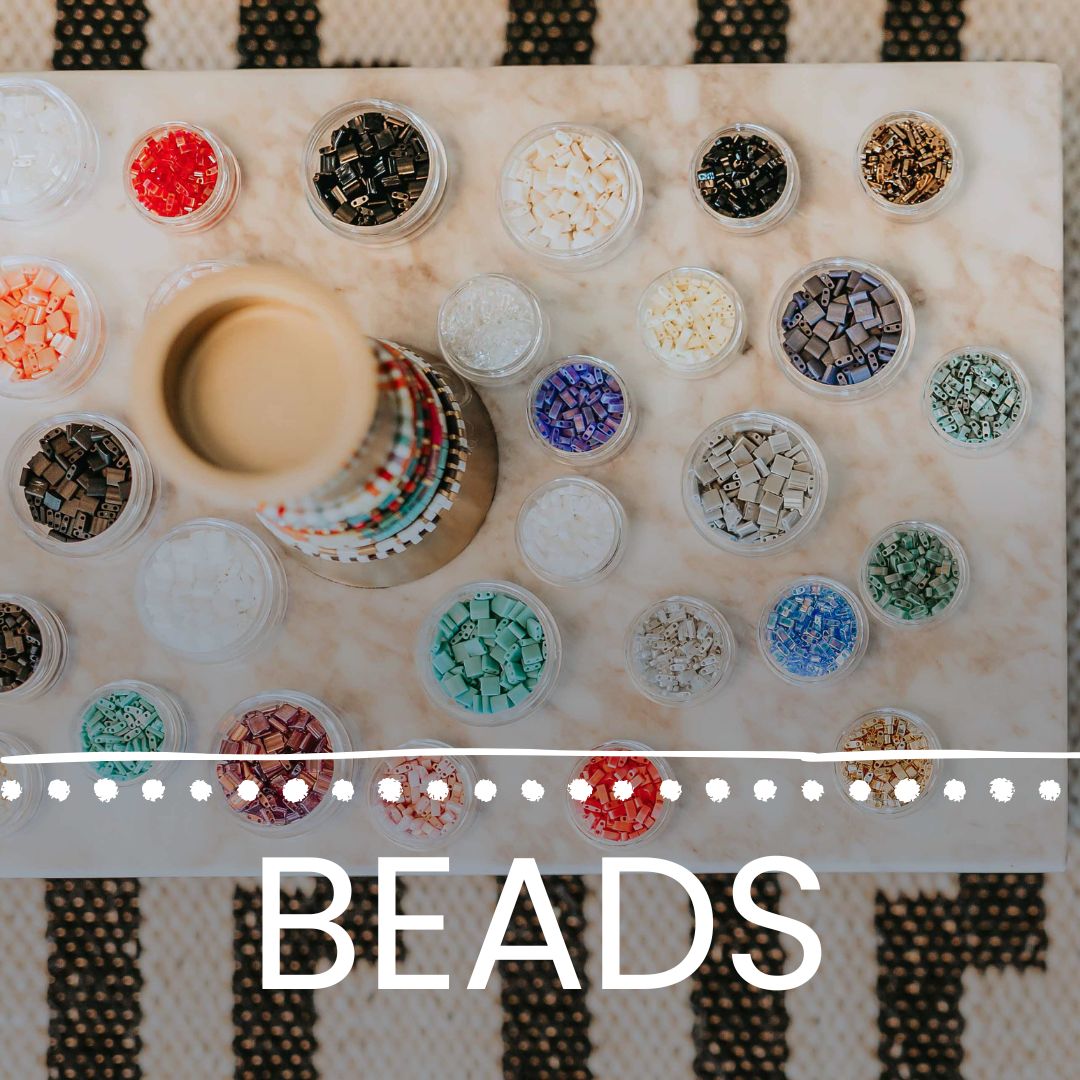
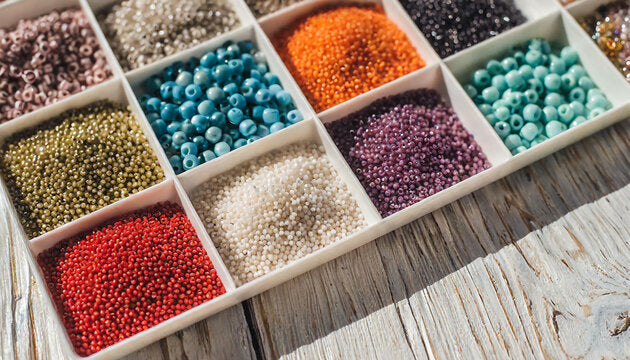
Beyond those four, you'll also find AB (aurora borealis) coatings, opaque beads in solid colors, and transparent beads in saturated hues. Fusion Beads carries a wide selection of rocaille finishes if you want to see all the options before ordering.
How Are Rocaille Beads Different from Other Seed Beads?
Shape is the main distinction. Rocailles are round, or very nearly round. Other seed bead families have different geometries that create different effects in finished work.
Cylinder beads (Miyuki Delicas are the well-known brand) are shaped like tiny tubes with thin walls and large holes. They stack almost perfectly flat against each other, which is why loom work and peyote stitch projects often specify cylinder beads. The finished surface is incredibly even. Rocailles have a slight randomness in how they sit against each other, which gives them a more organic, textured look.
Hex-cut beads are six-sided, which means they catch light differently from a round bead. They're used to add subtle sparkle without using a coated finish.
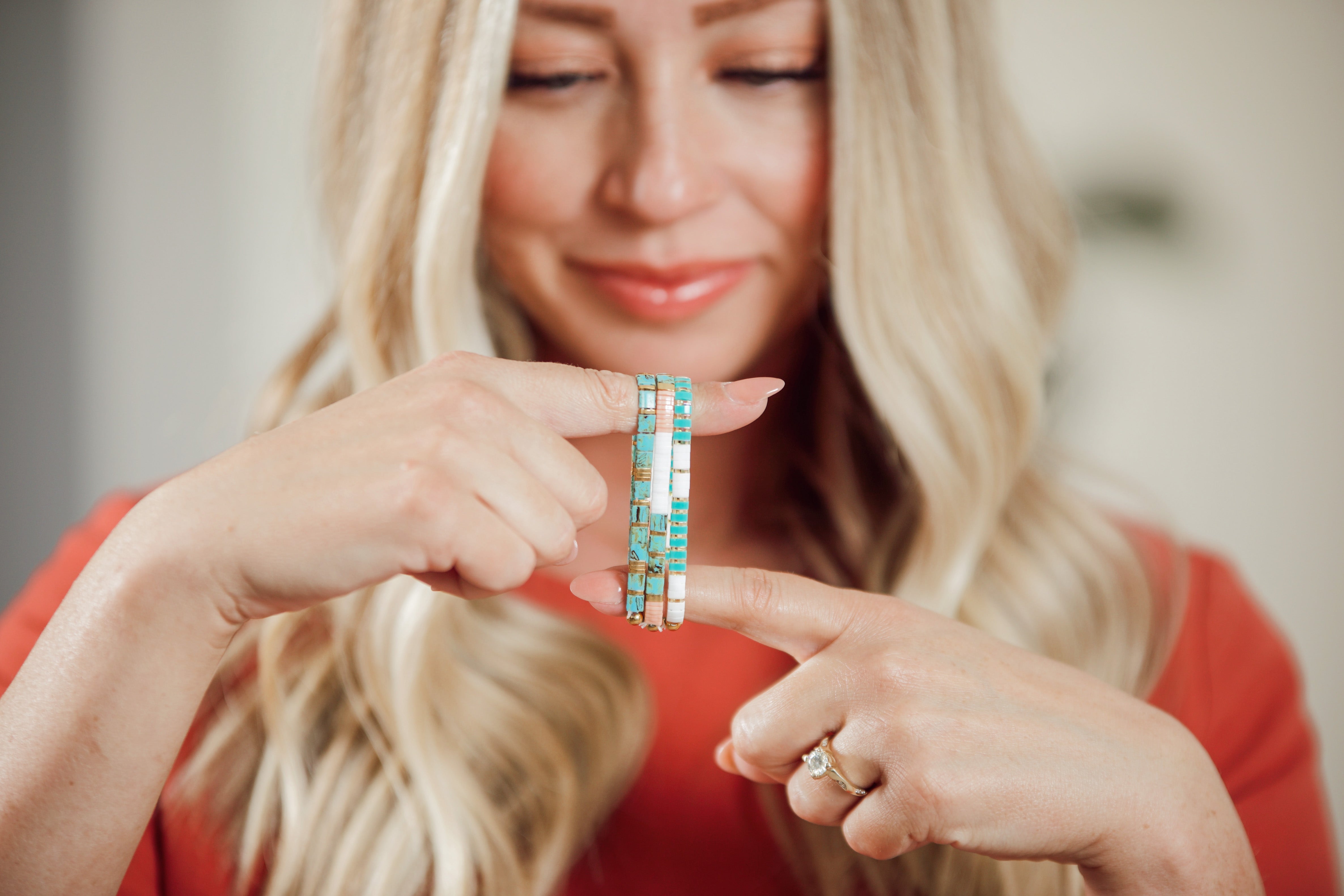
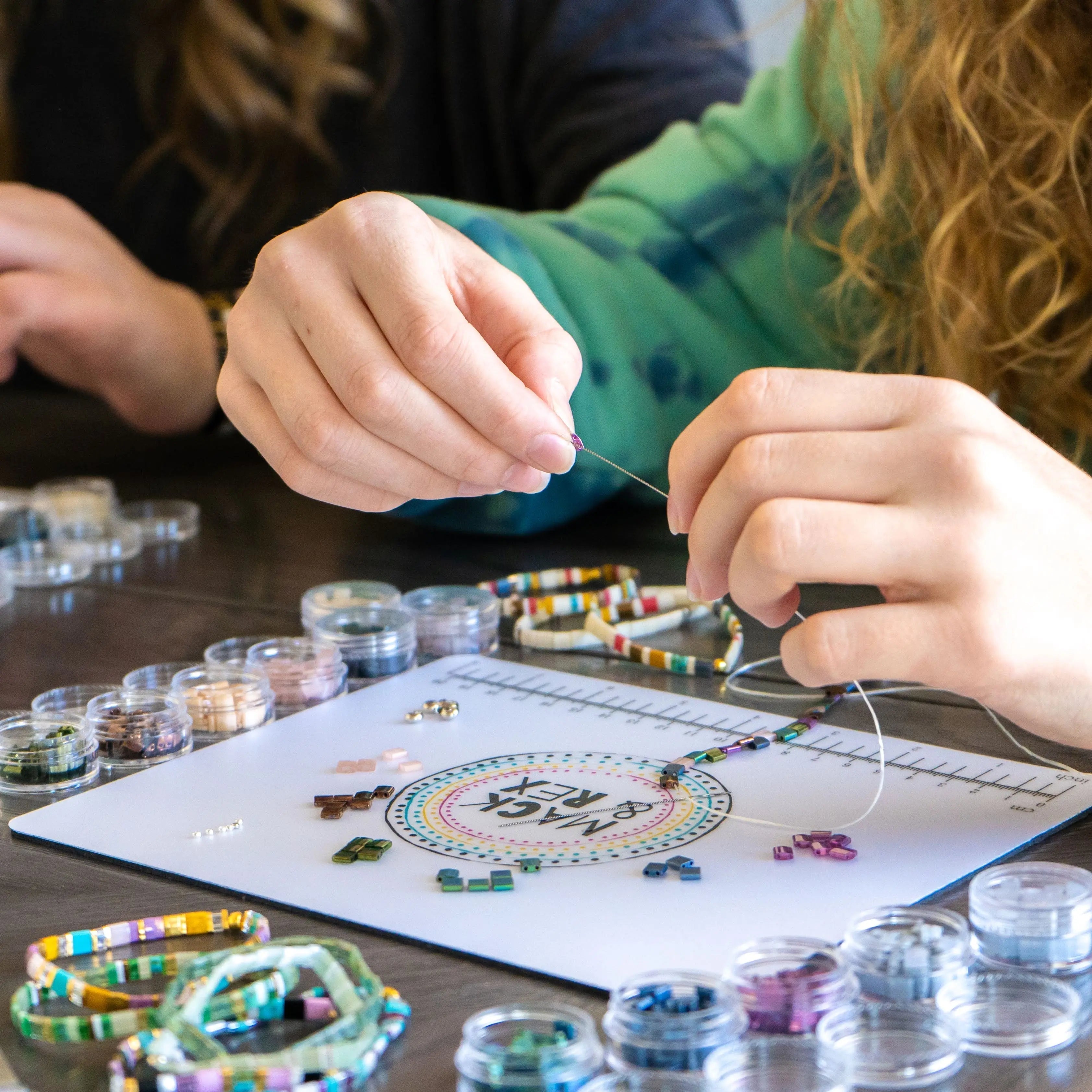
Miyuki flat Tila beads are a different animal entirely. A Tila is a flat, square, two-hole bead, about 5mm x 5mm x 1.9mm. Tila beads are what Mack & Rex builds their signature bracelets from. Rocaille beads show up alongside Tilas in many Tila bracelet patterns as spacers between the tiles or as accent beads on either side of the clasp. The combination works because the flat Tila surface and the rounded rocaille create contrast in both shape and light. Miyuki Tila beads and Miyuki rocailles are products of the Miyuki brand, a Japanese manufacturer whose beads Mack & Rex sources and resells.
How Do Bracelet Makers Actually Use Rocaille Beads?
Three main ways.
First, as spacers. In a Tila bead bracelet, crafters often thread one or two 11/0 rocailles between each Tila to control spacing, soften the transitions, and add a bit of texture. A single silver-lined 11/0 between each Tila pair catches light and gives the bracelet a refined look without cluttering the design.
Second, as accent beads. A run of 8/0 rocailles in a contrasting color punctuates a stretch bracelet the way a comma punctuates a sentence. They break up longer bead sequences and give the eye a place to rest. This is especially useful in stacked bracelet sets, where you want each bracelet to read as distinct rather than blurring together on the wrist.
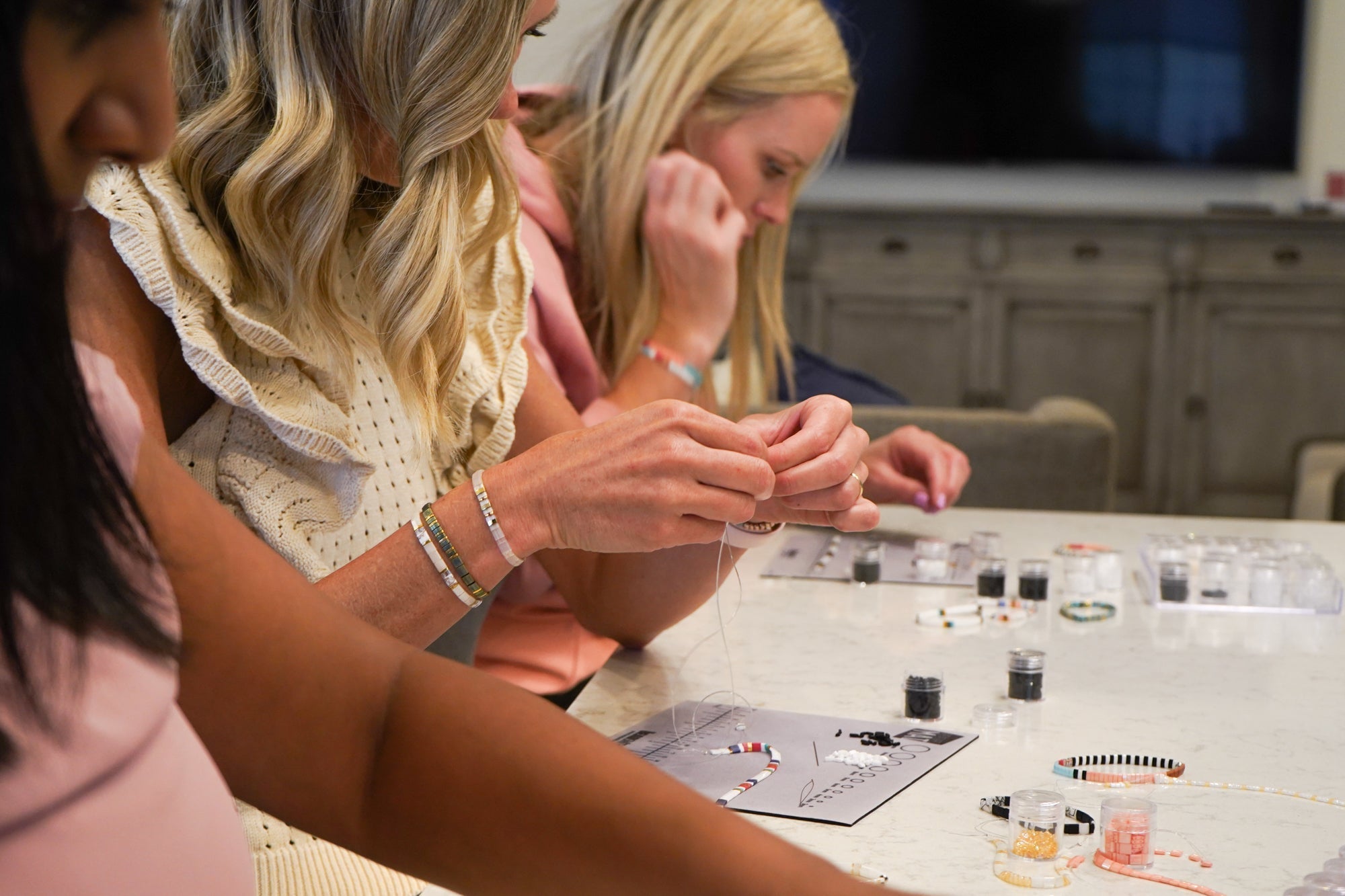
Third, as the main bead in full seed bead bracelets. You don't need a focal bead or a Tila. String 11/0 rocailles in a single color or in a graduated pattern on elastic cord, and you get a clean, minimal bracelet that works for everyday wear. This is one of the easiest starter projects for anyone new to bracelet making, and it's where a lot of crafters first discover how much variety finishes and colors can generate from the same basic bead.
If you want to try rocaille beads alongside Miyuki Tila beads, browse the seed bead collection at Mack & Rex. The selection is curated for bracelet projects, so you won't have to sort through industrial quantities to find a usable size.
Czech vs. Japanese Rocailles: Does It Matter?
It depends on what you're making. Czech rocailles are slightly less uniform than Japanese rocailles, with a bit more variation in size and shape from bead to bead within a strand. For some projects that variation adds character; for others it creates gaps in a pattern. Japanese rocailles, including those made by Miyuki, are manufactured to tighter tolerances. If you're doing loom work or any technique where bead-to-bead consistency affects the finished shape of the piece, Japanese rocailles are worth the slight price difference. For strung bracelets on elastic cord, the difference is less dramatic.
What Should I Know Before Buying Rocaille Beads?
A few practical notes before you order:
Rocailles are sold by size, color, and finish. Make sure you know all three variables when you buy. "Red 11/0" could be a transparent red, an opaque red, a matte red, or a silver-lined red, and they'll look very different in a finished bracelet.
They're also sold by weight or bead count. A gram of 11/0 rocailles contains roughly 110 beads. A standard tube holds about 8-10 grams (880-1,100 beads). That sounds like a lot until you start stringing a stretch bracelet, which uses 80-120 beads depending on wrist size.
Small beads are a choking hazard. If you're doing a bracelet-making project with children, keep bead containers closed when not in use and supervise closely. Rocailles are not appropriate for very young children to handle unsupervised.
One last practical note: store rocailles in a container with a lid that seals. A spilled tube of 15/0s is one of the more miserable craft room cleanup jobs there is.
Ready to Start Beading?
Rocaille beads reward experimentation. Buy a few different finishes in 11/0 and see which ones make you reach for them first. Silver-lined for sparkle, matte for softness, galvanized for something modern. Once you get a feel for how each finish reads in a finished piece, the selection process gets faster.
Browse the Mack & Rex seed bead collection to find rocailles curated for bracelet projects. Orders over $100 ship free within the US.
Frequently Asked Questions
What are rocaille beads?
Rocaille beads are small, rounded glass seed beads with a center-drilled hole. The name is French for "little stone" or "pebble." They're the most common type of seed bead used in jewelry making, and they come in sizes from the large 8/0 to the very small 15/0. Silver-lined, galvanized, matte, and gold-plated are the most popular finish options.
What is the difference between rocaille beads and regular seed beads?
Rocaille is a type of seed bead. "Seed bead" covers the whole category, including cylinder beads, hex-cut beads, and drop beads. Rocaille specifically refers to the rounded, near-spherical shape. When people say "seed beads" without a shape qualifier, they usually mean rocailles.
What sizes do rocaille beads come in?
The most common sizes are 8/0 (roughly 3mm, the largest), 11/0 (about 2.2mm, the most popular for bracelets), and 15/0 (around 1.5mm, used for fine detail work). The size number runs counterintuitive to what you might expect: a lower number means a bigger bead.
What finishes are available on rocaille beads?
The main finishes are silver-lined (foil inside the hole that reflects light), galvanized (metallic coating on the outside), matte (frosted, non-reflective surface), and gold-plated. AB coatings, opaque colors, and transparent glass are also common. Each finish reads differently in a finished bracelet, so it's worth sampling a few before committing to a large order.
Can I use rocaille beads with flat Tila beads in a bracelet?
Yes. Rocaille beads pair naturally with Miyuki flat Tila beads. Crafters use small rocailles as spacers between Tila beads, as accent beads at each end of a Tila run, or woven into the strap of a finished bracelet. The contrast between the flat Tila surface and the rounded rocaille adds texture and visual interest.