

What Beads Can You Pair With Tila Beads?
What Beads Can You Pair With Tila Beads?
Round seed beads, heishi discs, Delica cylinders, small metal spacers and a few accent beads all pair well with tila beads. Match the hole size so your cord passes cleanly, keep the shapes complementary, and let the flat square tile lead. Everything else plays a supporting role.
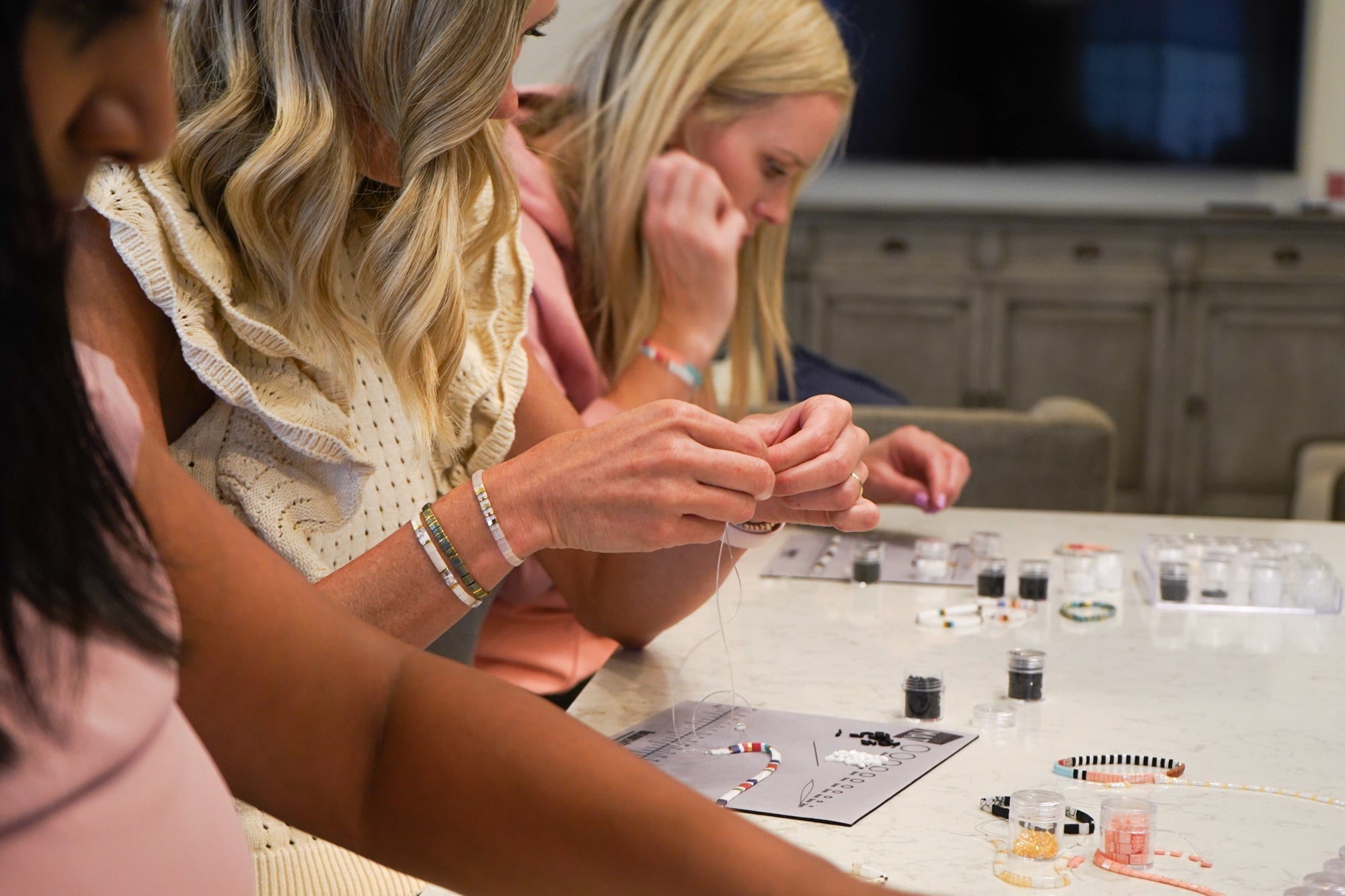
That's the short version. The longer one comes from a lot of bracelet tables at our house, where my daughters and I have tried nearly every combination you can think of. Some pairings look great on day one and fight you at the cord. Others feel boring until you wear them for a week and realize they're the ones you reach for. Here's what we've learned about each type, and why it works.
One note on terms: Tila and Delica are Miyuki trademarks. Mack & Rex resells these Japanese glass beads. We don't manufacture them. You can browse the full range in our tila beads collection.
Why does bead shape matter when you pair with tila beads?
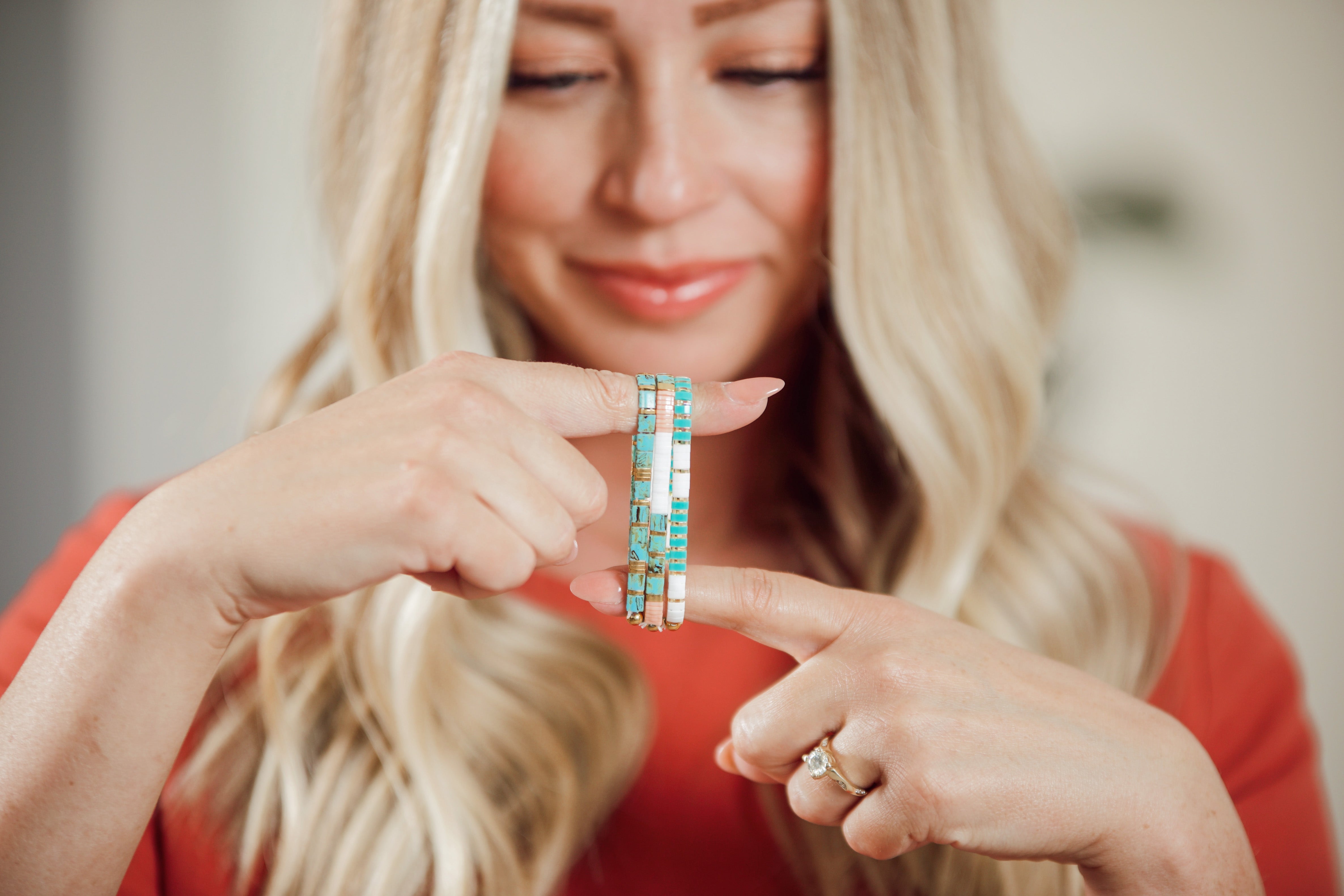
Tila beads are flat squares with two parallel holes, so they lie like little tiles. Pair them with shapes that either stay out of the way (small rounds, thin discs) or echo the clean geometry (cylinders). Chunky, irregular beads fight the flat profile and make a bracelet roll on the wrist.
Think about how the bracelet sits. A tila bracelet lies flat and smooth against your skin, which is a big part of why people wear it all day. Add a fat round bead every other position and you've got a bump pattern that twists and slides. Add a thin disc or a tiny seed bead and the flat line stays intact.
A good rule: your partner bead should be no taller than the tila bead is thick. Not a hard law, just a quick test. Hold the two side by side. If the new bead towers over the tile, it'll catch on sleeves and pull the row crooked.
Hole size is the second filter. Stretch cord is thicker than thread, and some beads that look perfect have holes that barely admit it. Test one before you commit to fifty. We cover this in nearly every class we run, because nothing's more annoying than discovering the problem at bead number thirty.
Do seed beads and rocaille beads go with tila beads?
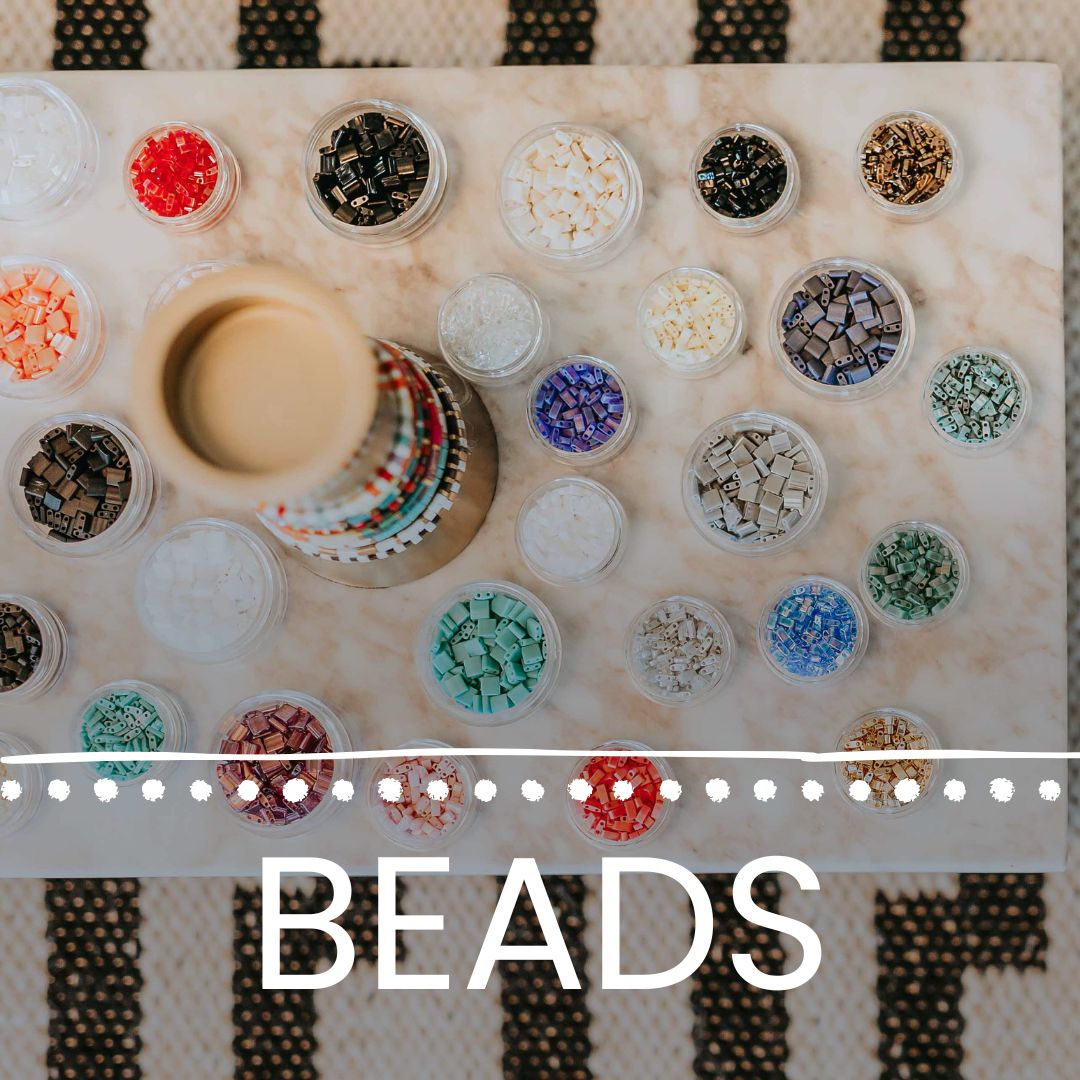
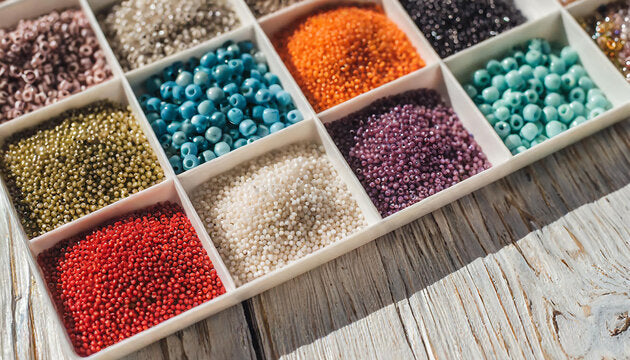
Yes, and they're the safest first pairing. Seed beads are small, round, uniform glass beads that work as color breaks between tila beads. Because they're tiny, they add sparkle and rhythm without changing the flat feel of the bracelet. Choose a size whose hole fits your cord comfortably.
Seed beads are the little glass rounds that have been used for centuries in everything from embroidery to loom work. If you want the background, the Wikipedia entry on seed beads covers the history and the sizing system (the higher the number, the smaller the bead).
Rocaille is the term you'll see for round seed beads with a slightly larger, rounder hole. That bigger hole matters for bracelets. Rocailles thread easily on elastic, and they come in lots of finishes: opaque, transparent, matte, metallic and picot-style.
How we use them: one or two seed beads between tila beads gives a pattern a gentle pause. Try a run of three tila beads in one color, then two seed beads in a contrasting shade, then repeat. The seed beads read as a thin accent line, almost like stitching.
Want to see how these look? Our seed bead collection sits right beside the tila mixes so you can pull colors that talk to each other.
A small warning. Too many seed beads in a row turn the bracelet into a seed bead bracelet with a few tiles in it. Keep the ratio in favor of tila.
Can you use heishi beads with tila beads?
You can. Heishi are thin, flat discs that stack tightly, so they make a soft, textured band next to the sharper tila squares. Use them as spacers or as a short stretch of contrast. They add depth, but too many will hide the glassy tile shine.
Heishi has deep roots. The name traces back to the Pueblo peoples of New Mexico, who traditionally cut shell into thin discs, as the Kewa (Santo Domingo) Pueblo reference notes. Today the name also covers polymer clay and other materials cut to the same thin-disc look.
Why do they work with tila? Contrast in finish. Tila is glossy glass with crisp edges. Heishi is usually matte and soft. Put them together and each makes the other look better, a bit like pairing a polished stone with a linen shirt.
Our favorite use is a short heishi section, maybe five to eight discs, between two tila patterns. It breaks the bracelet into zones without a hard color change. Pastel clay heishi next to soft-toned tila mixes looks especially good for spring.
One fit tip: heishi holes vary a lot by maker. Always run a test strand with your cord before you buy a whole strand's worth.
Are Delica beads a good match for tila beads?
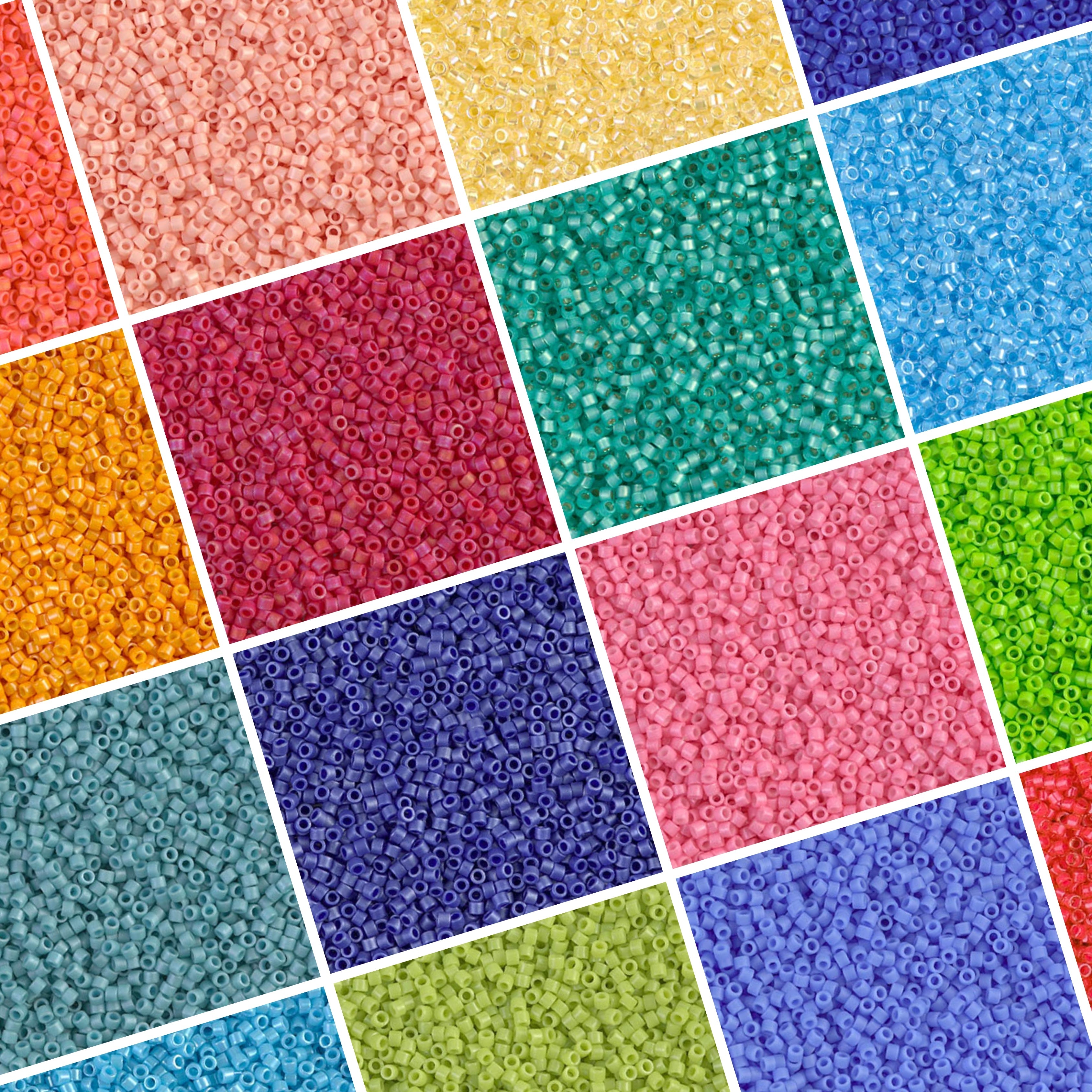
Very good. Delica beads are cylinder-shaped glass beads with large holes and very even sizing, made by the same Japanese company as Tila. They line up in tight, flat rows, which suits the tile look, and they come in many of the same finishes and colors.
This is a pairing for people who like precision. Delicas are cut to consistent lengths, so they stack with almost no gaps. Beside tila squares they read as a sleek band, a bit like piping on a jacket.
Because the two beads share a maker, finishes often coordinate. A matte opaque Delica next to a matte opaque tila gives a seamless, intentional look. If you want to learn more about the manufacturer behind both, the Miyuki English site is a good place to start.
Delicas have a big hole for their size, which helps on elastic. You can often pass cord through a Delica twice, handy when you're building a bracelet that needs a double strand for strength.
Try this: two rows of tila in the main color, then a single border of Delicas in a deeper shade along one edge. It frames the pattern and looks like something from a boutique.
What spacer and accent beads work with tila beads?
Small metal rondelles, thin gold or silver spacers, tiny pearls, and a single focal charm bead all work as accents. Use spacers to separate colors and accents sparingly as a punctuation mark. The goal is a bracelet that still looks like tila at first glance.
Spacers are the quiet workers. A thin gold rondelle between two tila beads adds a flash of metal and gives the eye a place to rest. Silver does the same for cooler palettes. Skip anything with sharp edges or a rough finish, since it can chew through elastic over time.
Accent beads are the fun part. A single pearl, a small glass bead in a pop color, or a letter bead for initials can turn a pattern into a gift. Just place it at the center or the clasp point, not in every repeat.
Here's a combination we like for everyday wear: tila beads in three related shades, one tiny gold spacer between each shade change, and a single pearl at the center. Quiet, polished, and easy to stack with other bracelets.
Not sure where to start? Skip the guessing and pick up a themed mix. Our tila mixes run roughly $5 to $9, and they're already color-matched, so you only have to decide on the extras. Finished bracelets run about $20 to $25 if you'd rather wear than make. Buy 3 finished bracelets and get 1 free, no code needed.
How do you check that beads fit together before you start?
Thread one of each bead type onto your cord, slide them together, and tug gently. If the cord passes without forcing and the beads sit flat, you're good. Check the bead heights, the hole sizes and whether the finishes clash. Five minutes of testing saves a whole bracelet.
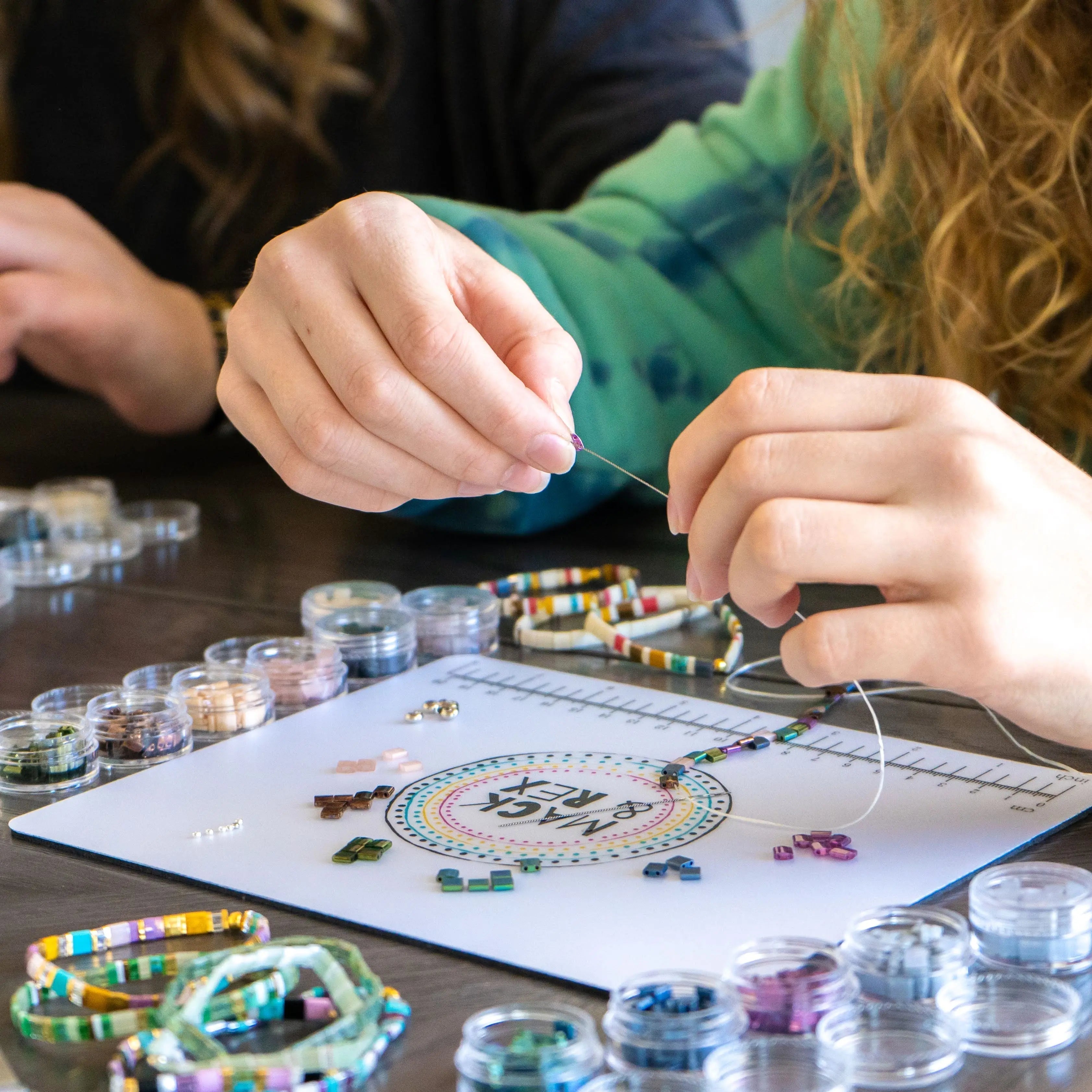
Here's our routine, the same one we show in live classes:
- Lay out a pattern on a bead mat first. Photos help you compare options later.
- Test the hole. Cord should slide through without a fight, and it should do so twice if your design needs a double pass.
- Check the stack. Make a two-inch test strand and flex it. It should curve smoothly around your wrist.
- Look at the finish. Mixing matte with glossy works, but mixing three finishes usually gets busy.
- Pick a hero. One bead type leads, the others support.
Crafting with kids or grandkids? Beads are a choking hazard, so keep loose beads away from very young children and stay close by while little ones thread. It's a wonderful afternoon activity with the right supervision.
Ready to try a pairing? Start with the Mack & Rex tila beads collection. We ship internationally, with shipping and any duties calculated at checkout, and US orders over $100 ship free.
Frequently Asked Questions
Can you mix tila beads with regular seed beads?
Yes. Round seed beads (rocaille) are the easiest partner for tila beads. Pick a size that fits the tila hole with room to spare, thread them between tila rows as a color break, and keep the count small so the flat tile shape stays the star.
Do delica beads and tila beads go together?
They do. Both are Japanese glass beads with clean, uniform shapes. Delica cylinders stack flat and tight, so they make neat bands or edges beside tila squares. Check that the thread or cord passes through both without forcing it.
What is the best spacer for tila bead bracelets?
Small metal rondelles, tiny round seed beads and thin heishi discs all work as spacers. The best one is small enough not to compete with the tila beads and has a hole large enough for your stretch cord to pass through twice if needed.
Can I buy tila beads and finished bracelets from Mack & Rex?
Yes. Mack & Rex resells Miyuki Tila beads in loose mixes and makes finished stretch bracelets and DIY kits with them. Orders ship internationally, with shipping and any duties calculated at checkout.

