

What Colors Do Miyuki Tila Beads Come In?
What Colors Do Miyuki Tila Beads Come In?
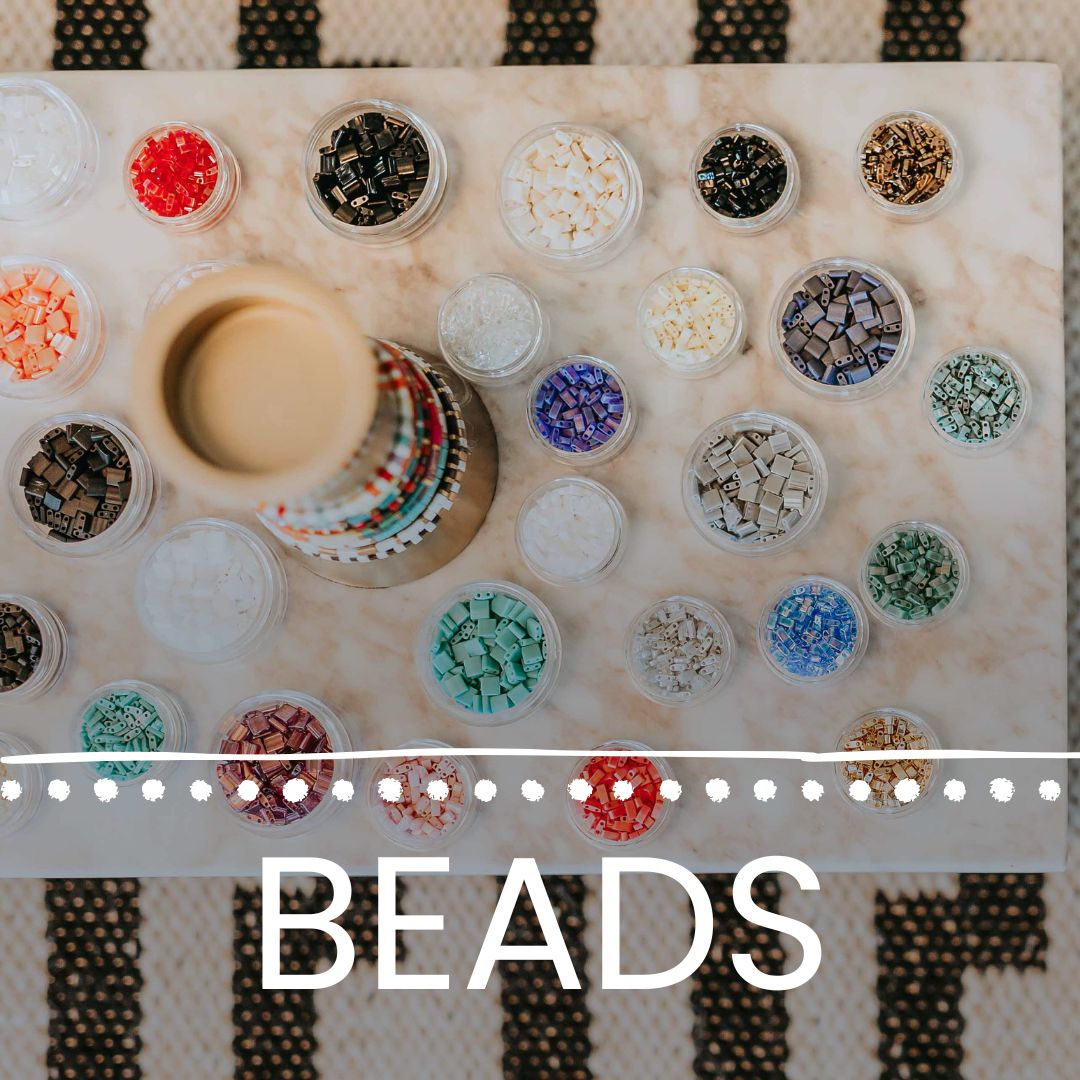
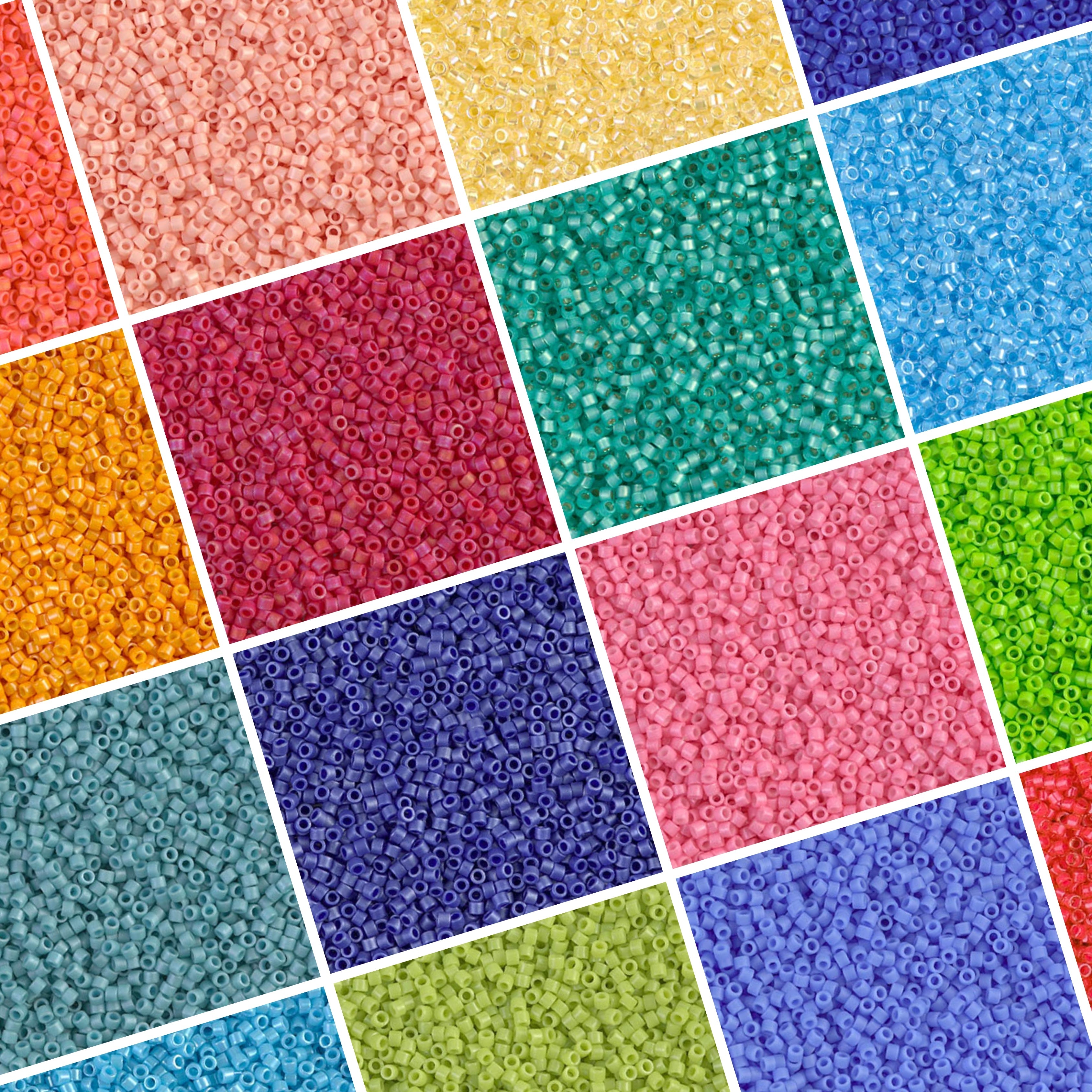
Miyuki Tila beads come in a genuinely huge range of colors, and the color is only half the story. The Japanese bead maker Miyuki produces these two-hole, square glass beads in dozens of base colors, then finishes each one with a coating or treatment that changes how it looks entirely. The same shade of blue can show up opaque and flat, transparent and glowing, matte and soft, or metallic and almost mirror-bright, all under the Miyuki Tila name. If you've ever wondered why two "blue" tila beads in your stash look nothing alike, the finish is usually the answer, not the color.
Here's the short version: Miyuki Tila beads are sold across eight main finish families (opaque, transparent, matte, metallic, luster, Picasso, galvanized, and Duracoat), and picking a good bracelet palette usually comes down to choosing one finish family to anchor a stack, then letting one or two other colors play off it. Below we'll walk through what each finish actually looks like, then get into how to build palettes that work, using some of Mack & Rex's own named color collections as real examples.
What Are the Main Tila Bead Finish Types?
Before you even get to color, it helps to know what "finish" means on a glass bead. A finish is a coating, treatment, or glass structure applied during or after the bead is made, and it's what determines whether a color looks shiny, dull, see-through, or speckled. According to a general overview of glass beadmaking, finish and surface treatment are just as central to a bead's final look as the glass color itself, which is exactly why the same "red" can show up a dozen different ways across a bead maker's catalog.
Here are the finish families you'll run into most often on Miyuki Tila:
- Opaque: solid color all the way through, light doesn't pass through it. Reads as flat, even, and consistent bead to bead.
- Transparent: light passes through the glass, giving the color depth and a slight glow, especially outdoors or near a window.
- Matte: a chemical or sandblasted treatment that kills the shine, leaving a soft, dusty, almost chalky surface. Works well for muted, grown-up palettes.
- Metallic: a true metal-like coating (gold, silver, gunmetal) that reflects light rather than letting it through. This is your shiniest option.
- Luster: a glossy, slightly iridescent coating over a base color, somewhere between metallic shine and a plain transparent glow.
- Picasso: a mottled, speckled finish layered over a base color, usually in rust or bronze tones, so every bead looks a little different.
- Galvanized: a bright, mirror-like metallic plating, usually in gold, silver, or copper, that's shinier and more uniform than a standard metallic finish.
- Duracoat: Miyuki's more durable color coating, designed to resist fading and wear better than some of the older finish methods, available across opaque, matte, and galvanized-style looks.
None of these finishes are better than the others. They're just tools. A matte opaque bead and a transparent luster bead in the exact same base color will sit completely differently on a wrist, and knowing that ahead of time saves you from ordering a mix that looks nothing like what you pictured.
How Does Finish Change the Way a Color Looks?
Finish affects three things: how much light the bead reflects, how uniform it looks bead to bead, and how the color reads under different lighting. A craft materials guide to bead and finish terminology is a useful reference here, since finish names aren't always obvious from the word alone. "Matte" and "frosted," for instance, can describe a similar soft, low-shine look even though they're not always the exact same process.
A practical way to think about it: opaque and matte finishes are your most forgiving, consistent options, which is why they show up so often in neutral palettes. Transparent, luster, and metallic finishes bring more shine and more light-dependent variation, better for pieces you want to catch the eye. Picasso and galvanized sit in between, adding texture or shine without losing the handmade feel a lot of people like about glass beads.
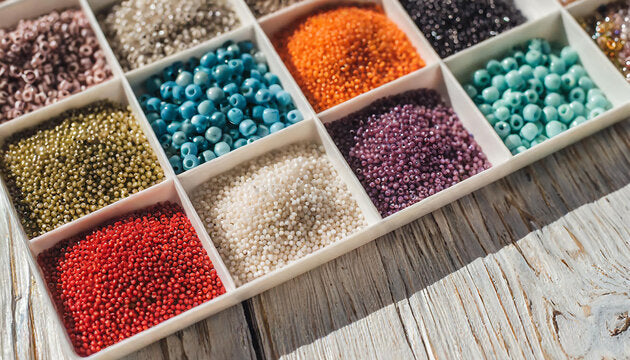
This matters even more with loose mixes. Three opaque colors together will look cohesive and calm. Mix an opaque color with a transparent one and a metallic one, and you get more visual movement, which can look great or busy depending on what you're going for.
How Do You Pick a Color Palette for a Tila Bracelet Stack?
Pick one dominant color first, then build around it with a neutral and a single accent. Three strong, equally loud colors competing for attention is the most common way a stack ends up looking cluttered instead of put-together. A simpler formula: one color does most of the talking, one neutral grounds it, and one accent (often metallic) adds a bit of shine.
Retailers who carry a wide swath of Miyuki's catalog, like Lima Beads, are worth a browse if you want to see just how many finish and color combinations exist industry-wide. It's genuinely a lot, which is exactly why having a few organizing principles (dominant, neutral, accent) matters more than trying to see every option at once.
Mack & Rex's own named collections are a real shortcut here, since they've already done the dominant-neutral-accent thinking for you:
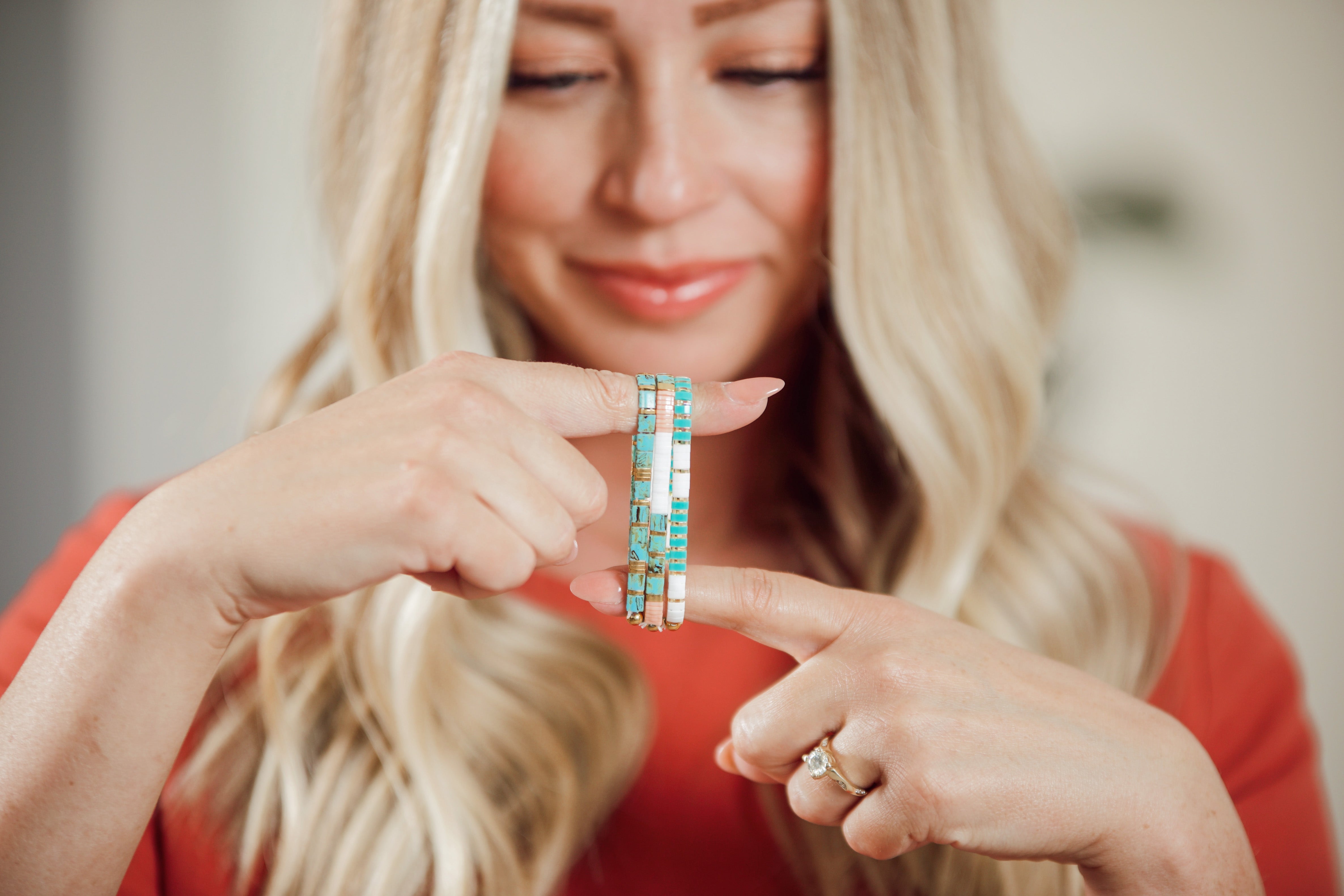
- STAINED runs deep jewel tones, think emerald, plum, and garnet, for anyone who wants a richer, moodier stack.
- BEACHY covers the lighter end: aquas, corals, and sandy neutrals, suited to warm-weather, everyday wear.
- RETRO SUNSET leans into warm oranges, pinks, and golds, the colors of a late-afternoon sky.
- EVERGREEN EDIT stays in muted greens and natural earth tones, a good pick for anyone who wants color without much shine.
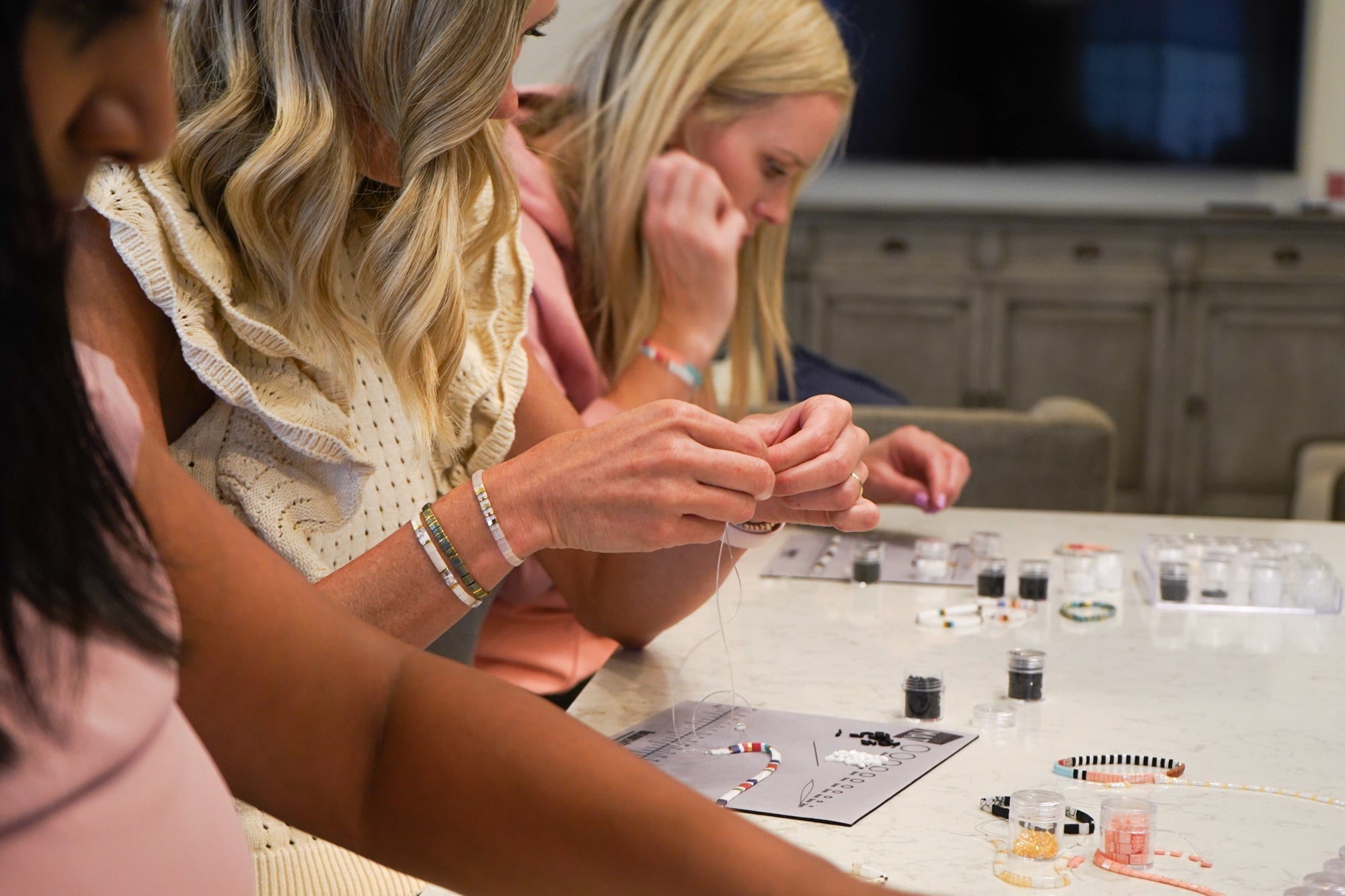
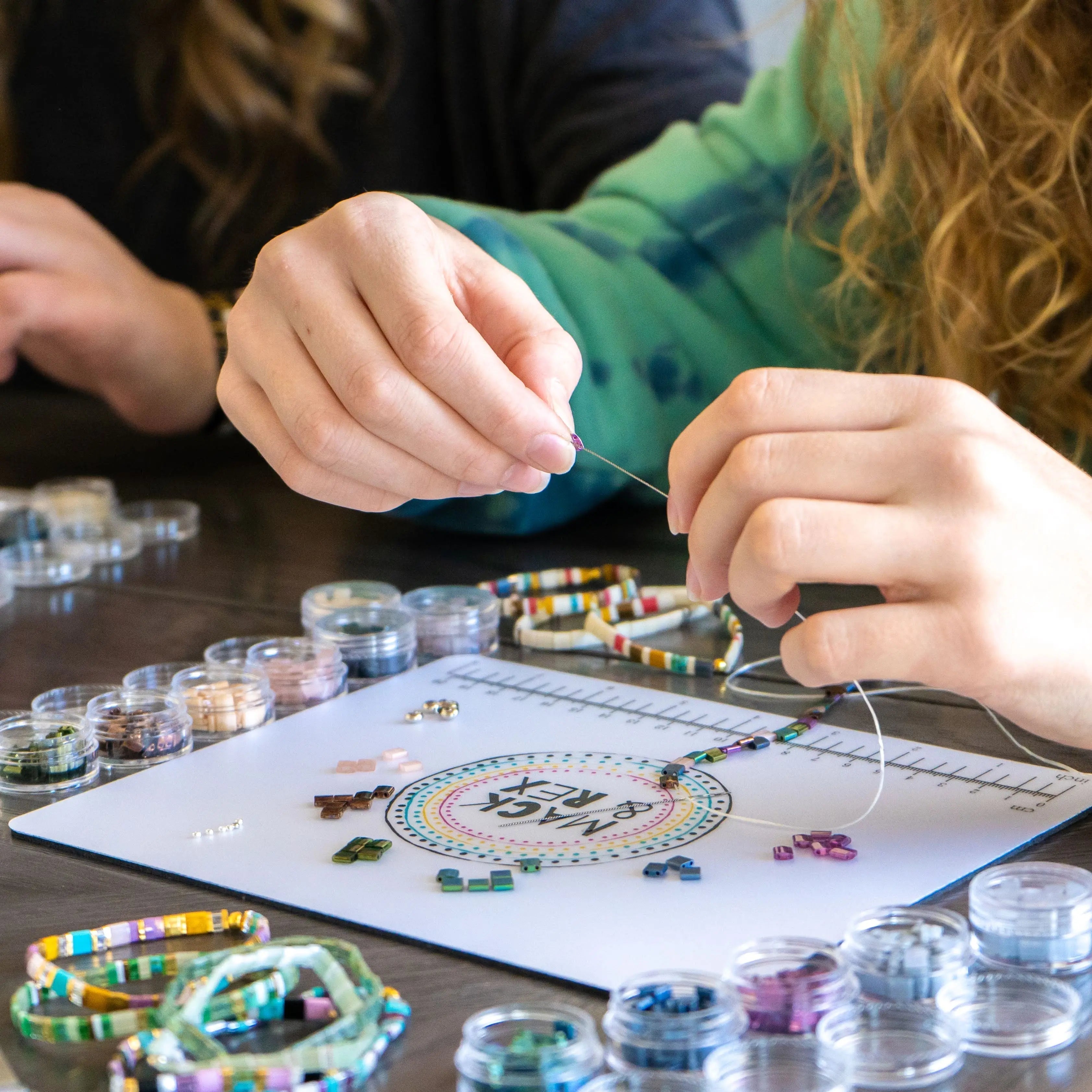
If you're starting from zero, pick one of these four as your base palette, then pull a single piece from an adjacent collection for contrast. A deep plum from STAINED dropped into an otherwise BEACHY stack, for example, grounds the lighter aquas and corals without fighting them for attention. The same logic works with loose Tila bead mixes if you're building a bracelet from scratch: let one finish and color family lead, then add one or two accents rather than mixing five unrelated colors into a single piece.
Seasonal and Neutral Palette Ideas
Neutrals are the easiest starting point if you're new to Tila beads. Opaque cream, grey, and black cover almost any outfit, and a single metallic or Duracoat accent keeps the stack from looking plain. For seasonal palettes, matte and opaque finishes photograph well in daylight (BEACHY corals for summer, EVERGREEN EDIT greens for fall), while transparent and luster finishes catch more light for evening wear, which is where a RETRO SUNSET gold or a STAINED garnet earns its spot.
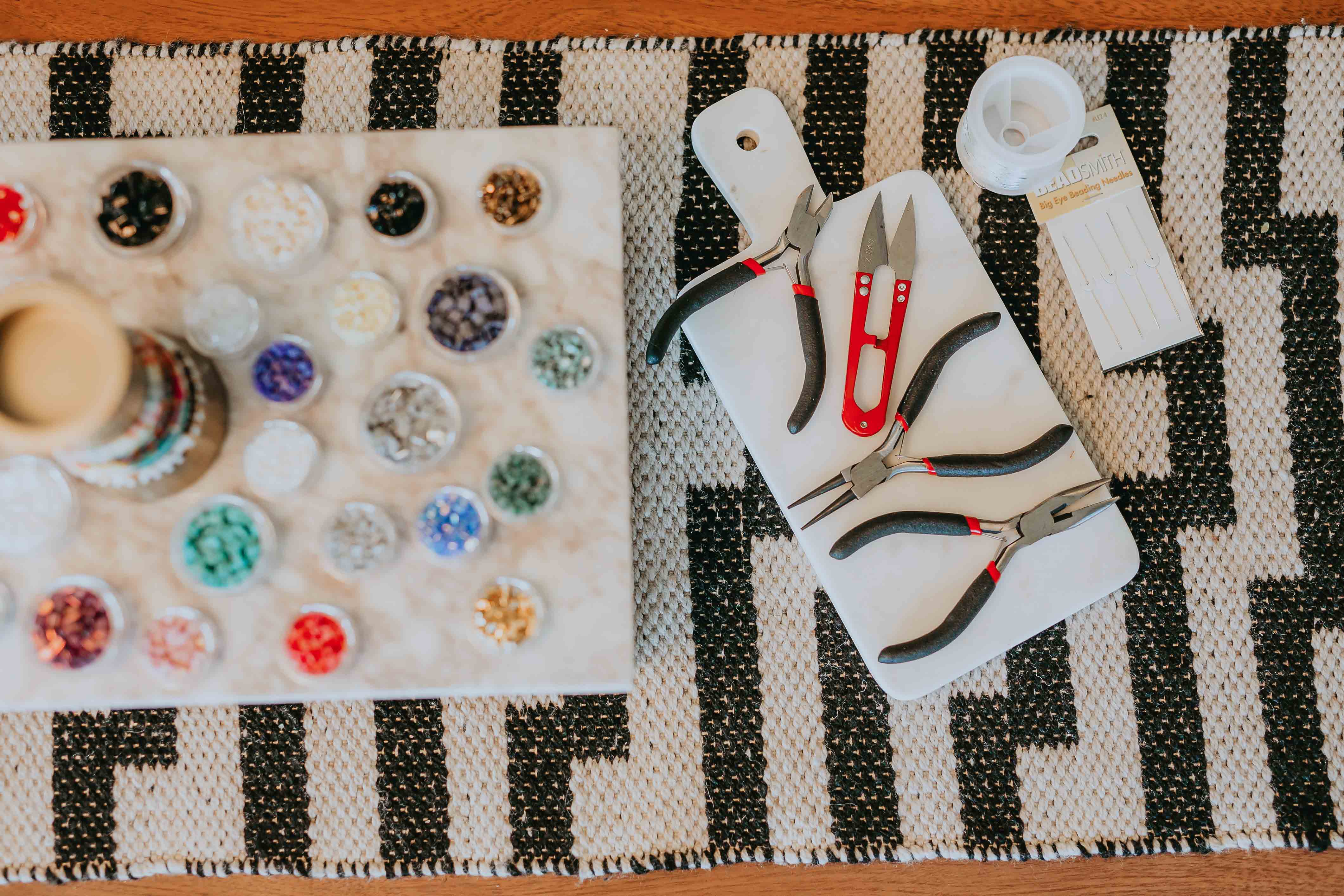
A quick note on supervision if a child is helping with any of this: Tila beads and the small findings that go with them are a choking hazard for young kids, so keep an adult in charge of the loose parts.
Where Can You Shop Miyuki Tila Bead Colors?
Mack & Rex's seed bead collection carries a wide range of Miyuki Tila and Delica colors and finishes, with bead mixes typically running $5 to $9. Miyuki is the Japanese manufacturer behind these beads; Mack & Rex sells the loose mixes, trio kits, and finished bracelets made from them, but doesn't make the glass itself. Trio kits ($44.99) are a good way to try a few finish families in one project, and the Tila Starter Kit ($189.99) or Ultimate Kit ($399.99) go further for multiple palettes.
Mack & Rex ships internationally, with shipping and any customs costs calculated at checkout. Free shipping applies to US orders over $100, so a single bead mix or trio kit won't clear that threshold on its own, but it's worth knowing if you're combining a few orders. Buy 3 finished bracelets and get 1 free applies to finished bracelets only, not loose beads or kits.