

What Size Delica Beads Do You Need for a Bracelet?
What size Delica beads should you use for a bracelet?
Size 11/0 is the standard for most Delica bracelet work: 1.6mm cylinders that run about 19 beads to the inch, with a hole narrow enough for fine beading thread. Size 10/0 or 8/0 suits bolder, faster projects and beginner hands. Size 15/0 is too fine and fragile for most bracelet builds.
That's the short version. The longer answer depends on what kind of bracelet you're making, and that distinction matters more than most sizing charts let on.
What do the "0" numbers on Delica beads actually mean?
Delica sizes use the same "aught" system as other seed beads: a number followed by a zero, like 11/0 or 15/0. Here's the part that trips people up. The relationship is backward from what you'd expect. A higher number means a smaller bead, because the number reflects how many beads line up in a given length, not the bead's actual size.1
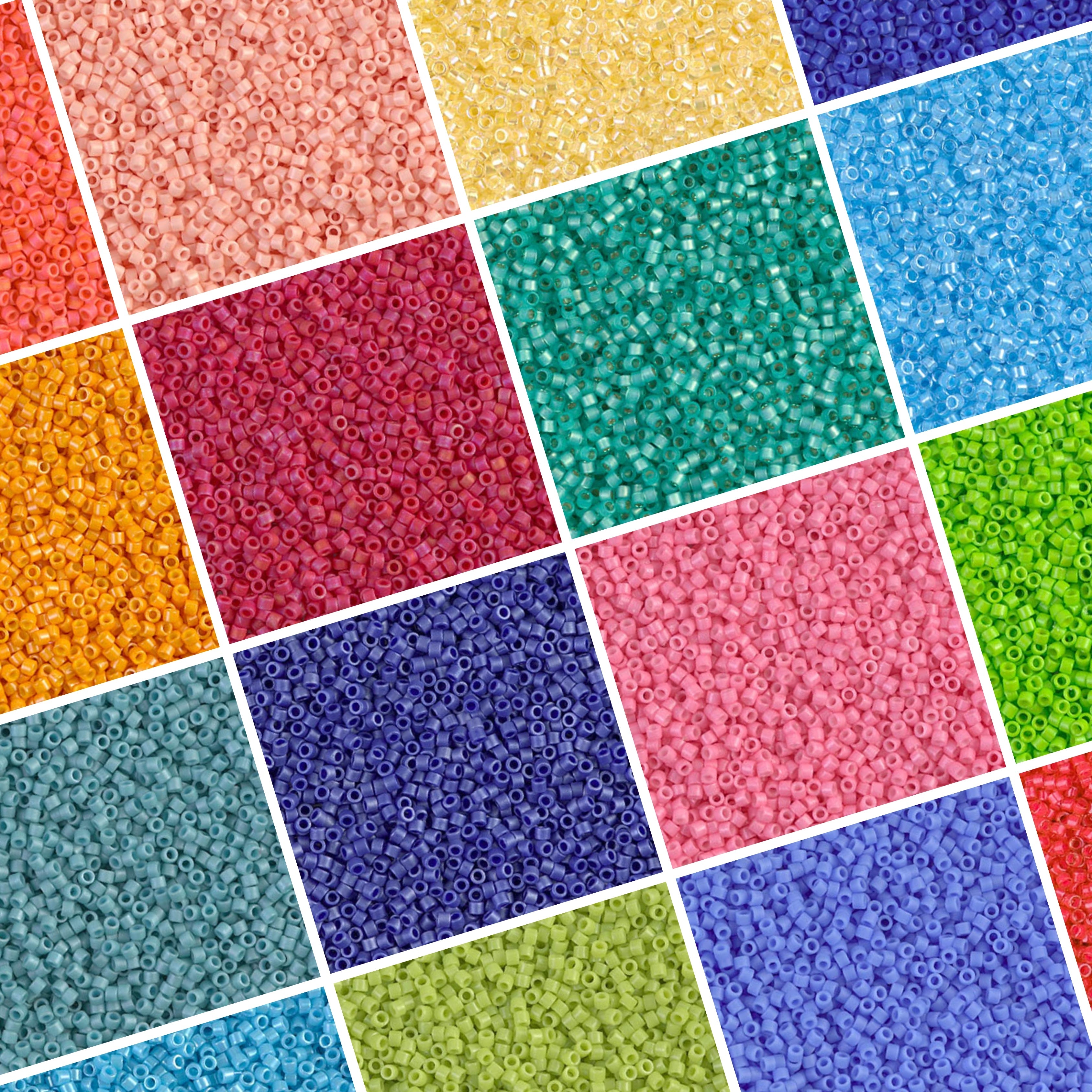
So a 15/0 Delica is smaller than an 11/0, which is smaller than a 10/0, which is smaller than an 8/0. Miyuki makes Delica cylinder beads in exactly these four sizes: 15/0, 11/0, 10/0, and 8/0. No 6/0 or 5/0 Delica exists, unlike round Miyuki seed beads, which run into larger sizes too.
How big is each Delica size, and how many fill an inch?
Here's where the numbers get useful for planning a project. Bead count per inch tells you how much product to buy and roughly how fine the pattern detail can get.
| Delica size | Approx. diameter | Beads per gram | Beads per linear inch | Typical use |
|---|---|---|---|---|
| 15/0 (DBS) | ~1.3mm | ~350 | ~22 | Fine detail, miniature patterns |
| 11/0 (DB) | ~1.6mm | ~200 | ~19 | Standard weaving, most patterns |
| 10/0 (DBM) | ~1.7-1.9mm | ~108 | ~14 | Slightly bolder rows, wider hole |
| 8/0 (DBL) | ~3mm | ~30 | ~9 | Chunky patterns, beginners |
These figures come from beads-per-gram and beads-per-inch counts published by specialty bead suppliers, and finishes can shift them slightly. A heavy metallic coating adds a hair of thickness; a matte finish barely changes it at all.2 Size 11/0 has the deepest color and finish selection by far, which is one reason most published patterns default to it.
Which cord or thread fits which Delica hole size?
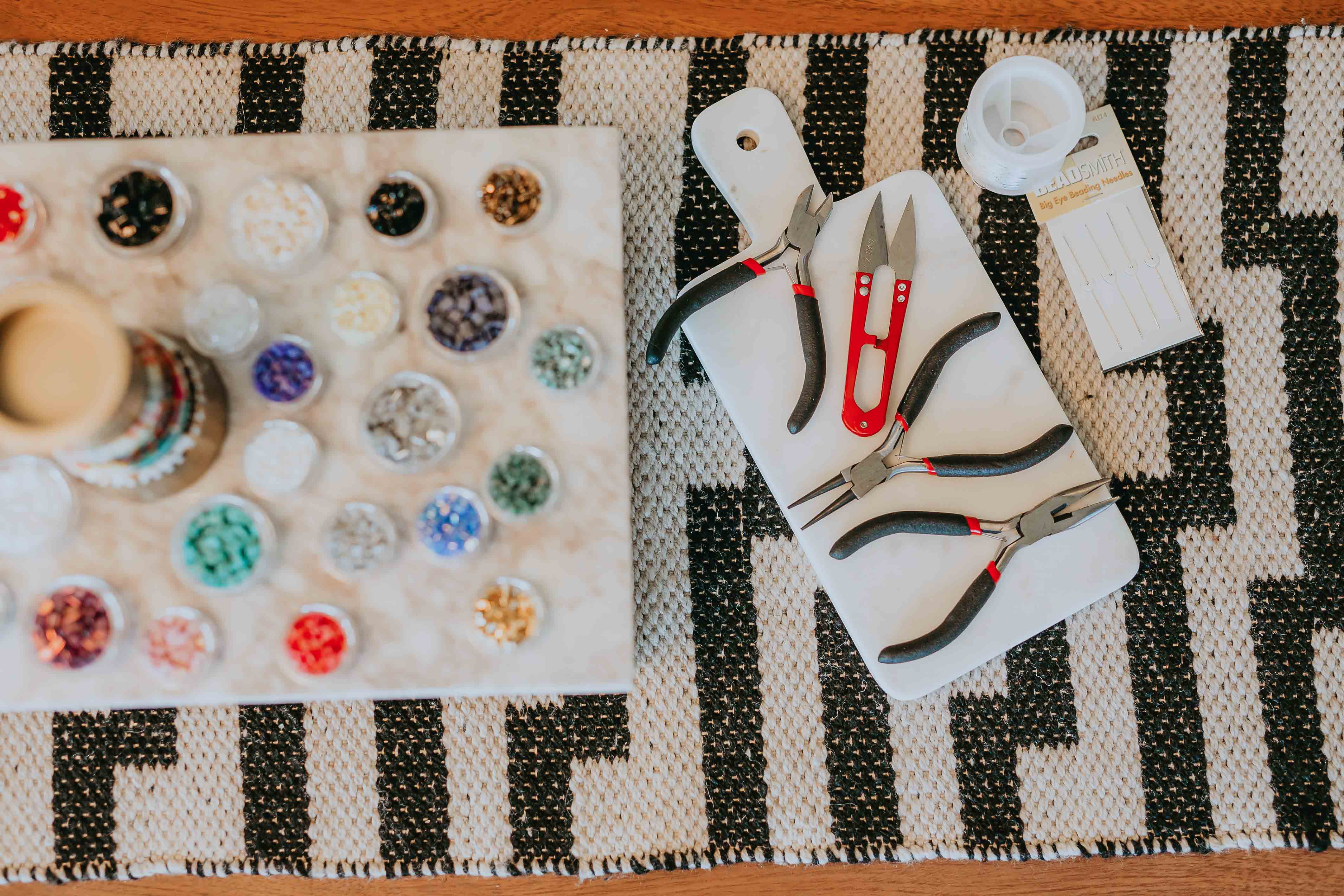
Hole size, not bead diameter, decides what you can thread through a Delica bead. Smaller sizes have proportionally tighter holes. A 15/0 Delica's hole runs around 0.65mm, an 11/0 sits near 0.8mm, and the larger 10/0 and 8/0 sizes open up to roughly 1mm or more. Fine beading thread (size B or D nylon) works across all four sizes. Stretchy elastic cord is a different story: the general rule is to use the thickest cord that still passes through the bead hole comfortably, since a snugger fit means a stronger, longer-lasting bracelet.3 For the smaller Delica sizes, that means thin 0.5mm elastic cord, which is less durable than the thicker cord a bigger-holed bead can take.
Should you use Delica beads for a stretch bracelet?
It depends on the look you want.
Delica beads are round cylinders with one hole, built for loom weaving, peyote stitch, and brick stitch, techniques where beads are woven row by row into a flexible fabric. You can string them in a single strand on elastic cord for a simple beaded bracelet, and plenty of people do. What they won't do is tile flush against each other the way a flat bead does; a strung Delica row keeps its round profile, gaps and all.
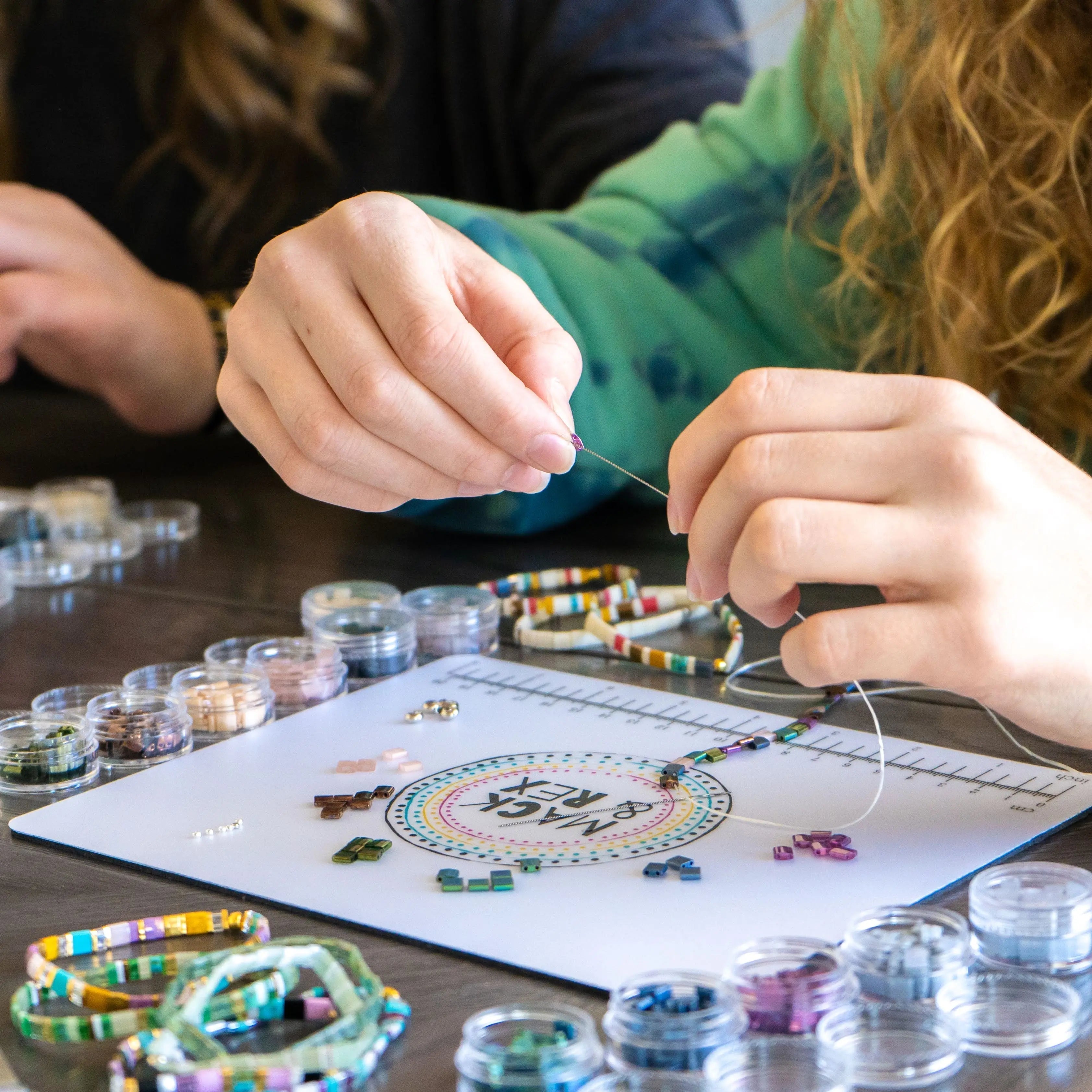
Flat, two-hole beads like Miyuki Tila are built for a different result. Each Tila bead is 5mm x 5mm and about 1.9mm thick, with two parallel holes that let the beads tile together and lie flush on the wrist when strung on elastic cord. No gaps between beads. If you want that structured, mosaic-tile look, Tila is the purpose-built bead; if you want the fine, uniform texture Delica is known for in woven or single-strand designs, that's what Delica does well. For a deeper breakdown of how the two bead types compare shape-for-shape, see our Delica beads vs Tila beads guide.
Which Delica size fits your skill level and project?
Match the bead to the hands doing the work, not the other way around.
New to beadwork? Start with 8/0 or 10/0. Bigger beads and wider holes mean fewer dropped beads and less squinting. You'll finish a small project without the frustration that comes from fighting tiny cylinders on your first attempt.
Following a published pattern? Use 11/0. It's the size almost every peyote, brick stitch, and loom chart is designed around, and it has the widest color and finish selection of any Delica size. Swapping to a different size means recalculating the whole pattern. It's also the size you'll find stocked in depth at most Miyuki bead retailers, Mack & Rex included.
Doing fine detail or miniature work? Reach for 15/0, but only once you're comfortable with a needle and thread. The tiny hole and bead size reward patience and steady hands, and they're genuinely fiddly for a first project.
A quick note on kids and loose beads
Any bead this small is a choking hazard, delica or otherwise. If you're setting up a beading project with kids or grandkids, keep loose beads out of reach of toddlers and stay close by for younger children working with any size bead.
Where does Mack & Rex fit into this?
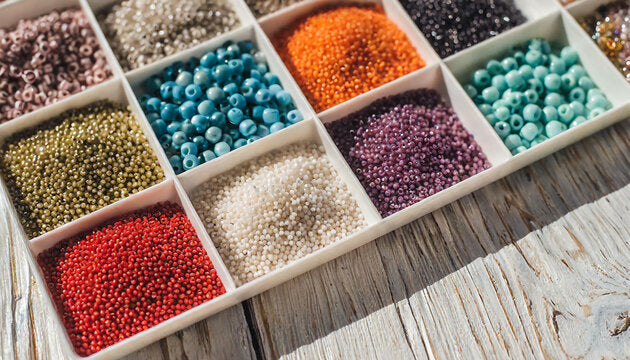
Mack & Rex carries a dedicated Miyuki Delica collection, and it's overwhelmingly size 11/0, the standard workhorse size this whole guide points to. Individual tubes cover a wide color and finish range, from opaque neutrals to metallics and duracoat finishes, priced roughly $7 to $50 depending on finish and quantity. Miyuki manufactures the beads in Japan; Mack & Rex sources and resells them, alongside Miyuki Tila beads and the ready-to-wear bracelets and kits the shop is best known for.
If you're weaving a peyote or brick stitch piece, or stringing a simple single-strand bracelet, 11/0 Delica from that collection is the sizing-safe choice this article recommends. If what you actually want is the flat, tile-stacked look of a stretch bracelet with none of the pattern-charting, Tila beads (also stocked at Mack & Rex) are the more direct route, and they come as loose beads, DIY kits, or already-finished bracelets in inclusive sizing from XXS through 5XL, backed by a quality guarantee.
Current offer: buy 3 bracelets, get 1 free, no code needed. Orders over $100 ship free within the US.
Browse Miyuki Delica beads at Mack & Rex to find the color and finish for your next project.
Frequently asked questions
What size Delica beads should I use for a bracelet?
Size 11/0 is the standard choice for most Delica projects, including woven bracelets, at about 1.6mm per bead with roughly 19 beads per linear inch. Size 10/0 or 8/0 works better for chunkier, faster-to-finish designs. For a stretch bracelet strung on elastic cord rather than woven, a flat two-hole bead like Miyuki Tila is generally a better fit than any Delica size.
What is the difference between 11/0 and 10/0 Delica beads?
Size 11/0 (DB) is smaller and the most widely available Delica size, with the largest color range and about 19 beads per inch. Size 10/0 (DBM) is a step up in size with a wider hole and about 14 beads per inch, which makes it easier to thread but less common in published patterns.
Are 8/0 Delica beads good for beginners?
Yes. Size 8/0 Delicas are the largest standard size, roughly twice the diameter of an 11/0, with a wide hole that's easier to thread and see. Beginners often start with 8/0 to build coordination before moving down to the finer, more pattern-dense 11/0 size.
Can you string Delica beads on stretch cord for a bracelet?
You can, but Delica beads are round cylinders designed for weaving, so a strung row of them doesn't lie flat or hold its shape the way a flat, two-hole bead does. Miyuki Tila beads are purpose-built for stretch bracelets and are the more practical choice for stringing projects.
How many Delica beads do I need for one bracelet?
It depends on size and wrist length. At roughly 19 beads per inch, a 7-inch woven band in size 11/0 needs around 130 to 135 beads across a single row, and considerably more once you account for the full width of a woven pattern rather than a single strand.