

What Size Elastic Beading Cord Do You Need for Heishi Bead Bracelets?
What Size Elastic Beading Cord Should You Use for Heishi Beads?
0.8mm elastic beading cord is the best starting point for most heishi bead bracelets. It slides through standard clay and shell heishi holes without forcing, and it's thick enough to hold a secure knot through daily wear. If your heishi beads have noticeably smaller holes, like many stone varieties, size down to 0.7mm; for chunky, large-hole beads, size up to 1mm.
That's the short answer. The longer answer is that "elastic beading cord" isn't a single product. It comes in a handful of common gauges (0.5mm, 0.7mm, 0.8mm, and 1mm are the ones you'll see most often at craft and bead suppliers), and heishi beads aren't one uniform size either. Picking the right pairing is less about a universal rule and more about matching cord thickness to the actual hole in front of you.
Why Does Cord Gauge Even Matter That Much?
Two failure modes, both avoidable. Cord that's too thin for the bead hole doesn't give you enough friction to hold a tight knot, so the bracelet loosens or the knot slips within weeks. Cord that's too thick gets forced through a snug hole, and that constant pressure against the hole's edge is what causes clay or stone heishi to chip or crack over months of wear.
The fix is boring but effective: pick the thickest cord that still passes through the hole without resistance. According to The Bead Traders' bead hole size guide, matching stringing material to the actual hole diameter, rather than the bead's outer size, is the single biggest factor in how long a strung piece lasts. Read their full bead hole size breakdown here.
How Do Heishi Bead Holes Compare Across Materials?
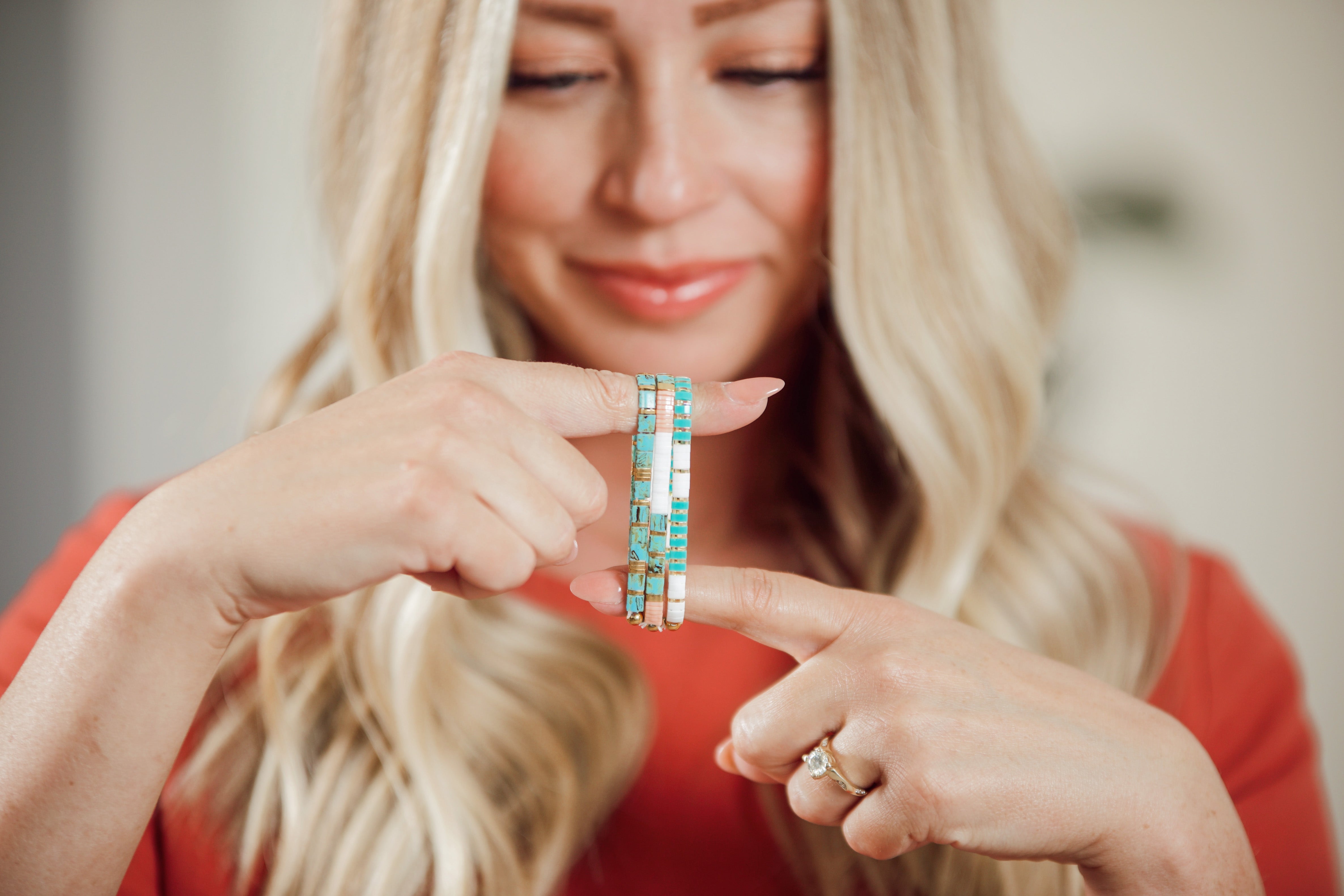
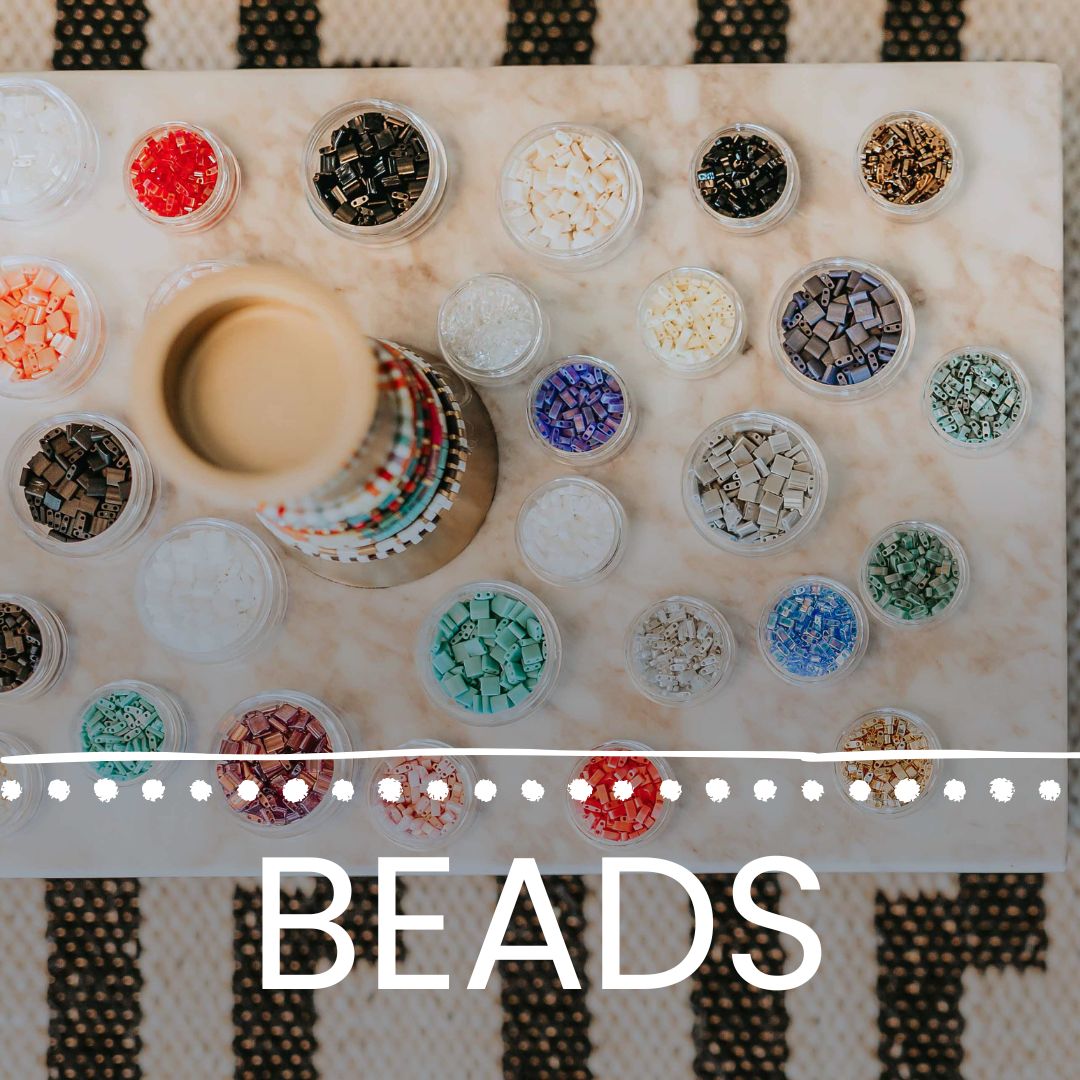
Heishi beads are flat discs with a hole punched through the center, and that hole varies more by material than most people expect. Clay heishi (the polymer clay discs you'll see in most bracelet stacks) tend to have clean, consistent holes that comfortably fit 0.8mm cord. Natural shell heishi runs similar, sometimes a touch larger. Stone heishi, think howlite, turquoise, or jasper chips, is cut from solid material, so the holes are often drilled smaller and less consistently. That's where 0.7mm, and occasionally 0.6mm, earns its keep.
If you're mixing heishi with smaller accent beads in the same strand, like seed beads or tiny metal spacers, let the smallest hole in the mix set your cord size, not the average. One tight bead will stop a whole strand cold.
- Clay heishi (standard 4-6mm discs): 0.8mm cord fits comfortably
- Shell heishi: 0.8mm, occasionally up to 1mm on larger discs
- Stone heishi (howlite, turquoise, jasper): 0.7mm, drop to 0.6mm if snug
- Mixed strands with seed beads or small spacers: size to your smallest bead, usually 0.6mm-0.7mm
When Should You Size Up to 1mm Cord?
Go thicker when the bracelet has to work harder. A heavily layered stack, a design with larger focal beads, or a bracelet you know will see rough daily use (gym, yard work, a kid who never takes it off) all benefit from 1mm cord's extra tensile strength. The tradeoff is that 1mm won't pass through tighter stone or small-spacer holes, so it only works when your bead holes are large enough to take it without forcing.
Artcove Crafts' size chart for Stretch Magic-style cord lists 0.5mm through 1.8mm as the common commercial range, with the heavier gauges marketed specifically for bigger, heavier beads that put more strain on a strand. See the full gauge-to-bead-weight chart here.
Step-by-Step: Stringing a Heishi Bracelet With the Right Cord
Step 1: Test-fit before you buy a full spool
Hold a loose heishi bead up to the light, or run a needle through the hole if you have one handy. Can't tell by eye? Buy a short length of two gauges, say 0.7mm and 0.8mm, and test one bead on each before committing to a whole spool. Most bead suppliers sell small cut lengths for this exact reason, so there's no need to guess.
Step 2: Cut generously
Cut your elastic cord about 8 to 10 inches longer than your target wrist measurement. That slack is working room for the knot, not waste. Trim it after you've tied off, not before.
Step 3: String in order
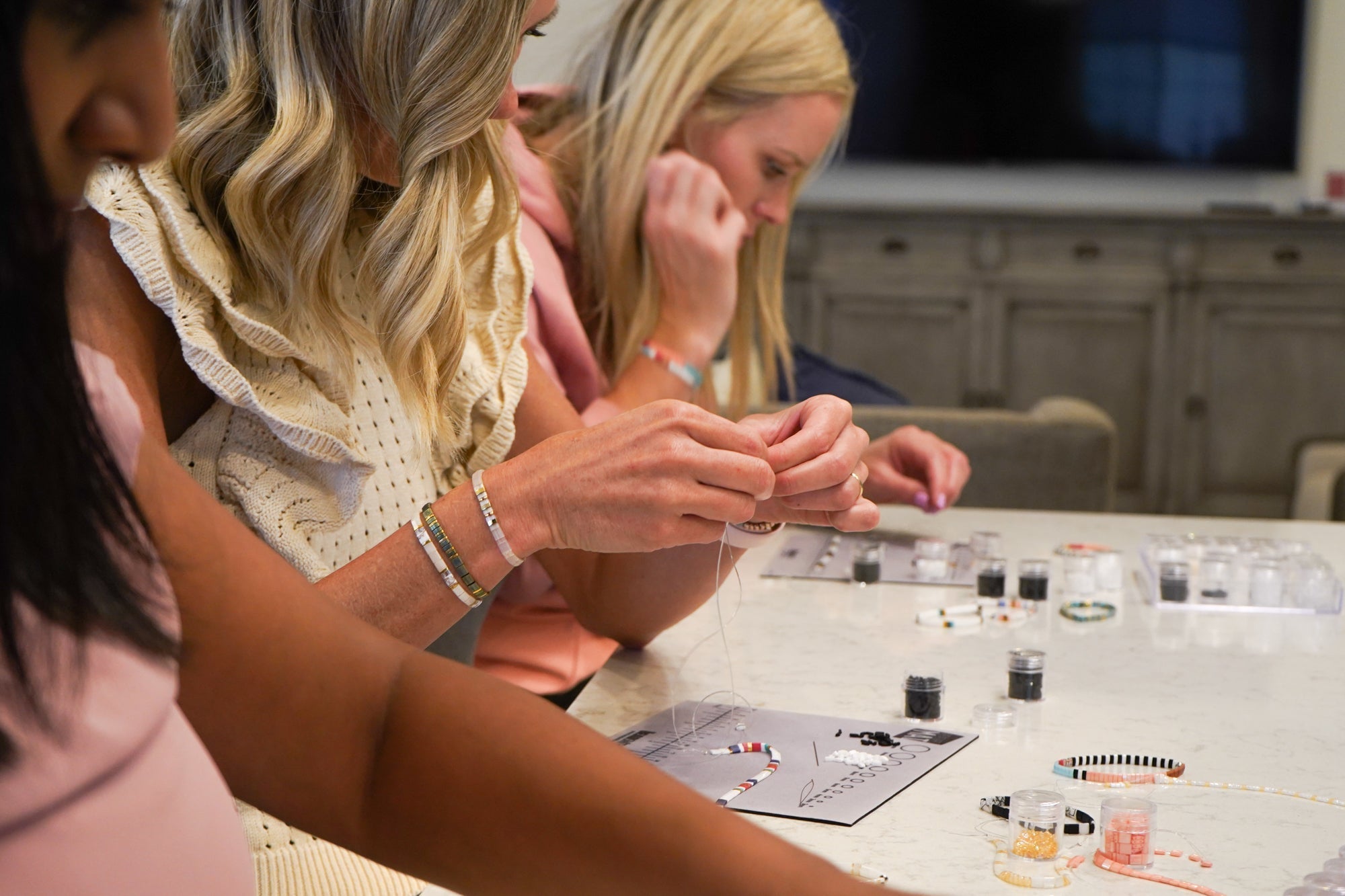
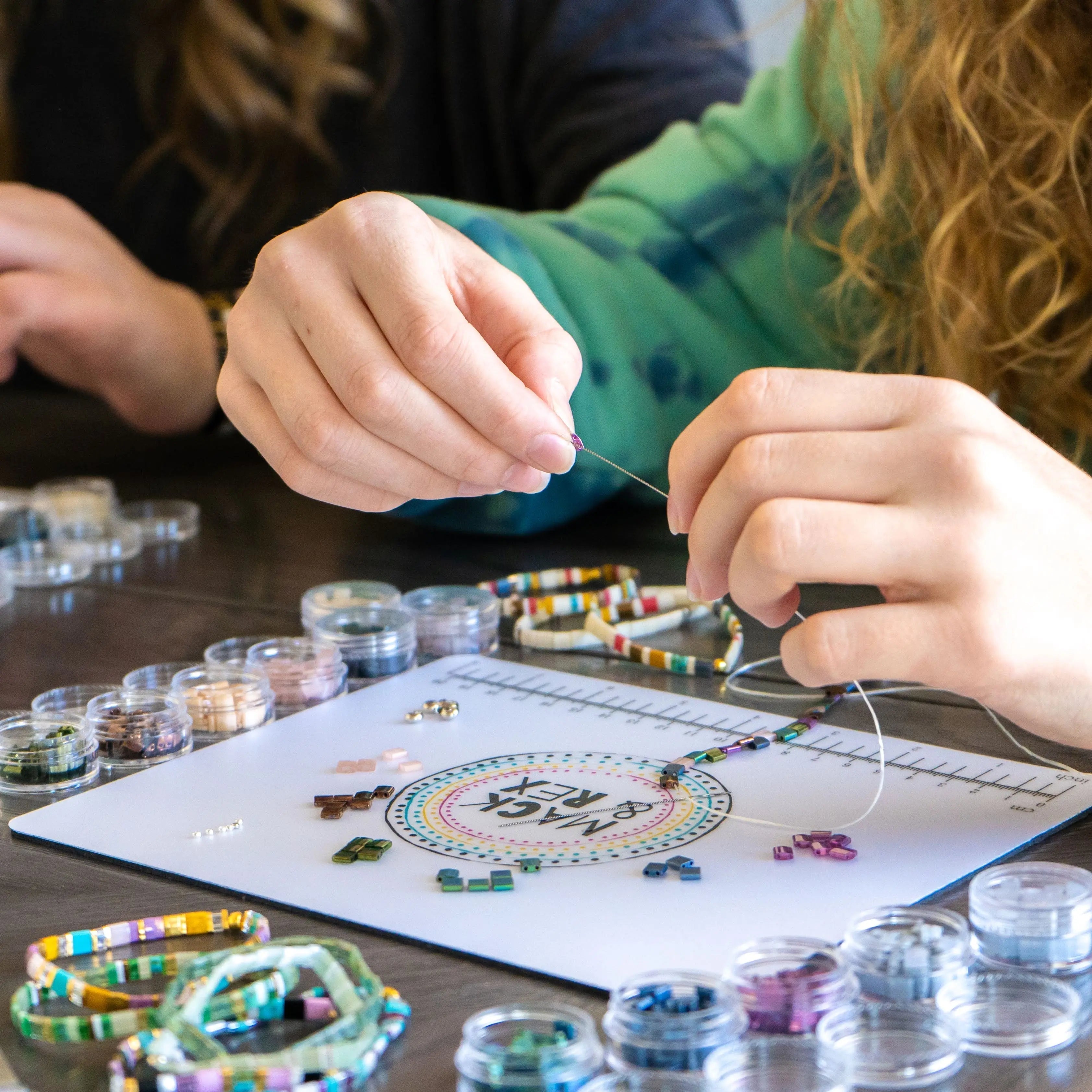
Lay your beads out on a tray in the pattern you want before threading anything. Heishi discs stack face to face as you go, and a well-matched cord slides through smoothly without you having to force each bead down the line.
Step 4: Check fit, then knot
Wrap the strand loosely around your wrist with both ends held together. It should sit snug without pinching and stretch open easily when you pull it on. Adjust the bead count now. Once you tie off, changing your mind means cutting the knot and starting over.
Tie a surgeon's knot (two loops on the first pass instead of one, then a second knot on top), trim the tails to about a quarter inch, and tuck the knot sideways into a bead hole so it's hidden. A small dot of G-S Hypo Cement on the knot adds a bit of extra insurance if the bracelet is going into daily rotation. Jewelry Universe's guide on building durable elastic bracelets points out that the knot, not the cord itself, is usually the first thing to fail on a stretch bracelet, which is exactly why doubling up the knot is worth the extra 30 seconds. Their full durability guide covers knotting and storage tips.
A Quick Note on Kids and Loose Beads
Heishi beads and elastic cord are small parts, and loose beads are a choking hazard for children under 3. Older kids, generally 8 and up, do fine stringing their own bracelet with an adult nearby, but an adult should always handle the final knot and any glue, and loose beads shouldn't sit out unsupervised.
Where to Get Heishi Beads and the Right Cord in One Place
Sourcing beads and cord separately usually means guessing at gauge compatibility and ordering twice when the first spool doesn't fit. Mack & Rex's heishi bead collection is a faster way in if you want to start stringing today without cross-referencing hole sizes between two different stores.
If you'd rather skip the gauge math entirely, the Mack & Rex bracelet-making kits come with beads and cord already paired correctly, so there's nothing to test-fit. Mack & Rex ships internationally, with shipping and any customs or duties calculated at checkout, and orders over $100 ship free to US addresses. Buying three finished, ready-to-wear bracelets (not kits) gets you a fourth free, no code needed.
Frequently Asked Questions
What size elastic cord is best for heishi bead bracelets?
0.8mm elastic beading cord is the best all-around choice for most heishi bead bracelets. It fits the holes on standard clay and shell heishi without forcing, and it's thick enough to hold a knot through regular wear. Drop to 0.7mm for smaller stone heishi with tighter holes, or go up to 1mm for chunky, large-hole beads.
Can cord that's too thick damage heishi beads?
Yes. Forcing a thick cord through a snug hole puts constant pressure on the hole edges, and over months of wear that can chip or crack the bead, especially with clay or stone heishi. Size down a gauge rather than fight a cord that barely fits.
Is thinner elastic cord always weaker?
Not necessarily. A quality 0.5mm or 0.7mm cord can outlast a thicker, lower-grade cord. Matching gauge to the bead holes so the cord isn't over-tensioned matters more than raw thickness, and a real surgeon's knot rather than a single overhand knot prevents most failures.
How do I know which cord gauge fits my beads before buying a whole spool?
Check the hole against a light or run a needle through it. If you're still unsure, buy a short length of two gauges, commonly 0.7mm and 0.8mm, and test-fit a single bead before committing to a full spool.
Can kids help string a heishi bracelet with elastic cord?
Older kids, generally 8 and up, can handle stringing with an adult nearby. Heishi beads and elastic cord are small parts and a choking hazard for children under 3, so keep loose beads out of reach of toddlers and let an adult handle the final knot and any glue.