


What to Look for in a Bead Bracelet Kit Before You Buy
What should you look for in a bead bracelet kit?
A good bead bracelet kit gives you crystal-cord elastic rated for stretch wear, real glass beads rather than plastic, a size range that actually fits your wrist, and finishing tools like needles, crimp beads, and knot covers already in the box. Skip any of those and you're either buying extra supplies mid-project or wearing a bracelet that won't hold up.
That's the short version. The long version matters more once you've bought a kit that fell apart after two wears, or one where the beads faded after a month in the sun. Four things separate a kit worth your money from one that ends up in a drawer: the cord, the beads, the sizing, and what's actually included.
Is the cord actually built for stretch wear?
Cheap elastic cord. That's the number one reason a DIY bracelet stops looking good within a month. Thin craft elastic loosens, stretches out, or snaps outright once it's stretched over a hand a few dozen times, which is exactly what happens every time you put a stretch bracelet on and off.
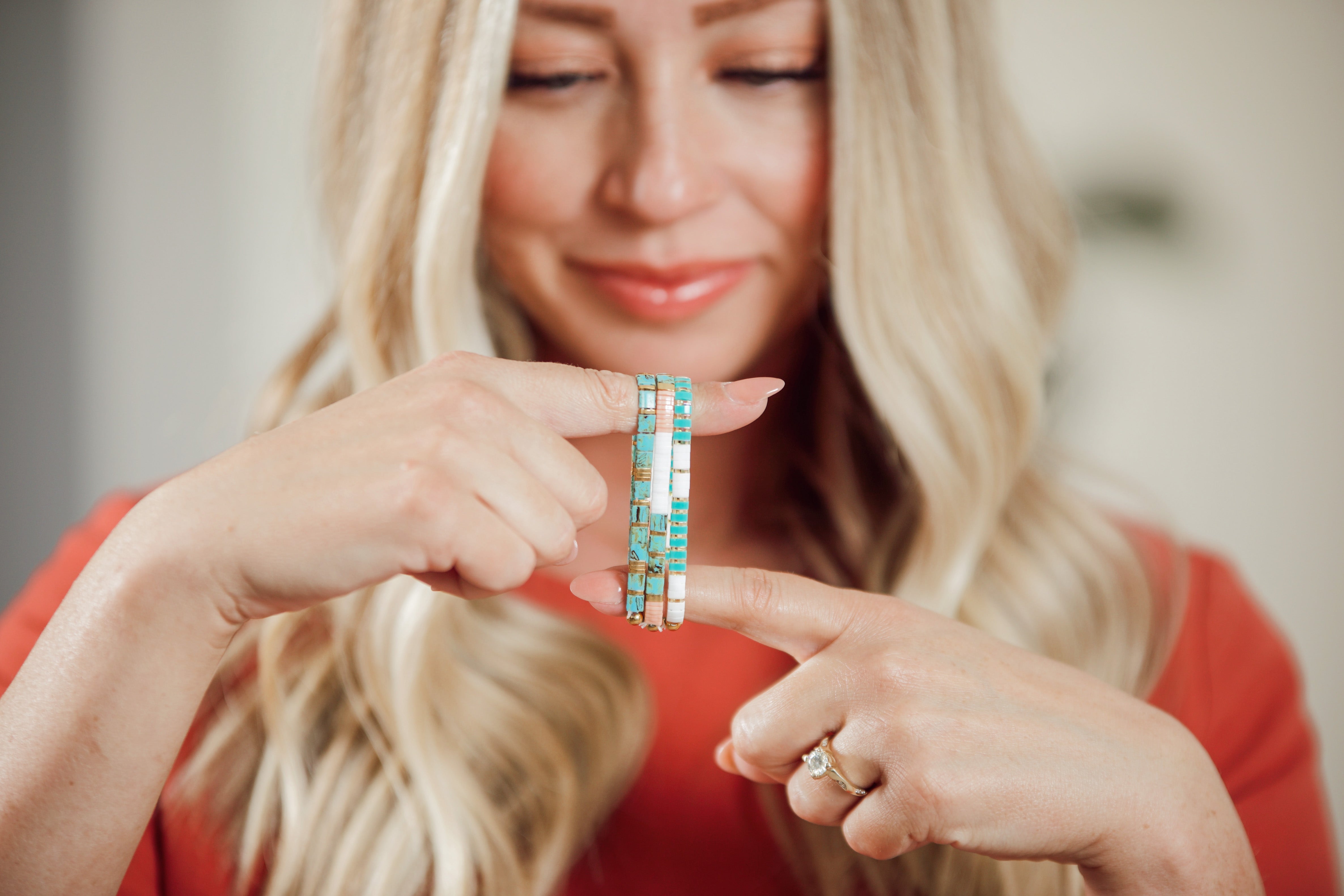
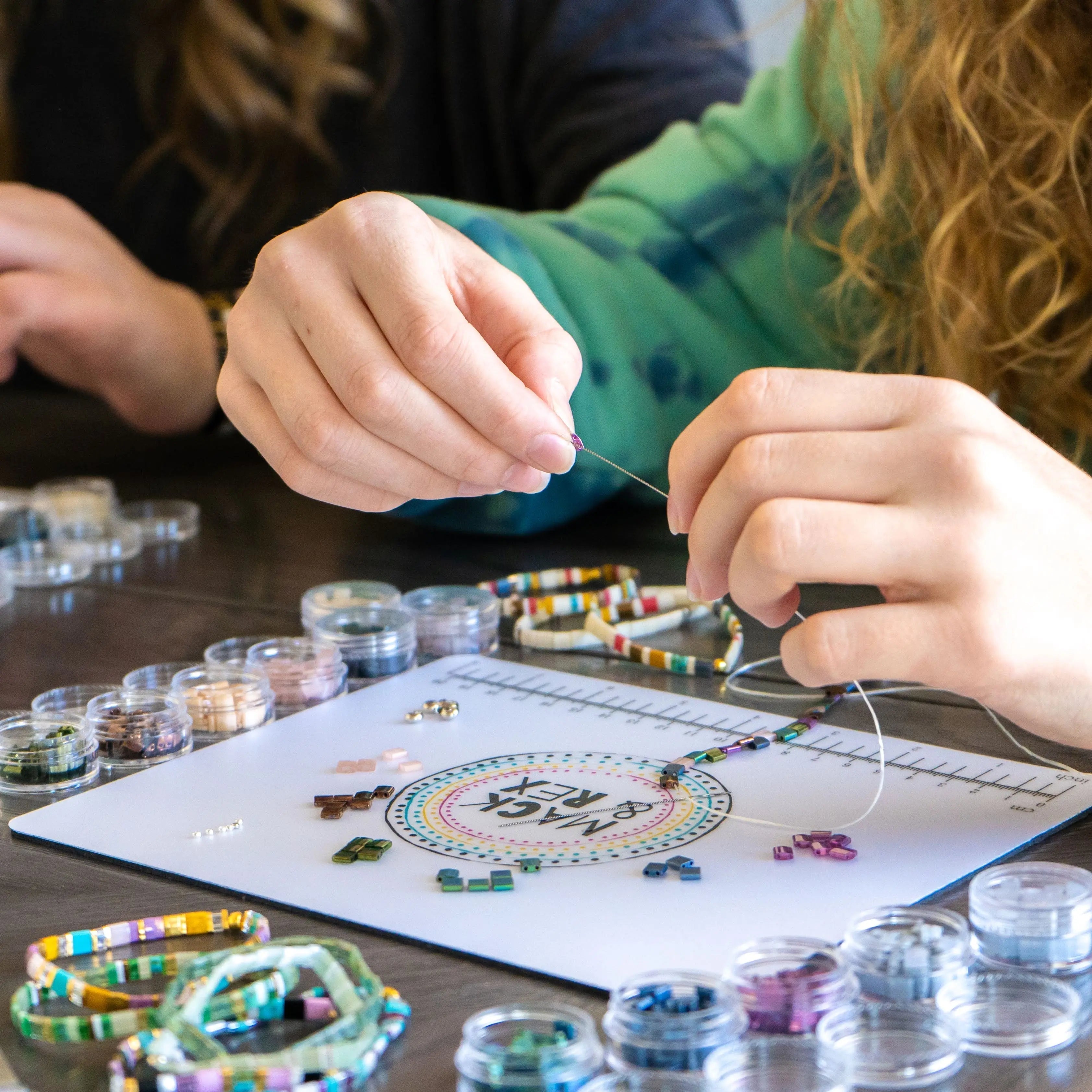
Look for crystal-cord elastic specifically, ideally pre-cut to a workable length so you're not measuring your own wrist and guessing at extra slack. Mack & Rex kits use crystal-cord elastic rated for stretch wear in every kit, trio or otherwise, and one longtime customer summed up the difference plainly: "This is the 4th bracelet I've purchased and I wear it daily. The elastic has not stretched out and the tiles are as beautiful as the day I got it." That's the bar a decent cord should clear.
What kind of beads come in the kit?
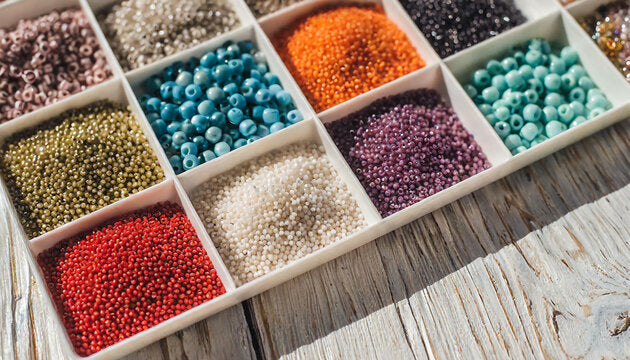
Real glass or plastic. Ask that question before anything else about color or pattern, because it changes how the finished bracelet looks and lasts. Glass beads hold their color and their shine for years; plastic beads dull, scratch, and can warp with heat.
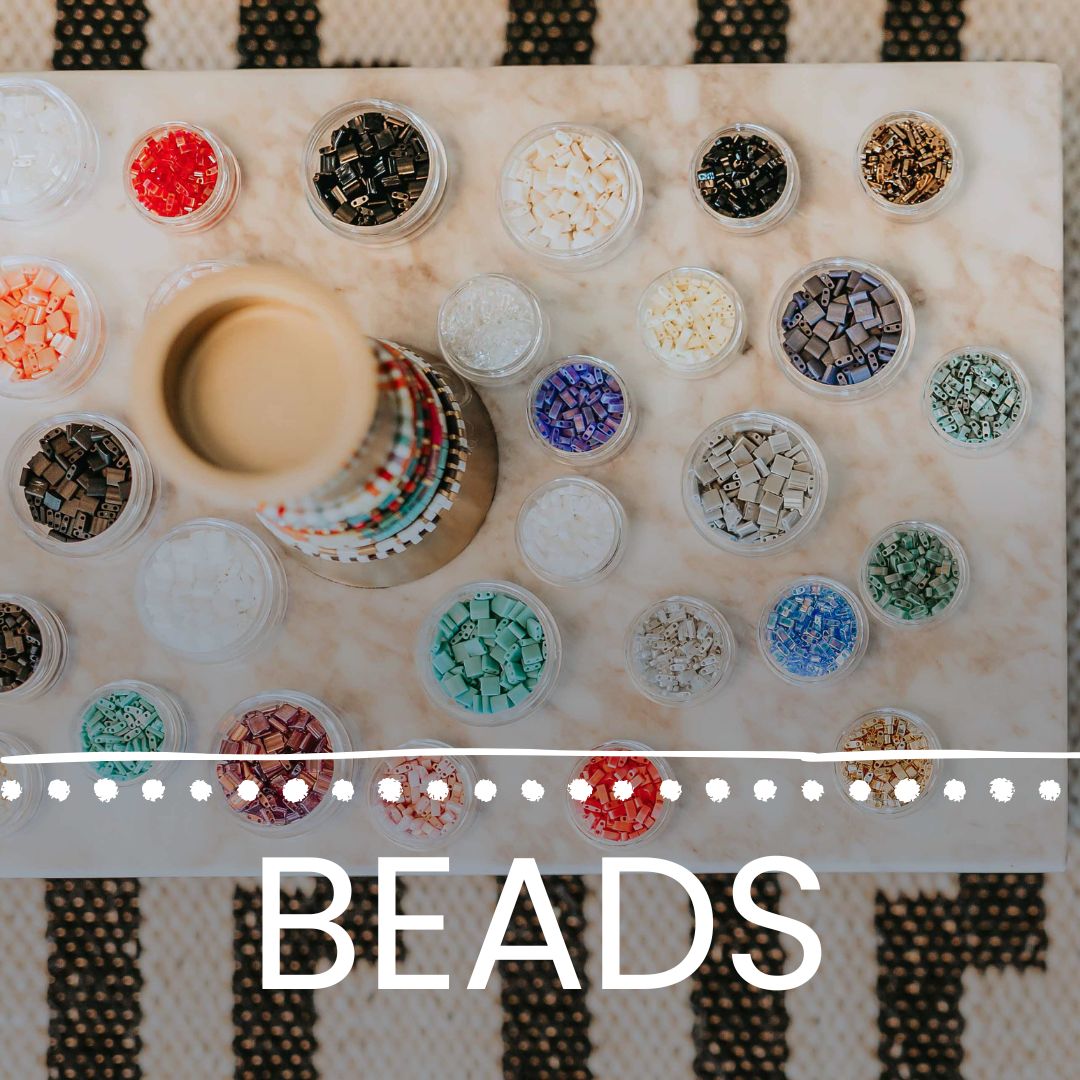
Miyuki Tila beads, the flat, two-hole glass tiles that give a lot of trendy bracelets their mosaic look, are a specific product made by Miyuki, a Japanese glass bead manufacturer. Mack & Rex sources and curates authentic Miyuki Tila beads for its kits; it doesn't manufacture the beads itself, and no reputable seller would claim otherwise. If you want to see the general anatomy of a glass seed bead explained by an independent source, Wikipedia's seed bead entry is a decent starting point before you compare bead types across brands.
One customer reviewing a Mack & Rex kit noted the tiles lay flat and comfortable against the skin: "The stones lay flat against your wrist which makes it very comfortable. I love the ease of which it goes on and off with the elastic band." That flat lay is a Tila-specific trait; round seed beads sit differently and don't give the same mosaic effect.
Does the kit include a real sizing range?
Wrists aren't all 6.5 inches. A kit built around one standard length works fine for some people and pinches or spins loosely for everyone else, which is a bigger deal than it sounds like when you're making a bracelet for a specific person, not an average.
Look for a brand that sizes across a real range rather than offering one adjustable length and calling it universal. Mack & Rex sizes its finished bracelets and kit outputs XXS through 5XL. One customer who'd bought eight bracelets across multiple color ways put it directly: "I love that they have extended sizes, all of us don't have a 7-inch wrist! I wear swimming all the time, they are just fine." A kit that only fits an average wrist isn't a kit built for everyone at your table.
What tools and finishing pieces should be included?
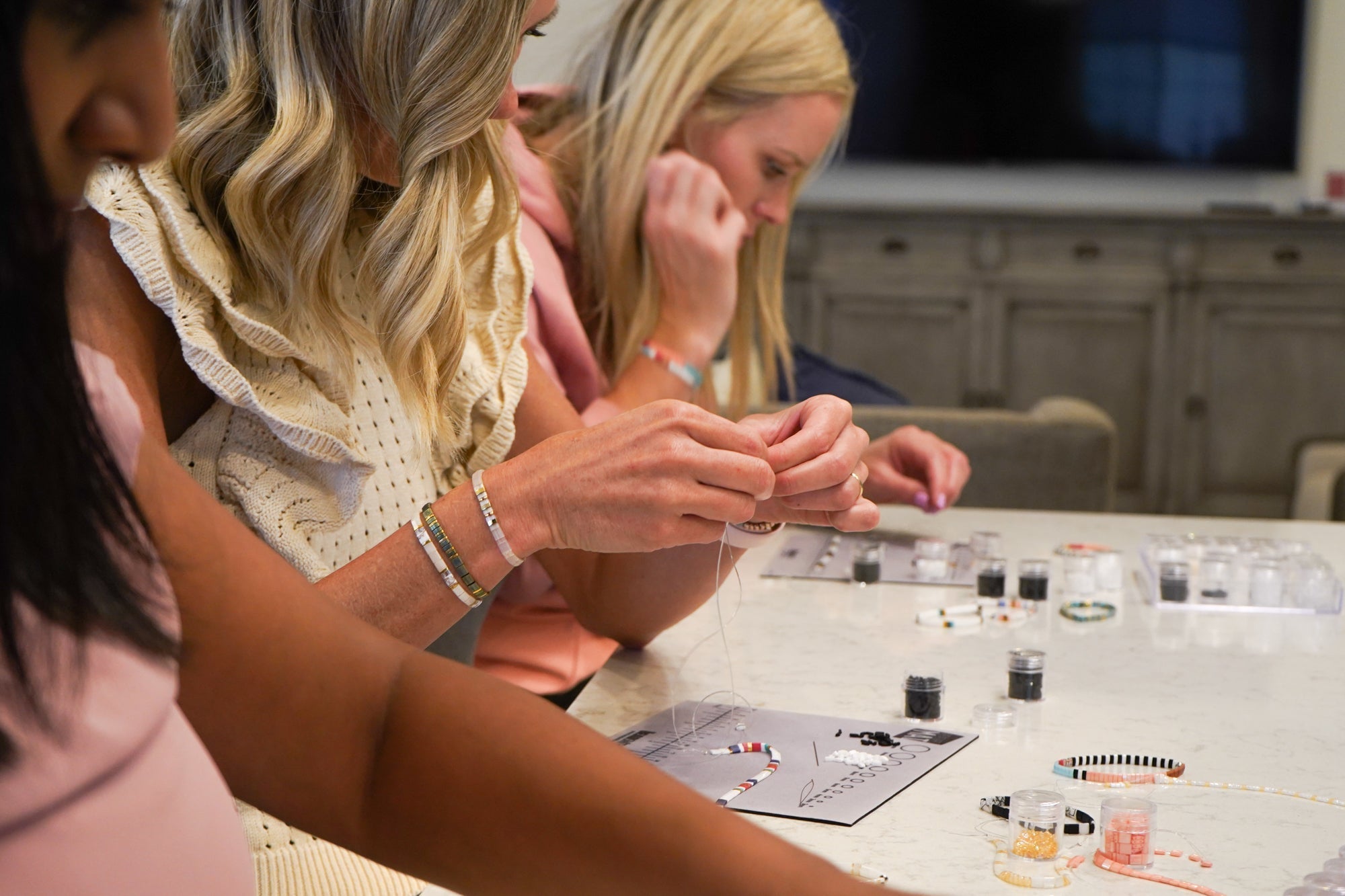
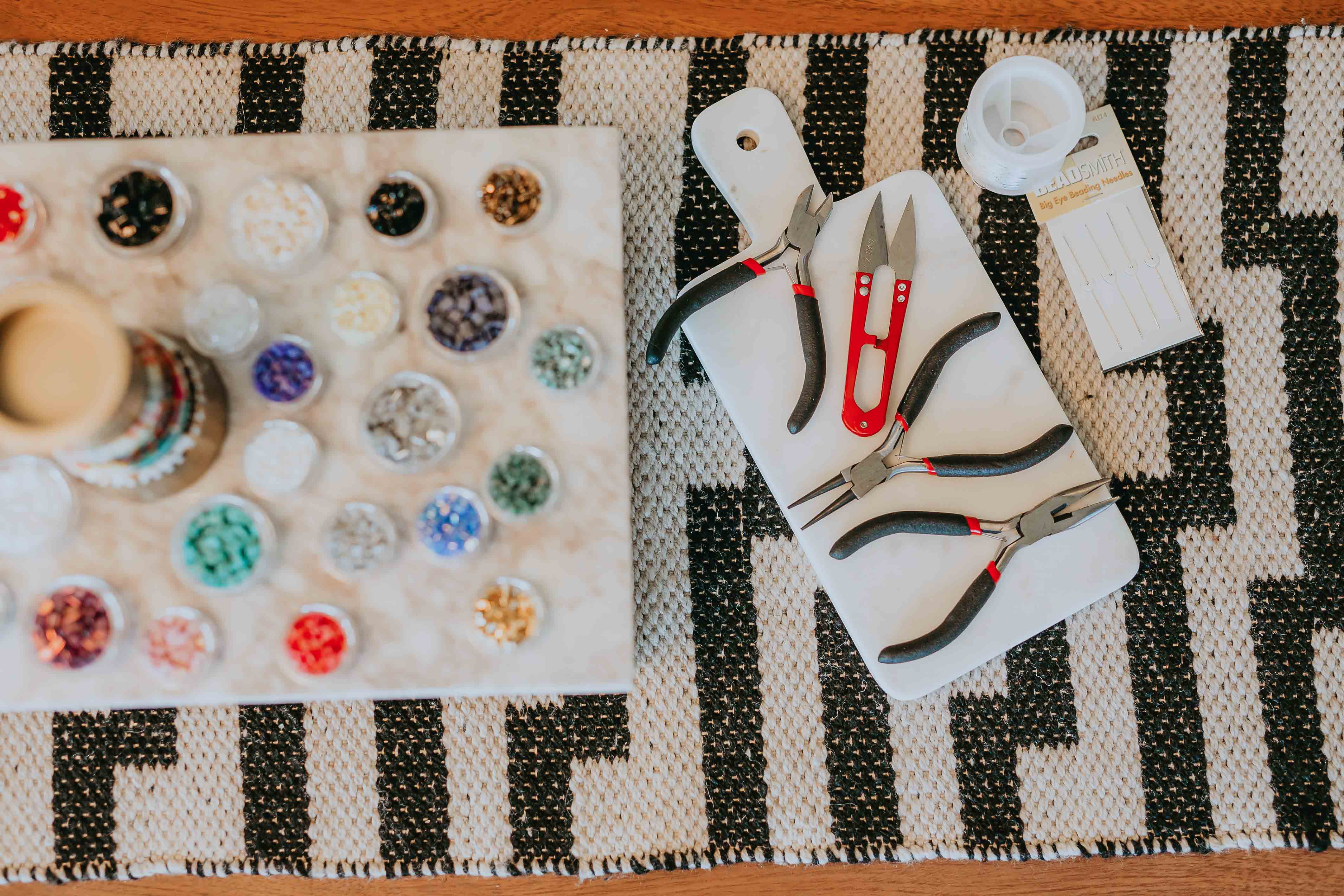
Needles, crimp beads, knot covers, and instructions you can actually follow without prior beading experience. A complete kit hands you everything needed to start and finish the project in one sitting, not a partial list that sends you back to the craft store for a $3 tool halfway through.
Beadaholique's stringing basics guide walks through the general technique and tools if you want an outside reference before your kit arrives. A Mack & Rex trio kit, for comparison, ships with pre-bagged beads sorted by bracelet, two needles, pre-cut crystal elastic, crimp beads, knot covers, extra materials, and a link to a video tutorial, all in one tin. Nothing extra to buy, nothing to guess at.
How do you actually use a bead bracelet kit?
String the beads onto the pre-cut elastic in the order the pattern shows, check the fit against your wrist before committing, then tie a secure knot, add a crimp bead and knot cover, and trim the ends. That's the entire process, and it's the same five steps whether you're making your first bracelet or your fiftieth.
Craftsy's seed bead bracelet guide covers a similar stringing sequence if you want to compare methods before you start. Most first-timers finish one bracelet in under an hour once the beads are sorted; a trio kit's three bracelets go faster once the knotting technique feels familiar on the second one.
What should you know before you buy?
Two things worth a minute of your time. Beads are small parts and a choking hazard, so a kit isn't something to hand a young child without an adult watching the whole session; older kids and teens generally manage fine with a little help on the final knot.
On shipping and offers: Mack & Rex ships internationally, with shipping and any customs or duties calculated at checkout, and orders over $100 within the US ship free. A single kit doesn't always clear that $100 line on its own, so check your cart total if free shipping matters to you. And the "buy 3 bracelets, get 1 free" offer applies to finished, ready-to-wear bracelets only, not to kits or loose beads.
Mack & Rex started with a mom and her two daughters, Mack and Rex, figuring this out together at the kitchen table, and the kits are still built around that same idea: hand someone everything they need and let them make something real. Browse the current lineup at the Mack & Rex bracelet making kits collection and check the cord, the beads, the sizing, and the tools against this list before you buy. Spread happy, one bracelet at a time.
Frequently asked questions about bead bracelet kits
What should you look for in a bead bracelet kit?
Look for crystal-cord elastic rated for stretch wear, real glass beads instead of plastic, an inclusive sizing range, and finishing tools like needles, crimp beads, and knot covers included in the box. If any of those pieces are missing, you will likely need to buy extras before you can finish a bracelet.
Are Miyuki Tila beads better than regular seed beads for a kit?
Miyuki Tila beads are flat, two-hole glass tiles that lie flatter against the wrist and give a more mosaic-like finish than round seed beads. Miyuki is a Japanese glass bead manufacturer, and brands like Mack & Rex source and curate authentic Miyuki beads rather than making the beads themselves.
How do you know if a bracelet kit fits your wrist size?
Check whether the brand offers a size range beyond one standard length, since wrist sizes vary widely from person to person. Mack & Rex sizes its bracelets XXS through 5XL, which covers most adult and teen wrists in a single kit lineup.
Is a bead bracelet kit safe for kids to use?
Beads are small parts and a choking hazard, so a kit is not appropriate for young children without an adult in the room the whole time. Older kids and teens generally do fine with a bit of help tying the final knot.
Does a bead bracelet kit come with free shipping?
Mack & Rex ships internationally, with shipping and any customs or duties calculated at checkout, and offers free shipping on US orders over $100. A single kit may or may not clear that threshold on its own, so check your order total before checkout.