

What Should You Look For in Elastic Beading Cord?
What Should You Look For in Elastic Beading Cord?
Four things: diameter, stretch retention, clarity, and knot grip. Elastic beading cord needs to fit your bead holes without binding, snap back to size after months of daily wear rather than going slack, stay clear and consistent so it doesn't show between beads, and hold a knot tight enough that it won't slip loose on your wrist. Get those four right and the bracelet lasts years. Get even one wrong and you're restringing by spring.
What Diameter Elastic Beading Cord Do You Need?
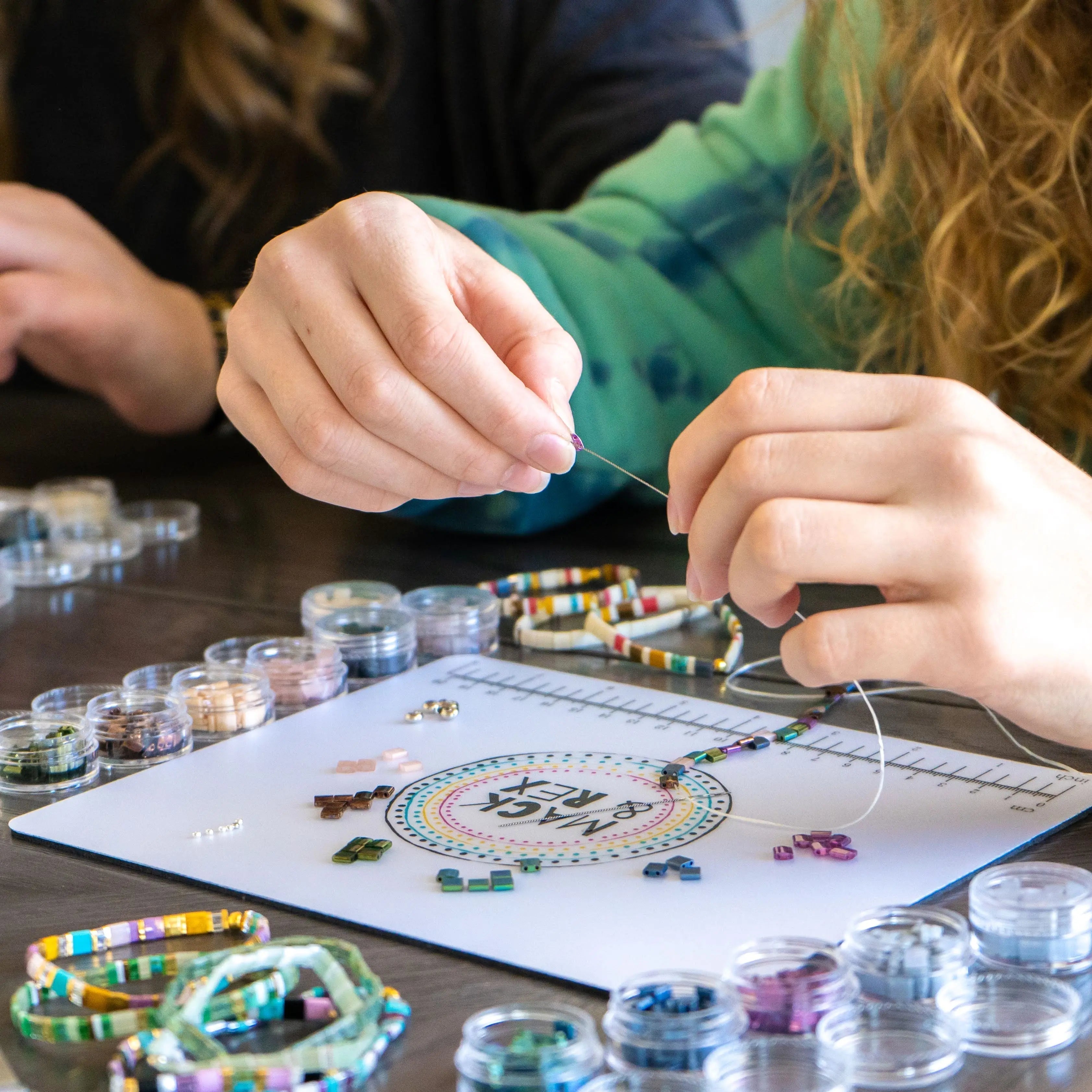
Match the cord to the hole, not the other way around. Most seed beads and Miyuki Tila beads run small, narrow holes, so a 0.5mm to 0.8mm elastic cord passes through cleanly without fighting every single bead on the strand. Tila beads in particular have two tiny parallel holes through a flat square tile, and anything much thicker than 0.8mm simply won't thread through both.
Bigger beads change the math. Heishi discs, larger glass rounds, or chunky accent beads usually need a 1mm cord for support, since a thinner cord can shift inside the oversized hole or wear through faster carrying that extra weight. I've restrung bracelets where someone used 1mm cord on 11/0 seed beads out of habit, and it fought every bead on the strand for twenty minutes straight. Size the cord to the hole first, then pick colors and patterns.
How Do You Know Elastic Cord Will Hold Its Stretch?
Test it before you buy a spool. Stretch a few inches of sample cord and let go; good elastic snaps back to its exact original length right away, with zero visible slack. Cheap cord often stays a hair stretched out or just feels mushy and soft in your fingers, a sign it will go slack on a bracelet within weeks.
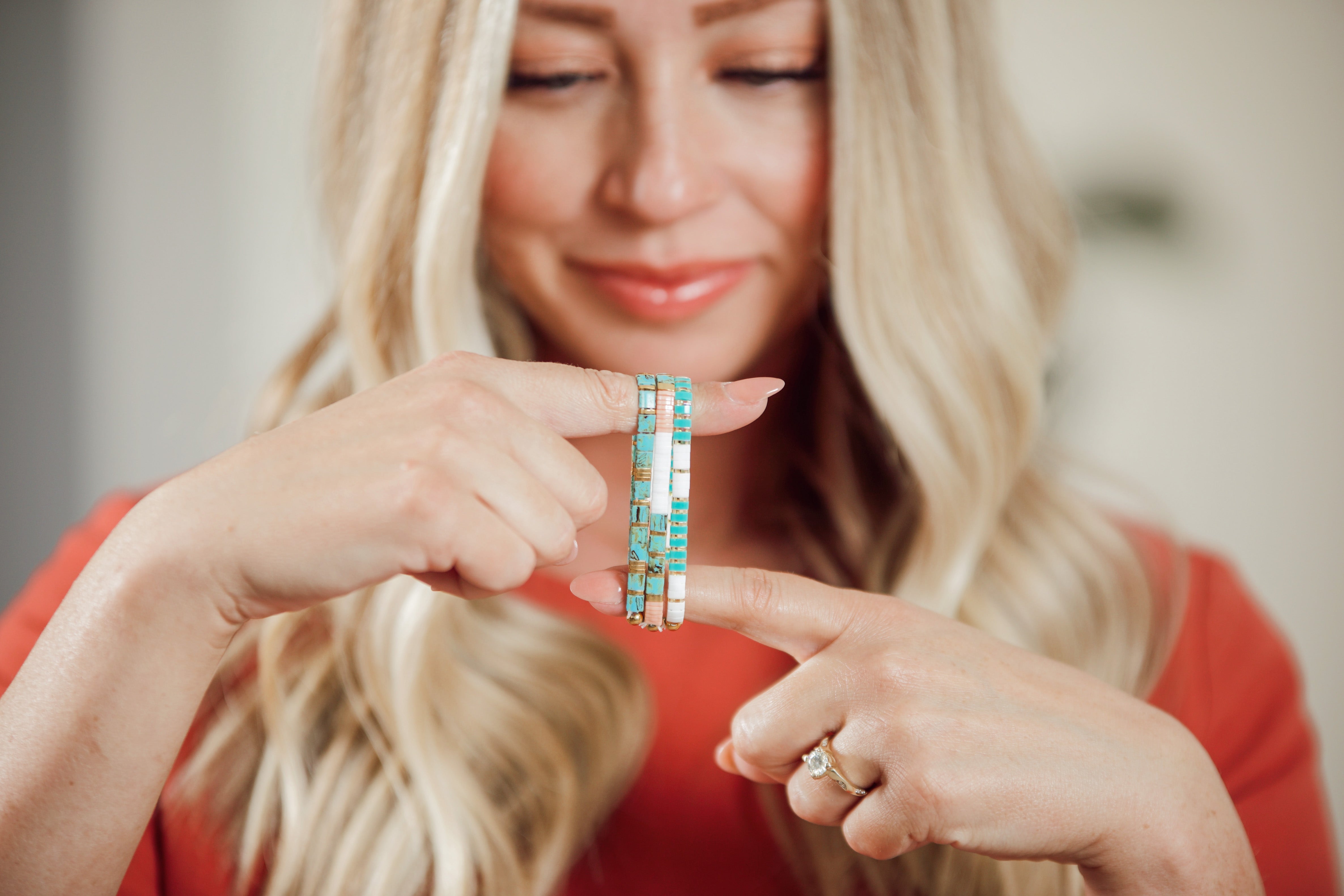
This is the single biggest difference between a bracelet that lasts and one that stretches out by summer. Mack & Rex strings its finished bracelets on crystal-cord elastic for exactly this reason, and that holds up in customer feedback, not marketing copy alone. One customer wrote after her fourth purchase: "This is the 4th bracelet I've purchased and I wear it daily. The elastic has not stretched out and the tiles are as beautiful as the day I got it." Another put it more plainly: "Well made, strong bead cord." That's the bar, whether you're buying a finished piece or stringing your own loose beads from our seed bead collection.
Does the Clarity of Elastic Beading Cord Matter?
It matters more than most people expect. Cloudy, yellowed, or inconsistently colored cord shows through the gaps between beads, especially with clear or crystal-finish glass, and that clouding is often an early sign the elastomer is already breaking down. Fresh, well-made cord stays clear and disappears visually against the beads, which is exactly what you want when the beads are the point.
Storage affects this too. Heat and direct sun degrade stretch cord faster than ordinary wear, so a spool left in a hot car or on a sunny shelf can cloud up before you've even used it. Keep elastic cord somewhere cool and dark, and it'll stay clear and flexible far longer than a spool baking on a windowsill.
What's the Strongest Knot for Elastic Beading Cord?
Tie a surgeon's knot, not a single overhand knot. A surgeon's knot wraps the cord around itself twice before you pull it tight, and that extra wrap bites into the elastic so it can't work itself loose the way a single knot slowly does under repeated stretching. Pull both ends firm so the knot seats right against the end beads, with no gap for it to hide in.
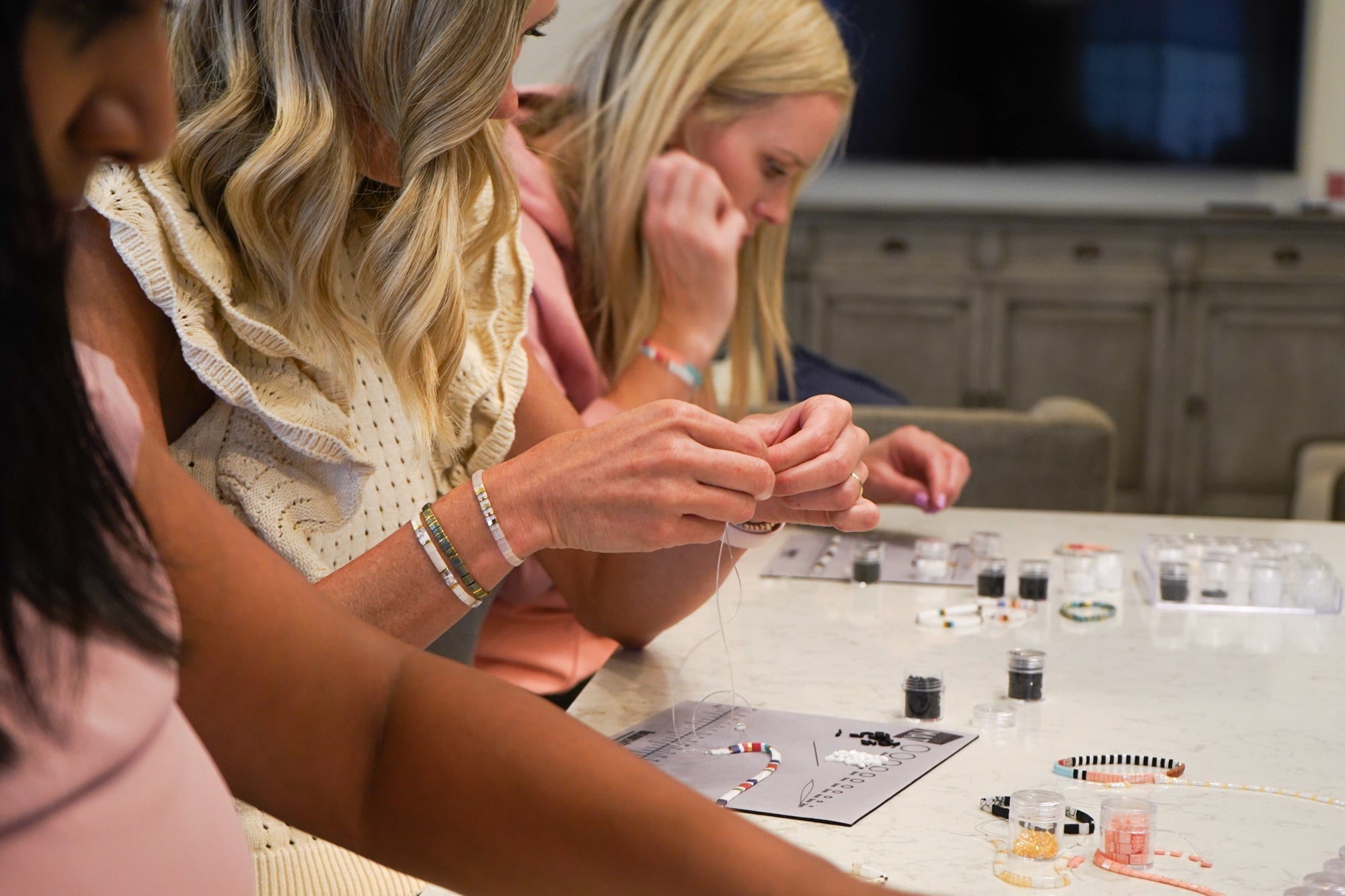
Most "my bracelet just fell apart" stories trace back to a loose single knot, not bad cord or weak beads. A customer who reviewed one of our stretch bracelets noted the elastic "feels secure when stretched," which is the knot and the cord working together, not either one alone. If you've never tied a surgeon's knot, it takes about a minute to learn, and general crafting guides like wikiHow's guide to making stretchy bracelets walk through the wrap-and-pull motion step by step. Add a small dot of jewelry glue once it's seated, trim the tails close, and you're done.
How Much Elastic Cord Should You Buy for a Bracelet?
More than the finished length. Plan for your wrist measurement plus about an inch of ease, then add extra for the knot itself, since a surgeon's knot eats more cord than a single tie. A typical adult bracelet runs 7 to 8 inches of beads, so cutting 10 to 12 inches of cord per bracelet leaves enough slack to knot properly without running short mid-project.
Elastic cord itself has been part of beadwork for a long time, long after beads moved off natural fiber cords and onto synthetic stretch materials that didn't need a clasp at all, a shift Wikipedia's overview of bead stringing touches on alongside other stringing methods. The elastomers used in modern stretch cord are a newer material category entirely, built specifically to return to shape after repeated stretching, as Wikipedia's entry on elastomers explains. That's the property you're actually buying when you pick a quality cord over a bargain spool.
Ready to Pick the Right Elastic Beading Cord?
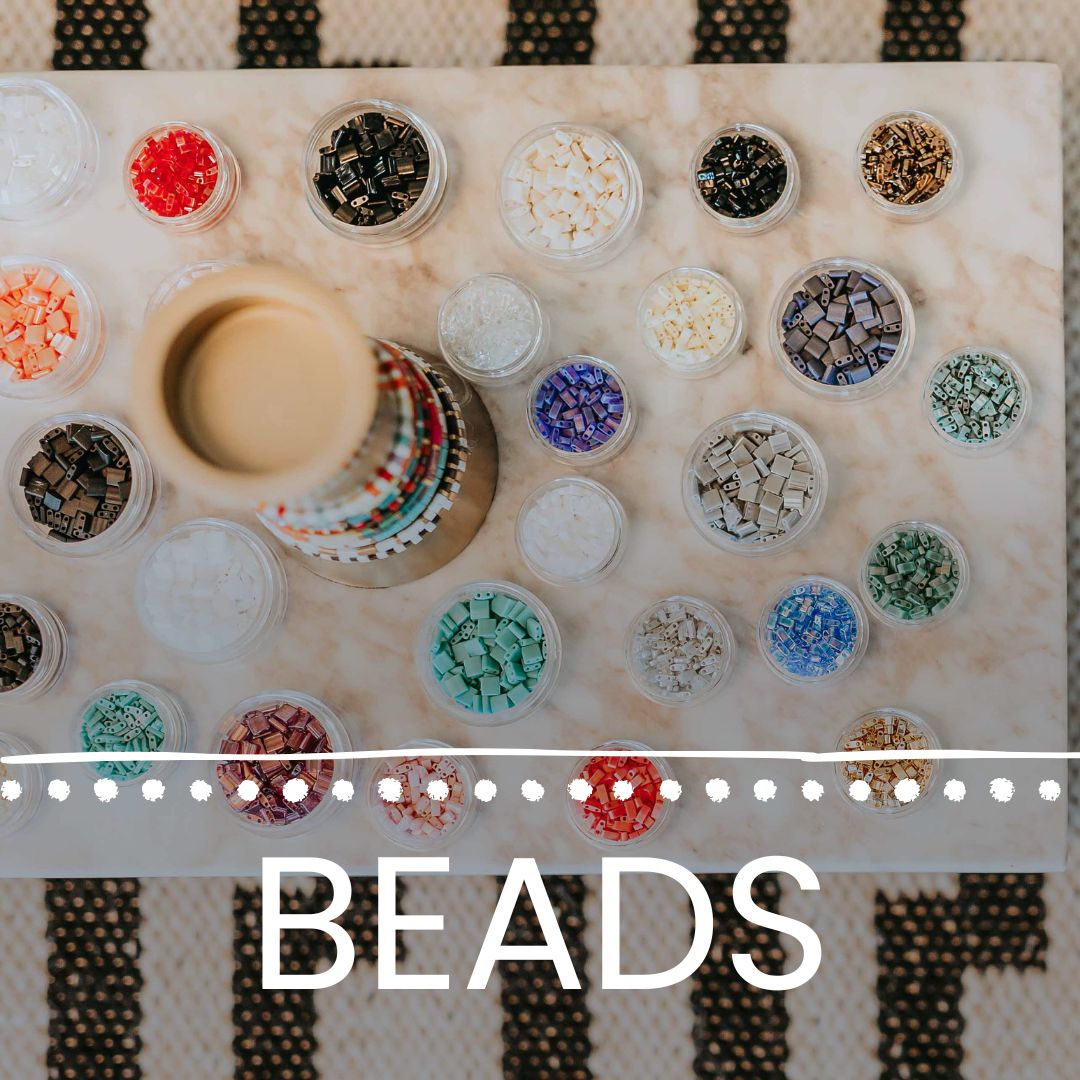
Start with the hole, size the cord to fit it, and don't skimp on the material. Browse Mack & Rex's seed bead collection for Japanese glass beads sized for standard stretch cord, from 11/0 seed beads to Miyuki Tila tiles, and pick a cord diameter that matches before you cut a single inch. Or skip the stringing altogether and pick up a finished bracelet already strung on crystal-cord elastic, sized XXS through 5XL so it actually fits the wrist it's going on. Get the cord right once, and the knot, the fit, and the color all hold up with it.
Frequently Asked Questions
What should you look for in elastic beading cord?
Look for a diameter that matches your bead holes, a cord that still snaps back after months of wear rather than going limp, clear or consistent color so it doesn't show between beads, and enough body to hold a surgeon's knot without slipping. Most cheap stretch cord fails on the second point first: it stretches out within a few weeks of regular wear.
What diameter elastic cord should I use for beading?
A 0.5mm to 0.8mm cord fits most seed beads and Miyuki Tila bead holes, which run small and narrow. Bigger beads like heishi discs or larger glass rounds usually need a 1mm cord for support, since anything thinner can shift or wear through faster under the weight.
How do you know if elastic cord will hold its stretch?
Stretch a sample a few inches and let go. Quality cord snaps back to its original length immediately with no visible slack, while cheaper cord often stays a little stretched or feels mushy. Crystal-cord elastic, the type Mack & Rex strings its finished bracelets on, is built to hold that snap-back through regular daily wear.
What's the best knot for elastic beading cord?
A surgeon's knot, a double overhand knot, holds elastic cord better than a single knot because the second wrap bites into the material so it can't slide loose under tension. Pull it snug against the end beads and add a small dot of jewelry glue for extra security.
Does the color or clarity of elastic cord matter?
Yes. Cloudy or yellowed cord shows between beads and ages faster, which is usually a sign the material is already breaking down. Clear, consistent cord disappears visually against glass and crystal beads and tends to come from a more stable batch of elastic.