

What's in a Bracelet Beads Kit? The Complete Starter Checklist
What Should a Bracelet Beads Kit Actually Include?
A good bracelet beads kit includes the beads themselves (usually a mix of Tila, seed, heishi, or accent beads), a length of stretch cord or beading thread, a needle, scissors, and basic findings like clasps or crimp beads. Everything should be there to sit down and finish at least one bracelet start to finish. Most beginner kits skip a piece or two, so knowing the full checklist ahead of time saves a wasted trip to the craft store mid-project.
If you've ever bought a "kit" only to discover it didn't include cord, or the cord it came with snapped on the first stretch, you know exactly what I'm talking about. Let's go through every item that should be in the box.
What Types of Beads Come in a Bracelet Beads Kit?
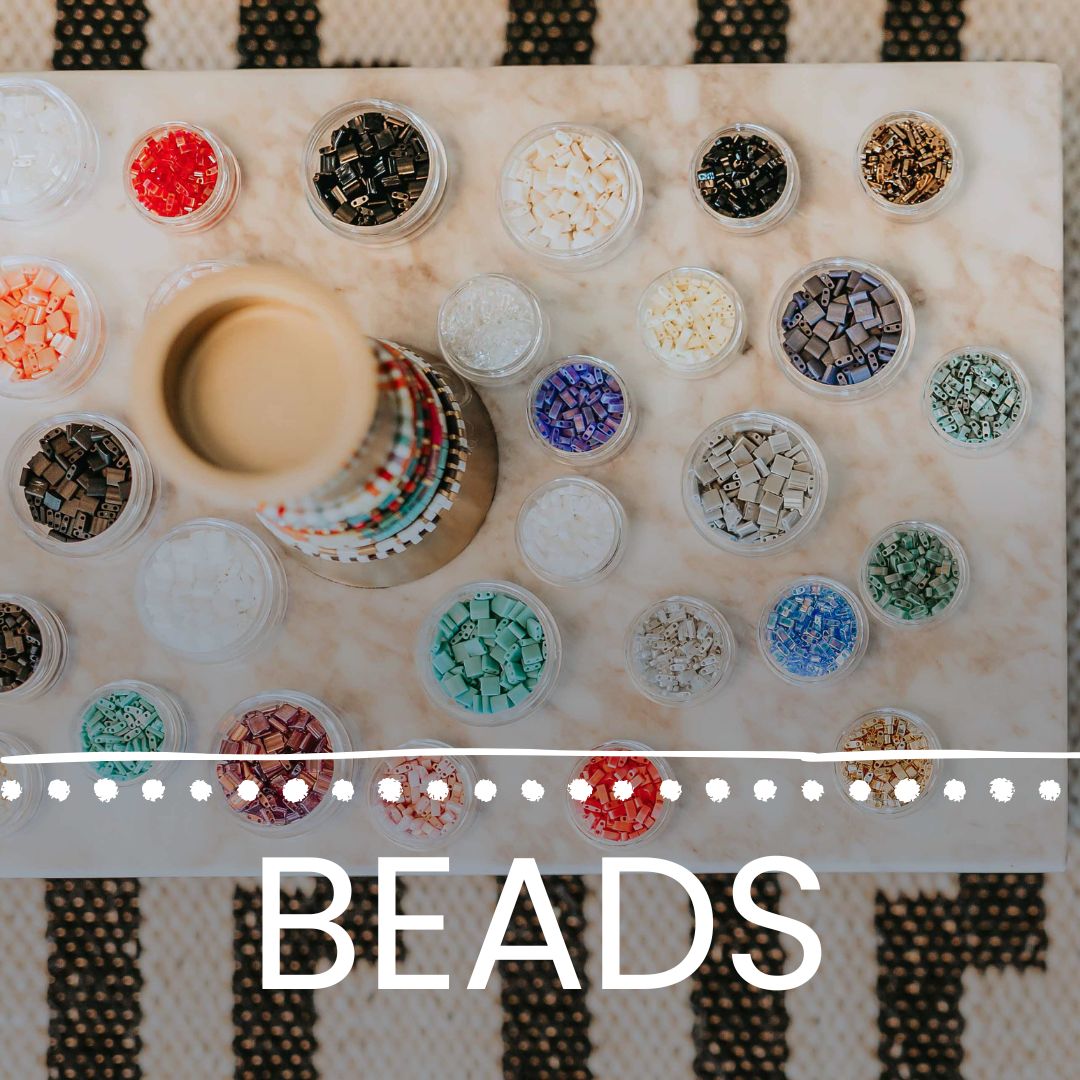
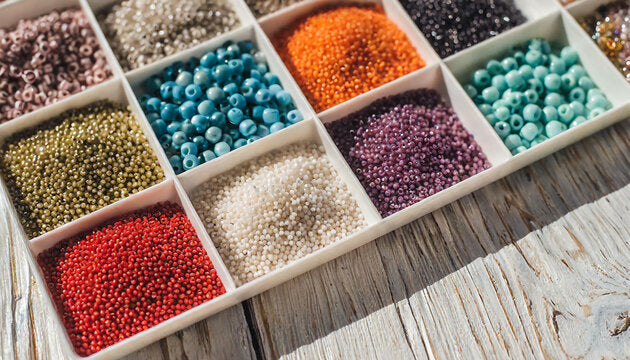
The bead selection makes or breaks a kit. There are four categories worth knowing about.
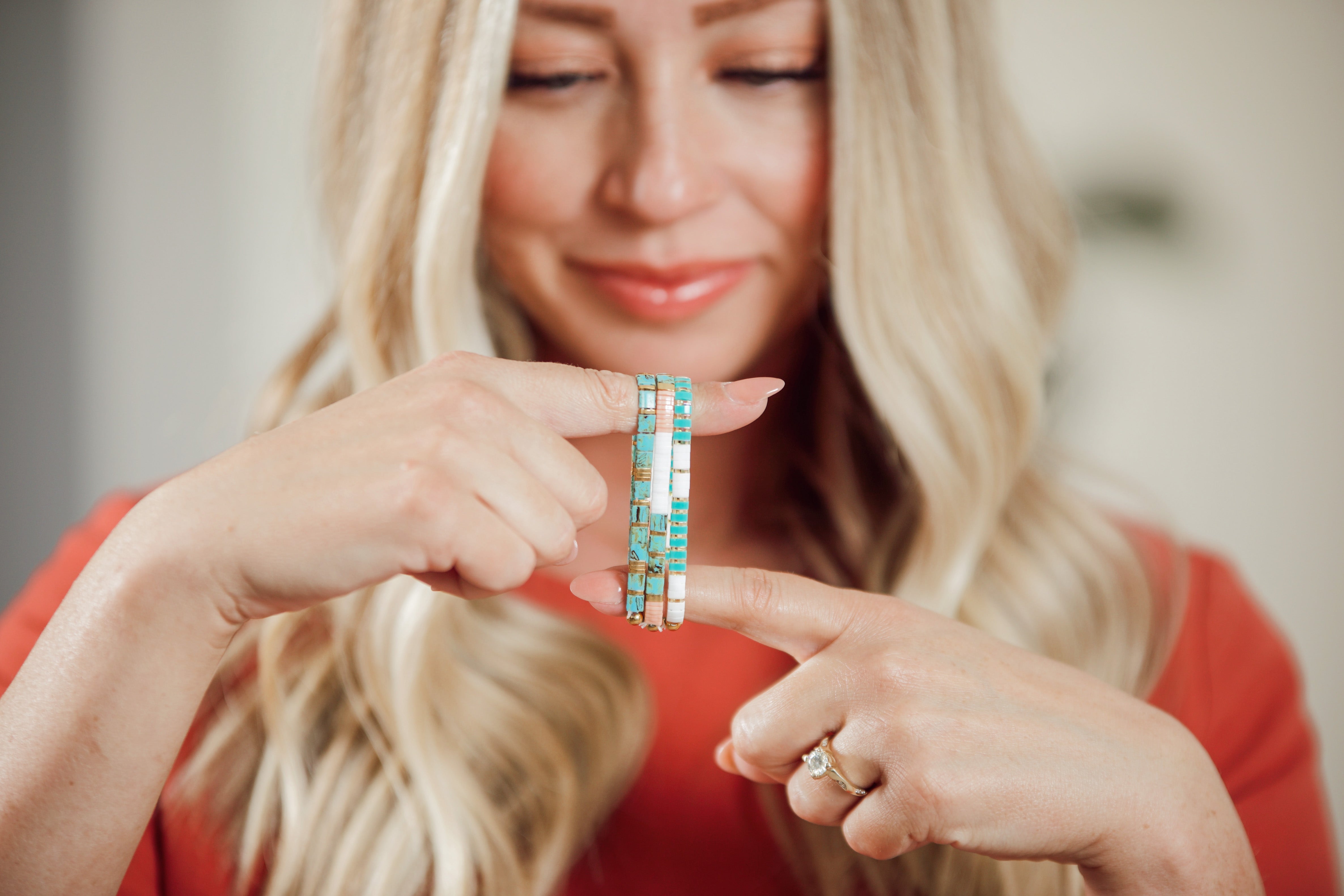
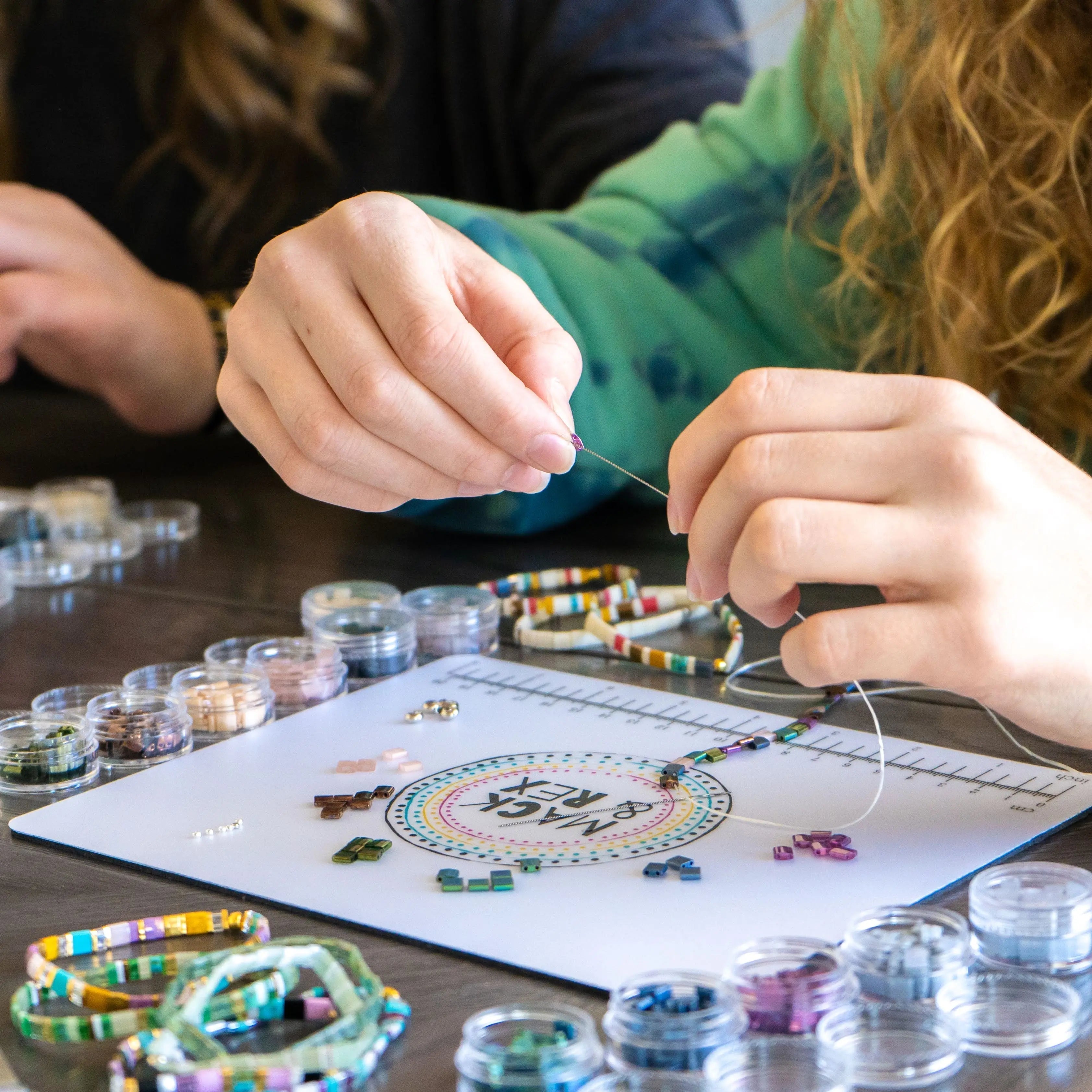
- Tila beads. Flat, two-hole rectangular beads made by Miyuki (a Japanese bead manufacturer). They create a smooth, tile-like surface that lies flat on the wrist and stacks beautifully. Most Mack & Rex kits feature Miyuki Tila beads as the main bead: they're one of the most consistent beads available for this style of bracelet.
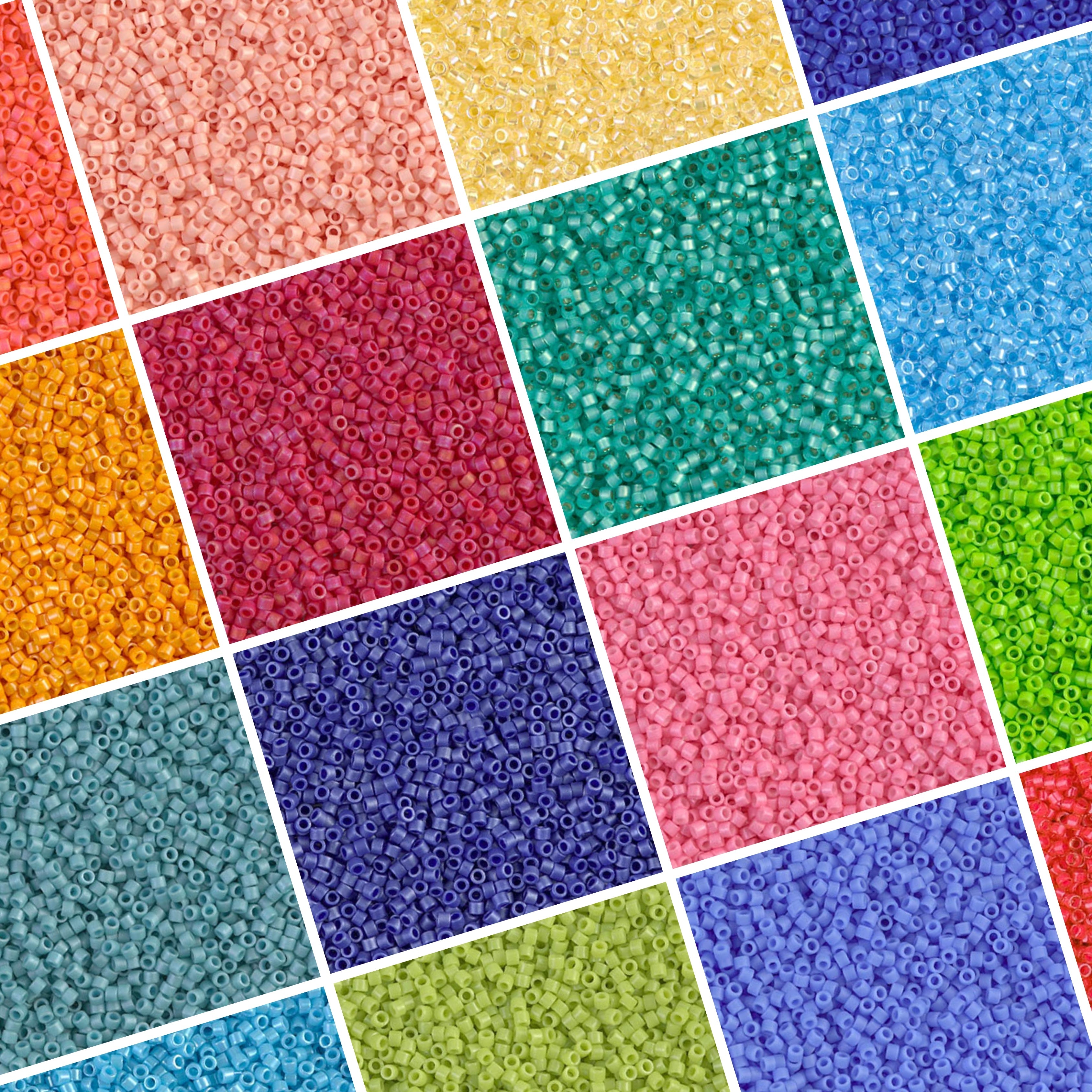
- Seed beads. Tiny round or cylindrical beads, usually glass. They're used as spacers between focal beads or on their own for a fine, delicate look. Miyuki Delicas are a popular seed bead choice for their uniform size.
- Heishi beads. Disc-shaped beads originally made from shell, now also produced in clay and glass. They add a boho texture and layer well with Tila or seed beads in a stacked bracelet look. For more on heishi beads specifically, The Spruce Crafts has a clear primer on how they're used in jewelry making.
- Accent beads. Larger focal beads (charms, faceted crystals, or shaped glass) that anchor a design. A good kit includes a handful for variety without overwhelming the pattern.
One practical note: bead count matters. A kit that says it contains "20+ bracelet-worth of beads" should be clear whether that's 20 full bracelets or 20 partial sets. Mack & Rex kits specify this on each listing, so you're not guessing.
What Cord or Thread Does a Bead Bracelet Kit Need?
Cord is where a lot of cheap kits cut corners. The main options are:
- Stretch elastic cord. The friendliest option for beginners, with no clasp needed, easy to put on and take off, and forgiving on sizing. Look for crystal-clear elastic cord (sometimes called "crystal cord") that's rated for glass beads. Thin, dull elastic from the craft store breaks fast. Mack & Rex finished bracelets use crystal-cord elastic specifically because it holds up through daily wear, including workouts.
- Beading thread. Nylon or polyester thread like FireLine or Wildfire for more structured designs. Stronger than elastic, though it requires a clasp and more technique. Better suited for multi-strand or woven patterns than a simple single-strand stretch bracelet.
- Wire. Stainless steel or coated memory wire for bangle-style designs. Less common in starter kits because it requires different tools to cut safely.
For a beginner starting with Tila or heishi beads on a single strand, stretch elastic cord is the right call. The kit should include enough cord for at least two or three bracelets. Cord breaks, knots slip, and having extra on hand means you're not stopping mid-project.
What Findings and Hardware Should Be in the Kit?
Findings are the metal bits that finish a bracelet. Look for these in any complete kit:
- Clasps. Lobster clasps, toggle clasps, or magnetic clasps depending on the design. If the kit uses stretch cord, you may not need a clasp at all (the bracelet slips over the hand). With thread or wire, a clasp is non-negotiable.
- Crimp beads or crimp tubes. Small metal beads that you flatten with pliers to secure the end of beading wire or thread. Essential for non-elastic designs.
- Jump rings. Small metal rings used to connect a clasp to the bracelet end. Usually come in a small assortment.
- End caps or wire guardians. Optional, though helpful for protecting cord where it exits the last bead.
A beginner-level kit doesn't need every single finding. If the kit description doesn't mention clasps or crimps at all, and it's not an elastic-cord kit, that's a gap you'll need to fill yourself before you can finish anything.
What Tools Does a Starter Bracelet Kit Include?
Tools make the difference between a smooth first project and a frustrating one.
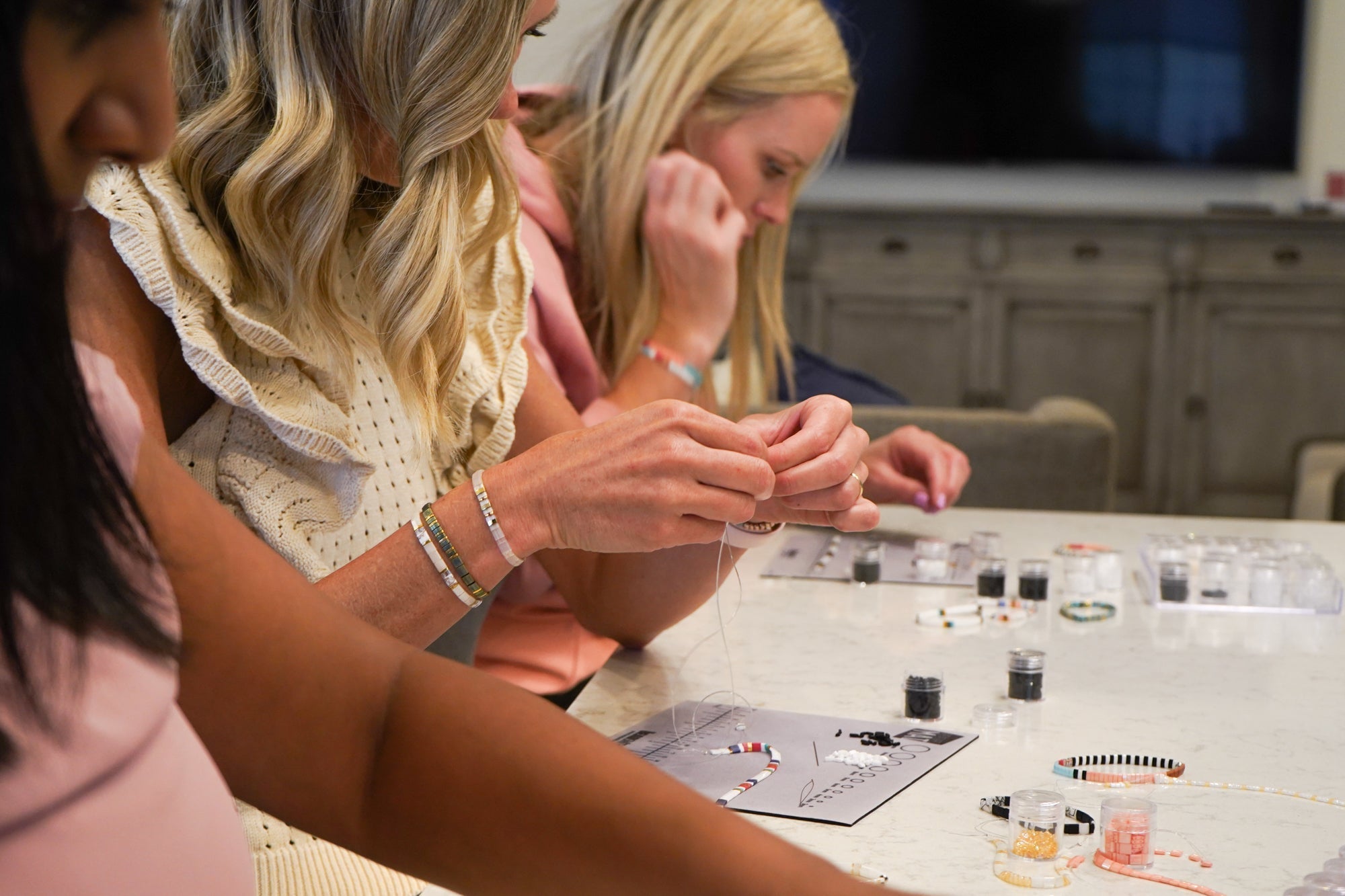
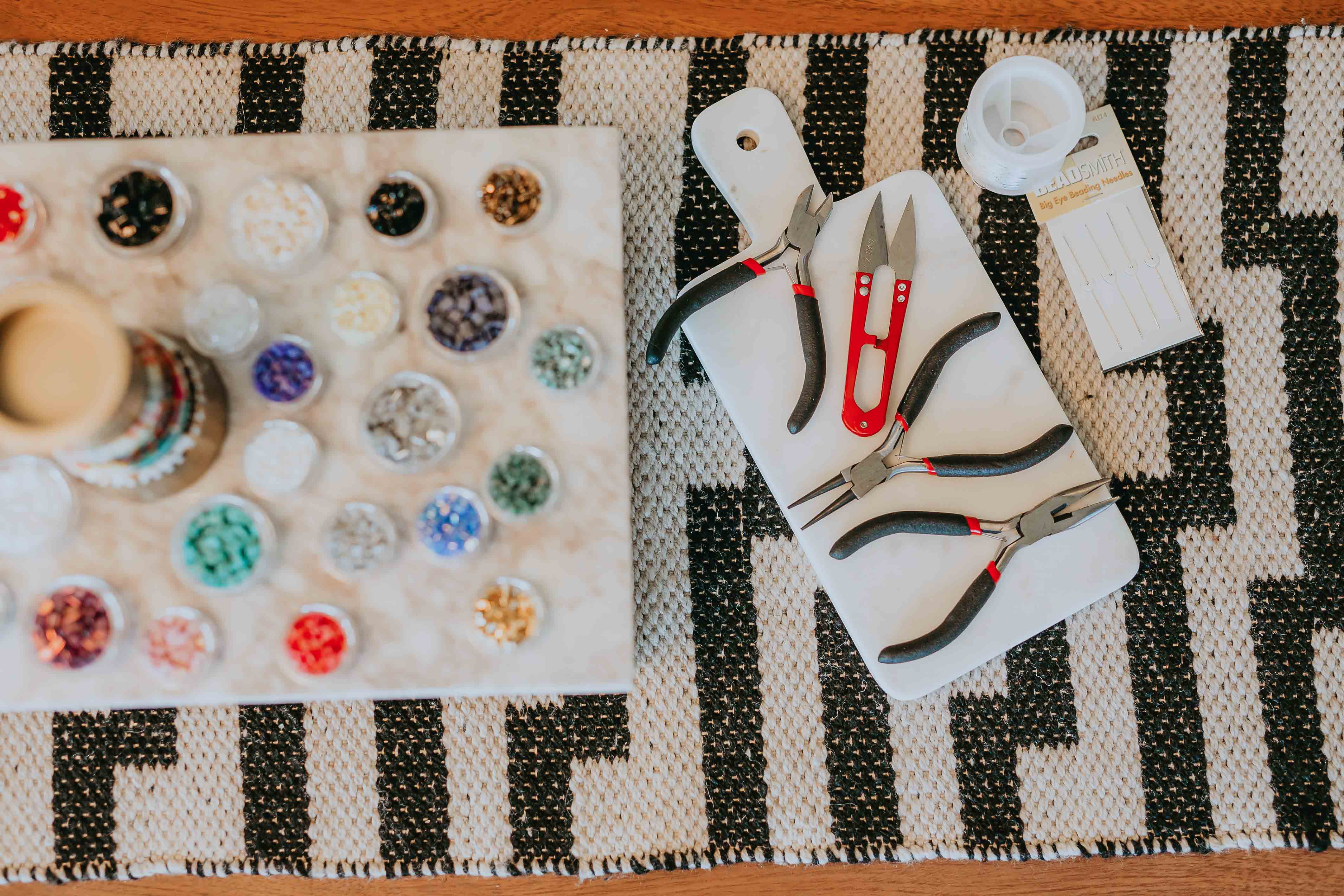
- Beading needle. A flexible, thin needle for threading beads onto cord or thread. Collapsible twisted-wire needles are easiest for beginners, with a big eye that collapses as it passes through tight bead holes.
- Scissors or thread snips. Sharp scissors cut cleanly; don't try to use kitchen scissors on beading cord.
- Pliers. Flat-nose or chain-nose pliers for crimping and opening jump rings. Round-nose pliers are useful if the kit involves wire wrapping. Most beginner elastic-cord kits don't require pliers at all.
- Bead mat or tray. A soft surface that keeps beads from rolling. A folded hand towel works in a pinch, and a real bead mat has a slight texture that holds beads in place even better.
- Ruler or bracelet sizer. Seriously useful. Bracelet sizing is where a lot of beginners go wrong (more on that below).
Not every kit bundles all of these. The better all-in-one kits include at least a needle, scissors, and a bead mat. If tools are listed as "sold separately," factor that into your total cost before buying.
Does a Bracelet Beads Kit Include Sizing Help?
Most kits skip sizing guidance entirely. The short version follows.
The average adult wrist measures 6 to 7 inches. A finished bracelet usually needs about half an inch to an inch of ease to sit comfortably and move freely on the wrist. That puts a typical finished bracelet between 6.5 and 8 inches. Kids run smaller; larger wrists need more cord and more beads than a standard kit assumes.
Mack & Rex offers bracelet making kits with sizing that runs XXS through 5XL — one of the few places you'll find that range built into a kit rather than bolted on as an afterthought. If you're making bracelets for a group (a crafting night, a classroom, a family gathering), that range matters.
For a more detailed breakdown of how bead count affects bracelet length at different wrist sizes, Beadaholique's bracelet sizing guide walks through the math clearly.
Piecemeal Supplies vs. an All-in-One Kit: Which Saves More?
Buying supplies item by item looks cheaper on paper. It almost never is.
A spool of quality elastic cord runs $6-10. A pack of Miyuki Tila beads is $5-9 per colorway. Add a needle, a bead mat, accent beads in two or three colors, and a small pack of crimp beads, and you're at $40-60 before you've made a single bracelet. And you still might be missing something.
An all-in-one kit bundles everything at a lower per-item cost, and you know the pieces are sized and matched to work together. The Mack & Rex trio kits (starting at $44.99) include enough materials to make three bracelets with Miyuki Tila beads, stretch cord, and instructions, with no sourcing required. For crafters who want to go deeper, the starter and ultimate kits run higher and include a significantly larger bead selection and enough cord for a full bracelet wardrobe.
The piecemeal approach makes sense if you already own tools and just want a specific bead colorway. For a true beginner, the kit wins on convenience and cost every time.
Frequently Asked Questions
What beads are best for a beginner bracelet beads kit?
Miyuki Tila beads and heishi beads are both excellent starting points. Tila beads are flat and uniform, which makes them easy to string in a straight line without a lot of technique. Heishi beads are lightweight and flexible. Both work well on stretch elastic cord, which is the most beginner-friendly stringing material.
Can I make a bracelet beads kit work without a needle?
For stretch elastic cord, yes. You can stiffen the end of the cord with a small piece of tape to thread it through bead holes. For beading thread or fine cord, you'll want a needle. A collapsible twisted-wire needle is the easiest type to use and costs less than a dollar.
How much cord does a starter kit need?
For a single 7-inch stretch bracelet, you'll use roughly 20 to 24 inches of elastic cord to leave enough tail for knotting. A kit that includes one yard (36 inches) per bracelet gives you enough to work with and retry if the first knot slips. More cord is always better than less.
Are bead bracelet kits safe for kids to use?
Beads are a choking hazard and are not safe for young children. For older kids (generally 8 and up), bracelet making can be a great hands-on activity with adult supervision at all times. Never leave small loose beads accessible to toddlers or young children. The U.S. Consumer Product Safety Commission provides guidance on toy and craft material safety for children.
What's the difference between a bead bracelet kit and a bracelet making kit?
The terms are often used interchangeably, though in practice they mean different things. A "bead bracelet kit" generally focuses on the beads, with cord and tools sold separately. A "bracelet making kit" typically bundles everything you need to complete a bracelet from start to finish. Always read the kit contents carefully before buying.
Ready to Skip the Scavenger Hunt?
A good bracelet beads kit opens up and you start making, with no extra runs to the craft store and no guessing whether the cord will hold. Mack & Rex kits are built around Miyuki Tila beads, crystal-cord elastic, and clear instructions, with sizing that actually fits real wrists from XXS to 5XL.
Browse the full lineup at Mack & Rex bracelet making kits and see which one fits your project. Orders over $100 ship free within the US, and if you find yourself falling down the finished-bracelet rabbit hole, the buy-3-get-1-free deal makes it easy to start a stack.