

What's Actually Inside a Good Bracelet Making Kit? A Pre-Buy Checklist
What Should Actually Be Inside a Bracelet Making Kit?
A bracelet making kit worth buying gives you real glass beads (not painted plastic), crimp-quality stretch cord, working findings like crimp beads and knot covers, actual tools, not a single flimsy needle, and instructions you can follow without a magnifying glass. Skip any kit that's vague about what's inside.
That's the short version. The long version is where most kits fall apart, literally. You open the box, the beads don't match the photo, the cord snaps the first time you tie a knot, and there's a folded slip of paper instead of real instructions. Before you add a kit to your cart, here's what to check.
Are the Beads Real Miyuki Tila or Just Painted Plastic?
Real Miyuki Tila beads are Japanese glass, cut flat and square with two parallel holes, made to a tight size tolerance so every bead lines up the same way. Cheap kits swap in plastic or acrylic "tile" beads that look similar in a product photo but vary in size from bead to bead.
That size variation is the whole problem. String twenty inconsistent plastic tiles next to each other and you get gaps, twisting, and a bracelet that sits crooked on the wrist, not lying flat the way it should. Glass also holds color and shine longer than painted plastic, which tends to scuff and fade with normal wear. If a listing doesn't name Miyuki specifically, or shows beads with rounded edges, not the flat tile shape, that's your first red flag. Miyuki is a Japanese glass bead manufacturer, and Mack & Rex resells their Tila beads rather than making them, so we're always specific about which beads are actually in a kit versus a lookalike (Fire Mountain Gems has a good breakdown of how seed bead sizing and finish grading works if you want to compare specs across brands).
Does the Cord or Elastic Actually Hold Up?
Good kits use crystal-cord elastic, a stretch cord rated for beading that keeps its stretch and doesn't fray at the knot. Weak kits use thin, generic elastic that stretches out within a few wears or snaps the first time you double-knot it.
Cord is the part nobody thinks about until it fails, usually while the bracelet is on someone's wrist. A stretchy bracelet that goes loose after two weeks or pops off during a workout is a cord problem, not a bead problem. Mack & Rex kits use .5mm crystal elastic stretch cord, the same cord used in our finished bracelets, so a bracelet made from a kit is built to the same standard as one we sell ready-to-wear. If a kit's listing doesn't mention cord thickness or type at all, assume it's an afterthought.
What Findings and Tools Come With It?
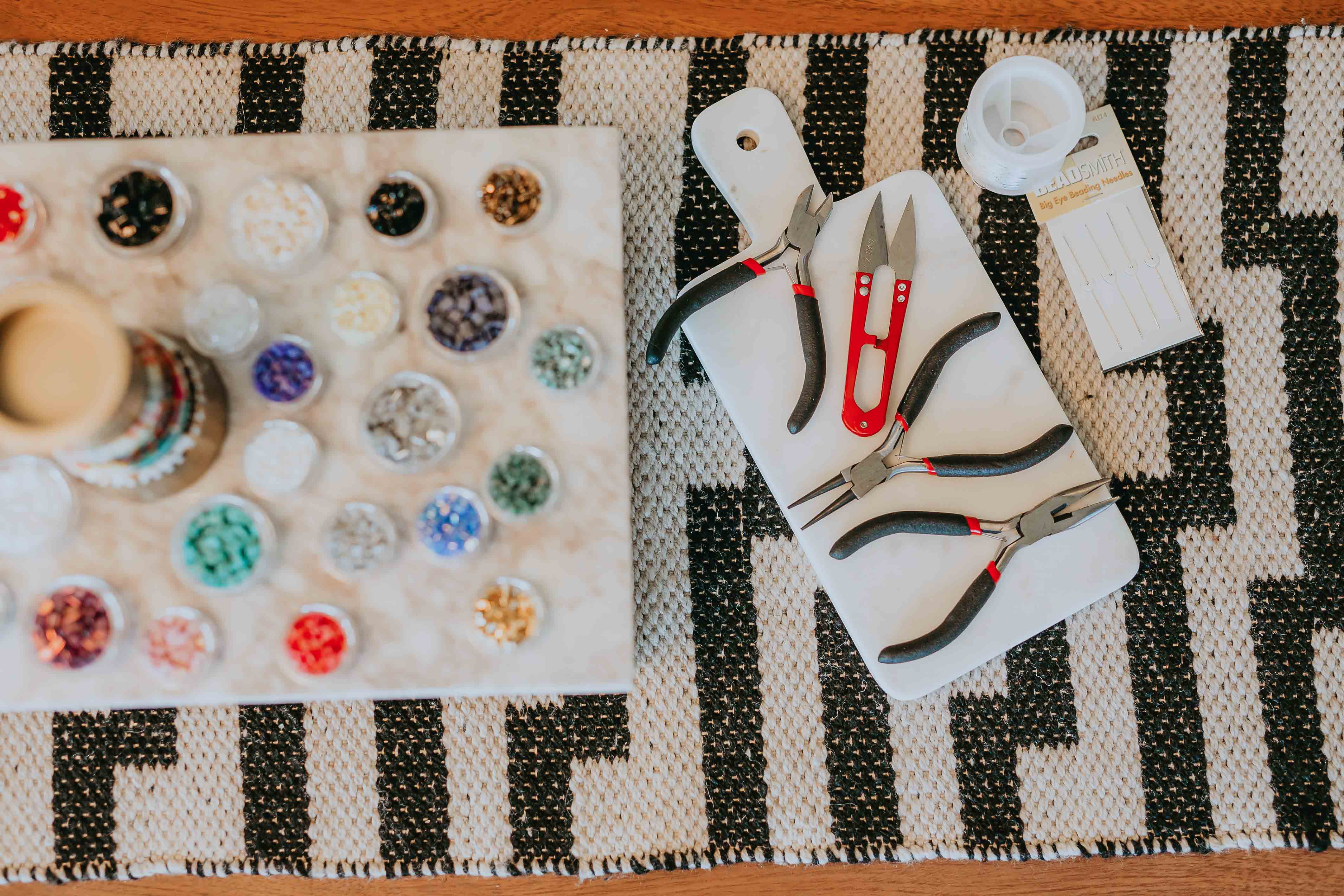
Findings are the small hardware pieces, crimp beads, knot covers, clasps, that finish off a bracelet so the ends don't fray or slip loose. Tools mean pliers, side cutters, and beading needles that lock so the elastic doesn't slide while you're stringing.
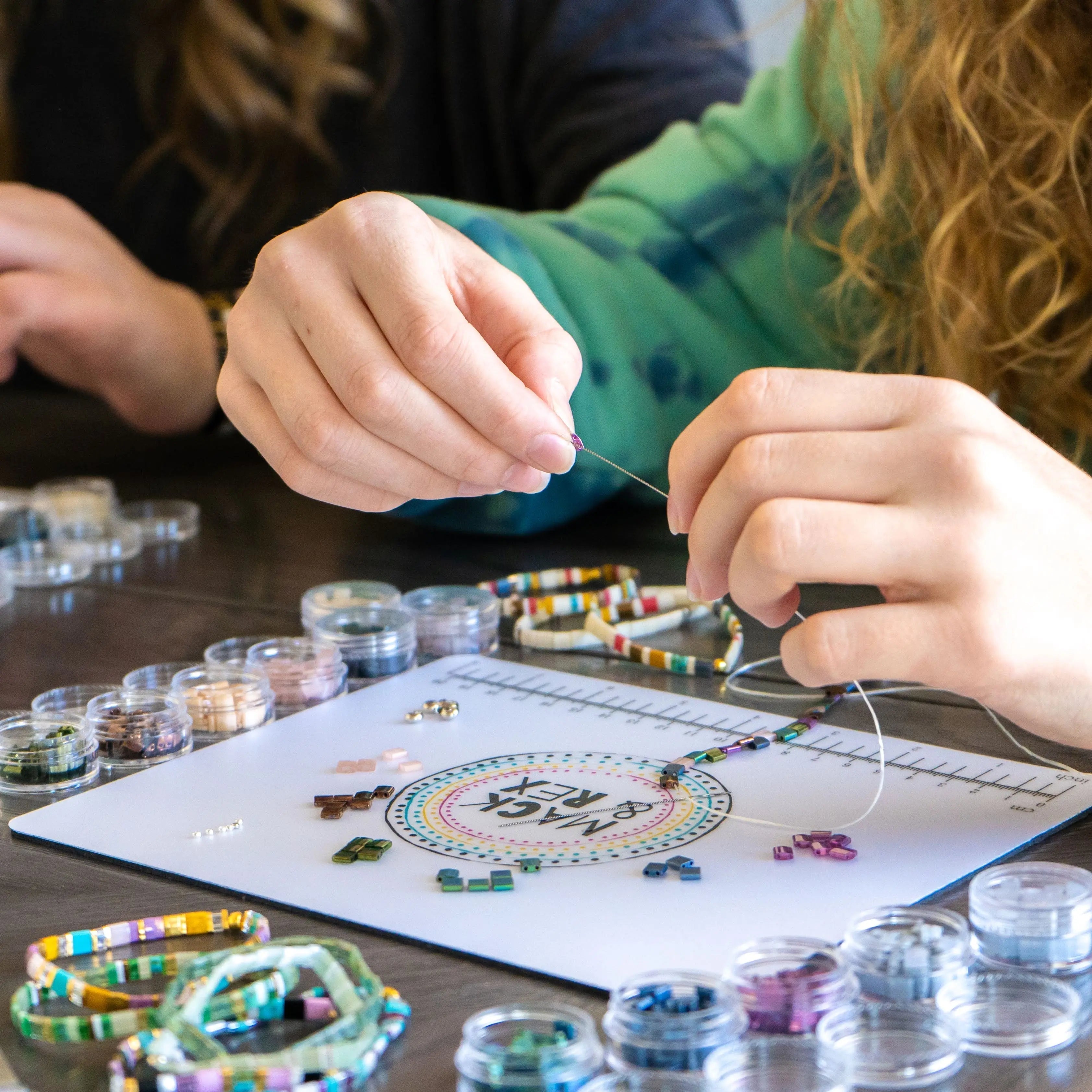
A kit missing these forces you to buy separate jewelry pliers and figure out crimping on your own, which defeats the point of buying a kit in the first place. Our Tila Bead Starter Kit, for example, includes a full tool set with pliers and side cutters, two locking beading needles, crimp beads, knot covers, and a bead mat with a built-in ruler for sizing as you go. That's the difference between a kit you can start using in five minutes and one that sends you to a craft store for parts before you can finish a single bracelet. If you're buying kits regularly or crafting with a group, our All-in-One tools and supplies kit is a solid standalone option for keeping a full tool set on hand.
Is a Bracelet Making Kit Safe for Kids to Use?
Beads, crimp beads, and other small findings are a choking hazard. A good kit is built for adults and older kids crafting with adult supervision, not for a toddler to dump out and play with alone.
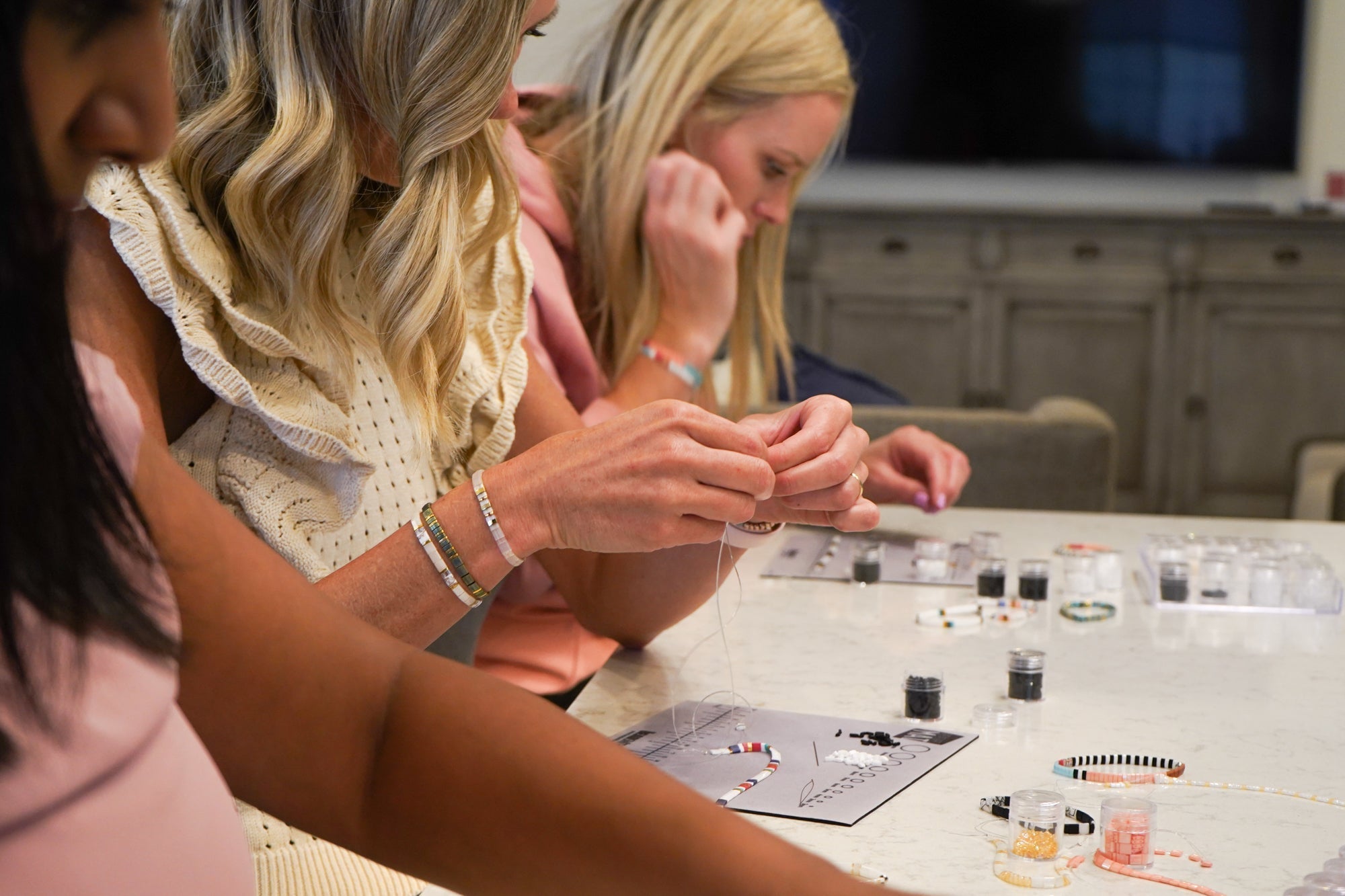
This is worth saying plainly because so many kits get marketed around the "make it together" moment, a grandmother and grandkid at the kitchen table on a Sunday afternoon. That's exactly the setting a kit is designed for, with an adult managing the small parts and helping with the trickier steps like crimping and knotting off. It's not a claim about developmental benefits or an educational tool, it's a craft project. Keep loose beads, crimps, and findings away from very young kids and pets between sessions, and count pieces back into their containers when you're done for the day.
How Many Bracelets Does the Kit Actually Make?
This is where sizing matters more than most buyers expect. A "trio" style kit makes 3 bracelets from one themed color palette, a starter kit makes 20, and a larger bulk kit makes 80. None of that is guaranteed unless the listing states it plainly.
Cheap kits often advertise "makes bracelets" without a number, so you can't compare value across listings. Compare kits the way you'd compare unit pricing at the grocery store: total price divided by bracelets made. A trio kit runs $44.99 and yields 3 bracelets in one color story, which works well as a gift or a first project. Our Tila Bead Starter Kit runs $189.99 and makes 20 bracelets with your pick of color pack, and the largest option, The Ultimate Tila Bracelet Kit, makes 80 bracelets for $399.99, which pencils out to a lower per-bracelet cost if you're crafting for a group, a class, or a bridal party. If you want an ongoing supply without committing to the biggest kit up front, the DIY Bracelet Kit Club subscription ships a new 3-bracelet kit each month for $36.99.
What Do the Themed Trio Kits Actually Look Like?
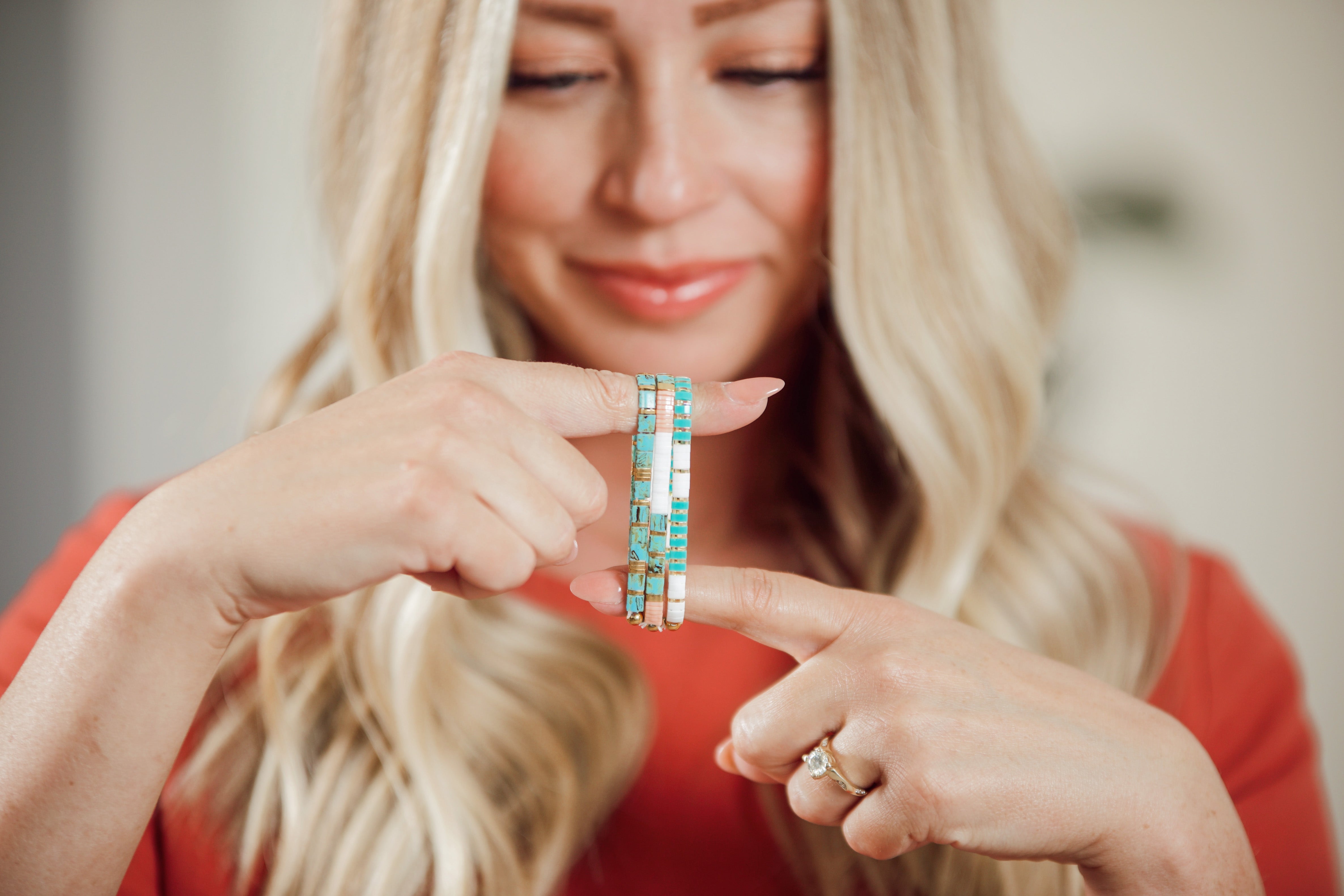
A trio kit gives you one coordinated color story and enough beads, cord, and findings to finish 3 bracelets in that palette, no separate color decisions required. It's the fastest way to try a kit without committing to a 20 or 80-bracelet size.
Mack & Rex runs a rotating lineup of these, named for the palette rather than a generic SKU: STAINED GLASS leans into jewel tones, HAPPY and LAVENDER SKY run brighter and softer respectively, and seasonal drops like NOEL or AMERICANA rotate in and out with the calendar. Each one runs $44.99 and includes the same crystal-cord elastic, findings, and tool basics as the larger kits, just scaled down to a single palette. Worth noting: that $44.99 price point is below the $100 free-shipping threshold on its own, so don't expect free US shipping unless you're bundling in other items. Browse the current colorways on the bracelet making kits page since the lineup changes with each monthly drop.
Are the Instructions Actually Usable?
Usable instructions show the exact stringing pattern with photos or diagrams, name the tools you'll use at each step, and explain how to finish and knot off the bracelet so it doesn't unravel. A slip of text with no visuals isn't instructions, it's a suggestion.
This matters most for a first-timer or a grandmother sitting down with a grandchild for an afternoon project. Nobody wants to pause a craft session to hunt for a YouTube tutorial because the printed card assumes you already know how to crimp. Every Mack & Rex kit includes access to a free online tutorial that walks through the same stringing method we use on our own finished bracelets, so you're following the identical process whether you bought a kit or a ready-made piece. The Spruce Crafts has a solid general primer on beading techniques if you want to see the baseline vocabulary (needle, crimp, findings) before you shop.
What Else Separates a Good Kit From a Cheap One?
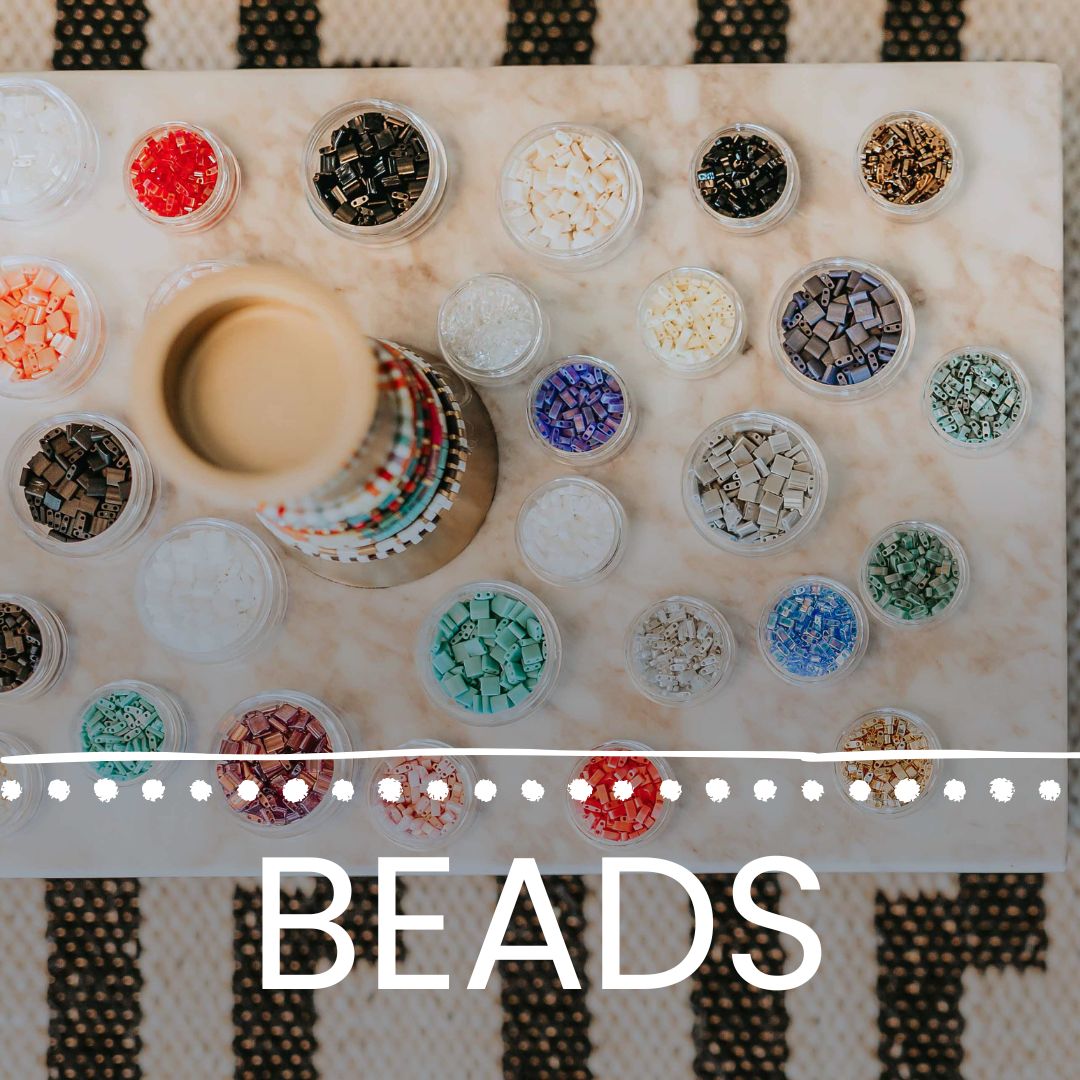
Packaging and organization matter more than people expect. A kit with 12 clear labeled containers holding each bead color is faster to work with than a single bag of mixed beads you have to sort by hand before you even start stringing.
Small details add up fast here: a bead mat with a built-in ruler so bracelets come out sized correctly, a case sturdy enough to store extra beads between projects, and color packs that are genuinely coordinated rather than a random assortment. A kit's real value shows up the second time you use it, when you can find the bead you want in ten seconds rather than digging through a junk drawer bag. If durability and fit matter to you (and they should, since a bracelet that doesn't stay put during a workout defeats the purpose), look for a kit built on the same materials as the brand's finished pieces, not a separate, cheaper line made just for the DIY crowd.
So What Should You Actually Buy?
Match the kit size to your project. A trio kit is right for a single gift or a one-afternoon project with a kid or grandkid. A starter kit that makes 20 covers a small group or a season of gift-giving. A kit that makes 80 makes sense for a class, a bridal party, or a bulk crafting weekend.
Across every size, check for the same four things: real Miyuki Tila glass beads, crystal-cord elastic, complete findings and tools, and instructions with visuals. Our full lineup lives on the bracelet making kits collection, where every kit lists exactly what's included and how many bracelets it makes, so you're comparing real specs rather than guessing from a photo.
Frequently Asked Questions
Is a bracelet making kit worth it compared to buying loose beads?
Yes, if you don't already own tools, cord, and findings. A kit bundles beads, elastic, needles, and closures at one price, so you're not guessing what else to buy or ending up with tools you'll only use once. If you already have pliers and cord on hand, loose bead mixes can stretch your budget further.
What's the difference between Miyuki Tila beads and generic tile beads?
Miyuki Tila beads are a specific Japanese glass bead made by Miyuki Co., cut and finished to tight, consistent tolerances so the square holes line up and colors stay true. Generic or plastic tile beads vary more in size and finish, which shows up as gaps, twisting, or uneven color once the bracelet is strung.
How many bracelets does a typical kit make?
It depends on the kit size. A trio kit is built to make 3 bracelets, a starter kit makes 20, and a larger kit makes 80. Check the product listing for the exact count before buying, since kit sizes and colorways change with each drop.
Are bracelet making kits safe for kids to use?
Beads, crimps, and findings are small parts and a choking hazard, so kits are meant for adults and older kids working with adult supervision, not for very young children to use alone. Keep loose components away from toddlers and pets between crafting sessions.