

What's Inside a Tila Bead Bracelet Kit? A Complete Breakdown
What's actually inside a tila bead bracelet kit?
A solid tila bead bracelet kit comes with four things: the beads, elastic cord, basic instructions, and usually a small finishing needle. That's it. No hot glue gun, no wire cutters, no prior jewelry experience required. If you've been searching for a beginner-friendly bracelet making kit with tila beads, knowing what's in the box before you buy saves a lot of guesswork.
Below is a full breakdown of every component you'll typically find, what separates a good kit from a forgettable one, and how the whole thing goes together.
What are tila beads, and why do they matter for bracelets?
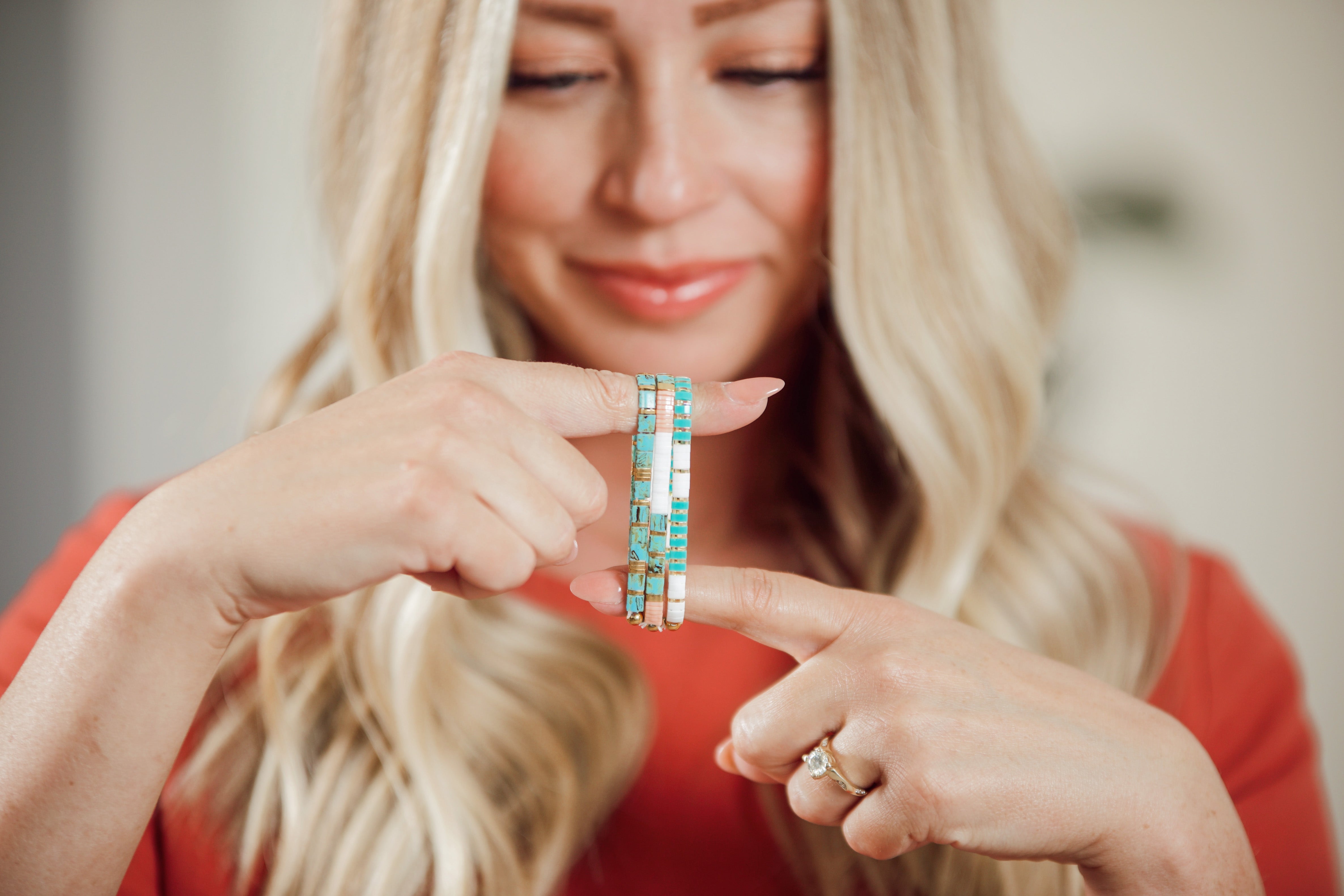
Tila beads are flat, square, two-hole glass beads originally developed by Miyuki, a Japanese bead manufacturer. Each bead measures 5mm x 5mm and sits flat when strung, which gives tila bracelets that clean, tiled look you've probably seen stacked together.
The two-hole design is actually the whole trick. Thread through one hole consistently and every bead lays face-up in a neat row. Nearly impossible to get wrong, which is why tila bracelets have become a go-to starter project for adults who want to try beading without a steep learning curve. Miyuki's glass bead lineup, including tilas, is documented on their official product pages.
What does a complete tila bead bracelet kit include?
The beads themselves
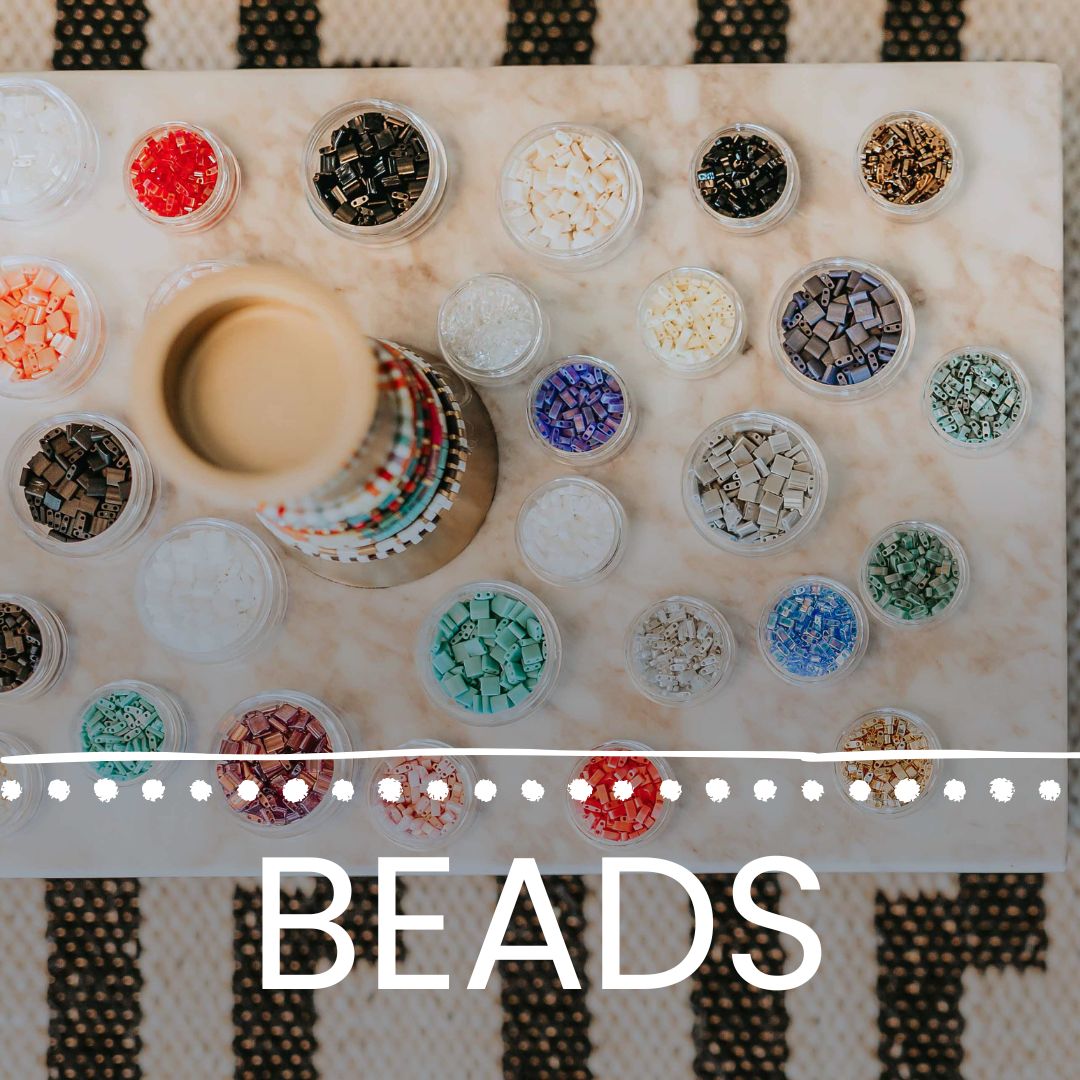
This is the most important component by far. A good kit uses authentic Miyuki glass tila beads, not plastic knock-offs or unnamed "tile beads." The finish on genuine Miyuki glass holds up through daily wear, sweating, hand-washing, and stacking. You'll notice the difference the first time you handle them: the weight feels right, the finish is consistent, and the color doesn't rub off.
Mack & Rex kits and bead packs use Miyuki glass tila beads sourced from Miyuki. Miyuki is a third-party brand that Mack & Rex carries and curates; Mack & Rex doesn't manufacture the beads, they select them. That distinction matters because it tells you exactly what quality standard you're getting.
Quantity varies by kit. Mack & Rex bead packs are sized to yield 20+ bracelets per pack. Trio kits come with three coordinating colorways so you can build a small stack without committing to a massive bead order.
Elastic cord
Crystal-clear elastic cord is the preferred material for stretch bracelets. It's nearly invisible between beads, holds tension well, and allows for easy on-and-off wear with no clasp required. Look for cord rated for repeated stretching; thin bargain cord snaps fast. Mack & Rex kits include crystal-cord elastic designed to hold up to real daily use.
Instructions
A good beginner kit walks you through the process step by step. The instructions don't need to be long. They do need to cover: how to measure your wrist, how many beads to string per size, how to tie and tuck the knot, and any finishing tips. Clear, straightforward instructions are one of the things that separate a quality kit from a bag of loose beads with no context.
Optional extras: needles, clasps, and finishing tools
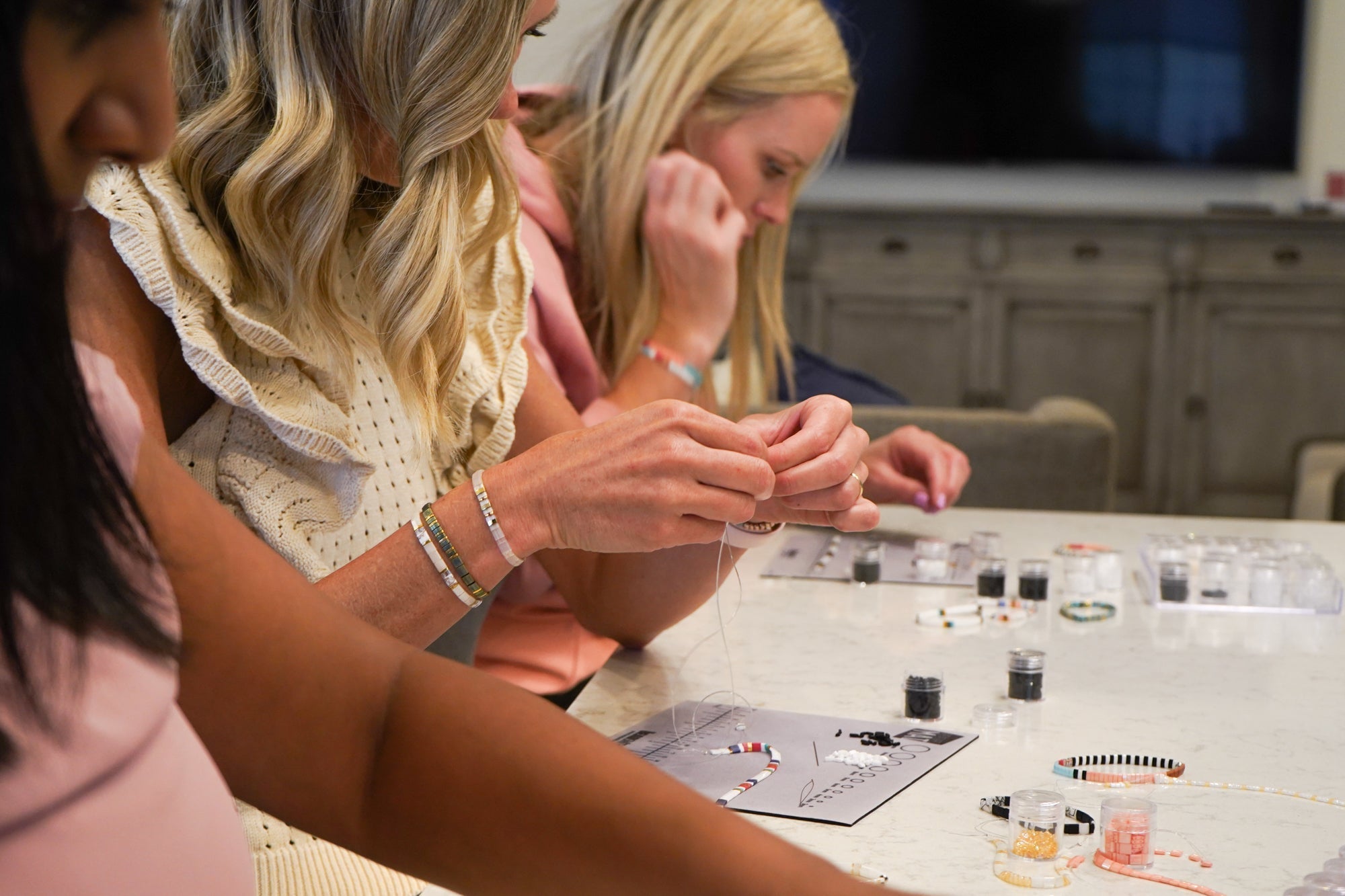
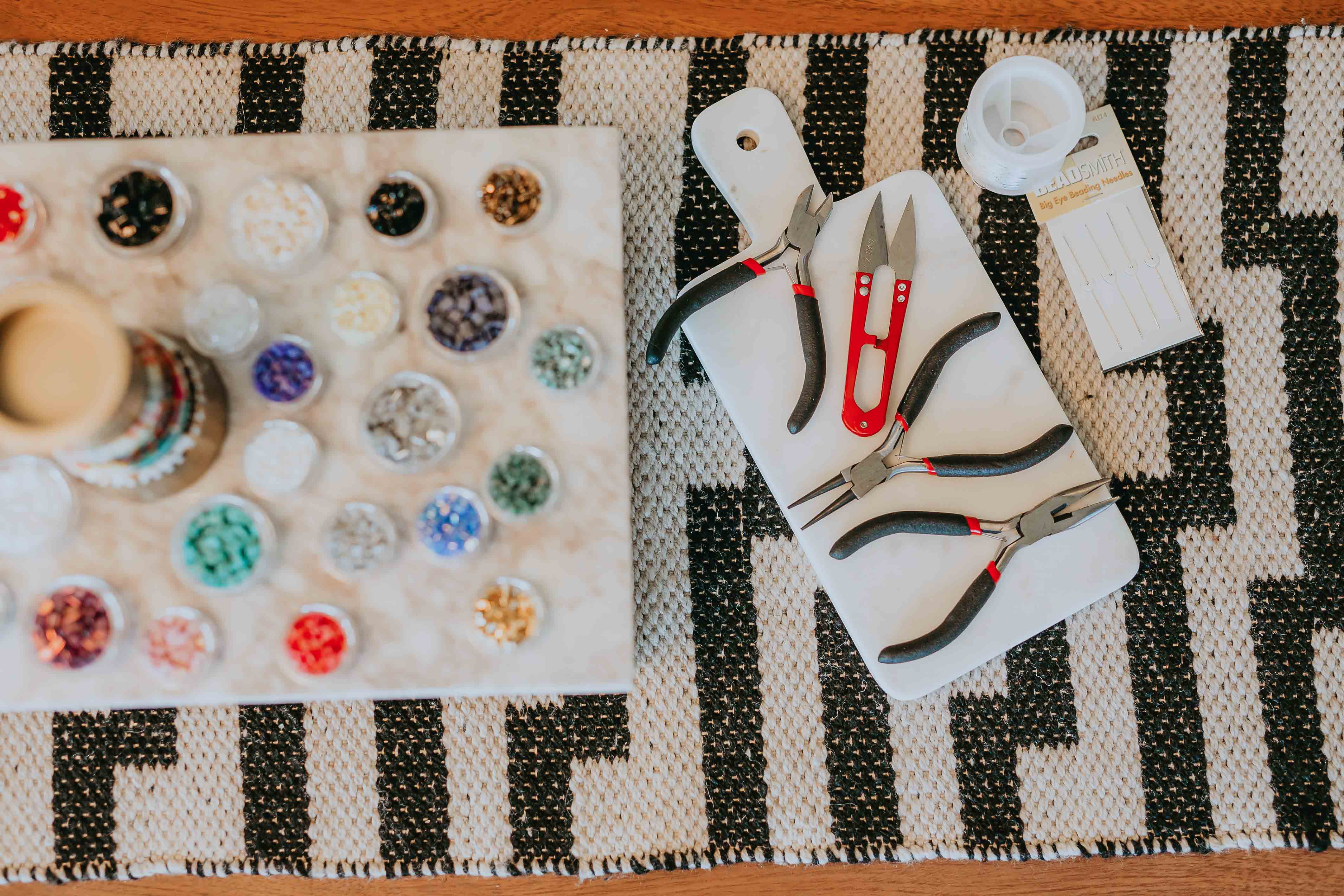
Some kits include a beading needle to make threading easier, especially for people who find the cord a little slippery to work with. Others add a pair of scissors, a knotting tool, or a small dot of fabric glue for securing the final knot. Check the product listing before you buy if a needle is important to you, since contents vary.
How do you actually assemble a tila bracelet from a kit?
The process is genuinely simple. Five steps.
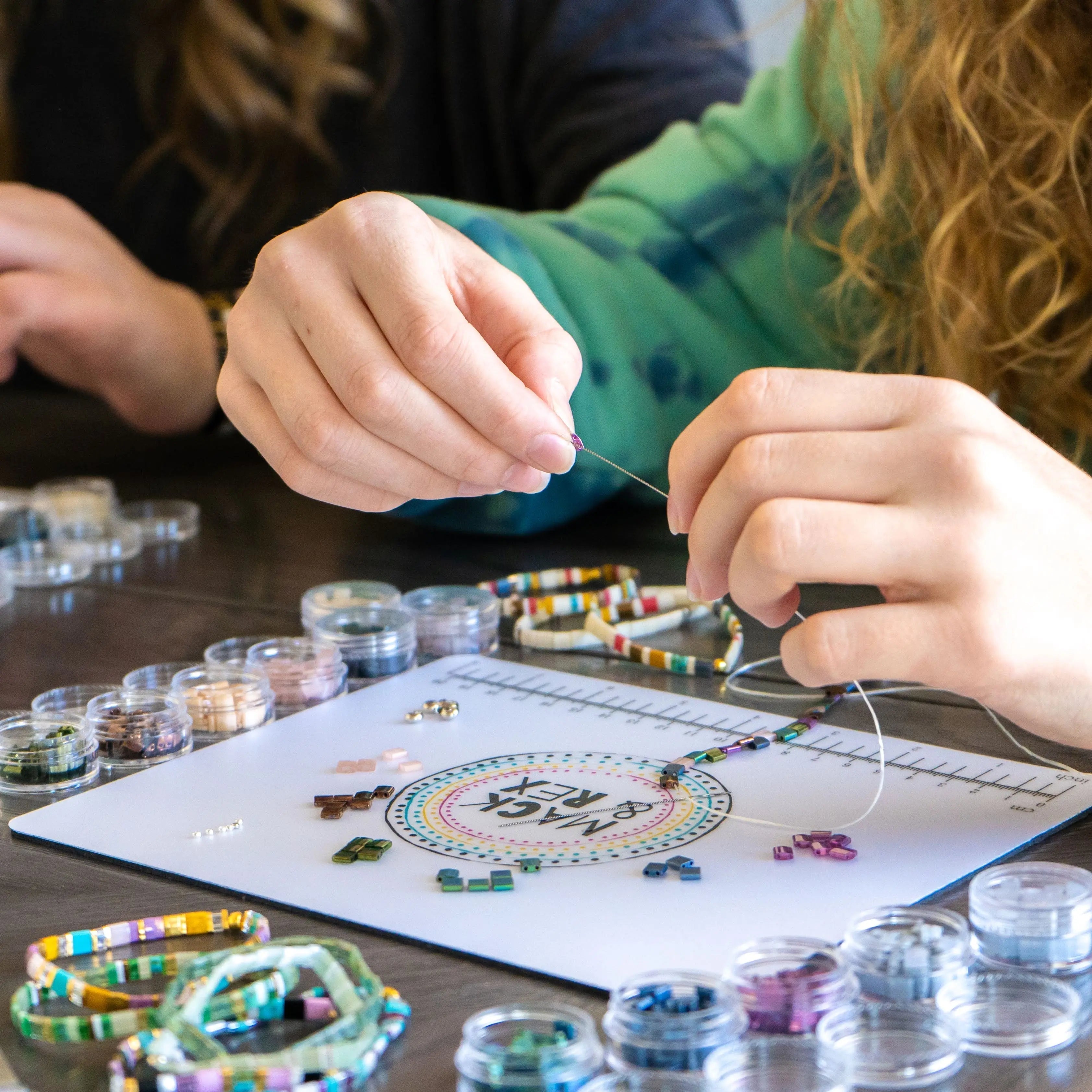
First, sort your beads by color on a flat surface so you can see your pattern before you start. Cut your elastic cord about 6 to 8 inches longer than your wrist; that extra length gives you room to tie a good knot at the end. String beads one by one through a single hole on each tila bead, keeping that choice consistent.
Once you've strung enough beads to go around your wrist with about a finger's width of slack, you're ready to tie off. A surgeon's knot (two overhand knots stacked) is the standard method. Pull it tight, add a tiny drop of glue if your kit includes it, trim the cord tails, and tuck the knot into the nearest bead hole so it disappears.
That's a bracelet. Many people finish their first one in about 20 minutes, then immediately start a second.
What wrist sizes do tila bead kits work for?
Elastic stretch bracelets offer real size flexibility. Since you're stringing the beads yourself, you add more or fewer beads to match your wrist. Mack & Rex bracelets, both ready-to-wear and DIY kits, are sized from XXS through 5XL. That inclusive sizing approach comes from a founding commitment: bracelets that fit every wrist in the family, not a narrow average.
How is a tila bead kit different from a general bead bracelet kit?
Most bead bracelet kits use round seed beads or mixed shapes. Tila kits are more focused: the flat square tile shape creates a specific look, structured, stackable, a little architectural. Color-mixing becomes more intentional too. Two or three colors in a tila bracelet read cleanly because each bead sits flat and visible, rather than blurring together in a pile of round beads.
For beginners, that structure is genuinely helpful. There's one obvious way to orient each bead, so the finished bracelet looks clean even on the first try. You can browse Miyuki's full tila range, alongside other two-hole bead styles, at Beadaholique's Miyuki collection.
Is a trio kit worth it over buying beads separately?
Depends on your goal. A single-color bead pack works fine when you want one bracelet in your favorite color. A trio kit is the smarter call when you want a coordinated stack. The colorways are already paired, so you skip the guesswork of whether two colors will look good side by side. You get three ready-to-assemble kits in one go.
Mack & Rex trio kits are put together with that stacking intention built in. Make all three, put them on together, and you'll immediately understand why the set format exists.
Where can you get a quality tila bead bracelet kit?
A few things to look for before you buy: confirmed use of Miyuki glass beads (not generic "tile beads"), elastic cord rated for stretch wear, and clear size guidance. Avoid kits that don't specify the bead brand or cord type; those missing details usually tell you the kit wasn't put together with much care.
Mack & Rex bracelet making kits are built around those standards. Founded by a mom and her two daughters (Mack and Rex), the brand sources authentic Miyuki tila beads and pairs them with crystal-cord elastic and sizing from XXS to 5XL. Kits ship worldwide (shipping and any customs and duties calculated at checkout); US orders over $100 ship free.
If you've been meaning to try a DIY bracelet kit and keep putting it off, a tila kit is the lowest-friction entry point there is. Pick a colorway, grab the cord, and you'll have something wearable inside the hour.
Browse the full range at Mack & Rex bracelet making kits and find the kit that fits your wrist and your vibe.
Frequently asked questions about tila bead bracelet kits
What's inside a tila bead bracelet kit?
A tila bead bracelet kit typically includes Miyuki tila beads, crystal-clear elastic cord, and instructions. Quality kits like those from Mack & Rex may also include a needle or finishing tool. The exact contents vary by kit, so check the product listing for specifics.
Are tila bead bracelet kits good for beginners?
Yes. Elastic-cord tila kits are among the most beginner-friendly bracelet projects available. There's no clasp, no wire wrapping, and no tools beyond scissors. Most people finish a bracelet in under 30 minutes on their first try.
How many bracelets can I make from one tila bead kit?
Mack & Rex bead packs are sized to make 20 or more bracelets. Trio kits are designed to produce three coordinating bracelets from one purchase.
What wrist sizes do tila bead kits accommodate?
Since you string the beads yourself, you control the length. Mack & Rex covers sizing from XXS to 5XL; just add or remove beads to match your wrist measurement.
Are tila bead kits safe for kids?
Tila beads are small parts and pose a choking risk for young children. Adult supervision is required for any beading project involving kids. These kits are best suited for older children and teens with an adult present throughout the project.