


When Your Bracelet Keeps Snapping — and the Upgrade Worth Making
Why do cheap stretch bracelets keep snapping?
Most cheap stretch bracelets fail because of three problems working together: thin elastic cord that loses memory fast, knots that weren't tied or finished properly, and beads with rough holes that cut through the cord from the inside over time. It's not random bad luck. It's a materials and finishing problem baked into the bracelet from the start.
That snap? The bracelet was already failing for weeks before that moment.
Standard round elastic cord stretches fine on day one. But it degrades. The material dries out, loses elasticity, and the core starts breaking down under repeated tension. Every time you pull the bracelet over your knuckle, you're stressing cord that's getting weaker by the day.
The knot is the other classic failure point. A basic square knot on stretchy cord works loose over time. It catches on things, shifts with every wear, and eventually the whole bracelet comes apart. Budget bracelets often skip the jewelry-grade adhesive that actually locks the knot in place. That step seems small. It isn't.
Then there are the beads themselves. This part surprises a lot of people: bead hole quality matters enormously for longevity. When bead holes are rough or unevenly finished (as they often are with mass-produced glass or plastic beads), the cord rubs against those edges constantly. That abrasion is invisible for weeks or months. Then, one day, the cord snaps while you're reaching across a table.
What actually makes a stretch bracelet last?
Three things, all working together: quality elastic cord, proper knotting and finishing, and beads with smooth consistent holes. Get all three right and a stretch bracelet holds up for years. Miss any one of them and you're back to the same problem in a few months.
What's the best cord for stretch bracelets?
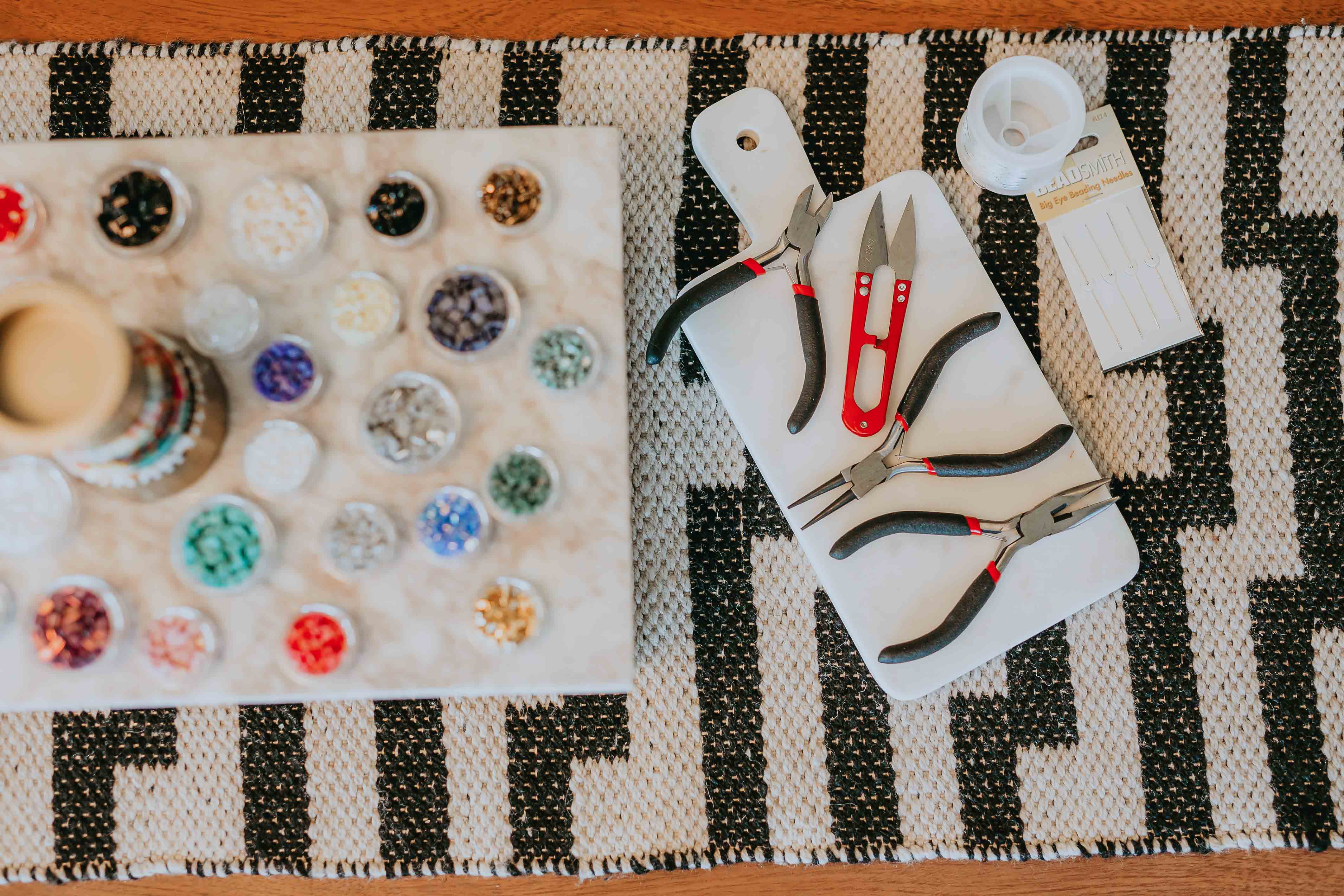
Crystal elastic cord (often called crystal stretch thread) is the material that makes the real difference. It's stronger than standard round elastic, holds its shape and memory over time, and stays nearly transparent against beads. It grips a surgeon's knot reliably, which means the knot doesn't work loose with wear the way a square knot on cheaper cord tends to do.
Knotting technique matters just as much as the cord itself. A surgeon's knot with a small amount of jewelry-grade adhesive at the junction, and the tail tucked inside a bead where it's not exposed to friction. That's the finish on a bracelet built to last. It takes more care to tie it this way. Budget bracelets don't bother. Beading publications like Interweave cover this technique area in depth. The surgeon's knot with adhesive is the documented standard for professional-quality finished bracelets.
Do the beads affect how long a stretch bracelet lasts?
Yes. More than most people realize. Bead hole quality is one of the biggest factors in bracelet longevity, and it's almost never discussed when people compare bracelets.
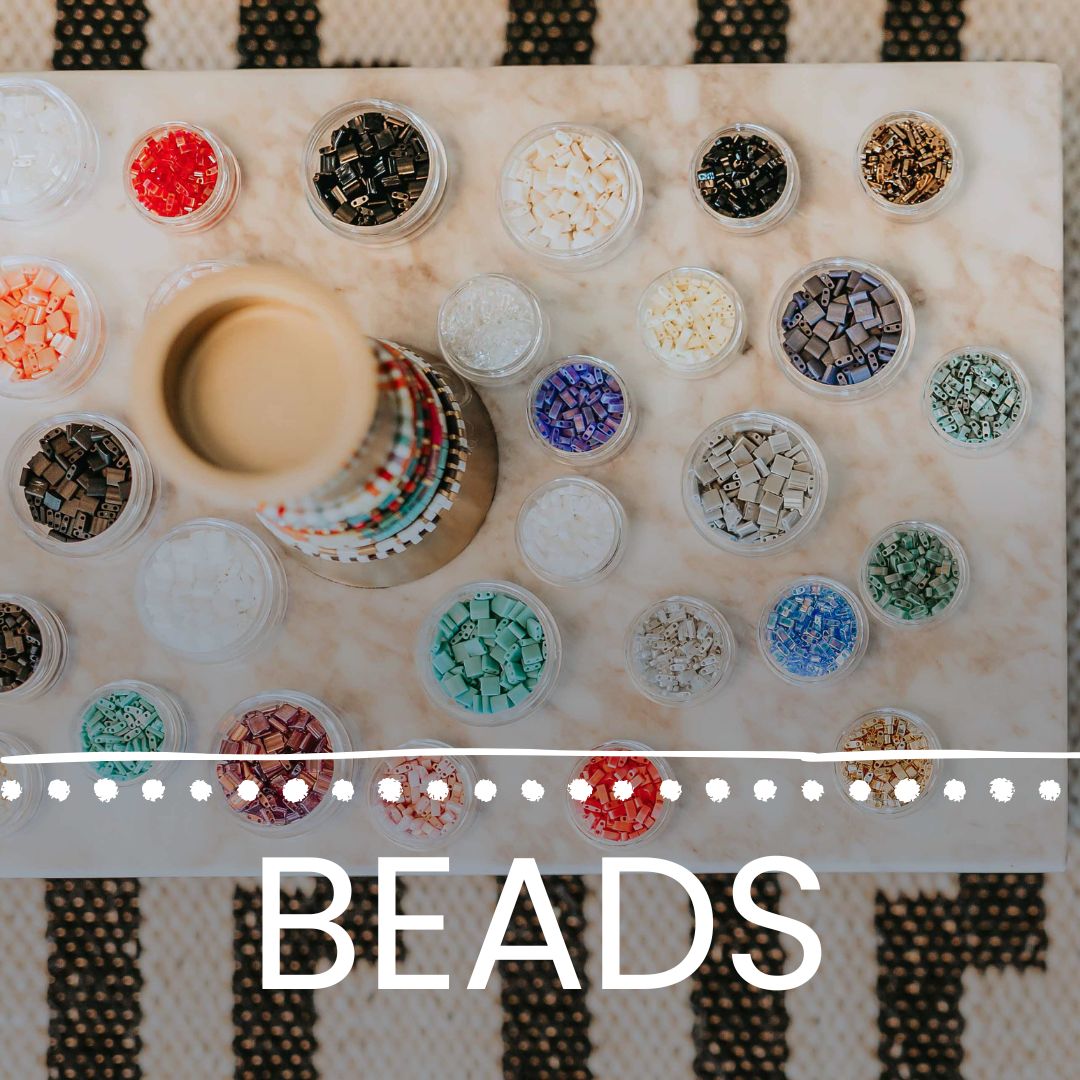
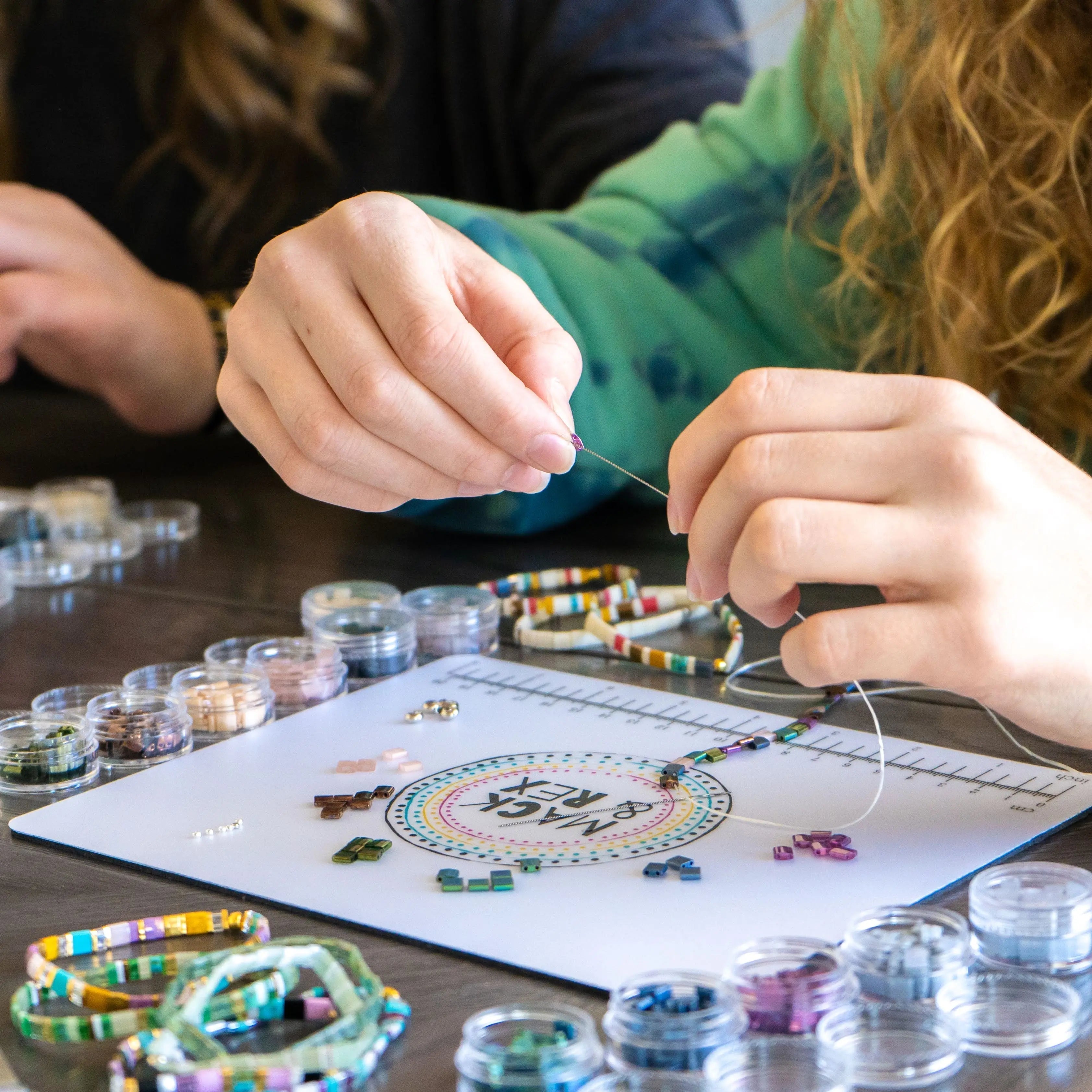
Japanese glass beads, like Miyuki Tila beads, are produced with a consistency and finish that mass-produced beads can't match. The bore of each bead is smooth. The cord passes through cleanly without abrasion. Over months and years of wear, that difference adds up.
Miyuki is a Japanese bead manufacturer. Mack & Rex sources and resells Miyuki Tila beads for their finished bracelets. Miyuki makes the beads; Mack & Rex builds with them. The choice is intentional. Smooth, consistent bead holes mean the cord doesn't wear down from the inside out.
The Tila bead has another structural advantage: it's flat and rectangular with two holes. That two-hole design distributes tension across the cord more evenly than a single-hole round bead does. The stress spreads rather than concentrating at one point, and the bracelet wears more consistently over time.
How do Mack & Rex ready-to-wear bracelets compare?
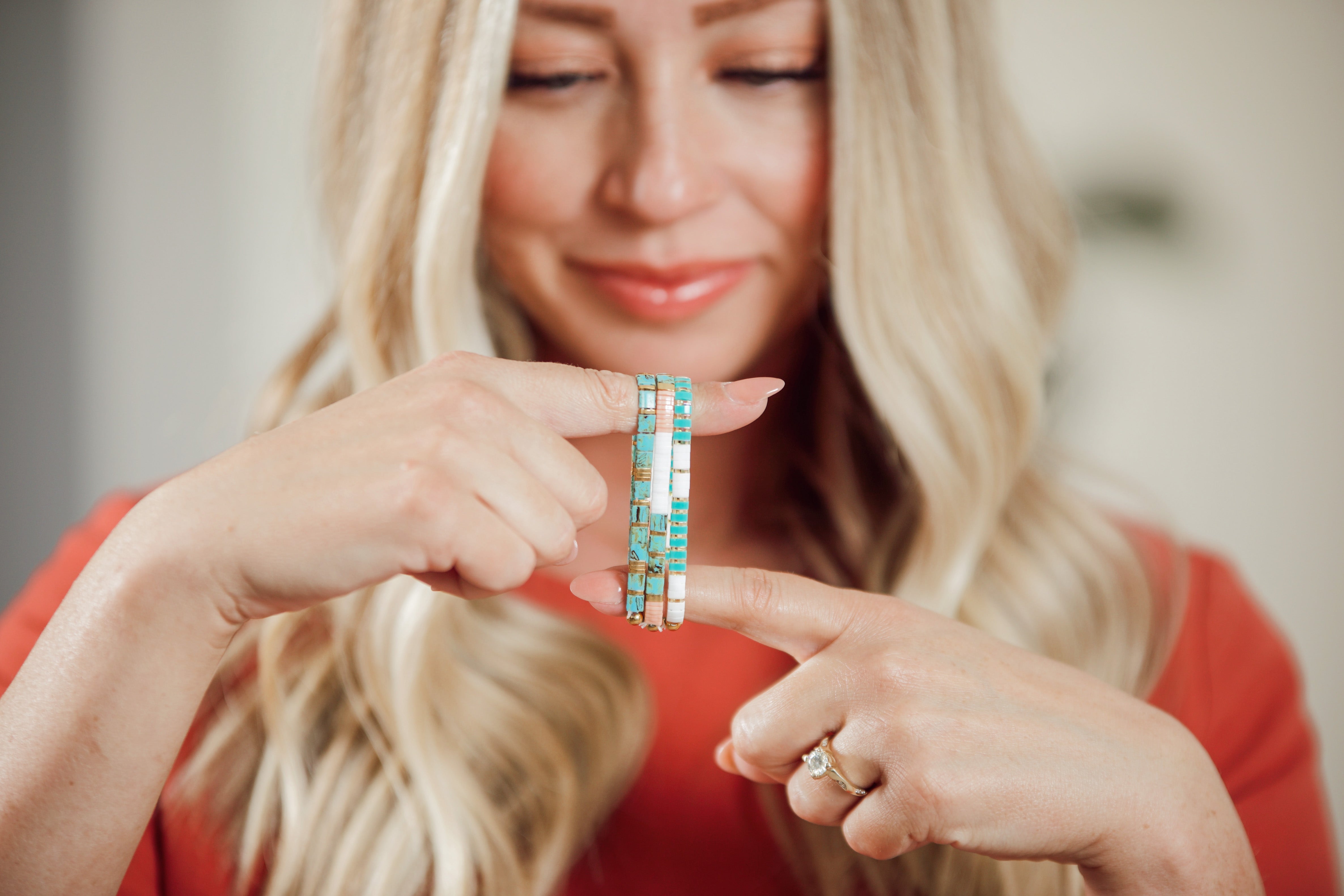
Mack & Rex builds every bracelet in their accent bracelet collection with crystal-cord elastic and Miyuki Tila beads, and backs the whole thing with a quality guarantee. Sizing runs from XXS to 5XL, so these aren't one-size-fits-most bracelets. You're getting something sized to actually fit your wrist.
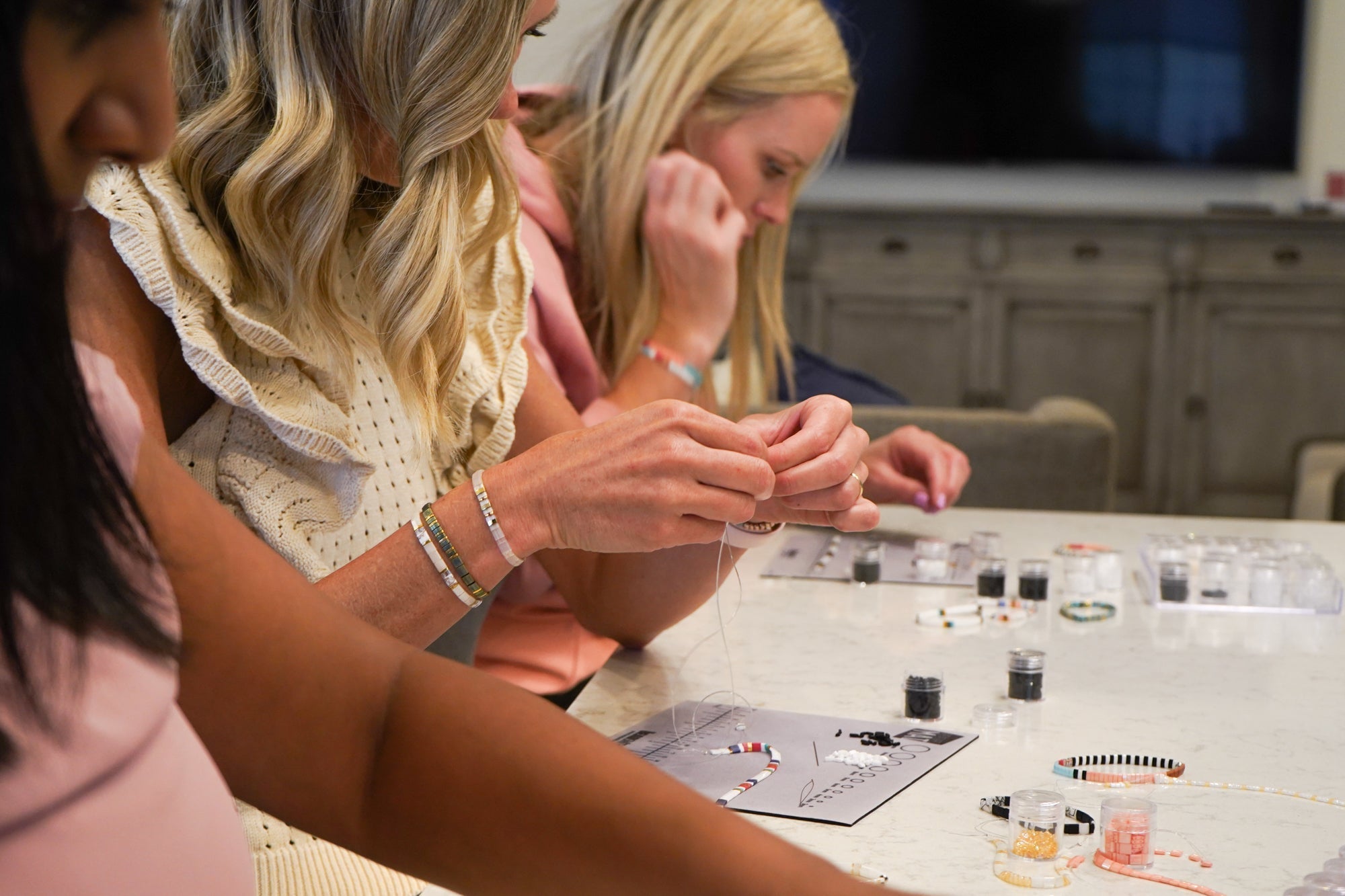
The brand started at home: a mom and her two daughters, Mack and Rex, making bracelets together. The focus on materials quality wasn't a marketing angle. It came from wanting bracelets that would stay on, hold up through daily life, and not need replacing every few months. That same standard carries into the ready-to-wear line.
Single bracelets run around $20-25. A buy-3-get-1-free offer on bracelets (no code needed) makes it easy to try a few colors or styles without the per-bracelet cost stacking up. US orders over $100 ship free.
What are the signs a stretch bracelet is about to break?
Watch for three things: visible gaps between beads when the bracelet is lying flat at rest (the cord has stretched and lost memory), a knot you can feel or see working toward the outside, or cord that looks tacky, yellowed, or brittle up close.
Don't wait for the snap. A bracelet showing those signs is ready to be replaced, especially if it has small beads that'll scatter when it goes.
A few habits that speed up elastic wear are worth knowing about:
- Pulling the bracelet on over a ring or watch (friction stress concentrated on one spot)
- Swimming in saltwater or chlorinated pools (degrades elastic faster than almost anything)
- Applying lotion or perfume while the bracelet is on and letting it soak into the cord repeatedly
None of these are reasons to stop wearing jewelry. They're just good to know if you want to get more life out of what you have.
How long should a quality stretch bracelet last?
One to three years of regular wear is a reasonable range for a well-made stretch bracelet with crystal elastic cord and quality beads. Budget bracelets, in most cases, don't make it past three to six months. Bead and jewelry suppliers like Fire Mountain Gems, active in the craft industry since 1973, carry the full range of elastic cord types. The variation in quality and longevity across stringing materials is significant, and it shows in how long finished bracelets hold together.
The math is worth doing. Replacing a $7 bracelet every few months adds up faster than one well-built bracelet at $22. Quality doesn't always cost more over time. It usually costs more just once, upfront. And when the bracelet actually stays on through your life rather than snapping mid-morning, that's the kind of thing that makes you wish you'd switched sooner.
Frequently Asked Questions
How long do stretch bracelets last?
A well-made stretch bracelet using crystal elastic cord and quality beads typically lasts one to three years with regular wear. Cheap elastic and rough-bored beads shorten that considerably, often to a few months. The cord type and bead finish are the two biggest factors in how long a bracelet holds up.
What cord is best for stretch bracelets?
Crystal elastic cord is the best choice for finished stretch bracelets. It holds tension better than standard round elastic, grips a knot more securely, and stays transparent against beads. Mack & Rex uses crystal-cord elastic in every ready-to-wear bracelet for exactly these reasons.
Are Miyuki Tila beads better for stretch bracelets?
Yes, for two reasons: smooth bore and two-hole design. Miyuki Tila beads have consistently smooth holes that don't abrade the cord from the inside, and their two-hole structure distributes tension more evenly across the cord. Miyuki manufactures the beads; Mack & Rex sources and resells them in finished bracelets.
When should I replace a stretch bracelet?
Replace it when you see gaps between beads at rest, when the cord looks yellowed or tacky, or when the knot feels like it's working loose. Don't wait for it to snap. By that point it's already overdue. Regular wear in saltwater or chlorine speeds up the timeline significantly.
What's the difference between a cheap bracelet and a quality one?
Three things: the cord, the knot, and the beads. Budget bracelets use thin round elastic, simple knots without adhesive, and beads with rough holes. A quality bracelet uses crystal elastic, a sealed surgeon's knot, and beads with smooth consistent bores. All three work together, and you can't fix a bad cord with a good knot.
Ready to try a bracelet that actually holds up? The Mack & Rex accent bracelet collection covers sizes from XXS to 5XL, backed by a quality guarantee. The buy-3-get-1-free offer is live right now (no code needed), and US orders over $100 ship free.