

Why Do Heishi Beads Chip, and How Do You Keep a Heishi Bracelet Looking New?
Why do heishi beads chip in the first place?
Heishi beads chip because they are thin, flat discs with exposed edges, and those edges take the most friction. On natural stone heishi, tiny surface flaws can flake under knocks. On clay and polymer disc beads, the rims can scuff or crack if they hit hard surfaces, soak up harsh chemicals, or get crushed when the cord is over-stretched.
Think about the shape. A heishi bead is basically a little washer. The flat faces sit protected against your skin and the neighboring beads, but the outer rim is out in the open, catching doorframes, countertops, steering wheels, and other bracelets in your stack. That rim is where wear shows up first.
What are heishi beads actually made of?
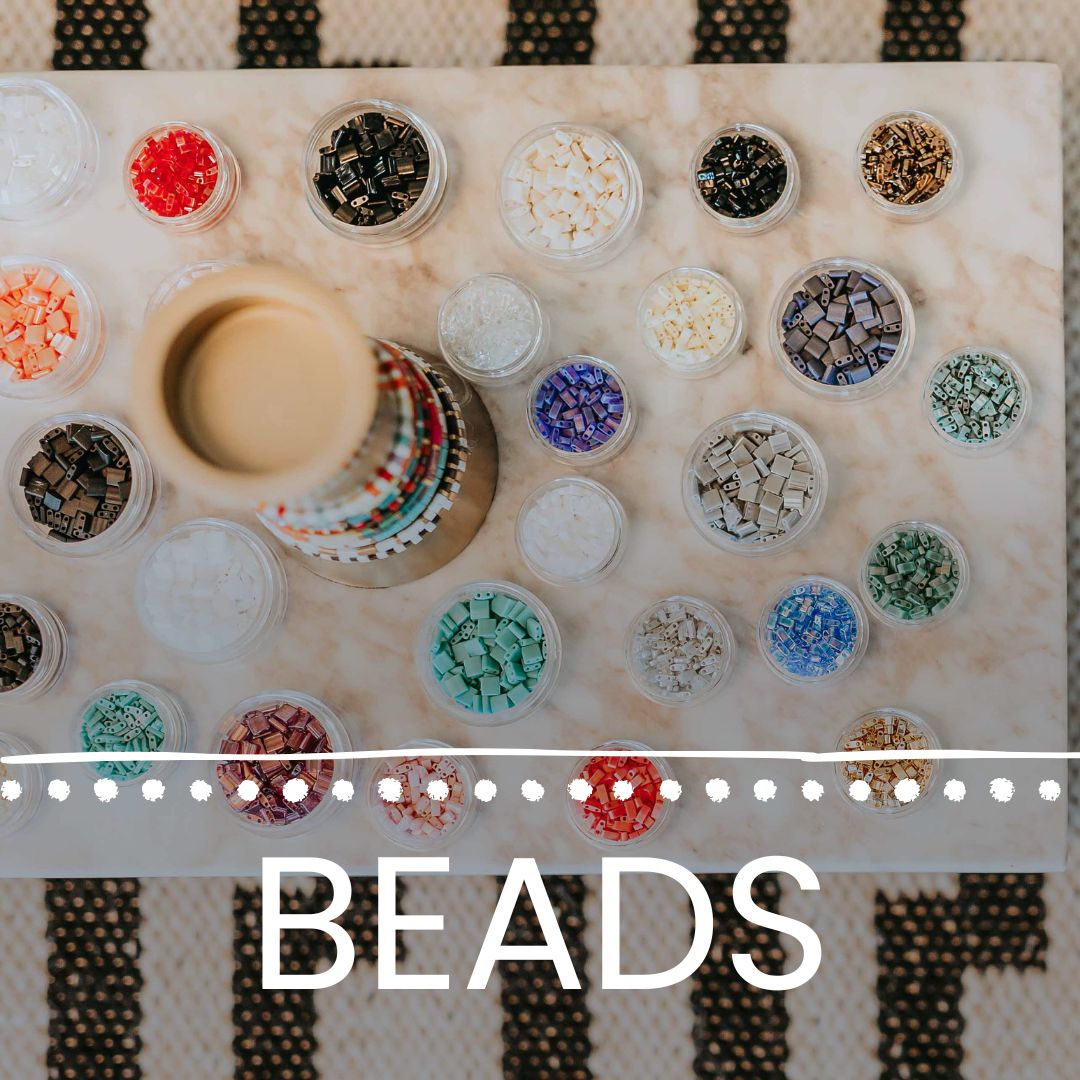
Heishi can mean two different things. Traditional heishi are small discs hand-cut and ground from natural materials like shell, turquoise, and other stones, a technique rooted in Native American jewelry of the American Southwest. Modern "heishi" more often means uniform clay or polymer disc beads that copy that flat, stacked look at a friendlier price.
The word itself comes from a Keres term for shell, and the original beads were strung shell discs. Wikipedia's entry on heishe beads walks through that history. The clay and polymer versions you see in most stacking bracelets today are machine-cut for consistency, which is part of why they sit so evenly on the cord.
Why does the material matter for chipping? Because stone and polymer wear differently.
Does clay or stone heishi chip more easily?
It depends on the knock. Natural stone heishi is hard but brittle, so a sharp drop onto tile can chip a rim even though the bead resists everyday scuffing. Clay and polymer disc beads are lighter and a bit more forgiving on impact, but their surface finish can scuff, and strong solvents can dull or soften them over time.
Polymer clay is a plastic that cures firm but stays sensitive to certain chemicals. The polymer clay reference on Wikipedia notes that some plasticizers and solvents can react with it. That is the real-world reason perfume, nail-polish remover, and strong cleaners are rough on clay-style beads: it is chemistry at work, plain and simple, on top of ordinary abrasion.
Short version: stone chips from impact, clay scuffs from chemicals and rubbing. Different beads, different weak spots.
How do you keep a heishi bracelet looking new?
Keep a heishi bracelet looking new by keeping chemicals and friction off the beads. Put it on after lotion, perfume, and sunscreen have dried. Wipe it with a soft cloth after wear, clean it only with mild soap and lukewarm water, store it flat, and roll it on and off instead of yanking the elastic wide.
Here is the routine that holds up:
- Dress, then accessorize. Lotion, perfume, sunscreen, hairspray first. Let them dry. Then the bracelet goes on last.
- Wipe it down. A quick pass with a dry microfiber cloth at night lifts sweat and skin oils before they settle into the edges.
- Clean gently. Lukewarm water, a drop of mild soap, a soft cloth. Skip ultrasonic cleaners, bleach, and anything with alcohol or acetone.
- Store it flat. A shallow dish or a soft pouch beats a hook. Hanging keeps tension on the cord and lets rims grind together.
- Roll, don't yank. Ease a stretch bracelet over your knuckles. Pulling it wide every time stresses the elastic and lets beads rub.
None of this is fussy. It is the same gentle approach reputable jewelers suggest for most beaded pieces, and it lines up with how bead specialists like Lima Beads describe handling heishi strands: warm water, mild soap, soft cloth, skip the harsh stuff.
What actually causes the most chipping day to day?
Most chipping comes from three everyday habits: wearing the bracelet into contact with chemicals, storing it loose with other hard jewelry, and over-stretching the elastic. Lotions and perfumes attack the finish, tangled storage lets edges grind, and yanking the cord wide lets beads shift and knock. Fix those three and wear marks slow way down.
Water deserves its own note. A splash is fine, but a long soak is not. Pools, hot tubs, and the shower mix chlorine, salt, and soap with warmth, and that combination is hard on both the beads and the elastic cord. Take the bracelet off before you swim or bathe. One habit, big payoff.
And the stack? A heishi bracelet loves company, but metal charms and sharp-edged beads sitting right against the discs are what sand down those rims over months. Mixing in softer neighbors helps.
Where can you find heishi bracelets built to be worn?
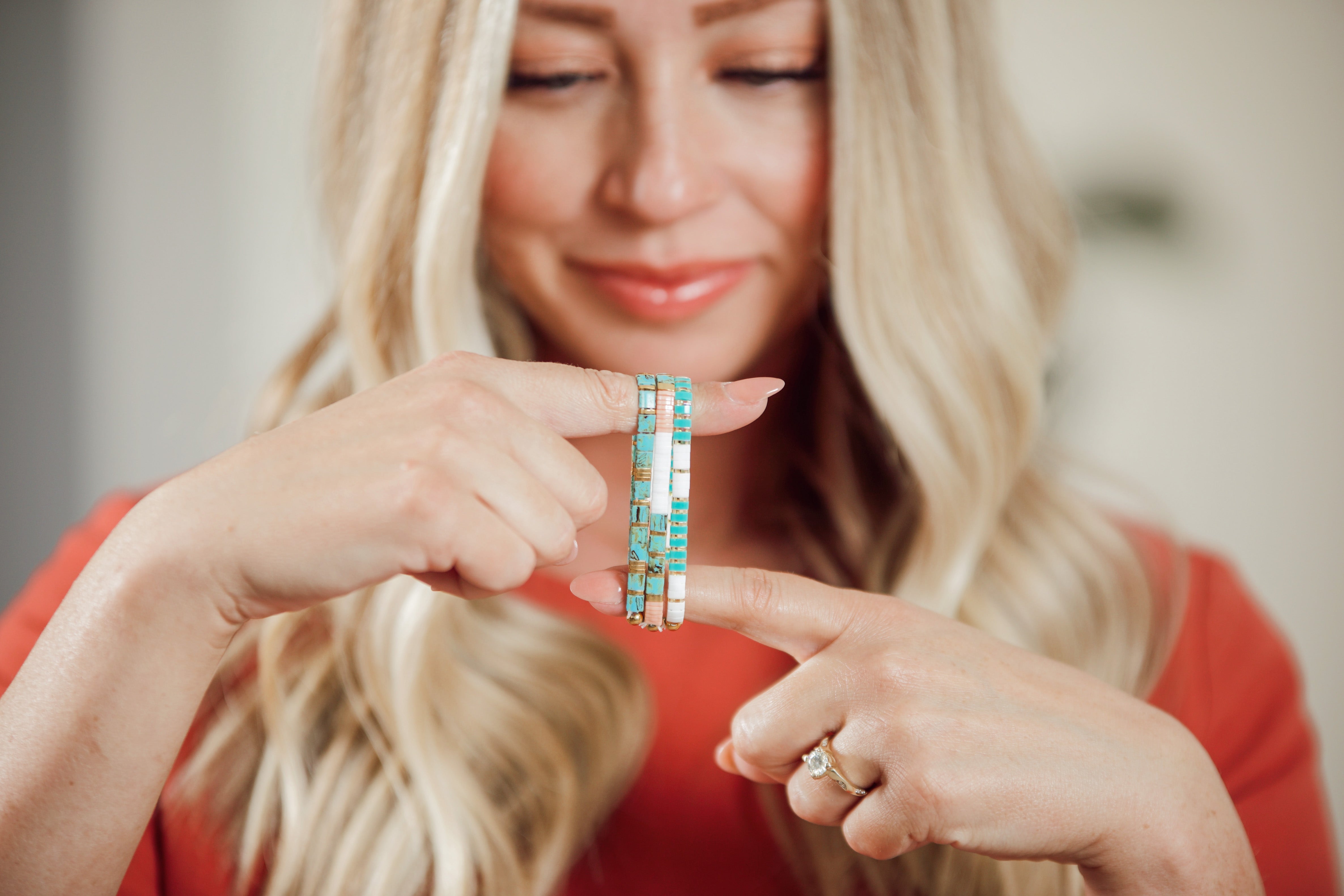
If you want heishi bracelets made for real, everyday wear, Mack & Rex's BOHO Heishi accent bracelets are a good place to start. The finished stretch bracelets are built on crystal-cord elastic, come in inclusive sizing from XXS to 5XL, and are backed by a quality guarantee, so fit and durability are covered from the first wear.
The BOHO Heishi accent bracelets are $18.99 each. Buy 3 finished bracelets and you get 1 free, no code needed, and US orders over $100 ship free. Mack & Rex ships internationally too, with shipping and any customs or duties calculated at checkout, so a heishi stack can land on a wrist well outside the States.
We are a mom-and-two-daughters shop at heart, and the goal is simple: bracelets you actually reach for, not ones you baby in a drawer. Spread happy, keep it on your wrist.
Frequently asked questions about heishi beads
Can I shower or swim with a heishi bracelet?
It's best not to. A quick splash won't ruin it, but a long soak in chlorinated, salty, or soapy water is hard on both the beads and the elastic cord. Take the bracelet off before you swim, shower, or sit in a hot tub, and it will keep its finish much longer.
Will perfume or lotion really damage heishi beads?
Over time, yes. Alcohols and oils in perfume, lotion, sunscreen, and hairspray can dull the finish on clay and polymer discs and dry out the cord. The fix is easy: apply all of that first, let it dry, then put the bracelet on last. Your beads and your scent both last longer.
How should I store a heishi bracelet?
Lay it flat in a soft pouch or a shallow dish rather than hanging it on a hook. Flat storage keeps the elastic relaxed and stops disc edges from grinding against harder jewelry. If you stack several, give each a little room so their rims aren't constantly rubbing.
Are clay heishi beads real jewelry, or just cheap plastic?
Clay and polymer heishi are legitimate, wearable beads, just a different material than natural stone. They cure firm, hold color well, and sit evenly on the cord. They're more sensitive to harsh chemicals than stone, so the care routine matters, but with gentle handling they stay looking new for a long time.
Can a chipped heishi bracelet be fixed?
A single scuffed or chipped bead usually can't be repaired, but a stretch bracelet can often be restrung with a replacement bead if you're handy with elastic cord. For most people, prevention is the better route: keep chemicals off, store it flat, and roll it on gently so chipping doesn't start.

