

Why Real Miyuki Bracelet Kits Cost More Than Amazon Ones
What Are You Actually Paying For in a Real Miyuki Bracelet Kit?
You're paying for beads made to a tight size tolerance, elastic cord rated for daily wear, and a kit that actually contains enough matched material to finish what you start. Generic Amazon kits usually cut costs in the same three places: mismatched filler beads, thin stretch cord, and skimpy quantities dressed up with a nice box photo.
That's the short version. Here's what it means once the box is actually open on your table.
Why Do Amazon Bracelet Kits Cost So Much Less?
Cheap. That's the whole pitch, and it's not fake. A generic bracelet kit can be assembled from bulk, unbranded glass or plastic beads sourced from wherever's cheapest that week, packaged with a length of stretch cord, and sold at a price that undercuts anyone using name-brand materials. There's nothing dishonest about a seller doing that. Plenty of casual crafters just want to try stringing beads once and don't need Japanese glass to have fun on a rainy Saturday.
The problem shows up later. Beads that don't match in size leave visible gaps or bulges in the finished bracelet. Colors that looked uniform in the product photo turn out to vary bead to bead once you're stringing them side by side. And cord that felt fine on day one starts to stretch, discolor, or snap within a few weeks of actual wear.
What's the Real Difference in Bead Quality?
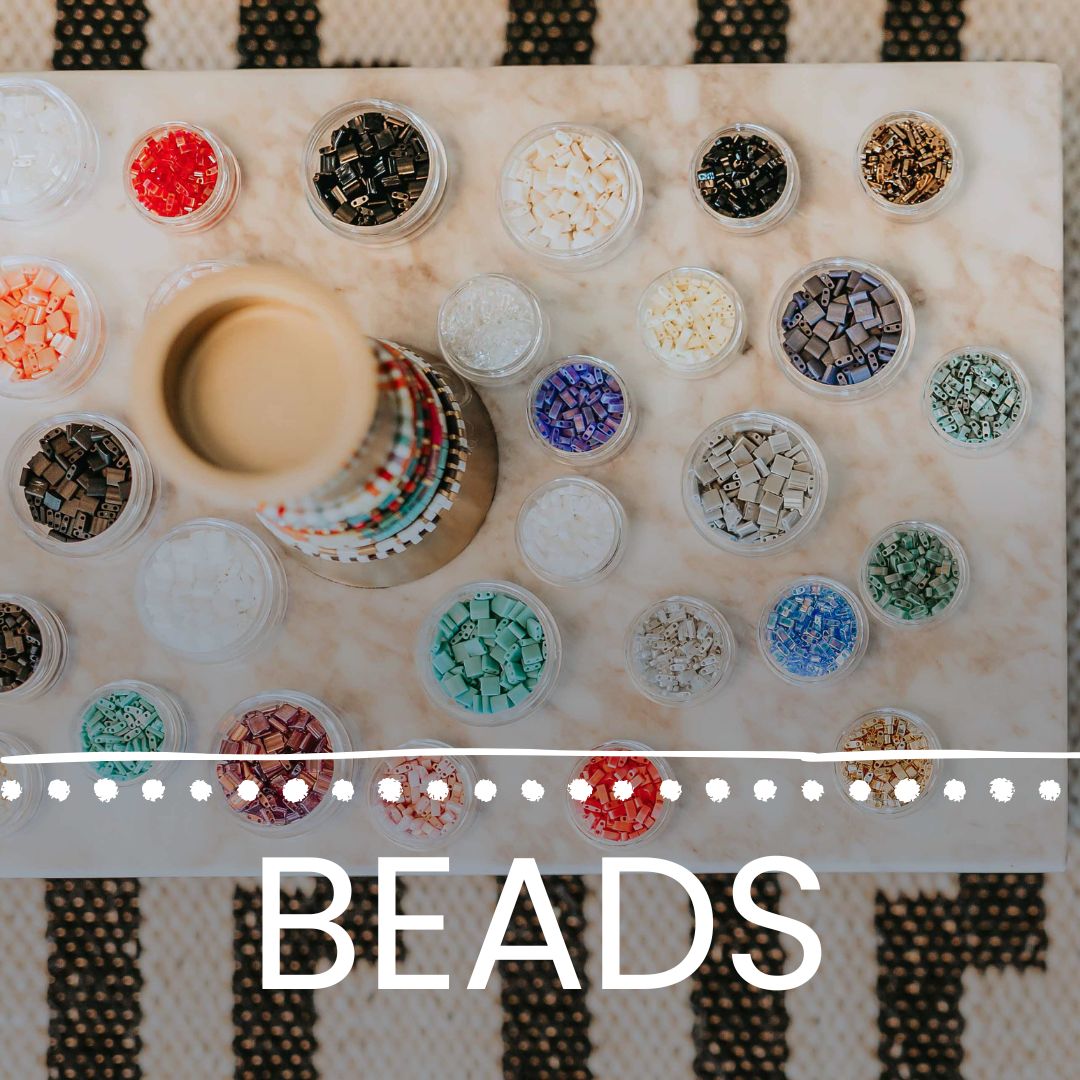
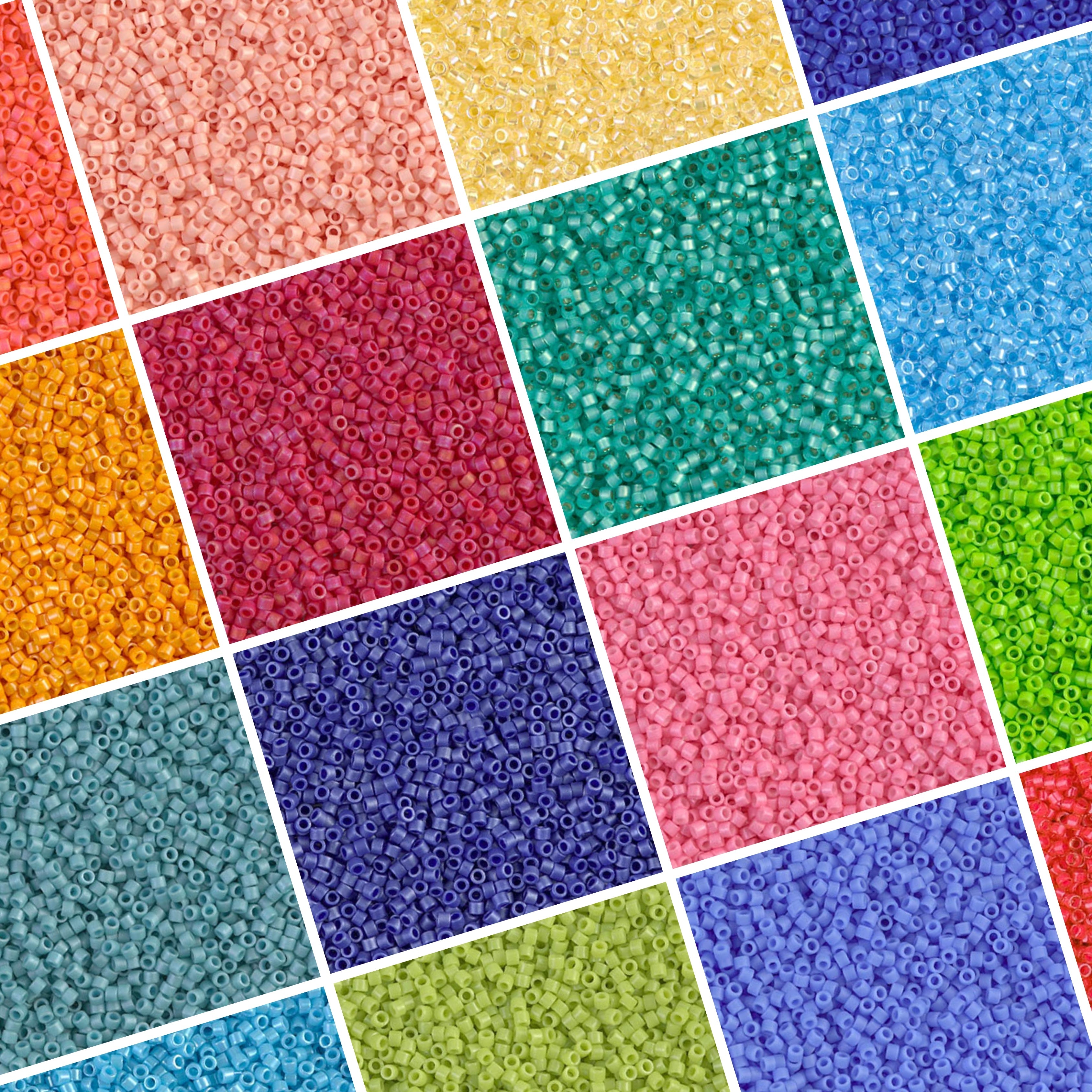
Miyuki has manufactured glass beads in Hiroshima, Japan since 1949, and the company is known in the beading world for extremely consistent sizing across production runs. Tila beads specifically are flat, two-hole glass tiles, precision-cut so each one sits flush against its neighbor on the strand. That consistency is the whole reason the finished bracelet looks clean and even instead of lumpy.
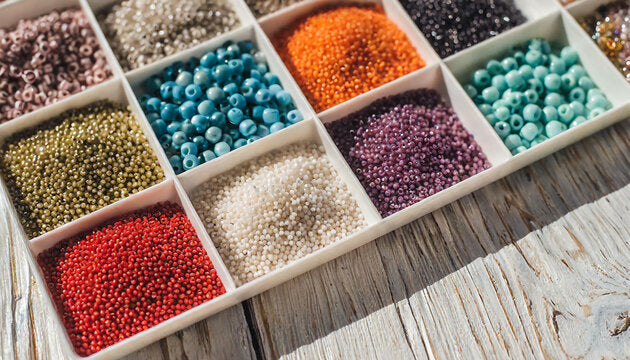
Generic filler beads skip that step. A bag might contain beads from three or four different molds, with visible size drift and finish differences you won't notice until you're halfway through stringing a bracelet and the pattern starts to wobble. Seed and tile beads have been a staple of beadwork for centuries, and manufacturing precision is what separates a bead meant for fine jewelry work from one meant to fill a bag cheaply, as Wikipedia's overview of seed bead history and production explains.
Does the Cord Actually Make a Difference?
Yes, more than people expect. Crystal-cord elastic is built to hold its shape and stretch back after repeated wear, which matters for a bracelet that goes on and off your wrist daily. Dollar-bin stretch cord, the kind bundled into a lot of generic kits, tends to go slack, yellow, or fray at the knot within a month or two of regular use.
Bead and material education resources point to cord quality as one of the most overlooked factors in a beading project's longevity. Fire Mountain Gems' bead and stringing material library covers how cord type affects durability across different jewelry projects, and elastic is no exception. A bracelet is only as strong as the weakest knot, and a weak cord means a weak knot no matter how nice the beads look.
Is a Cheap Kit Actually Missing Pieces?
Often, yes. This is where the sticker price gets misleading. A kit priced well below a real bead bracelet making kit has to cut the cost somewhere, and quantity is an easy place to do it. You open the box expecting to make several bracelets and realize there's only enough for one, or the backup cord you'd need after a snap simply isn't in the bag.
A complete kit should give you:
- Enough beads to finish more than one bracelet, with the yield stated up front
- Crystal-cord elastic rated for regular wear, plus a bit extra for mistakes
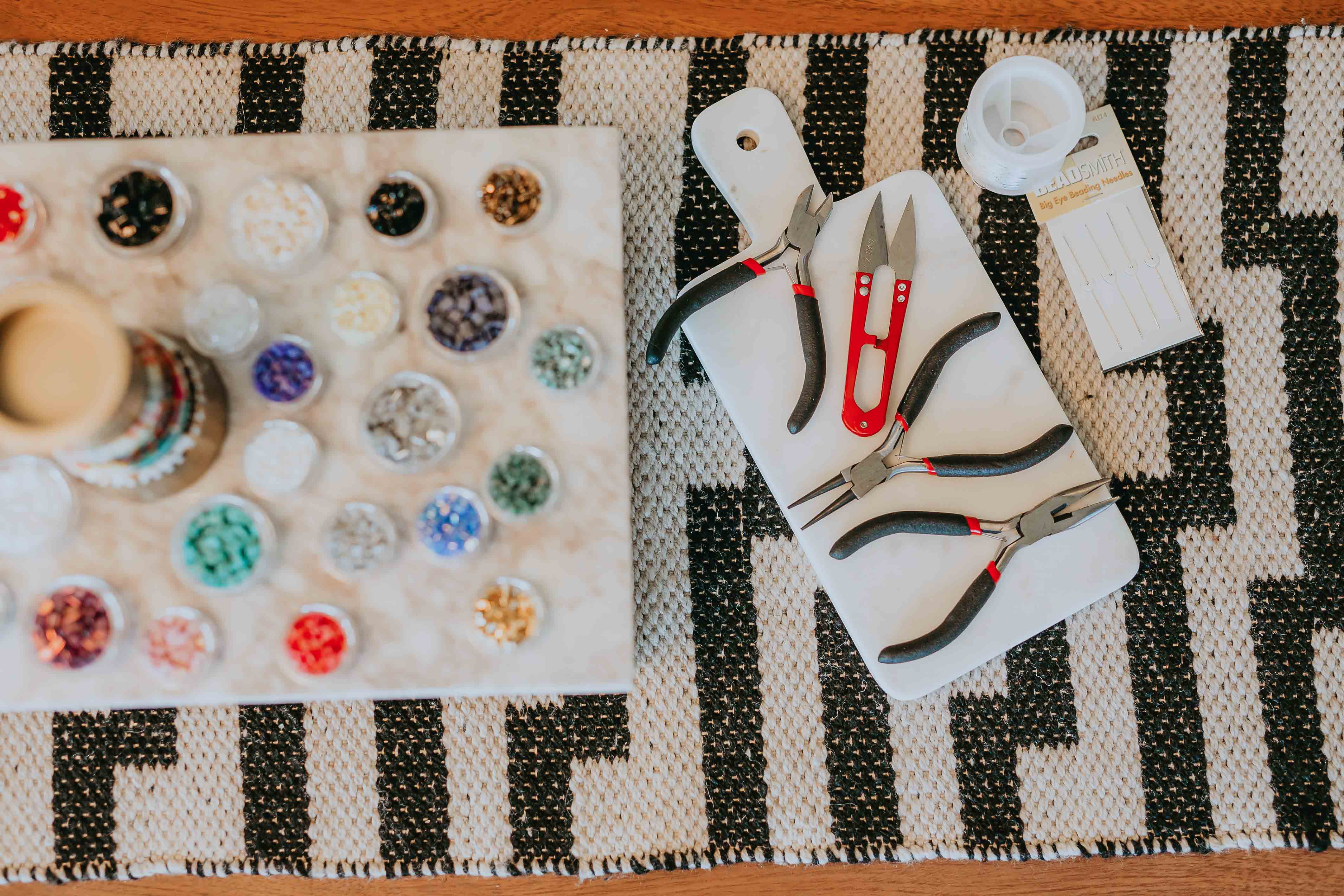
- A needle or wire threader so you're not fighting elastic through a tiny bead hole
- Instructions that assume you've never done this before and explain it clearly
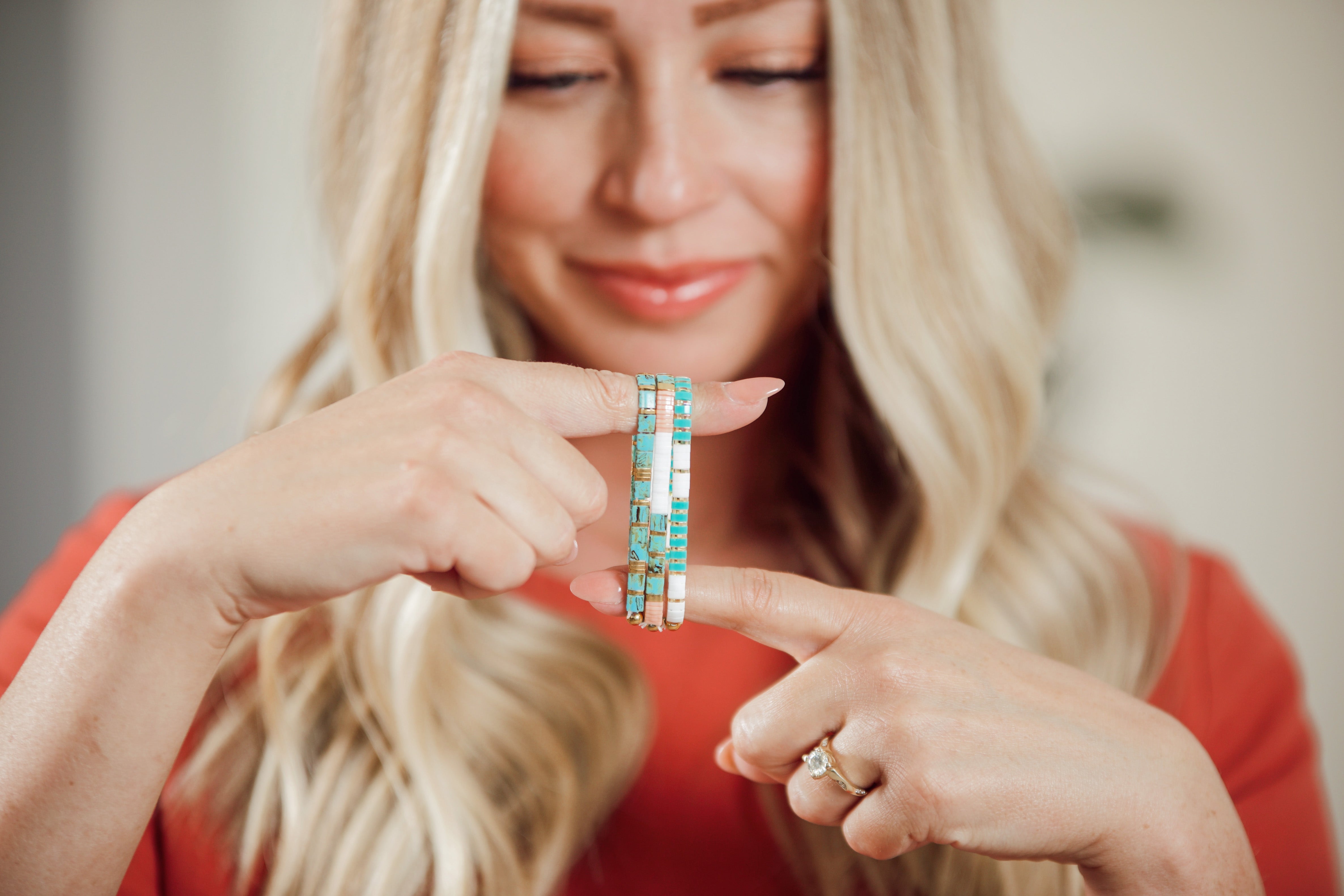
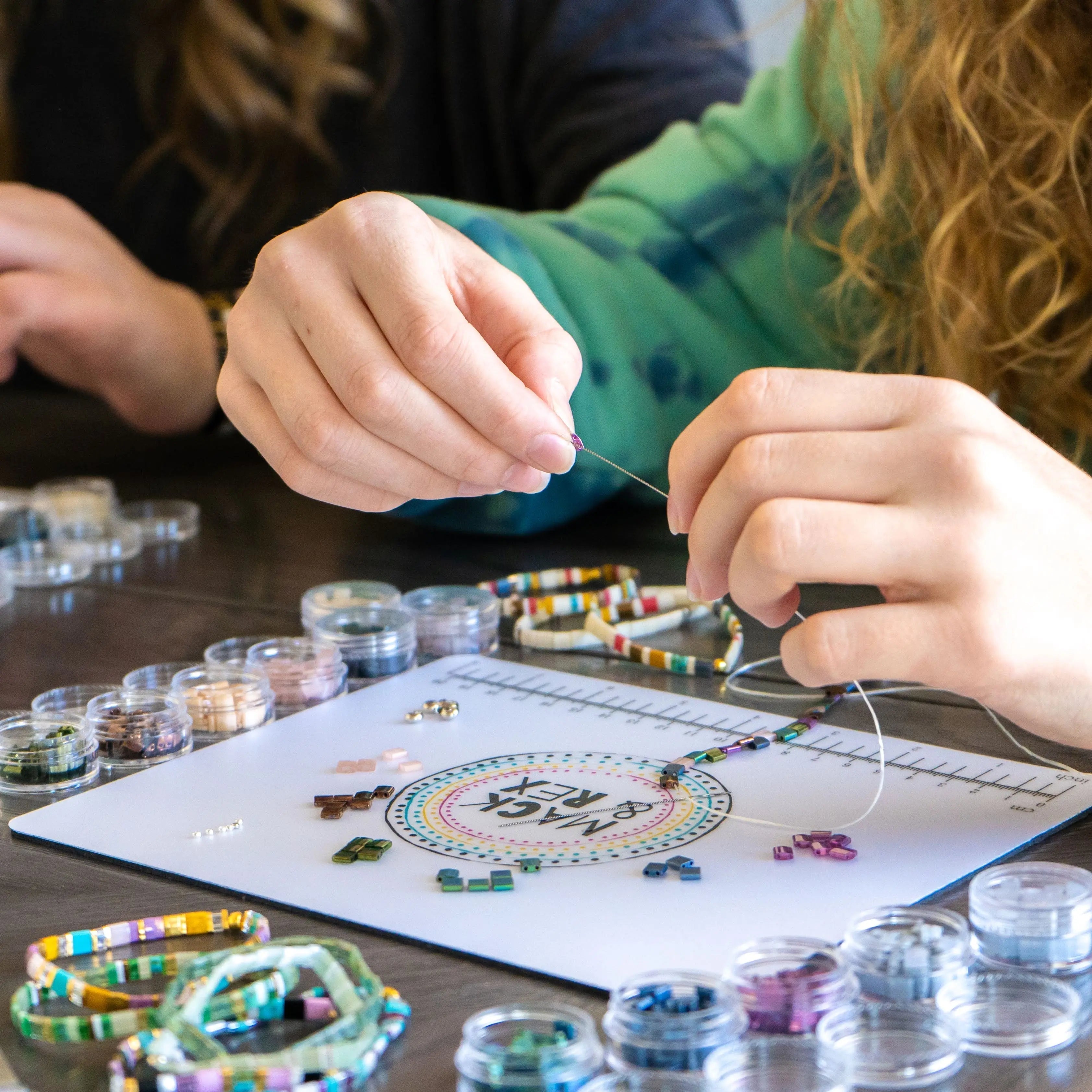
Mack & Rex trio kits are built around that checklist. Each one includes real Miyuki Tila beads, crystal-cord elastic, a threading tool, and instructions, with enough material to make three bracelets. Nothing in the box is a filler item.
What Do You Get With Instructions and Support?
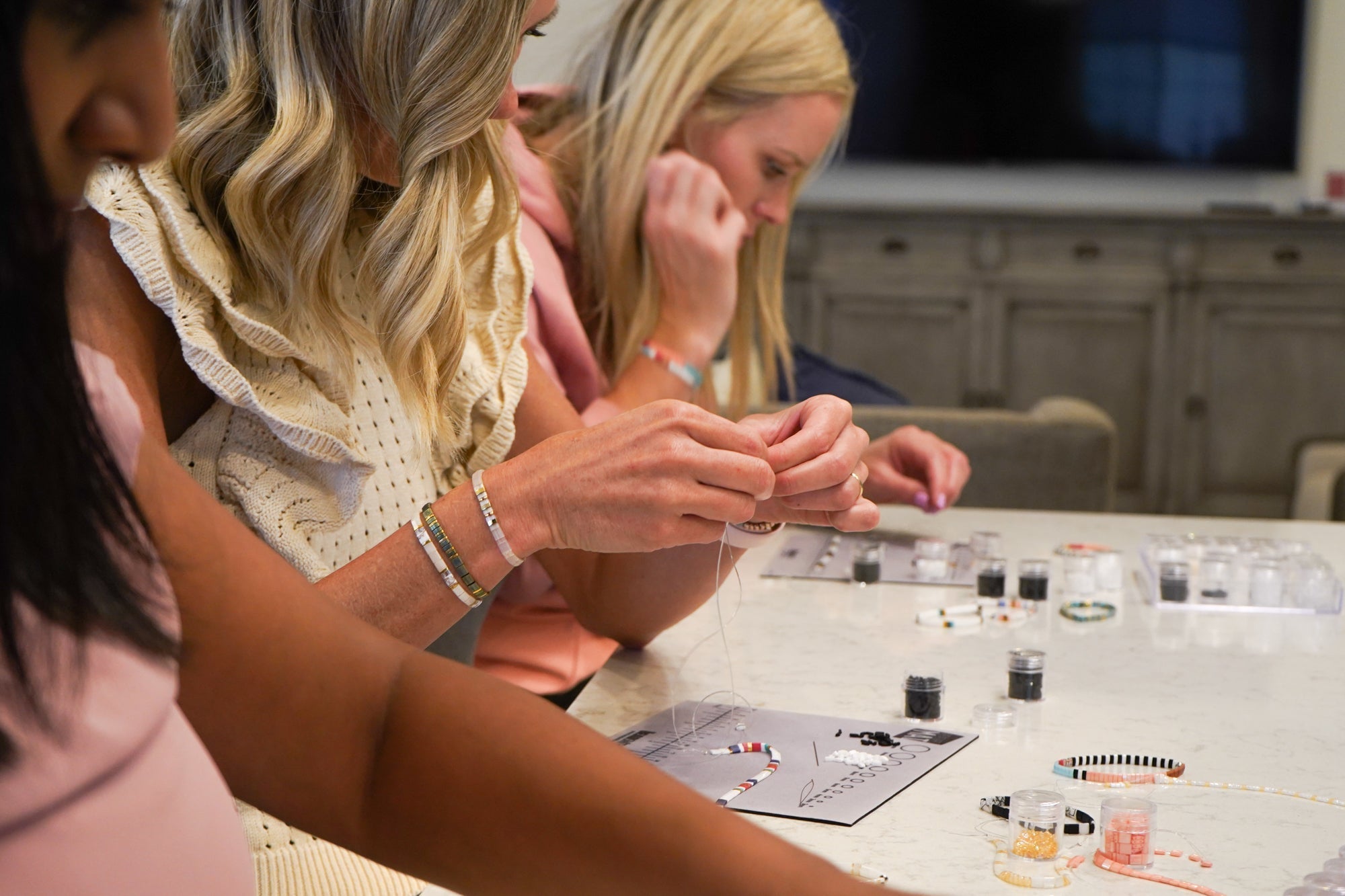
A real kit comes with instructions written by people who've actually made the bracelet, not a translated insert that raises more questions than it answers. If something goes wrong (a knot slips, you miscounted beads, the pattern isn't lining up) there's a real company behind the kit you can reach out to.
That's a bigger deal than it sounds like on paper. Generic marketplace kits often ship from a seller with no storefront, no way to ask a question, and no real accountability if the box shows up short. Craft technique guides like Interweave's beading resources are a good general reference for stringing and finishing methods, but they can't replace a kit that includes its own clear, project-specific instructions and a person to email when you're stuck.
How Do the Prices Actually Compare?
Here's where real numbers help more than vague claims. A Mack & Rex trio kit (makes 3 bracelets) runs $44.99. The DIY Bracelet Kit Club is $36.99. The All-in-One tools and supplies kit runs $39.99 to $43.99 depending on what's included. For bigger projects or gifting in bulk, the Tila Bead Starter Kit (makes about 20 bracelets) is $189.99, and the Ultimate Kit (makes about 80) is $399.99.
Compare that to a generic Amazon kit at $12 to $18 that yields one bracelet, maybe two if you're careful with the beads. Per bracelet, the math is closer than the sticker price suggests, and that's before you factor in whether the finished piece survives being worn to the grocery store and back a dozen times.
One honest note: a single trio kit at $44.99 doesn't clear the $100 free-shipping threshold by itself. If you want free shipping, pair a kit with a finished bracelet or a bead mix to get your order over $100.
So Which Kit Should You Actually Buy?
If you're testing whether bracelet making is something you'll enjoy at all, a cheap kit isn't a bad way to find out. Nobody needs to spend real money to discover they don't like stringing beads.
If you already know you like it, or you're buying for a grandkid's birthday party, a book club night, or a gift that needs to actually hold up, a real bead bracelet making kit with genuine Miyuki-Tila beads is the better call. You're paying for consistency you can see and cord that won't quit on you in a month. The full range of Mack & Rex bracelet making kits lays out the options side by side, from the trio kit up to the Ultimate Kit.
One small note if kids are part of the project: beads are a choking hazard, so keep loose beads away from young children and supervise any crafting session where little ones are at the table.
Ready to Pick Your Kit?
Mack & Rex started as a mom crafting with her two daughters, Mack and Rex, at the kitchen table, and that's still the idea behind every kit: real materials, honest instructions, and a project you'll actually finish. Browse the full lineup of bracelet making kits and pick the size that fits your project. Orders over $100 ship free within the US.
Frequently Asked Questions
What is the real difference between a Miyuki bead kit and a generic Amazon bracelet kit?
A real Miyuki-Tila kit uses Japanese glass beads made to tight, consistent tolerances, crystal-cord elastic rated for daily wear, and enough matched material to finish full bracelets with clear instructions. Generic Amazon kits often mix beads from several unlisted sources, use thin stretch cord, and shortchange you on quantity or color consistency.
Are Miyuki beads worth the extra cost?
For most people who want a bracelet that still looks good after weeks of wear, yes. Miyuki beads are precision-manufactured in Japan with tight size tolerances, which means fewer chipped edges, less color variation, and a cleaner finished look on the wrist compared to unbranded filler beads.
Can you tell if an Amazon kit uses real Miyuki beads?
Check the listing for the word "Miyuki" or "Tila" specifically, not just "Japanese-style" or "glass seed beads." If the listing doesn't name the brand or the bead shape, it's likely a generic mix. Photos showing uneven color or size between beads in the same bag are also a red flag.
How much does a real Miyuki-Tila bracelet kit cost?
Mack & Rex trio kits (make 3 bracelets) run $44.99, the DIY Bracelet Kit Club is $36.99, and the All-in-One tools and supplies kit is $39.99 to $43.99. Larger options include the Tila Bead Starter Kit (makes about 20 bracelets) at $189.99 and the Ultimate Kit (makes about 80) at $399.99.
Does a bracelet kit purchase qualify for free shipping?
Mack & Rex offers free shipping on US orders over $100. A single trio kit at $44.99 doesn't reach that threshold on its own, so you'd need to add another kit, a bead mix, or a finished bracelet to your order to qualify. Mack & Rex ships internationally, with shipping and any customs and duties calculated at checkout.