



Why Does My Tila Bead Bracelet Twist? How to Make It Lay Flat
Why Does My Tila Bead Bracelet Keep Twisting?
A tila bead bracelet twists when something breaks the two-hole lock that's supposed to hold each bead flat against the ones beside it. The usual suspects are a bead strung through just one hole, not two, tension that's tighter in one spot than another, cord that doesn't fit the holes, mismatched bead heights, or a row with the wrong number of beads for the wrist.
One loose bead. That's often all it takes. A single bead with slack around its cord can pivot, and once it pivots, it drags the beads on either side slightly out of plane with it.
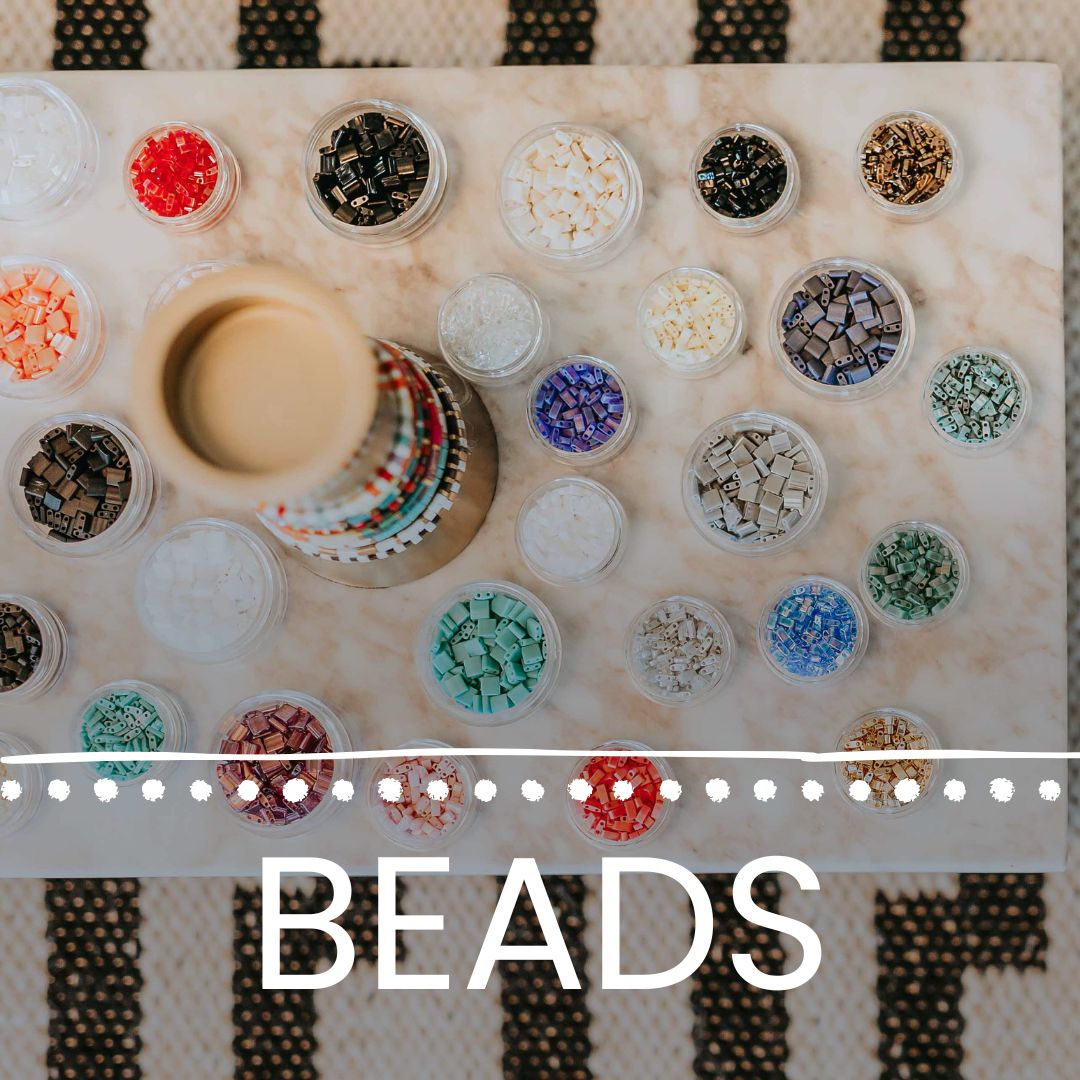
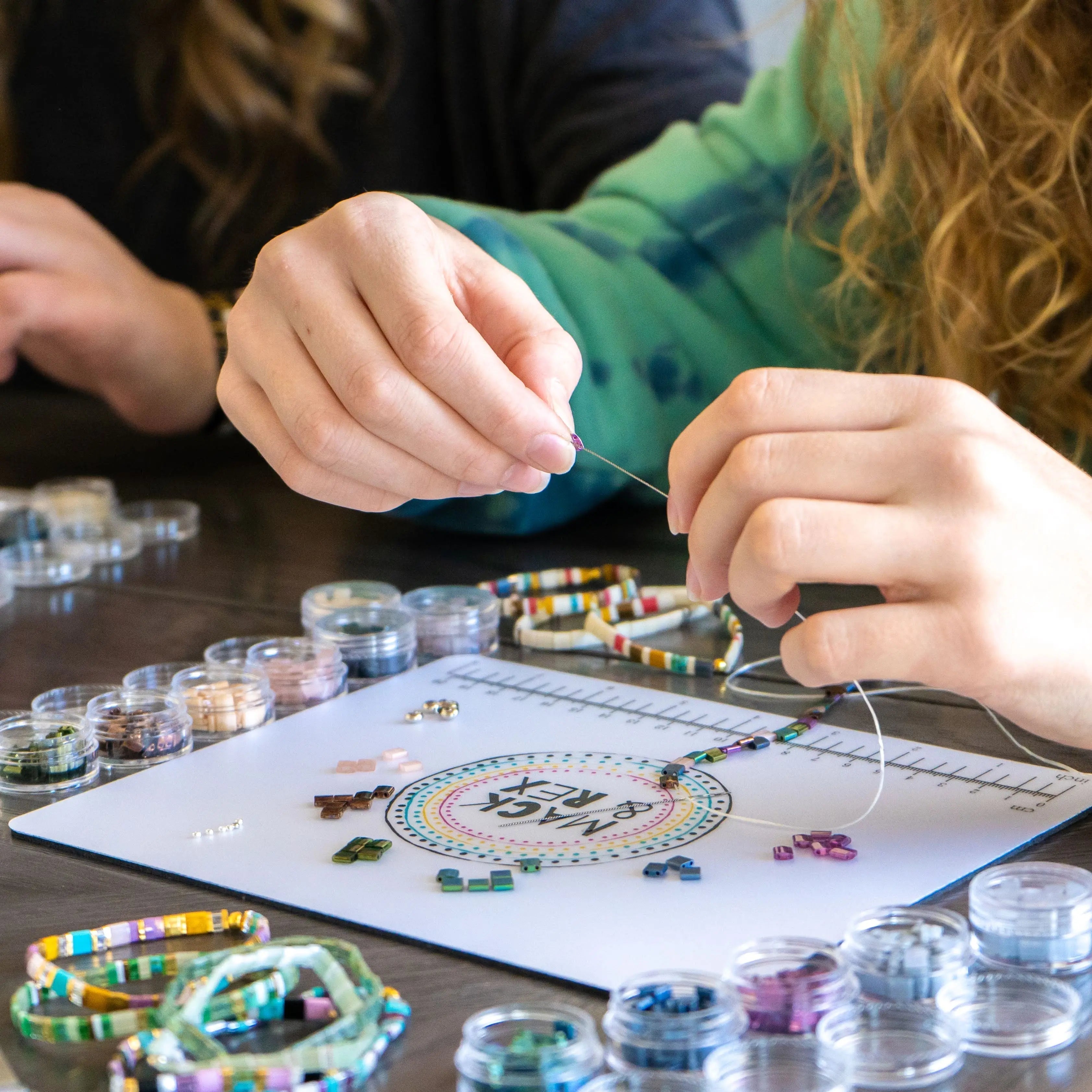
Tila beads are flat, two-hole Miyuki glass tiles, roughly 5mm square, built to sit face to face rather than rolling like a round seed bead. The whole point of the second hole is to pin each tile from two points instead of one, so it can't spin freely around the cord. When a bracelet twists anyway, something in the stringing broke that lock. Below is each cause and the specific fix for it.
Did You Actually String Both Holes on Every Bead?
This is the single most common cause of a twisting Tila bracelet. If even one bead in a long row only has cord running through one of its two holes, that bead has nothing stopping it from rotating, and a rotating bead pulls its neighbors off-axis with it.
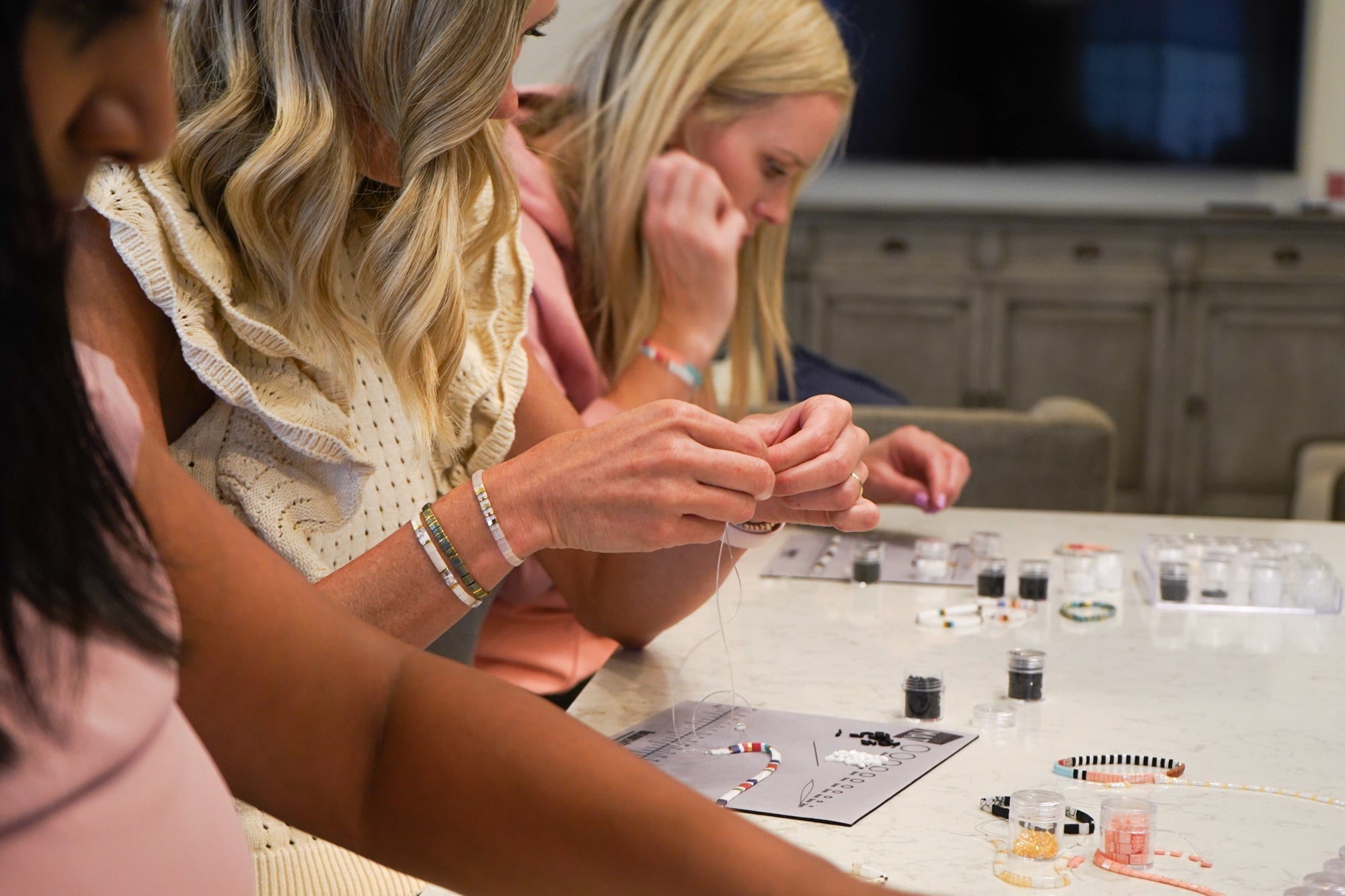
It happens easily. You're running a needle through dozens of tiny square tiles, tracking two holes per bead rather than one, and it's an easy slip to thread through the same hole twice in a row or skip a hole on a bead that's turned slightly the wrong way in your fingers. Hold the finished row up to the light and look along its length. Every bead should show two parallel strands of cord running through it, side by side. If one bead shows only a single strand, that's your twist.
The fix: find the offending bead, undo the cord back to that point, and re-thread it through both holes before continuing. There's no shortcut here. A row with even one single-holed bead in the middle will twist no matter how good the tension is everywhere else.
Is Your Tension Uneven Across the Row?
Pull a finished bracelet taut and look for slack pockets. If some sections sit snug and others sag, the loose spots are where beads have room to shift and rotate even with both holes strung correctly.
Tension problems creep in over a long stringing session. Your grip tightens or loosens as your hand gets tired, and a bracelet strung in one sitting without checking tension every few rows often ends up tighter at one end than the other. That mismatch doesn't always show up right away. It shows up a few wears in, once the looser section has had time to work itself loose further.
Fix it by re-tensioning in sections rather than trying to redo the whole piece. Loosen the knot, gently work the slack out of the loose section by sliding beads toward the tighter end, and re-knot once the whole row reads as one even tension from end to end. Test by flexing the bracelet gently. It should bend as one piece, not bunch at a particular spot.
Is Your Cord the Wrong Size for Tila's Holes?
Cord that's too thin lets beads wobble and rotate even when both holes are strung, because there's extra room inside the hole for the bead to shift. Cord that's too thick makes it hard to pass two strands through a single hole at all, which pushes crafters toward shortcuts like skipping a hole, which brings the twisting problem right back.
Fire Mountain Gems' Tila bead reference lists the standard Tila size as 5mm by 5mm by 1.9mm, which narrows the usable cord range more than people expect. A cord sized for standard 8mm seed beads is often too fat for a clean double pass through a Tila hole. Match your cord diameter to the hole, not to whatever spool happens to be in your kit.
Crystal-cord elastic, the kind used on Mack & Rex's ready-to-wear pieces, is sized specifically for this. It holds its shape under stretch rather than thinning out and sliding around inside the hole the way some generic elastics do after a season of wear.
Are You Mixing Beads of Different Heights or Finishes?
Tila beads from different dye lots or finishes, matte against AB-finish, opaque against transparent, can carry tiny differences in thickness even within the same nominal size. String a slightly thicker bead between two slightly thinner ones and that one bead sits a hair higher, which tips the whole row and reads as a twist even though every hole is strung correctly.
This one's subtle, and it's the cause people miss most often because they've already checked the obvious stuff. Before stringing a full row, lay your beads out flat on a tray in the order you plan to use them and run a finger along the top edge. Any bead that sticks up or sits lower than its neighbors is worth swapping for one from the same batch. The AllFreeJewelryMaking guide to Tila bead patterns covers this kind of pre-sorting for checkerboard and striped Tila layouts, where even small height mismatches show up fast against a clean grid.
Does Your Bead Count Match the Wrist Size?
Too few beads stretched over a wrist that's too big forces the row to cinch and bunch where it doesn't naturally reach, and bunching shows up as twisting at the bunch point. Too many beads crowded onto a small wrist does the same thing in reverse, forcing extra length to buckle somewhere along the row.
Measure the wrist first. A typical finished Tila bracelet uses somewhere around 7 to 8 inches of doubled elastic cord before the knot, and that range is exactly why Mack & Rex sizes its ready-to-wear line from XXS to 5XL rather than selling one length for everyone. Guessing a bead count and hoping it fits is where a lot of home-strung bracelets go wrong before the first wear even happens.
A loose knot that hasn't fully settled can also mimic a sizing problem. The Jewelry Making Journal's piece on hiding stretch-bracelet knots covers how a poorly seated knot can leave a weak point that shifts under wear, which looks a lot like a twist until you trace it back to that one spot.
What If You'd Rather Skip the Stringing Entirely?
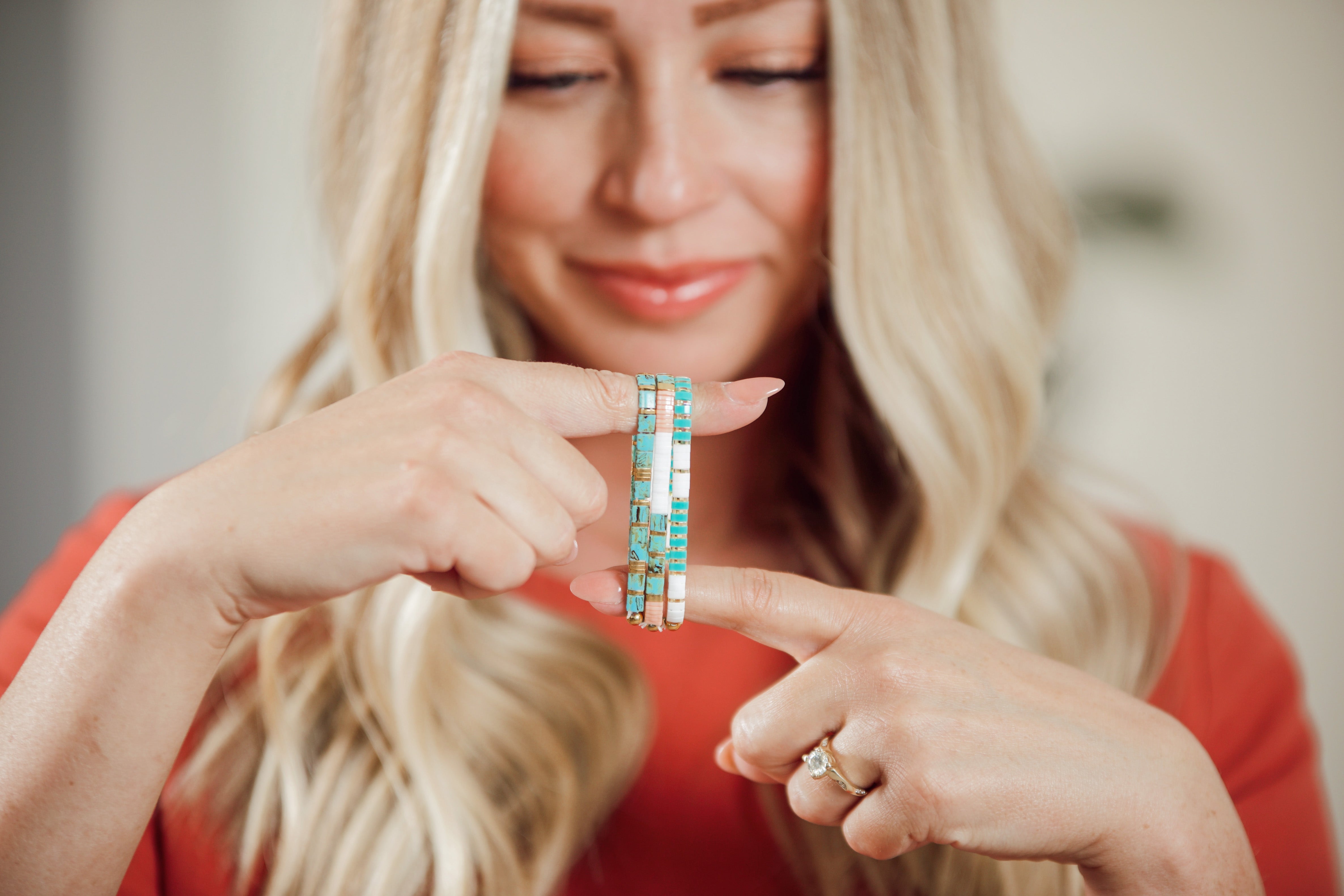
Short answer: you can. Most Mack & Rex customers buy the finished, ready-to-wear route, and it's worth saying plainly why. The Mack & Rex Tila bead bracelets collection is strung flat on crystal-cord elastic before it ships, both holes threaded correctly, tension checked, sized XXS through 5XL, and backed by a quality guarantee if something still isn't right.
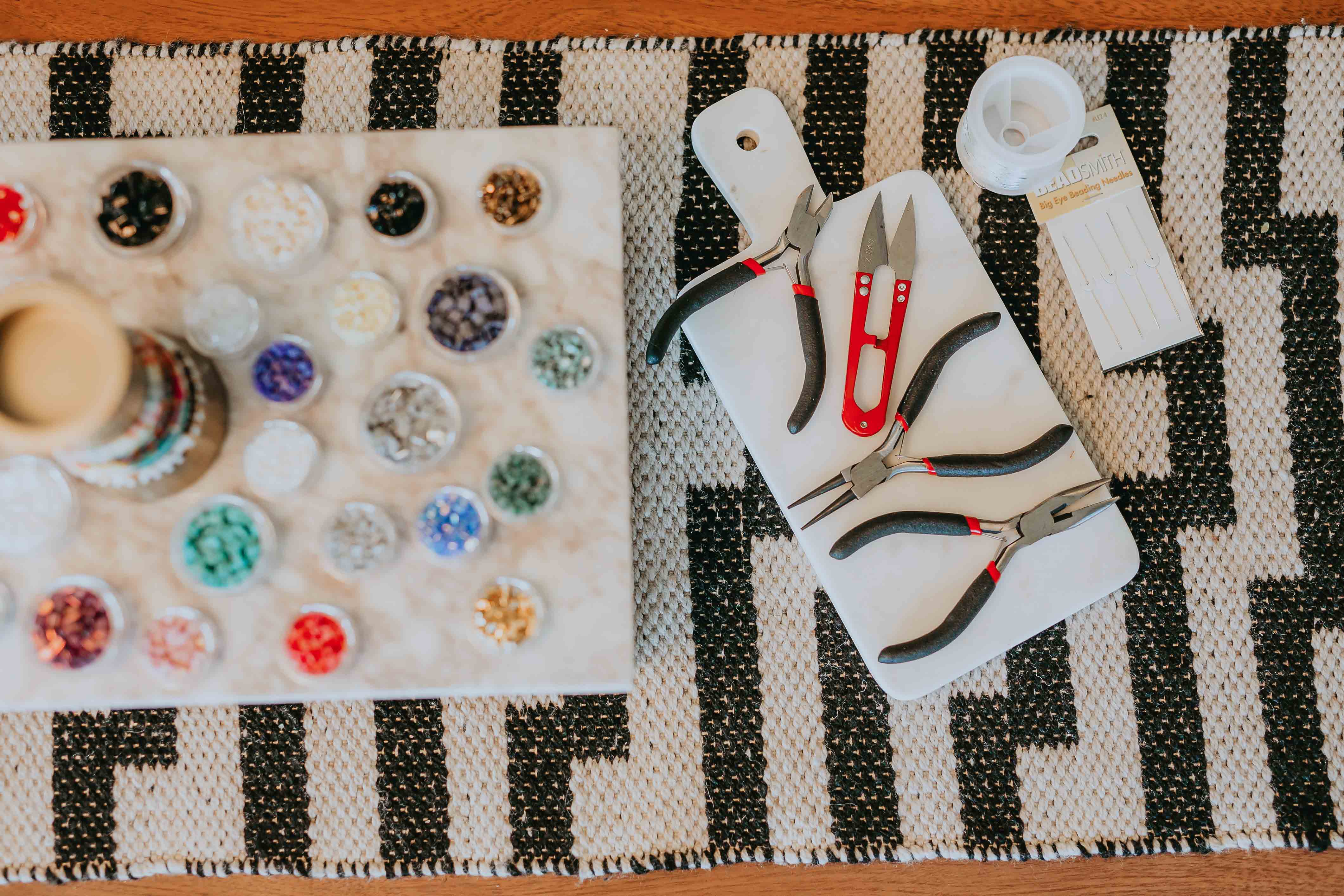
If you'd rather string your own and just want the right materials sorted ahead of time, the trio kits bundle genuine Miyuki Tila beads with cord sized for the holes, which removes the guesswork around cord thickness that trips up a lot of first attempts. Either way, you're working with the same two-hole glass tiles. One path skips the troubleshooting; the other hands you better odds of avoiding it in the first place.
A quick safety note if kids are part of the project: Tila beads are small glass pieces and a choking hazard, so keep loose beads out of reach of toddlers and younger kids who still put things in their mouths, and have an adult handle the small parts during a family craft night.
Frequently Asked Questions
Why does my tila bead bracelet keep twisting?
Most twisting comes from one bead strung through only one of its two holes, uneven tension across the row, or cord that doesn't match the hole size. Any one of those lets a bead pivot rather than locking flat against its neighbors.
Can I fix a tila bracelet that already twists without restringing it?
Sometimes. If the twist traces to one or two beads, you can often cut the cord near the knot, slide the problem beads back into alignment, and re-knot. If several beads are affected or the cord has stretched unevenly, a full restring is faster and more reliable.
What cord works best for tila beads so they don't twist?
A thin, strong stretch cord sized for Tila's roughly 5mm holes works best, run through both holes on every bead in the same direction. Crystal-cord elastic, the type Mack & Rex uses on its ready-to-wear bracelets, holds tension evenly and resists the stretch that causes twisting over time.
Is it normal for a new tila bracelet to twist slightly before it settles?
A little give in the first few wears is normal while the cord seats itself against the bead holes, but a correctly strung bracelet should settle flat within a wear or two, not keep twisting. If it's still twisting after that, one of the beads is likely strung through a single hole.
Do ready-to-wear tila bracelets avoid the twisting problem entirely?
Yes, in practice. Mack & Rex's ready-to-wear Tila bracelets are strung flat on crystal-cord elastic before they ship, so the stringing variables that cause twisting at home are already handled and backed by a quality guarantee.
Tired of troubleshooting a row that won't sit still? Shop the Mack & Rex Tila bead bracelets collection for pieces already strung flat on crystal-cord elastic, sized XXS to 5XL, with a quality guarantee behind them. US orders over $100 ship free, and international orders ship with duties calculated at checkout.