Why Tila Bead Bracelet Kits Cost More Than Craft-Store Packs
Why Do Tila Bead Bracelet Kits Cost More Than Craft-Store Packs?
A real tila bead kit uses genuine Miyuki glass tiles made to tight size and color tolerances, crystal-cord elastic rated for daily wear, and a curated color mix with enough material to finish complete bracelets. A craft-store bead pack usually mixes glass or plastic beads from several unlisted sources, bundled at a lower price because the quality control simply isn't there.
That's the short answer. Here's what actually changes once you open both boxes on the table.
What's Actually Different About the Beads Themselves?
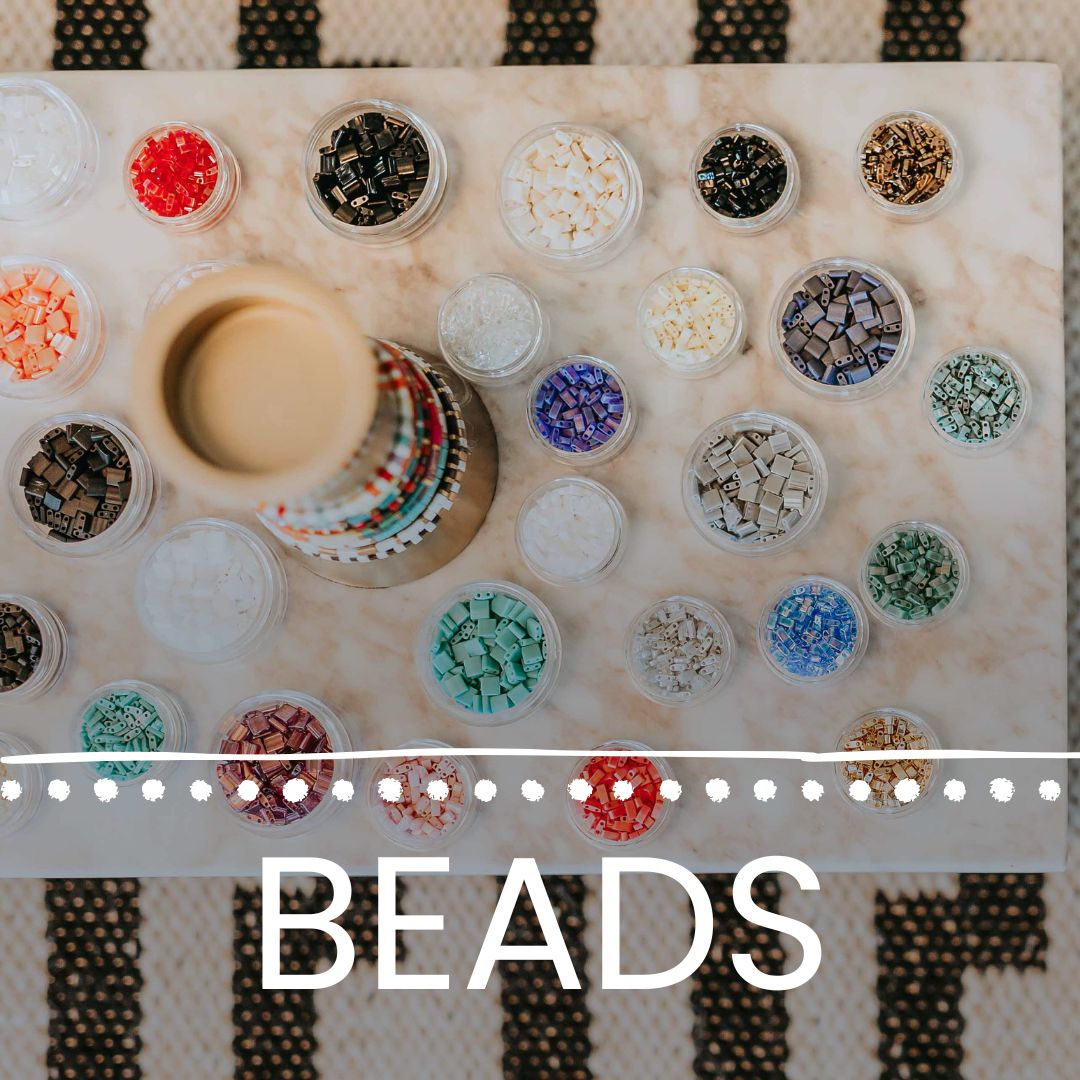
Size and hole placement. Miyuki has made glass seed and tile beads in Japan since 1949, and the company is known across the beading world for holding tight tolerances across huge production runs, which is a big part of why Miyuki tila beads sit flush against each other instead of wobbling off-line.1
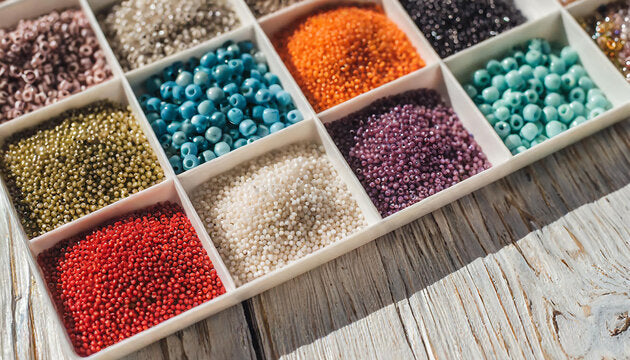
A craft-store bin doesn't make that promise. Mixed-source bead packs can pull glass from several molds with no shared spec, so you end up with beads that look identical on the shelf but vary once strung side by side, slightly bigger here, a shade off there, a hole drilled a little crooked. Glass bead manufacturing has relied on consistent sizing for centuries precisely because uneven beads throw off any pattern that depends on them lining up.2 Mack & Rex sells Miyuki's tila beads as a retailer, not the manufacturer; Miyuki and Tila are Miyuki's own trademarks.
Does the Elastic Cord Really Matter That Much?
More than most first-time crafters expect. Crystal-cord elastic holds its stretch and shape through daily wear, washing hands, and taking the bracelet on and off a hundred times, while the thin filament bundled into a lot of generic packs tends to go slack or yellow within weeks.
Stretch cord quality is also one of the most overlooked factors in whether a finished bracelet survives past month one.3 A bracelet is only as strong as its weakest knot, and a weak cord makes a weak knot no matter how nice the beads look sitting next to it. Mack & Rex uses crystal-cord elastic across its kits and finished bracelets for exactly that reason.
What's Actually in the Box?
Count the pieces. That's the fastest way to tell a complete kit from a dressed-up filler pack.
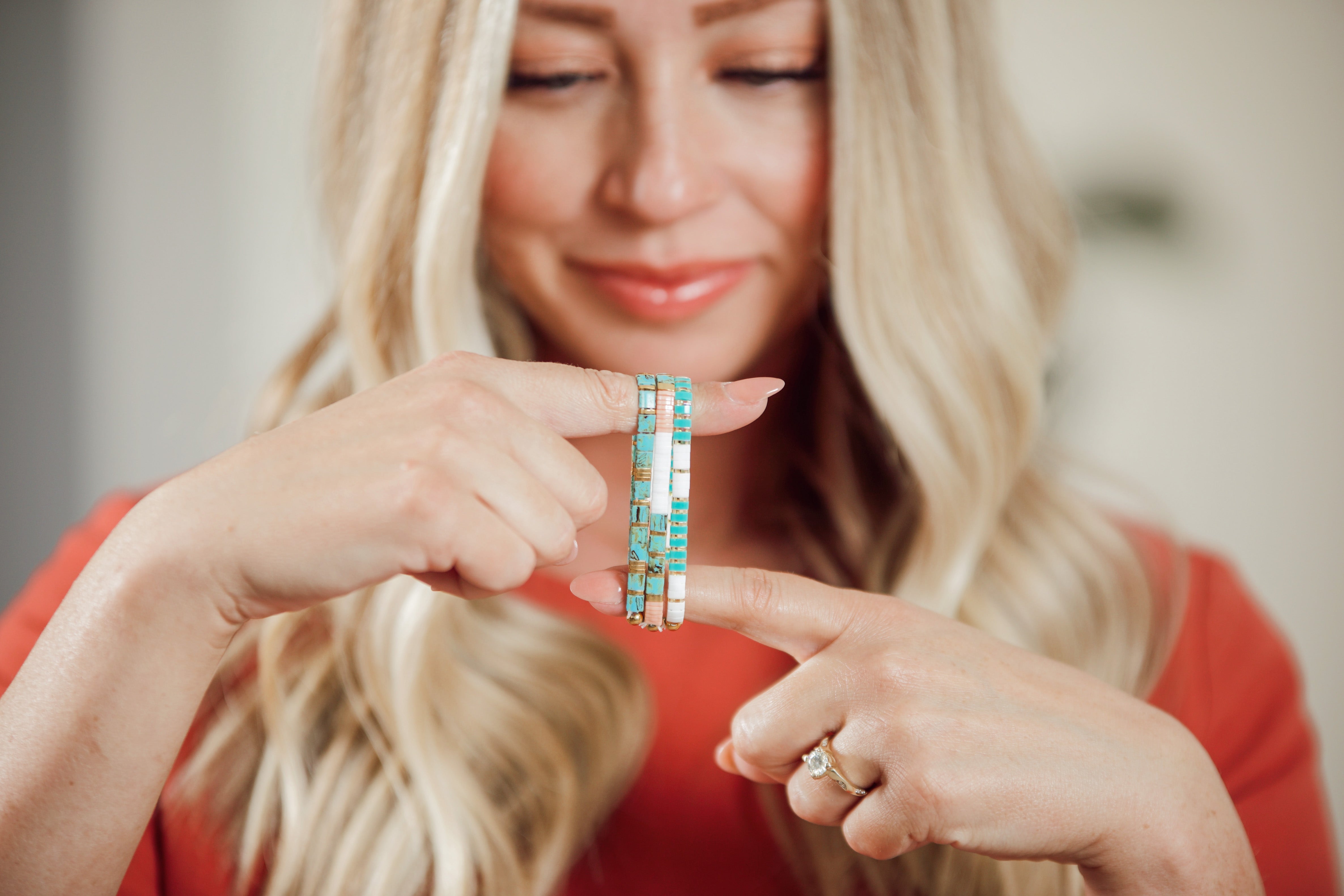
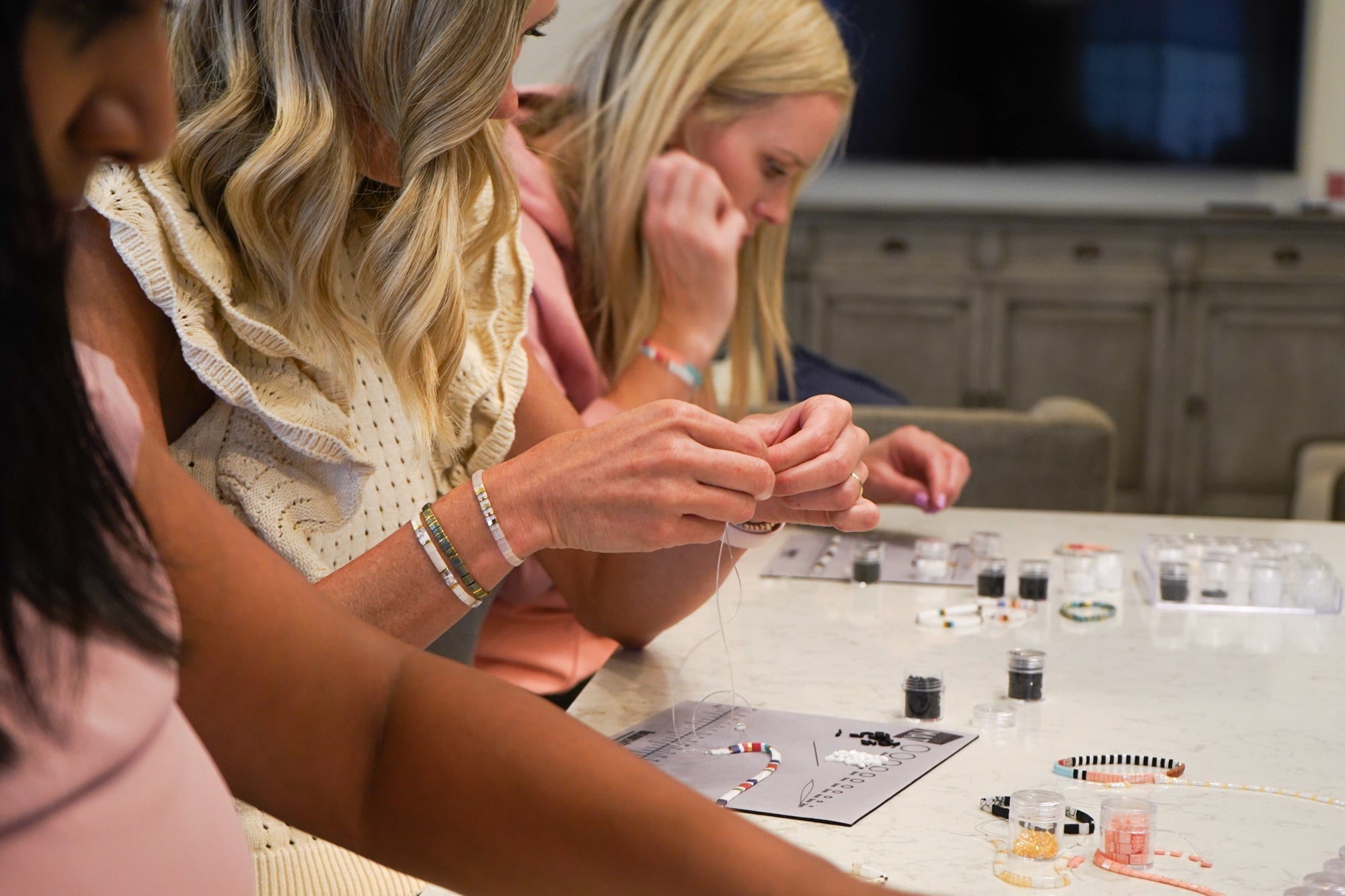
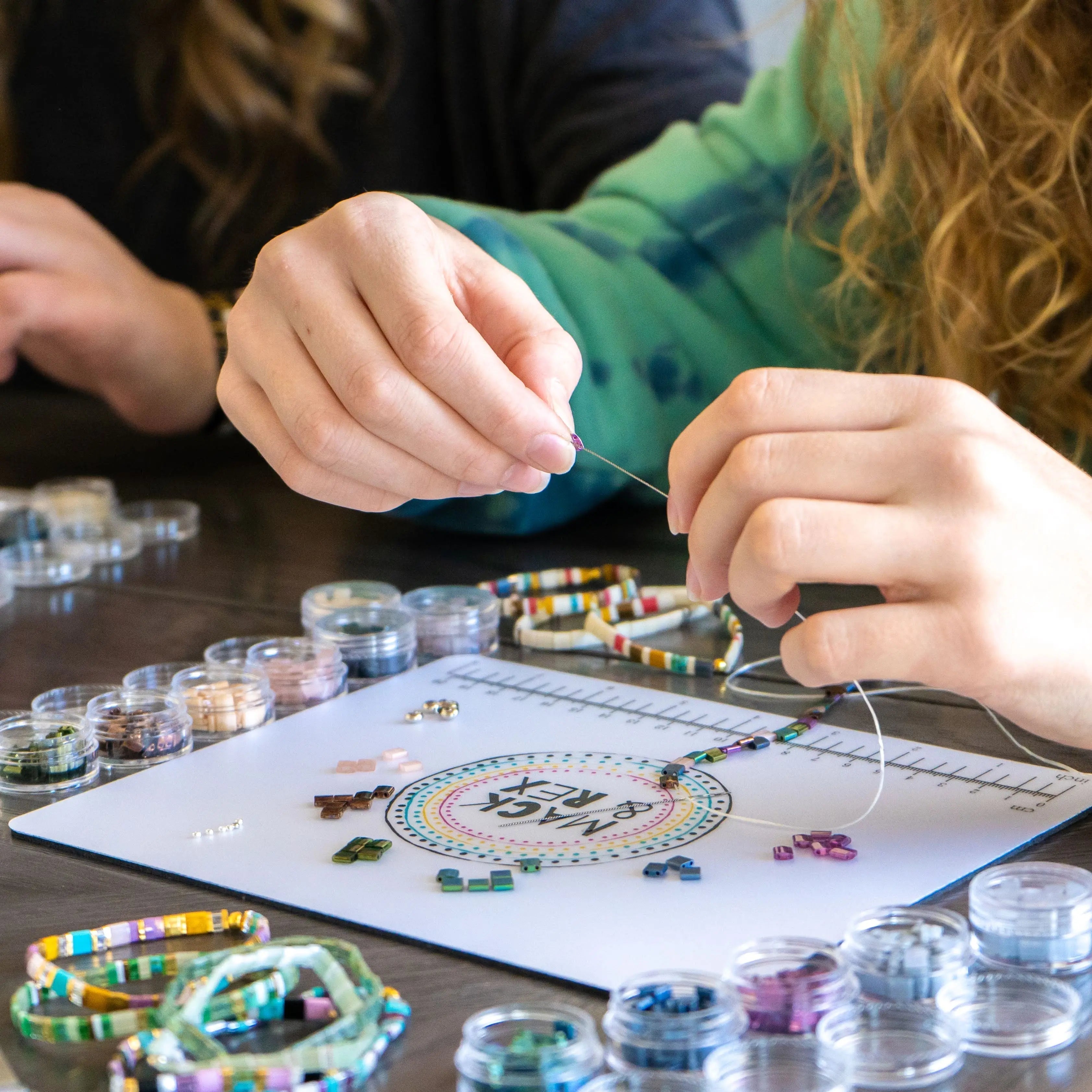
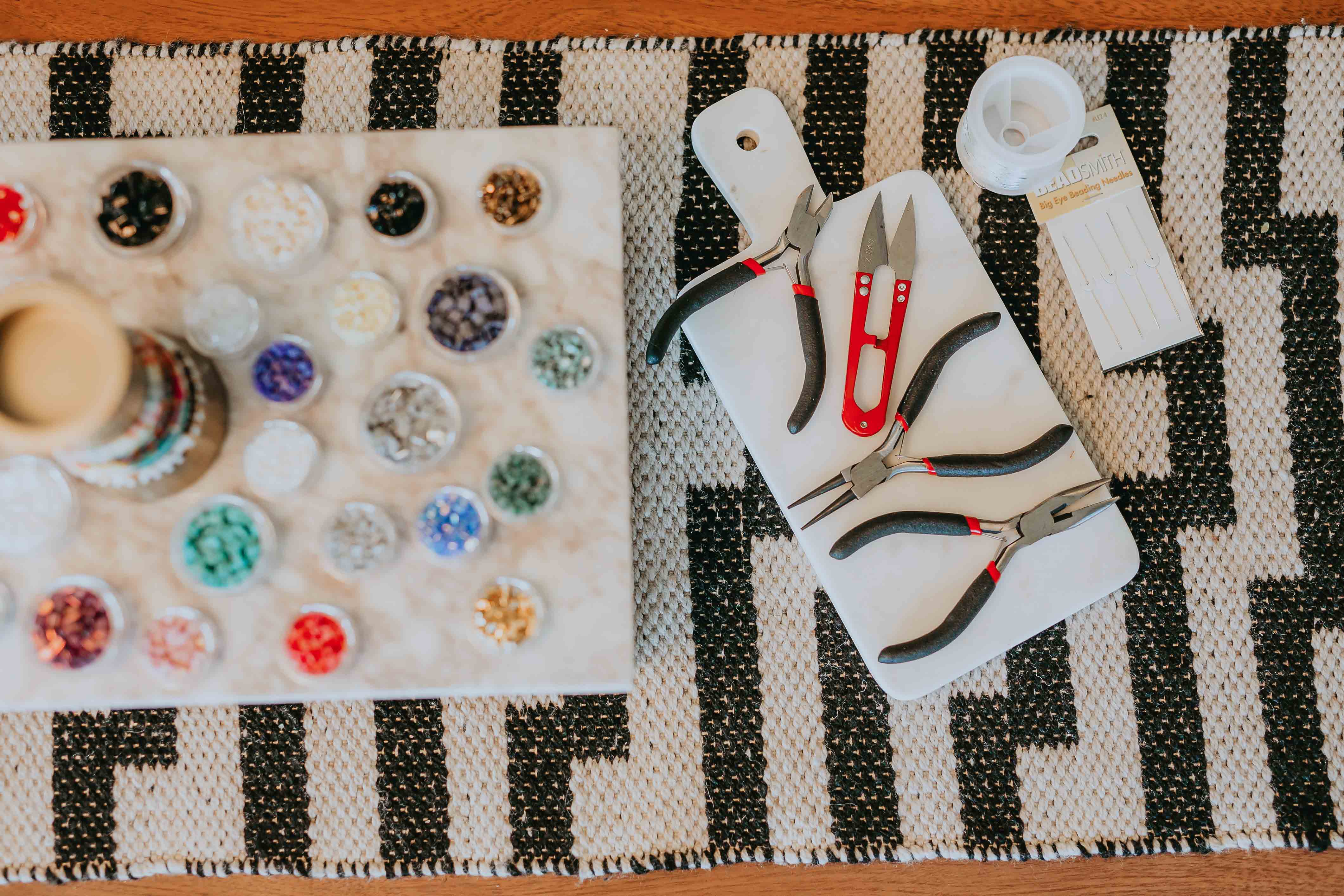
A Mack & Rex trio kit includes genuine Miyuki tila beads in a curated color mix, crystal-cord elastic, a threading tool, and written instructions, with enough material to finish three full bracelets. A craft-store pack often skips one of those pieces, usually the cord or the quantity, and leaves you short halfway through a project you already planned around. Curated color mixes matter more than they sound like they should. A pack of randomly bagged colors rarely reads as a finished design on the wrist, while a kit built around a named palette (coastal blues, autumn neutrals, a holiday mix) hands you a bracelet that looks intentional the moment it's strung.
One small note if kids are helping assemble a kit: beads are a choking hazard, so loose beads aren't appropriate for young children, and any crafting session with little ones at the table needs an adult present the whole time.
Does Inclusive Sizing Change What You're Paying For?
Fit is part of the cost too. Mack & Rex builds its bracelet instructions and finished pieces around a size range from XXS to 5XL, which means the kit accounts for wrists a generic one-size pattern never considers.
A craft-store pack typically gives you a single length suggestion and leaves the rest to guesswork. That's fine if you're making a bracelet for yourself and already know your wrist measurement. It's a lot less fine when you're making bracelets for a group with a wide range of wrist sizes, a book club, a grandkid's birthday party, a wedding party, and you'd rather not re-measure and restring half of them.
What Happens If Something's Off With the Kit?
You can actually reach someone. Mack & Rex backs its stretchy bracelets with a quality guarantee, and because there's a real company and a real storefront behind the kit, a snapped knot or a sizing question gets a real answer.
Generic marketplace packs often ship from a seller with no storefront and no real way to follow up if the box arrives short on beads or the cord snaps the first week. That gap doesn't show up on the price tag. It shows up three weeks later when something needs fixing and there's nobody to ask.
How Do the Real Prices Actually Compare?
Here's where actual numbers help more than a vague "worth it" claim. A Mack & Rex trio kit (makes 3 bracelets) runs $44.99. The DIY Bracelet Kit Club is $36.99. The All-in-One tools and supplies kit runs $39.99 to $43.99. For bigger projects, the Tila Bead Starter Kit (makes about 20 bracelets) is $189.99, and the Ultimate Tila Bracelet Kit (makes about 80) is $399.99.
A craft-store bead pack usually runs somewhere in the $8 to $15 range and yields one bracelet, sometimes two if you're careful and the bead count holds up. Per bracelet, the gap narrows once you factor in a cord that doesn't need replacing and beads that don't leave gaps in the final piece. One honest note: a single trio kit at $44.99 doesn't clear the $100 free-shipping threshold by itself, so pair it with another kit or a finished bracelet if free shipping matters to your order.
So Is a Tila Bead Kit Worth the Extra Cost?
Depends on the project. If you're testing whether beading is something you'll actually enjoy, a cheap craft-store pack is a reasonable way to find out without spending much.
If you already know you like it, or you're making bracelets that need to survive real wear, a gift, a group project, a bracelet somebody will wear to the gym, genuine Miyuki tila beads and crystal-cord elastic are the better call. You're paying for consistency you can see and a cord that won't quit in a month. The full lineup of Mack & Rex bracelet making kits lays every option out side by side, from the trio kit up to the Ultimate Kit.
Ready to Build Your Own Kit?
Mack & Rex started at a kitchen table, a mom crafting with her two daughters, Mack and Rex, and that's still the thinking behind every kit: real materials, honest instructions, and a project that actually finishes looking the way you pictured it. Browse the full range of tila bead bracelet kits and pick the size that matches your project. Mack & Rex ships internationally, with shipping and any customs or duties calculated at checkout, and free shipping on US orders over $100.
Frequently Asked Questions
Why do tila bead bracelet kits cost more than a craft-store bead pack?
A real tila bead kit uses genuine Miyuki glass tiles made to tight size and color tolerances, crystal-cord elastic rated for daily wear, and a curated color mix with enough material to finish complete bracelets. A craft-store pack usually mixes glass or plastic beads from several unlisted sources at a lower, less consistent quality.
Are Miyuki tila beads actually different from craft-store seed beads?
Yes. Miyuki tila beads are flat, two-hole glass tiles manufactured in Japan to consistent size and hole placement, so they sit flush against each other on the strand. Craft-store bins often blend beads from multiple molds, which shows up as visible gaps or size drift once you string a few side by side.
Is a tila bead bracelet kit worth it if I'm new to beading?
For a first project, yes, mainly because a complete kit removes the guesswork. You get matched beads, the right elastic, a threading tool, and instructions in one box, so you're not guessing whether a craft-store pack has enough beads or the right cord to finish a bracelet that actually holds up.
Does buying a tila bead kit qualify for free shipping or the buy-3 offer?
Mack & Rex offers free shipping on US orders over $100, and a single trio kit at $44.99 doesn't clear that threshold on its own. The buy-3-bracelets-get-1-free offer applies only to finished, ready-to-wear bracelets, not to kits, loose beads, or bead mixes.