


Why Do Tila Beads Lay Flat? A Guide to Two-Hole Beads
Why Do Tila Beads Lay Flat?
Tila beads lay flat because each one is cut as a square glass tile rather than a sphere, and it carries two parallel holes instead of the usual single hole. The flat face gives the bead a stable surface to rest against the wrist or the bead next to it, and the second hole stops it from spinning in place.
Two holes. One flat face. Nothing round to roll. That combination is the entire mechanism, and it's why a Tila piece sits flush rather than bunching the way a round-bead piece does after a few wears.
Round seed beads only ever touch their neighbors at a single point. One strand of cord lets each bead pivot freely around it, which is why round-bead bracelets twist, bunch, and show gaps over time. Tila beads trade that single point of contact for a full flat face plus two anchor points, and that swap is the whole trick behind the style.
What Makes the Two-Hole Design Different From a Regular Seed Bead?
A regular seed bead has one hole through its center, so one strand of cord is the only thing holding it in position relative to its neighbors. A Tila bead has two holes running side by side through a flat 5mm square, so two strands of cord pass through it at once, pinning it on both sides rather than one.
That second hole is doing more work than it looks like. With only one connection point, a bead can rotate around the cord any time there's slack, which is exactly what happens during a workout, a handshake, or a few hours of typing. With two connection points locked to the beads on either side, there's nowhere for it to rotate to. Fire Mountain Gems' Tila bead reference lists the standard size as 5mm x 5mm x 1.9mm, with half Tila and quarter Tila cut down from the same flat profile for narrower rows.
How Do the Flat Shape and Two Holes Create Clean, Stackable Rows?
Flat edges meet flat edges. Lay two Tila beads side by side and they touch along a full face rather than a single point, so a finished row reads as a tight grid, not a loose string of circles. That grid effect is what gives finished Tila bracelets their smooth, tile-like look, not the bumpy texture you get from round beads.
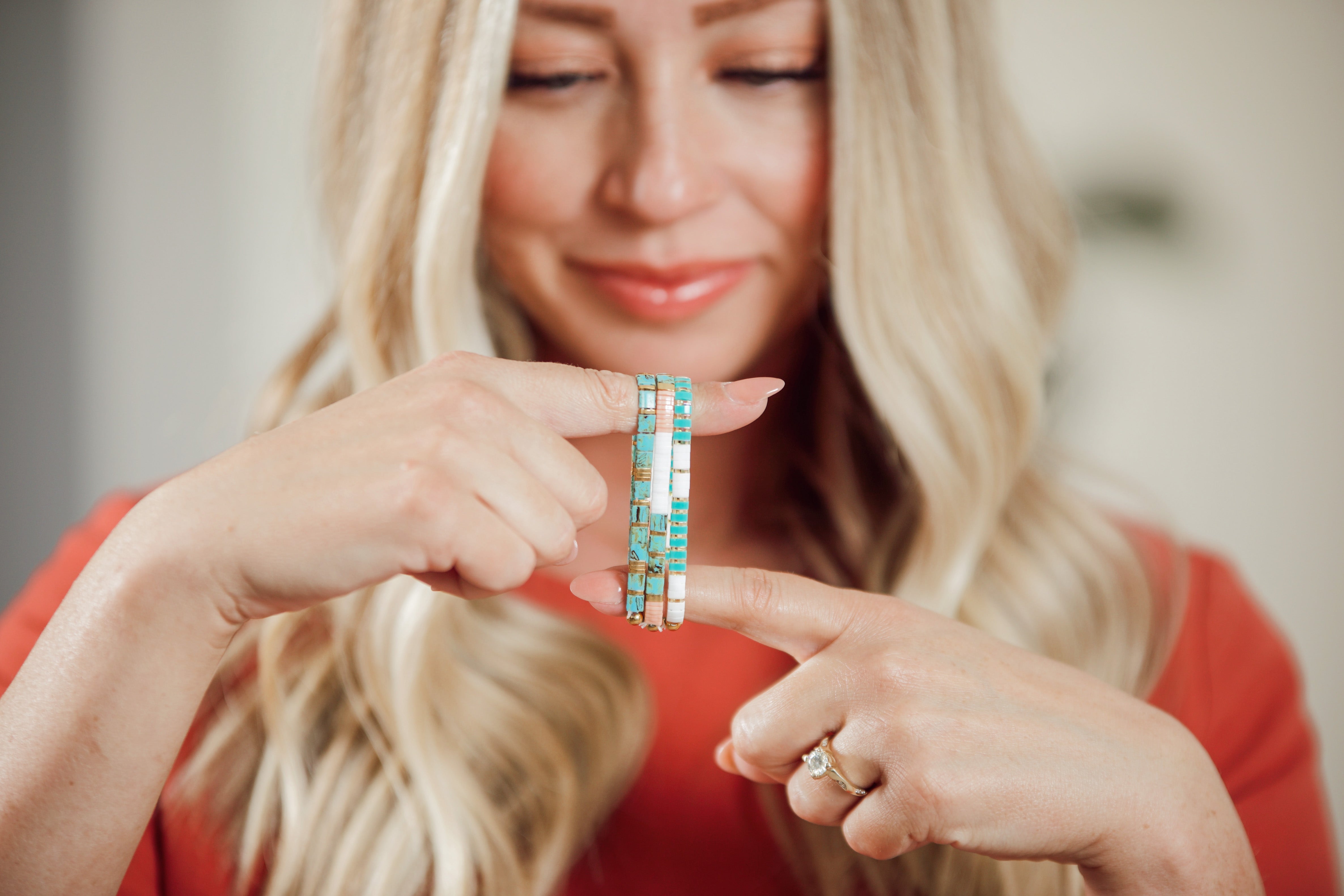
Stacking multiple Tila bracelets works the same way at a larger scale. Because each individual bracelet sits flat against the skin rather than bulging outward, two or three stacked together still sit close to the wrist rather than piling into a thick stack. If you've ever had a round-bead bracelet dig in or slide around under a stack of others, that's the exact problem the flat profile solves. A stack of three or four finished pieces from different named colorways, say a STAINED bracelet next to an EVERGREEN EDIT piece, still sits nearly as flat as a single one, which is the whole appeal of the shape for anyone who likes to stack.
How Do You String Tila Beads So They Sit Right?
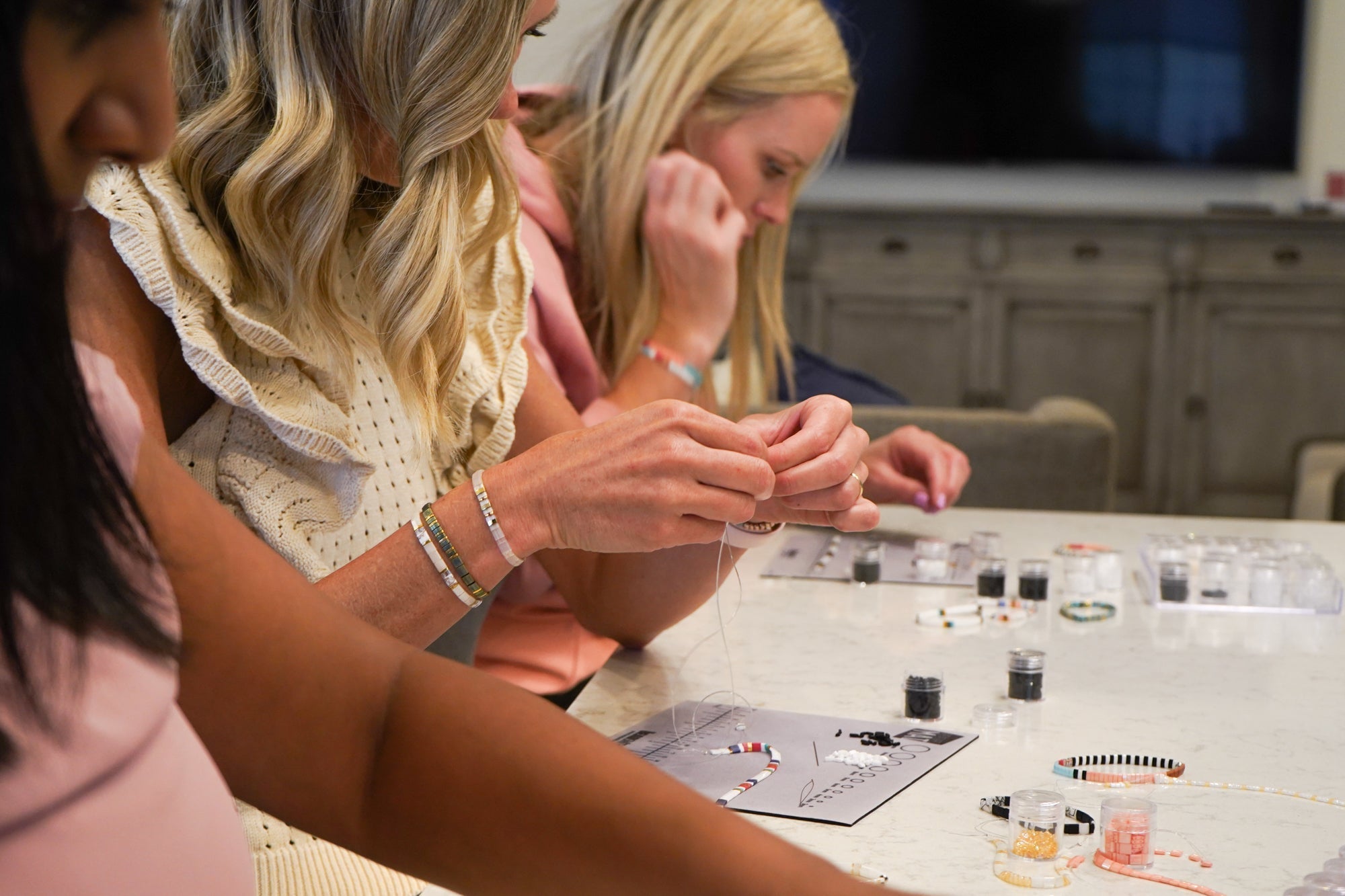
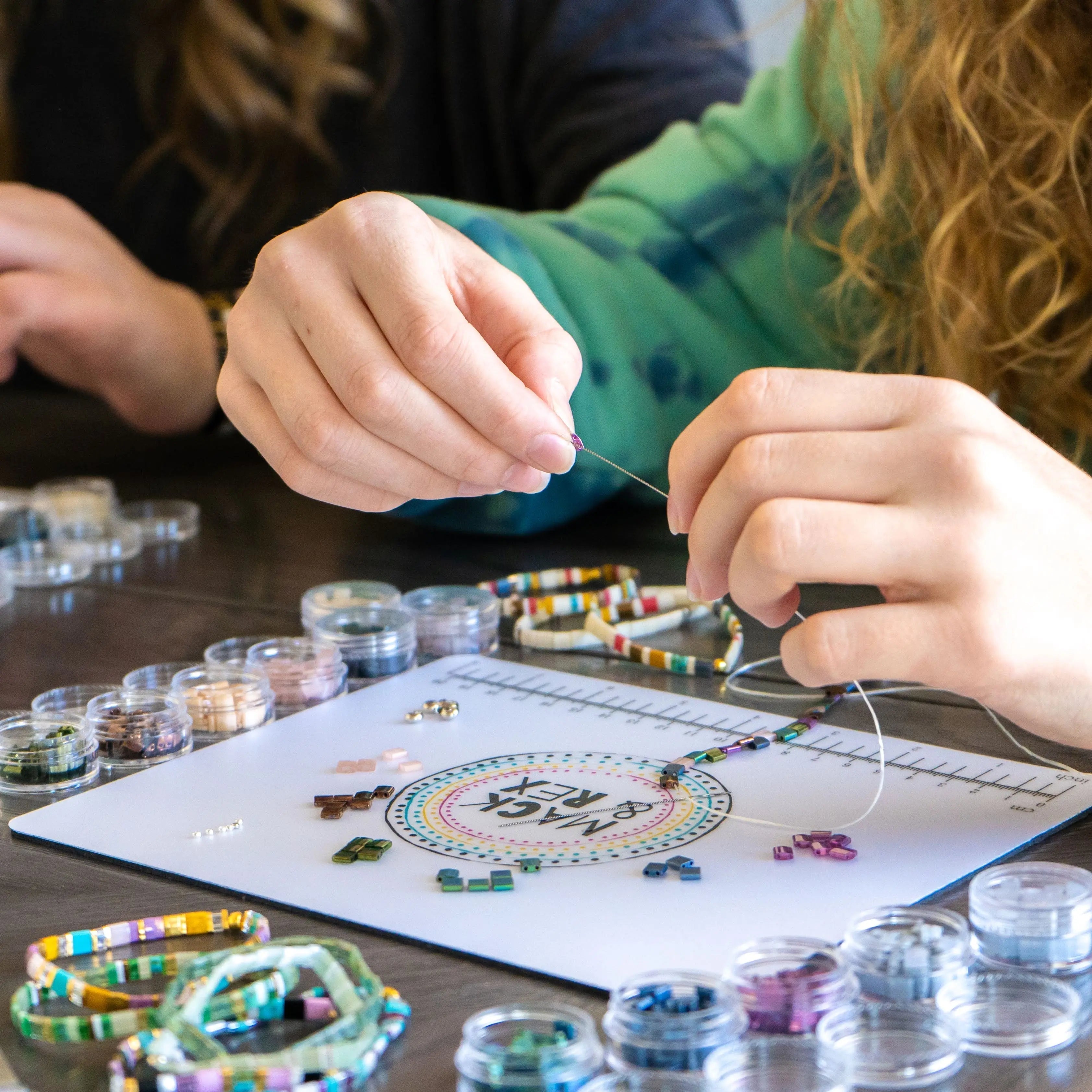
Pick your cord first. Most Tila bracelet makers use a thin, strong stretch cord, run through both holes on every bead, in the same direction, row after row. A typical finished bracelet uses somewhere around 7 to 8 inches of doubled elastic cord before the knot, depending on wrist size, and that length is what the inclusive XXS to 5XL sizing is built around. Mixing directions, even occasionally, is what causes a finished piece to twist once it's off the loom or needle.
A few things that make the process smoother:
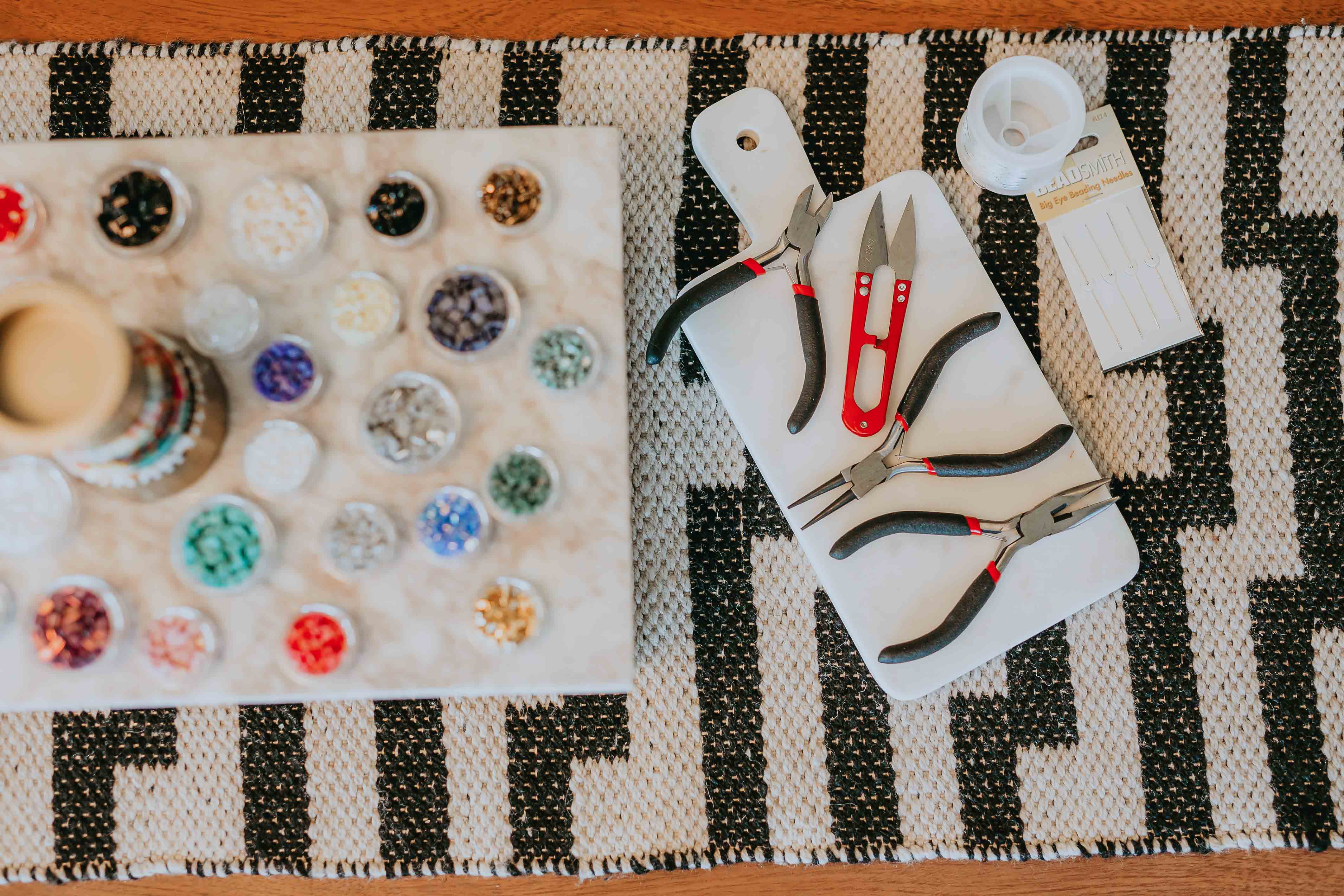
- Use two needles (or a needle on each end of a doubled cord) so you can work both holes of each bead without re-threading constantly.
- Keep tension even. Too loose and the beads wobble; too tight and the cord wears faster at the holes.
- Work in short test rows before committing to a full bracelet length, especially the first time you're matching a color pattern.
- If you're crafting with kids, keep an adult handling the loose beads. They're small glass pieces and a choking hazard, so they're not something to leave within reach of a toddler or a preschooler who's still mouthing objects.
The AllFreeJewelryMaking guide to Tila bead patterns walks through several stitch and stringing approaches, including checkerboard layouts and striped rows, if you want to see the two-hole technique applied to different patterns beyond a basic stretch bracelet. The same logic scales down to half Tila and quarter Tila beads if you want narrower rows or a mixed-width design within one piece.
Where Do Mack & Rex's Tila Beads Come From?
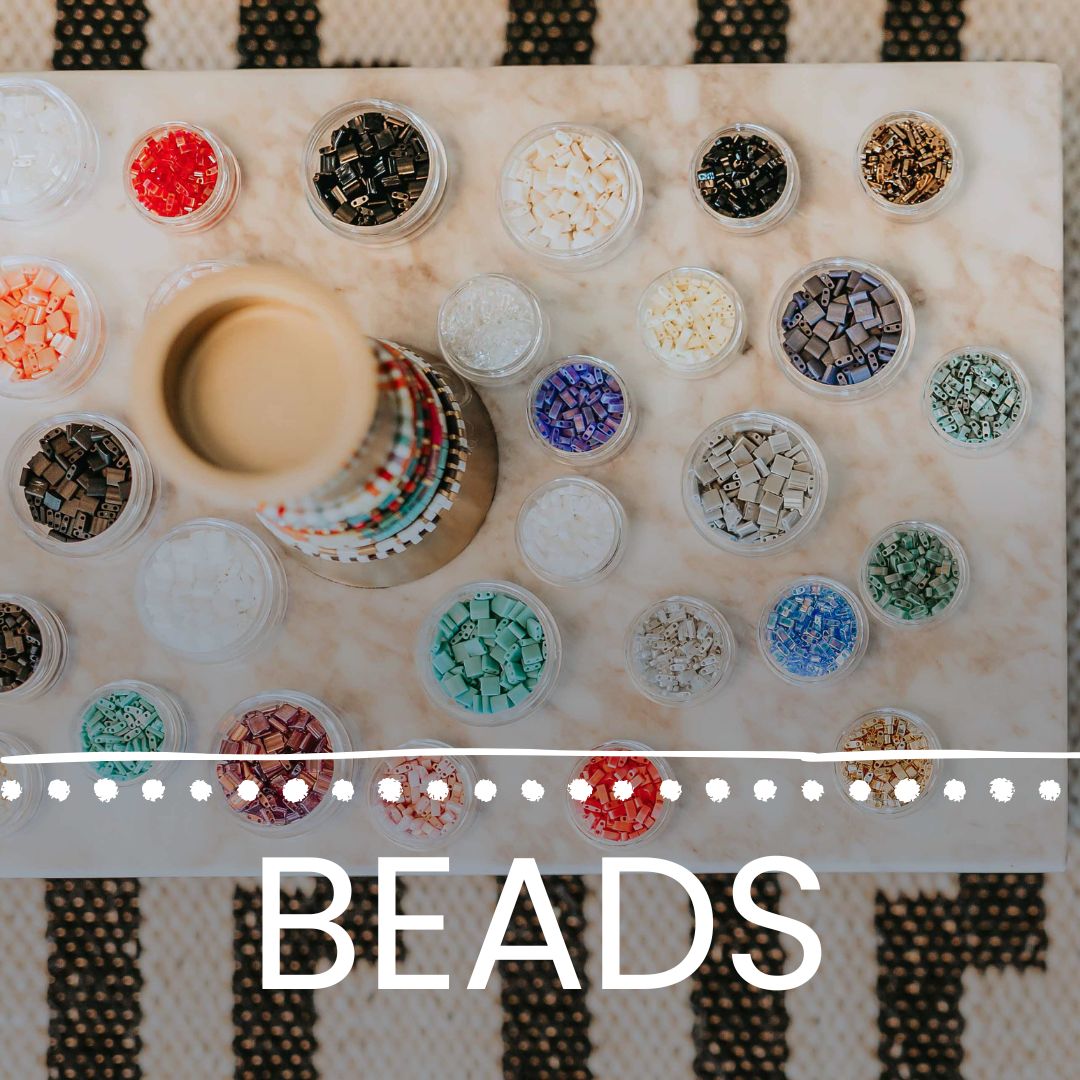
Miyuki is the Japanese glass bead maker behind the Tila shape. "Tila" is Miyuki's own trademarked name for the flat, two-hole tile bead, and Mack & Rex sources genuine Miyuki Tila beads rather than making the glass itself. The Mack & Rex Tila beads collection carries loose Tila mixes in named colorways alongside the finished, ready-to-wear bracelets and trio kits built from the same beads. Collections like STAINED, BEACHY, RETRO SUNSET, and EVERGREEN EDIT rotate through different Miyuki finishes each drop, so the two-hole mechanics stay the same even as the colors change month to month.
Seed and tile beads in general follow sizing conventions that go back decades in the bead industry; the aught system used for round seed beads (11/0, 8/0, and so on) is a separate convention from Tila's flat millimeter sizing, and Wikipedia's seed bead overview is a useful starting point if you want the broader history of how bead sizing got standardized across manufacturers.
If stringing your own isn't the plan, the finished bracelets skip the needle-and-cord step entirely. Mack & Rex backs them with a quality guarantee, and sizing runs XXS to 5XL, so fit isn't a guessing game whether you're buying for yourself or for a grandchild.
Frequently Asked Questions
Why do tila beads lay flat?
Tila beads lay flat because each one is cut as a square glass tile rather than a sphere, and it has two parallel holes, not one. The flat face rests against the wrist or against the next bead, and the second hole keeps the bead from rotating, so a strung piece sits still rather than rolling.
What is a two-hole bead?
A two-hole bead has two separate holes running through it, not one, which locks it to its neighbors on two points of contact. Miyuki Tila, half Tila, and quarter Tila beads are the best-known two-hole glass beads, and the second hole is what keeps a flat bead bracelet from twisting while you wear it.
Are tila beads harder to string than regular seed beads?
They take a bit more attention at the start because you're tracking two holes per bead rather than one, but most crafters pick up the rhythm within a row or two. Running both strands of elastic through in the same direction on every bead is the detail that matters most.
Can kids safely use tila beads?
Tila beads work well for a supervised craft night with older kids, but they are small glass pieces and a choking hazard, so they're not appropriate for young children who still put things in their mouths. An adult should handle loose beads around toddlers and preschoolers.
Does Mack & Rex ship tila beads internationally?
Yes. Mack & Rex ships internationally, with shipping and any customs or duties calculated at checkout. Free shipping applies to US orders over $100; it is not a blanket offer, and international orders ship at the checkout-calculated rate rather than being unavailable.
Want to see the flat, two-hole shape in person before you string a single row? Browse the Mack & Rex Tila beads collection for loose mixes, trio kits, and finished bracelets built from genuine Miyuki Tila beads. US orders over $100 ship free, and international orders ship with duties calculated at checkout.