



Why Do Tila Beads Sit Flat? The Two-Hole Design Explained
Why Do Tila Beads Sit Flat?
Tila beads sit flat because they are cut as small, square tiles and drilled with two parallel holes near the top edge rather than a single hole through the center. That off-center, two-point setup locks each bead's rotation in place on the cord, so the flat face stays facing outward rather than spinning the way a round bead does.
It's a simple piece of geometry, but it changes everything about how the finished piece looks. A round seed bead only touches its cord at one point, so it can twist freely no matter how tight you pull the strand. A Tila bead touches the cord at two points spaced apart, and that second point is what stops the spin. No spin, no wobble, no random gaps opening up between beads. Once you see it laid out side by side with a round bead, the difference is obvious.
What Exactly Is a Tila Bead?
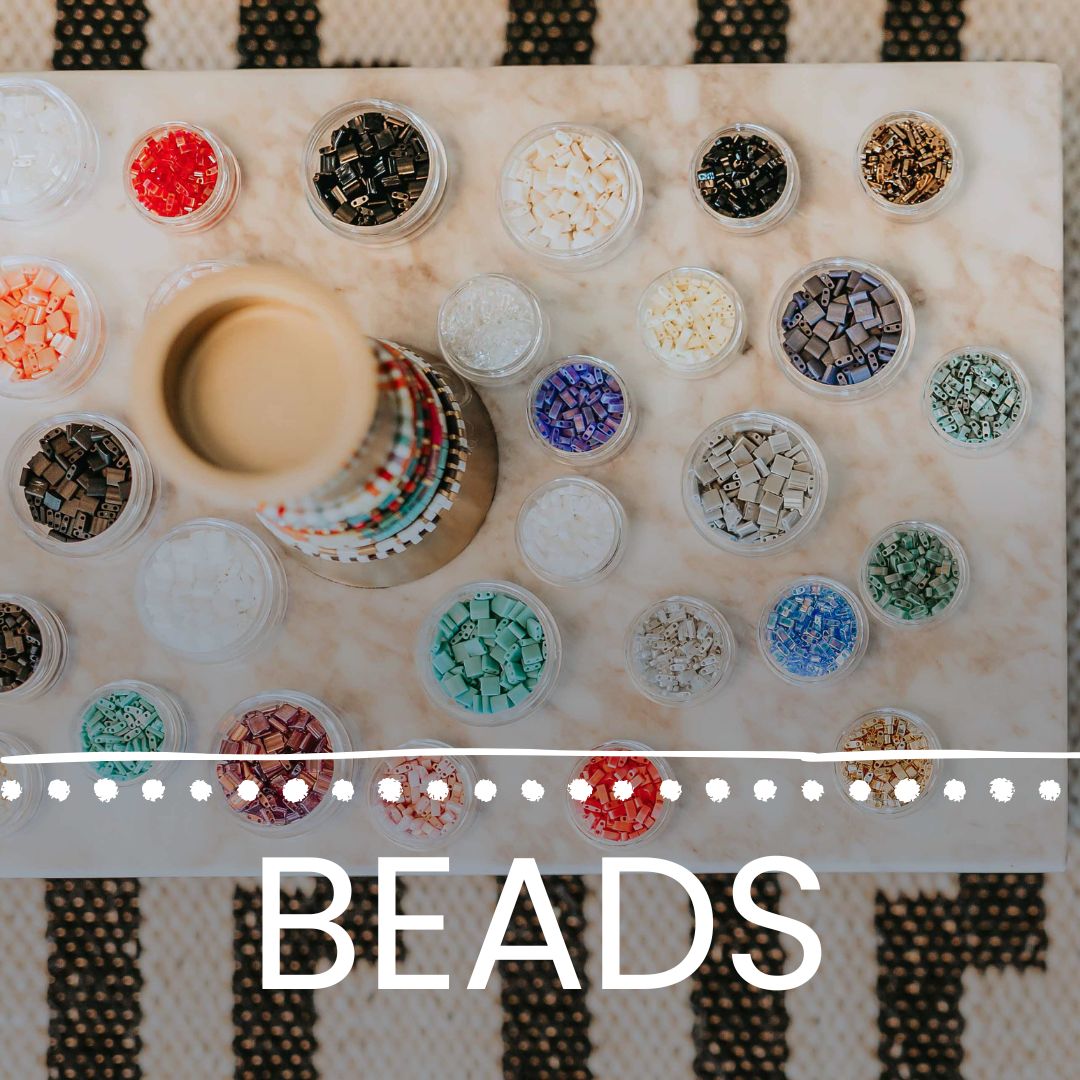
A Tila bead is a flat, square glass bead made by Miyuki, the Japanese seed bead manufacturer, measuring about 5 mm by 5 mm and roughly 1.9 mm thick. Two parallel holes about 0.8 mm wide run through the flat face near the top edge, which is the defining feature that separates a Tila from a standard round seed bead.
Miyuki introduced the shape as an offshoot of its cylinder-style Delica beads, built specifically to sit flush in a row rather than tumble around a single center hole. Seed beads in general have always leaned toward rounded, spheroidal shapes, so a flat square with two holes was a real departure when it showed up on the market.1 Mack & Rex sources genuine Miyuki Tila beads, not a lookalike from another factory, so a pattern built around true 5 mm measurements holds up bead for bead.
How Does the Two-Hole Geometry Actually Work?
The two holes sit side by side, both drilled straight through the bead's thin dimension, near one edge rather than dead center. Running a strand through each hole gives the bead two fixed anchor points rather than one, and two anchor points on a rigid square shape means the bead cannot rotate freely once it's under any tension at all.
Think of it like a picture frame hung on two nails rather than one. A single nail lets the frame swing and tilt. Two nails, spaced apart, lock the frame's angle no matter how you bump it. Tila beads work the same way on a bracelet: two parallel strands (or two passes of the same strand) through the two holes hold the bead's orientation steady, bead after bead, all the way around the wrist.
The hole spacing matters here too. Miyuki keeps that gap consistent across its Tila line, which is part of why beads from the same production run mix and match cleanly in a pattern. A supplier spec sheet for Tila beads lists the shape plainly: 5x5mm, two holes, no variation by color.2
Why Do Flat Beads Lock Together Into a Solid Band?
Flat-faced beads lock together because each square face rests directly against its neighbor's square face, leaving almost no gap between beads. Round beads, by contrast, only ever touch at a single point of curvature, so a strand of round beads always shows small triangular gaps no matter how tight you pull the cord.
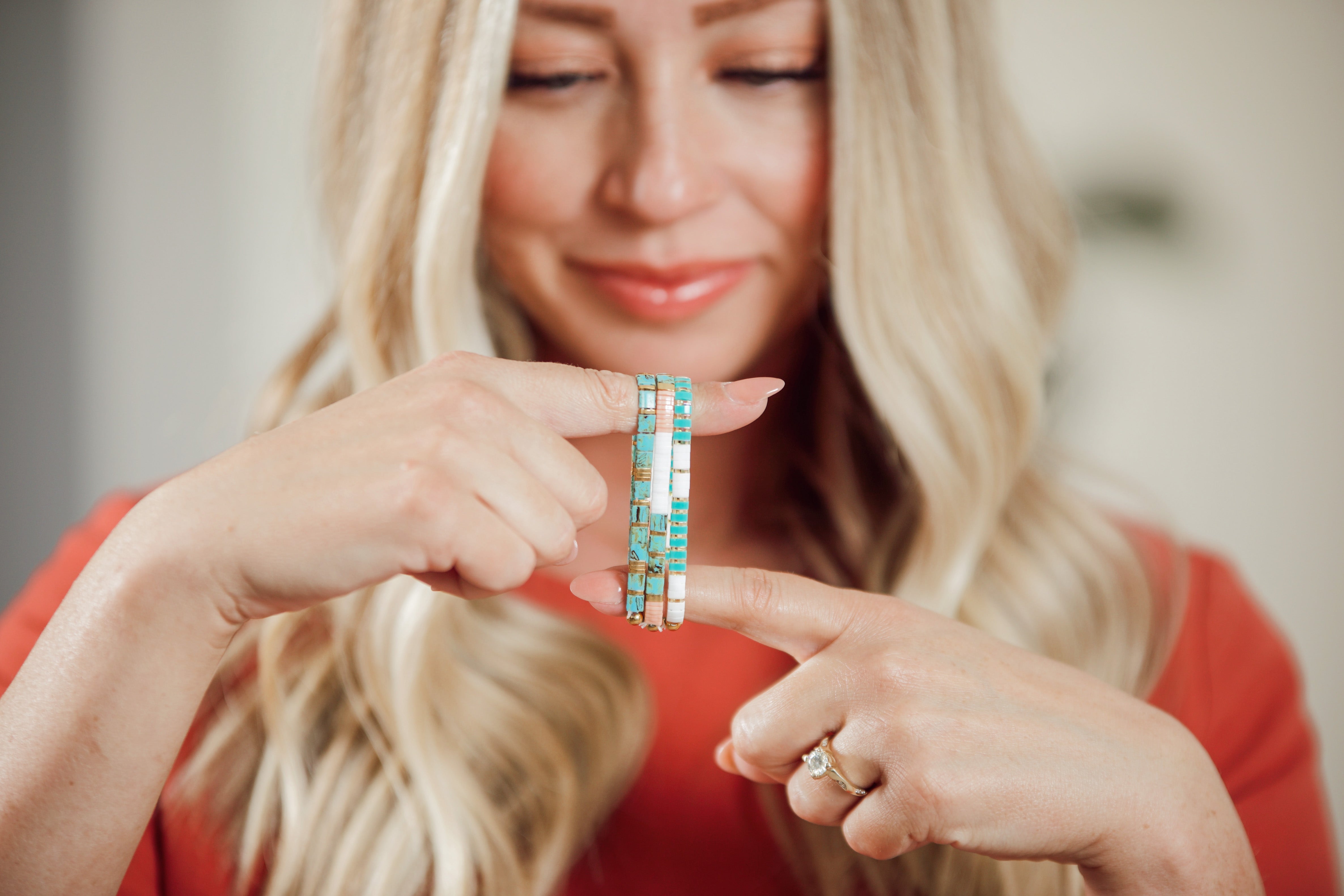
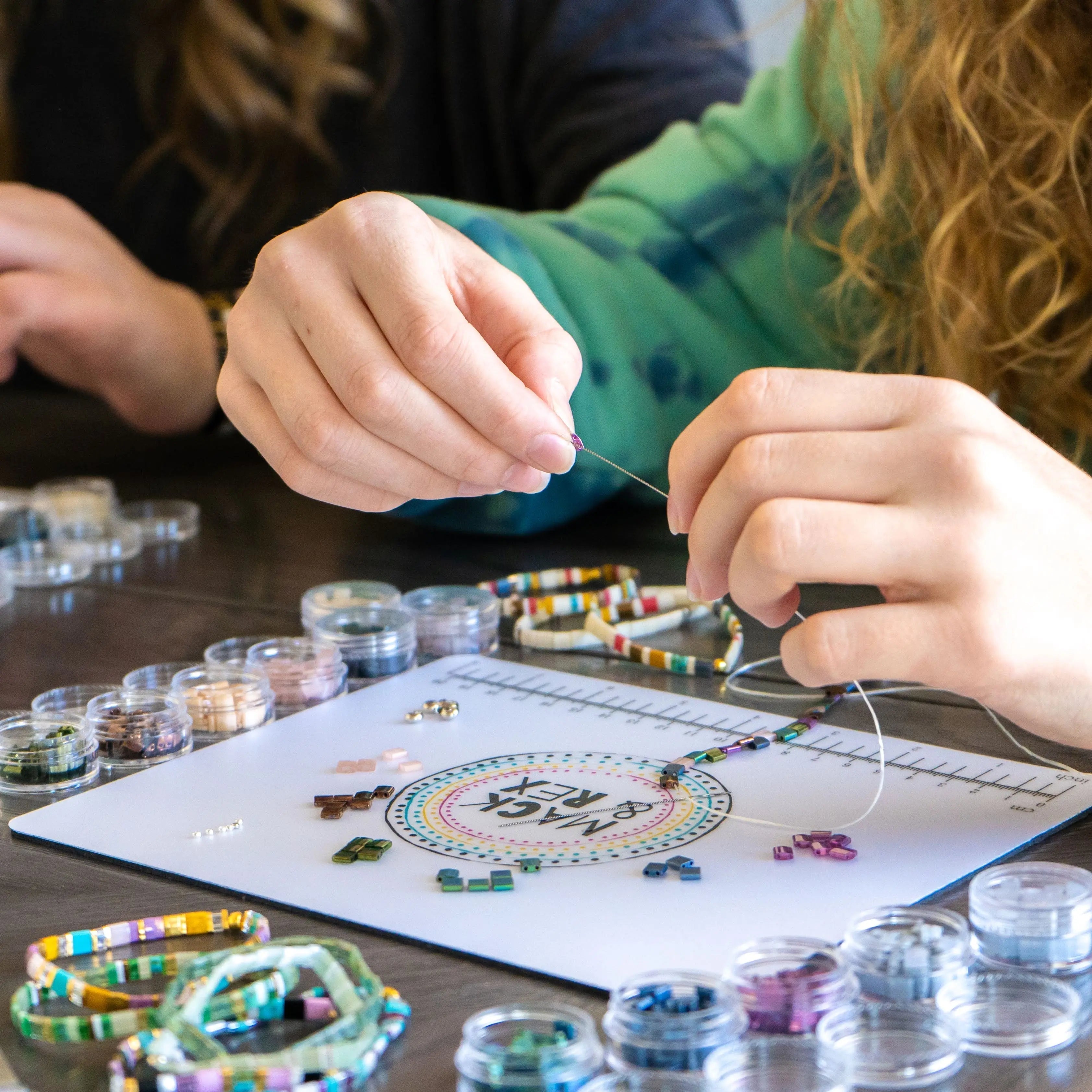
Line up twenty Tila beads edge to edge and you get something closer to a tile mosaic than a beaded strand. The flat surfaces butt up against each other, the two-hole rotation lock keeps every bead facing the same way, and the result reads as one continuous band of color and pattern rather than individual beads strung in a line. That's the whole visual signature of a Tila bracelet: crisp, geometric, almost woven-looking, even though it's just beads on cord.
Retailers who work with Tila beads describe the shape in almost identical terms: a flat square, two-hole bead built to bring a geometric, tiled look to beadwork.3 That's not marketing language so much as a description of the physics. The shape does the work.
How Does This Change the Look and Fit of a Finished Bracelet?
A Tila bracelet sits flatter and wider against the wrist than a round-bead bracelet of the same length, because each bead contributes its full 5 mm face to the visible surface rather than a curved sliver. The finished piece reads more like a solid band than a string of individual beads, and it tends to stay put better since the flat faces resist rolling around the wrist during movement.
That flush, locked-in structure is also why cord tension matters more with Tila beads than with round ones. Pull the elastic too loose and the beads can still twist out of alignment even with two holes, breaking that clean tile look. Too tight, and the square edges can't seat fully against each other. Getting the tension right is part of what separates a bracelet that lies flat from one that looks slightly off no matter how carefully you string it.
This is also where the "stays put" reputation of two-hole bracelets comes from. Two strands of cord under load spread the stress differently than one strand does, which is part of why quality control on the elastic matters so much for stretch bracelets built this way.
How Do You Thread Two-Hole Beads?
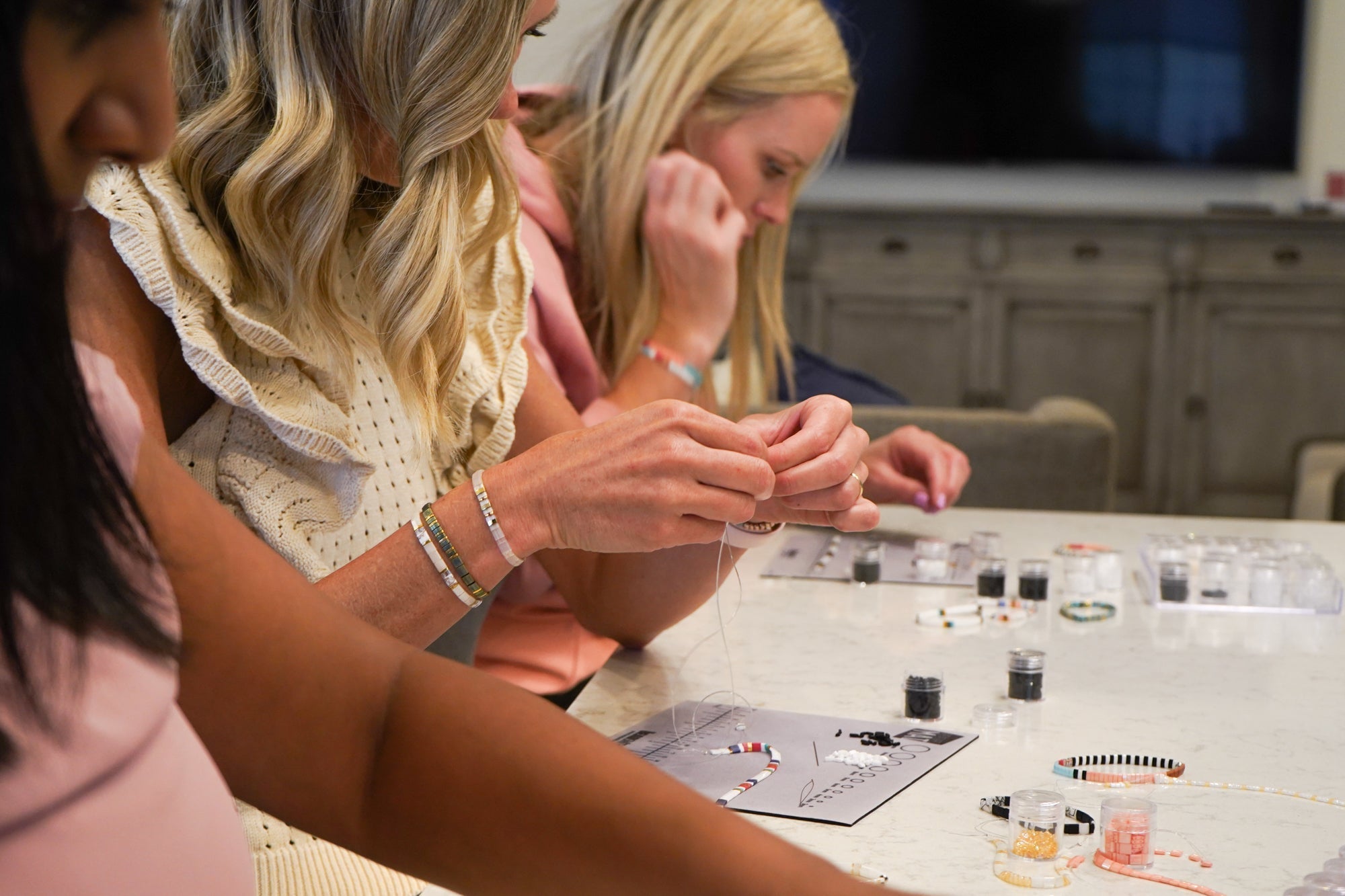
Threading two-hole beads means running a separate length of elastic cord (or, in bead weaving, a needle and thread) through each of the two holes on every bead in the row, keeping both strands moving through the beads in the same direction and order. Most beginners find it easiest to lay all the beads out in the pattern first, then thread hole by hole rather than bead by bead.
A few practical habits make the first attempt smoother. Start with a bit of extra cord length on both strands so you're not scrambling to catch up if one strand runs short. Keep the beads face-up in a tray or bead mat so the hole orientation stays consistent as you work down the row. And check every few beads that both strands are still running in the same direction. It's easy to flip one bead upside down without noticing, and that one flipped bead can throw off the whole flat, locked look once you tie off. Beading tutorials that walk through two-hole stringing step by step are worth watching once if you've only ever worked with single-hole seed beads before, since the motion is a little different from what most crafters are used to.
A Note on Safety When Kids Are Crafting
Tila beads are small glass pieces and a real choking hazard, so keep an adult at the table any time kids are stringing beads and keep loose beads away from children under three or anyone who still puts small objects in their mouth. Bead kits and loose Tila beads are craft supplies, not toys, and they aren't sized or marketed for very young children.
Where to Find Genuine Tila Beads for Your Next Project
Mack & Rex carries genuine Miyuki Tila beads as loose mixes, themed color packs, and full DIY bracelet kits with elastic cord already matched to the bead holes. Every listing states the real gram weight and approximate piece count, so you know what you're working with before you buy, not after.
Browse the full Tila bead collection to compare colors, mixes, and kit options side by side. Mack & Rex ships internationally, with shipping and any customs costs calculated at checkout, and free shipping on US orders over $100.
FAQ: Tila Bead Shape and Two-Hole Design
Why do Tila beads sit flat rather than spinning?
Tila beads sit flat because they are square and drilled with two parallel holes near the top edge rather than one hole through the center. Two points of contact with the cord hold the bead in a fixed rotation, so the flat face stays facing out rather than turning.
What is the actual size of a Tila bead?
A standard Miyuki Tila bead measures about 5 mm by 5 mm and is roughly 1.9 mm thick, with two 0.8 mm holes running through the flat face. That thin, wide profile is part of why the beads lie flush against each other.
Are Tila beads made by Mack & Rex?
No. Tila and Miyuki are trademarks of Miyuki, the Japanese glass bead manufacturer. Mack & Rex sells genuine Miyuki Tila beads sourced through the regular supply chain; it does not make the beads itself.
Can beginners thread two-hole beads?
Yes. The most common beginner method uses two lengths of elastic cord or two needles, one through each hole of every bead, so the row builds evenly. Going slow on the first few beads to keep both holes aligned makes the rest of the row go faster.
Do two-hole beads make a stronger bracelet than round beads?
A two-hole build spreads tension across two strands of cord rather than one, which can add resistance to twisting and add a second point of support if one strand wears. It is not a guarantee against breakage, since cord quality and daily wear still matter most.
1 Background on seed bead shapes and sizing conventions: Wikipedia, "Seed bead". 2 Tila bead spec (5x5mm, two-hole) from a beading supplier's catalog: John Bead, Miyuki Tila Beads. 3 Shape description from a beading retailer: PotomacBeads, Miyuki Tila Beads.
Ready to see the flat, tiled look in person? Shop the full Tila bead collection at Mack & Rex.