


Can You Make Wide or Double-Strand Bracelets from an Adult Making Kit?
Can you make a wide or double-strand bracelet from an adult bracelet making kit?
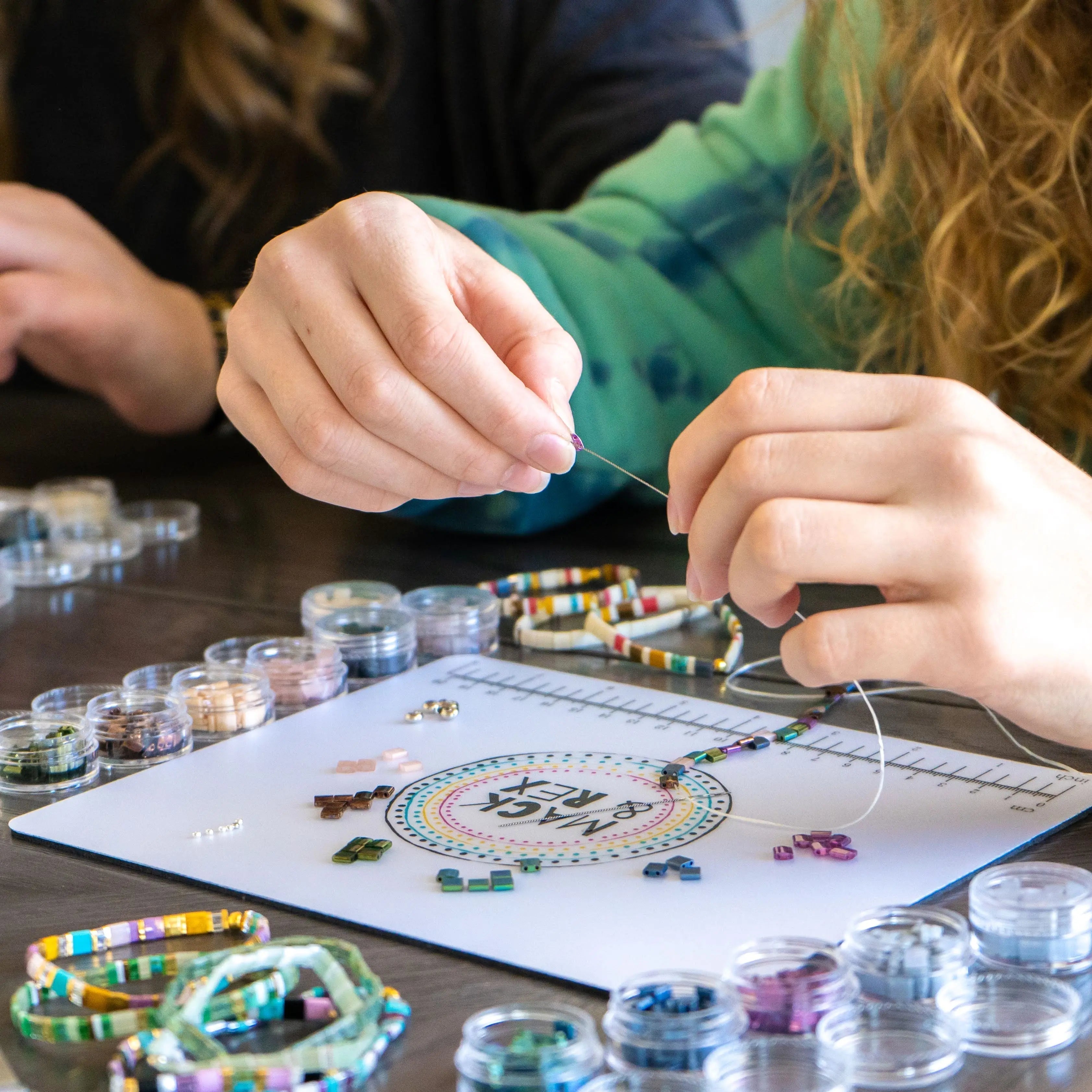
Yes. The Tila beads, crystal-cord elastic, and tools in a standard adult kit work for a wide cuff or a true double-strand bracelet, not just a single row. You build two rows, link them together every few beads so they move as a single piece, and plan on roughly double the beads and cord per finished bracelet compared to a standard single-row design.
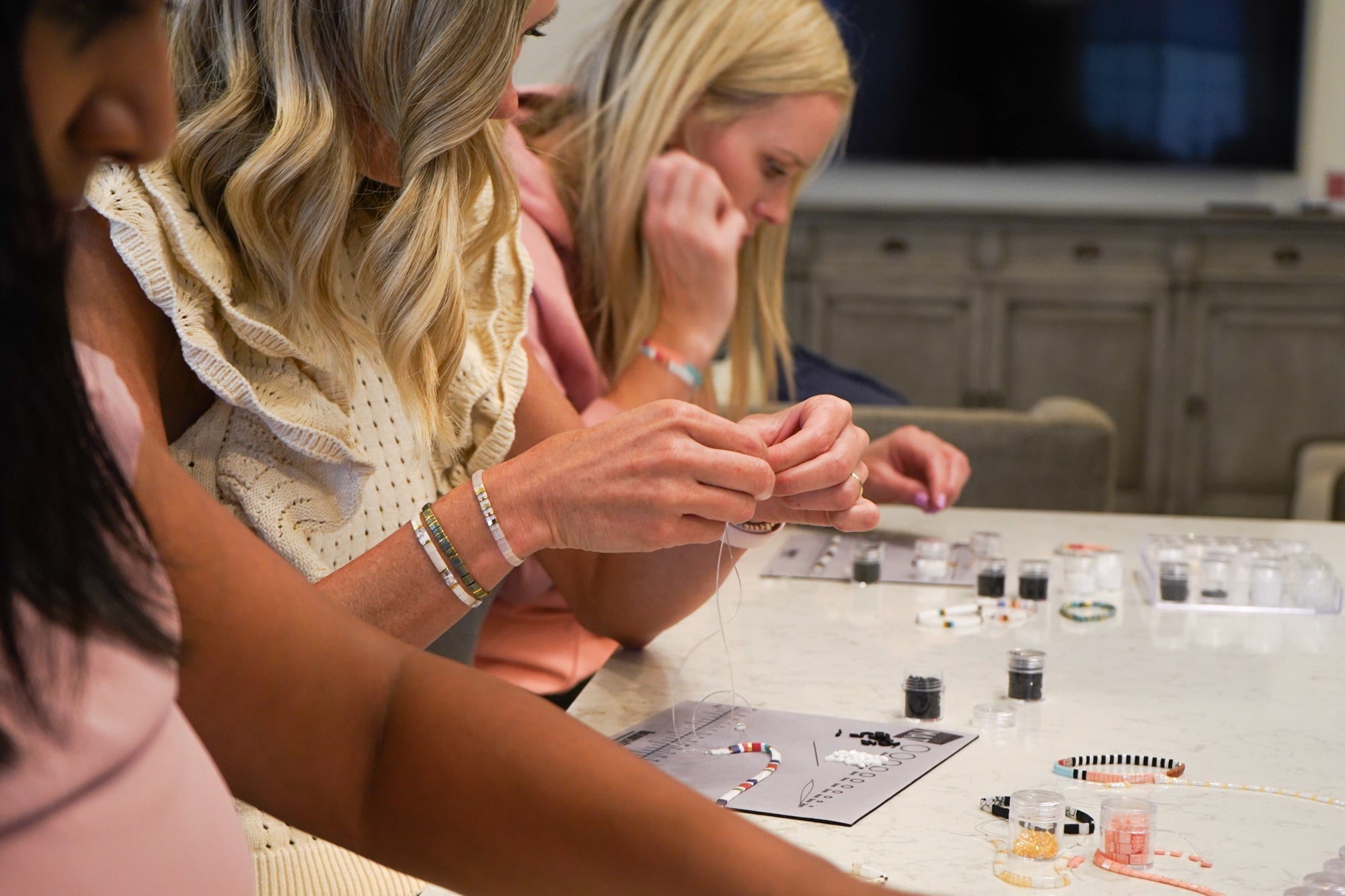
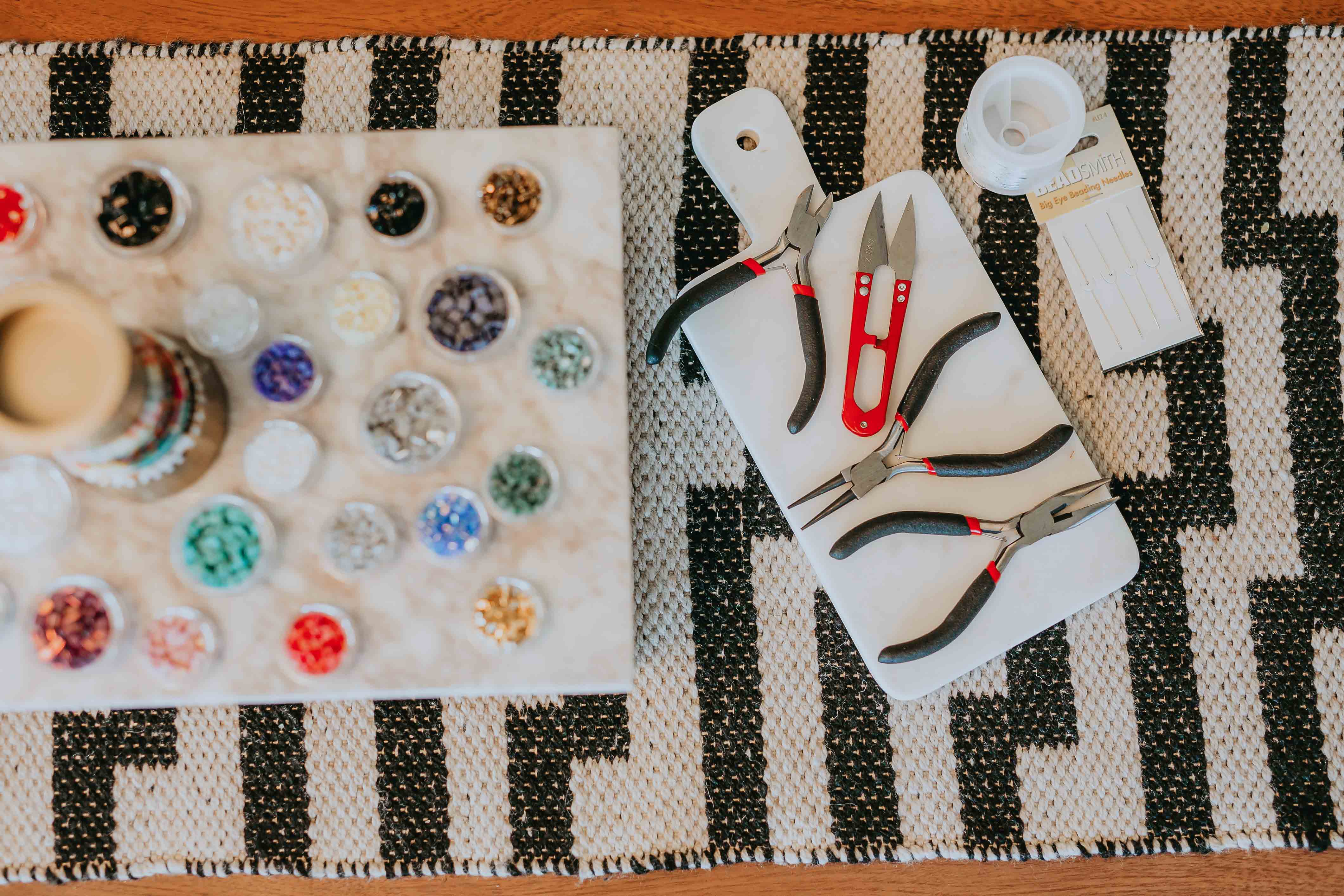
Nothing about this needs extra hardware. It's the same lock-top needle, the same bead mat, the same spool of elastic that comes in an All-in-One kit or the bigger tiered kits. What changes is the plan before you start stringing.
What's the real difference between a wide cuff, a double-strand bracelet, and a stacked wrap?
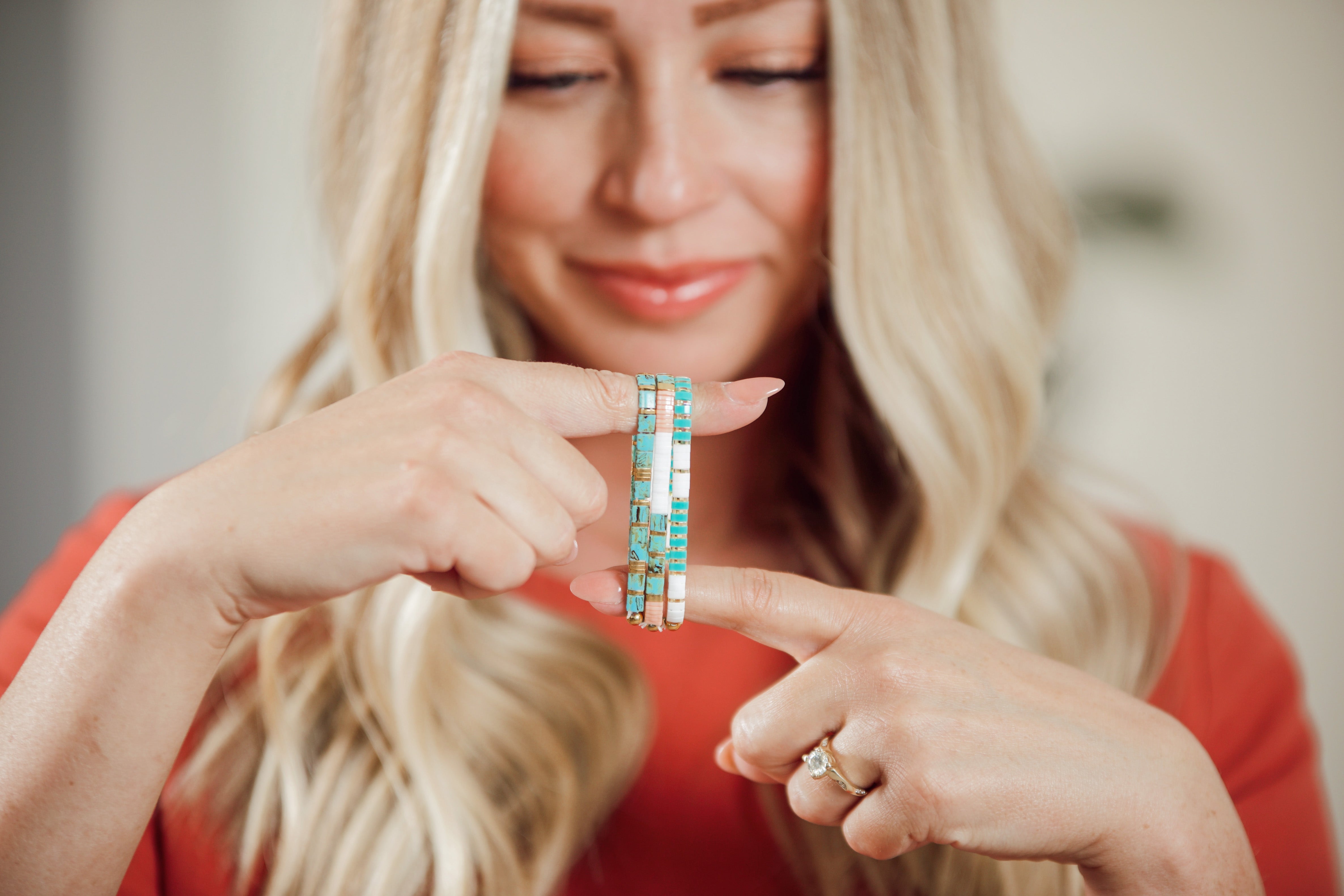
A wide cuff and a double-strand bracelet are the same idea: two or more rows of beads physically linked so the finished piece behaves as one band on the wrist. A stacked wrap is different. It's two or more separate finished bracelets worn together, with nothing connecting them at all.
Both looks read as "bolder" from across a room. The build process is where they split. A wide cuff takes planning and a connector step partway through. A stacked wrap takes zero extra technique; you're just making a few single bracelets sized to sit together and wearing them as one look. If you've already got the hang of a standard Tila bracelet, a stacked wrap is the faster weekend project. A linked cuff is the one that looks custom.
How many beads and how much cord does a wide or double-row bracelet take?
Budget about double what a single-row bracelet uses. Tila beads are small, flat, two-hole glass tiles, roughly 5mm square, and a standard single row already runs cord through both holes of every tile to keep the flat beads from twisting on the wrist. A second row repeats that exact structure, so the bead count and the cord length both roughly double per finished bracelet.
Wrist size drives the baseline math before you ever get to doubling it. Stretch bracelet sizing generally runs about 6.5 inches for a small wrist, 7 inches for medium, and 7.5 to 8 inches for a larger wrist, according to Fire Mountain Gems' sizing guidance, and that's the number you're building each row to match before linking a second one on.1 Cut your elastic a few inches longer than the finished measurement on every strand so you've got room to knot, and pre-stretch it by hand before stringing so a finished wide cuff doesn't loosen up after its first few wears.2
How do you connect two rows so they act like one bracelet, not two?
String both rows first, then bridge them. Build row one across its full length on two strands of elastic the way you'd build any single Tila bracelet, set it aside, and build row two the same way. Once both rows match in length, lay them side by side and, every three or four beads, thread a small round connector bead through a strand from each row so the two pull snug against each other at that point.
Three or four connector points along the length is usually enough. Fewer than that and the rows twist apart when the bracelet moves on the wrist; more than that and the piece stiffens up and stops moving with you at all. Finish each row's own knot separately once the bridges are in, since each row still needs its own surgeon's knot and glue dot. Trim the tails short and tuck them into the nearest bead so nothing pokes out against skin.
How do you size a wide or double-strand bracelet from XXS to 5XL?
Scale the repeat, not the formula. Mack & Rex sizes finished bracelets from XXS through 5XL, and that range holds for a self-built piece too: measure the wrist, string one row to that exact length plus a touch for knotting, then build the second row to match before you bridge them.
A smaller wrist needs fewer beads per row and shorter cord on all four strands; a larger wrist needs more of both, and a true plus-size cuff (5XL territory) can run several beads longer per row than a small. The only real adjustment between sizes is how many beads you string before you stop and measure against the wrist again. Measure twice before you tie the first knot. A wide piece with two rows bridged together is much harder to unpick and resize than a single strand once it's finished.
How many wide bracelets can one Ultimate Tila Bracelet Kit make?
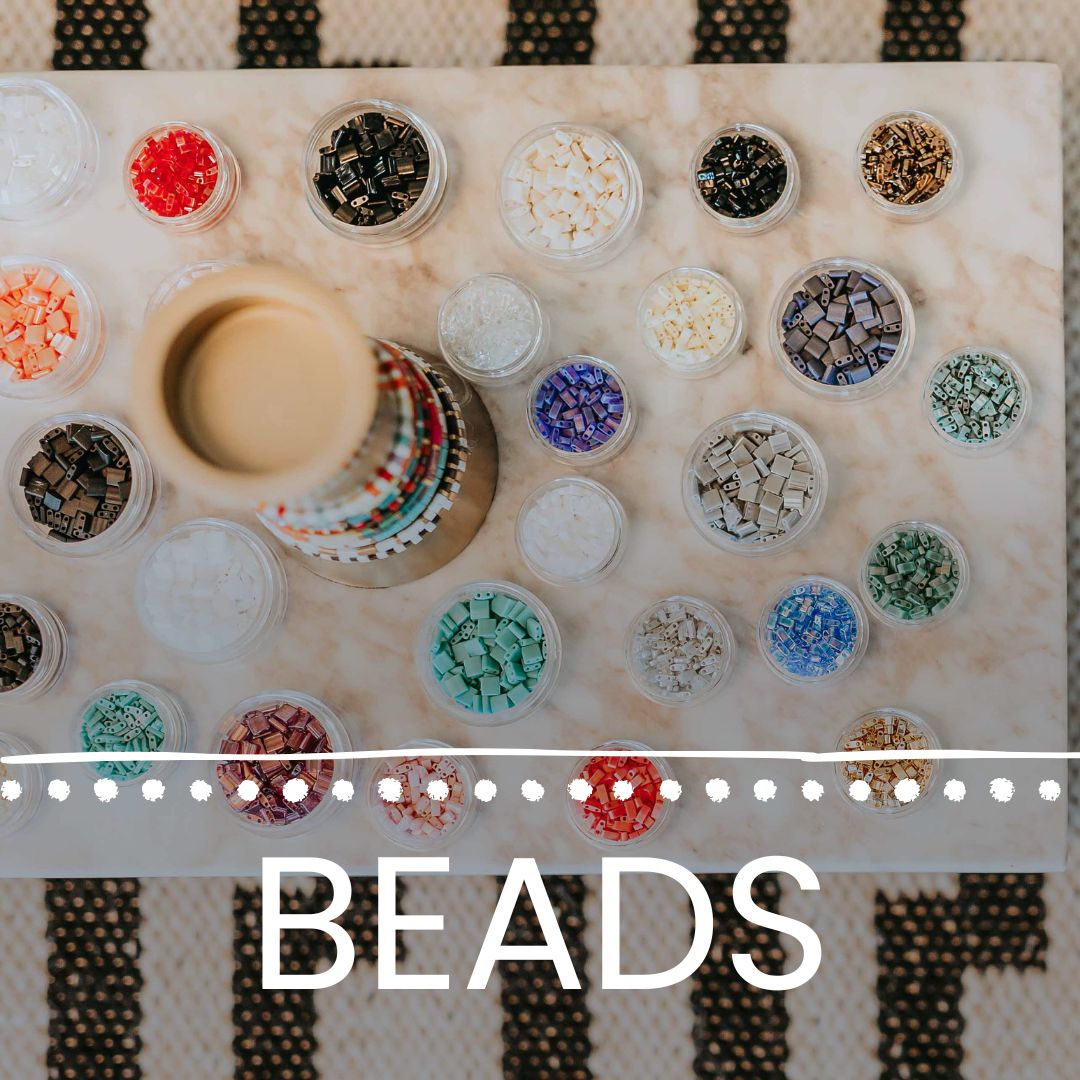
Roughly half of its single-row count. The Ultimate Tila Bracelet Kit is built to make about 80 standard single-row bracelets from its 32 bead colors and 100 meters of crystal-cord elastic. Since a wide or double-strand bracelet uses roughly double the beads and cord of a single row, the same kit works out to about 40 wide bracelets instead, give or take depending on wrist sizes and how often you mix in connector beads.
That math holds whether you're building every single piece as a wide cuff or mixing it up, a few standard single rows alongside a handful of wider ones from the same case of beads, tools, and cord. The kit doesn't care which style you build; it's the same 32 colors and the same leather tool case either way.
Is a stacked wrap easier than building one true double-strand bracelet?
For most first-timers, yes. A stacked wrap skips the bridging step entirely: you string two or three standard single-row bracelets, size each one to sit snugly against the others, and wear the set together. No connector beads, no extra knots to keep aligned, no risk of the rows twisting apart.
Craftsy's guide to building a beginner jewelry kit points out that most new jewelry makers get more mileage out of mastering one solid technique before adding a second layer of complexity, which is exactly the case here.3 Build a few confident single rows first. Move to a bridged double-strand cuff once that feels easy. If you end up going the stacked-wrap route with finished bracelets rather than building your own, buy three and the fourth is free, no code needed; that offer runs on finished bracelets only, not on kits or loose beads.
Ready to build your own wide or double-strand bracelet?
One kit covers both looks. Grab the Ultimate Tila Bracelet Kit for the beads, crystal-cord elastic, and tools, then decide row by row whether you're building standard single bracelets, a bridged wide cuff, or a mix of both from the same case. Mack & Rex ships worldwide, with shipping and any customs or duties calculated at checkout, and free shipping applies on US orders over $100. A small heads-up: Tila beads and the small connector beads used for bridging are a choking hazard, so keep loose beads away from young kids and supervise any crafting table they're near.
Shop the Ultimate Tila Bracelet Kit at Mack & Rex →
Frequently asked questions
Can you make a wide bracelet from a regular bracelet making kit?
Yes. The beads and elastic cord in a standard adult kit work for a wide cuff; you build two rows and link them together every few beads so the piece reads as a single wide band rather than two loose strands.
Does a double-strand bracelet use twice the beads and cord?
Roughly, yes. A true double-strand or two-row bracelet takes about double the Tila beads and about double the elastic cord of one standard single-row bracelet, since each row is strung the same way a single bracelet is strung.
What is the difference between a double-strand bracelet and a stacked wrap?
A double-strand bracelet has its two rows physically linked together so it moves as one piece. A stacked wrap is two or more separate finished bracelets worn together with nothing connecting them, which is the simpler option if you'd rather not bridge rows by hand.
Can adult bracelet making kits fit larger or smaller wrists?
Yes. Mack & Rex sizes finished bracelets from XXS to 5XL, and the same scaling applies when you build your own: measure the wrist, then add or remove a repeat of beads per row until the strung length matches that measurement before knotting.