

Are Tila Beads Glass or Plastic? What Miyuki Tila Beads Are Really Made Of
Are Tila Beads Glass or Plastic?
Miyuki Tila beads are glass, not plastic. Miyuki, the Japanese manufacturer behind the brand, forms each bead from molten glass canes, then cuts, fires, and polishes every piece for a smooth, weighted, light-catching finish that cheap plastic imitations can't fully copy.
Every genuine Tila bead measures 5mm x 5mm x 1.9mm, flat and square, with two parallel holes running through it. That precision is a glass-manufacturing thing, not a plastic-molding thing. Plastic beads can be stamped out in bulk with looser tolerances, which is part of why they're cheaper and part of why they never quite match Miyuki glass up close.
You'll sometimes see "Tila" used loosely online to describe any flat, square, two-hole bead, regardless of what it's made from. That's a marketing shortcut, not a material fact. The real Tila name and the Miyuki brand belong to Miyuki Co., Ltd., and only beads Miyuki manufactures are genuine Miyuki Tila glass beads.
Why Does Real Glass Look and Wear Better Than Plastic?
Glass holds color better than plastic does, and it holds it from the inside out. Miyuki mixes color directly into each molten glass batch, so the hue runs through the whole bead instead of sitting as a surface coating that can flake, scratch, or fade the way a painted or dyed plastic bead does over time.
Glass is also a dense, non-porous material. It doesn't absorb lotion, sweat, or hand sanitizer the way some plastics do, and it doesn't dull with repeated handling. Soda-lime glass, the general category most beads and glassware are made from, is prized for its hardness and chemical durability compared to softer plastics, which is a big part of why glass beads keep their shine long after plastic ones have gone cloudy or scratched.
Finishes matter here too. Metallic, matte, AB, and galvanized finishes bond to the glass surface during manufacturing. A blog covering Tila beads notes that because they're manufactured by Miyuki, they're uniformly consistent in size, shape, and quality, batch after batch. Plastic finishes, by comparison, tend to sit on top as a coating that wears off at friction points, like where a bracelet rubs against a wrist or a bag strap.
How Can You Tell Real Miyuki Glass From a Plastic Knockoff?
Four checks and you'll know. Weight, sound, temperature, and price all give it away fast, before you even get to the label.
- Weight: a handful of genuine glass Tila beads feels noticeably heavier than the same volume of plastic beads. Glass has real heft. Plastic feels almost hollow by comparison.
- Sound: tap a few glass beads together in your palm and you'll hear a sharper, higher clink. Plastic beads make a duller, softer tap.
- Temperature: glass starts out cool to the touch and slowly warms in your hand. Plastic starts closer to room temperature and doesn't have that same cool-then-warm shift.
- Price: a large "Tila" bead lot priced far below the going rate for genuine Miyuki is worth a second look. Loose Miyuki Tila bead mixes generally run about $5 to $9 per pack.
Uniformity is another tell. Genuine Miyuki beads are known in the bead community for their extreme consistency from bead to bead, a hallmark retailers who carry Miyuki products regularly point to when describing what sets the brand apart. Lay a pack out on a flat surface: genuine Tila beads sit flush and match in size and hole placement. Knockoffs often show slight warping, uneven edges, or holes that sit a little off-center, since inexpensive plastic molds don't hold tolerance the way precision glass tooling does.
Packaging is worth a glance too. Genuine Miyuki beads ship in labeled tubes or hanks with a color code, something like TL-2075 for a specific cobalt finish. A bag of unbranded "tila style" beads with no color code or manufacturer name on it is a flag worth noticing before you buy.
Does Mack & Rex Sell Authentic Miyuki Glass Tila Beads?
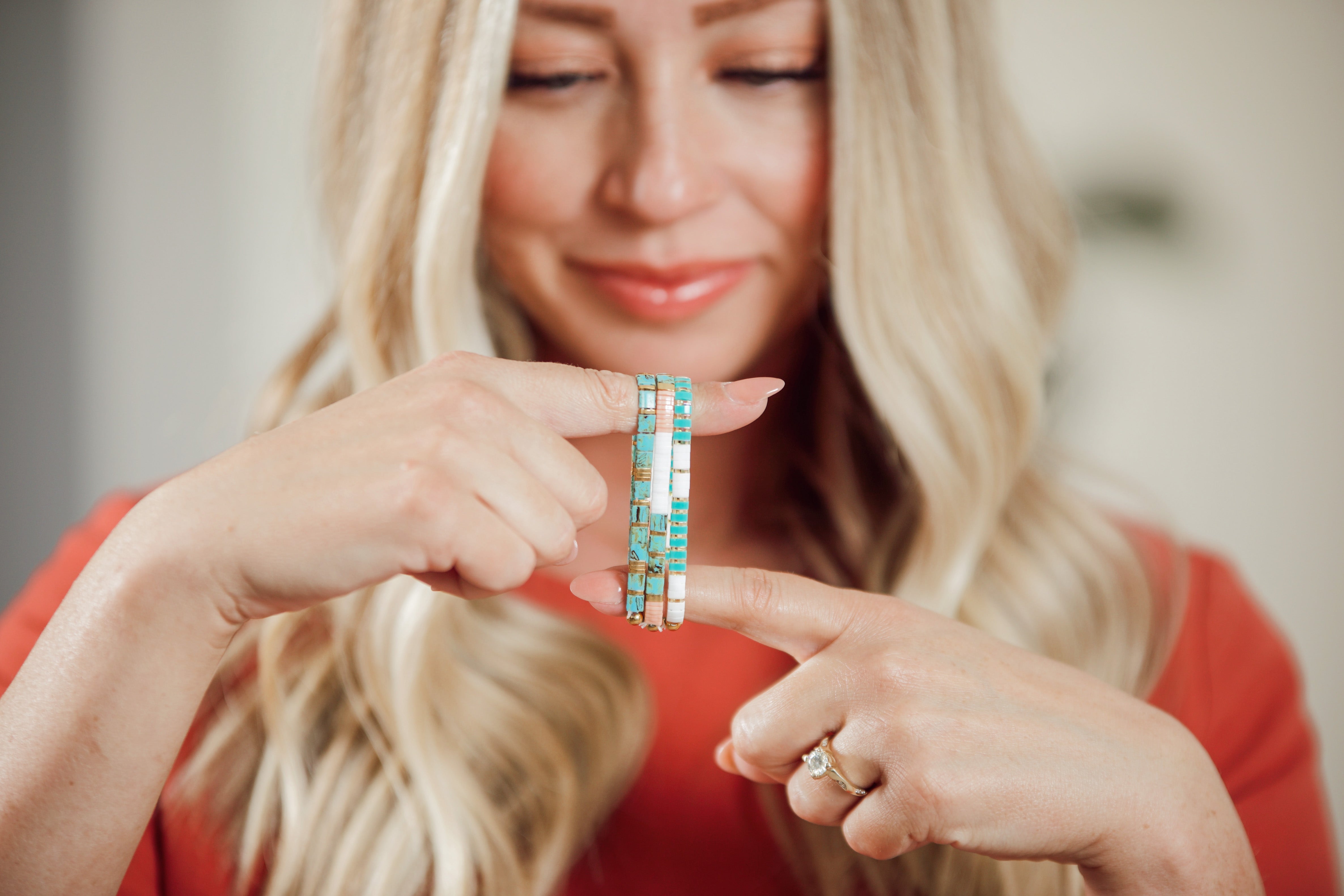
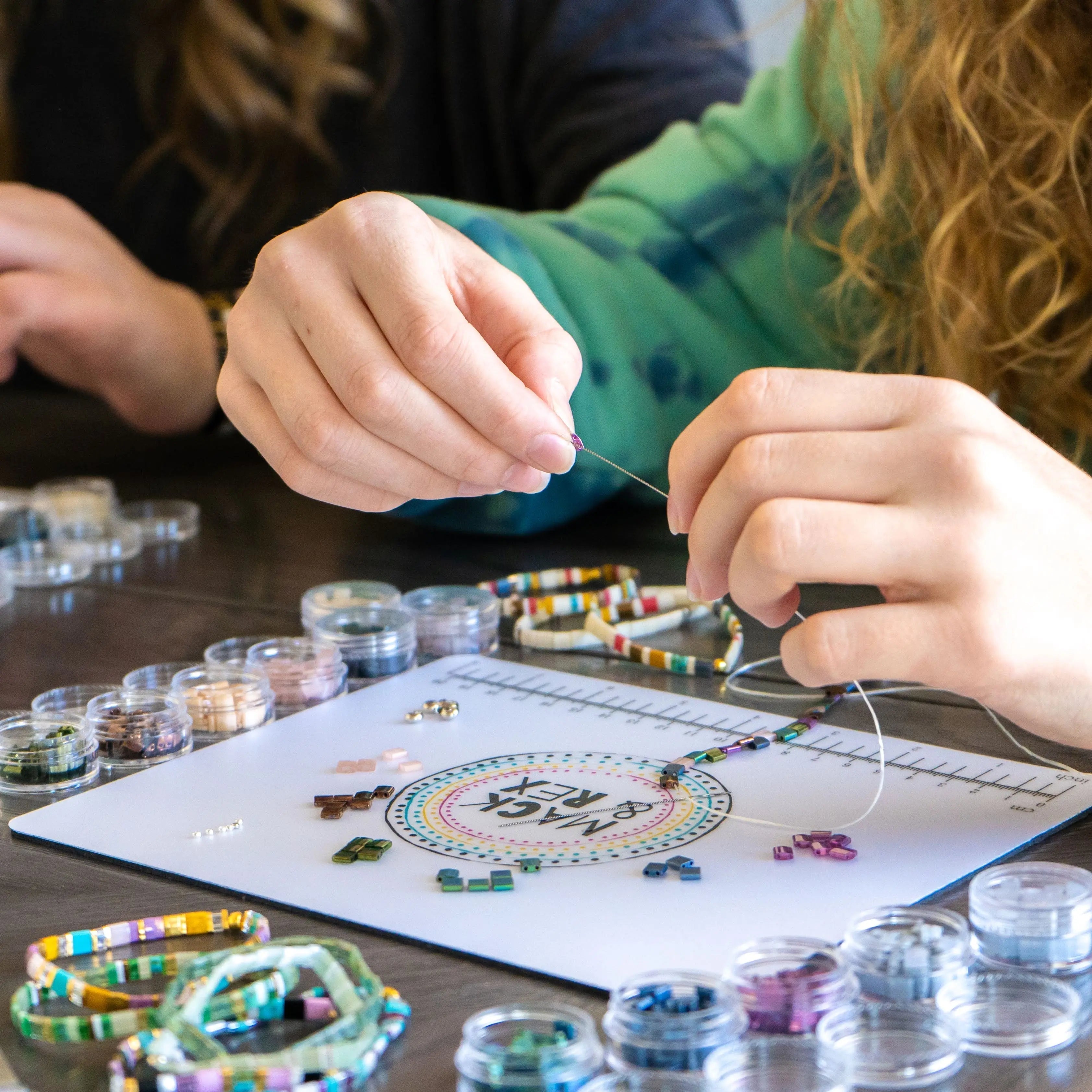
Yes. Every single bead. Mack & Rex sources genuine Miyuki Tila beads made in Japan, not the loose knockoffs floating around discount marketplaces. Miyuki manufactures the glass; Mack & Rex sells it as loose bead mixes, DIY bracelet-making kits, and finished, ready-to-wear stretch bracelets built on crystal-cord elastic, sized XXS through 5XL.
One customer put it simply after wearing a Tila bracelet daily for months: "This is the 4th bracelet I've purchased and I wear it daily. The elastic has not stretched out and the tiles are as beautiful as the day I got it." That's the glass doing its job. Real Miyuki color doesn't wash out from daily wear, showers, or sunscreen the way a cheaper plastic imitation eventually would.
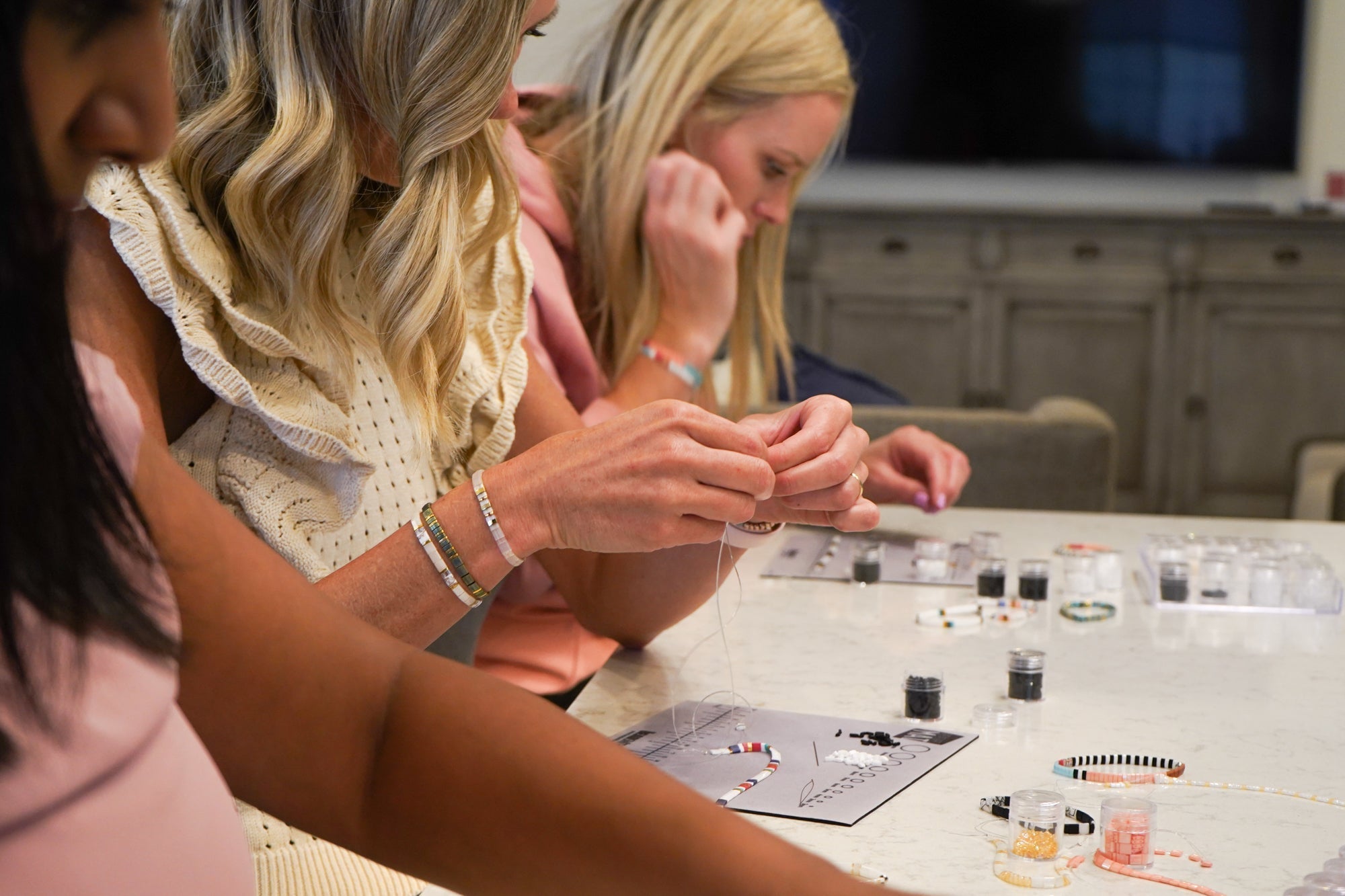
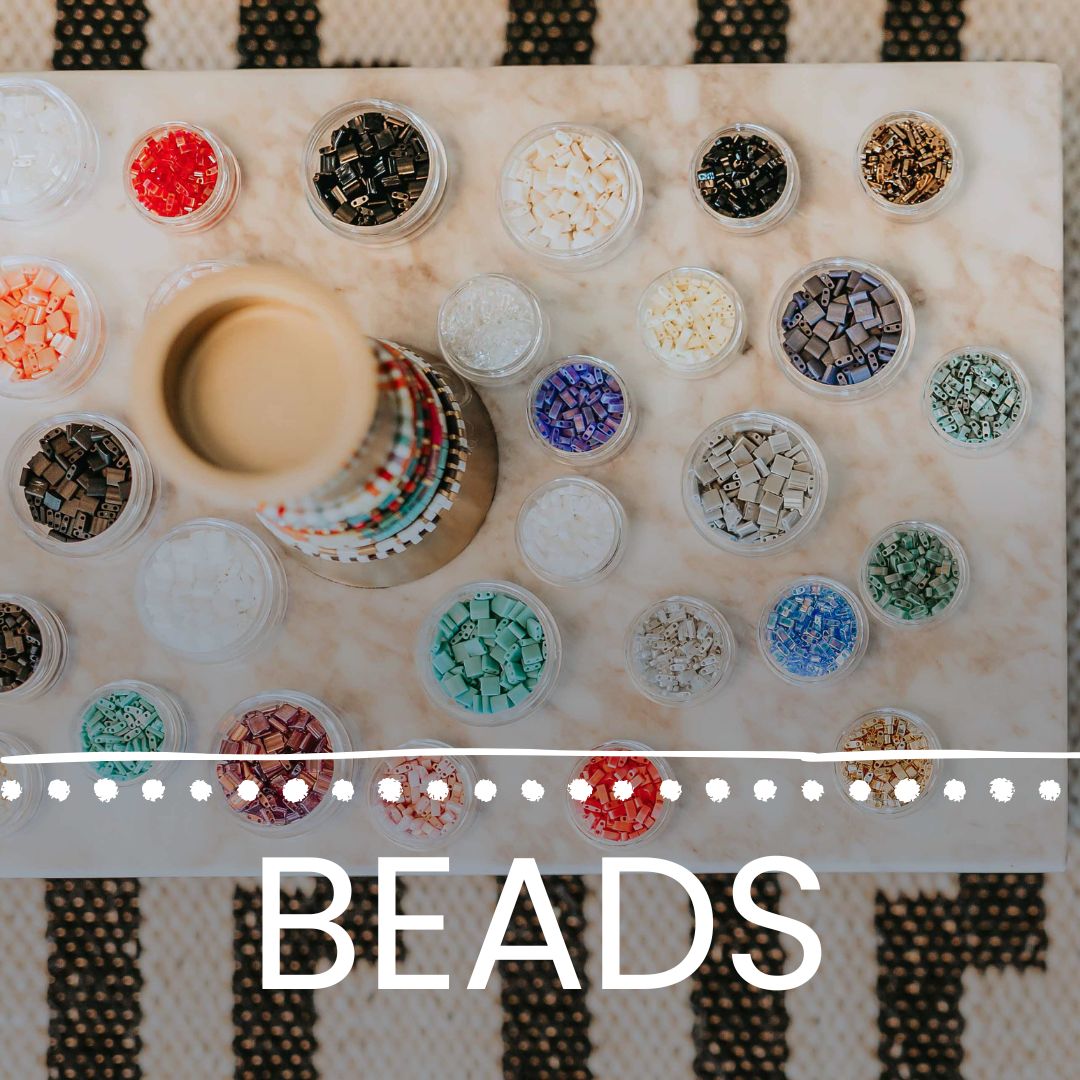
If you're building your own bracelets, the Tila bead mixes at Mack & Rex are curated by color story, so the shades already work together, and each mix costs about $5 to $9. If you'd rather skip the sourcing altogether, a finished bracelet or DIY kit gets you the same genuine Miyuki glass without any guesswork.
Small-parts note for any project involving kids: Tila beads and bracelet components are a choking hazard. Keep loose beads in a closed container when they're not actively being strung, and have an adult supervise beading time with children start to finish.
Ready to Shop Real Miyuki Glass?
Skip the guesswork on generic "tila style" listings. Browse authentic Miyuki Tila bead mixes at Mack & Rex and pick a color story that's ready to string as soon as it arrives. Orders over $100 ship free within the US, and when you buy 3 finished bracelets, you get a 4th free, no code needed.
Frequently Asked Questions About Tila Bead Material
Are Tila beads glass or plastic?
Genuine Miyuki Tila beads are glass, not plastic. Miyuki, the Japanese bead manufacturer that trademarked the name, forms every Tila bead from color-consistent glass canes. Beads sold as "tila style" or "flat square beads" from unbranded sellers are often acrylic or resin, which look similar in a photo but feel and wear differently.
Why do some cheap Tila beads feel like plastic?
Because they are plastic. Some sellers use the word "Tila" loosely to describe any flat, square, two-hole bead shape, even when the material is molded acrylic or resin rather than Miyuki glass. Only beads manufactured by Miyuki are genuine Miyuki Tila beads.
Will glass Tila beads break if a bracelet gets dropped?
Glass Tila beads hold up well for everyday wear but can chip if struck hard against a hard surface, similar to a drinking glass. Beads and small bracelet parts are a choking hazard, so keep loose beads away from children under 3 and supervise any beading project with kids closely.
How much do genuine Miyuki Tila beads cost?
Loose Miyuki Tila bead mixes typically run about $5 to $9 per pack, depending on the color story and quantity. A suspiciously low price on a large "Tila" bead lot is one sign the beads may not be genuine Miyuki glass.
Does Mack & Rex make Miyuki beads, or sell them?
Mack & Rex sells genuine Miyuki Tila beads; Miyuki manufactures them in Japan. Mack & Rex is a reseller that sources authentic Miyuki glass and offers it as loose bead mixes, DIY bracelet kits, and finished, ready-to-wear stretch bracelets.