


Back-to-School Bracelet Making Kits: A Teacher & Classroom Gift Guide
What's a Good Bracelet Making Kit for Back-to-School Gifting?
A good back-to-school bracelet kit has three things: real glass beads instead of plastic pony beads, enough beads and elastic to make more than one bracelet, and simple instructions that don't require a jewelry background to follow. That combination works whether you're picking a gift for a teacher or setting up a classroom activity for twenty kids.
August means two different shopping lists collide: teacher appreciation gifts and classroom supply runs. Bracelet kits happen to cover both, which is why they show up on so many back-to-school lists this time of year.
Why Do Bracelet Kits Make a Good Teacher Gift?
Teachers get a lot of candles. A bracelet, or a small kit to make one, is a gift they can actually wear at school without it sitting in a drawer.
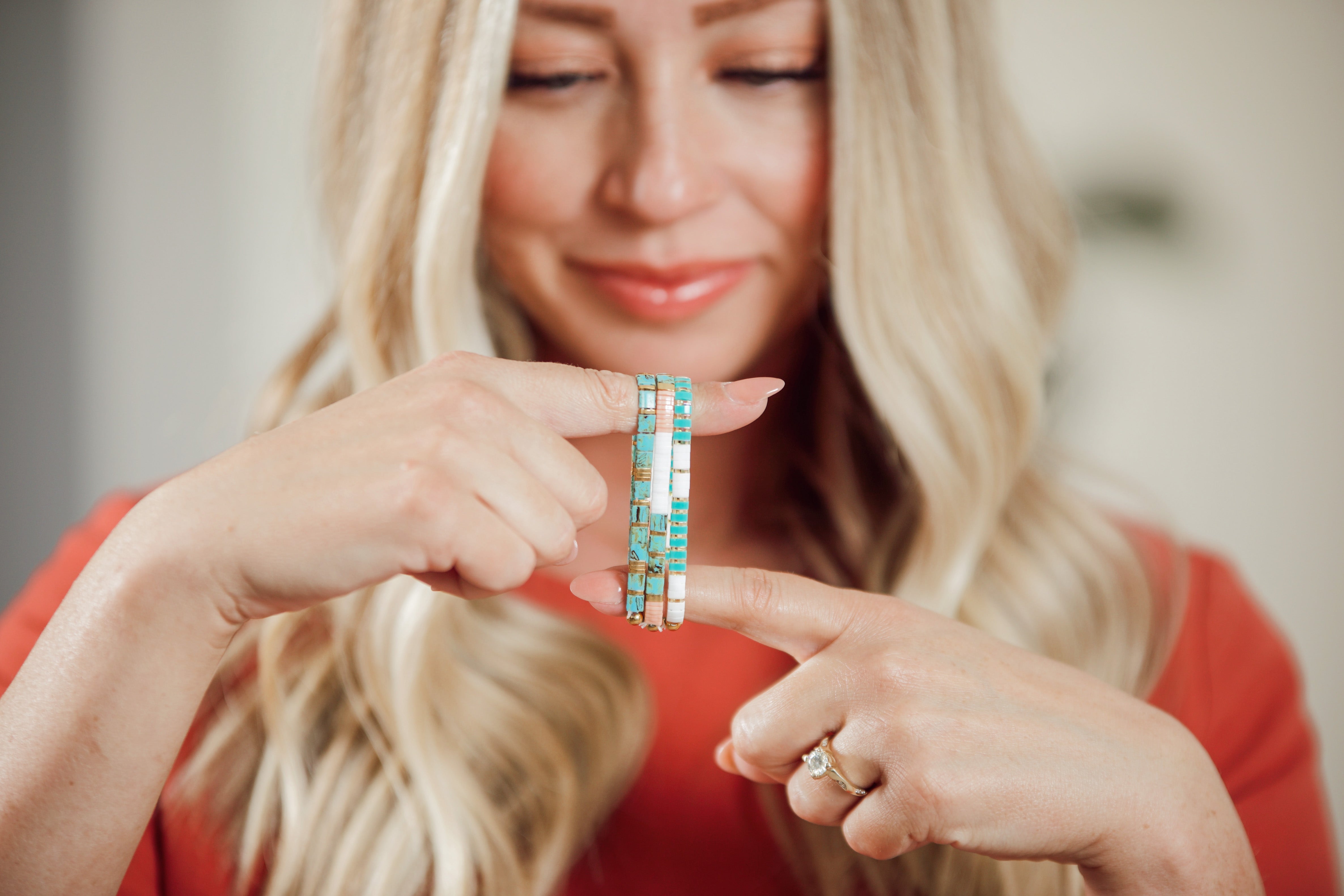
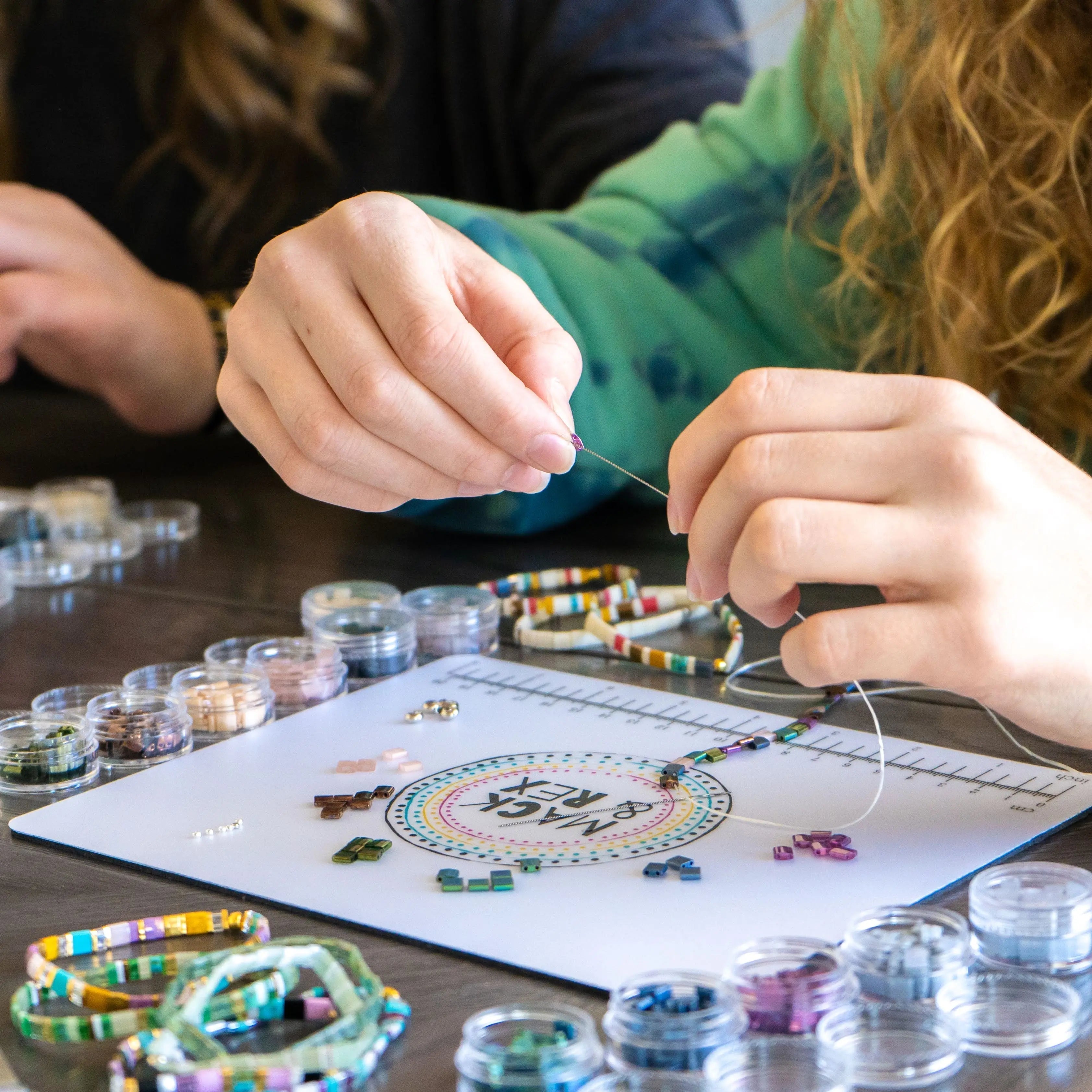
Mack & Rex started as a mom-and-daughters project, and the bracelets are built for everyday wear, from the first day of school through winter break. The crystal-cord elastic and Miyuki glass Tila beads hold their shape through a full school day of writing on a whiteboard, grading papers, and everything else a teacher's hands do. If you'd rather skip the DIY step entirely, a finished bracelet in colors that match a teacher's classroom or favorite sports team is a quick, done-for-you option. Right now, buy three bracelets and get a fourth free, no code needed, if you're picking up a few finished pieces for a whole grade-level team.
How Do You Set Up a Bracelet-Making Kit for a Classroom or Club?
Three questions decide what you order: how many kids, how much time, and how much mess you can handle.
Headcount and bead quantity
Count students, then round up. A bead pack sized to yield around 20 bracelets is a reasonable fit for a standard elementary classroom, with a little room left for a bracelet that snaps mid-project or a kid who wants to make two. For a bigger group, like a whole grade level or a multi-session after-school club, a larger pack sized for 80 bracelets stretches across several classes without a mid-semester reorder.
Time per session
A simple stretch bracelet with 15 to 20 beads takes most kids 10 to 15 minutes once they've done one. Budget extra time for the first round, when everyone's learning the knot at the same time.
Table setup
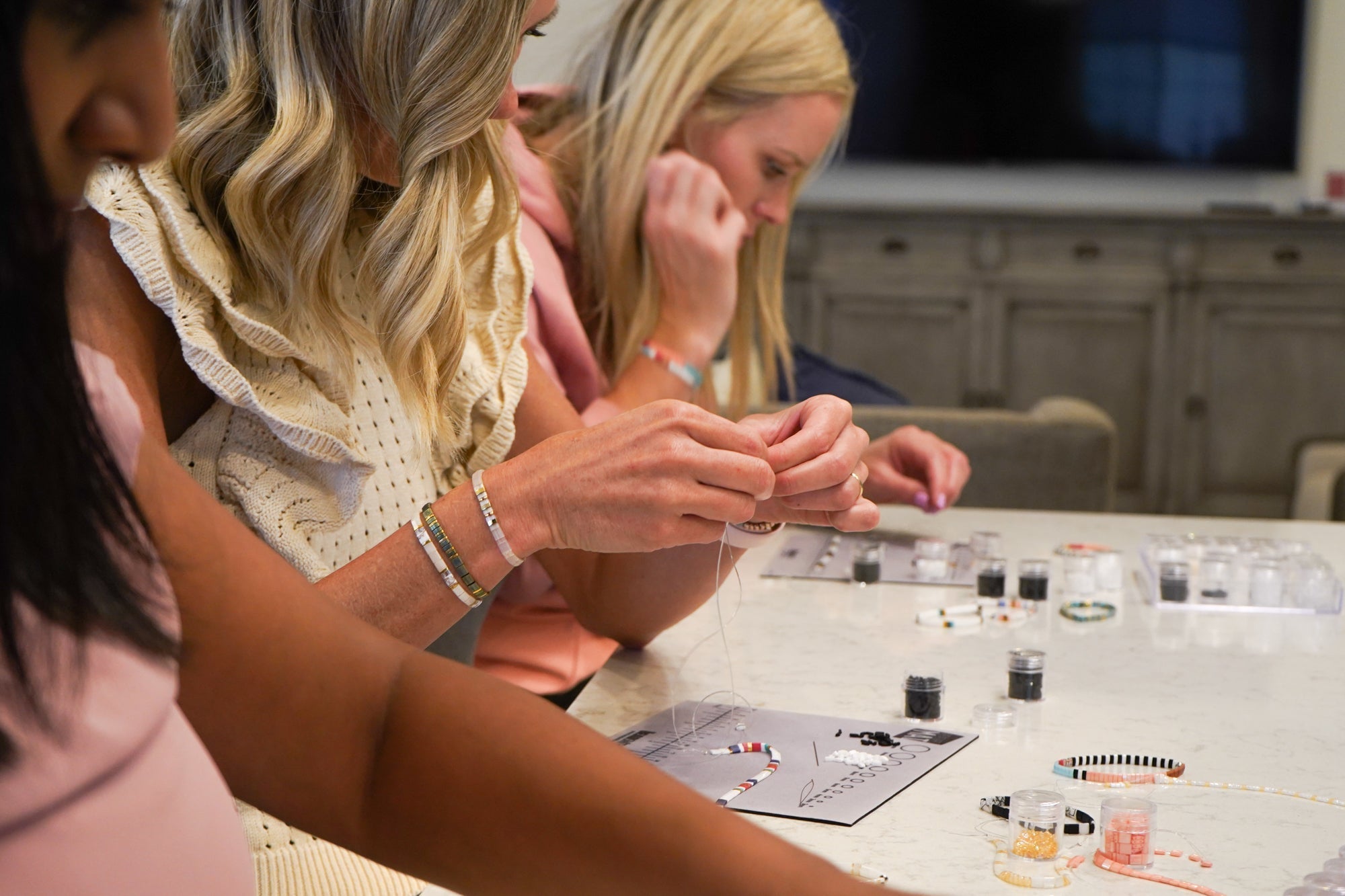
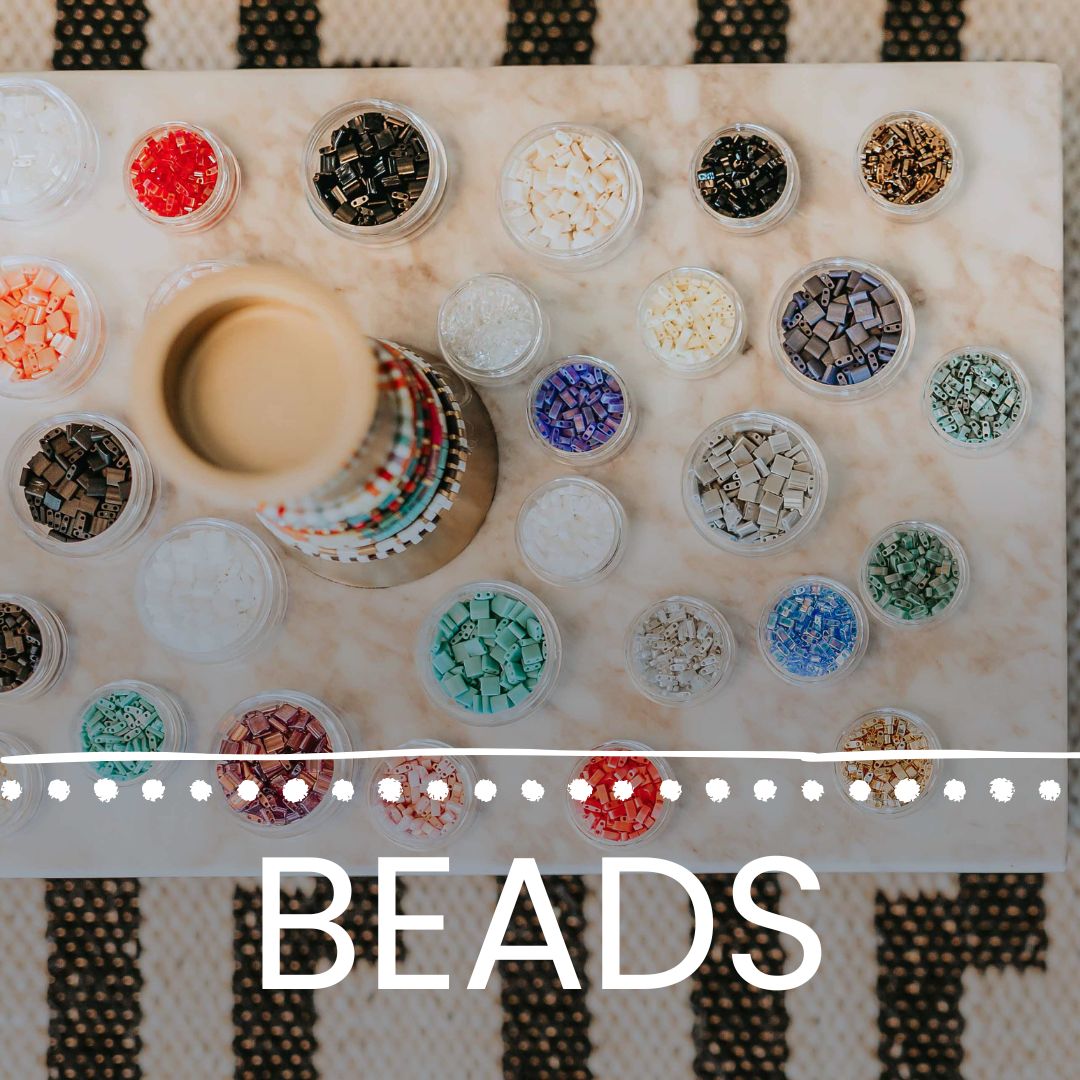
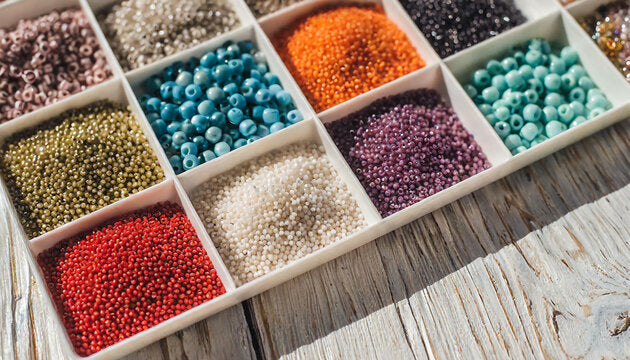
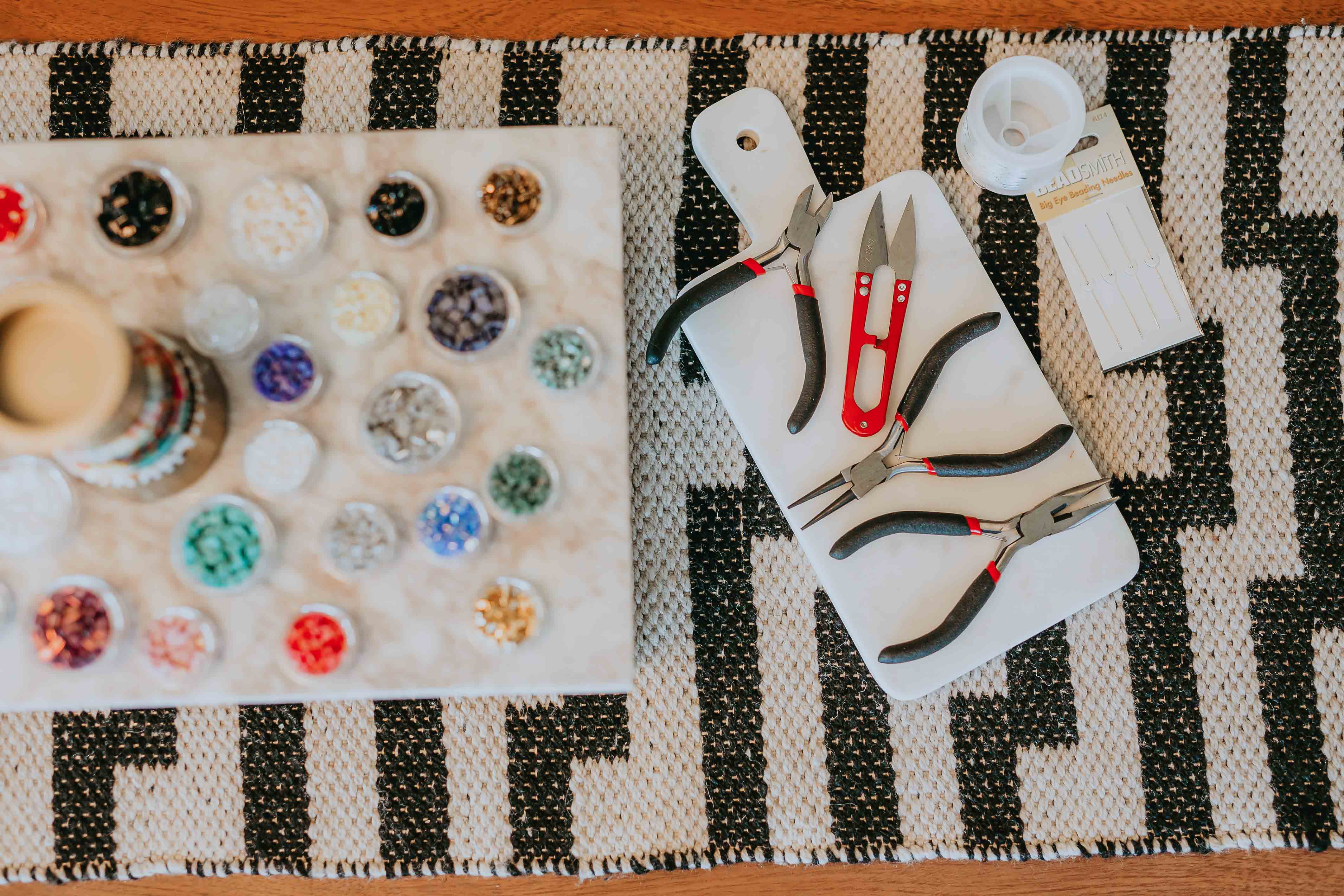
Small bins or paper plates for sorting beads by color keep the table organized and cut down on stray beads rolling onto the floor. Pre-cutting elastic to length before the session starts saves a step and keeps scissors out of little hands.
How Do You Make a Simple Tila Bead Bracelet? (Step-by-Step)
Four steps get a bracelet from loose beads to finished wrist wear.
- Sort and pick a pattern. Spread the beads by color and settle on a two- or three-color layout before anyone starts stringing. This keeps a group moving, without a table full of kids deciding mid-bracelet.
- Cut the elastic. Cut crystal-cord elastic a couple of inches longer than the wrist it's for. That extra length leaves room to tie off comfortably.
- String the beads. Thread beads onto the elastic in the chosen pattern, one at a time, going slower near the end so the last few don't slide back off.
- Tie and trim. Bring the two ends together, tie an overhand knot twice in the same direction (a surgeon's knot), pull it snug, then trim the tail and tuck the knot into the nearest bead hole.
The friendship bracelet tradition this format borrows from goes back generations of kids trading handmade pieces, so the format itself isn't new. Tila beads just swap the woven-thread technique for a quicker strung version.
What Should You Know About Bead Safety Before Handing Out Kits to a Group of Kids?
Beads are small parts, and small parts are a choking hazard. That's the single most important thing to plan around when a bracelet activity involves more than one child at a time.
An adult needs to be hands-on and present for the whole session, watching the table, not stepping away once the bowls of beads are out. Loose beads should stay picked up and off the floor between activities, and any child prone to putting small objects in their mouth shouldn't have unsupervised access to them. The Consumer Product Safety Commission's guidance on small parts is worth a read if you're setting this up for a mixed-age group, since it lays out why loose small components are treated differently for younger versus older kids. These kits are built for school-age kids crafting alongside an adult, not for toddlers or unsupervised play.
Count your beads back in when the session wraps. A quick sweep of the table and floor keeps stray beads from turning up somewhere they shouldn't.
Which Mack & Rex Kit Fits a Classroom-Sized Group?
Depends on group size. And whether it's a one-time activity or a recurring club.
A trio kit, priced at $44.99, makes three coordinated bracelets and works well for a small friend group, a handful of students staying after for a quick project, or a teacher gift where you want the recipient to have options. For a full class, a bead pack sized to make roughly 20 bracelets covers a typical roster with a few extras. For a grade-level event, a school fair table, or a club that meets weekly through the semester, the largest bead pack, sized for around 80 bracelets, spreads the cost over far more bracelets per dollar than buying several smaller kits separately. All the packs come in themed colorways, so a classroom can pick one palette and everyone ends up with bracelets that coordinate. Compare quantities and colorways in the Mack & Rex bracelet making kits collection before you order for a group.
For technique reference beyond the basics covered here, Fire Mountain Gems' Encyclobeadia has a deeper library on stringing methods and bead types if a teacher or club leader wants to build out a more advanced session later in the year.
Where to Find Back-to-School Bracelet Making Kits
Skip the plastic pony bead multipacks from the big-box school supply aisle. Mack & Rex kits use the same Miyuki glass Tila beads as the brand's ready-to-wear bracelet line, so a classroom project or a teacher gift is built from real materials, not filler. Sizing runs XXS to 5XL, so an adult teacher gift fits properly, no guessing at a one-size elastic loop.
Shipping is free on US orders over $100, which most classroom-sized orders clear on their own. Browse the bracelet making kits collection to compare a single teacher-gift trio kit against the larger classroom-sized packs before the first week of school.
Frequently Asked Questions
What's a good bracelet making kit for a teacher gift?
Look for real glass beads over plastic, enough materials to make more than one bracelet, and instructions that are easy to follow. A trio kit or a finished bracelet in colors the teacher actually likes both work as a quick, wearable gift.
Is bracelet making kits safe for a classroom of kids?
Beads are small parts and a choking hazard, so a classroom or club session needs an adult supervising the whole time. These kits are meant for school-age kids crafting with an adult present, not for toddlers or unsupervised use.
How many kits do I need for a full class?
Count your students and add a few extra bracelets for mistakes or a second color request. A pack sized for around 20 bracelets fits a typical elementary classroom, and a larger pack covers multiple sessions or an after-school club.
Does Mack & Rex offer free shipping on classroom orders?
Shipping is free on US orders over $100. A single smaller kit might not clear that threshold on its own, but most classroom-sized orders do. Mack & Rex ships internationally (shipping and any customs and duties calculated at checkout).
What's the difference between a kit for a teacher gift and a kit for a whole classroom?
A teacher gift is usually one trio kit or a ready-made bracelet in colors the teacher would pick for themselves. A classroom set is a larger bead pack sized to give each student their own materials to make one or more bracelets in a single session.