

Bead Kit vs Buying Beads Separately: Cost and Convenience Compared
Is It Actually Cheaper to Buy Beads Separately, or Does a Bead Kit Win?
A bead kit almost always costs less in practice than sourcing the same supplies piecemeal, once you account for minimum order quantities, leftover cord, and tools you'd only need once. For someone building a first bracelet stack, the kit route saves $20 to $40 in wasted supplies and at least two hours of hunting for matching components.
That's the short answer. The longer version involves a little math, plus a few places where buying loose beads does make sense.
What Does It Actually Cost to Buy Beads Separately?
Let's price out what you'd need to make three Tila bead bracelets from scratch, sourcing each component individually.
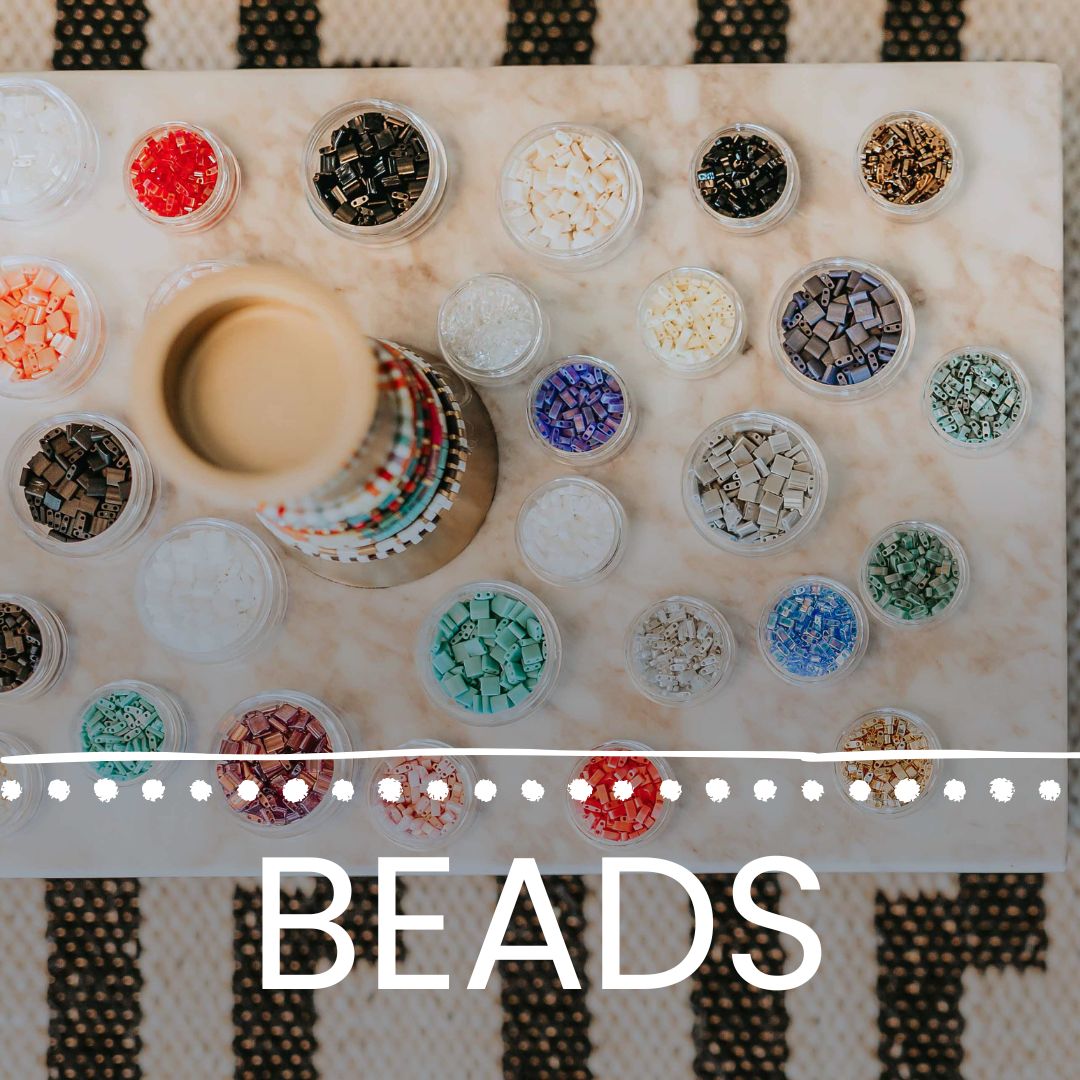
Miyuki Tila beads are sold by Japanese bead suppliers and specialty retailers. A single color usually comes in a 7.2-gram tube, which holds roughly 110 beads. One bracelet takes about 30-35 full Tila beads depending on wrist size, so you'd need 3-4 tubes to cover three different bracelets with a single color each. Fire Mountain Gems has a helpful breakdown of Tila bead counts by project type if you want to work out your own math.
Then there's the cord. Crystal elastic cord is sold on spools (typically 10 to 100 yards). A bracelet uses maybe 18-20 inches. You'd burn through a fraction of the spool on three bracelets and store the rest. Expect to spend $5-10 on cord you'll largely leave in a drawer.
Clasps or closure knots, a beading needle, a bead mat: each of those is a separate order from a separate place. Add in shipping on each small purchase and the "cheap" route adds up fast.
Realistically, buying separately for three bracelets runs $35-60, depending on where you source and what you already own. And you'll still have a spool of extra cord, a half-used tube of beads, and tools you might never use again.
What Does a Bead Kit Actually Cost, and What Do You Get?
A kit bundles everything at once. No minimums. No "I need to order from three websites." No leftover spool sitting in a craft bin for two years.
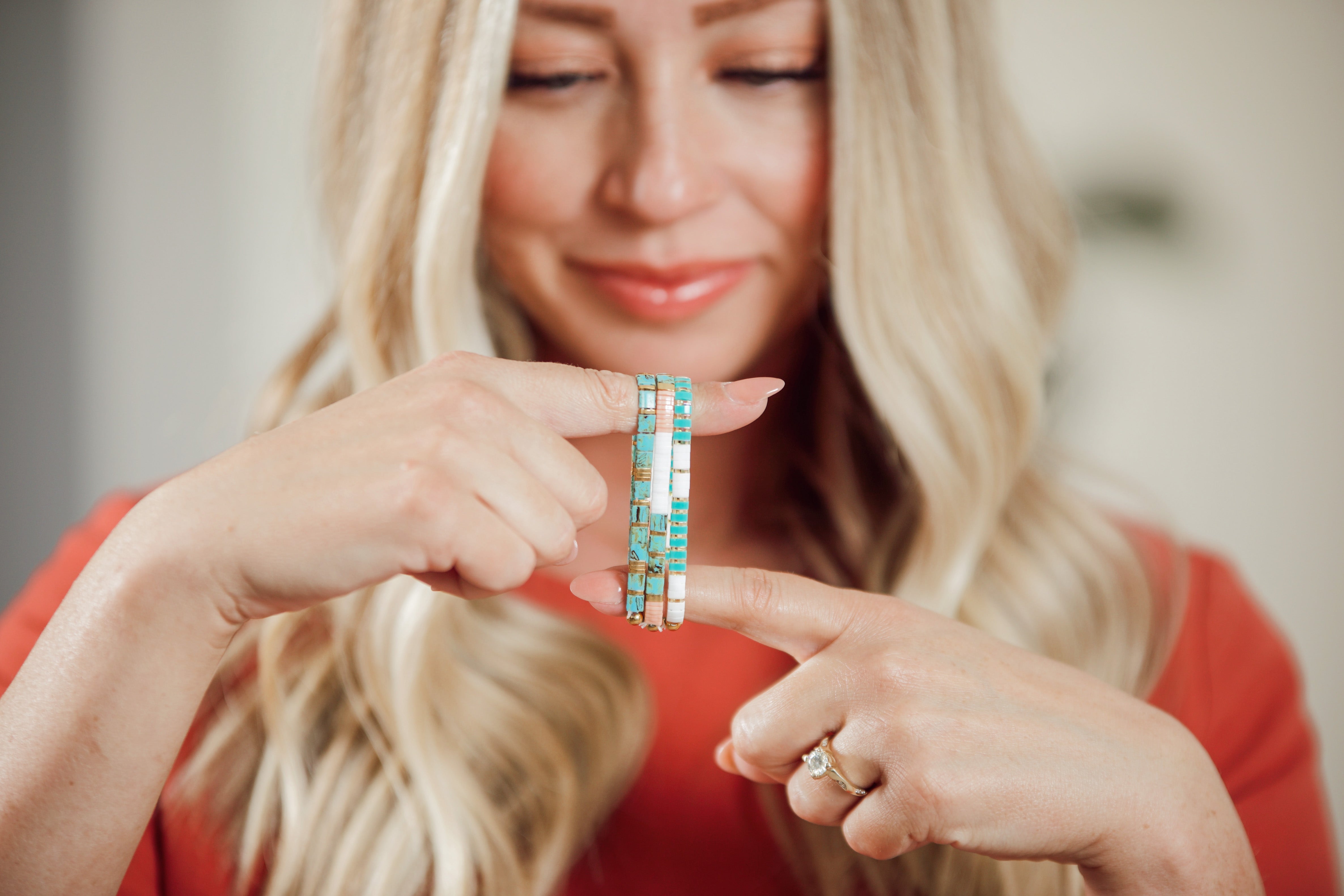
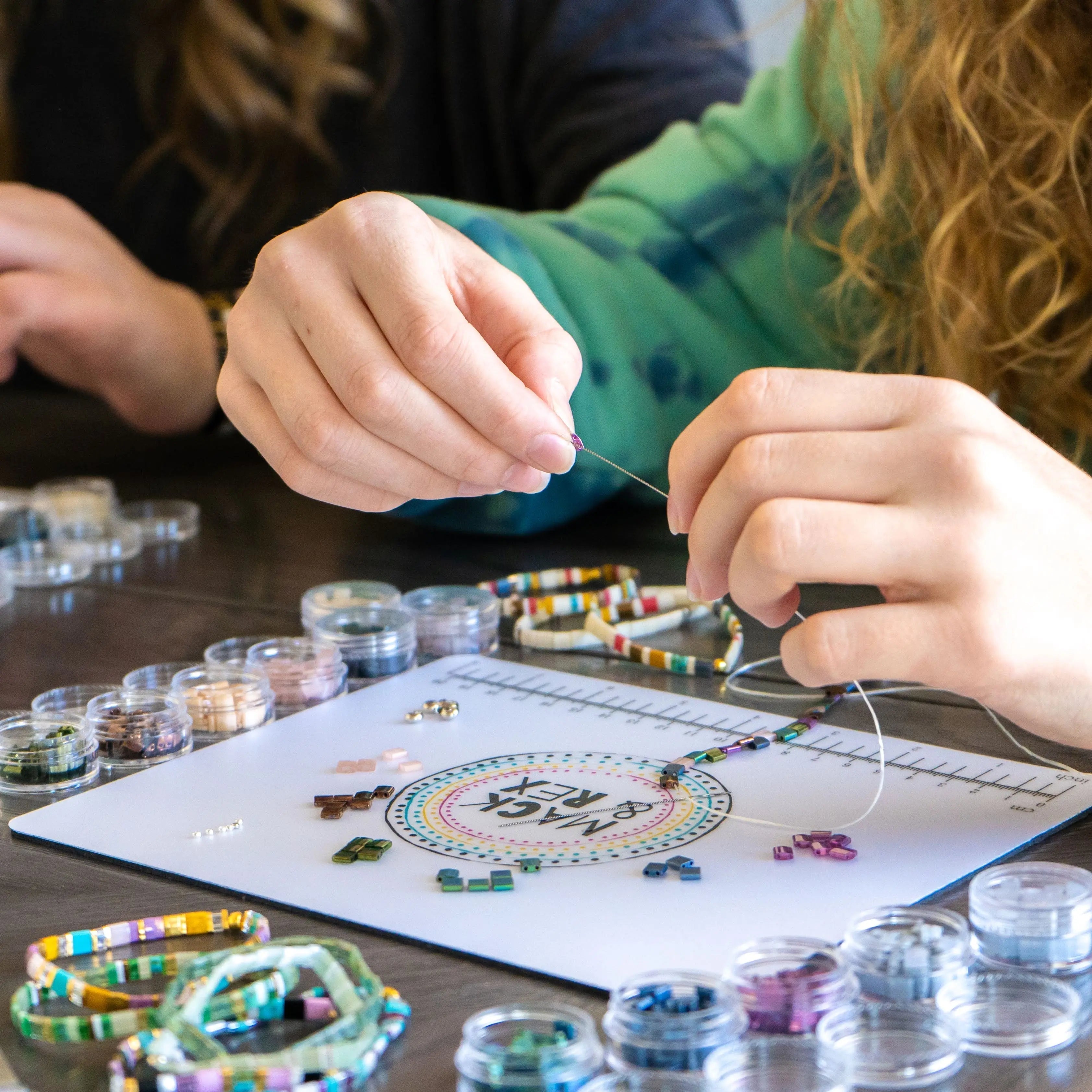
The Mack & Rex trio kits, for example, come in at $44.99 and include curated bead mixes, elastic cord (crystal-core, so it doesn't stretch out), and everything you need to make three matching bracelets. That's already competitive with the piecemeal route. And you're getting Miyuki glass Tila beads, not generic plastic.
Larger all-in-one kits scale up from there. The starter and ultimate kits in the Mack & Rex lineup run from roughly $165 to $345 and are built for serious stackers: enough materials to make 20 or more bracelets. At that volume, the per-bracelet cost drops significantly compared to buying loose.
The Mack & Rex beads are Miyuki Tila beads, which Miyuki manufactures in Japan. Mack & Rex resells and bundles them (they don't make the beads themselves), but the sourcing is real Japanese glass, not a substitute.
How Does the Leftover/Waste Factor Change the Math?
This is where the piecemeal route really loses. Minimums are the hidden cost.
When you buy loose beads, you often buy more than you need. A tube of 110 Tila beads for a bracelet that uses 32 means 78 beads you either use later (if you keep crafting) or lose track of. Cord spools force the same problem. You can't buy 18 inches of elastic. You buy a spool and cut what you need.
A kit is portioned. You get what you need for the project inside it. There's no leftover waste unless you deliberately overbuy.
The one scenario where buying separately wins: you've already made 10+ bracelets, you know exactly which colors you want, and you're comfortable ordering individual tubes in quantity. At that volume, the per-bead price drops and bulk cord makes sense. The Spruce Crafts covers stringing material in detail for anyone who wants to go deeper on cord types before committing to a spool.
Side-by-Side Comparison: Bead Kit vs Buying Separately
| Factor | Bead Kit | Buying Separately |
|---|---|---|
| Upfront cost (3 bracelets) | $44.99 (trio kit) | $35-60+ depending on sources |
| Leftover waste | Minimal (portioned for the project) | Extra cord, partial bead tubes likely |
| Shopping effort | One order | 2-4 separate vendors or tabs |
| Bead quality | Miyuki glass Tila beads (curated mix) | Varies; depends on supplier |
| Cord included | Yes (crystal-core elastic) | Bought separately; minimum spool |
| Tools included | Yes (larger kits) | Bought separately |
| Best for | First-timers, gifters, family crafting | Experienced crafters buying in volume |
When Does the Convenience Argument Actually Matter?
More than most crafters expect. If you're buying beads separately, you'll spend time:
- Finding a supplier that carries the specific Tila color you want
- Checking whether the cord gauge is right for a two-hole bead
- Waiting on 2-3 separate shipments
- Figuring out finishing technique if instructions aren't included
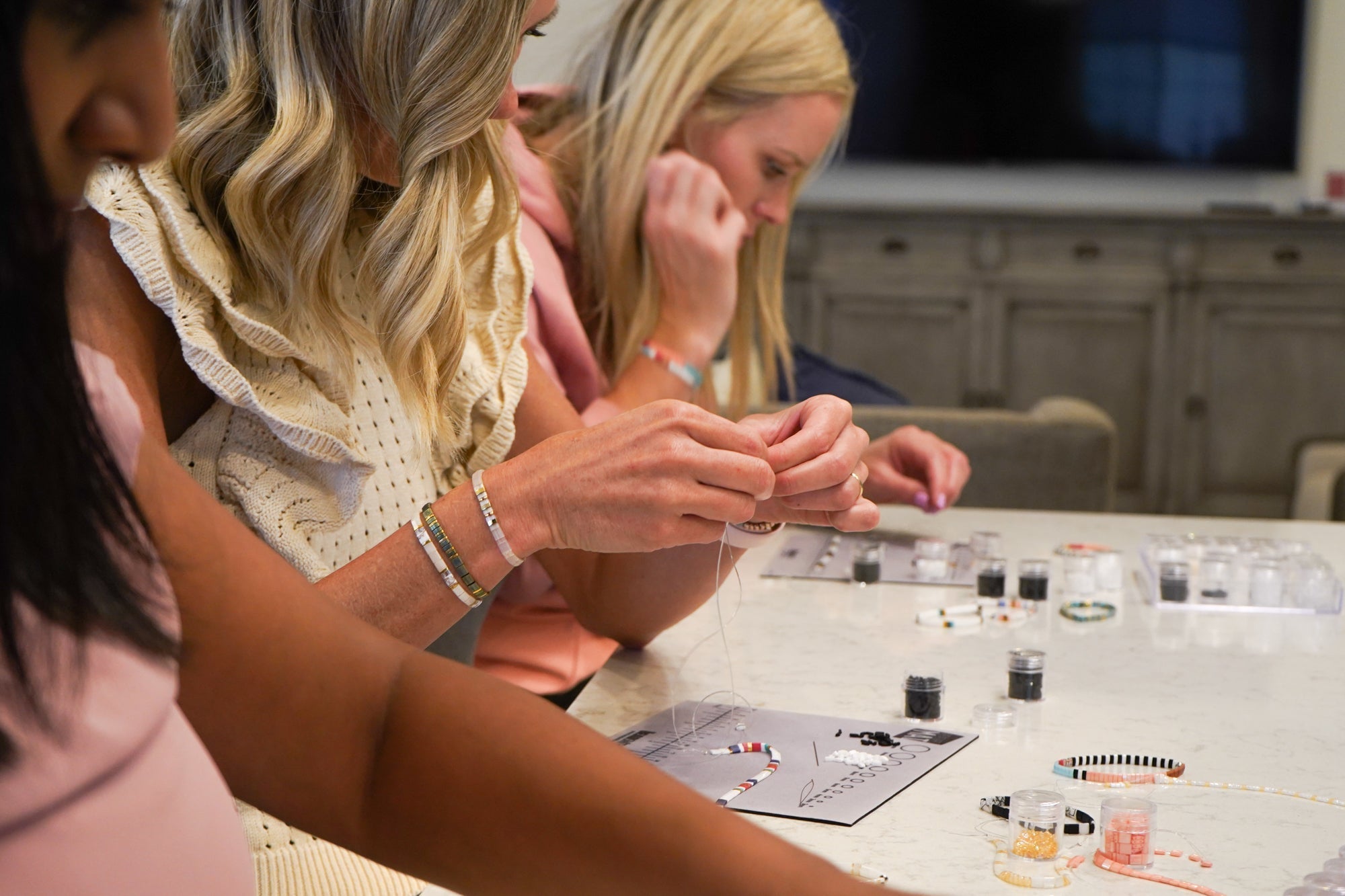
A good kit removes every one of those steps. That matters a lot if you're doing this with kids, planning a bracelet-making night with friends, or giving it as a gift. Nobody wants to troubleshoot bead gauge at the craft table.
Beadaholique has a solid beginner resource on bead types and wire gauges if you're curious about the technical side. For most people making stretch Tila bracelets, the kit takes care of all of that for you.
What's the Best Bead Kit for a First Bracelet Stack?
Short answer: one that comes with real Miyuki glass beads, crystal-core elastic, and enough variety to make 3+ bracelets so you can start stacking right away.
The Mack & Rex all-in-one kits are built around exactly that. The trio kits give you a coordinated color mix and enough materials to make three bracelets in one sitting. No measuring cord, no hunting for findings. Larger kits scale up to full stacks. Inclusive sizing runs XXS through 5XL, so they work for pretty much any wrist.
If you're not sure where to start, browse the full collection at mackandrex.com/collections/all. Kits, finished bracelets, and loose Tila bead mixes are all there. Orders over $100 ship free within the US. And if you're buying finished bracelets, the buy 3 get 1 free offer (no code needed) makes stacking even easier.
FAQ: Bead Kit vs Buying Beads Separately
Is a bead kit actually cheaper than buying beads separately?
For most beginners making a first or second bracelet, yes. A kit bundles exactly what you need with no minimums and no leftover supplies sitting unused. Buying separately can look cheaper per item, but you often pay for more cord, more beads, or tools you only need once.
What does a complete bead kit include?
A well-made bead kit includes the beads themselves, elastic cord or thread, a clasp or closure method, and ideally instructions. Some kits also include a needle, bead mat, or scissors. The key word is "complete": if a kit is missing cord or a clasp, add those costs back in when comparing.
How many bracelets can you make from one bead kit?
It depends on the kit. Entry-level kits typically yield 1-3 bracelets. Larger starter or ultimate kits can yield enough materials for 20 or more bracelets when the bead supply is sized for a full stack.
What type of elastic cord works best for bead bracelets?
Crystal-core elastic holds tension well over time and is less prone to snapping than basic round elastic. It's what Mack & Rex uses in their kits because it survives daily wear, workouts, and the occasional snag without stretching out.
Do I need special tools to make a beaded bracelet?
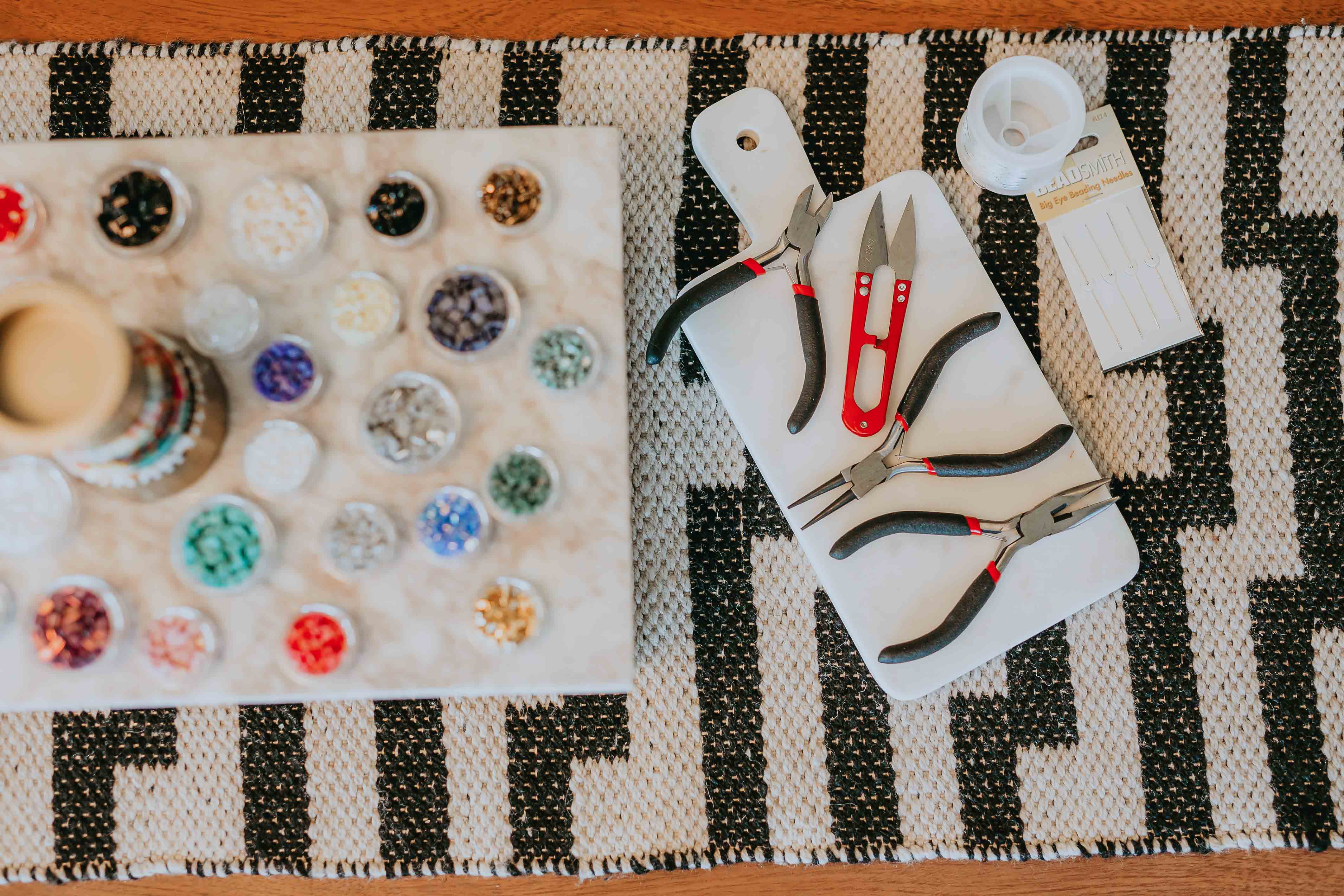
For a stretch bracelet with Tila beads, you need very little: a beading needle, scissors, and a flat bead mat or towel so beads don't roll. Some people skip the needle entirely and use a stiff thread end. A good kit either includes these basics or works without them.