



Best Beading Cord for Bead Bracelets (and Why Cheap Elastic Fails)
What Cord Do You Actually Need for a Bead Bracelet?
For a bead bracelet that slips on and off without a clasp, quality elastic beading cord is the right call, and it's the foundation under most bracelet-making kits on the market. Beading wire, memory wire, and waxed cord all exist for good reasons, but they solve different problems: a clasp closure, a rigid cuff, a knotted-bead design. Which one you need depends on how the bracelet should fit and how much daily wear it has to survive.
What Are Your Stringing Options for a Bead Bracelet?
Four materials cover almost every bead bracelet on the market. Each one trades stretch for structure in a different way.
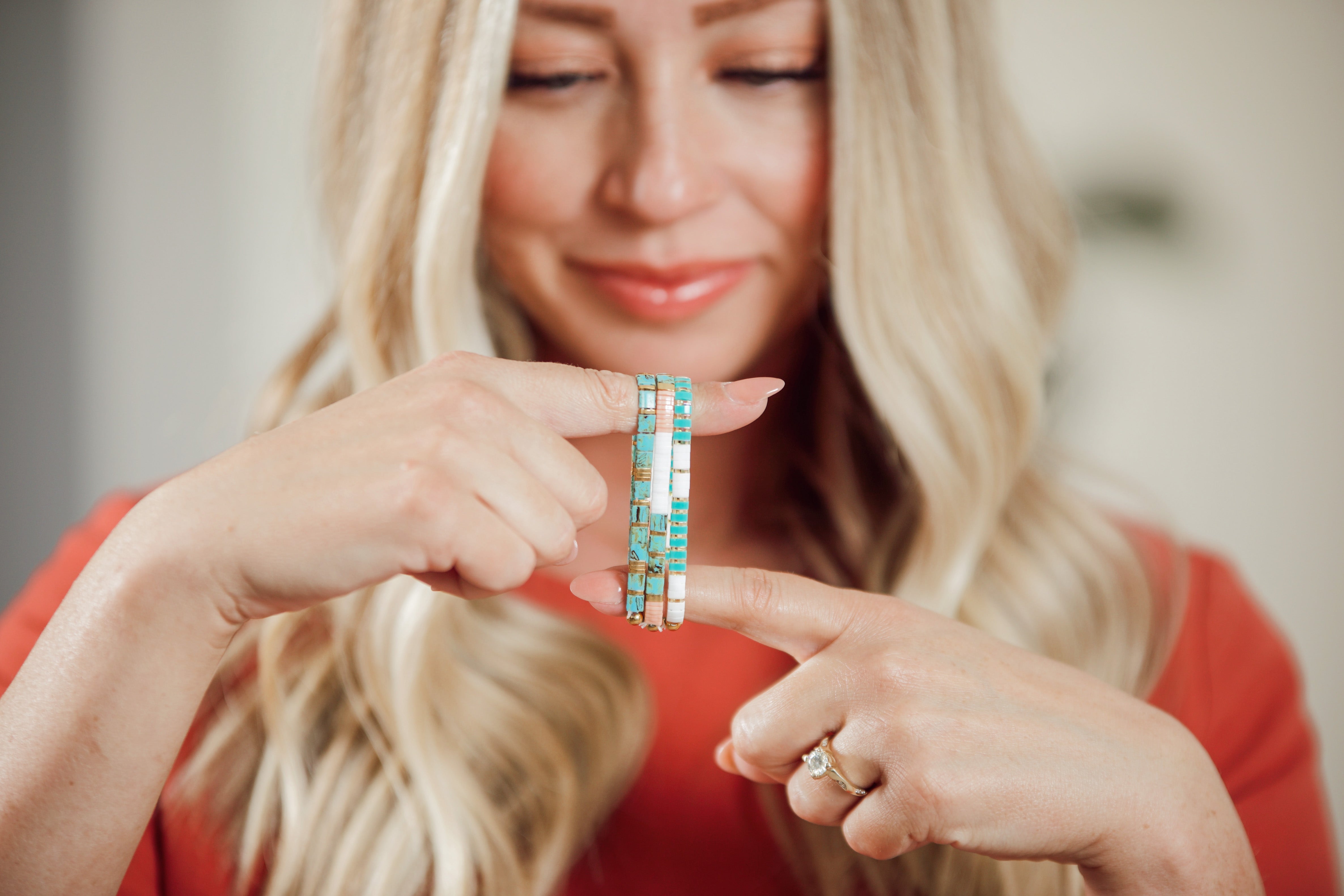
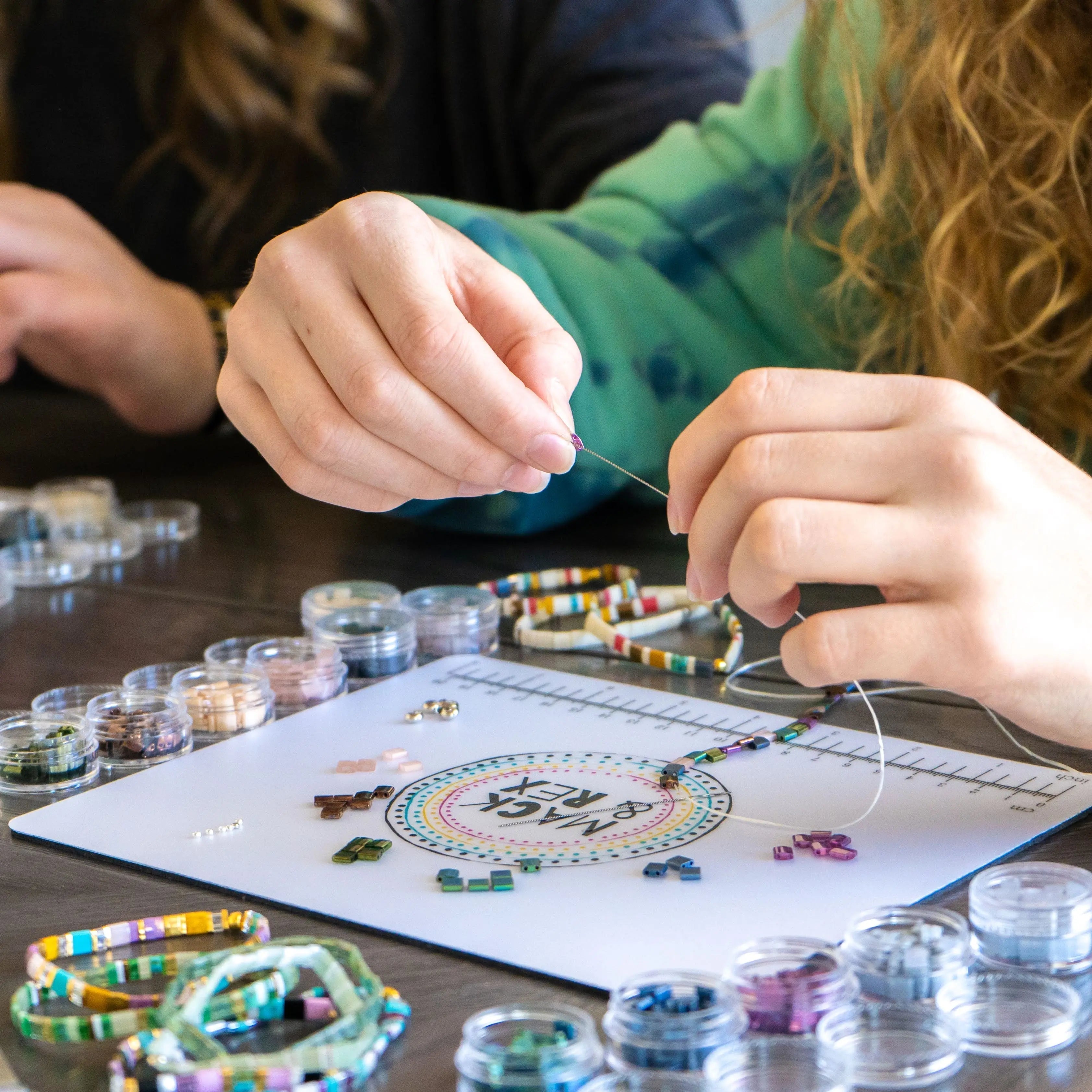
- Elastic (stretch) beading cord. A round, clear or colored crystal cord that stretches to fit over a hand and snaps back. No clasp, no findings, and it layers cleanly in a stack. This is the standard for Tila bead bracelets and most slip-on designs.
- Beading wire (tigertail). A flexible, multi-strand wire, often sold under brand names like Beadalon, finished with crimp beads and a clasp. It doesn't stretch, which makes it a better fit for necklaces or structured cuffs than a stretch bracelet.
- Memory wire. Pre-coiled spring steel that holds its own shape without a clasp or knot. It works for wrap-style bracelets but locks you into a coil design rather than a flat bead stack.
- Waxed nylon cord. A knotted cord (S-Lon is a common brand) used between beads on corded or macrame-style bracelets rather than a clean bead-to-bead stack.
For flat tile beads worn stacked, elastic wins because it goes on over a hand in a couple of seconds and stacks with other bracelets without a clasp catching on your sleeve.
When Should You Skip Elastic and Use Something Else?
A few cases call for a different cord entirely. A stiff statement cuff that shouldn't stretch is one. A bracelet built around a focal clasp or toggle is another, since the clasp is the design, not an afterthought. And if you're stringing a bracelet as a gift where the recipient's wrist size is a guess, a beading-wire design with an adjustable clasp gives more room to work with than a fixed-length stretch loop.
Why Does Cheap Thin Elastic Stretch Out and Snap?
Two things, mostly: thickness and grade. Bargain elastic cord is often sized too thin for the bead weight it's carrying, so it takes on more tension than it should with every stretch. Add a lower-grade rubber or latex blend, and the fibers break down fast under sweat, lotion, and sun exposure. Once that happens, the cord stops snapping back and just stays loose, or it splits right where the knot sits.
Nylon and polyurethane-based cords hold their shape longer because the polymer chains recover after stretching instead of deforming permanently, a property Wikipedia's entry on nylon touches on when it covers the material's elasticity and durability. Cheap cord skips that quality for a lower price point, and you feel the difference within weeks, not years.
Finishing matters too. A single overhand knot with no reinforcement is the weak point on most bargain bracelets. Rings & Things, a jewelry-supply company whose design blog covers stringing techniques for beginners, recommends doubling back through the last couple of beads before knotting, which spreads the tension across more contact points rather than putting it all on one strand.
What Actually Makes a Bracelet Stack Durable?
Most guides only talk about a single bracelet. A stack is a different problem. When you wear four or five bracelets together, they rub against each other, against a watch band, against a sleeve cuff, all day long. That friction wears on the cord and the bead edges from the outside, on top of the normal stretching that already stresses the cord from the inside.
A durable stack needs a few things lined up at once:
- Matched cord diameter across every bracelet in the stack, so they move together and no single piece stretches looser than the rest
- Smooth, consistent bead holes that don't have sharp inner edges to saw at the cord as pieces shift against each other
- A reinforced knot, sealed with adhesive, on every single bracelet, since one weak piece in a stack of five still fails first
This is where a lot of DIY stacks fall apart even when each individual bracelet seemed fine on its own. Mixing cord from different sources, different ages, or different diameters means the stack ages unevenly. One bracelet stretches out while the others still fit snug, and the whole stack starts to look mismatched.
What Cord and Beads Does Mack & Rex Use?
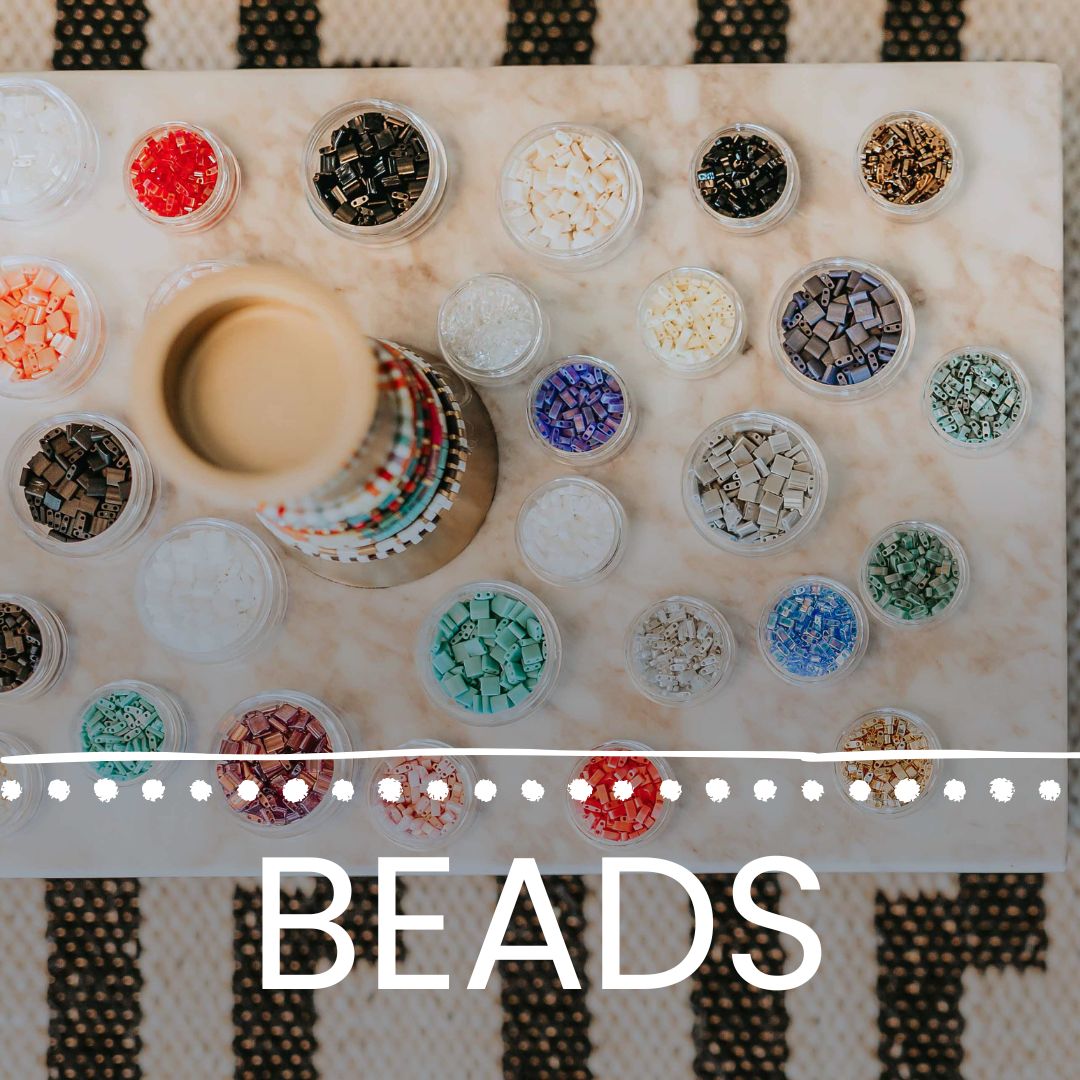
Crystal-cord elastic, paired with genuine Miyuki Tila glass beads made in Japan. That's the build behind every finished bracelet and every DIY kit Mack & Rex sells, and it's backed by a quality guarantee on the stretchy bracelets. Sizing runs XXS to 5XL, so a stack fits the wrist it's actually going on rather than a one-size guess.
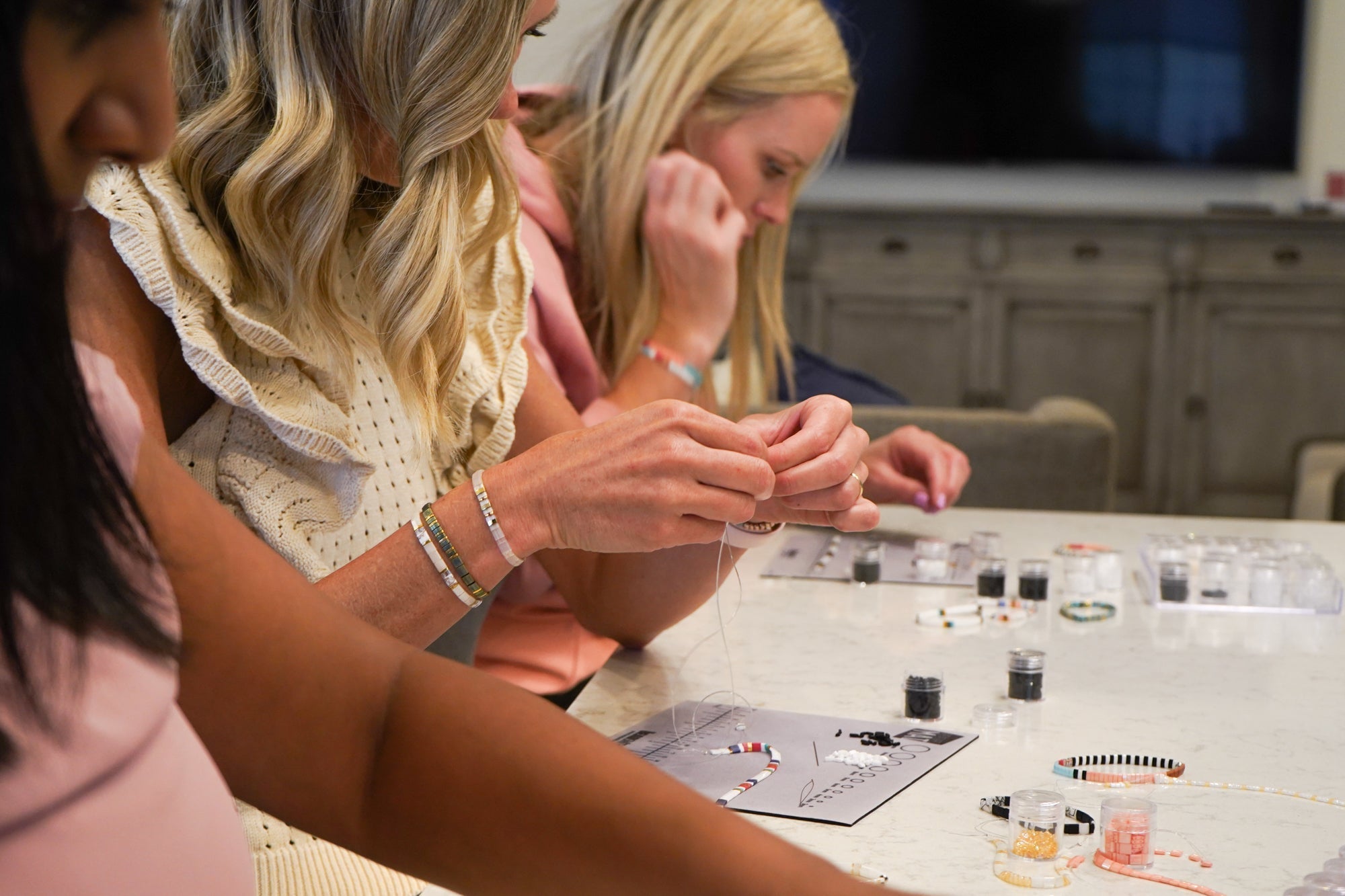
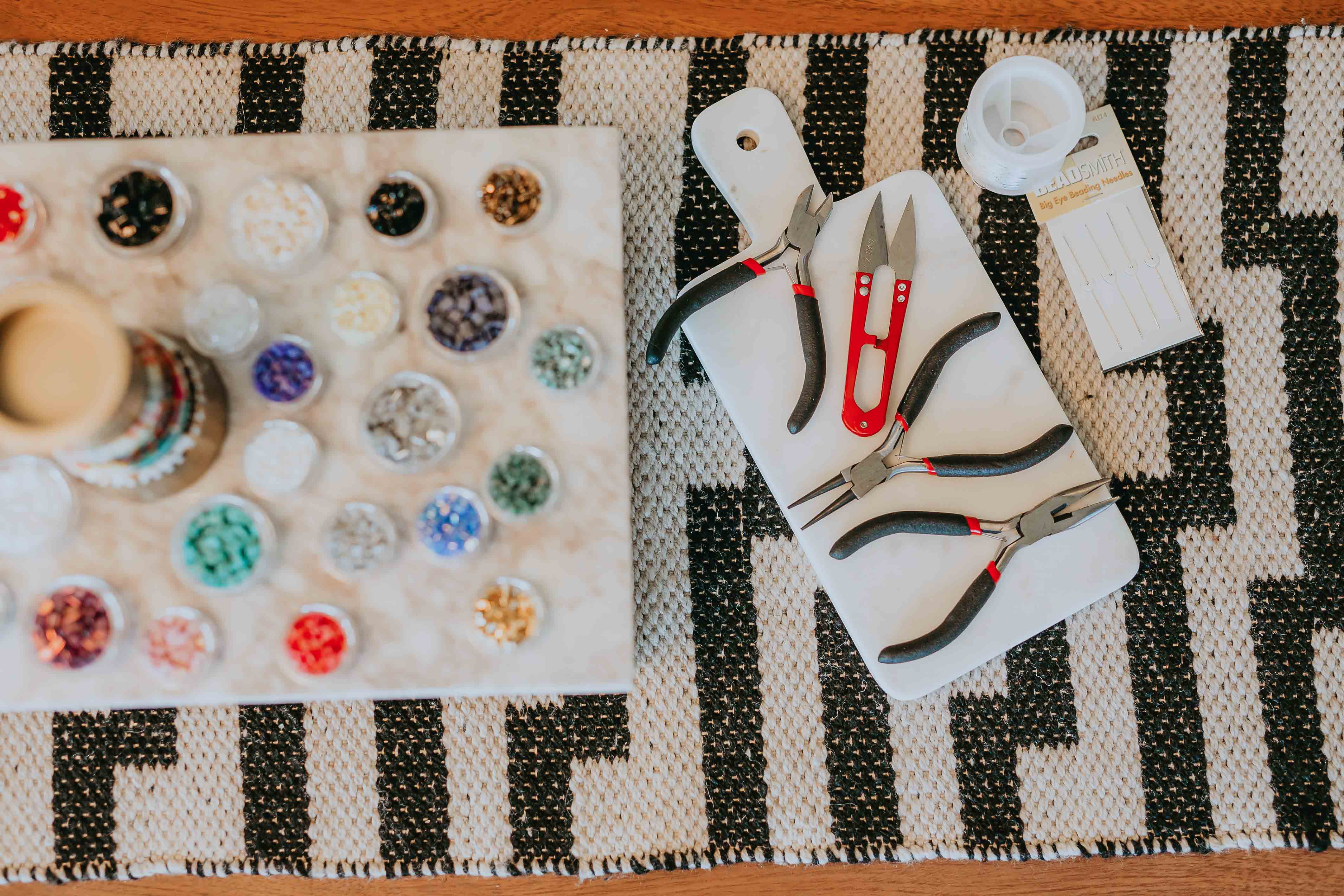
The bracelet-making kits come with the cord and beads already matched, which takes the diameter guesswork out for anyone building their own stack at home. Trio kits (enough supplies for three bracelets) start at $44.99, and the DIY Bracelet Kit Club runs $36.99 for a three-bracelet set. If you'd rather skip the stringing entirely, the ready-to-wear bracelets use the same cord and bead combination.
Since kits involve loose beads, keep them in a closed container between sessions and have an adult handle setup if kids are part of the project. Small beads are a choking hazard, and that's worth a beat of caution regardless of how the cord is finished.
A quick note on real offers: orders over $100 ship free within the US (international orders calculate shipping and any duties at checkout), and buying three finished bracelets gets you a fourth free, no code needed. That offer applies to finished bracelets, not kits or loose beads.
Frequently Asked Questions
What's the best cord for a bead bracelet?
For a bead bracelet you slip on and off without a clasp, quality elastic beading cord (0.7mm to 1mm crystal cord) is the standard choice. It's stretchy enough to fit over a hand, strong enough for daily wear, and it's what most bracelet-making kits, including Mack & Rex's, build around.
What's the difference between elastic cord and beading wire?
Elastic beading cord stretches to slip on and off a wrist with no clasp needed. Beading wire (sold as tigertail or under brand names like Beadalon) doesn't stretch. It's a stiffer, multi-strand wire finished with crimp beads and a clasp, better suited to necklaces or structured cuffs than a stretch stack.
What thickness of elastic beading cord should I use?
0.7mm is the workhorse size for most glass and tile beads. Go down to 0.5mm for tiny seed beads with narrow holes, and up to 1mm for chunky or heavy beads. The cord should pass through the bead hole twice with a snug fit and no wiggle room.
Why does my bracelet stack wear out faster than a single bracelet?
Stacked bracelets rub against each other, a watch, or a sleeve cuff all day, which adds friction the cord and bead edges have to survive on top of normal stretching. Cord that's fine in one bracelet can fray faster in a stack, so matched diameter and smooth bead holes across every piece matter more than they would for a single bracelet.
What cord does Mack & Rex use?
Mack & Rex builds its finished bracelets and DIY kits on crystal-cord elastic paired with genuine Miyuki Tila glass beads, sized XXS to 5XL, and backs the stretchy bracelets with a quality guarantee. Browse the lineup at mackandrex.com/collections/bracelet-making-kits.