


Bracelet Making Kit for Adults: The 8 Questions Buyers Ask (Answered)
Adults shopping for a bracelet making kit tend to ask the same handful of questions before they click buy, and most product pages never really answer them. This post answers the 8 that come up most: whether you need experience, what's in the box, whether it's reusable, how long it takes, whether the beads are actually good, whether it makes a solid gift, what age it's appropriate for, and whether the whole thing is worth the money.
Search "bracelet making kit for adults" and you'll get a wall of product listings with almost identical stock photos and none of the actual buying questions answered anywhere on the page. That's the gap this post is meant to fill. Every answer below reflects how Mack & Rex kits are actually built and priced, not a generic industry description, so you can compare it against whatever else you're considering.
Do I need crafting experience to use a bracelet making kit as an adult?
No. A well-built kit comes pre-measured and pre-sorted, so the hardest decision is which colors to string first. Most adults finish a single bracelet in 20 to 30 minutes the first time through, with zero beading background.
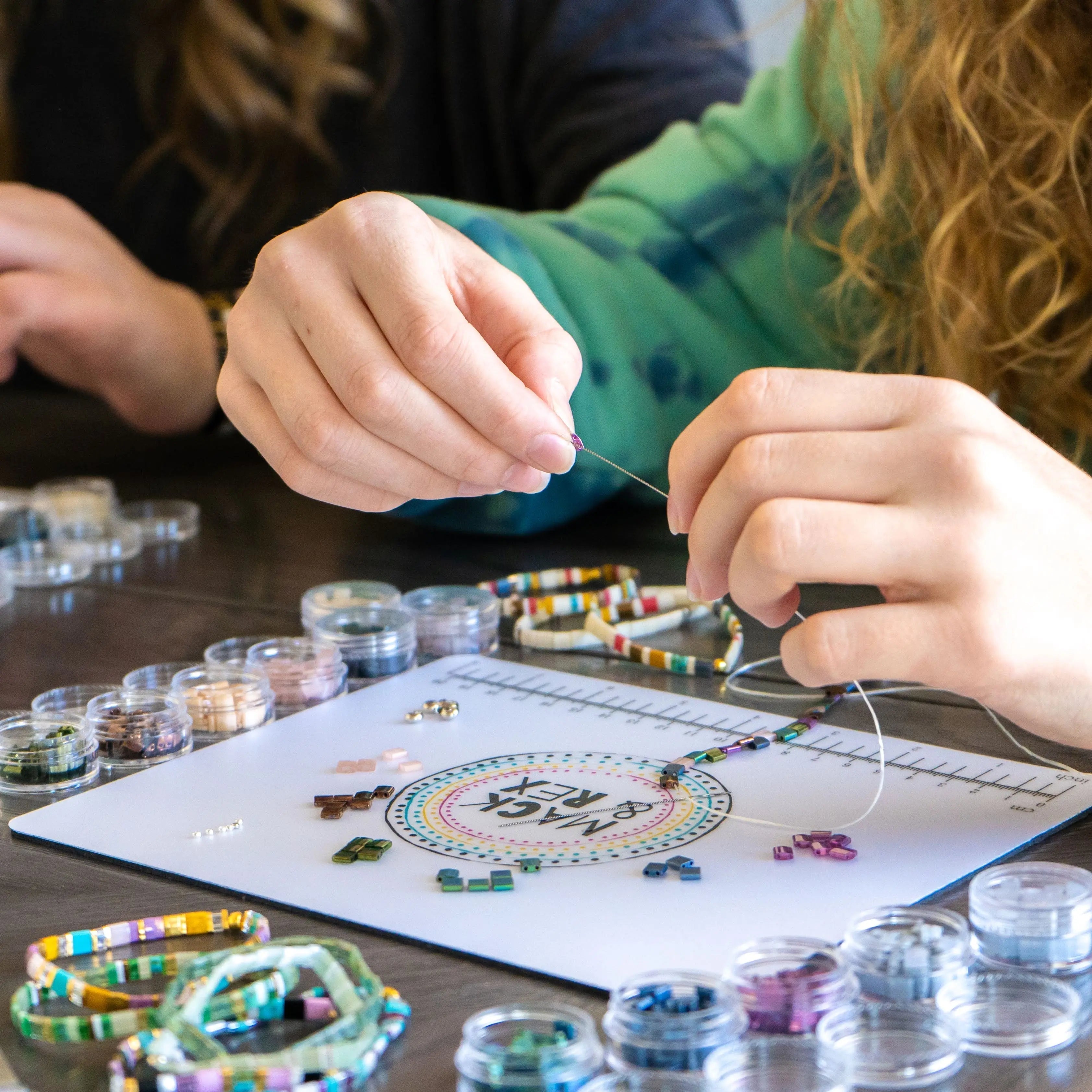
The learning curve is smaller than people expect because the kit does the planning for you. You're not calculating cord length or guessing at a color ratio, you're following a layout that's already been worked out. Mack & Rex trio kits ship with a printed pattern card that lays out the bead order by color, so the only real skill is threading a needle or cord tip and pulling it snug. Anyone who's tied a shoelace has the fine motor skills this requires.
Where beginners actually slow down is tension. Pull the elastic too tight and the bracelet puckers; too loose and it sags. That's a five-minute habit to build, not a barrier to entry.
Compare that to buying beads and cord separately with no pattern to follow. You'd be deciding on bead spacing, color ratio, and cord gauge from scratch, all before you've strung a single piece. That's a reasonable project for someone who already beads regularly, but it's a rough first experience for someone who just wants to sit down and make something in an afternoon. A kit removes those decisions so the first attempt actually goes well, which is a big part of why people come back for a second one.
What's actually included in an adult bracelet making kit?
A complete kit has four things: beads, cord, findings if the pattern calls for them, and instructions. Anything missing from that list means you'll be making a supply run before you can finish a single bracelet.
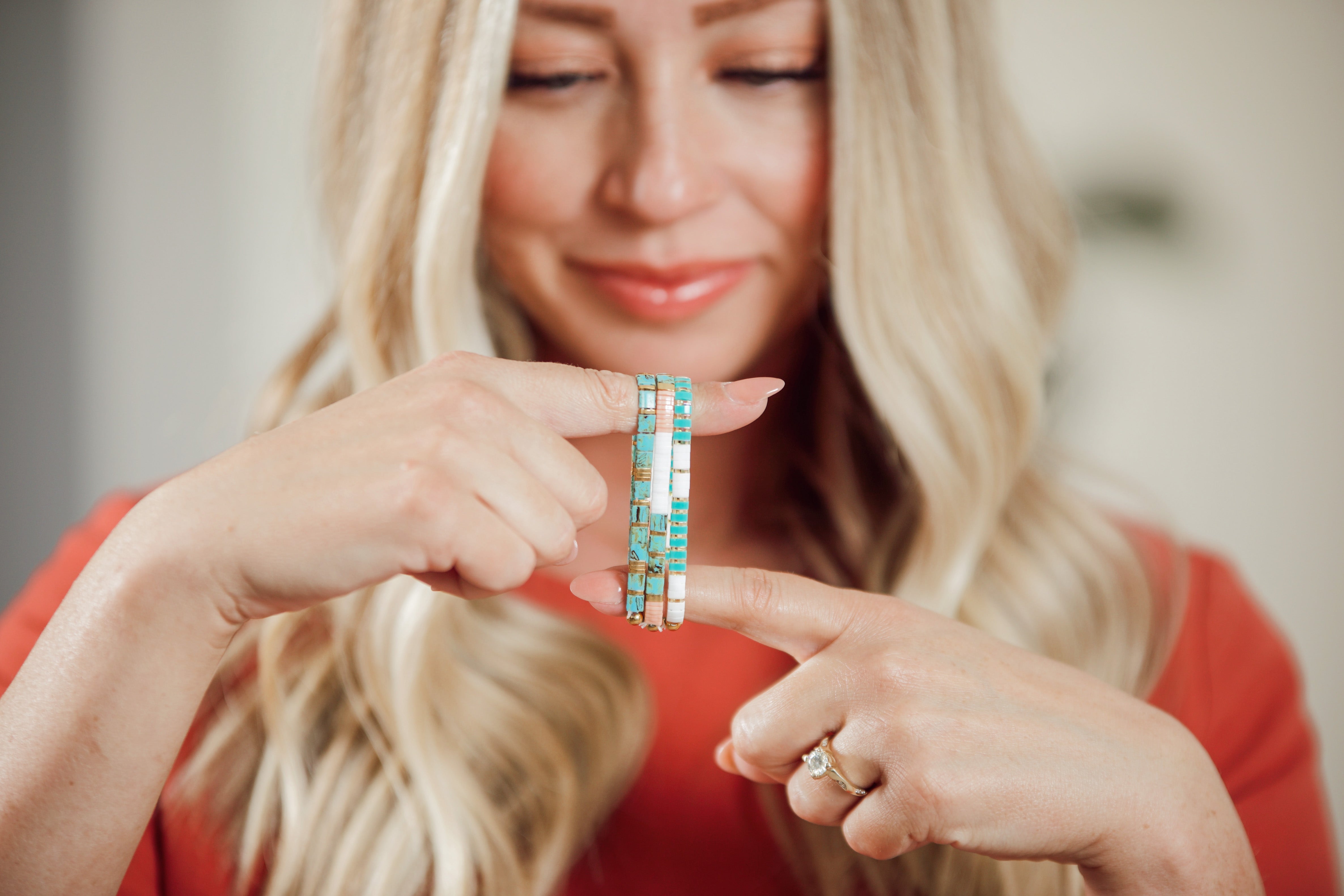
Here's what that breaks down to in a Mack & Rex trio kit ($44.99, makes 3 bracelets):
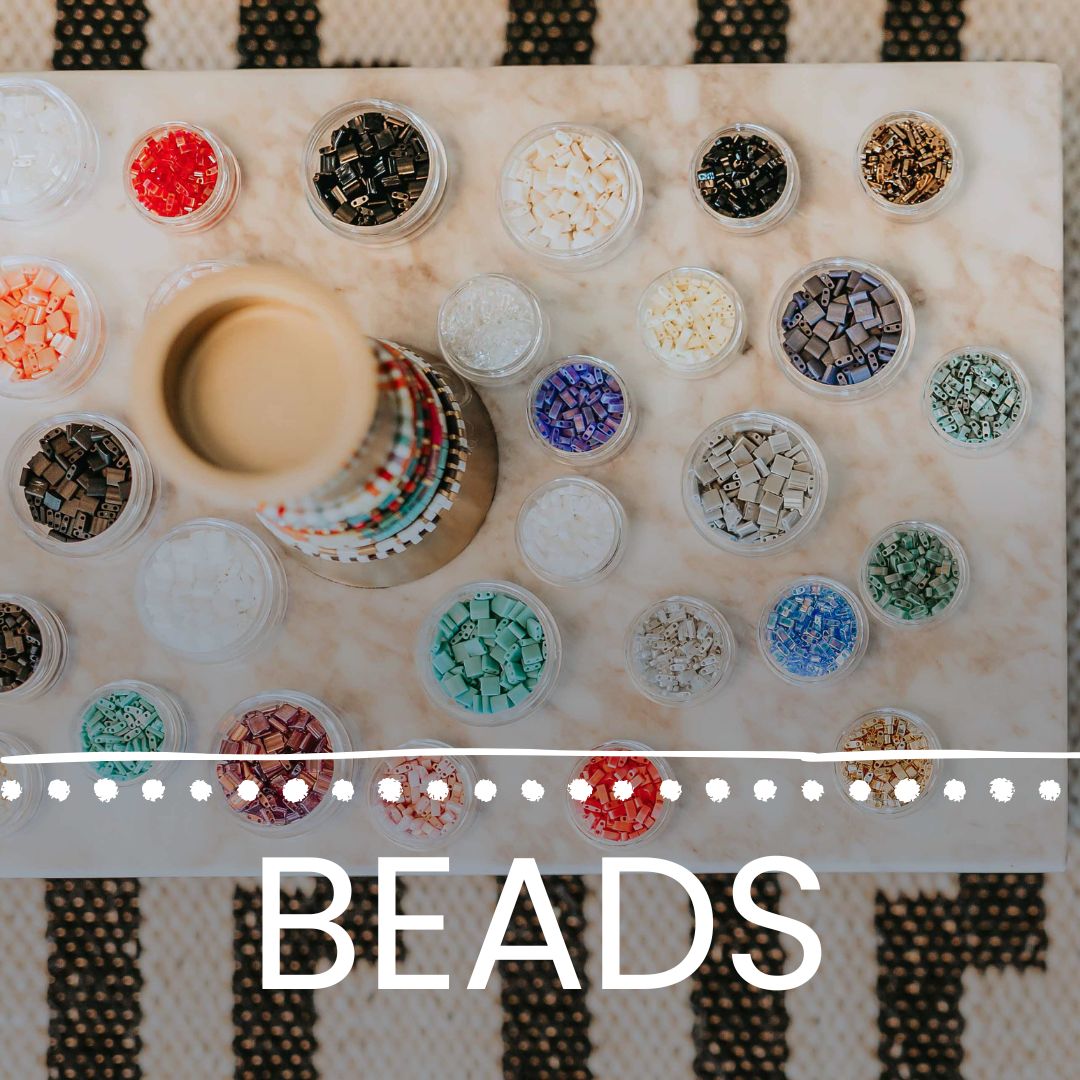
- Pre-portioned Miyuki Tila beads in a coordinated color palette, enough for all 3 bracelets
- Crystal-cord elastic, cut to length so you're not measuring your own wrist mid-project
- A color-coded pattern layout showing bead order
- Basic written instructions for stringing and finishing the knot
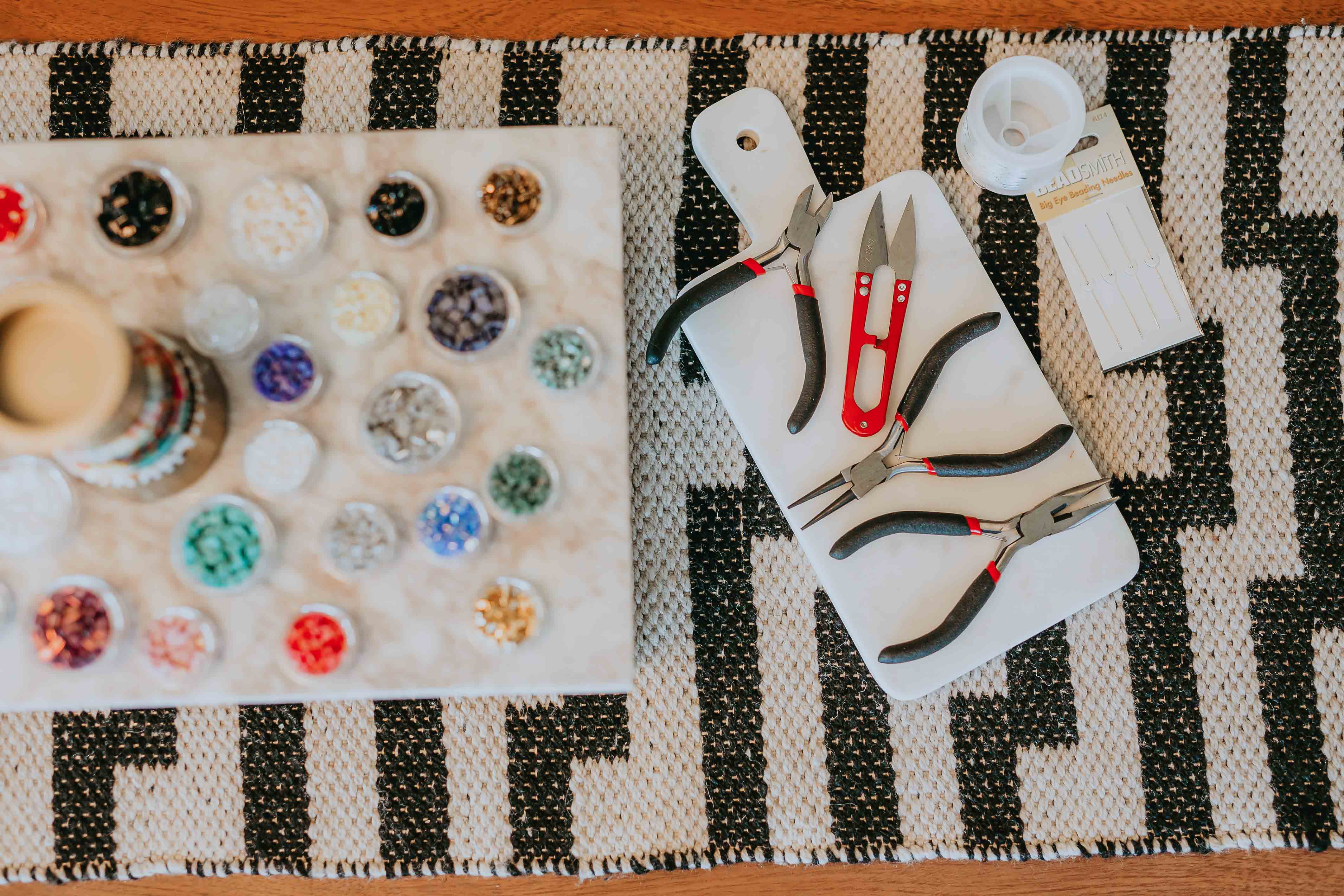
Step up to the All-in-One tools and supplies kit ($39.99 to $43.99) and you also get the tools: bead scoop, cord scissors, and a design board for laying out a pattern before you commit to stringing it. That's the one to grab if you don't already own basic jewelry tools at home.
What you won't find in a bracelet making kit, and shouldn't expect: glue, clasps for permanently fixed sizing, or a storage case for future projects. Stretch bracelets built on crystal-cord elastic don't need a clasp, the elastic itself is the closure, which is also why the kits ship without one. If a listing promises a clasp and jump rings for a stretch-style bracelet, that's usually a sign it's a generic kit copy-pasted from a different bracelet style rather than one actually built for Tila or seed bead stretch designs.
Is a bracelet making kit reusable, or is it one-and-done?
The tools are reusable. The beads and cord that ship inside a single kit are portioned for that kit's stated bracelet count and don't restock themselves once they're gone.
This trips people up because "kit" sounds like it should refill on its own. It doesn't, and no kit on the market genuinely does. What you get is a fixed amount of material sized to a specific yield: a trio kit makes 3 bracelets, a Tila Bead Starter Kit makes 20, and the Ultimate Tila Bracelet Kit makes 80. Once you've strung through that count, you're either buying another kit, buying loose Tila bead mixes (roughly $5 to $9 each), or moving up a tier.
People sometimes expect a kit to work like a refillable container, top it up and go again. It doesn't, mostly because bead colors and finishes change between production runs, so a "refill" wouldn't reliably match what shipped in the original box anyway. Buying a fresh kit or mix each time is actually the more reliable way to get a matching palette rather than a mismatched patch job.
If you like the process and want to keep going without buying a new kit every time, the DIY Bracelet Kit Club subscription ($36.99) sends a new three-bracelet kit on a set schedule so you're never staring at an empty bead tray. One reviewer put it simply: "I like the kit in a can monthly as it is a complete three bracelet project for me. The pieces and colors work so well together I love it."
How long does it take to make a bracelet from a kit?
Fifteen to 30 minutes for a single strand once you know the pattern. A three-bracelet trio kit is a realistic one-hour sit-down, learning curve included.
Time depends more on the pattern than your skill level. A single row of Tila beads strung in sequence is fast. A layered or multi-strand design takes longer because you're managing more than one cord at once. If you're planning a specific window, say a lunch break or a night in, a trio kit built around a simple repeating pattern is the safer bet than a complex layered one.
Drying time isn't a factor here since there's no glue step in a standard stretch bracelet. Once the knot is tied and tucked, you're wearing it.
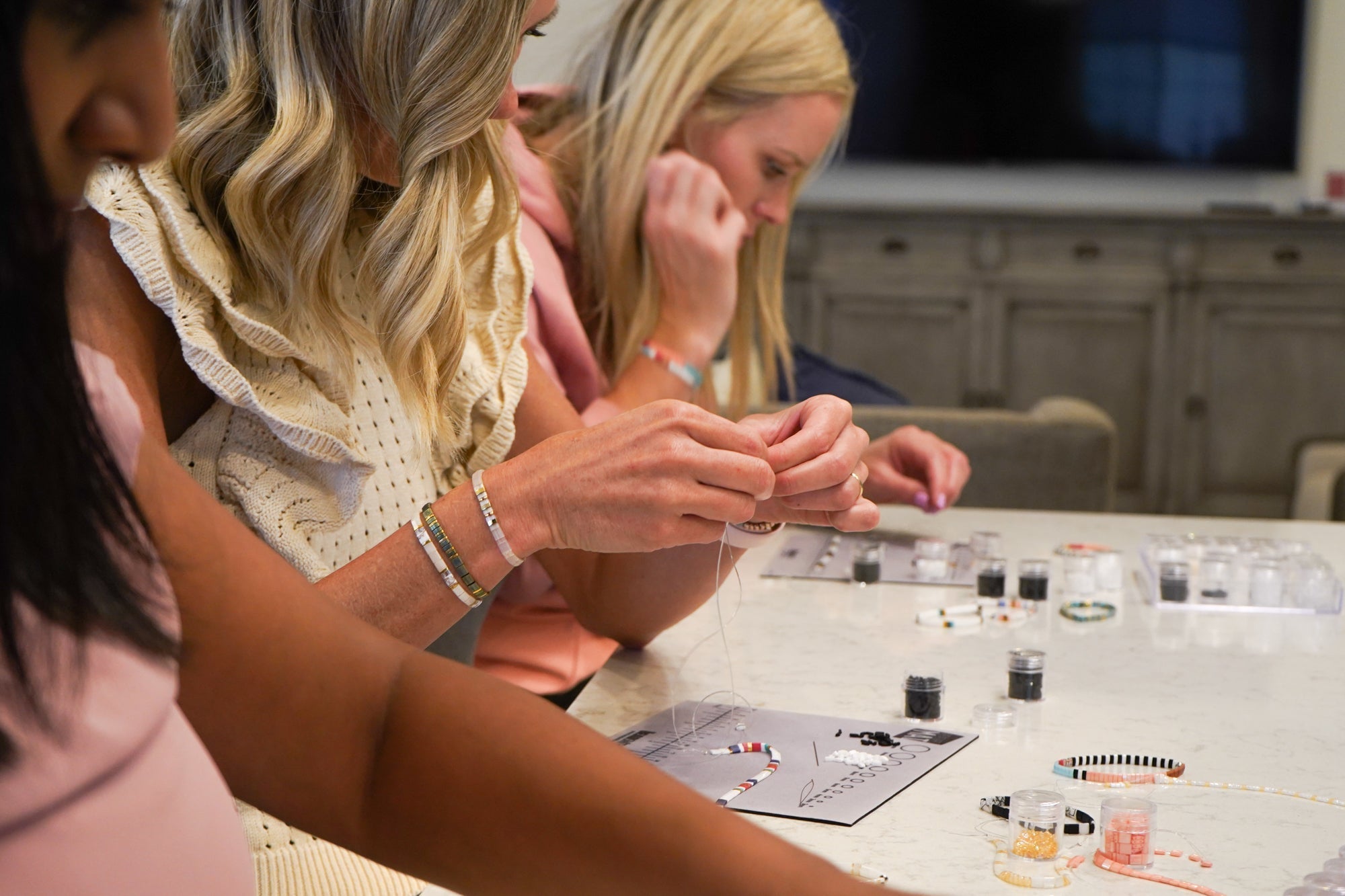
Group settings change the math. A bachelorette party or a girls' night with four or five people working from one trio kit each takes longer per person just from sharing scissors and comparing patterns, budget closer to 45 minutes to an hour so nobody feels rushed. Solo, at your own table, with coffee and no interruptions, most people move faster than they expect.
Are the beads in these kits good quality?
Mack & Rex kits use Miyuki Tila beads, a Japanese glass bead line known for tight size tolerances and consistent color coating from bead to bead. Miyuki manufactures the beads; Mack & Rex sources and resells them as part of its kits and finished bracelets, it doesn't produce the beads itself.
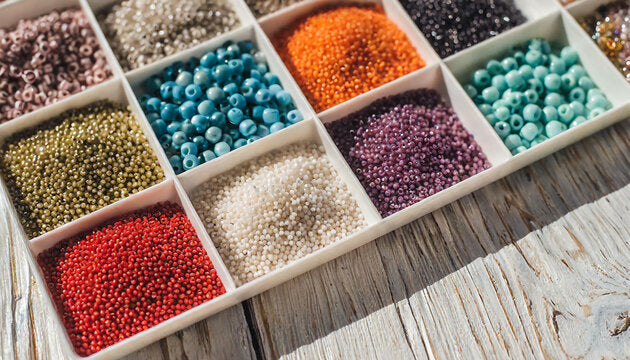
That distinction matters because it's the reason the beads look uniform once strung. Cheaper glass or plastic beads vary in hole size and shape, which shows up as gaps or crooked rows in a finished bracelet. Miyuki's flat, square-cut Tila shape is specifically designed to sit flush against its neighbors, which is part of why the style reads as clean and finished rather than homemade-looking. Seed and tile bead manufacturing more broadly has a long documented history in glasswork, and the basic craft techniques for stringing and finishing them haven't changed much in decades (Wikipedia: seed bead).
One customer review on a Tila bead color mix summed up the quality complaint you don't want to have: "The color of this bead is true to the pictures. Very nice color and made a beautiful accent to my bracelet." True-to-photo color consistency is a small thing until you've dealt with a batch that isn't.
Is a bracelet making kit a good gift for an adult?
Yes, for someone who likes hands-on activities or would enjoy a shared project with you. It beats a bag of loose beads as a gift because everything needed to actually finish something is already in the box, no follow-up trip to a craft store required.
The kit format also solves the usual gift problem of guessing size or taste. A trio kit comes in a themed color palette, so the recipient picks their favorite of the three finished looks rather than being stuck with one design that may not suit them. One customer bought a kit as a holiday gift for her sister: "I ordered this as a Christmas gift for my sister and she is enjoying making the bracelets. No complaints from her! The kit arrived quickly and was in good shape." That's the outcome you want from a gift kit: it shows up intact and gets used, not shelved.
If you're shopping for someone who already has a full craft room, the DIY Bracelet Kit Club subscription is worth considering instead of a one-time kit. It turns a single gift into a recurring project they get to look forward to.
What age is a bracelet making kit really appropriate for?
Adult bracelet making kits are sized and built for adult hands, and Mack & Rex doesn't market them as safe for very young children. Tila beads, crimps, and findings are small enough to be a choking hazard, so any crafting session that includes kids needs a supervising adult at the table the whole time.
This isn't a small print detail, it's the one rule that matters most if you're crafting with kids or grandkids around. Keep loose beads off the floor and out of reach when you step away, and don't leave a bowl of beads unattended near a toddler. General product safety guidance from the U.S. Consumer Product Safety Commission covers small-parts risk in toys and craft materials and is a useful baseline if you're unsure what counts as too small (CPSC toy safety guidance). If you want a family project, plan for the adult to handle bead pouring and let the kid handle placement and stringing under direct watch.
Is a bracelet making kit worth the price?
Compared to buying beads, cord, and findings separately, a kit is usually the better deal once you factor in the bulk minimums most bead retailers require. A Mack & Rex trio kit runs $44.99 and makes 3 bracelets, which works out to roughly $15 per bracelet in materials, plus you skip the trial-and-error of matching colors and cord weights yourself.
Scale matters here too. The Tila Bead Starter Kit ($189.99) makes 20 bracelets, and the Ultimate Tila Bracelet Kit ($399.99) makes 80, so the per-bracelet material cost drops as the kit size goes up. Which tier is "worth it" depends on whether you're making one bracelet for yourself or setting up for a bracelet-making party, a craft table at a family event, or a stack of handmade gifts. A single trio kit at $44.99 doesn't clear the $100 threshold for free shipping on its own, so if that matters to you, pair it with a second kit or a bead mix to get there. And note that the "buy 3 bracelets, get 1 free" offer applies to finished, ready-to-wear bracelets, not to kits or loose beads, so don't expect it to apply here.
There's also a durability angle worth weighing into "worth it." A kit is only as good as the finished bracelet it produces, and a crystal-cord elastic bracelet that survives daily wear, showers included, without stretching out is a different value proposition than one that goes slack after a month. Mack & Rex backs its finished bracelets with a quality guarantee, which tells you something about how the same materials in the kits are expected to hold up once you've made your own.
For general technique on stringing patterns and finishing knots if you want to branch beyond the included instructions, the friendship bracelet craft has centuries of documented pattern variations to borrow from (Wikipedia: friendship bracelet).
If you've read through all 8 answers and you're ready to pick one, browse the full lineup of bracelet making kits at Mack & Rex. Start with a $44.99 trio kit if you're testing the waters, or go straight to the DIY Bracelet Kit Club if you already know you'll want more than one round.