


Cheap Elastic Bracelets vs. Handmade: Why the Upgrade Lasts
Why Do Cheap Elastic Bracelets Snap So Fast?
Cheap stretch bracelets snap because the elastic cord inside them is thin, the knot is basic, and nobody checked the tension before it left the factory. Sweat, lotion, hand sanitizer, and sun break the cord down within weeks, and once one bead shifts, the whole strand loosens and eventually lets go.
You've felt this before. A bracelet from a gift shop or a big-box multipack feels fine for the first few wears, then goes slack around week three. By week six it's either snapped in the shower or stretched out so far it slides off your wrist while you're typing. That's not bad luck. It's cheap materials doing exactly what cheap materials do.
Elastic cord is a rubber-based material, and rubber degrades with exposure to oils, UV light, and repeated stretching, a basic property of the material itself, not a manufacturing defect specific to any one brand. A bracelet made with thin, low-grade cord simply hits that breaking point faster because there's less material there to begin with.
The Knot Problem Nobody Talks About
Here's what actually fails first, most of the time: the knot, not the cord. Mass-produced bracelets are often tied off fast on an assembly line, with a basic overhand knot and a dab of glue. That knot has to hold under tension every single time you put the bracelet on or take it off. A rushed knot slips loose long before the elastic itself wears out.
What Actually Makes a Handmade Bracelet Hold Up?
A handmade bracelet lasts because someone checked three things a factory line skips: the grade of the elastic cord, the tension it's strung at, and the knot that closes it. Get those right and the bracelet handles daily wear, workouts, and dish soap for months, well past the few weeks a bargain-bin bracelet usually lasts.
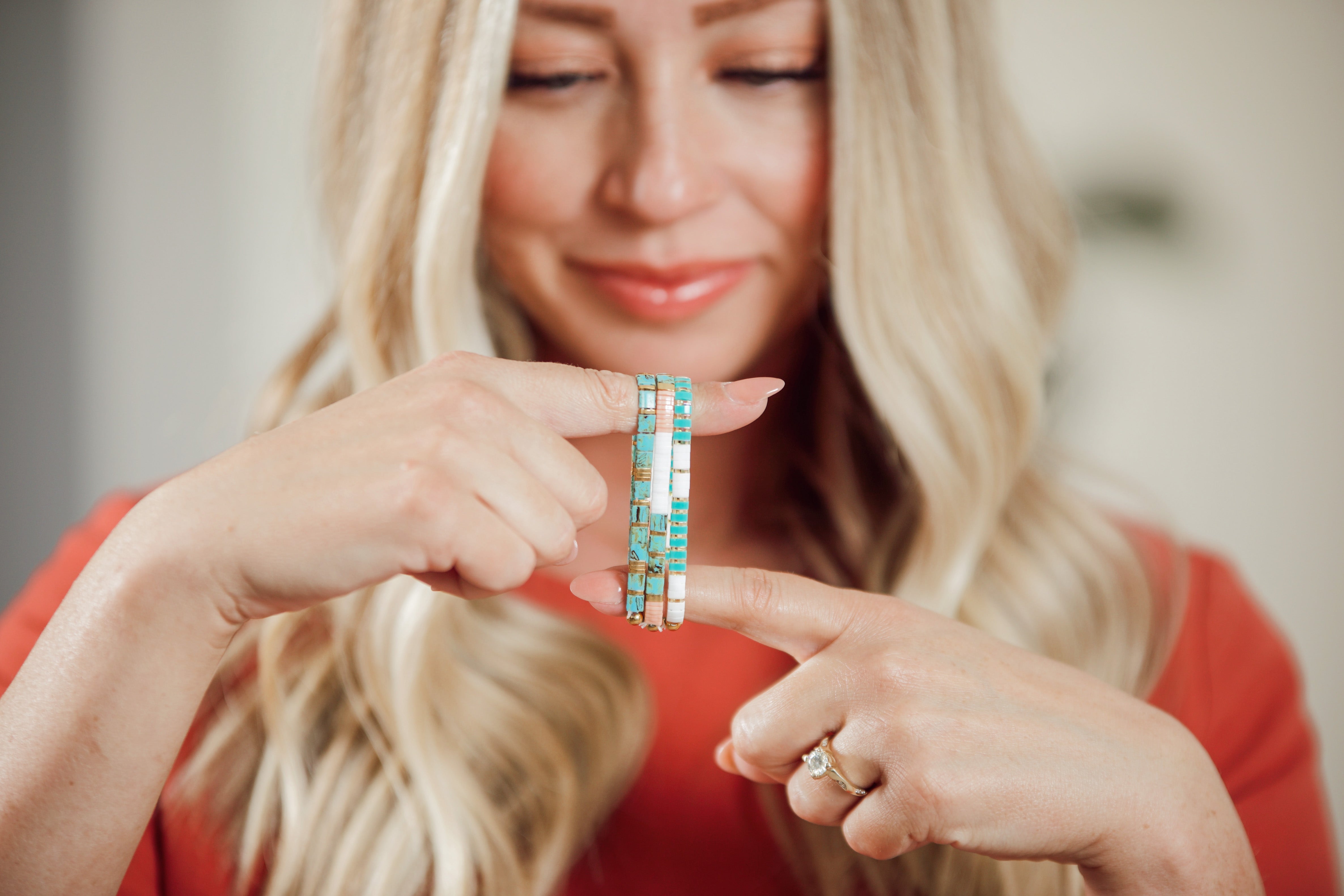
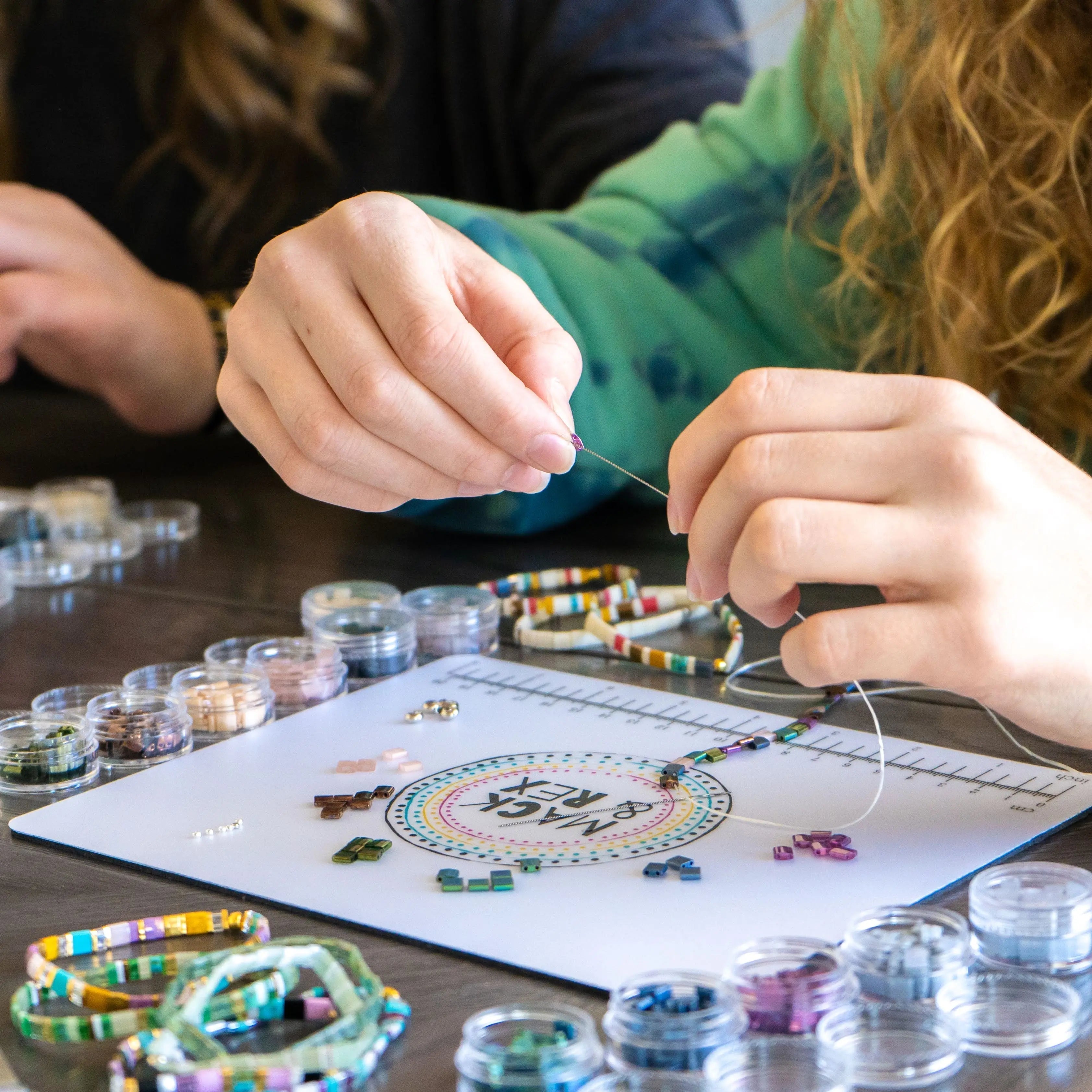
Mack & Rex bracelets are strung on crystal-cord elastic, a thicker, higher-grade stretch cord than what you'll find in a bargain bin bracelet. Each one is finished with a secure knot tucked inside the beads, not glued on the outside where it catches on sleeves and eventually pops loose. That's the difference between a bracelet you replace every month and one you forget you're wearing.
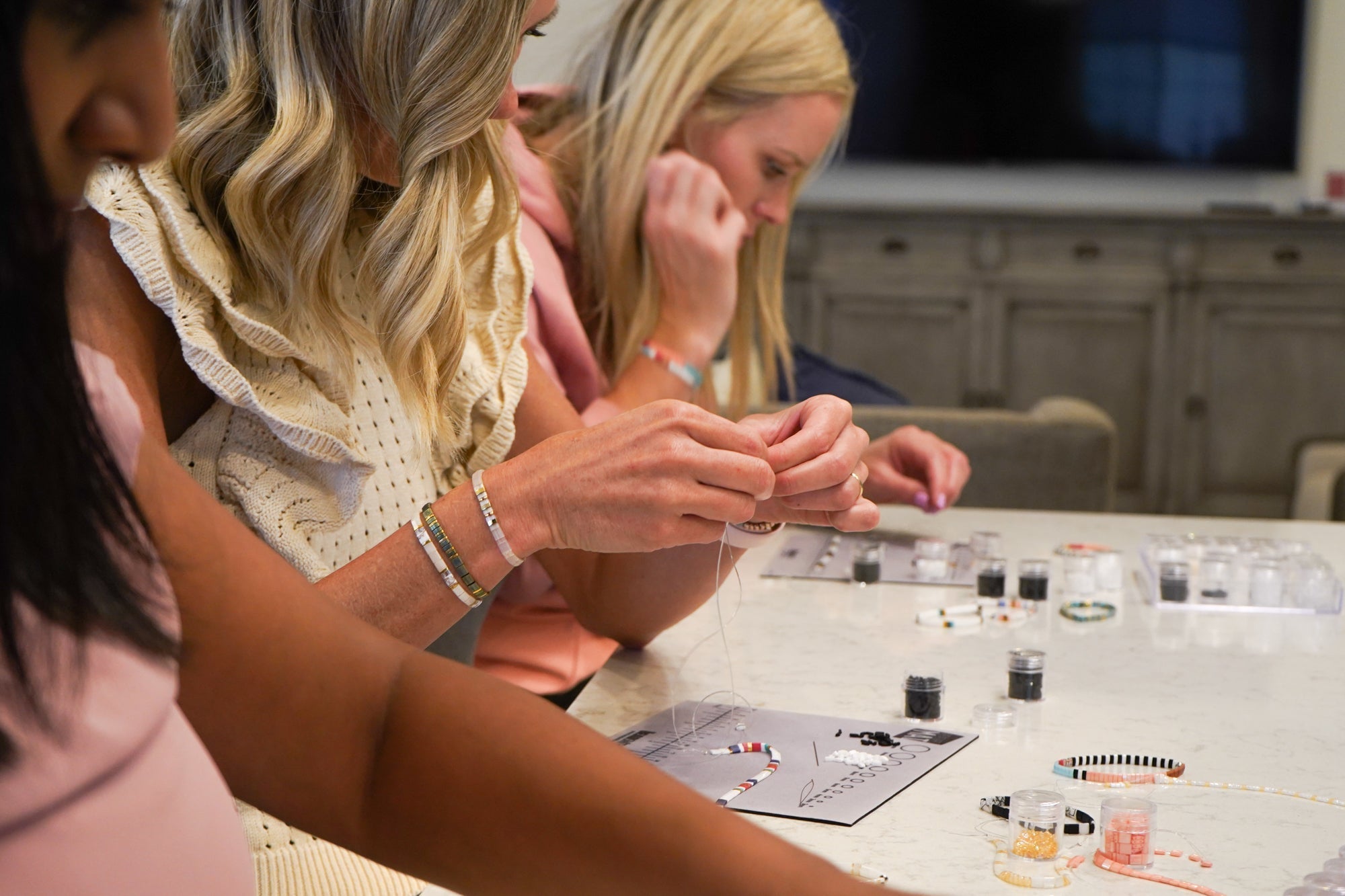
Tension matters more than people expect. String beads too loose and they clack around and wear at the holes; too tight and the cord stays stretched even when it's off your wrist, which is how a bracelet ends up sliding past your hand within a month. Getting that middle point right is a hand-strung skill, not something a machine tunes bead by bead.
One customer put it simply in a review: "Simple but beautiful. Good price too." That's the whole pitch when a bracelet is made right, it looks good, it's not fussy, and it doesn't cost a fortune to get quality that actually holds.
What Are Tila Beads, and Why Do They Matter Here?
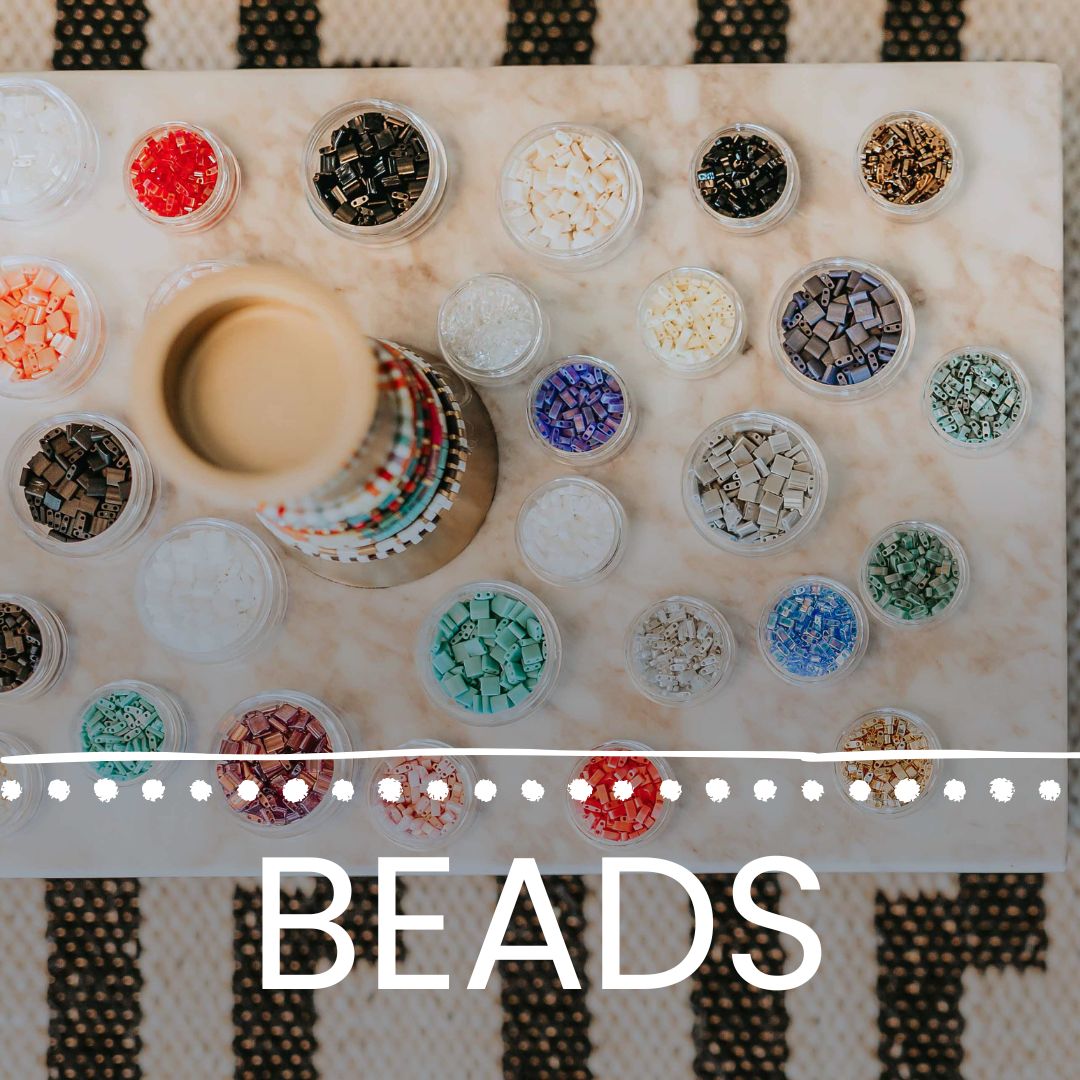
Tila beads are a flat, two-hole glass bead made by Miyuki, a Japanese bead manufacturer known for precision glass beadwork. Mack & Rex sells finished bracelets, loose bead mixes, and kits made with genuine Miyuki tila beads, sourced and resold, not produced in-house.
The two-hole shape is the part that matters for durability. A single-hole seed bead relies on one strand of cord to carry all the weight and movement. A tila bead spreads that same stress across two holes, so the bead sits flatter against the cord and doesn't rock or twist as much during wear. Less rocking means less friction wearing through the elastic at each bead. Glass beadwork like this has a long documented history in craft and jewelry making, and the quality of the glass itself, how consistent the holes are, how uniform the cut, still varies a lot between manufacturers. Miyuki's reputation in the beading world comes from that consistency, which is part of why serious hobbyists and small-batch jewelry makers reach for it over off-brand glass.
Cheap elastic bracelets almost never use tila beads. They use round plastic or low-grade glass beads because they're faster to string by machine. That's a fine choice for a $3 souvenir bracelet. It's not the choice for something you want to wear every day for a year.
Is a Ready-Made Handmade Bracelet Worth It Over a Cheap One?
Yes, if you actually wear bracelets daily. A finished Mack & Rex bracelet runs about $20 to $25, more than a gas-station three-pack, but it's not competing with those on price. It's competing on how many times you have to replace it, and a well-strung bracelet on crystal-cord elastic simply doesn't need replacing every month.
Do the math over a year. Buy a $3 stretch bracelet every five or six weeks because it keeps snapping, and you've spent $25 to $36 on bracelets you were annoyed with the whole time. One well-made bracelet at $20 to $25, backed by a quality guarantee, gets you to the same spot with one purchase and no replacing.
Sizing plays into this too, more than most people expect. A bracelet that's stretched too tight to force onto a wrist that's a size up wears out fast, and one that's too loose slides and snags all day. Mack & Rex bracelets come in sizes XXS through 5XL, so you're picking a fit instead of hoping a one-size-fits-most stretch bracelet happens to work for your wrist. That fit alone takes a lot of strain off the elastic long-term, since a properly sized bracelet isn't fighting to stretch past a wrist it wasn't built for.
If you're ready to stop replacing bracelets every month, the full collection of finished, ready-to-wear bracelets is where to start. Buy 3 finished bracelets and get 1 free, and any order over $100 ships free within the US, so building out a real stack (one for everyday, one for the gym, a couple to stack and swap) costs less than it looks like at first.
A Quick Note on Kids and Loose Beads
If little hands are helping pick out colors or making their own bracelets at a craft table, keep loose beads and small parts away from very young kids and stay close by. Beads are a choking hazard, not a toy, even when a project is genuinely fun to do together.
Frequently Asked Questions
Why do cheap elastic bracelets break so fast?
Most mass-produced stretch bracelets use thin, low-grade elastic cord tied off with a basic knot and no real tension control. The cord dries out from sweat, lotion, and sun within weeks, and the knot slips before the bead holes even get a chance to wear through.
What makes a handmade tila bracelet last longer?
A well-made tila bracelet uses thicker crystal-cord elastic strung with the correct tension and finished with a secure, hidden knot. Mack & Rex bracelets are made this way and back it with a quality guarantee, so the stretch holds and the beads stay lined up through daily wear.
Are Miyuki tila beads the same as regular seed beads?
No. Tila beads are a specific flat, two-hole glass bead made by Miyuki, a Japanese bead manufacturer. Mack & Rex sells finished bracelets and kits made with genuine Miyuki tila beads; it does not manufacture the beads itself.
How do I know if a bracelet will fit and stay put?
Check that the brand offers a real size range rather than a single stretch-to-fit guess. Mack & Rex bracelets come in sizes XXS through 5XL, so the fit is chosen, not hoped for, which matters as much as material for a bracelet that stays on through a workout or a full day.
Does a handmade bracelet cost a lot more than a cheap one?
A finished Mack & Rex bracelet runs roughly $20 to $25, more than a $3 gas-station stretch bracelet but far less than fine jewelry. Buy 3 finished bracelets and get 1 free, and orders over $100 ship free within the US, which narrows the price gap fast if you're building a stack.
Sources: Wikipedia: Seed bead, Wikipedia: Natural rubber, Interweave: Beading.